Wednesday, March 15, 2023

[Botany • 2023] Primula pingbaensis (Primulaceae) • A New Species from Guizhou, China


Primula pingbaensis Na Zhang, X.Q.Jiang & Z.K.Wu,

in Zhang, Jiang & Wu, 2023.

Abstract
Primula pingbaensis Na Zhang, X.Q.Jiang & Z.K.Wu, a new species of Primulaceae from Gaofeng Mountain of Pingba county, Guizhou, China, is described and illustrated. Morphological evidence supports P. pingbaensis as a member of P. sect. Petiolares on account of scape elongating, pedicels conspicuously thickening in fruit, and its capsule cracking irregularly round the top and crumbling away. Amongst the members of subsect. Davidii, the new species is characterized by having a uniquely smooth leaf blade due to inconspicuously raised veinlets and homostylous flowers with the style usually extending beyond the anthers. The distribution, phenology and conservation status of the new species are also provided.

Keywords: Guizhou, Karst, new species, ping ba bao chun, Primula sect. Petiolares

Primula pingbaensis sp. nov.
 A habit B calyx and stigma C upper face of leaves D lower face of leaves E dissected corolla F capsule.
Drawn by Ms. Xiang-Li Wu.

A–I Primula pingbaensis sp. nov.: A habitat B habit in flowering C capsule in early-fruiting D capsule in later-fruiting E flower, front view F bracts and calyx G calyx and stigma H dissected corolla showing the anthers and stigma I specimen in flowering;
J–L Primula esquirolii: J habitat K leaves, both surfaces L habit. Photographed by Z.K Wu.


 Primula pingbaensis Na Zhang, X.Q.Jiang & Z.K.Wu, sp. nov.
 
Note: The new species most resembles Primula esquirolii and P. coerulea, sharing similar floral morphology and short or almost obsolete scapes at flowering time. However, the new species differs from the homostylous P. esquirolii mainly in its lamina smooth on upper surface, deeper flower color, oblong flower lobes, and the style usually extending beyond the anthers. Compared to the heterostylous P. coerulea, the new species differs mainly in its homostylous flower, and the whole plant is usually covered with sparse glands. The main morphological distinctions between P. pingbaensis, P. esquirolii and P. coerulea are summarized in Table 1.

Distribution and ecology: Primula pingbaensis is only known from the type locality on Gaofeng mountain in Pingba county, Guizhou, China. The plant grows on moist walls of karst cliffs. (Fig. 1, Map 1).

Etymology: The epithet of the new species is derived from the name of Pingba county, Guizhou, where the new species was discovered and collected (Map 1).


 Na Zhang, Xiao-Qi Jiang and Zhi-Kun Wu. 2023. Primula pingbaensis (Primulaceae), A New Species from Guizhou, China. PhytoKeys. 221: 85-93. DOI: 10.3897/phytokeys.221.97948

[Botany • 2022] Ceropegia kumaonensis (Apocynaceae: Asclepiadoideae: Ceropegieae) • A New Species from Uttarakhand, Western Himalaya, India


Ceropegia kumaonensis Kamal Kishor, G.S. Rawat & S.S. Samant,  

in Kishor, Rawat & Samant, 2022. 

Abstract
A new species of Ceropegia: C. kumaonensis Kamal Kishor, G.S. Rawat & S.S. Samant from Western Himalaya, Kumaon region of Almora District, Uttarakhand, India is described and illustrated. This newly described species differs from its allied taxa C. attenuatula and C. parvissima in having fascicled cymes with multiple drooping flowers per node, flowers without tube, long corolla lobes and having regularly toothed corona.
 
Keywords: Eudicots, Cropegia kumaonensis, Kumaon, Western Himalaya, Uttarakhand, new species


Ceropegia kumaonensis Kamal Kishor, G.S. Rawat & S.S. Samant
a – c. Habit; d - e. Inflorescence and flowers; f. Folliclesand seeds; g - h. Corona.


Ceropegia kumaonensis Kamal Kishor, G.S. Rawat & S.S. Samant sp. nov.
 
 
Kamal Kishor, Gopal S. Rawat and Sher S. Samant. 2022. A New Species of Ceropegia L. (Apocynaceae) from Uttarakhand, Western Himalaya, India. Phytotaxa. 571(1); 85-90. DOI:  10.11646/phytotaxa.571.1.7 


[Herpetology • 2023] Cnemaspis ganeshaiahi • A New Species of Rupicolous Cnemaspis Strauch, 1887 (Squamata: Gekkonidae) from the Male Mahadeshwara Wildlife Sanctuary, southern Eastern Ghats, India


Cnemaspis ganeshaiahi
Narayanan, Pal, Grismer & Aravind, 2023
 

Abstract
We describe a new species of rupicolous Cnemaspis from the Male Mahadeshwara Wildlife Sanctuary in the Eastern Ghats. The current description is based on a type series of eight specimens that bear a unique combination of morphological and colour pattern characteristics that do not occur in other closely related species. Maximum likelihood and Bayesian analyses based on the mitochondrial gene ND2 recovered the new species to be nested within the gracilis clade and the sister species to the recently described C. agarwali from the Eastern Ghats.

Keywords: Endemic, gecko, India, integrative taxonomy, MM Hills, morphology

Live images of Cnemaspis ganeshaiahi sp. nov.
A Paratype (BNHS 3148), B live uncollected female.


Cnemaspis ganeshaiahi sp. nov.
 Suggested common name: Ganeshaiah’s dwarf gecko.

Diagnosis: A small-sized Cnemaspis, SVL up to 32.8 mm (n = 8). Dorsal pholidosis heterogeneous; weakly keeled granular scales intermixed with fairly regularly arranged rows of enlarged, strongly keeled, conical tubercles; last one or two rows of enlarged tubercles on flank keeled, spine-like; 12–14 rows of dorsal tubercles at mid-body, 14–18 tubercles in paravertebral rows, paravertebral rows rarely irregularly arranged; ventral scales smooth, subcircular, subimbricate, subequal from chest to vent, 24–28 scales across belly at mid-body, 118–124 longitudinal scales from mental to cloaca; subdigital scansors smooth, unpaired, unnotched; nine or 10 lamellae under digit I of manus and pes, 15–18 lamellae under digit IV of manus and 17–21 lamellae under digit IV of pes; males (n = 5/8) with five femoral pores on each thigh separated by seven or eight poreless scales from series of four to six precloacal pores, precloacal pores separated medially by one or two poreless scales, (precloacal pores rarely not separated, n = 1/5); tail with enlarged, strongly keeled, pointed, and spine-like tubercles forming whorls; median row of subcaudals smooth, roughly pentagonal, and distinctly enlarged. Dorsum pale-orange, mottled with small white to light-grey spots and few small black spots with a series of light-grey vertebral blotches extending from neck to tail base; a single central black dorsal ocellus on neck and a smaller one on occiput separated by a light-grey blotch, ocellus on neck flanked anteriorly on each side by a subequal ocellus and posteriorly by a pair of obscure blotches; venter off-white with black speckles, two distinct pairs of black streaks on throat; original tail in males pale-grey, regenerated tail orange-brown.

Etymology: The specific epithet of this new species is a patronym in honour of Professor K.N. Ganeshaiah, who served as a Professor of Plant Genetics and Breeding at the University of Agricultural Sciences, Bangalore, and was a founding trustee of the Ashoka Trust for Research in Ecology and the Environment (ATREE), Bangalore. Professor Ganeshaiah has contributed significantly towards plant breeding, ecology, evolutionary biology, and conservation biology. He also popularised science literature in the local language and wrote over 25 books.


 Surya Narayanan, Saunak Pal, L. Lee Grismer and N. A. Aravind. 2023. A New Species of Rupicolous Cnemaspis Strauch, 1887 (Squamata: Gekkonidae) from the Male Mahadeshwara Wildlife Sanctuary, southern Eastern Ghats, India. Vertebrate Zoology. 73: 189-203. DOI:  10.3897/vz.73.e101311


[Botany • 2023] Aeschynanthus smaragdinus (Gesneriaceae) • A New Species from Yunnan Province, China


Aeschynanthus smaragdinus F.Wen & J.Q.Qin, 

in Qin, Li, Pang & Wen, 2023.
翡翠芒毛苣苔  ||  DOI: 10.3897/phytokeys.220.98040

Abstract
Aeschynanthus smaragdinus F.Wen & J.Q.Qin, a new species of Gesneriaceae from the monsoon rain forest in Mangbang township, Tengchong City, Yunnan Province, China, is described and illustrated here. It morphologically resembles A. chiritoides C.B.Clarke in size, shape and hairs on the leaf blades. But it can easily be distinguished from the latter by the green corolla limb with brownish-red to maroon lower lobes. At the same time, the hairs of the pedicel and calyx lobes, the length of the staminode and the size of the seed grain can also help distinguish both. It is provisionally assessed as Data Deficient (DD), according to the IUCN Red List Categories and Criteria, because field surveys for this new taxon have not been completed.

Keywords: Aeschynanthus chiritoides, Didymocarpoideae, Flora of Yunnan, taxonomy


Aeschynanthus smaragdinus F.Wen & J.Q.Qin
A habit B flower C flower dissection D fruit E seed F seed grain. A–F from Isotype. Scale bars: 1 cm (A–E); 1 mm (F). Illustrated by Rui-Feng Li.

Plants Aeschynanthus smaragdinus F.Wen & J.Q.Qin 
A habit B a branch with a single flower C the adaxial surface of leaf blades and stem D the abaxial surface of leaf blades and stem E the adaxial and abaxial surfaces of leaf blades.
Photographs by De-Chang Meng.

Propagative organs of Aeschynanthus smaragdinus F.Wen & J.Q.Qin
 A a branch with terminal flower B lateral view of flower C top view of flower D upward view of flower E frontal view of corolla F pistil with calyx lobes G pistil without calyx lobes.
 Photographs by De-Chang Meng.


 Aeschynanthus smaragdinus F.Wen & J.Q.Qin, sp. nov.
 
Diagnosis: The new species resembles Aeschynanthus chiritoides C.B.Clarke (Fig. 5) in leaf blades size, shape and indumentum, but can be easily distinguished from the latter by its pedicel densely erect glandular-pubescent (vs. densely villous), calyx lobes adaxially nearly glabrous and abaxially erectly glandular puberulent (vs. adaxially and abaxially glandular- or eglandular-villous or a mixture of both), corolla pale yellowish green to greenish (vs. white or slightly yellowish or greenish with a few thin purple lines), corolla limb upper lobes green and lower lobes brownish red to maroon (vs. all lobes white or slightly pale green with pale purplish lines), seed grain ca. 1.0× 0.5 mm (vs. 1.2–3 × ca. 0.3 mm). Detailed morphological comparisons with A. chiritoides are provided in Table 1.
...

Etymology: Compared with most other species of Aeschynanthus, the beautiful green leaves and flowers of this dwarf plant resemble an emerald. The specific epithet ‘smaragdinus’ is derived from the Latin vocabulary and means a unique dazzling green.
Vernacular name: 翡翠芒毛苣苔 (Chinese name); 
Féi Cuì Máng Máo Jù Tái (Chinese pronunciation).


 Jia-Qi Qin, Rui-Feng Li, Yan-Ping Pang and Fang Wen. 2023. Aeschynanthus smaragdinus F.Wen & J.Q.Qin (Gesneriaceae), A New Species from Yunnan Province, China. PhytoKeys. 220: 65-73. DOI: 10.3897/phytokeys.220.98040

[Botany • 2023] Bulbophyllum contortum (Orchidaceae: Epidendroideae: Malaxideae) • A New Species from Yunnan, China


Bulbophyllum contortum Z.Zhou, P.Y.Wu & Z.J.Liu, 

in Zhou, Wu, Xu, Zhao, Lin, Xu & Liu, 2022.

Abstract
A new orchid species, Bulbophyllum contortum (Malaxideae, Epidendroideae, Orchidaceae) from Zhenyuan, Yunnan, China, is described and illustrated here. Detailed morphological comparisons indicate that B. contortum is similar to B. lemnisactum and B. lemniscatoides, but it differs in the shape and size of pseudobulbs, inflorescence shape, flower colour and shape and size of the sepalar appendages.

Keywords: Monocots, Bulbophyllinae, Bulbophyllum section Lemniscata, Chinese orchids, Epidendroideae, flora of China


Bulbophyllum contortum Z.Zhou, P.Y.Wu & Z.J.Liu. 
A. Habit. B. Flowering plant. C–D. Inflorescences. E. Flower, front view. F. Flower, side view. G. Dissected parts of a flower. H. Detail of the sepal. I. Anther cap and pollinarium. J. Detail of the sepal appendage. 

Bulbophyllum contortum Z.Zhou, P.Y.Wu & Z.J.Liu, sp. nov. 
(扭带石豆兰)

This new species is similar to B. lemniscatoides Rolfe (1890: 672) and B. lemniscatum Parish in Hooker (1872: 5961),but it differs in shape and size of its pseudobulbs, inflorescence shape, flower colour and shape and size of the sepalar appendages (Table 1). 

Etymology:— Referring to the contorted flanges of sepalar appendages.


Zhuang Zhou, Peng-Yu Wu, Xiao-Wei Xu, Zhuang Zhao, Ya-Jun Lin, Wan Xu and Zhong-Jian Liu. 2022. Bulbophyllum contortum (Orchidaceae, Malaxideae), A New Species from Yunnan, China. Phytotaxa. 560(3); 295-300. DOI: 10.11646/phytotaxa.560.3.4 

Tuesday, March 14, 2023

[Arachnida • 2022] Linothele mubii • A New Species of Linothele (Araneae: Dipluridae) from Peru


Linothele mubii   
Nicoletta, Ochoa, Chaparro & Ferretti, 2022


Abstract
 A new species of Linothele Karsch, 1879 from southern Peru is described and illustrated, L. mubii sp. nov. The new species can be distinguished from other species of the genus by scopulation in combination with the morphology of copulatory organs.

Key words: taxonomy, South America, sheet-web spider, Mygalomorphae, Dipluridae, Linothele, new species


Linothele mubii sp. nov., female (holotype).
 1, carapace and abdomen, dorsal view; 2, general appearance, dorsal view;
 3, collecting habitat of the holotype (photo by J.C. Chaparro).
Scale bars: 10 mm.

Linothele mubii sp. nov. 

Diagnosis. The female of L. mubii sp. nov. can be distinguished from congeners by undivided scopula on tarsi I, vulva consisting of two short stalks bearing a single isolated retrolateral vesicle (Fig. 14), together with dorsal pattern on opisthosoma consisting of several dots forming incomplete chevrons (Fig. 5). The male of L. mubii sp. nov. differs from congeners in the presence of a keel on embolus (Figs 23–26), leg formula 4123 and well-developed v-shaped apex of metatarsal protuberance (Fig. 22).

Etymology. The species name is a noun in genitive case, derived from the abbreviated name of the Peruvian Institution Museo de Biodiversidad del Perú (MUBI) in Cusco, Peru. The species is named in recognition for the contribution of this institution to science as a biodiversity repository


M. Nicoletta, J.A. Ochoa, J.C. Chaparro and N. Ferretti. 2022. A New Species of Linothele (Araneae: Dipluridae) from Peru. Zoosystematica Rossica. 31(1); 134-142. DOI: 10.31610/zsr/2022.31.1.134
 www.zin.ru/journals/zsr/publication.asp?id=1436

[Botany • 2022] Nepenthes candalaga (Nepenthaceae) • A New Species from eastern Mindanao, Philippines


Nepenthes candalaga Lagunday & V.B.Amoroso, 

in Lagunday, Rosa, Cleofei, Patano, Coritico & Amoroso, 2022. 

Abstract
A new endemic species, Nepenthes candalaga (Nepenthes sect. Alata) from Mt. Candalaga (eastern Mindanao, Philippines) is here described and illustrated. This new taxon resembles N. justinae but can be easily distinguished in having the lamina with 2‒3 longitudinal nerves, orbicular lid, non-bifid lid spur tip, triangular lid appendage, short banner-shaped trap wings, and absent upper pitcher rim. The species is assessed as Critically Endangered (CE) according to the IUCN criteria. This novelty is the 38th species of Nepenthes in Mindanao making the island with the highest concentration of Nepenthes species in the Philippines. This discovery increases the number of Nepenthes species in the Philippines to 61. The new taxon described faces threats of deforestation and habitat loss without legislative protection.

Keywords: Eudicots, Taxonomy, Nepenthes, threatened species, Mt. Candalaga


Nepenthes candalaga Lagunday & V.B.Amoroso
 

Noel E. Lagunday, Sherolai Dela Rosa, Clint Michael B. Cleofei, Romeo Patano Jr., Fulgent P. Coritico and Victor B. Amoroso. 2022. Nepenthes candalaga (Nepenthaceae), A New Species from eastern Mindanao, Philippines. Phytotaxa. 554(3); 285-292. DOI: 10.11646/phytotaxa.554.3.7

NEPENTHES CANDALAGA, DAVAO DE ORO'S NEWEST ENDEMIC SPECIES
https://r11.denr.gov.ph/index.php/news-events/press-releases/1597-nepenthes-candalaga-davao-de-oro-s-newest-endemic-species

Monday, March 13, 2023

[Herpetology • 2023] Gracixalus truongi • A New Species of Gracixalus (Anura: Rhacophoridae) from northwestern Vietnam


Gracixalus truongi 
Tran, Pham, Le, Nguyen, Ziegler & Pham, 2023

Truong’s Treefrog | Nhái cây trường  ||  DOI: 10.3897/zookeys.1153.93566

Abstract
A new species of small tree frog is described from northwestern Vietnam based on morphological differences and molecular divergence. Gracixalus truongi sp. nov. is distinguishable from its congeners and other small rhacophorid species on the basis of a combination of the following characters: size relatively small, SVL 32.2–33.1 mm in males, 37.6–39.3 mm in females; head slightly wider than long; vomerine teeth absent; snout round and long RL/SVL 0.17–0.19 in males, 0.16–0.17 in females; spines on upper eyelid absent; supratympanic fold distinct; tympanum distinct; dorsal skin smooth; throat smooth and venter granular; tibiotarsal projection absent; webbing of fingers rudimentary, toes with moderately developed webbing; dorsum moss-green, with an inverse Y-shaped dark green marking extended from interorbital region to posterior region of dorsum; external vocal sac absent in males; males with a nuptial pad on finger I. In the molecular analyses, the new species has no clear sister taxon and is at least 4.5% divergent from other congeners based on a fragment of the mitochondrial 16S rRNA gene.

Keywords: 16S rRNA, Dien Bien Province, Gracixalus truongi sp. nov., morphology, Rag1, Son La Province, taxonomy


Gracixalus truongi sp. nov., holotype (IEBR A.5004), male, in life
A dorsolateral view B ventral view.

Gracixalus truongi sp. nov., dorsolateral view of paratypes in life
A female (IEBR A.5005) from Dien Bien Province B female (ZVNU 09) from Son La Province.

 Gracixalus truongi sp. nov.
  
Diagnosis: The new species is assigned to the genus Gracixalus based on molecular phylogenetic analyses and the following morphological characters: the presence of intercalary cartilage between terminal and penultimate phalanges of digits, tips of digits expanded into large discs bearing circum-marginal grooves, the vomerine teeth being absent, horizontal pupil, tibia ~ 4–5× longer than wide, translucent skin, inner (first and second) and outer (third and fourth) fingers not opposable, and dorsum with an inversed Y-shaped dark brown marking (Fei et al. 2009; Rowley et al. 2011, 2020; Chen et al. 2018; Yu et al. 2019; Le et al. 2021).

Etymology: We name this new species in honor of our colleague, Prof. Dr. Truong Quang Nguyen from the Institute of Ecology and Biological Resources, Vietnam Academy of Science and Technology, in recognition of his great contributions to the herpetofaunal exploration of the Indochina region. 
We recommend “Truong’s Treefrog” as the common English name of the new species 
and the common name in Vietnamese “Nhái cây trường”.
 

Tung Thanh Tran, Anh Van Pham, Minh Duc Le, Nam Hai Nguyen, Thomas Ziegler and Cuong The Pham. 2023. A New Species of Gracixalus (Anura, Rhacophoridae) from northwestern Vietnam.  ZooKeys. 1153: 15-35. DOI: 10.3897/zookeys.1153.93566

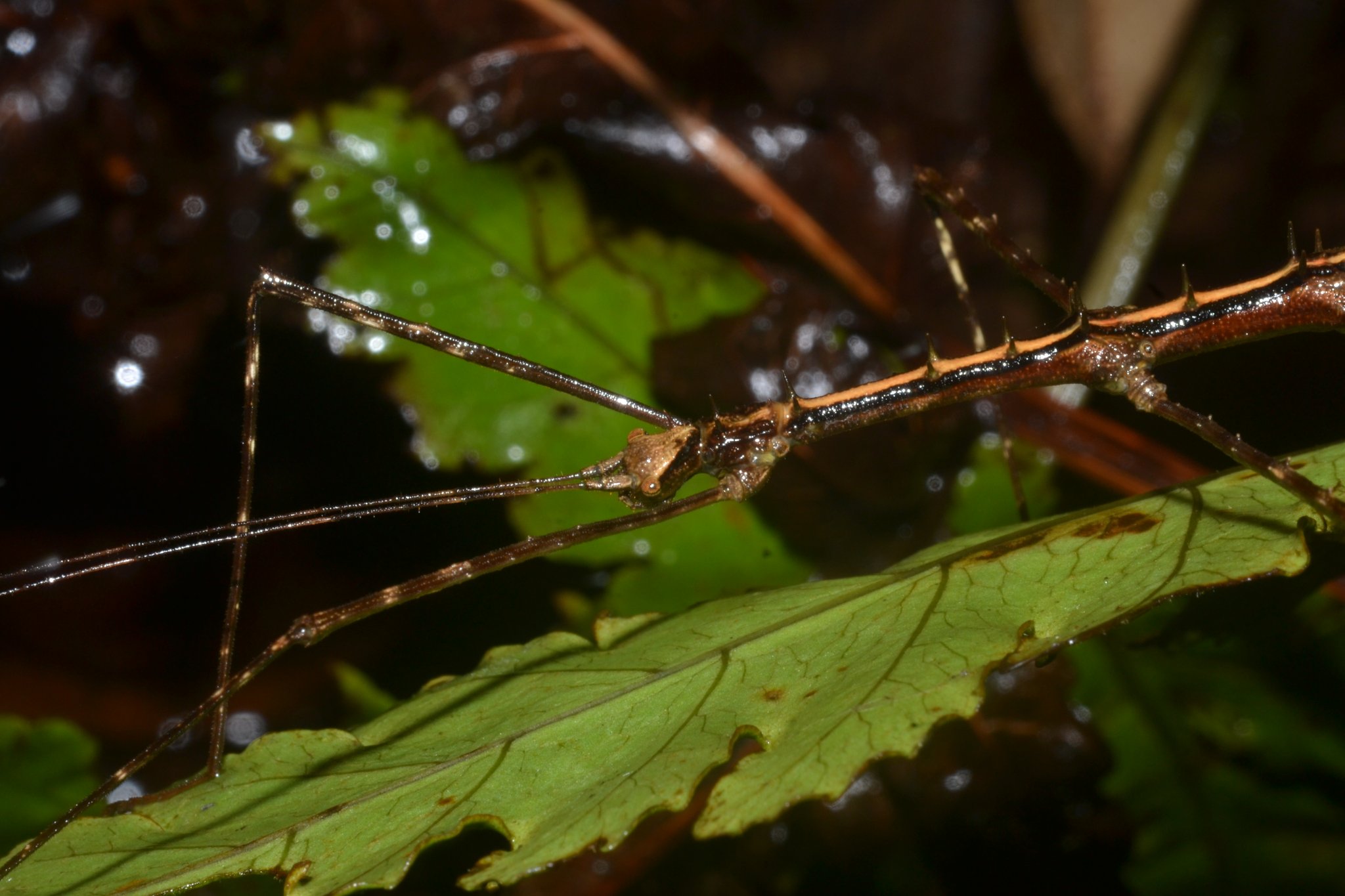
[Entomology • 2023] Stenobrimus pilipinus • Synoptic Review of Stenobrimus Redtenbacher, 1906 (Phasmatodea: Heteropterygidae: Obriminae), with the Description of A New Species from the Cavinti Karst Landscape, Laguna, Philippines


  Stenobrimus pilipinus Eusebio, Lit & Lucañas, 

in Lit, Eusebio, Lucañas, Barrion-Dupo, Abenis, Taray, Alviola et Naredo, 2023.

The unique Philippine spiny stick insect genus Stenobrimus, was reviewed. One new species, S. pilipinus Eusebio, Lit & Lucañas, sp. nov., is described from the forest over limestone outside the Cavinti Underground River and Cave Complex (CURCC) in Cavinti, Laguna Province. S. pilipinus, sp. nov., is unique among Stenobrimus species in having post-median mesonotal spines in both males and females. Its morphologically nearest congeners, S. bolivari Redtenbacher and S. tagalog Rehn & Rehn, are redescribed. The distribution of the genus in relation to karst forests and the historical biogeography of the Philippines is briefly discussed. Revised keys to the identification of Stenobrimus species for males, females, and eggs are presented.

Keywords: cave and karst landscape, karst forest arthropods, slender spiny stick insects

TAXONOMY: 
Order Phasmatodea 
Family Heteropterygidae Kirby 
Subfamily Obriminae Brunner von Wattenwyl 

Tribe Obrimini Brunner von Wattenwyl 

Genus Stenobrimus Redtenbacher

  Stenobrimus pilipinus Eusebio, Lit & Lucañas, sp. nov.

Diagnosis. Based on the armature of the mesonotal area, S. pilipinus, sp. nov., is unique among its congeners for having post-median mesonotal spines on both males and females. Stenobrimus pilipinus, sp. nov., is morphologically close to both S. tagalog and S. bolivari in having median mesonotal spines, which are absent in S. lumad. The eggs of both S. pilipinus, sp. nov., and S. lumad have the lateral arms of the micropylar outline appearing as connected to each other forming a circular band. However, they may differ from each other in the position and shape of the formed band with that of S. lumad having the ventral arm distinctly transverse and positioned on the posterior half, whereas that of S. pilipinus, sp. nov., is on the anterior half of the egg capsule and forming a somewhat semi-circular band.

Etymology. S. pilipinus Eusebio, Lit & Lucañas, sp. nov., is named after and dedicated to the Filipino people and is an assertion that nationalism, bravery, and dedication to our country and people should continue to inspire us, even in science, to be proud of Philippine treasures (which include endemic species) and continue to have the courage to do what is right for our country – including pushing for scientific literacy and scientific culture, and conservation of our biological diversity


Ireneo L. Lit Jr., Orlando L. Eusebio, Cristian C. Lucañas, Aimee Lynn A. Barrion-Dupo, Kristine O. Abenis, Kirk J. Taray, Marnelli S. Alviola and Jeremy Carlo B. Naredo. 2023. Synoptic Review of Stenobrimus Redtenbacher, 1906 (Phasmatodea: Heteropterygidae: Obriminae), with the Description of A New Species from the Cavinti Karst Landscape, Laguna, Philippines. Philipp J. Sci. 152(3): 783–796.

Sunday, March 12, 2023

[Herpetology • 2023] Integrative Approach resolves the Systematics of Barred Wolf Snakes in the Lycodon striatus Complex (Reptilia: Colubridae)


Barred Wolf Snakes in the Lycodon striatus Complex
 
in Amarasinghe, Masroor, Lalremsanga, Weerakkody, ... et Jablonski, 2023.
 
Abstract
We reviewed the systematics of Lycodon striatus (Shaw, 1802), including all available name-bearing types of its synonyms after evaluating phylogeographic (genetics), morphological (morphometry, meristic, and hemipenes), osteological and distribution evidence. Lycodon striatus sensu lato is widely distributed throughout South and Central Asia and mimics elapids. Based on phylogenetic analyses of mitochondrial DNA, we demonstrate that populations from (i) eastern and central Peninsular India plus Sri Lanka and (ii) south-western parts of Central Asia form two different clades representing two distinct species: L. striatus sensu stricto and L. bicolor comb. nov. respectively. These two clades are sisters to L. deccanensis (in the case of L. striatus) and L. jara (in the case of L. bicolor) and together form two main sister radiations. Although the external morphological variability is high in both species, the genetic variability is higher only in L. striatus but not distinct enough to represent more than one species if using the phylogenetic or biological species concept. The phylogeny of the L. aulicus group hints at Sri Lankan L. striatus, likely having evolved in continental Asia through a probable overland dispersal across the Bay of Bengal (present Palk Strait) into Sri Lanka. This dispersal may have been facilitated by low sea levels during the Pleistocene glaciations when Sri Lanka was connected to mainland India. After considering genetic divergence (with a p-distance of 1.8%–2.1% in the mitochondrial cytochrome b gene) and morphological evidence, we synonymize the Sri Lankan subspecies, L. s. sinhaleyus Deraniyagala, 1955, with L. striatus sensu stricto. The eastern and central Indian L. striatus (i.e. L. striatus sensu stricto) is morphologically distinct and deeply divergent genetically compared to Tajik and Pakistani L. bicolor with a p-distance of 13.6% in cytochrome b gene (mtDNA). Interestingly, L. bicolor is conspecific (p-distance 1.4%) with L. mackinnoni, a western Himalayan endemic, and it reveals intraspecific clinal variation.

Keywords: Asia, iconotype, Lycodon mackinnoni, Lycodon striatus sinhaleyus, neotype, nomen dubium, subspecies


Amarasinghe A. Thasun Amarasinghe, Rafaqat Masroor, Hmar T. Lalremsanga, Sanjaya Weerakkody, Natalia B. Ananjeva, Patrick D. Campbell, Stevie R. Kennedy-Gold, Sanjaya K. Bandara, Andrey M. Bragin, Atthanagoda K. A. Gayan, Vivek R. Sharma, Amit Sayyed, Lal Biakzuala, Andradige S. Kanishka, Sumaithangi R. Ganesh, Ivan Ineich, Anslem de Silva, Lakshman J. M. Wickramasinghe, Sampath S. Seneviratne, Nikolay A. Poyarkov, Gernot Vogel and Daniel Jablonski. 2023. Integrative Approach resolves the Systematics of Barred Wolf Snakes in the Lycodon striatus Complex (Reptilia, Colubridae). Zoologica Scripta. DOI: 10.1111/zsc.12587 


[Ichthyology • 2023] Euchiloglanis nami • A New Species of Euchiloglanis Regan, 1907 (Siluriformes: Sisoridae) from Vietnam


Euchiloglanis nami  
 Tran, Nguyen, Dang, Nguyen & Nguyen, 2023


Abstract
 A new species of sisorid catfish of the genus Euchiloglanis is described from the Gam River, a tributary of the Red River in northern Vietnam. Euchiloglanis nami sp. n. differs from all the species placed in Euchiloglanis and Chimarrichthys by having elongated papilae on the ventral part of maxillary barbell. Euchiloglanis nami is distinguished from E. longibarbatus by having a wider premaxillary tooth band without indentation and the tip of the maxillary barbell reaching pectoral fin origin. The new species differs from E. davidi and E. kishinouyei by the depth of the caudal peduncle equal to 20.26–27.40 % of the caudalpeduncle length. It also differs from E. dorsoarcus by the anal-fin position being closer to the caudal-fin base than to the pelvic fin. From E. phongthoensis, it differs by the distance from the adipose-fin origin to the dorsal-fin insertion close to 50 % of the length of the adipose-fin base. In addition, E. nami differs from E. longus by having a wider premaxillary tooth band without indentation, shorter caudal peduncle (20.7 % SL), higher caudal peduncle depth (5.0 % SL), shorter distance between dorsal-fin insertion to adiposefin origin (14.8 % SL), shorter distance from snout to adipose-fin origin (57.4 % SL), shorter pelvic fins length (15.9 % SL) reaching the anus or a little beyond anus, longer adipose-fin base length (33.2 % SL) and narrower interorbital width (24.6 % SL). The new species is the first record of the genus Euchiloglanis in the Gam-Lo River system and is the third species in the genus from Vietnam. 

Key words: Euchiloglanis nami sp. n., new species, Glyptosterminae, Black River, Gam River

Euchiloglanis nami sp. n., HNUE-F00283, holotype, 142.3 mm SL; Phia Oac-Phia Den National Park; Cao Bang Prov., Vietnam. Dorsal, ventral and lateral views. Scale bar 10 mm.

Euchiloglanis nami sp. n., HNUE-F00283, holotype, 142.3 mm SL; Phia Oac-Phia Den National Park; Cao Bang Prov., Vietnam. Dorsal, ventral and lateral views.   Scale bar 10 mm.
Ventral profile of the head part of the holotype.
Ventral view of premaxillary tooth band of Euchiloglanis nami 
collected from the Gam River of the Red River, northern Vietnam.

Euchiloglanis nami sp. n.
 
Diagnosis. Euchiloglanis nami sp. n. can be distinguished from congeners by the following unique combination of characteristics: D. i, 6; A. i, 4; P. i, 15–16; C. 16; wider premaxillary tooth band without indentation (Fig. 4); elongate and threadlike maxillary barbell with pointed tip reaching to pectoral fin origin; elongated papilae ventral part of maxillary barbell; anal-fin origin closer to caudalfin base than to pelvic-fin insertion; distance from adipose-fin origin to dorsal-fin insertion close to 50% of length of adipose-fin base; depth of caudal peduncle equal to 20.26–27.40% of length of caudal peduncle; shorter dorsal-fin insertion to adipose-fin origin (12.05–15.90% SL); shorter caudal-fin length (11.53–13.42% SL); longer adipose-fin base length (31.81–35.74% SL); adipose fin not connected with caudal-fin base; pelvic fins reaching anus or a little beyond anus; narrower interorbital width (20.97– 29.45% HL).

Etymology. The specific name is in honour of the young ichthyologist and our best friend Mr. Chu Hoang Nam. The species name is a noun in genitive case. 


Hau Duc Tran, Duc Huu Nguyen, Huong Thanh Thi Dang, Huy Quang Nguyen and Nga Thi Nguyen. 2023. A New Species of Euchiloglanis Regan, 1907 (Actinopterygii: Sisoridae) from Vietnam. ACTA ZOOLOGICA BULGARICA [Acta Zool. Bulg.]. in press

[Herpetology • 2023] Amolops terraorchis • A New Species of Amolops (Anura: Ranidae) representing the morphological ‘Marmoratus Species Group’ from Sessa Orchid Sanctuary, Arunachal Pradesh, Northeast India


Amolops terraorchis 
Saikia, Sinha, Laskar, Shabnam & Dinesh. 2022

Rec. zool. Surv. India. 122(3) 

Abstract
The cascade-dwelling frog genus Amolops is known for its range of distribution concentrated in China, India, Myanmar and Nepal. The first Amolops species described from India was in 1871, and since then, 11 species have been described from the country. Being morphologically cryptic and with a preference for cascade habitats, identification of Amolops species based on morphology alone is difficult. Although 11 species of Amolops have been described from the country, their genetic data is very poorly represented in the Amolops phylogenetic studies. In one of our efforts of explorations and documenting the Amolops diversity, multiple populations were sampled in Arunachal Pradesh, which was subjected to genetic analysis. Our study has led to the generation of a novel genetic datum for the species Amolops gerbillus, and a report of a new species. Due to shallow genetic divergence between A. yarlungzangbo and A. gerbillus and the close geographic proximity of the type localities, Amolops yarlungzangbo is proposed to be a junior synonym of Amolops gerbillus as per ICZN codes warranting the examination of the type specimens. Additionally, single gene-based phylogeny is presented including the genetic data available for the Indian species of Amolops.

Keywords: Amolops, Eaglenest, Eastern Himalayas, New Species, Sessa Orchid Sanctuary, West Kameng

Field photo of holotype of Amolops terraorchis sp. nov.

Amolops terraorchis sp. nov. 
Sessa Cascade Frog

Field diagnosis: Amolops terraorchis sp. nov. is a member of the morphological Marmoratus species group. The new species can be diagnosed based on the following set of morphological characters: adult male size medium (SVL 38.6-42.6 mm) and adult female size large (SVL 65.8-82.9 mm); head length wider than long; obtusely pointed snout; snout longer than eye length; inter-orbital distance equals upper eyelid width but smaller than internarial distance; tympanum distinct, about 40% of eye length; finger I disc slightly dilated, all discs with circummarginal grooves; tibia longer than femur and foot, about 2/3rd of SVL; tibio-tarsal articulation reaches beyond snout; no supra-tympanic fold; a discontinuous row of small glandular tubercles dorsolaterally

Distribution: Currently, this species is known from two protected landscapes of West Kameng district of Arunachal Pradesh, India – Sessa Orchid Sanctuary and Eaglenest Wildlife Sanctuary.

Type locality of Amolops terraorchis sp. nov. from Sessa Orchid Sanctuary, West Kameng district, Arunachal Pradesh, India.

Etymology: The species epithet is derived from two Latin words – terra meaning ‘land’ and orchis meaning ‘orchid’, meaning ‘from the land of orchids. The name refers to the type collection locality of Sessa Orchid Sanctuary, which is the first such unique protected landscape in India, and most probably in the world, dedicated to the protection and conservation of the rich orchid diversity of the area. Interestingly, with an area of just 100 km2 , the Sessa Orchid Sanctuary harbours an incredible 149 species of orchids including 59 rare and five extremely rare species, with further scope of documenting much more species (Tsering and Rinya, 2020). 

Suggested Common Name: We suggest ‘Sessa cascade frog’ as a common English name for this species.

A male Amolops gerbillus (Annandale, 1912) from Rottom, Kamle district, Arunachal Pradesh, India.


Bhaskar Saikia, Bikramjit Sinha, Mostaque A. Laskar, A. Shabnam and K. P. Dinesh. 2022. A New Species of Amolops (Anura: Ranidae) representing the morphological ‘Marmoratus Species Group’ from Sessa Orchid Sanctuary, Arunachal Pradesh, Northeast India. Rec. zool. Surv. India. 122(3); 303–322.  RecordsofZSI.com/index.php/zsoi/article/view/167288

Saturday, March 11, 2023

[Botany • 2023] Hedyotis konhanungensis (Rubiaceae) • A New Species from the central highlands of Vietnam


Hedyotis konhanungensis  B.H. Quang, T.A. Le, K.S. Nguyen & Neupane, 

in Quang, Nguyen, Le, Linh, Nguyen, Ngo, Wu & Neupane, 2023. 
An điền Kon Hà Nừng  ||  DOI:  10.3897/phytokeys.221.95895

Abstract
A new species of Hedyotis L. (Rubiaceae), Hedyotis konhanungensis B.H. Quang, T.A. Le, K.S. Nguyen & Neupane, is described and illustrated from the central highlands of Vietnam based on morphological and phylogenetic evidence. The new species belongs to the morphologically diverse tribe Spermacoceae (ca. 1000 species) of the family Rubiaceae, which is represented by 70–80 species in Vietnam. The phylogenetic analysis, based on four DNA regions (ITS, ETS, petD, rps 16), confirms the new species’ placement within the genus Hedyotis – one of the largest genera in the tribe, comprising ca. 180 species across Asia and the Pacific. Hedyotis konhanungensis is morphologically distinct from all southeastern Asian Hedyotis L. in its set of traits such as leaf type (shape and thickness), growth habit, and floral parts (color of inflorescence axis and the shape of calyx lobes). The new species shows similarities with Hedyotis shenzhenensis, H. shiuyingiae, and H. yangchunensis from China in its herbaceous habit, fleshy ovate leaf blades, and dark purple floral parts, but it is phylogenetically distinct and can be distinguished from them by the following combination of morphological traits: habit with slightly smaller stature (<25 cm), broadly ovate or deltoid stipules with cuspidate apex and entire margin, and ovate or nearly ovate calyx lobes.

Keywords: Gia Lai Province, Hedyotis-Oldenlandia complex, Indochina, phylogenetics, Spermacoceae, taxonomy

Hedyotis konhanungensis
A habitat B habit C stipule D adaxial and abaxial leaf surfaces E inflorescences top view F long-styled and short-styled flower G infructescence H fruiting branch.
Photos by Q.L. Nguyen and B.H. Photos by Quang, from Luan et al. LTA 531.

Hedyotis konhanungensis  B.H.Quang, T.A.Le, K.S.Nguyen & Neupane, sp. nov.
 
Diagnosis: Hedyotis konhanungensis is similar to H. shenzhenensis, H. shiuyingiae and H. yangchunensis from southeastern China (Guangdong and Hongkong) in the morphology of the leaf blades, floral bracts, dichasial cymes, and fruits, but differs from them by its broadly ovate or deltoid (vs. triangular or broadly triangular) stipules with entire (vs. hairy or lacerated) margins and cuspidate (vs. acute) apex, suborbicular or broadly oval (vs. subovate or ovate to lanceolate) lowest floral bracts, ovate or nearly oval (vs. triangular or subulate to lanceolate) persistent calyx lobes on fruits, and stamens in long-styled flowers inserted in lower ¼ or near the base (vs. at the middle or near the mouth) of the corolla tube (Table 1).

Etymology: This species is named after the “Kon Ha Nung Biosphere Reserve” where it was discovered.

Vernacular name: Vietnamese: An điền Kon Hà Nừng


 Bui Hong Quang, Khang Sinh Nguyen, Tuan Anh Le, Le Thi Mai Linh, Quoc Luan Nguyen, Duy Hoang Vu Ngo, Lei Wu and Suman Neupane. 2023. Hedyotis konhanungensis (Rubiaceae): A New Species from the central highlands of Vietnam. PhytoKeys. 221: 73-84. DOI:  10.3897/phytokeys.221.95895