Showing posts with label Paguroidea - Hermit Crab. Show all posts

Sunday, May 26, 2024

[Crustacea • 2017] Heteromysis cancelli, H. fosteri & H. octopodis • Three New Species of Heteromysis (Mysida: Mysidae: Heteromysini) from the Cape Peninsula, South Africa, with first documentation of a mysid-cephalopod association


Heteromysis octopodis 
Wittmann & Griffiths, 2017


Abstract
Faunistic studies in sublittoral and littoral marine habitats on the Cape Peninsula, South Africa, have yielded three new species belonging to the genus Heteromysis, subgenus HeteromysisH. cancelli sp. n. associated with the diogenid hermit crab Cancellus macrothrix Stebbing, 1924, and H. fosteri sp. n. extracted from ‘empty’ urchin and gastropod shells. The first documented mysid-cephalopod association is reported for H. octopodis sp. n. which was found in dens occupied by Octopus vulgaris Cuvier, 1797, but was also captured from tide pools. The three new species differ from previously known E. Atlantic species, among other characters, by a single spine on the endopods of uropods in combination with large cornea and absence of median sternal processes on thoracic somites. They are also characterized by a white stripe along the dorso-lateral terminal margin of the eyestalks in living specimens. The new species appear quite similar to each other, but are distinguished by different depths of the telson cleft, different distributions of spines on the lateral margins of the telson, different numbers of segments on thoracic endopod 4, and by differently modified setae on the carpus of the third thoracic endopod, as well as on the carpopropodus of the fourth endopod. An updated key to the species of Heteromysis known from the E. Atlantic is given.

Keywords: Crustacea, hermit crab association, octopus association, ectocommensals, taxonomy, key to species, SE. Atlantic

 A subadult female of Heteromysis octopodis sp. n. with 11 mm body length from tide pool
B multi-species association inside den in 3 m depth, occupied by Octopus vulgaris, to the right with the crab Guinusia chabrus; upper arrow points to a mysid school of what we assume to be H. octopodis sp. n., lower arrow to a different but undetermined mysid species.
A, B from Miller’s Point, Cape Peninsula, South Africa; in situ images by Craig Foster B image is taken of the same octopus den from which the samples were collected, but on a different date. 


 Karl J. Wittmann and Charles L. Griffiths. 2017. Three New Species of Heteromysis (Mysida, Mysidae, Heteromysini) from the Cape Peninsula, South Africa, with first documentation of a mysid-cephalopod association. ZooKeys. 685; 15-47.  DOI:  10.3897/zookeys.685.13890

Sunday, July 31, 2022

[Cnidaria • 2022] Stylobates calcifer • Carcinoecium-Forming Sea Anemone (Actiniaria, Actiniidae) from the Japanese Deep-Sea Floor: A Taxonomical Description with Its Ecological Observations


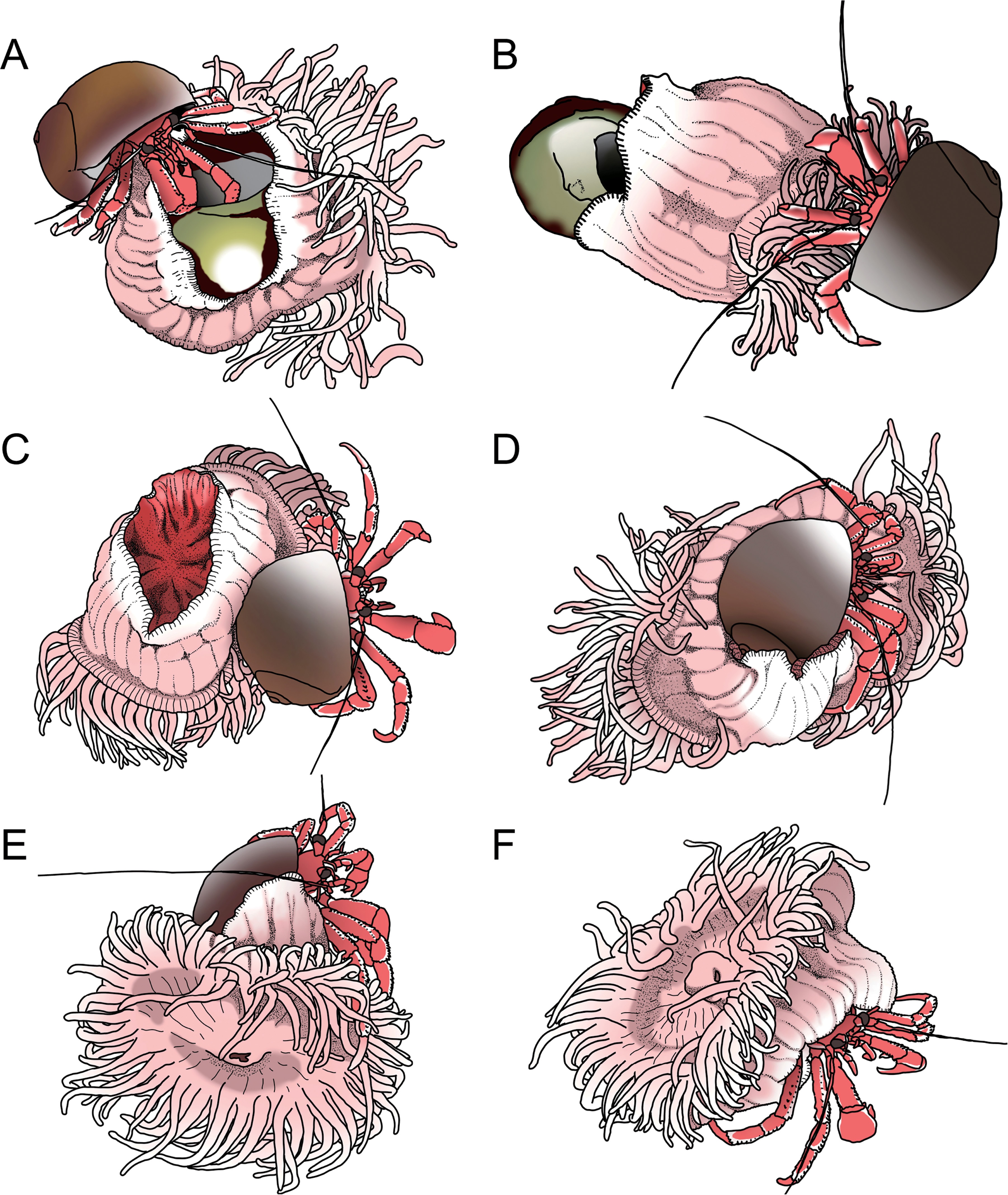
 Stylobates calcifer sp. nov. with host hermit crab Pagurodofleinia doederleini.

 Stylobates calcifer  Yoshikawa & Izumi, 
in Yoshikawa, Izumi, Moritaki, Kimura & Yanagi, 2022.
ヒメキンカライソギンチャク  ||  DOI: 10.1086/719160 

 
Abstract
Here we describe Stylobates calcifer sp. nov. (Cnidaria, Actiniaria, Actiniidae), a new carcinoecium-forming sea anemone from the deep-sea floor of Japan. Stylobates produces a carcinoecium that thinly covers the snail shells inhabited by host hermit crabs Pagurodofleinia doederleini. The new species is distinct from other species by the shape of the marginal sphincter muscle, the distribution of cnidae, the direction of the oral disk, and host association. The species’ novelty is supported by the data of its mitochondrial genes 12S, 16S, and COIII and nuclear genes 18S and 28S. Also, we conducted behavioral observation of this new species, focusing on the feeding behavior and interaction with the specific host hermit crab. Our observations suggest that this sea anemone potentially feeds on the suspended particulate organic matter from the water column or the food residuals of hermit crabs. When the host’s shell changed, intensive manipulation for transference of S. calcifer sp. nov. was recorded. However, although the hermit crab detached and transferred the sea anemone to the new shell after shell change, the sea anemone did not exhibit active or cooperative participation. Our data suggest that the sea anemone may not produce a carcinoecium synchronously to its host’s growth, contrary to the anecdotal assumption about carcinoecium-forming sea anemones. Conversely, the host hermit crab’s growth may not depend entirely on the carcinoecium produced by the sea anemone. This study is perhaps the first observation of the behavioral interaction of the rarely studied carcinoecium-forming mutualism in the deep sea.


Order ACTINIARIA
Suborder ENTHEMONAE

Superfamily ACTINIOIDEA Rafinesque, 1815
Family ACTINIIDAE Rafinesque, 1815

Genus Stylobates Dall, 1903


 External morphology of Stylobates calcifer sp. nov. (holotype: NSMT-Co 1794) with host hermit crab Pagurodofleinia doederleini.
The upper (A) and posterior (B) views and the marginal views of the right and left sides (C, D, respectively) of the living specimen.
The upper and marginal views (E, F, respectively) of the preserved specimen.
Scale bars = 5 mm.

Stylobates calcifer sp. nov. Yoshikawa and Izumi
[Japanese name: Hime-kin-kara-isoginchaku
ヒメキンカライソギンチャク]


  Behavioral sequence of the hermit crab Pagurodofleinia doederleini transferring the sea anemone  Stylobates calcifer sp. nov. from the original snail Glossaulax reiniana shell to a new one.
(A) The hermit crab begins tapping the pedal disk and column of the sea anemone with its walking legs and chelipeds. (B) The hermit crab uses one or both of its chelipeds to pinch and remove S. calcifer sp. nov. from the G. reiniana shell. (C) Stylobates calcifer sp. nov. displays no shell-mounting action after being removed from the original shell. (D) The sea anemone is turned to the upside-down position (facing up the pedal disk) by the crab. (C) The hermit crab rides on the pedal disk of the sea anemone and fits the shell to the curved line of the pedal disk. (E) The sea anemone settles down in a new shell of the host hermit crab with a usual position.

Ecological note: Stylobates calcifer sp. nov. was exclusively found on the shells inhabited by Pagurodofleinia doederleini, consistent with previous studies (Uchida and Soyama, 2001; Yanagi, 2006; Yoshikawa et al., 2019). However, P. doederleini without S. calcifer sp. nov. was sometimes collected in this study. One individual was usually attached to one host hermit crab, consistent with previous studies (Uchida and Soyama, 2001; Yanagi, 2006; Yoshikawa et al., 2019).

Distribution and habitat: All of the samples were collected from the Sea of Kumano (Uchida and Soyama, 2001; Yoshikawa et al., 2019) and Suruga Bay. All of the previous records were from the Pacific Ocean facing the middle of Honshu Island to Kyushu (Uchida and Soyama, 2001; Yanagi, 2006). The specimens were distributed at 100–400 m from the fine sand and soft mud (Fig. 1; Table 1).


Etymology: The specific name “calcifer” is driven from the name of a resident fire-demon Calcifer, which appeared in Howl’s Moving Castle, a fantasy novel by British author Diana Wynne Jones, published in 1986; the story is the original version of the Japanese animated film of the same name, directed by Hayao Miyazaki (animated by Studio Ghibli). The shell-making ability of the new species in the species-specific relationship appears as if Calcifer was in a magical contract with the Wizard Howl, constructing his Moving Castle.


Akihiro Yoshikawa, Takato Izumi, Takeya Moritaki, Taeko Kimura and Kensuke Yanagi. 2022. Carcinoecium-Forming Sea Anemone Stylobates calcifer sp. nov. (Cnidaria, Actiniaria, Actiniidae) from the Japanese Deep-Sea Floor: A Taxonomical Description with Its Ecological Observations. The Biological Bulletin. 242;  DOI: 10.1086/719160 [2 April 2022]
 Researchgate.net/publication/360192582_Stylobates_calcifer_sp_nov__from_the_Japanese_Deep-Sea_Floor

第65回 瀬戸海洋生物学セミナー
「ヤドカリの“宿”を作るヒメキンカライソギンチャクの分類・共生生態と進化学的研究への展望」
吉川 晟弘 特任研究員(東京大学 大気海洋研究所附属国際・地域連携研究センター) 


Thursday, December 24, 2020

[Crustacea • 2020] Cancellus heatherae • A New Species of the Hermit Crab Genus Cancellus H. Milne Edwards, 1836 (Decapoda: Diogenidae) from A Mesophotic Deep Bank in the northwestern Gulf of Mexico


Cancellus heatherae  
Felder & Lemaitre, 2020


Abstract
Recent sampling on mesophotic deep banks in the northwestern Gulf of Mexico has produced a previously undescribed hermit crab assignable to the genus Cancellus H. Milne Edwards, 1836. Members of the genus are most often found to occupy cavities of eroded coral, siliceous sponges, porous calcareous rock fragments, algal concretions, or worm tubes as shelters. The present specimen was found loose as by-catch in a dredged rhodolith sample taken for algal life history studies. In situ, it likely occupied a cavity within one of the collected calcareous rhodoliths or small sponges in the by-catch. While our description is based on a single female specimen, the holotype is fully mature and intact, and it was solidly frozen in seawater until its coloration could be photographically documented and tissues extracted for sequencing. In comparison to the three other known western Atlantic species, the frontal rim of the carapace shield in the new species is continuous between the blunt lateral teeth as in C. ornatus Benedict, 1901 and C. viridis Mayo, 1873, and thus distinct from the subdivided front found in C. spongicola Benedict, 1901. The rim itself is somewhat flattened as in C. ornatus rather than inflated as in C. viridis. However, each of the ocular scales bears a pair of spines at the tip, as in C. viridis. The lower palms of the chelipeds, while distinctly rugose, do not have a separated patch of stridulating ridges comparable to those reported for C. spongicola. The yellow-orange to deep-orange pigmentation of the color pattern differs from fresh coloration in both C. ornatus and C. viridis, but that of C. spongicola is unknown for other than preserved specimens. Description of the single available specimen is in this case justified by the low likelihood for timely acquiring of additional samples from the type locality or adjacent habitats, most of which are deep banks warranting protection under pending habitat management changes. Our diagnosis includes GenBank accession numbers for COI sequences to facilitate future molecular phylogenetic comparisons.

Keywords: Crustacea, new species, Anomura, Cancellus, mesophotic, Gulf of Mexico


FIGURE 3. Cancellus heatherae n. sp., female holotype, sl 4.0 mm (USNM 1618800 = ULLZ 18309), northwestern Gulf of Mexico: A, habitus, dorsal; B, habitus, right side; C, habitus, ventral; D, sixth tergite and telson, dorsal.
 Cancellus viridis Mayo, 1973, female, sl 2.2 mm (USNM 1544358 = ULLZ 8947), southeastern Gulf of Mexico: E, in carcinoecium, front; F, habitus, dorsal. 
Cancellus ornatus Benedict, 1901, female, sl 6.9 mm (USNM 1539291 = ULLZ 2089), northeastern Gulf of Mexico: G, front; H, habitus, dorsal.


Taxonomy 
Family Diogenidae 

Genus Cancellus H. Milne Edwards, 1836 

Cancellus heatherae n. sp.

Diagnosis. Cephalothoracic shield width not exceeding length; rostrum well developed, angular, produced anteriorly beyond blunt anterolateral projections; narrow flattened frontal rim continuous across front between anterolateral projections, crossing rostrum without disjuncture; dorsal surface with angular depression on either side of shield posterior to rim behind each ocular peduncle. Median calcified plate of cardiac region subrectangular, slightly longer than wide. Ocular acicles armed with 2 spinules distally. Antennal acicle extending anteriorly less than onehalf length of ocular peduncle. Cheliped and second pereopod distal segments adapted to form operculum when withdrawn into habitat opening, outer surfaces of carpus and propodus with concave opercular depression. Cheliped propodus (palm) with opercular depression limited mesially by crest of 7 or 8 marginally denticulate lobes. Second pereopod propodus with opercular depression limited laterally by crest of 5 marginally denticulate lobes. Pleon elongate, with lightly sclerotized transverse tergites dorsally, 4 minute biramous pleopods on left side, depressed longitudinal groove along left side; sixth pleonite greatest width exceeding three-fourths greatest length, anterior lobes to either side of median incision each armed by 7 or 8 strong spines. Uropods and telson symmetrical; telson subovoid, anteriorly with subtriangular median dorsal prominence, posterior margin entire, unarmed except for setae. Color pattern of orange to yellow-orange dominating most dorsal surfaces and superior surfaces of anterior appendages, darker blotches and spots of deeper orange to reddish brown. A diagnostic COI gene sequence available under GenBank accession number MT800937. 

Etymology. This species name “heatherae” is chosen to honor Heather Bracken-Grissom for her extensive contributions to molecular phylogenetic studies of decapod crustaceans, including works focused on hermit crabs and other anomurans populating Gulf of Mexico waters. Her laboratory also generously made available the gene sequences here reported in our diagnosis.


Habitat. The sole specimen was found among rhodoliths and other calcareous rubble on a mesophotic offshore bank at 95 m depth. 

Distribution. The species is known only from the type locality off Louisiana in the northwestern Gulf of Mexico, western Atlantic Ocean. 


 Darryl L. Felder and Rafael Lemaitre. 2020. A New Species of the Hermit Crab Genus Cancellus H. Milne Edwards, 1836 from A Mesophotic Deep Bank in the northwestern Gulf of Mexico (Crustacea: Decapoda: Diogenidae). Zootaxa. 4890(4); 589–598. DOI: 10.11646/zootaxa.4890.4.10


Tuesday, January 21, 2020

[Crustacea • 2020] New and Rare Micro-pagurid Hermit Crabs (Anomura: Paguridae) from the Caribbean Sea and Gulf of Mexico


Anisopagurus asteriscus
Lemaitre, 2020


Abstract
Six species of hermit crabs of the family Paguridae from the Caribbean Sea and Gulf of Mexico region, including two new species, Anisopagurus asteriscus sp. nov. and Pagurus alarius sp. nov., are documented. The two new species are described, and recognition characters summarized for the four previously known species. Reports of the latter, Nematopaguroides fagei Forest & de Saint Laurent, 1968, N. karukera Lemaitre, Felder & Poupin, 2017, Paguriscus robustus Lemaitre, Felder & Poupin, 2017, and Pylopaguridium markhami McLaughlin & Lemaitre, 2001, represent range extensions for all four species. Color photographs are included for four of the species, as well as remarks on their taxonomy and distributions. All six species included can be categorized as micro-pagurids (with shield length rarely exceeding 2.0 mm), and were collected from cryptic reef habitats in Bocas del Toro, Panama; the French Antillean island of Guadeloupe; and the Gulf of Mexico coasts of Louisiana, Yucatán, and Florida Keys. The discovery of these new or rare species supports the conclusion of recent studies that the diversity of pagurids from the Caribbean region has yet to be fully realized.

Keywords: Crustacea, Paguridae, micro-pagurids, new species, Caribbean Sea, Gulf of Mexico


 Family Paguridae Latreille, 1802


FIGURE 4. Anisopagurus asteriscus sp. nov., Bocas del Toro Province, Panama, Caribbean Sea:
A, B, female (in shell) 2.1 mm (UF 044440); C, male 1.8 mm, removed from shell (UF 044486); D, same male in shell (UF 044312). Scales: 2.0 mm. (Photographs: G. Paulay).

Anisopagurus asteriscus sp. nov. 

Etymology. The specific name is derived from the Greek asteriskos, meaning small star, and refers to the characteristic minute star-like tubercles that adorn the dorsal surface of the right chela of this new species.


Pagurus alarius sp. nov.

Etymology. The specific name is derived from the Latin alarius, meaning of wings, and refers to the wing-like similarity of the fringes of long setae on the right chela that characterize this new species.


FIGURE 11. A, Paguriscus robustus Lemaitre, Felder & Poupin, 2017, Bocas del Toro Province, Panama, Caribbean Sea: male, 1.2 mm (UF 044397);
B, Nematopaguroides karukera Lemaitre, Felder & Poupin, 2017, Bocas del Toro Province, Panama, Caribbean Sea: ov female in shel 1.8 mm (UF 044300);
C, D, Pylopaguridium markhami McLaughlin & Lemaitre, 2001, Bocas del Toro Province, Panama, Caribbean Sea: C, male 1.6 mm (UF 044314); D, male 1.4 mm (UF 044396).
 Scales: 1.0 mm (A), 2.0 mm (B–D). (Photographs: G. Paulay)

Nematopaguroides fagei Forest & de Saint Laurent, 1968

Nematopaguroides karukera Lemaitre, Felder & Poupin, 2017 

Paguriscus robustus Lemaitre, Felder & Poupin, 2017 

Pylopaguridium markhami McLaughlin & Lemaitre, 2001 


Rafael Lemaitre. 2020. New and Rare Micro-pagurid Hermit Crabs (Crustacea: Anomura: Paguridae) from the Caribbean Sea and Gulf of Mexico. Zootaxa. 4722(4); 301–325. DOI: 10.11646/zootaxa.4722.4.1


Friday, January 17, 2020

[Crustacea • 2020] Diogenes minimus • A New Species of the Hermit Crab Genus Diogenes Dana, 1851 (Decapoda: Anomura: Diogenidae) from Shallow Coastal Waters in Japan


Diogenes minimus Komai & Yoshida, 2020


Abstract
A new species of diogenid hermit crab, Diogenes minimus, is described and illustrated on the basis of material from shallow subtidal waters (5–19 m) in central Japan. It appears close to D. holthuisi Asakura & Tachikawa, 2010, but easily distinguished from the latter by the shape of the antennal acicle, non-elongate male left cheliped and the armature of the right cheliped merus. Including the new species, 14 identified species of Diogenes are now known from Japanese waters. A brief overview on species of Diogenes recorded from Japanese waters is given.

Keywords: Decapoda, Boso Peninsula, Diogenes minimus, Izu Peninsula, shallow subtidal


 Tomoyuki Komai and Ryuta Yoshida. 2020. A New Species of the Hermit Crab Genus Diogenes Dana, 1851 (Decapoda: Anomura: Diogenidae) from Shallow Coastal Waters in Japan. Zootaxa. 4722(6); 571–582. DOI: 10.11646/zootaxa.4722.6.4

Monday, December 23, 2019

[Cnidaria • 2019] A Molecular Phylogeny of Carcinoecium-forming Epizoanthus (Hexacorallia: Zoantharia) from the Western Pacific Ocean with Descriptions of Three New Species; Epizoanthus xenomorphoideus, E. australis & E. gorgonus


 Epizoanthus xenomorphoideus
Kise, Montenegro, Ekins, et al., 2019. 


Abstract
Many cnidarians have been reported in association with hermit crabs from shallow waters to the deep sea. Some of these actiniarians and zoantharians produce a carcinoecium, a chitin-like pseudo-shell. Many studies have been conducted on hermit crab–actiniarian symbioses, while hermit crab–zoantharian symbioses have received less attention due to the difficulty of specimen collection as they are exclusively found in the deep sea. In this study, 11 carcinoecium-forming specimens associated with hermit crabs of several genera were collected from the western Pacific Ocean. We formally described the collected specimens as Epizoanthus xenomorphoideus sp. nov., E. australis sp. nov., and E. gorgonus sp. nov. based on results of molecular phylogenetic analyses (COI, mt 12S-rDNA, mt 16S-rDNA, 18S-rDNA, ITS-rDNA) and morphological observations. Our phylogenetic results showed that there are two different subclades within a carcinoecium clade, and these subclades have different external morphologies. Further studies with more taxon sampling will enable a more comprehensive evaluation of the evolution and phylogenetic relationships of carcinoecium-forming zoantharian species.


Key words: deep sea, diversity, hermit crab, pseudo-shell, sea anemone, zoantharian

Systematics: 
Order Zoantharia Rafinesque, 1815
Suborder Macrocnemina Haddon & Shackleton, 1891
Family Epizoanthidae Delage & H erouard, 1901

Genus Epizoanthus Gray, 1867

Type species: Dysidea papillosa Johnston, 1842, by monotypy 
(see also Opinion 1689, ICZN 1992).

  Epizoanthus xenomorphoideus sp. nov. (holotype: NSMT-Co 1688),
A carcinoecium colony inhabited by a Parapaguridae hermit crab.

Epizoanthus xenomorphoideus sp. nov. (holotype: NSMT-Co 1688).
(1) living carcinoecium colony from the dorsal side, (2) living carcinoecium colony from the marginal side, (3) living carcinoecium colony from the ventral side.
 DP, dorsal polyp; MP, marginal polyp; VP, ventral polyp.
 Scale: (1-3) 20 mm.

Epizoanthus xenomorphoideus sp. nov. 

Etymology: The new species is named after a fictional alien xenomorph creature in the famous 1979 movie Alien, as this species resembles the ‘face hugger’ xenomorph. ‘Xenomorph’ is combined with the Latin word ‘oideus’ meaning ‘resembling’. 
Japanese common name: Yadokari-sunaginchaku


Epizoanthus australis sp. nov.

Etymology: 'Australis' is the Latin word 'southern', as this species was first discovered in waters off New South Wales, off south-eastern Australia. 
Japanese common name: Kanmuri-yadokari-sunaginchaku


Epizoanthus gorgonus sp. nov.

Etymology: From the Greek word 'gorgon', the monster Medusa with multiple snake heads, as the marginal polyps and their colouration are reminiscent of vipers. 
Japanese common name: Beni-yadokari-sunaginchaku 


Hiroki Kise, Javier Montenegro, Merrick Ekins, Takeya Moritaki and James Davis Reimer. 2019. A Molecular Phylogeny of Carcinoecium-forming Epizoanthus (Hexacorallia: Zoantharia) from the Western Pacific Ocean with Descriptions of Three New Species. Systematics and Biodiversity.  DOI: 10.1080/14772000.2019.1693439
Researchgate.net/publication/337932019_A_molecular_phylogeny_of_Epizoanthus

Zoantharia coral raised at west Japan aquarium recognized as new species - The Mainichi mainichi.jp/english/articles/20191220/p2a/00m/0na/027000c


Thursday, November 14, 2019

[Crustacea • 2019] Paguroids (Decapoda: Anomura: Diogenidae and Paguridae) of the Remote Oceanic Archipelago Trindade and Martin Vaz, off southeast Brazil, with New Records, Description of Three New Species and Zoogeographical Notes


Iridopagurus martinvaz 
 Lima, Tavares & de Mendonça, 2019


Abstract
Trindade and Martin Vaz (TMV) is a highly isolated, oceanic volcanic archipelago located some 1200 km off the Brazilian coast and about 4200 km away from the nearest African coast. For almost 100 years Calcinus tibicen (Herbst, 1791) was the only hermit crab species known from TMV. From 2012 to 2018, 263 daytime SCUBA diving and intertidal samplings conducted at TMV yielded 1075 paguroid specimens in 10 species, three of which are established herein as new species: Iridopagurus martinvaz sp. nov., Nematopagurus micheleae sp. nov., and Pagurus carmineus sp. nov. Iridopagurus margaritensis García-Gómez, 1983, and Phimochirus leurocarpus McLaughlin, 1981, both only known from the northern hemisphere, are recorded for the first time from the southwestern Atlantic. Opportunity was taken herein to include hitherto unreported or little known specimens from along the Vitória-Trindade Seamount Chain, namely, Dardanus venosus H. Milne Edwards, 1848, Nematopaguroides pusillus Forest & de Saint Laurent, 1968, Pagurus provenzanoi Forest & de Saint Laurent, 1968, and Phimochirus holthuisi (Provenzano, 1961). The lectotype of Pagurus venosus H. Milne Edwards, 1848 is designated as the neotype for the obscure Pagurus arrosor divergens Moreira, 1905, which thus becomes an objective junior synonym of the former. A list of all paguroid species known from the tropical southern-central Atlantic oceanic archipelagoes and islands (Ascension, Cape Verde, Fernando de Noronha, Gulf of Guinea, Rocas Atoll, Saint Helena, Trindade and Martin Vaz) with their gross distribution in the Atlantic Ocean is provided. Investigation on the existence of patterns of geographic distribution for the paguroid fauna of the tropical southern-central Atlantic oceanic islands showed that 70% percent of the paguroids from TMV are western Atlantic in origin and 30% endemic. No amphi-Atlantic paguroid species are known from TMV. Conversely, the affinity of Ascension’s (33%) and Saint Helena’s (50%) paguroids is with the eastern Atlantic; no western Atlantic paguroids have been reported from these two islands so far. Exploration on the existence of trends of correlation between islands area and species richness through the Spearman’s coefficient of correlation showed that the patterns in the number of paguroid species cannot be explained by variation in island area alone (rs = 0.4728; p = 0.28571).

Keywords: Crustacea, Vitória-Trindade Seamount Chain, species-area relationships, hermit crabs, Crustacea, Paguroidea


 Trindade and Martin Vaz Archipelago (TMV):
A—Position of the TMV relative to the Brazilian continental coastline and Vitória-Trindade Seamount Chain, and isobath curves around TMV; B—Trindade Island viewed from distance; C—Martin Vaz Islands viewed from distance; D–G—Trindade Island; D—rocky-sandy beach near Parcel das Tartarugas, partly exposed at low tide; E—artificial reef substrate (ARS) being deployed on hard bottom composed of large boulders among patches of sand and calcareous algae; F—mixed hard bottom characterised by numerous nodules of calcareous algae; G—irregular hard limestone bottom. A, adapted from Perreira-Filho et al. (2011); photographs by J.B. Mendonça

Daniel Lima, Marcos Tavares and Joel Braga Jr. de Mendonça. 2019.  Paguroids (Decapoda: Anomura: Diogenidae and Paguridae) of the Remote Oceanic Archipelago Trindade and Martin Vaz, off southeast Brazil, with New Records, Description of Three New Species and Zoogeographical Notes. Zootaxa. 4694(1); 1–63. DOI: 10.11646/zootaxa.4694.1.1

Wednesday, October 30, 2019

[Crustacea • 2019] Phimochirus formani & P. tunnelli • Two New Species of the Phimochirus holthuisi complex (Anomura: Paguridae) from the Gulf of Mexico, supported by Morphology, Color, and Genetics


Phimochirus formani P. tunnelli 
 Felder, Lemaitre & Craig, 2019


Abstract
Coloration, gene-sequence data (H3, 12s, 16s), and subtle features in morphology support the description of two new species, both formerly regarded to represent accepted variants of Phimochirus holthuisi s.l. While color in life consistently separates these species from P. holthuisi s.s. and from each other, morphological distinctions are subtle and less than absolute in small specimens, being based on ventral spine counts of walking leg dactyls and relative development of the superior crest on the major chela. Molecular phylogenetic analyses clearly support the separation of sister clades, representing two new species, from P. holthuisi s.s. as well as other congeners available for analysis. Both of the new species are presently known to occur widely throughout the northern Gulf of Mexico, though one occurs more commonly in the northeastern and southeastern Gulf, and may range as far south as Suriname. The other has been taken primarily in the northwestern Gulf, and is not known from outside Gulf waters. While both of the new species appear restricted to relatively deep subtidal waters of the continental shelf, Phimochirus holthuisi s.s. is instead more commonly found in shallow nearshore tropical waters on or near coral reefs. Previous literature reports of P. holthuisi usually represent, at least in part, one or both of these two new species.

Keywords: Crustacea, Paguroidea, Paguridae, Phimochirus, new species, Gulf of Mexico


FIGURE 2. Phimochirus holthuisi (Provenzano, 1961) s.s.: A, male, sl 3.3 mm (USNM 1542650 = ULLZ 3564), Belize; B, male, sl 2.9 mm (USNM 1558313 = ULLZ 16588), Belize.
Phimochirus formani nov. sp.: C, male paratype, sl 3.1 mm (USNM 1547566 = ULLZ 14352), northeastern Gulf of Mexico; D, male paratype, sl 2.8 mm (USNM 1543170 = ULLZ 7711), northeastern Gulf of Mexico.
Phimochirus tunnelli nov. sp.: E, male paratype, sl 4.1 mm (USNM 1545269 = ULLZ 10611), northwestern Gulf of Mexico; F, ov female paratype, sl 3.9 mm (USNM 1541146 = ULLZ 5789), northwestern Gulf of Mexico.

Taxonomy
 Family Paguridae 

Phimochirus holthuisi (Provenzano, 1961) s.s.

Diagnosis. Carapace shield approximately as long as broad; rostrum broadly subtriangular, rounded. Antennular and antennal peduncles at most reaching to distal margin of corneas; antennal flagella with short setae 1 or less flagellar article in length. Right chela with dorsal surface of fixed finger with small, low nearly obsolete tubercles; palm with dorsal surface smooth, lateral and mesial margins sharply defined by weakly crenulate ridge, mesial margin expanded distally and terminating in strong, blunt spiniform angle. Carpus with dorsomesial margin weakly defined by low ridge armed with 1 proximal spine and 2 or 3 small, blunt spines distally. Dactyls of second and third pereopods approximately 1.7 times longer than propodi; dorsomesial margins each with usually 5 corneous spinules, ventromesial margins each with row of usually 5 or 6 corneous spinules. Anterior lobe of sternite between third pereopods subsemiovate, with simple setae; sternite between fourth and fifth pereopods with simple setae.
 GenBank sequence accession numbers for Belize specimen (USNM 1558313 = ULLZ 16588): (H3) MK830047; (12s) MK848210; (16s) 848227. 
...

Habitat. Occupying variety of medium sized gastropod shells, including faciolariids, turbinids, and muricids; coral reefs, on coralline sand and rubble substrates of spur and groove reef front to backreef lagoon rubble, sands, and seagrass beds; reef crests and shallow adjacent subtidal waters; inner continental shelf; most commonly 2–18 m, to 91 m off North Carolina, perhaps to 291 m off Georgia. 

Distribution. Western Atlantic: East coast of the United States, off North Carolina and Georgia; Caribbean, including Quintana Roo (Cozumel), Belize, Virgin Islands, Jamaica, Guadeloupe, and Colombia; questionably northeastern coast of South America, Suriname to Brazil.


Phimochirus formani nov. sp.

Diagnosis. Carapace shield approximately 1.1 times longer than broad; rostrum acutely triangular, reaching distally beyond lateral projections, terminating in strong spine. Antennular peduncles exceeding distal margins of cornea when fully extended by approximately one-fourth length of ultimate segment. Antennal peduncles reaching to about distal margin of corneas when fully extended, flagellum with alternating long (2 flagellar articles in length) and short setae (less than 1 flagellar article in length). Right chela with dorsal surface of fixed finger with few wellspaced low tubercles; palm smooth dorsally or with few well-spaced low tubercles distally near base of fixed finger, dorsomesial margin sinuous sharply defined as tuberculate or bluntly spinose ridge flaring distally and terminating in spine-like distal angle; carpus with dorsomesial margin sharply defined by spinose ridge including strong, mesially projecting spine. Dactyls of second and third pereopods with ventromesial row of 7–9 corneous spinules (or 4 corneous spinules in very small individuals sl < 2.0 mm). Anterior lobe of sternite between third pereopods semisubovate, distal margin with simple setae; sternites between fourth and fifth pereopods with simple setae.
GenBank sequence accession numbers for paratype (USNM 1547566 = ULLZ 14352): (H3) MK830053; (12s) MK828404; (16s) MK848222.

Etymology. The specific name was selected to honor W. Wayne Forman, a New Orleans based environmental scientist whose talents include an unusually broad grasp of marine biota, and who has over many years brokered access to research sites, acquisition of research specimens, and the securing of financial support for marine scientists working throughout the northern Gulf of Mexico. 

Habitat. Occupying variety of small to medium sized gastropod shells, especially faciolariids, turbinids, and muricids; offshore calcareous banks and deep platforms around coral reefs, especially where richly covered by macroalgae and epifauna, including among rhodoliths; inner to middle continental shelf; 27–62 m. 

Distribution. Western Atlantic: northeastern, northwestern, and southeastern Gulf of Mexico; Suriname.


Phimochirus tunnelli nov. sp.

Diagnosis. Carapace shield approximately 1.1 times longer than broad; rostrum acutely triangular, reaching distally beyond lateral projections, terminating in strong spine. Antennular peduncles reaching to distal margins of corneas when fully extended. Antennal peduncles reaching to approximately midlevel of corneas when fully extended; flagellum with short setae 1 to < 1 flagellar articles in length. Right chela with dorsal surface of fixed finger covered with well-spaced low tubercles; palm with numerous well-spaced tubercles or blunt spines on distal half, dorsomesial margin sharply defined as straight (in mesial view) crenulate or bluntly spinulose ridge terminating in rounded or spine-like angle; carpus with dorsomesial margin sharply defined by ridge with 3 or 4 sharp proximal spines and 2 or 3 smaller blunt distal spines. Dactyls of second and third pereopods with 3 rows of corneous spinules, one dorsomesial with 10 or 11, one ventromesial with 5–10, and one ventral with 9–11. Anterior lobe of sternite between third pereopods semisubovate, distal margin with simple and often capsulate setae; sternites between fourth and fifth pereopods with simple setae and often short capsulate setae.
 GenBank sequence accession numbers for holotype (USNM 1547302 = ULLZ 13837): (12s) MK848209; (16s) MK848226.

Etymology. The specific name is assigned in recognition of the late John W. (Wes) Tunnell, formerly of Texas A&M University–Corpus Christi, whose deep appreciation for, and professional understanding of, coastal and marine biodiversity in the Gulf of Mexico region is reflected in many books and other publications that he authored or orchestrated over his long and productive career. 

Habitat. Occupying varied medium sized gastropod shells, especially faciolariids, turbinids, and muricids; offshore rhodolith and other calcareous banks, especially where richly covered by macroalgae and epifaunal communities; inner to middle continental shelf; 38–72 m.

 Distribution. Western Atlantic: northeastern, northwestern, and southeastern Gulf of Mexico. 

Darryl L. Felder, Rafael Lemaitre and Catherine Craig. 2019. Two New Species of the Phimochirus holthuisi complex from the Gulf of Mexico, supported by Morphology, Color, and Genetics (Crustacea: Anomura: Paguridae). Zootaxa. 4683(4); 531–551. DOI: 10.11646/zootaxa.4683.4.4

Friday, October 26, 2018

[Crustacea • 2018] Diogenes spongicola • A New Species of the Hermit Crab Genus Diogenes Dana, 1851 (Decapoda: Anomura: Diogenidae) from southern India


Diogenes spongicola 
Komai, Ravinesh & Kumar, 2018

ovigerous female (sl 2.2 mm) and housing shell covered with Callyspongia diffusa.

Abstract
A new species of the hermit crab genus Diogenes Dana, 1851, Diogenes spongicola, is described and illustrated on the basis of material collected from two locations off southern India. It appears close to D. takedai Rahayu, 2012 among about 70 congeners, but easily differentiated from the latter by the spinulose anterolateral margins of the shield, the article 2 of the antennal peduncle armed only with one distal spine, the longer, spinose antennal acicle, the absence of prominent spines on the ventrolateral margin of the cheliped meri, and the different color of the cheliped palm. Specimens of the new species were all collected from cavities of a callyspongiid sponge Callyspongia diffusa (Ridley, 1884), suggesting a possible association between the hermit crab and sponge.

Keywords: Crustacea, Association, Callyspongia diffusa, Diogenes spongicola, Kerala, Tamil Nadu


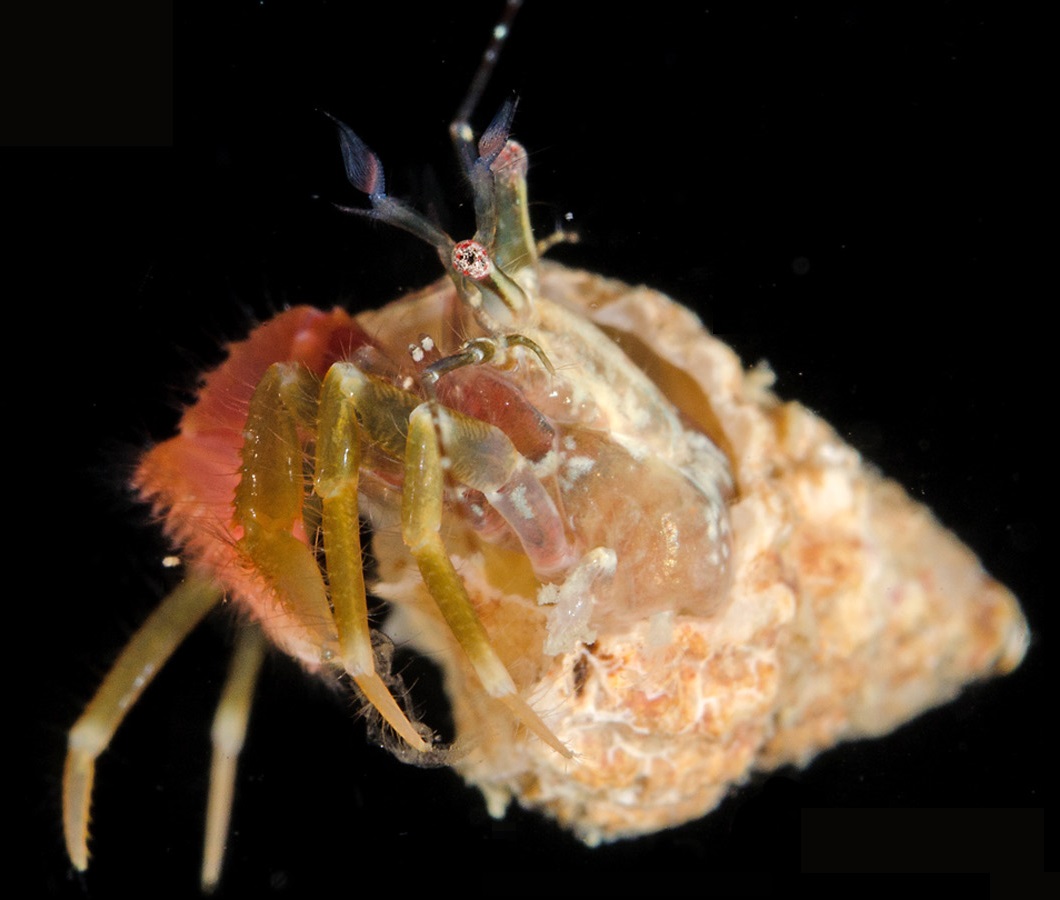
FIGURE 5. Diogenes spongicola n. sp., paratypes, showing colour in life.
paratype, male (sl 1.7 mm), DABFUK/ARAN98. 


FIGURE 5. Diogenes spongicola n. sp., paratypes, showing colour in life.
paratype, ovigerous female (sl 2.2 mm) and housing shell covered with Callyspongia diffusa, DABFUK/AR-AN103.

Family Diogenidae dana, 1851

Diogenes spongicola n. sp.

 Etymology. The name is a combination of the Latin spongia (= sponge) and -cola (= dweller), in reference to the possible association of the new species with the callyspongiid sponge Callyspongia diffusa.


 Tomoyuki Komai, Raveendhiran Ravinesh and Appukuttannair Biju Kumar. 2018. A New Species of the Hermit Crab Genus Diogenes Dana, 1851 (Decapoda: Anomura: Diogenidae) from southern India. Zootaxa. 4504(2); 243–252.  DOI:  10.11646/zootaxa.4504.2.5


ജീവനുള്ള ശംഖുകൾക്കുള്ളിലും സന്യാസി ഞണ്ടുകൾ; കണ്ടെത്തിയത് മലയാളികൾ

Sunday, September 30, 2018

[Crustacea • 2018] Pagurus fraserorum MicroCT Imaging Applied to Description of A New Species of Pagurus Fabricius, 1775 (Decapoda: Anomura: Paguridae) from South Africa, with Selection of Three-dimensional Type Data


 Pagurus fraserorum  Landschoff & Komai

in Landschoff, Komai, du Plessis, Gouws & Griffiths, 2018.

Abstract
A new species of hermit crab, Pagurus fraserorum n. sp. (family Paguridae) is described from rocky subtidal reefs off KwaZulu-Natal, South Africa, and illustrated using both conventional drawings and colour photographs, and via three-dimensional (3D) X-ray micro-computed tomography (μCT). Because of the limitation μCT has in detecting very fine and soft structures, a novel approach of manually drawing setation and spinulation onto the two-dimensional images of the 3D visualizations was used to illustrate the pereopods. In addition, an interactive figure and rotation movie clips in the supplement section complement the species description, and the 3D raw data of the 3D type data are downloadable from the Gigascience Database repository. The new species is the sixth species of Pagurus Fabricius, 1775 reported from South Africa and is closely allied to the Indo-Pacific P. boriaustraliensis Morgen, 1990 and P. pitagsaleei McLaughlin, 2002, from which it differs by its shorter ocular peduncles, by the armature of the carpus of the right cheliped, and also in colouration. This study presents the first description of a hermit crab in which a majority of taxonomic details are illustrated through 3D volume-rendered illustrations. In addition, colour photographs and COI molecular barcodes are provided, and the latter compared to COI sequences of specimens from Western Australia previously identified as P. boriaustraliensis and of specimens of P. pitagsaleei from Taiwan, as well as to three additional South African members of the genus. The South African taxon was confirmed to be genetically distinct from all species tested.

 Taxonomy
Family Paguridae Latreille, 1802

Genus Pagurus Fabricius, 1775

Pagurus fraserorum Landschoff & Komai, n. sp.

Fig 6. Pagurus fraserorum n. sp., colouration in life or fresh.
(A) male holotype 2.7 mm (SAMC MB-A066790), dorsal view; (B) ovigerous female paratype 2.4 mm (SAMC MB-A066770), dorsal view; (C) holotype, frontal view, in shell; (D) female paratype 2.4 mm (SAMC MB-A066407), left lateral view, parasitized by undescribed parasitic gills isopod Pseudionella sp..


Pagurus fraserorum n. sp., colouration in life or fresh.  male holotype 2.7 mm (SAMC MB-A066790), frontal view, in shell.


Pagurus fraserorum n. sp., colouration in life or fresh.  (D) female paratype 2.4 mm (SAMC MB-A066407), left lateral view, parasitized by undescribed parasitic gills isopod Pseudionella sp..

Distribution: Known from rocky reefs off Pumula and Hibberdene, near Port Shepstone, KwaZulu-Natal, South Africa, and from a photographic record from Vetch’s Pier, Durban, South Africa; 6–20 m depth.

Parasites: Host of an undescribed parasitic bopyrid isopod Pseudionella sp. (Fig 6D) that is currently being described by Williams & Landschoff, and of a second parasitic isopod, Pseudione sp., both inhabiting the branchial chamber.

Etymology: The species is named after the Fraser family, in particular Valda and Mike, but also to their son Allan and honours their deep passion for the marine world and the many exciting species discoveries they have made in South African waters. Mike and Valda generously hosted the senior author and his supervisor Charles L. Griffiths over the collection trip in October 2015, when this species was first recorded. This sampling would have not been possible without the use of the facilities and guidance they provided.


Jannes Landschoff, Tomoyuki Komai, Anton du Plessis, Gavin Gouws and Charles L. Griffiths. 2018. MicroCT Imaging Applied to Description of A New Species of Pagurus Fabricius, 1775 (Crustacea: Decapoda: Anomura: Paguridae), with Selection of Three-dimensional Type Data. PLoS ONE. 13(9): e0203107. DOI: 10.1371/journal.pone.0203107