Showing posts with label Leptotyphlopidae. Show all posts

Sunday, April 16, 2023

[Herpetology • 2023] Siagonodon exiguumAn Evolutionary Paradox on Threadsnakes: Phenotypic and Molecular Evidence reveal A New and Remarkably Polymorphic Species of Siagonodon (Serpentes: Leptotyphlopidae: Epictinae) from Amazonia


Siagonodon exiguum
 Martins, Folly, Ferreira, Garcia da Silva, Koch, Fouquet, Machado, Lopes, Pinto, Rodrigues & Passos,  2023


Abstract
Threadsnakes are known for their conserved external morphology and historically controversial systematics, challenging taxonomic, biogeographic and evolutionary researches in these fields. Recent morphological studies—mostly based on µCT data of the skull and lower jaw—have resolved systematic issues within the group, for instance leading to the description of new taxa or re-positioning little-known scolecophidian taxa in the tree of life. Herein we describe a new polymorphic species of the genus Siagonodon from Amazonia based on morphological (external, osteology and hemipenis) and molecular data, and provide the first hemipenial description for the genus. We also reassign Siagonodon acutirostris to the genus Trilepida based on osteological data in combination with molecular evidence. The new species described represents an evolutionary paradox for scolecophidians because the species displays a remarkable variation in the shape of the snout region that is otherwise always highly conserved in this clade. Finally, this study reinforces the importance of protected areas as essential in maintaining vertebrate populations, including those that are not yet formally described.

Keywords: Hemipenial morphology, intraspecific variation, Neotropics, osteology, phylogeny, polymorphism, Squamata

Comparisons of the head in dorsal (left column), lateral (middle column) and ventral (right column) views of the type series of Siagonodon exiguum sp. nov.
 A MNHN-RA-2023.0001; B MNRJ 27557; C MNRJ 27558; D MNRJ 27559; E MNRJ 27560; F MNRJ 27561; G MNRJ 27562 (holotype).

Siagonodon exiguum sp. nov. 
Dorsal (A, D), lateral (B, E), and ventral (C, F) views of
the holotype (MNRJ 27562; Figs A–C) and
paratype (MNHN-RA-2023.0001; D–F).

Siagonodon exiguum sp. nov.
  
Diagnosis: The putative autapomorphy of Siagonodon exiguum sp. nov. may be represented by lateral pointed projections on the snout or with inconspicuous lateral projection by presenting a slight concavity on the mid-rostral portion of snout (see below in comparison the opposite states for snout condition).

Etymology: The specific epithet exiguum is a Latin word meaning littleshortscanty and/or poor. Although readers might think that the name was chosen in allusion to the small size of the species, we dedicate the species to all minorities in science including gender, race/color, ethnicity, and sexual orientation that are considerably underrepresented in the academia throughout the world, especially in higher positions. Although several worldwide initiatives have been implemented in the past few years, the scientific environment is still biased, discouraging and, sometimes noxious, largely because of persisting systemic social, economic and cultural aspects.


 Angele Martins, Manuella Folly, Guilherme Nunes Ferreira, Antônio Samuel Garcia da Silva, Claudia Koch, Antoine Fouquet, Alessandra Machado, Ricardo Tadeu Lopes, Roberta Pinto, Miguel Trefaut Rodrigues and Paulo Passos. 2023. An Evolutionary Paradox on Threadsnakes: Phenotypic and Molecular Evidence reveal A New and Remarkably Polymorphic Species of Siagonodon (Serpentes: Leptotyphlopidae: Epictinae) from Amazonia. Vertebrate Zoology. 73: 345-366. DOI: 10.3897/vz.73.e98170


Sunday, February 20, 2022

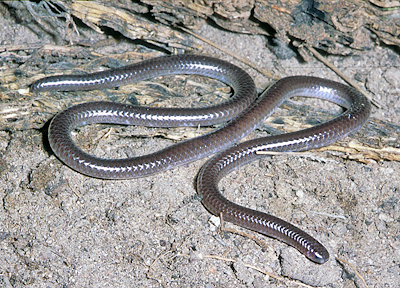
[Herpetology • 2022] Rena klauberi • A New Species of Blindsnake (Squamata: Leptotyphlopidae) from Jalisco, Mexico


Rena klauberi
Flores-Villela, Smith, Canseco-Márquez & Campbell, 2022

 DOI: 10.22201/ib.20078706e.2022.93.3933 

Abstract
 A new snake species of the genus Rena is described from northern Jalisco, Mexico. The new species represents an isolated member of the R. dulcis group in the extreme southwest Mesa Central of the country. We redefine the R. dulcis and R. humilis groups within the genus Rena. The status of the other species allocated to these groups is discussed. 

Keywords: Blind snakes; Taxonomy; Nomenclature; Squamata; Serpentes 

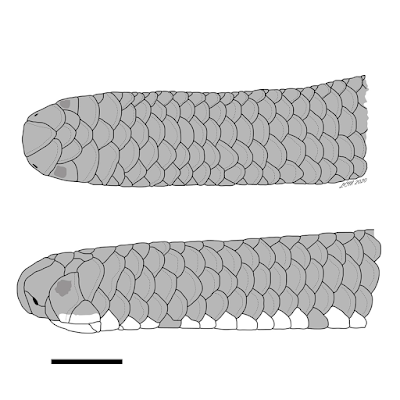
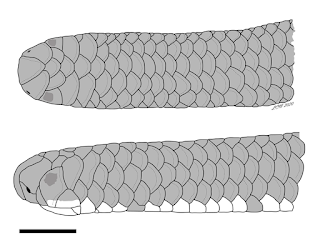
Drawing of dorsal (top) and lateral (bottom) views of head of holotype of Rena klauberi MZFC-17047.

Rena klauberi new species.

Diagnosis. A species of the R. dulcis group that differs from R. maxima, in having 10 rows of scales around the tail (vs. 12); from R. bressoni, R. myopica, and R. dissecta in having an undivided anterior supralabial (vs. divided); from R. dulcis in having nine scales on the dorsal surface with dark pigment (vs. seven); from R. humilis in having supraoculars (vs. absent); and by having 10 rows of scales around the tail (12 in R. humilis group members, except for R. h. segrega and R. h. tenuicula that have 10). Rena klauberi differs from all other Mexican Rena, except the holotype of R. d. iversoni, in having a darkly pigmented cloacal plate, while the remainder of the venter is immaculate.

Distribution. Rena klauberi is known only from the type-locality (Fig. 4) in dry scrub forest. The holotype was found crawling just after sunset on a dirt path near the outer periphery of a riparian zone consisting of grasses, sedges, and scattered oak trees (Fig. 5). It is likely that this species may also occur in nearby southern Zacatecas, which possesses similar habitat. Several reptile species, apparently endemic to the area, have been reported for both southern Zacatecas and northern Jalisco (Ponce-Campos et al., 2001). 

Etymology. This species is named in honor of the late Laurence Monroe Klauber, in recognition of his valuable contributions to North American herpetology, and especially to our knowledge of the genus Leptotyphlops (= Rena) from North America. 

 
Oscar A. Flores-Villela, Eric N. Smith, Luis Canseco-Márquez and Jonathan A. Campbell. 2022. A New Species of Blindsnake from Jalisco, Mexico (Squamata: Leptotyphlopidae) [Una especie nueva de serpiente agujilla de Jalisco, México (Squamata: Leptotyphlopidae)] Revista Mexicana de Biodiversidad. 93: e933933.
 doi.org/10.22201/ib.20078706e.2022.93.3933


Resumen: Una especie nueva de serpiente perteneciente al género Rena se describe del norte de Jalisco, México. La nueva especie representa un miembro aislado del grupo de R. dulcis, en el extremo suroeste de la Mesa Central del país. Redefinimos los grupos R. dulcis y R. humilis dentro del género Rena. Se discute el status de otras especies dentro de estos grupos. 
Palabras clave: Agujillas; Taxonomía; Nomenclatura; Squamata; Serpientes

Thursday, December 31, 2020

[Herpetology • 2020] Leptotyphlops sylvicolus Broadley & Wallach, 1997 One Species hides Many: Molecular and Morphological Evidence for Cryptic Speciation in A Thread Snake (Serpentes: Leptotyphlopidae)


 Leptotyphlops sylvicolus Broadley & Wallach, 1997

in Busschau, Conradie & Daniels. 2020. 


Abstract
We investigate the phylogeographic structure of a fossorial forest‐living snake species, the forest thread snake, Leptotyphlops sylvicolus Broadley & Wallach, 1997 by sampling specimens from the Eastern Cape and KwaZulu‐Natal provinces of South Africa. Phylogenetic results, using Bayesian inferences and maximum likelihood, from the combined mitochondrial sequence data (cyt b and ND4), along with population genetic analyses suggest the presence of phylogeographic breaks broadly congruent to those exhibited by other forest‐living taxa. Divergence‐time estimates indicate that cladogenesis within the study taxon occurred during the late Miocene climatic shifts, suggesting that cladogenesis was driven by habitat fragmentation. We further investigate the species‐level divergence within L. sylvicolus by including two partial nuclear loci (PRLR and RAG1). The three species delimitation methods (ABGD, bGMYC, and STACEY), retrieved 10–12 putative species nested within the L. sylvicolus species complex. These results were corroborated by iBPP implementing molecular and morphological data in an integrative Bayesian framework. The morphological analyses exhibit large overlap among putative species but indicate differences between grassland and forest species. Due to the narrow distributions of these putative species, the results of the present study have further implications for the conservation status of the L. sylvicolus species complex and suggest that forest and grassland habitats along the east coast of South Africa may harbor significantly higher levels of diversity than currently recognized.


Theo Busschau, Werner Conradie and Savel R. Daniels. 2020. One Species hides Many: Molecular and Morphological Evidence for Cryptic Speciation in A Thread Snake (Leptotyphlopidae: Leptotyphlops sylvicolus Broadley & Wallach, 1997).  Journal of Zoological Systematics and Evolutionary Research. DOI: 10.1111/jzs.12401

We investigated the phylogeographic structure of a fossorial forest‐living snake species, Leptotyphlops sylvicolus. Phylogenetic and population genetic analyses suggest the presence of phylogeographic breaks broadly congruent to those exhibited by other forest‐living taxa. Divergence‐time estimates suggest that cladogenesis was driven by habitat fragmentation during the late Miocene climatic shifts. The species delimitation methods retrieved 10–12 putative species nested within L. sylvicolus. Morphological analyses exhibit large overlap among putative species but indicate differences between grassland and forest species.


Friday, August 9, 2019

[Herpetology • 2019] Epictia rioignisA Century of Waiting: Description of A New Epictia Gray, 1845 (Serpentes: Leptotyphlopidae) based on Specimens housed for more than 100 years in the collection of the Natural History Museum Vienna (NMW)


Epictia rioignis
 Koch​​, Martins​ & Schweiger, 2019


Abstract 
We describe a new species of Epictia based on eight specimens from Nicaragua collected and housed in the collection of the Natural History Museum Vienna for more than a century. The species differs from the congeners by the combination of external morphological characters: midtail scale rows 10; supralabials two, anterior one large and in broad contact with supraocular; infralabials four; subcaudals 14–19; middorsal scale rows 250–267; supraocular scales present; frontal scale distinct; striped dorsal color pattern with more or less triangular dark blotches on each scale; small white blotch in anterior part of dorsal surface of rostral present in five out of six specimens (two further specimens are lacking their heads); terminal spine and adjacent scales white. Eidonomic species separation from other Epictia spp. is also supported by a few qualitative and quantitative differences in vertebrae count and morphology. The new species is putatively assigned to the Epictia phenops species group based on external morphological characters and distribution.

Figure 2: Holotype of Epictia rioignis sp. nov. (NMW 15446:6). (A) Dorsal and (B) ventral or lateral views.


Epictia rioignis sp. nov.

Diagnosis: Epictia rioignis sp. nov. can be distinguished from all congeners by the following combination of characters: (1) midbody scale rows 14; (2) midtail scale rows 10; (3) supralabials two, anterior one large and in broad contact with supraocular; (4) infralabials four; (5) subcaudals 14–19; (6) middorsal scale rows 250–267; (7) total number of precloacal vertebrae 231–248; (8) supraocular scales present; (9) frontal scale distinct, not fused with rostral; (10) striped dorsal color pattern with more or less triangular dark blotches on each scale; (11) upper half of eyes visible in dorsal view; (12) some caudals in posterior part of tail are fused in 50% of the specimens; (13) small white blotch in anterior part of dorsal surface of rostral present in about 83% of the specimens; (14) terminal spine and adjacent scales white.  

Figure 4: Comparison of lateral views of the heads of holotype (NMW 15446:6, A) and paratypes of Epictia rioignis sp. nov. (B–F).
 (A) Holotype (NMW 15446:6). (B) Paratype (NMW 15446:2). (C) Paratype (NMW 15446:4). (D) Paratype (NMW 15446:5). (E) Paratype (NMW 15446:7). (F) Paratype (NMW 15446:8).
Photos: Alice Schumacher & Josef Muhsil.

Figure 1: Drawings of the head of the holotype of Epictia rioignis sp. nov. (NMW 15446:6). (A) Lateral, (B) dorsal and (C) ventral views.

Etymology: The specific epithet is an agglutination of the Latin nomen “ignis” which means fire and the proper noun “Rio” as an acronym for the Brazilian city of Rio de Janeiro. This name was chosen in honour to the Museu Nacional do Rio de Janeiro/UFRJ, Brazil’s oldest scientific institution with the largest South American collections of zoology, anthropology, geology and paleontology. Many of the precious collections pertaining to the zoology department (mostly invertebrates), anthropology, geology and paleontology were completely destroyed in the disastrous fire in its main building on September 2nd 2018. Due to historical neglection of this institution from the Brazilian government, added with substantial funding decrease in the past 5 years the museum did not receive sufficient money to fullfil basic safety standards—such as fire protection. The description of this new species, with specimens housed in a scientific collection for more than 100 years highlights one of the several importances of zoological collections in housing relevant material to understand the diversity of life, and also reinforce that such collections are timeless treasures for science. Such collections should receive strong attention in government investments as they contribute to the global development of science.

Distribution and natural history: Epictia rioignis is currently known exclusively from its type series, from Corinto, Nicaragua.

Conclusions: 
The biodiversity of scolecophidians worldwide is greatly underestimated and often unexpected (Wallach, 2016). Although most of the systematic changes in Epictia spp. have arisen from molecular studies (or at least provided a start point for additional taxonomical arrangements, see Wallach, 2016), morphological studies including both external morphology and internal anatomy are very important for systematic clarification of this group (present study). Even if molecular studies have aided on the identification of cryptic species, this study shows that the morphological analysis of collection specimens still reveals novel data for threadsnakes. This further emphasizes the importance of zoological collections in housing specimens that still allow description of new taxa based on specimens collected more than a century ago.


Claudia Koch​​, Angele Martins​ and Silke Schweiger. 2019. A Century of Waiting: Description of A New Epictia Gray, 1845 (Serpentes: Leptotyphlopidae) based on Specimens housed for more than 100 years in the collection of the Natural History Museum Vienna (NMW). PeerJ. 7:e7411. DOI: 10.7717/peerj.7411


Wednesday, June 3, 2015

[Herpetology • 2015] Three New Endemic Species of Epictia Gray, 1845 (Serpentes: Leptotyphlopidae) from the Dry Forest of northwestern Peru; Epictia septemlineata, E. vanwallachi & E. antoniogarciai


Epictia septemlineata
Koch, Venegas & Böhme, 2015
FIGURE 1. Holotype of Epictia septemlineata sp. nov. in life (CORBIDI 14683).
Dorsal view (A); Detail of dorsal aspect of head (B); Detail of ventral aspect of tail and lower body (C).

Abstract
Three new blind snake species of the genus Epictia are described based on material collected in the Peruvian Regions Amazonas, Cajamarca and La Libertad. All three species are well differentiated from all congeners based on characteristics of their morphology and coloration. They share 10 scale rows around the middle of the tail and possess two supralabials with the anterior one in broad contact with the supraocular. Epictia septemlineata sp. nov. has 16 subcaudal scales, 257 mid-dorsal scale rows, a yellowish-white rostral, and a black terminal spine. Epictia vanwallachi sp. nov. exhibits 16 subcaudals, 188 mid-dorsal scale rows, a grayish-brown rostral, and a yellow terminal spine. Epictia antoniogarciai sp. nov. features 14–18 subcaudals, 195–208 mid-dorsal scale rows, a bright yellow or yellowish-white rostral, and the terminal spine and terminal portion of the tail yellow. All three species were collected in the interandean dry forest valleys of the Marañón River and its tributaries. This region is an area of endemism and warrants further attention from systematic and conservation biologists.


Key words: Andes, Blind snake, fossorial snake, slender blind snakes, thread snakes, burrowing snake, dry forest, Epictini, Leptotyphlops, Marañón valley, Reptilia, Squamata


Koch, Claudia, Pablo J. Venegas & Wolfgang Böhme. 2015. Three New Endemic Species of Epictia Gray, 1845 (Serpentes: Leptotyphlopidae) from the Dry Forest of northwestern Peru. Zootaxa. 3964(2): 228–244. DOI: 10.11646/zootaxa.3964.2.4

[Herpetology • 2010] Epictia clinorostris • A New Species of Epictia (Serpentes: Leptotyphlopidae) from Central Brazil


Epictia clinorostris
Arredondo & Zaher, 2010

ABSTRACT 
A new species of blindsnake is described from the gallery forests of the Brazilian Cerrado. The new species differs from all other known Brazilian species of Leptotyphlopidae by a combination of scale counts, the shape of the snout in lateral view, and color pattern. The new species most closely resembles Epictia tenella, from which it can be distinguished by the lack of contact between the supraocular and first labial scales, a higher number of mid-dorsal scales, and a sloped snout.

Keywords: Slender Blindsnake, Brazilian Cerrado, Epictini, Leptotyphlops, Scolecophidia, Squamata, Taxonomy


Juan Camilo Arredondo and Hussam Zaher. 2010. A New Species of Epictia (Serpentes: Leptotyphlopidae) from Central Brazil. South American Journal of Herpetology. 5(3):189-198. DOI: 10.2994/057.005.0304