Showing posts with label Clitellata. Show all posts

Wednesday, March 25, 2026

[Invertebrate • 2026] Helobdella viridoclypus • A New free-living Leech Species (Hirudinea: Rhynchobdellida: Glossiphoniidae) from Chiang Mai, Thailand


 Helobdella viridoclypus
 K, Trivalairat, P. Trivalairat, Raquib & Purivirojkul, 2026

Emerald-charm leech | ปลิงสร้อยมรกต || 
 RAFFLES BULLETIN OF ZOOLOGY. 74

 Abstract
 A new species of glossiphoniid leech, Helobdella viridoclypus, is described from the northern region of Thailand, representing the first record of the genus Helobdella from the country and Southeast Asia. Its characteristics are similar to those of the type species, H. stagnalis, but can be distinguished by its transparent rice-shaped and triannulated body, cephalisation, a single pair of dark eyes, a smooth dorsal surface without papillae, rich darkgreen pigmentation on the dorsum, six pairs of crop caeca with less developed first pair and unbranched second to sixth pairs (posterior caeca), male and female gonopore separated by a single annulus, and a triangular nuchal scute pointed backwards with yellowish-green colouring around the mid-dorsal region. The phylogenetic relationships of H. viridoclypus, new species, are clarified, showing that it is monophyletic within the stagnalis species-complex clade which includes H. adiastola, H. octatestisaca, H. modesta, and the type species H. stagnalis. The new species is a free-living leech that specifically preys on invertebrates and not on humans. 

Key words. Annelida, Glossiphoniidae, Haementeriinae, jawless leech, freshwater, Huai Tueng Thao Reservoir

Order Rhynchobdellida Blanchard, 1894 
Suborder Glossiphoniiformes Tessler & de Carle, 2018 in Tessler et al., 2018 

Family Glossiphoniidae Vaillant, 1890 
Subfamily Haementeriinae Autrum, 1939 

Genus Helobdella Blanchard, 1896

Diagnosis. Small, two eyes, transparent papillae on segment, nuchal gland or scute on dorsum on VIIIa1/a2, gonopores separated by one annulus, compact salivary glands, crop with less developed first pair and unbranched second to sixth pairs of caeca, liquidosomatophagous (Blanchard, 1896; Sawyer, 1986).

 Helobdella viridoclypus, new species, live holotype (ZRC.ANN.1623).
 A, dorsal view; B, ventral view.

Helobdella viridoclypus, new species

Diagnosis. Rice-shaped, transparent body; cephalisation; a pair of large, distinctly separated, dark eyes on somite III; anterior sucker twice as large as prostomium without pits inside; central mouth in anterior sucker; triangular nuchal scute pointed backward with yellowish-green colouring around mid-dorsal region (VIIa1–a3, annuli 11–13); smooth surface without dorsal papillae; rich dark-green pigmentation on dorsum, particularly around crop caeca; lesser or almost absent pigmentation along crop; one male gonopore on XIIa1/XIIa2 (annuli 26/27); one female gonopore on XIIa2/ a3 (annuli 27/28); six pairs of crop caeca with unbranched posterior caeca; maximum body width wider than anterior and posterior suckers by four and two times, respectively.
 
Etymology. The species epithet refers to the description of the nuchal scute on the neck region, which resembles a shield and is a yellowish green colour. 
The following common names are suggested: “Emerald-charm leech” (English), “Pling soi mor ra kot” (ปลิงสร้อยมรกต) (Thai), and “Der Smaragdt-charm Plattegel” (German).


 Krittiya TRIVALAIRAT, Poramad TRIVALAIRAT, Tashfia RAQUIB and Watchariya PURIVIROJKUL. 2026. Helobdella viridoclypus (Hirudinea: Rhynchobdellida: Glossiphoniidae), A New free-living Leech Species from Chiang Mai, Thailand. RAFFLES BULLETIN OF ZOOLOGY. 74: 124–141. [23 March 2026]

Thursday, December 25, 2025

[Invertebrate • 2025] Amynthas septuaginta & Metaphire fidelis • Two New Earthworm Species (Oligochaeta: Megascolecidae) from the Mekong River, Thailand


Amynthas septuaginta  Bantaowong & Panha,

in Bantaowong, Chanabun, Nantarat et Panha, 2025. 
  Tropical Natural History. Suppl. 8
ไส้เดือนริมโขงบึงกาฬ  ||  DOI: doi.org/10.58837/tnh.25.8.267154 

Abstract
Two new earthworm species are described from the Mekong River, Thailand, namely Amynthas septuaginta Bantaowong & Panha, sp. nov. and Metaphire fidelis Bantaowong & Panha, sp. nov. The former is a small Mekong earthworm in the A. aeruginosus species group with two pairs of spermathecal pores in 7/8-8/9. It is mainly distinguished from other Amynthas from the Mekong River by its small size (less than 50 mm), and with no genital markings at the male pore region. The latter is distinguished by having four pairs of spermathecal pores in 5/6-8/9, genital markings paired on xvii, ampulla paddle-shaped, and with diverticulum as a slender tube with a loose loop. Morphological description, taxonomic comments, illustrations, and distribution are provided.

Keywords: AmynthasMetaphire, taxonomy, Mekong River

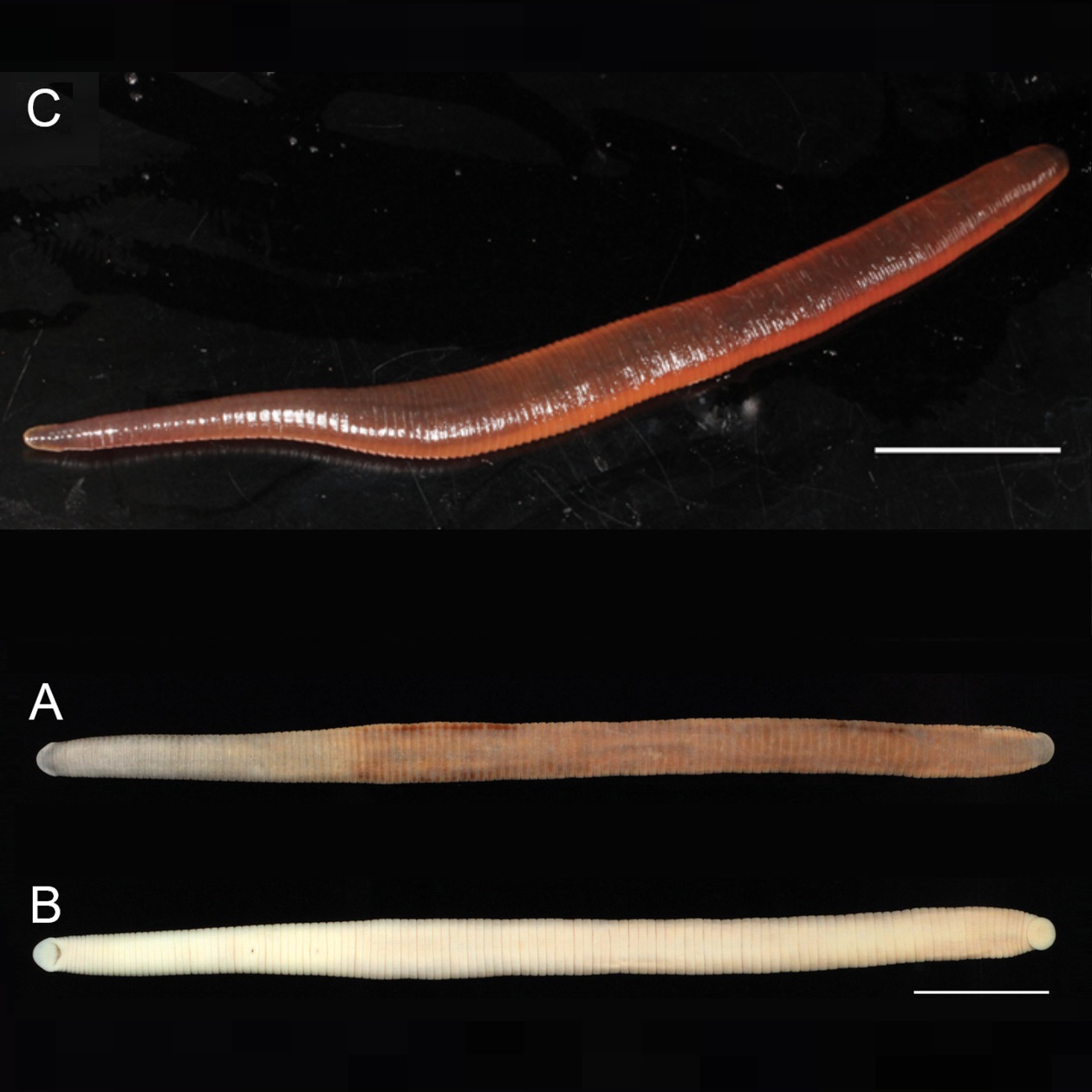
External and internal morphology of holotype (CUMZ3831) of Amynthas septuaginta sp. nov.,
A. external ventral view; B. internal dorsal view; C. spermathecae. Dark arrow indicates the connection of the spermathecae and spermathecal pore.


 Amynthas septuaginta Bantaowong & Panha, sp. nov. 
ไส้เดือนริมโขงบึงกาฬ


Metaphire fidelis Bantaowong & Panha, sp. nov.
 ไส้เดือนภักดีแม่น้ำโขง


Ueangfa Bantaowong, Ratmanee Chanabun, Nattawadee Nantarat and Somsak Panha. 2025. Description of Two New Earthworm Species (Oligochaeta: Megascolecidae) from the Mekong River, Thailand.  Tropical Natural History. Suppl. 8; 305-312. DOI: doi.org/10.58837/tnh.25.8.267154  [2025-10-20]

Saturday, November 22, 2025

[Invertebrate • 2025] Troglobdella guizhouensis • A New Genus and Species of Cave-dwelling Leech (Hirudinea: Salifidae) from China: Taxonomy, Phylogeny, and mitochondrial Genome Characterization


Troglobdella guizhouensis  Liu & Nakano, 

in K. Liu, Q. Li, Wu, Lin, H. Li, Nakano et Z. Liu, 2025.
 贵州隐洞蛭  ||  DOI: doi.org/10.3897/zse.101.168628 
 
Abstract
Accurate identification of leech species is critical for biodiversity conservation and evolutionary studies. However, due to the ambiguity and variability of some key characteristics, Salifidae remains a rather poorly known group of Erpobdelliformes. In this study, a new genus of salifid leech, Troglobdella gen. nov., is established, and a new species, Troglobdella guizhouensis sp. nov., is described based on specimens collected from a cave in Guizhou Province, Southwest China. Phylogenetic analyses based on mitochondrial cytochrome c oxidase subunit I (COI) and nuclear 18S rRNA gene sequences reveal that Troglobdella guizhouensis represents a distinct lineage within a clade that also includes the troglobiotic species Shibabdella wulingensis Tang & Liu, 2025, and the terrestrial Odontobdella gaowangjiensis Yin & Liu, 2025, both of which are known from Hunan Province. This suggests that cave-related morphologies in Chinese salifid leeches may have evolved independently. The complete mitochondrial genome of the new species was assembled into a circular molecule of 15,732 bp, comprising 13 protein-coding genes, 22 tRNAs, and 2 rRNAs. This study contributes new insights into the taxonomy, systematics, and mitochondrial architecture of cave-adapted leeches.

Key Words: mitochondrial genome, phylogeny, Salifidae, taxonomy, Troglobdella guizhouensis, troglobiont

Taxonomy
Family Salifidae Johansson, 1910

Troglobdella guizhouensis 
 B. The entrance of the cave; C. A leech living in the puddle.

 Troglobdella Liu & Nakano, gen. nov.

 Troglobdella guizhouensis Liu & Nakano, sp. nov.

Diagnosis. Troglobdella guizhouensis can be distinguished from the other salifid genera as well as other species by the following combination of characters: body milky white with no pigments; without eyes; oral sucker well developed, distinctly laterally expanded; mid-body somites six-annulate; gonopores separated by four annuli; testisacs multiple; pharynx strepsilaematous; lacking preatrial loop of male paired ducts; paired atrial cornua conical, curved laterad; atrium short, globular; ovisacs descending to anterior of somite XIV, then turned several times in each of posterior parts, forming globular mass.

Etymology. The genus name Troglobdella is derived from the Ancient Greek “troglos” meaning “cave” and “bdella” meaning “leech” referring to the genus’ trait to subterranean habitats. We suggest the Chinese formal name as “yǐn dòng zhì shǔ” (隐洞蛭属). The species name “guizhouensis” is based Guizhou Province in China, where the species was discovered, with the suffix “-ensis” indicating geographical origin. We suggest the Chinese formal name as “guì zhōu yǐn dòng zhì” (贵州隐洞蛭).


Kaiqing Liu, Qing Li, Heqi Wu, Yiquan Lin, Hexiang Li, Takafumi Nakano, Zichao Liu. 2025. A New Genus and Species of Cave-dwelling Leech from China in the family Salifidae: Taxonomy, Phylogeny, and mitochondrial Genome Characterization. Zoosystematics and Evolution. 101(4): 2123-2132. DOI: doi.org/10.3897/zse.101.168628 

Wednesday, October 22, 2025

[Invertebrate • 2025] Amynthas sirindhornae • Cryptic Diversity within the Endemic Mekong Giant Earthworm, Amynthas mekongianus (Cognetti, 1922) (Clitellata: Megascolecidae) across the Lower Mekong River Basin with Descriptions of a New Species


Amynthas sirindhornae Nantarat & Bantaowong,  

in Nantarat, Panha, Chanabun, Inkhavilay et Bantaowong. 2025. 
ไส้เดือนเทพรัตน์แม่น้ำโขง  ||  DOI: doi.org/10.58837/tnh.25.8.267375

Abstract
The Lower Mekong Basin is recognized as a region of remarkable biodiversity. However, it is currently experiencing severe degradation due to rapid economic development and the intensifying effects of climate change. Numerous species, including earthworms, are under increasing threat. In addition, Amynthas mekongianus (Cognetti, 1922) exhibits considerable intraspecific morphological variability, making its identification challenging. Therefore, the study aims to clarify species boundaries within the A. mekongianus complex in the Lower Mekong River Basin using both morphological and molecular approaches. Specimens were collected from multiple sites in the basin, and analyses revealed at least two putative species. Phylogenetic reconstructions (NJ, ML, and BI) together with species delimitation methods (ASAP, GMYC, and bPTP) consistently supported the recognition of two distinct lineages. These lineages differ primarily in body length, segment number, and spermathecae morphology. Accordingly, they are recognized as A. mekongianus sensu stricto and A. sirindhornae Nantarat & Bantaowong, sp. nov., which is formally described herein. This study enhances understanding of the evolutionary complexity and taxonomic status of the group, providing a foundation for future conservation and management strategies in the region.

Keywords: conservation, earthworm, phylogeny, systematics, taxonomy


A. coloration of living Amynthas sirindhornae sp. nov. 
B. surface casting and C. cocoon.

Amynthas sirindhornae Nantarat & Bantaowong, sp. nov.
ไส้เดือนเทพรัตน์แม่น้ำโขง 

Diagnosis.–Elongate and cylindrical body with 419-494 mm length, width 65–70 mm. Four pairs of spermathecal pores at 5/6–8/9, slit-like. Female pores mid-ventral on xiv. Male pores paired, on round placed disc, protuberant, alate on xviii. Spermathecae ellipsoi-dal ampulla, diverticulum long zig zag loops in the same plane. Testis sacs paired in x and xi. Seminal vesicles paired in xi, xii. Prostate glands paired in xvii-xix. Intestinal caecum simple in xxvii–xxiv.


Nattawadee Nantarat, Somsak Panha, Ratmanee Chanabun, Khamla Inkhavilay and Ueangfa Bantaowong. 2025. Cryptic Diversity within the Endemic Mekong Giant Earthworm, Amynthas mekongianus (Cognetti, 1922) (Clitellata: Megascolecidae) Across the Lower Mekong River Basin with Descriptions of a New Species. Tropical Natural History. Suppl. 8; 368-379. DOI: doi.org/10.58837/tnh.25.8.267375  [2025-10-20]

Tuesday, June 17, 2025

[Invertebrate • 2025] Kanchuria tripuraensis & K. priyasankari • Two New Earthworm Species of the Genus Kanchuria Julka, 1988 (Clitellata: Megascolecidae) from Tripura State, North-eastern India


 Kanchuria tripuraensis ...  K. priyasankari 
Narayanan, Paliwal & Julka, 

in NarayananPaliwal, Kurien, Nath, ... et Julka, 2025.
 
Abstract 
Eastern Himalaya-Northeastern Hills are the second most earthworm species-rich region in India. Kanchuria Julka, 1988, is a small genus endemic to the north-eastern region of India, with eight known species. Two new species of the genus, namely Kanchuria tripuraensis Narayanan, Paliwal & Julka, sp. nov., and K. priyasankari Narayanan, Paliwal & Julka, sp. nov., are described from materials collected from the Tripura State in North-eastern India. K. tripuraensis sp. nov. is a unique species of the genus, distinguishable from all other known species by having single ventromedian spermathecae in segments 7 and 8. K. priyasankari sp. nov. belongs to the turaensis-species group characterized by three pairs of spermathecal pores. This group has a total of 5 species, including the new species described herein. Among the congeners of the group, K. priyasankari sp. nov. shows close similarity with K. turaensis Julka, 1988. K. priyasankari sp. nov. can be easily differentiated from the K. turaensis by the small body dimensions and characteristics of the spermathecae. The present work provides detailed descriptions of the new species along with photographs and illustrations of the key characters. A key to species of the genus Kanchuria is also provided. With the discovery of two new taxa, the total number of Kanchuria species has gone up to 10, and megadrile worm diversity reported from the Tripura State has increased to 38.

 Annelida, distribution, endemic, Oligochaeta, soil fauna, taxonomy, India


S. Prasanth NARAYANAN, R. PALIWAL, Vijo T. KURIEN, Sabyasachi NATH, Animesh DEY, Subhrajit NANDY, Prithwiraj KAR, Sujata GOLDAR, A.P. THOMAS and J.M. JULKA. 2025. Description of Two New Kanchuria Julka, 1988 (Clitellata: Megascolecidae) Species of Earthworms from Tripura State, North-eastern India.  Zootaxa. 5647(2); 101-116. DOI: doi.org/10.11646/zootaxa.5647.2.1 [2025-06-13]
Researchgate.net/publication/392631231_two_new_Kanchuria_from_Tripura_NE_India

Saturday, March 23, 2024

[Invertebrate • 2024] Megascolex jeyporeghatiensis & M. quadripapillatus • Two New Species of the Genus Megascolex Templeton, 1844 (Clitellata: Megascolecidae) from the Eastern Ghats of Odisha State, India


Megascolex jeyporeghatiensis Narayanan & Paliwal,
M. quadripapillatus Narayanan & Paliwal, 

in Naik, Narayanan, Palita, Thomas et Paliwal, 2024.

Abstract
Two new earthworm species of Megascolex Templeton, 1844, M. quadripapillatus Narayanan & Paliwal, sp. nov. and M. jeyporeghatiensis Narayanan & Paliwal, sp. nov. are described from the under-explored Eastern Ghats Hills of Odisha state in Peninsular India. They belong to a group of species characterized by two pairs of spermathecal pores in intersegmental furrows 7/8/9, holandric, seminal vesicles in segments 9 and 12, absence of penial setae and calciferous glands. Megascolex ratus Cognetti, 1911, M. pumilio Stephenson, 1916 and the two new species described here are the members of this group. Megascolex quadripapillatus sp. nov. and M. jeyporeghatiensis sp. nov. occur in deciduous forests with brownish gravel-loamy soils. Here we provide the detailed description of the external and internal characteristics of the new species along with the illustrations of the key characters. With the new findings, the range of Megascolex genus has been extended further north in the less explored Eastern Ghats Hills of India. With this discovery, the total number of Megascolex species has increased to 70, of which 34 are found in India.

Annelida, biodiversity, endemic, Oligochaeta, Peninsular India, taxonomy  


Ayusmita Naik, S. Prasanth Narayanan, Sharat Kumar Palita, A.P. Thomas and R. Paliwal. 2024. Two New Species of the Genus Megascolex Templeton, 1844 (Clitellata, Megascolecidae) from the Eastern Ghats of Odisha State, India.  Zootaxa. 5424(5); 569-580. DOI: 10.11646/zootaxa.5424.5.5

Wednesday, May 10, 2023

[Invertebrate • 2023] Amynthas panhai & A. oudomxayensis • Two New Species of Terrestrial Earthworms of the Genus Amynthas Kinberg, 1867 (Clitellata: Oligochaeta: Megascolecidae) from Northern Laos


Amynthas panhai 
Bantaowong, Chanabun & Inkhavilay, 2023

Tropical Natural History. Supplement 7

Abstract
This paper describes two new species of terrestrial earthworms belonging to the genus Amynthas from northern Laos; A. panhai sp. nov. and A. oudomxayensis sp. nov., are described based on external morphology and anatomy. They were determined to be new species after comparison with the other members of their respective species groups based on their original descriptions and some reference materials from Biozentrum Grindel und Zoologisches Museum, Hamburg, and Chulalongkorn University, Museum of Zoology, Thailand. However, they differ from all other known species of Amynthas by a combination of the following characters: male field and genital marking pattern, shape of spermathecae, and prostate gland and duct.

Keywords: Amynthas, earthworm, new species, Laos, taxonomy

Photographs of holotype (CUMZ 3832) of Amynthas panhai sp. nov.
 A. specimen showing the coloration of the ventral side after preservation with 4% (w/v) formalin and in 70%(v/v) ethanol,
B. living specimen from the type locality showing coloration 
and, C. type locality of Amynthas panhai sp. nov


Ueangfa Bantaowong, Ratmanee Chanabun and Khamla Inkhavilay. 2023. Two New Species of Terrestrial Earthworms of the Genus Amynthas Kinberg, 1867 (Clitellata, Oligochaeta, Megascolecidae) from Northern Laos. Tropical Natural History. Supplement 7;165-172. 

Tuesday, August 16, 2022

[Invertebrate • 2022] Orobdella ibukifukuyamai • A New Sexannulate Species of Orobdella (Hirudinea: Arhynchobdellida: Orobdellidae) from Kii-Oshima Island, Japan


Orobdella ibukifukuyamai 
 Nakano, 2022


Abstract
A large-type sexannulate leech species, Orobdella ibukifukuyamai sp. nov., from Kii-Oshima Island, Japan, is described based on morphologic and molecular data. Phylogenetic analyses using nuclear 18S rRNA, 28S rRNA, histone H3, mitochondrial cytochrome c oxidase subunit I, tRNACys, tRNAMet, 12S rRNA, tRNAVal, 16S rRNA, tRNALeu and NADH dehydrogenase subunit 1 markers showed that O. ibukifukuyamai formed a clade with the sexannulate O. okanoi Nakano, 2016 and O. yamaneae Nakano, 2016 and octannulate O. nakahamai Nakano, 2016, which are endemic to Shikoku island, Japan.

Key Words: Hirudinida, Erpobdelliformes, Japanese Archipelago, molecular phylogeny

Orobdella ibukifukuyamai sp. nov., holotype, KUZ Z4031.
A. Dorsal view; B. Ventral view; C. Dorsal view of live animal.
Scale bars: 20 mm (same bar for A, B).

Family Orobdellidae Nakano, Ramlah & Hikida, 2012

Genus Orobdella Oka, 1895

Type species: Orobdella whitmani Oka, 1895, 
fixed by subsequent designation (Soós 1966).

 Orobdella ibukifukuyamai sp. nov.
 
Diagnosis: Body length of mature individuals reaching ~15 cm. Somite VII quinquannulate, somites VIII–XXV sexannulate, b1 = b2 < a2 = b5 > c11 = c12 (especially mid-body somites). Male gonopore in slightly anterior to middle of, or in middle of somite XI c12, female gonopore in somite XIII b2/a2, posterior to gastropore, gonopores separated by 1/2 + 8 annuli. Pharynx reaching to somite XIV a2/b5–b5. Gastropore conspicuous, in somite XIII b2/a2. Gastroporal duct thick tubular. Paired epididymides in somites XVI–XVIII, occupying 11–12 annuli. Atrial cornua developed, ovate, without pre-atrial loop. Dorsal surface reddish brown in life.

Etymology: The specific name is dedicated to Mr Ibuki Fukuyama who collected the specimens of the new species.
 

 Takafumi Nakano. 2022. A New Sexannulate Species of Orobdella (Hirudinea, Arhynchobdellida, Orobdellidae) from Kii-Oshima Island, Japan. Evolutionary Systematics. 6(2): 135-142. DOI: 10.3897/evolsyst.6.86308

Sunday, May 15, 2022

[Invertebrate • 2022] Tonoscolex kalimpongensis • A New Species of the Genus Tonoscolex Gates, 1933 (Clitellata: Megascolecidae) from India


Tonoscolex kalimpongensis Ahmed & Julka, 

in Ahmed, Emiliyamma, Marimuthu, Sajan & Julka, 2022.

Abstract
Tonoscolex kalimpongensis Ahmed & Julka sp. nov. is described from Neora Valley National Park in the Kalimpong district of West Bengal, India. The new species is easily distinguished by the presence of one pair of spermathecal pores at intersegmental furrow 7/8. An updated checklist of the genus Tonoscolex and an identification key to the Indian Tonoscolex species are provided as well.

Keywords: Annelida, checklist, earthworm, India, new species, taxonomy


Shakoor Ahmed, K. G. Emiliyamma, Nithyanandam Marimuthu, Sheikh Sajan and J. M. Julka. 2022. A New Species of the Genus Tonoscolex Gates, 1933 (Clitellata: Megascolecidae) from India.  Zootaxa. 5124(3); 375-382. DOI: 10.11646/zootaxa.5124.3.6


Wednesday, January 19, 2022

[Invertebrate • 2021] Aridulodrilus molesworthae • A New Genus and Species of Earthworm (Oligochaeta: Megascolecidae) from Semi-arid Australia


 Aridulodrilus molesworthae 
 Dyne, 2021


Abstract
A new genus and species of terrestrial oligochaete, Aridulodrilus molesworthae (Megascolecidae) is described from a new species found in a semi-arid habitat in New South Wales, Australia. The location of this species provides additional evidence that localized landscape and pedologic factors have allowed isolated populations of native earthworms to persist in areas where low rainfall averages were previously thought to preclude their occurrence. The genus has a combination of morphological features that distinguish it from all other Australian genera. While it shares some features with genera in Western Australia, the wide geographic gap (some 2300 km) appears to preclude any close phylogenetic affinity with these taxa.

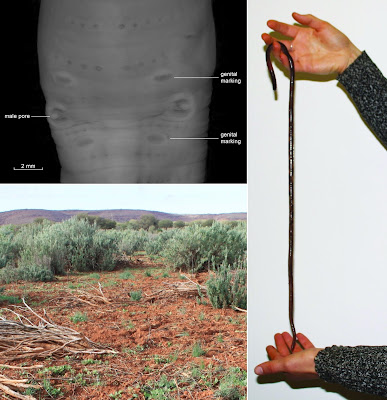
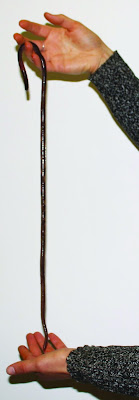
Live extended specimen of Aridulodrilus molesworthae gen. et sp. nov.

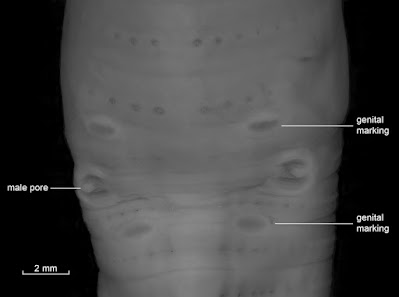
Male field of holotype of  Aridulodrilus molesworthae gen. et sp. nov. 

Oligochaeta 

Megascolecidae Rosa, 1891

Aridulodrilus gen. nov.

Diagnosis. Large worms (over 250 mm in length). Setae more than 15 per segment throughout. Dorsal pores present. Male pores from racemose prostates paired on XVIII. Firm oesophageal gizzard in V; calciferous glands and oesophageal caeca absent; intestinal gizzards and typhlosole lacking. Nephridia meronephric, avesiculate, and astomate, tufted anteriorly. Caudal modifications of the excretory system (e.g., ureters) absent. Spermathecae three pairs, spermathecal diverticula clavate and single; several internal chambers (i.e., multiloculate but not sessile). Penial and genital setae absent. 

Etymology: From the Latin aridulo-drilus—semi-desert worm.

 Distribution. Western New South Wales, Australia (restricted). 

Remarks. The closest generic relative appears to be Austrohoplochaetella Jamieson, 1971, differentiated by the lack, in Aridulodrilus gen. nov., of any caudal excretory system elaboration (such as megameronephridia, nephrostomes, bladders or ureters). Also Aridulodrilus gen. nov. lacks an intestinal typhlosole.


 Aridulodrilus molesworthae sp. nov.

Etymology: The species is named for the manager of the property on which the species was detected—Ms Rosalind Molesworth.

Habitat of Aridulodrilus molesworthae gen. et sp. nov. 


Geoffrey R. Dyne. 2021. A New Genus and Species of Earthworm (Oligochaeta: Megascolecidae) from Semi-arid Australia. Records of the Australian Museum. 73(4);123–129. DOI: 10.3853/j.2201-4349.73.2021.1769


Tuesday, March 30, 2021

[Invertebrate • 2021] Three New Species and Four New Species records of Earthworms of the Genus Moniligaster Perrier, 1872 (Clitellata: Moniligastridae) from Kerala Region of the Western Ghats Biodiversity Hotspot, India


Moniligaster sp.
 
in Narayanan, Sathrumithra, Anuja, ... et Julka, 2021. 

Abstract
Three new species of Moniligaster Perrier, 1872, namely Moniligaster bahli Narayanan & Julka, sp. nov., M. blakemorei Narayanan & Julka, sp. nov. and M. keralensis Narayanan & Julka, sp. nov. are described from materials collected from the Indian state of Kerala. Moniligaster cernosvitovi Gates, 1962, Moniligaster horsti Gates, 1940, Moniligaster michaelseni Gates, 1940 and Moniligaster stephensoni Gates, 1940 are recorded for the first time from the state. With the new findings, a total of 10 Moniligaster species are known from Kerala. Moniligaster species are restricted to southern peninsular India, except Moniligaster ivaniosi Manazhy, 2011, decribed from the Andaman Islands, outside the currently known distributional range of the genus. Hence we critically reviewed the original description and reinvestigated the holotype. As a result, Moniligaster ivaniosi is considered a junior synonym of Drawida nepalensis Michaelsen, 1907.

Keywords: Annelida, Andaman and Nicobar islands, Drawida nepalensis, endemic, Moniligaster ivaniosi, Oligochaeta, shola forest


S. Prasanth Narayanan, S. Sathrumithra, R. Anuja, G. Christopher, A.P. Thomas and J.M. Julka. 2021. Three New Species and Four New Species records of Earthworms of the Genus Moniligaster Perrier, 1872 (Clitellata: Moniligastridae) from Kerala Region of the Western Ghats Biodiversity Hotspot, India. Zootaxa. 4949(2); 381–397. DOI: 10.11646/zootaxa.4949.2.11

Wednesday, November 4, 2020

[Invertebrate • 2019] Philomontanus gen. nov. • Multigene Phylogeny reveals A New Earthworm Genus (Oligochaeta: Lumbricidae) with Three New Species from Iran


A. Philomontanus sarii sp. nov. B. Philomontanus mahmoudi sp. nov. CPhilomontanus baloutchi sp. nov..

Bozorgi, Seiedy, Malek, Aira, Pérez-Losada & Domínguez, 2019

Abstract
Lumbricidae taxonomy is vastly restricted by the morphological simplicity of earthworms and their lack of complex appendices. This has led to confusing results in the Lumbricidae classifications, which in turn, has hindered our ability to identify and assign new and cryptic species to the family. Here we propose the addition of a new Lumbricidae genus from the Zagros and Elburz Mountains of Iran, i.e. Philomontanus gen. nov., including three new species. Our taxonomic inferences were based on the phylogenetic analysis of two nuclear gene regions (28S rDNA and 18S rDNA) and 11 mitochondrial gene regions (16S rDNA, 12S rDNA, NADH dehydrogenase I, cytochrome oxidase subunits I and II and tRNAs Asn, Asp, Val, Leu, Ala and Ser). Philomontanus gen. nov. comprises the earthworm species Philomontanus sarii sp. nov.Philomontanus mahmoudi sp. nov. and Philomontanus baloutchi sp. nov. These three species are morphologically similar to each other with only a few characters separating them (e.g. size, pigmentation and position of clitellum). Our findings support the adoption of an integrative approach including molecular information (e.g., DNA sequences) to aid earthworm classification and develop a robust taxonomy.


Fig 1. Study area in the Zagros and Elburz Mountains of Iran (This map is originally created by first author, using ArcGIS, Mapping & Analytical platform.
Red, Type locality of Philomontanus sarii sp. nov., Elburz Mountains.
Green, Type locality of Philomontanus mahmoudi sp. nov., Zagros Mountains.
Blue, Type locality of Philomontanus baloutchi sp. nov., Zagros Mountains.

Taxonomy
Phylum Annelida Lamarck, [1802]
Class Oligochaeta Grube, [1850]/ Clitellata Michaelsen, [1919]

Order Megadrilli Benham, [1890] /Haplotaxida Michaelsen, [1900]
Family Lumbricidae Rafinesque-Schmaltz, 1815

Genus Philomontanus gen. nov.  

Diagnosis: Setae widely distant. Pigmentation variable, red-violet or totally pale. Prostomium epi- or tanylobous. First dorsal pore around 7/8. Male pore on 15 very small, on setal line bc. Clitellum annular. Spermathecae, which are small and round shaped present, frequently empty in 9/10–10/11 and open in setal line cd. Tubercula pubertatis ribbon shape. Nephridiopores aligned in setal bc. Two pairs of testes and funnels in segments 10–11, not iridescent. Four pairs of seminal vesicles in 9–12, those in 11 and 12 are slightly smaller than others. Two pairs of small, roundly shaped and almost empty spermathecae in 9/10 and 10/11 and open in setae line cd. Calciferous glands in segments 11 with hardly recognizable diverticula. Excretory system holoic, nephridial bladders ocarina shape. Typhlosole simple lamelliform, the cross-section of longitudinal muscle layer is of pinnate type. Since the morphological characters above are not sufficient to pinpoint the taxonomic position of Philomontanus in the Lumbricidae, we have used phylogenetic analysis of DNA sequences to determine its taxonomic position and closest relatives.

Type species: Philomontanus sarii sp. nov. by original designation herein.
Included species: Philomontanus sarii sp. nov., P. mahmoudi sp. nov. and P. baloutchi sp. nov.

Etymology. Philomontanus is composed of Philo (Greek prefix means liking for specified thing) and montanus (Latin noun means mountains). This name has been chosen as new genus and its three species have been found in mountains.

Fig 3. Ventrolateral view of the Philomontanus species. Arrows point to tubercula pubertatis 
A. Philomontanus sarii sp. nov. B. Philomontanus mahmoudi sp. nov. CPhilomontanus baloutchi sp. nov..


Philomontanus sarii Bozorgi & Malek sp. nov. 

Etymology. The new species name was chosen to honor Dr. Alireza Sari, who has done extensive research on various aspects of Iranian fauna.


Philomontanus mahmoudi Bozorgi & Malek sp. nov.

Etymology. The new species is named in memory of coauthor Masoumeh Malek’s father.


Philomontanus baloutchi Bozorgi & Malek sp. nov.  

Etymology. The new species is named in memory of Dr. Mohammad Baloutch, who was a prominent zoology professor in Iran.

 Fig 5. Sampling sites of new species.
(A1, A2) Mazandaran, Abbasabad (36.72 o N; 51.11o E), Elburz Mountains, sampling site of  Philomontanus sarii sp. nov.
(B1, B2) Kurdistan, Kamyaran (35.49o N; 46.35o E), Zagros Mountains, sampling site of Philomontanus mahmoudi sp. nov. 
 (C1, C2) Kurdistan, Baneh (35.99o N; 45.88o E), Zagros Mountains, sampling site of Philomontanus baloutchi sp. nov..


 Farnaz Bozorgi, Marjan Seiedy, Masoumeh Malek, Manuel Aira, Marcos Pérez-Losada and Jorge Domínguez. 2019. Multigene Phylogeny reveals A New Iranian Earthworm Genus (Lumbricidae: Philomontanus) with Three New Species.  PLoS ONE. 14(1): e0208904. DOI: 10.1371/journal.pone.0208904


Wednesday, April 1, 2020

[Invertebrate • 2020] Amynthas whitteni • A New Species of Earthworm (Clitellata: Megascolecidae) from Mawlamyine, Myanmar


 Amynthas whitteni
Bantaowong, Chanabun & Panha, 2020

 RAFFLES BULLETIN OF ZOOLOGY. Supplement No. 35.

 Abstract
 Amynthas whitteni, a new species of earthworm from Mawlamyine, Myanmar, is described herein based on anatomical and morphological characteristics. The new species belongs to the andersoni species group and is closely related to Amynthas andersoni, but was easily distinguished from it by the position and shape of the postclitellar genital markings. 

Key words: Amynthas, earthworms, Megascolecidae, Myanmar

Fig. 1.  Amynthas whitteni, new species. A, B, paratypes just after anaesthesia step in 30% (v/v) ethanol, dorsal and lateral view; C, colouration of ventral view, with male pores and genital markings. Photographs by R. Srisonchai.

Family Megascolecidae Rosa, 1891 

Amynthas Kinberg, 1867 

Amynthas whitteni, new species

Diagnosis. Length 190–265 mm, diameter 8.5–10 mm, segments 98–152. Male pores paired in XVIII, each represented by a glandular area, genital markings unpaired, midventral (MV) in intersegments 17/18–19/20; sometimes in 20/21. Spermathecal pore paired, minute in intersegments 5/6–8/9. Spermathecae large ovoid sac, diverticulum as long as ampulla, weakly crooked in middle. Holandric, intestinal caeca simple, first dorsal pore in 12/13. Prostate gland compact in XVII–XVIII, its duct long and U-shaped. No genital marking glands.

Etymology. Amynthas whitteni is named in honour of the late Dr. Tony Whitten of FFI, who contributed extensively to our knowledge of cave invertebrates and initiated several projects on Asian biodiversity from Indonesia to China, Vietnam and Myanmar.


 Ueangfa Bantaowong, Ratmanee Chanabun and Somsak Panha. 2020. Amynthas whitteni, A New Species of Earthworm from Mawlamyine, Myanmar (Clitellata: Megascolecidae). RAFFLES BULLETIN OF ZOOLOGY. Supplement No. 35; 17-21. 

Saturday, October 26, 2019

[Invertebrate • 2019] Placobdelloides sirikanchanae • A New Species of Glossiphoniid Leech (Hirudinea, Rhynchobdellida) and A Parasite of Turtles from lower southern Thailand


Placobdelloides sirikanchanae (arrows) 
on the Asian leaf turtle (Cyclemys dentata (Gray, 1831)) (left) and the dark-bellied leaf turtle (Cenigmatica Fritz et al., 2008) (right).
 Trivalairat, Chiangkul & Purivirojkul, 2019
ปลิงอาจารย์ประไพสิริ  ||  DOI: 10.3897/zookeys.882.35229

Abstract
 A new species of glossiphoniid leech, Placobdelloides sirikanchanae sp. nov., is reported in the Asian leaf turtle (Cyclemys dentata) and the dark-bellied leaf turtle (C. enigmatica) from Songkhla Province, southern Thailand. The examination of morphological characters revealed that this new species is similar to P. siamensis (Oka, 1917), a common turtle leech species found in Thailand. Placobdelloides sirikanchanae sp. nov. demonstrates distinct morphological characters, with an elongated, narrow body, 13–17 well-developed knob papillae on each annulus, dark brown to greenish dorsal color with a crimson median line, the absence of a scarlet dot, different male and female gonopore distributions, a rough posterior sucker with a random pit distribution, and 104–115 eggs per clutch. The phylogenetic relationships of COI-ND1 genes were clarified and shown to be distinct from those of P. siamensis. Additionally, habitat preferences tended toward low oxygen conditions such as puddles or water patches on rubber plantations.

Keywords: Clitellata, Cyclemys, Glossiphoniidae, Hirudinea, leaf turtle, Songkhla


Placobdelloides Sawyer, 1986
Type species: Placobdelloides multistriata (Johansson, 1909) by original designation.

Genus diagnosis: eyes one pair, esophageal organ, crop caeca seven pairs, mouth pore terminal (Oosthuizen 1979).

Genus distribution: Placobdelloides species can be found in Africa (P. fimbriata (Johansson, 1909); P. jaegerskioeldi (Johansson, 1909); P. multistriata (Johansson, 1909)), Australia and United States, eastward to India (P. fulva (Harding, 1924); P. emydae (Harding, 1920); P. undulata (Harding, 1924); P. horai (Baugh, 1960); P. indica (Baugh, 1960)), Southeast Asia (P. siamensis in China and Thailand; P. okadai (Oka, 1925) in China; P. okai (Soós, 1969); P. stellapapillosa Govedich et al., 2002 in Malaysia and Singapore), and throughout Australia and New Zealand (P. octostriata (Grube, 1866); P. maorica (Benham, 1907); P. bancrofti (Best, 1931); P. bdellae (Ingram, 1957)).

Figure 2. Dorsal surface (upper) and ventral surface (lower) of the live holotype of Placobdelloides sirikanchanae sp. nov.

Placobdelloides sirikanchanae sp. nov.

Material examined: Holotype (ZMKU-ANN-0006), puddle on rubber plantation, Sadao District, Songkhla Province, Thailand , 21 October 2018. Paratypes (nine individuals, ZMKU-ANN-0007 to 0015), same locality data as the holotype. All collected specimens were kept in 70% alcohol and deposited at the Zoological Museum of Kasetsart University (ZMKU), Department of Zoology, Faculty of Science, Kasetsart University on 23 November 2018.

Diagnosis: This species can be recognized from its elongated, narrow body, crimson median dorsal line, rich dark green pigmentation, 13–17 well-developed knob papillae on each annulus, symmetrical dorsal papillae between the left and right body sides, male gonopore on XIa1/a2, female gonopore on XIa3/XIIa1, amorphous salivary glands, smooth surface with random pits inside the anterior sucker, and rugged surface with randomly distributed pits inside the posterior sucker.

Etymology: The species is named in honor of Associate Professor Prapaisiri Sirikanchana, the pioneer aquatic parasitologist of Thailand. The following common names, Sirikanchana’s leech (English), Pling Arjan Prapaisiri (Thai: ปลิงอาจารย์ประไพสิริ), and Sirikanchanas Plattegel (German) are suggested.

Figure 1. Live Placobdelloides sirikanchanae sp. nov. (arrows) on the Asian leaf turtle (Cyclemys dentata (Gray, 1831)) (left) and the dark-bellied leaf turtle (C. enigmatica Fritz et al., 2008) (right): carapace (lower), plastron (upper).

Type host: Dark-bellied leaf turtles (Cyclemys enigmatica).

Additional host: Asian leaf turtles (C. dentata).

Habitat: Placobdelloides sirikanchanae sp. nov. can be found attached on the shell surface, both the carapace and plastron, of C. dentata and C. enigmatica, which inhabit the bottom of enclosed shallow muddy puddles on rubber plantations. In the rainy season, several puddles will be connected due to an increase in the water level. Numerous small vertebrates are present in these puddles, such as small fishes or tadpoles. In the dry season, the puddles will be disconnected as the shallower waters disappear from evaporation. These aquatic ecosystems usually have low oxygen due to decomposition of leaf litter and nonflowing water.


 Poramad Trivalairat, Krittiya Chiangkul and Watchariya Purivirojkul. 2019. Placobdelloides sirikanchanae sp. nov., A New Species of Glossiphoniid Leech and A Parasite of Turtles from lower southern Thailand (Hirudinea, Rhynchobdellida). ZooKeys. 882: 1-24. DOI: 10.3897/zookeys.882.35229