|
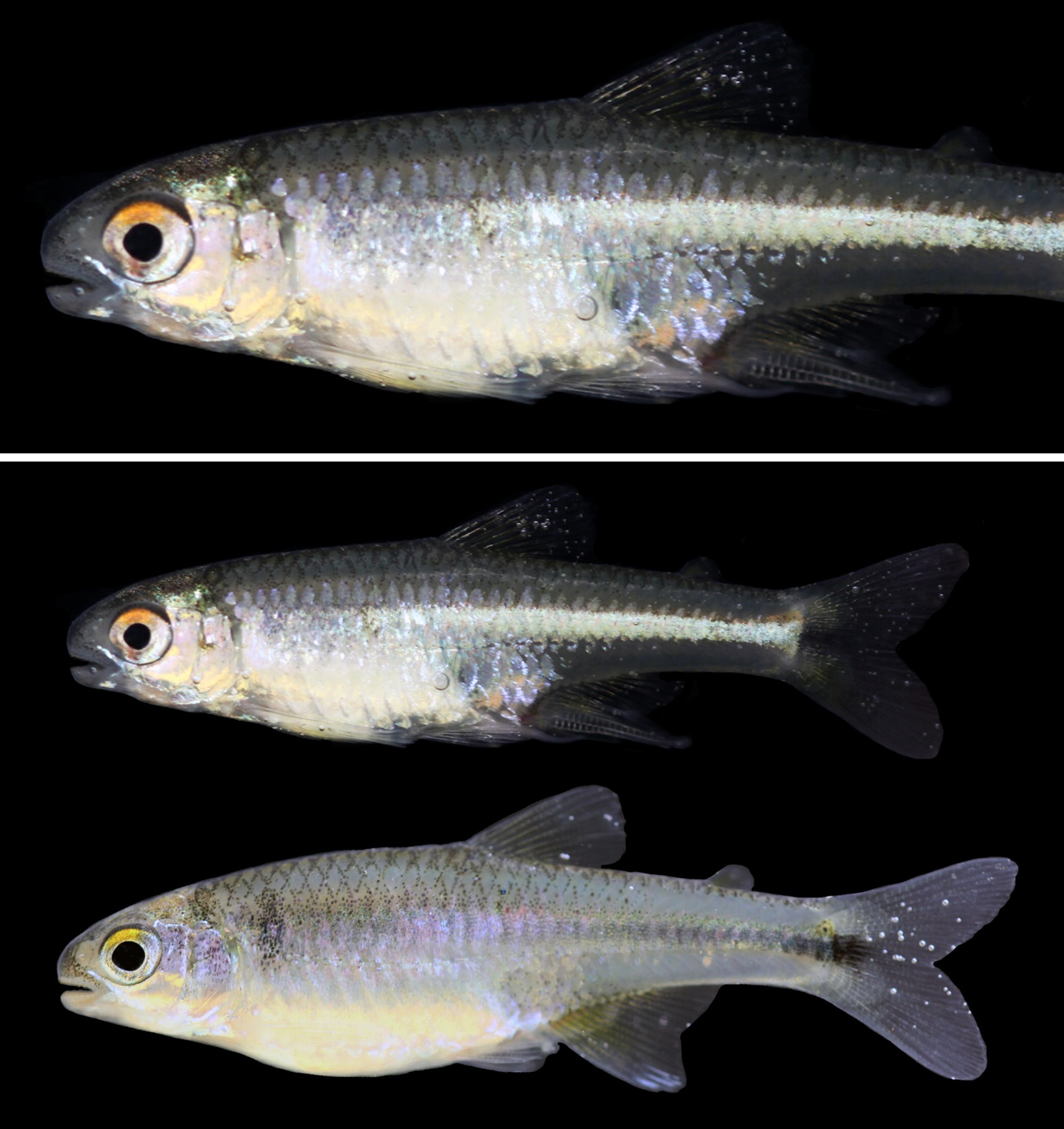
| (A) Cetopsorhamdia ramirezi Cortés-Hernández & DoNascimiento, , Holotype, IAvH-P 9723, 87.9 mm SL, Colombia, Casanare, Aguazul, río Únete; (B) C. boquillae, IAvH-P 13552, 62.0 mm SL, Colombia, Quindío, Finlandia, El Membrillal; (C) C. cf. insidiosa, MHNU-I 1159, 59.5 mm SL, Colombia, Meta, Villavicencio, río Ocoa; (D) C. nasus, CIUA 7809, 68.4 mm SL, Colombia, Valle del Cauca, Ansermanuevo, quebrada el Chanco (photo by José Luis Londoño-López); in Cortés-Hernández, Márquez et DoNascimiento, 2025. |
Abstract
Cetopsorhamdia as currently classified is corroborated as non-monophyletic, based on a comprehensive multilocus phylogenetic analysis, with complete taxonomic representation from northern South America, and including its type species. However, a subgroup of species that agrees with a previous phylogenetic definition of the genus, based on morphology, is recovered as monophyletic and is designated herein as Cetopsorhamdia sensu stricto. A new species from piedmont tributaries of the Meta and Guaviare Rivers, Orinoco basin in Colombia, was recovered as sister to remaining cis-Andean species of the sensu stricto concept of the genus and is described here. The new species is distinguished from all sensu stricto congeners by a unique combination of characters: distal end of pectoral fin surpassing dorsal-fin origin, adipose-fin base short (12.9–15.9% of SL), lower lobe of caudal fin longer than upper lobe (31.7–37.3% of SL), body homogeneously brown, and 35–36 total vertebrae. A clear vicariant cis- and trans-Andean pattern is obtained for species of Cetopsorhamdia sensu stricto, predating isolation of present Magdalena and Lake Maracaibo basins by orogenesis of the Eastern Cordillera and Mérida Andes, respectively.
 |
| Left lateral view of (A) Cetopsorhamdia ramirezi, holotype, IAvH-P 9723, 87.9 mm SL, Colombia, Casanare, Aguazul, río Únete; (B) C. boquillae, IAvH-P 13552, 62.0 mm SL, Colombia, Quindío, Finlandia, El Membrillal; (C) C. cf. insidiosa, MHNU-I 1159, 59.5 mm SL, Colombia, Meta, Villavicencio, río Ocoa; (D) C. nasus, CIUA 7809, 68.4 mm SL, Colombia, Valle del Cauca, Ansermanuevo, quebrada el Chanco (photo by José Luis Londoño-López); (E) C. picklei, IAvH-P 11805, 125.5 mm SL, Colombia, Norte de Santander, río Zulia. Scale bar 5 mm. |
Cetopsorhamdia ramirezi Cortés-Hernández and DoNascimiento, new species
Etymology.—The specific epithet honors Hernando Ramírez Gil, for his invaluable contribution to the knowledge and conservation of ornamental and food fishes in Colombia
Miguel Ángel Cortés-Hernández, Edna J. Márquez, and Carlos DoNascimiento. 2025. Phylogenetic Relationships and Historical Biogeography of Cetopsorhamdia (Siluriformes: Heptapteridae), with Description of a New Species from the Orinoco Basin, Colombia. Ichthyology & Herpetology. 113(4), 667-681. DOI: doi.org/10.1643/i2025051 (28 November 2025).
Cetopsorhamdia como es actualmente clasificado es corroborado como no monofilético, con base en un análisis filogenético multilocus exhaustivo, con representación taxonómica completa del norte de Sudamérica, e incluyendo su especie tipo. Sin embargo, un subgrupo de especies que concuerda con una definición filogenética previa del género, con base en morfología, es recuperado como monofilético y es designado aquí como Cetopsorhamdia sensu stricto. Una especie nueva de tributarios de piedemonte de los ríos Meta y Guaviare, cuenca del Orinoco en Colombia, fue recuperada como hermana de las especies cisandinas del concepto sensu stricto del género y es descrita aquí. La especie nueva se distingue de todos sus cóngeneres sensu stricto por una combinación única de caracteres: extremo distal de la aleta pectoral sobrepasando el origen de la aleta dorsal, base de la aleta adiposa corta (12,9–15,9% de LE); lóbulo inferior de la aleta caudal más largo que el lóbulo superior (31,7–37,3% de LE), cuerpo homogéneamente marrón y 35–36 vértebras totales. Un claro patrón vicariante cis y transandino es obtenido para las especies de Cetopsorhamdia sensu stricto, antecediendo el aislamiento de las actuales cuencas del Magdalena y del lago de Maracaibo, por la orogénesis de la cordillera oriental y de los Andes de Mérida, respectivamente.