Showing posts with label Angiosperm. Show all posts

Wednesday, January 14, 2026

[PaleoBotany • 2026] Simojoflorum mijangosii gen. et sp. nov. preserved in the Mexican Amber unravels the polycarpellate condition in the tribe Mimoseae (Fabaceae: Caesalpinioideae)


Simojoflorum mijangosii 
Hernández-Damián, Rubalcava-Knoth, Gómez-Acevedo, Cruz-Durán & Cevallos-Ferriz, 

in Hernández-Damián, Knoth, Gómez-Acevedo, Cruz-Durán et Cevallos-Ferriz, 2026. 
Drawings by Aldo Domínguez de la Torre.
 
ABSTRACT
An inflorescence preserved in amber from the middle-early Miocene from southern Mexico is identified as a new extinct member of Fabaceae. We described and identified the fossil material, comparing it with extant and fossil members of the Fabaceae using light microscopy and computed microtomography. The fossil inflorescence has morphological characters that allow a near comparison with Caesalpinioideae (Fabaceae), including flowers aggregated in a capitate inflorescence. Even more, bisexual and staminate flowers, valvate aestivation, many stamens, a superior, unilocular ovary with marginal placentation are characters that allow their comparison with the tribe Mimoseae, especially the polycarpellate gynoecium is comparable to the Acacieae and Ingeae tribes in the traditional classification. However, other floral characteristics, such as anther glands, partially united filaments, a basal nectariferous disk, and a stalk ovary, are comparable to Mariosousa Seigler & Ebinger, 2006, Senegalia Raf., 1838, and Parasenegalia Seigler & Ebinger, 2017. The phylogenetic relationship between them is unresolved, and information on the floral structure is limited for further comparison. Thus, we support the identification of Simojoflorum mijangosii gen. et sp. nov. as a new extinct member of the tribe Mimoseae that suggests the diversification of the lineage during the Miocene.

KEYWORDS: Fossil inflorescence, Fabaceae, Mimoseae, Miocene, polycarpellate


Simojoflorum mijangosii gen. et sp. nov. from Simojovel de Allende, Chiapas, Mexico.
(A) Overall view showing the spherical capitate inflorescence, scale bar: 1.0 mm. (B), Lateral view of spherical inflorescence, scale: 1.0 mm. (C) Detail of staminate and bisexual flowers arranged in the spherical capitate inflorescence, inferior left arrow indicates staminate flower, superior left arrow indicates the differentiated perianth, and right arrow indicates a bisexual flower with a large style, scale: 1.0 mm. (D) Detail of sessile flowers with differentiate perianth, right arrow indicates sepal and left arrow to indicate petal, scale: 0.5 mm. (E) Detail of anthers, right arrow indicates dorsifixed anthers, and left arrow indicates glandular appendage, scale: 0.2 mm. (F) Detail of stigma and style, scale: 0.5 mm.

Family: Fabaceae Lindley, Citation1836

Subfamily Caesalpinioideae De Candolle, Citation1825

Tribe: Mimoseae sensu Queiroz et al. Citation2024

Genus: Simojoflorum Hernández-Damián, Rubalcava-Knoth, Gómez-Acevedo, Cruz-Durán et Cevallos-Ferriz gen. nov.

Etymology: The epithet Simojo refers to Simojovel de Allende, the locality from which the fossil was collected, and florum, of Latin meaning flowers.

Generic diagnosis: Inflorescence capitate and spherical with staminate and bisexual flowers. Staminate flowers sessile with pentamerous and differentiate perianth, actinomorphic; calyx and corolla with valvate aestivation, androecium with more than 30 stamens slightly fused at the base with stalked glands. Bisexual flowers with a basal nectariferous disk; central carpel stipitate, ovary superior, unilocular with ca. twenty ovules in two rows, and marginal placentation along a ventral suture. Some bisexual flowers present 4–5 peripheral carpels that surround the central carpel, these carpels are poorly differen and smaller than the central one.

 
Simojoflorum mijangosii Hernández-Damián, Rubalcava-Knoth, Gómez-Acevedo, Cruz-Durán et Cevallos-Ferriz sp. nov.

Etymology: The epithet mijangosii refers to Luis Alonso Zuñiga Mijangos who contributed to the study of Mexican amber through the Museo del ámbar, Lilia Mijangos.
 
Holotype: MALM-00111 (Museo del Ámbar, Lilia Mijangos)
 
Locality: Simojovel de Allende, Chiapas, Mexico

Stratigraphic horizon: La Quinta Formation, middle-early Miocene

Artistic reconstruction of inflorescence, flowers, and hypothetical whole plant of Simojoflorum mijangosii gen. et sp. nov. in the Mexican amber.
(A) Spherical capitate inflorescence of Simojoflorum mijangosii, scale=1.0 mm. (B) Details of staminate flower, scale = 0.25 mm. (C) Details of anther glands, scale=0.05 mm. (D) Details of monocarpellate bisexual flower, scale = 0.25 mm; (E) Details of polycarpellate bisexual flower, scale = 0.25 mm. (F) Hypothetical Simojoflorum mijangosii small tree, scale = 2.0 m.
Drawings by Aldo Domínguez de la Torre.


 Ana L. Hernández-Damián, Marco A. Rubalcava Knoth,Sandra L. Gómez- Acevedo, Ramiro Cruz-Durán and Sergio R. S. Cevallos-Ferriz. 2026. Simojoflorum mijangosii gen. et sp. nov. preserved in the Mexican Amber unravels the polycarpellate condition in the tribe Mimoseae (Caesalpinioideae, Fabaceae). Historical Biology: An International Journal of Paleobiology. DOI: doi.org/10.1080/08912963.2025.2604147 [13 Jan 2026]

Saturday, April 27, 2024

[PaleoBotany • 2024] Hymenaeaphyllum mirandae n. gen. n. sp. (Leguminosae: Detarioideae) • A New extinct Member of the Resin Producer Group of the Mexican Amber


Reconstruction of flowers, leaf, and whole plant of Hymenaea clade in the Mexican amber.
 (A) Hymenaea mexicana (Poinar and Brown, 2002), scale bar = 5.0 mm. (B) A bifoliate leaf of H. mexicana, scale bar = 5.0 mm. (C) Hymenaea allendis, scale bar = 5.0 mm. (Calvillo-Canadell et al., 2010).
(D) Hypothetical Hymenaea clade tree, scale bar=1.0 m.
(E) Hymenaeaphyllum mirandae, scale bar=5.0 mm. (F) Details of brochidodromous secondary veins and abundant translucid glands of Hymenaeaphyllum mirandae, scale bar = 2.0 mm. 

Hernández-Damián, Rubalcava-Knoth & Cevallos-Ferriz, 2024
Drawings by Aldo Domínguez de la Torre.
 
Abstract
One of the most important amber deposits with bioinclusion outcrops in Chiapas, southern Mexico, dated ca. 23–15 Ma (early–middle Miocene). Angiosperms (flowering plants) are the most frequently recorded group, with ca. 16 families based principally on fossil flowers and occasional leaves, including members of Leguminosae. This study reports new bifoliolate-compound leaves preserved in Mexican amber, represented by a pair of leaflets marginally attached to a short petiole. Each leaflet is ovate to oblong with an entire margin and has an acuminate apex with a pinnate primary vein. Their characteristics are comparable with bifoliate compound leaves of extant members of Cercidoideae, Caesalpinioideae, and Detarioideae subfamilies. Their asymmetrical base, brochidodromous secondary veins, and abundant translucid glands allow establishment of a new extinct resin-producing member of the Hymenaea clade (Detarieae, Detarioideae), Hymenaeaphyllum mirandae n. gen. n. sp. Hymenaea clade includes Guibourtia, Hymenaea, and Peltogyne, all with similar foliar architecture and other plant characteristics, including reproductive structures. The connection of Hymenaeaphyllum mirandae with extinct members of resin-producing plants recognized previously is uncertain. The discovery of Hymenaeaphyllum mirandae in the Mexican amber suggests that the Boreotropical Flora extended to low latitudes of North America during the Miocene.

Keywords: Amber, bifoliate leaves, Detarieae, Leguminosae, Miocene

 Hymenaeaphyllum mirandae n. gen. n. sp., IGM-PB 1550, holotype.
 (A) General view of the bifoliolate leaf. (B) Line drawing of (A), highlighting preserved leaf architecture.
 Scale bars = 1 cm.

Family Leguminosae Jussieu
Subfamily Detarioideae Burmeister
Tribe Detarieae de Candolle

Clade Hymenaea (sensu Fougère-Danezan et al., 2010)

Hymenaeaphyllum Hernández-Damián, Rubalcava-Knoth and Cevallos-Ferriz, n. gen.

Etymology: Highlighting the remarkable similarity of a vegetative organ (leaf) to the Hymenaea clade.

Generic diagnosis: Bifoliolate-compound leaves; two petiolulate leaflets, slightly asymmetrical; petiolule bases pulvinulate; leaflets with asymmetrical base with basal insertion asymmetrical; apex acuminate; elliptical to slightly oblong shape; pinnate primary vein, becoming thinner distally; second-order venation simple brochidodromous, forming irregular arches distally; third-order venation is reticulate irregular but sometimes mixed percurrent veins can be found; translucent gland dots are distributed on the surface of the leaflets in a very high density (50.9 per mm2).

Hymenaeaphyllum mirandae Hernández-Damián, Rubalcava-Knoth and Cevallos-Ferriz, n. sp.

Etymology: The epithet recognizes Dr. Faustino Miranda, a pioneer in the study of plants in Mexican amber.
 
Repository: Colección Nacional de Paleontología, Museo María del Carmen Perrilliat M., Instituto de Geología, Universidad Nacional Autónoma de México (IGM-PB).

Locality: Simojovel de Allende, Chiapas.
Stratigraphy: La Quinta Formation.
Age: Early–middle Miocene.

 Reconstruction of flowers, leaf, and whole plant of Hymenaea clade in the Mexican amber. (A) Hymenaea mexicana (Poinar and Brown, 2002), scale bar = 5.0 mm. (B) A bifoliate leaf of H. mexicana, scale bar = 5.0 mm. (C) Hymenaea allendis, scale bar = 5.0 mm. (Calvillo-Canadell et al., 2010). (D) Hypothetical Hymenaea clade tree, scale bar=1.0 m.
(E) Hymenaeaphyllum mirandae, scale bar=5.0 mm. (F) Details of brochidodromous secondary veins and abundant translucid glands of Hymenaeaphyllum mirandae, scale bar = 2.0 mm.
 Drawings by Aldo Domínguez de la Torre.

Conclusions: 
Hymenaeaphyllum mirandae n. gen. n. sp. from Mexican amber is evidence of a geological history of Leguminosae in the Neotropical region during the early–middle Miocene. Foliar characteristics such as leaflets with asymmetrical bases, brochidodromous secondary veins, and translucent gland dots support its inclusion into Detarioideae, especially into the Hymenaea clade, whose members are resin-producing trees. However, it is uncertain how this new species relates to the known extant genera of the clade (Hymenaea, Guibourtia, Peltogyne) due to the remarkable similarity of their foliar architecture and lack of further morphological evidence. This new extinct member of Detarioideae supports the extension of the Boreotropical Flora into the low latitude of North America. However, evidence from other groups of plants suggests that the Boreotropical biogeographic route is essential in extending the distribution of tropical plants into low-latitude North America.


 Ana L. Hernández-Damián, Marco A. Rubalcava-Knoth and Sergio R.S. Cevallos-Ferriz. 2024. A New extinct Member of the Resin Producer Group of the Mexican Amber: Hymenaeaphyllum mirandae n. gen. n. sp. (Detarioideae-Leguminosae). Palaeoworld. In Press. DOI: 10.1016/j.palwor.2024.04.004

Friday, June 9, 2023

[Botany • 2023] Heisteria austroecuadorica (Erythropalaceae) • A New Species from southeastern Ecuador


Heisteria austroecuadorica  

in Cornejo, Homeier et Ulloa, 2023. 
 
Abstract
Heisteria austroecuadorica, a new species of Erythropalaceae from the conserved evergreen montane forest at the San Francisco reserve, in southeastern Ecuador, is here described and illustrated. It is characterized by the flowers with 10 stamens, and relatively large fruits, with the apex conspicuously depressed, and the calyx not covering the base of the fruits. Heisteria austroecuadorica is assessed provisionally as Endangered.

Keywords: endemism, montane forests, neotropics, Olacaceae, Zamora Chinchipe, Eudicots


Xavier Cornejo, Jürgen Homeier, Carmen Ulloa Ulloa. 2023. Heisteria austroecuadorica (Erythropalaceae): A New Species from southeastern Ecuador.  Phytotaxa. 599(3); 201-206. DOI: 10.11646/phytotaxa.599.3.7

Tuesday, June 6, 2023

[PaleoBotany • 2023] Notocyamus hydrophobus • A New Remarkable Early Cretaceous nelumbonaceous Fossil (Proteales: Nelumbonaceae) bridges the gap between herbaceous aquatic and woody protealeans


 Notocyamus hydrophobus Gobo, Coiffard, Bachelier, L. Kunzmann, Conceição et Iannuzzi, 

in Gobo, Kunzmann, Iannuzzi, Santos, Conceição, Nascimento, Silva Filho, Bachelier et Coiffard, 2023. 
 Illustration by Rebecca Dart twitter.com/R_Dart 

Abstract
Dating back to the late Early Cretaceous, the macrofossil record of the iconic lotus family (Nelumbonaceae) is one of the oldest of flowering plants and suggests that their unmistakable leaves and nutlets embedded in large pitted receptacular fruits evolved relatively little in the 100 million years since their first known appearance. Here we describe a new fossil from the late Barremian/Aptian Crato Formation flora (NE Brazil) with both vegetative and reproductive structures, Notocyamus hydrophobus gen. nov. et sp. nov., which is now the oldest and most complete fossil record of Nelumbonaceae. In addition, it displays a unique mosaic of ancestral and derived macro- and micromorphological traits that has never been documented before in this family. This new Brazilian fossil-species also provides a rare illustration of the potential morphological and anatomical transitions experienced by Nelumbonaceae prior to a long period of relative stasis. Its potential plesiomorphic and apomorphic features shared with Proteaceae and Platanaceae not only fill a major morphological gap within Proteales but also provide new support for their unexpected relationships first suggested by molecular phylogenies.

 Notocyamus hydrophobus gen. nov. et sp. nov. (holotype, MB. Pb. 2002/1047).
(A) Overview of the whole plant, with roots, rhizome, leaves, and aggregate fruit in organic connection. A black arrow points to the part of the peduncle used to make the thin sections (see Figs. 5 and 6). (B) Details of higher-order venation. (C) Close-up of palinactinodromous venation and the marginal lamina attachment. (D) Close-up on the enlarged receptacle showing two globose fruitlets (presumed nutlets). Scale bars: 1 cm.

Angiospermae Lindley (P.D.Cantino et M.J.Donoghue).
Eudicotyledoneae M.J.Donoghue, J.A.Doyle et P.D.Cantino.

Order Proteales Juss. ex Berchtold et J.Presl.
Family Nelumbonaceae A.Rich.

Notocyamus 
Gobo, Coiffard, Bachelier, L.Kunzmann, Conceição et Iannuzzi, gen.nov.

Generic diagnosis: Aquatic angiosperm with herbaceous rhizomatous growth habit, with adventitious roots and long-petiolate, alternate simple leaves. Leaf with marginal petiole attachment, unlobed and untoothed margin, and distinctly papillate epidermis with anomocytic and (brachy-) paracytic stomata on both sides. Primary venation palinactinodromous, distally bifurcating, with agrophic veins. Major secondary venation festooned brochidodromous. Fruit solitary, terminal, and aggregate, derived from an apocarpous gynoecium with fruitlets embedded in an enlarged ellipsoidal receptacle, attached to a long woody peduncle. Fruitlets inserted in pits and free from the receptacle.

Etymology: Noto is derived from notos from Ancient Greek νότος (south) and cyamus from Ancient Greek κύαμος (bean), in reference to the Egyptian “bean” described by Theophrastos of Eresos, which was probably a lotus seed.

Remarks: The main diagnostic characters of Notocyamus gen. nov. are the palinactinodromous leaf venation, in which lateral primary veins branch successively rather than from one point, and the secondary xylem in the peduncle, which are distinct from any living Nelumbo or any fossil-genus in the family.


Notocyamus hydrophobus 
Gobo, Coiffard, Bachelier, L. Kunzmann, Conceição et Iannuzzi, sp. nov.

Species diagnosis: Lamina noto- to mesophyllous in size with L/W ratio ca. 1, chartaceous, obovate to elliptical, with obtuse and rounded to slightly cordate base and obtuse and rounded to straight-sided apex. Interior secondaries and intersecondary veins present. Tertiary venation mixed percurrent, predominantly opposite. Quaternary venation mixed percurrent, mostly alternate. Quinternary veins regular reticulate. Areolation five- to six-sided. Freely ending veinlets absent. Marginal ultimate venation looped.

Etymology: hydrophobus is derived from Ancient Greek ὑδροφόβος meaning fearing water, in relation to the epidermis structure similar to the superhydrophobic epidermis of living lotus.

Holotype: MB.Pb. 2002/1047 (repository: Museum für Naturkunde—Leibniz Institute for Evolution and Biodiversity Science, Berlin, Germany).

Type horizon and locality: Opencast pit(s) southwest of Nova Olinda, Ceará, Brazil. Lower Cretaceous (uppermost Barremian?/lowermost Aptian), C6 limestone horizon, Crato Formation, Santana Group, Araripe Basin.

Remarks: Vegetative structures are preserved as reddish-brown replacement fossils and/or impressions with or without a thin iron oxide covering layer. Tissues of the peduncle are also replaced by iron oxide, while the receptacle is a mold with two casts of fruitlets. Clastic material is especially abundant on the rhizome of the holotype, and also in the petiole of the paratype.

Reconstruction of Notocyamus hydrophobus gen. nov. et sp. nov. in its likely environment.
 Illustration by Rebecca Dart (Vancouver–British Columbia).

 
William Vieira Gobo, Lutz Kunzmann, Roberto Iannuzzi, Thamiris Barbosa dos Santos, Domingas Maria da Conceição, Daniel Rodrigues do Nascimento Jr., Wellington Ferreira da Silva Filho, Julien B. Bachelier and Clément Coiffard. 2023. A New Remarkable Early Cretaceous nelumbonaceous Fossil bridges the gap between herbaceous aquatic and woody protealeans. Scientific Reports. 13: 8978. DOI: 10.1038/s41598-023-33356-z


Monday, May 22, 2023

[Botany • 2023] Dicranostyles yrypoana (Convolvulaceae) • A New Species from the Brazilian Amazon Rainforest


Dicranostyles yrypoana   
in Pastore, Simão-Bianchini, Alves dos Santos, Torres et Viana, 2023. 


Abstract
A new species of liana, Dicranostyles yrypoana (Convolvulaceae) is described from the Central Amazon rainforest in Brazil. The specimens of D. yrypoana remained with dubious identification in herbaria for at least 60 yr. This new species is distinguished from other species of Dicranostyles mainly for its tomentose leaves, in addition to its cylindric glabrous ovary, short style (0.5–0.6 mm long), and globose stigma. The specific epithet yrypoana refers to yripo, which means liana in the language of the Sateré-Mawé people that originally live in the region of occurrence of this new species. We provide morphological and palynologic descriptions, a distribution map, illustrations, taxonomy comments, an identification key, and comparisons with similar species. Dicranostyles yrypoana is informally assessed as Endangered (EN) based on IUCN criteria and guidelines.

KEYWORDS: Central Amazon, endangered plant, lianas, Maripeae, Solanales, taxonomy of angiosperms


Dicranostyles yrypoana


Mayara Pastore, Rosângela Simão-Bianchini, Daiane Alves dos Santos, Daniela Santos Carneiro Torres and Pedro Lage Viana. 2023. The Discovery of A New Species of Convolvulaceae: Dicranostyles yrypoana from the Brazilian Amazon Rainforest. Systematic Botany. 48(1); 88-95 DOI: 10.1600/036364423X16758873924126

Nova espécie de cipó, da família da batata-doce, é descoberta na Amazônia

Uma nova espécie de liana, Dicranostyles yrypoana (Convolvulaceae), é descrita para a floresta da Amazônia Central no Brasil. Os espécimes de D. yrypoana permaneceram nos herbários com identificação duvidosa por pelo menos 60 anos. Esta nova espécie é distinguida das outras espécies de Dicranostyles principalmente por suas folhas tomentosas, além de seu ovário cilíndrico e glabro, estilete curto (0.5–0.6 mm compr.) e estigma globoso. O epíteto específico yrypoana refere-se a yrypo que significa cipó na linguagem dos Sateré-Mawé, povos originários da região de ocorrência desta nova espécie. Nós fornecemos descrições morfológica e palinológica, mapa de distribuição, ilustrações, comentários taxonômicos, chave de identificação e comparação com espécies similares. Dicranostyles yrypoana é avaliada informalmente como Em Perigo (EN) baseada nos critérios e instruções da IUCN.
Amazônia Central, lianas, Maripeae, planta ameaçada, Solanales, taxonomia de angiospermas

Friday, April 21, 2023

[PaleoEntomology • 2023] Insect Pollination in Deep Time


Paleoecological reconstruction of insect pollination of gymnosperms and angiosperms during the Cretaceous.

in Peña-Kairath, Delclòs, Álvarez-Parra, ... et Peris, 2023.
 Art by J.A. Peñas.
 
Highlights: 
• The pollinating role of insects preceded the evolution of flowers.
• Insects pollinated gymnosperms before the appearance of angiosperms.
• The oldest record of pollinating insects is from the Upper Jurassic (~163 Ma), demonstrating the antiquity of animal pollination.
• We present a protocol for the definition and classification of pollinators and presumed pollinators in the fossil record of insects.
• Detailed study of bioinclusions in amber and fossil compressions can provide invaluable data for understanding insect-plants interactions in deep time.

Abstract
Inferring insect pollination from compression fossils and amber inclusions is difficult because of a lack of consensus on defining an insect pollinator and the challenge of recognizing this ecological relationship in deep time. We propose a conceptual definition for such insects and an operational classification into pollinator or presumed pollinator. Using this approach, we identified 15 insect families that include fossil pollinators and show that pollination relationships have existed since at least the Upper Jurassic (~163 Ma). Insects prior to this can only be classified as presumed pollinators. This gives a more nuanced insight into the origin and evolution of an ecological relationship that is vital to the establishment, composition and conservation of modern terrestrial ecosystems.

Keywords: pollination, fossil pollinator, gymnosperms, angiosperms, paleobiology, insect–plant interactions


Paleoecological reconstruction of insect pollination of gymnosperms and angiosperms during the Cretaceous.
To the left of the resiniferous trunk is represented the Albian (Lower Cretaceous), with a ginkgolean with Melanthripidae thrips, a cycad host with Oedemeridae beetles, and a bennettitalean with Zhangsolvidae fly, based on Spanish amber fossil records. At the right of the trunk is represented the Cenomanian (Upper Cretaceous), with water lilies with Kateretidae beetles at the bottom, a cycad host with Kateretidae beetles, and a eudicot angiosperm with Mordellidae beetles at the front, based on Myanmar amber fossil records.
 Art by J.A. Peñas.


Constanza Peña-Kairath, Xavier Delclòs, Sergio Álvarez-Parra, Enrique Peñalver, Michael S. Engel, Jeff Ollerton and David Peris. 2023. Insect Pollination in Deep Time. Trends in Ecology & Evolution. In Press. DOI: 10.1016/j.tree.2023.03.008

https://jeffollerton.co.uk/2023/04/17/insect-pollination-in-deep-time-a-new-review-just-published


Wednesday, January 22, 2020

[Botany • 2020] Piper semi-transparens (Piperaceae) • Morphological and Molecular Evidence for A New Species from China


Piper semi-transparens C.Y. Hao & Y.H. Tan

in Hao, Wu, Qin, ... et Tan, 2020. 

Abstract
We conducted morphological and molecular analyses to describe a new species of Piperaceae, Piper semi-transparens, which was observed in Hainan, Guangdong and Guangxi Provinces, China. Detailed morphological comparisons between the newly discovered species and other members of Piper indicate that Piper semi-transparens is similar to P. bonii and P. bonii var. macrophyllum, from which it differs in having glabrous leaf blades; stem densely short and unbranched pubescent when young, glabrous when mature; veins 5(–7); stamens 2; stigmas 3, rarely 4; spikes color white when mature; floral bracts glabrous; pericarp white and semi-transparent. Molecular analyses based on the ITS marker of nuclear ribosomal DNA strongly support that P. semi-transparens is a new species in the genus Piper, most closely related to P. bonii and P. bonii var. macrophyllum.

Keywords: diversity, ITS, taxonomy, tropical flora, Magnoliids


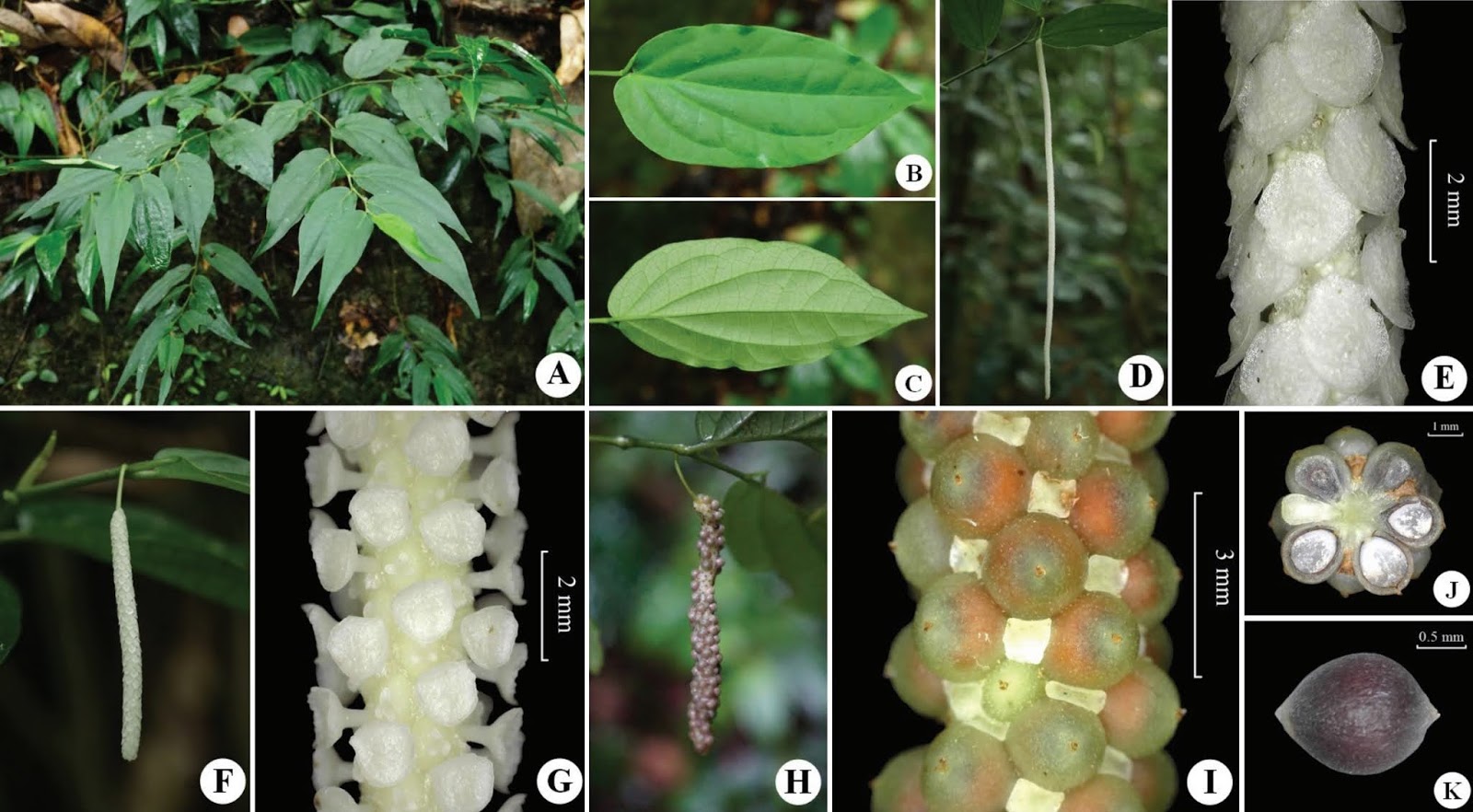
FIGURE 2. Piper semi-transparens C.Y. Hao & Y.H. Tan.
 A. Habit; B. Adaxial surface of leaf; C. Abaxial surface of leaf; D. Male spike; E. Detail of male spike; F. Female spike; G. Detail of female spike; H. Infructescence; I. Detail of infructescence; J. Transection of infructescence; K. Seed (side view); Photographed by C.-Y. Hao.

Piper semi-transparens C.Y. Hao & Y.H. Tan, sp. nov. 

 Type:—CHINA. Hainan: Lingshui County, Diaoluoshan National Natural Reserve, tropical low montane moist forests, ca. 1084m, ..., 9 April 2015, Chao-Yun Hao 2015028 (holotype HITBC!; isotype HITBC!). 

Piper semi-transparens is morphologically similar to Piper bonii and P. bonii var. macrophyllum, but it is distinguished by glabrous leaf blades, stems that are densely short and unbranched pubescent when young and glabrous when mature, leaves with 5(–7) veins, stamens 2, stigmas 3 or rarely 4, and spikes white when mature; floral bracts glabrous; pericarp white and semi-transparent.

 Etymology:— The epithet refers to the semi-transparent pericarp, which is unique in Chinese Piper species. 

Distribution and habitat:— Piper semi-transparens is currently known from Hainan, Guangdong and Guangxi Provinces of China. It occurs in wet subtropical and tropical montane forest at elevations of 500–900 m, and often climbs on trees or rocks close to streams. In its distribution area, other Piper species such as P. hancei and P. austrosinense are often associated.


 Chao-Yun Hao, Bao-Duo Wu, Xiao-Wei Qin, Gang Wu, Hai-Yan Deng and Yun-Hong Tan. 2020. Morphological and Molecular Evidence for A New Species from China: Piper semi-transparens (Piperaceae). Phytotaxa. 429(3); 191–199. DOI: 10.11646/phytotaxa.429.3.1


Thursday, November 14, 2019

[PaleoEntomology • 2019] Angimordella burmitina • Pollination of Cretaceous Flowers


Angimordella burmitina 
Bao, Wang, Li & Dilcher, 2019

The color and morphology of flowers are artistic only. Illustration: Ding-hau Yang. 

Significance: 
Since Darwin, insect pollination was thought to be a key contributor to the Cretaceous radiation of angiosperms. Both insects and angiosperms were common during the mid-Cretaceous, but direct evidence for a Cretaceous insect-angiosperm pollination mode was until now absent. Here, we report a specialized beetle-angiosperm pollination mode preserved in Burmese amber where a tumbling flower beetle is carrying tricolpate pollen grains that belongs to the eudicots that comprise the majority of extant angiosperm species. Our study provides direct evidence of insect pollination of Cretaceous flowers, which is further supported by the flower-visiting body shape, specialized pollen-feeding mouthparts, and zoophilous pollen grains. These findings demonstrate that insect pollination of flowering plants was well established 99 million years ago.

Abstract
Insect pollination of flowering plants (angiosperms) is responsible for the majority of the world’s flowering plant diversity and is key to the Cretaceous radiation of angiosperms. Although both insects and angiosperms were common by the mid-Cretaceous, direct fossil evidence of insect pollination is lacking. Direct evidence of Cretaceous insect pollination is associated with insect-gymnosperm pollination. Here, we report a specialized beetle-angiosperm pollination mode from mid-Cretaceous Burmese amber (99 mega-annum [Ma]) in which a tumbling flower beetle (Mordellidae), Angimordella burmitina gen. et sp. nov., has many tricolpate pollen grains attached. A. burmitina exhibits several specialized body structures for flower-visiting behavior including its body shape and pollen-feeding mouthparts revealed by X-ray microcomputed tomography (micro-CT). The tricolpate pollen in the amber belongs to the eudicots that comprise the majority of extant angiosperm species. These pollen grains exhibit zoophilous pollination attributes including their ornamentation, size, and clumping characteristics. Tricolpate pollen grains attached to the beetle’s hairs are revealed by confocal laser scanning microscopy, which is a powerful tool for investigating pollen in amber. Our findings provide direct evidence of insect pollination of Cretaceous angiosperms, extending the range insect-angiosperm pollination association by at least 50 million years. Our results support the hypothesis that specialized insect pollination modes were present in eudicots 99 million years ago.

Keywords: amber, insect, angiosperm, pollen, paleoecology


  Fig. 2. Angimordella burmitina and tricolpate pollen grains.
 (A) Habitus. Pollen grains attached to the body are indicated by red dots, unattached are indicated by yellow dots, clumped pollen are indicated by blue squares. (B−H) Locations are highlighted in A. (B and C) Pollen grains near the body. Yellow arrows point to colpi. (D and E) Pollen grains on the body. (F−H) Clumped pollen grains. (G and H) Locations are highlighted in F and G, respectively. Blue arrows point to colpi.

Family Mordellidae Latreille, 1802.
Subfamily Mordellinae Latreille, 1802.

Angimordella burmitina gen. et sp. nov.

Etymology: The generic name is derived from the Latin prefix “angi” (referring to angiosperm) and the genus Mordella Linnaeus. The specific name is derived from Latin “Burmitina,” referring to the mineralogical name of Burmese amber.

Holotype :NIGP171315 (Fig. 1), a complete beetle with left side visible but its right side covered by abundant microbubbles. A thrip is near the maxillary palpi of the beetle on the left side.

Horizon and Locality: Mid-Cretaceous (∼99 Ma); Burmese amber, from the Hukawng Valley, Kachin State, Myanmar.

Diagnosis: Body small, with pronotum and elytra with wrinkles or ridges dorsally; antennae serrate; mesotibiae and metatibiae without any kind of ridge including subapical one; pygidium not well developed, shorter than 1/2 of last abdominal sternite.

 Fig. 3. Ecological reconstruction of Angimordella burmitina. These tumbling flower beetles are feeding on eudicot flowers.
The color and morphology of flowers are artistic only. 
Illustration: Ding-hau Yang. 


Tong Bao, Bo Wang, Jianguo Li, and David Dilcher. 2019. Pollination of Cretaceous Flowers. PNAS. DOI: 10.1073/pnas.1916186116

New fossil pushes back physical evidence of insect pollination to 99 million years ago  phys.org/news/2019-11-fossil-physical-evidence-insect-pollination.html via @physorg_com
A Specialized Beetle-Angiosperm Pollination Mode from mid-Cretaceous Burmese Amber

Wednesday, August 9, 2017

[PaleoBotany • 2017] The Ancestral Flower of Angiosperms and Its Early Diversification


Abstract
Recent advances in molecular phylogenetics and a series of important palaeobotanical discoveries have revolutionized our understanding of angiosperm diversification. Yet, the origin and early evolution of their most characteristic feature, the flower, remains poorly understood. In particular, the structure of the ancestral flower of all living angiosperms is still uncertain. Here we report model-based reconstructions for ancestral flowers at the deepest nodes in the phylogeny of angiosperms, using the largest data set of floral traits ever assembled. We reconstruct the ancestral angiosperm flower as bisexual and radially symmetric, with more than two whorls of three separate perianth organs each (undifferentiated tepals), more than two whorls of three separate stamens each, and more than five spirally arranged separate carpels. Although uncertainty remains for some of the characters, our reconstruction allows us to propose a new plausible scenario for the early diversification of flowers, leading to new testable hypotheses for future research on angiosperms.


Hervé Sauquet, Maria von Balthazar, Susana Magallón, James A. Doyle, Peter K. Endress, Emily J. Bailes, Erica Barroso de Morais, Kester Bull-Hereñu, Laetitia Carrive, Marion Chartier, Guillaume Chomicki, Mario Coiro, Raphaël Cornette, Juliana H. L. El Ottra, Cyril Epicoco, Charles S. P. Foster, Florian Jabbour, Agathe Haevermans, Thomas Haevermans, Rebeca Hernández, Stefan A. Little, Stefan Löfstrand, Javier A. Luna, Julien Massoni, Sophie Nadot, Susanne Pamperl, Charlotte Prieu, Elisabeth Reyes, Patrícia dos Santos, Kristel M. Schoonderwoerd, Susanne Sontag, Anaëlle Soulebeau, Yannick Staedler, Georg F. Tschan, Amy Wing-Sze Leung and Jürg Schönenberger. 2017. The Ancestral Flower of Angiosperms and Its Early Diversification. Nature Communications. 8, Article number: 16047. DOI:  10.1038/ncomms16047

Revealed: the first ever flower, 140m years ago, looked like a magnolia 
theconversation.com/revealed-the-first-ever-flower-140m-years-ago-looked-like-a-magnolia-81861 via @ConversationUK