Showing posts with label Plethodontidae. Show all posts

Friday, October 24, 2025

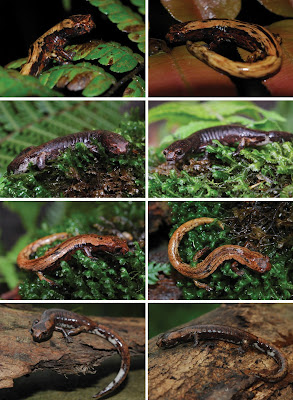
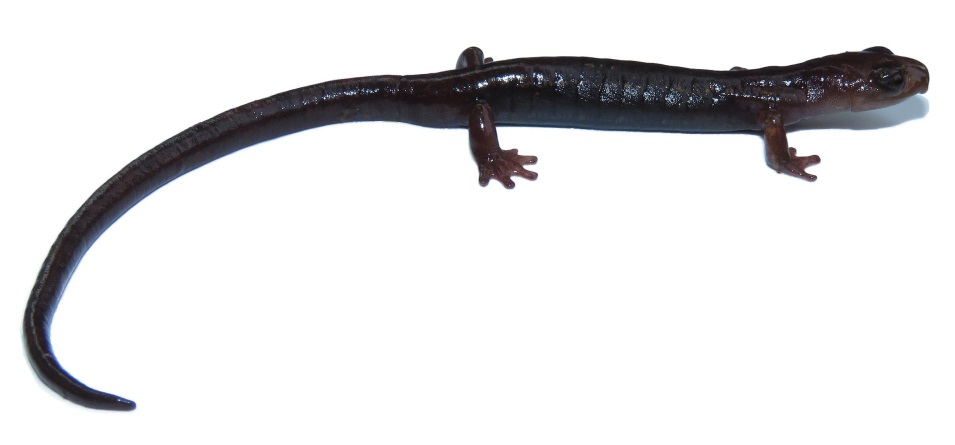
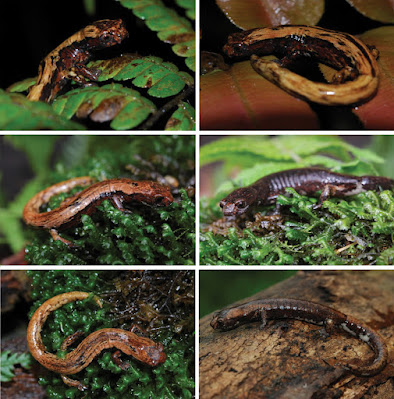
[Herpetology • 2025] Bolitoglossa chirripoensis • A New Species of Salamander of the Genus Bolitoglossa (Caudata: Plethodontidae) from the highest massif of the Cordillera de Talamanca, Costa Rica


Bolitoglossa chirripoensis
Klank, Chaves, Castro & Arias, 2025


Abstract
The mountains of Isthmian Central America (ICA) are biodiversity hotspot and contain a high number of endemic amphibians, many of which have been described from the region in recent decades. Neotropical salamanders of the genus Bolitoglossa have undergone an extensive diversification in the mountains of ICA, specifically in the Cordillera de Talamanca The páramo of the Cordillera de Talamanca, despite being only 1.5% of its total area, harbors six species of Bolitoglossa, which represents 14.2% of the species of the genus in the region. Based on molecular and morphological analyses, we describe a new species of the Bolitoglossa subpalmata species group from the highest massif of ICA, the páramo of the Chirripó National Park. This new species emphasizes the importance of the Cordillera de Talamanca for the speciation of salamanders in ICA and as an important site for their conservation and study.

Amphibia, Isthmian Central America, Neotropics, Páramo, Phylogenetics, Taxonomy


Bolitoglossa chirripoensis sp. nov.


Jeremy KLANK, Gerardo CHAVES, Kimberly CASTRO and Erick ARIAS. 2025. A New Species of Salamander of the Genus Bolitoglossa (Caudata: Plethodontidae) from the highest massif of the Cordillera de Talamanca, Costa Rica.  Zootaxa. 5642(5); 427-450. DOI: doi.org/10.11646/zootaxa.5642.5.2 [2025-06-03] 

Thursday, November 14, 2024

[Herpetology • 2024] Bolitoglossa silentium & B. chiquitica • Taxonomic Assessment of the Bolitoglossa (Eladinea) Subgenus (Caudata: Plethodontidae) with the Description of Two New Species from the Cordillera de Talamanca, Costa Rica


Holotype of Bolitoglossa silentium sp. nov. (UCR20489) in life.

(B) Bolitoglossa bramei (UCR21930) from Valledel Silencio, (C) B. bramei (UCR23698) from Cerro Fábregas, 
(E) B. pygmaea (UCR23697) from Cerro Fábregas, and (F) B. pygmaea (no collected) from Cerro Echandi. 

Arias, Chaves, Kubicki & Parra-Olea, 2024
Photos by E. Arias (A,C,E), Victor Acosta (B), Brian Kubicki (D), and Omar zúñiga (F). 

Abstract
Isthmian Central America boasts a diverse array of salamanders, with a total of 72 species spanning three genera. Among these, a subset of the subgenus Bolitoglossa (Eladinea), stands out as particularly rare within the Cordillera de Talamanca. Many of its species have been discovered since 2009, with the majority documented from fewer than five specimens. In our endeavor to elucidate the taxonomy of this species group, we conducted fieldwork at Tapantí and the summits of Utyum, Echandi, and Fábregas, aiming to locate specimens. Our efforts have led to the expansion of the distributional range and the elucidation of the known body size of Bolitoglossa bramei, while Bolitoglossa robinsoni underwent redefinition. Furthermore, we describe two additional species herein, including a miniature salamander from Cerro Utyum and another salamander of moderate size from Valle del Silencio. As result of this study, the Bolitoglossa diminuta species group is now recognized to encompass seven species, all confined within the limits of the Cordillera de Talamanca.

Amphibia, caudate, Central America, Costa Rica, Panama 


Photograph in preservation of (A) Bolitoglossa robinsoni (UCR11216), holotype from Cerro Echandi and in-life photographs of species found in the Talamanca Mountain range during this study. (B) B. bramei (UCR21930) from Valledel Silencio, (C) B. bramei (UCR23698) from Cerro Fábregas, (D) B. diminuta (UCR24413) from Tapantí, (E) B. pygmaea (UCR23697) from Cerro Fábregas, and (F) B. pygmaea (no collected) from Cerro Echandi.
 Photos by E. Arias (A,C,E), Victor Acosta (B), Brian Kubicki (D), and Omar zúñiga (F). 


Bolitoglossa chiquitica sp. nov.
Costa Rican Miniaturized Salamander

Etymology. The specific epithet is a noun in apposition, it is from the Spanish word “chiquitica”, a popular diminutive used by Costa Rican people to refer to especially small things or animals. This name is given in reference to the small size of this species and its restricted distribution to Costa Rica. 

Holotype of Bolitoglossa silentium sp. nov. (UCR20489) in life.
Photograph by Luis G. Artavia.

Bolitoglossa silentium sp. nov.
Valle del Silencio Web-footed Salamander

Etymology. The specific epithet, silentium, is a noun in apposition and is from Latin, meaning silence. The Spanish meaning of silence is “silencio”, this name was chosen in recognition of the site where this species was found, Valle del Silencio (Silent Valley). 


Erick Arias, Gerardo Chaves, Brian Kubicki and Gabriela Parra-Olea. 2024. Taxonomic Assessment of the Bolitoglossa (Eladinea) Subgenus (Caudata: Plethodontidae) with the Description of Two New Species from the Cordillera de Talamanca, Costa Rica.  Zootaxa. 5537(2); 211-233. DOI: doi.org/10.11646/zootaxa.5537.2.3

Thursday, January 4, 2024

[Herpetology • 2023] Bolitoglossa bolanosi • A New Species of Salamander (Caudata: Plethodontidae: Bolitoglossa) from the Subalpine Rain Páramo of the Cordillera de Talamanca, Costa Rica


 Bolitoglossa bolanosi
Arias, Chaves & Parra-Olea, 2023

Bolaños’ Web-footed Salamander ||  facebook.com/eapiedra

Abstract
The subalpine rain páramo of Isthmian Central America is an area with a high level of endemism. The salamanders of the Bolitoglossa subpalmata Species Group are restricted to the highlands of Costa Rica and Panama, including the subalpine rain páramo. During explorations of the páramos in the Cordillera de Talamanca, we found populations of Bolitoglossa that were referred to B. subpalmata S.G. These new populations were compared phylogenetically with all species within the species group using the 16S and cyt b mitochondrial genes; and they were also compared morphometrically with B. kamuk and B. pesrubra. Herein we described a new species of the B. subpalmata Species Group, which inhabits the subalpine rain páramo and montane forest surrounding the páramo in the Southeastern region in Costa Rica. This new species highlights the role of the subalpine rain páramo in the speciation of salamanders in the highlands of Isthmian Central America, as well as the need to protect this unique and vulnerable habitat. 

Keywords. Amphibia, caudate, Central America, páramo, phylogenetics, Plethodontidae

Holotype of Bolitoglossa bolanosi sp. nov. (UCR 22965) in life on a white background.
Photograph by Erick Arias.

In-life photographs of variations within  Bolitoglossa bolanosi sp. nov. 
 (A) Paratopotype male subadult UCR 22966, (B) paratype juvenile UCR 24247, (C) paratype adult female UCR 22421, and (D) paratype adult female UCR 24245.
 Photographs A and C by Erick Arias, B and D by Omar Zúñiga.

Bolitoglossa bolanosi sp. nov. 
Bolaños’ Web-footed Salamander 

Diagnosis. The combination of the following characteristics can be used to distinguish Bolitoglossa bolanosi from the other described species of the genus Bolitoglossa: (1) having broad hands and feet, with the distal phalanges on the fngers and toes free of palmar and plantar tissue; (2) dorsal coloration highly variable, rarely black brownish uniform and usually mottled with yellow spots, but never with red on hind limbs or forelimbs; and (3) 16S and cyt b mtDNA distances.

Etymology. The name “bolanosi” is a patronym honoring the Costa Rican herpetologist Federico Bolaños, and is used as a noun in the genitive case. We name this species after our dear friend in recognition of his scientifc contributions to the knowledge of the herpetology of Costa Rica, as curator of the Herpetology section at Museo de Zoología of Universidad de Costa Rica, and as the mentor of most herpetologists present in the country. 
 

Erick Arias, Gerardo Chaves and Gabriela Parra-Olea. 2023. A New Species of Salamander (Caudata: Plethodontidae: Bolitoglossa) from the Subalpine Rain Páramo of the Cordillera de Talamanca, Costa Rica. Amphibian & Reptile Conservation. 17(1 & 2) [General Section]: 143–160 (e327).

Wednesday, April 19, 2023

[Herpetology • 2023] Bolitoglossa muisca • A New Bolitoglossa (Caudata: Plethodontidae) from the Cordillera Oriental of Colombia


Bolitoglossa muisca 
 López-Perilla, Fernández-Roldán, Meza-Joya et Medina-Rangel, 2023

 
Abstract
A new salamander species of the genus Bolitoglossa is here described from the cloud forests of the western slopes of the Cordillera Oriental of Colombia, in the Cundinamarca department. The most salient characters of this new species are its numerous maxillary and vomerine teeth, its moderate webbing on hands and feet, its short and robust tail, and its chromatic variation. Based on molecular analyses this new species is assigned to the adspersa species group and its status established as the sister species of B. adspersa, with which it was previously confused. Lastly, the distribution, natural history, and conservation status of the new species are discussed.

Keywords: Biodiversity, coloration, phylogenetic systematics, salamanders, taxonomy

Paratype of Bolitoglossa muisca (IAvH-Am-17419) in life.
Photographs by Juan David Fernández-Roldán.

Chromatic variation of Bolitoglossa muisca in life. Notice some individuals bear white blotches on the ventral surfaces of the body and the tail.
 Photographs by Yeny Rocio López-Perilla.

A non-captured individual of Bolitoglossa muisca from the surroundings of Reserva Chicaque, San Antonio del Tequendama, Cundinamarca, Colombia, photographed by JDF in October 2015. Notice the striking contrasting dark brown background coloration with ochre markings primarily on the dorsal surfaces of the body.
 
 Bolitoglossa muisca sp. nov.
 Common English name: Muisca salamander 
Common Spanish name: Salamandra Muisca

Diagnosis: Bolitoglossa muisca is a member the subgenus Eladinea and of the adspersa species group. The new species is characterized by the following morphological characters: a large-size body; a broad head; a rounded snout in dorsal and ventral views; a very thick postocular fold; a moderate subgular fold; smooth skin texture; moderately long limbs; moderate webbing on third finger and toe; and a short, robust tail.
...

Etymology: Named after the native human inhabitants of the Altiplano Cundiboyacense and Sabana de Bogotá. The Muiscas regarded amphibians as sacred creatures associated with sex, fertility, and the arrival of the rainy season. The specific epithet is used as a noun in apposition.


 Yeny Rocio López-Perilla, Juan David Fernández-Roldán, Fabio Leonardo Meza-Joya nd Guido Fabian Medina-Rangel. 2023. A New Bolitoglossa (Amphibia, Caudata, Plethodontidae) from the Cordillera Oriental of Colombia. ZooKeys 1158: 27-48. DOI: 10.3897/zookeys.1158.99077

Resumen: Describimos una nueva especie de salamandra del género Bolitoglossa proveniente de los bosques nublados de la vertiente occidental de la Cordillera Oriental de Colombia, en el departamento de Cundinamarca. Los caracteres más sobresalientes de esta nueva especie son sus numerosos dientes maxilares y vomerinos, su palmeadura moderada en pies y manos, su cola corta pero robusta, y su variación cromática. Basados en análisis moleculares asignamos esta nueva especie al grupo de especies adspersa y establecemos su estatus como especie hermana de B. adspersa, con la cual era previamente confundida. Finalmente, discutimos algunos aspectos de su distribución, historia natural y su estado de conservación.
Palabras clave: Biodiversidad, coloración, salamandras, sistemática filogenética, taxonomía

Sunday, October 23, 2022

[Herpetology • 2022] Pseudoeurycea jaguar • A New Arboreal Pseudoeurycea (Caudata: Plethodontidae) from the Sierra de Zongolica, Veracruz, Mexico


Pseudoeurycea jaguar 
Cázares-Hernández, Jimeno-Sevilla, Rovito, López-Luna & Canseco-Márquez, 2022 


Abstract
We describe a new species of plethodontid salamander of the genus Pseudoeurycea from the Sierra de Zongolica, Veracruz, Mexico. The new species is distinguished from all other species in the genus by morphological and genetic features and by coloration. Based on a mtDNA phylogeny, the new species belongs to the Pseudoeurycea juarezi group and is most closely related to P. ruficauda from the Sierra Mazateca in northern Oaxaca. The newly described salamander increases the number of species of plethodontid salamanders from Veracruz to 43 and those recognized from Mexico to 140.

Keywords: Bolitoglossini, juarezi group, phylogeny, Pseudoeurycea jaguar sp. nov., salamander

Live specimens of all members of the P. juarezi group.
 A P. aurantia (Peña Verde, Oaxaca), Photo by Sean Rovito; B P. saltator (Sierra de Juárez, Oaxaca), Photo by Sean Rovito;
 C, D P. juarezi (Cerro Pelón, Sierra de Juárez, Oaxaca), Photos by Sean Rovito and Luis Canseco, respectively;
E P. ruficauda (near Plan de Guadalupe, Oaxaca), Photo by Sean Rovito; F Holotype of P. jaguar sp. nov. from the type locality, Photo by Erasmo Cázares.

Color pattern of Pseudoeurycea jaguar sp. nov.
Adults: A Male holotype (MZFC-HE 28694); B, C, D Female paratypes (MZFC-HE 35856-57, 28685, respectively; and released male (E) and female (F).
 Juveniles (all released). G A specimen < 22 mm SVL; H a specimen measuring 30 mm SVL; I, J specimens measuring 33 mm SVL.
Photos by Erasmo Cázares.

Pseudoeurycea jaguar sp. nov.

Pseudoeurycea sp. – Cázares-Hernández et al. 2021.
Suggested English name: Jaguar Salamander.
Suggested Spanish name: Tlaconete jaguar.
 
Diagnosis: 
Assigned to the genus Pseudoeurycea based on the presence of a sublingual fold, comparatively short fifth toe compared to the fourth, limited foot webbing, relatively large size, and mitochondrial DNA sequences.

Morphologically, we distinguish the new species from the other salamanders that occur in the region and from the others of the genus Pseudoeurycea based on size of the body and tail, limb length, digit shape, shape and size of the head, and especially by external coloration (dorsal and ventral coloration of head, body and tail). Pseudoeurycea jaguar is easily distinguished from the other species of the genus Pseudoeurycea by its unique color pattern (Figs 1, 4).
...

Etymology: The specific epithet jaguar is a noun in apposition and refers to the similarity between the dorsal color pattern of the salamander and that of the jaguar (Panthera onca). In the last three years the presence of this endangered feline has been recorded in some places in the Sierra de Zongolica and it seems appropriate to honor this emblematic species in the region.


 Erasmo Cázares-Hernández, H. David Jimeno-Sevilla, Sean M. Rovito, Marco Antonio López-Luna and Luis Canseco-Márquez. 2022.  A New Arboreal Pseudoeurycea (Caudata: Plethodontidae) from the Sierra de Zongolica, Veracruz, Mexico. Vertebrate Zoology. 72: 937-950. DOI: 10.3897/vz.72.e87275

Resumen: Se describe una nueva especie de salamandra pletodóntida del género Pseudoeurycea de la Sierra de Zongolica en el Estado de Veracruz. La nueva especie se distingue de todas las especies del género por características morfológicas y genéticas y patrón de coloración. Con base en la filogenia de ADN mitocondrial, la nueva especie pertenece al grupo P. juarezi y se encuentra más cercanamente relacionada con P. ruficauda de la Sierra Mazateca en el norte de Oaxaca. La descripción de esta nueva salamandra, incrementa el número de especies de salamandras pletodóntidas de Veracruz a 43 y 140 reconocidas para Mexico.

Saturday, September 24, 2022

[Herpetology • 2022] Desmognathus valtos • Allocation of Salamandra auriculata Holbrook, 1838, with A New Species of Swamp-dwelling Dusky Salamander (Urodela: Plethodontidae: Desmognathus) from the Atlantic Coastal Plain


Desmognathus valtos  Pyron & Beamer, 2022

Carolina Swamp Dusky Salamander || DOI: 10.11646/zootaxa.5188.6.6

Abstract
Most swamp-dwelling dusky salamanders of the genus Desmognathus from the Coastal Plain were long treated as a single species (Desmognathus auriculatus) ranging from east Texas to southeastern Virginia. This taxon concept was based on the name Salamandra auriculata Holbrook, 1838 with type locality Riceboro, Liberty County, Georgia and a type series that could not be located by later authors. Recent workers have been unable to locate or verify swamp-dwelling populations from east Texas and western Louisiana, which appear to be extirpated and may not have represented a distinct taxon from co-occurring lineages of D. conanti. Recent molecular phylogenies have supported at least four distinct species-level taxa within D. auriculatus. Populations from the Gulf Coastal Plain in eastern Louisiana, Mississippi, and southwestern Alabama were recently described as D. valentinei Means, Lamb, and Bernardo, 2017 and D. pascagoula Pyron, O’Connell, Lamb, and Beamer, 2022. This leaves two remaining species-level lineages with uncertain taxonomy and nomenclature: D. auriculatus A (Alabama, Florida, and Georgia), and D. auriculatus B/C (Georgia, South Carolina, and North Carolina), both of which occur near the type locality. We recently located a specimen at the Muséum national d’Histoire naturelle in Paris (MNHN 0.4675) that we concluded is one of Holbrook’s syntypes and designated it as the lectotype, but without allocation. Here, we use linear morphometrics to confidently allocate it to D. auriculatus A, bolstered by examination of three historical topotypic collections. This requires a new name for D. auriculatus B/C, which we describe as Desmognathus valtos sp. nov. (suggested common name: Carolina Swamp Dusky Salamander) from Otter Creek, Craven County, North Carolina. Other related and sympatric species of Desmognathus remain to be described from the Atlantic Coastal Plain and adjacent Piedmont of the southeastern United States.

Keywords: Amphibia, Carolina Swamp Dusky Salamander, Desmognathus valtos sp. nov., taxonomy, nomenclature, cryptic species

Holotype (MNHN 2021.0131/RAP0955) of Desmognathus valtos.
 Specimen is an adult (53.1mm SVL), possibly a female based on apparent lack of mental gland and lack of peramorphic or hypertrophied jaw musculature. The holotype exhibits the diagnostic greenish-grey ground color with a reddish-orange dorsal wash, orangish stripe with indistinct margins on the dorsal surface of the tail, yellowish or orangish portholes on the lateral surfaces in three rows, and granular ventral color-pattern with clusters of xanthophores and melanophores interspersed with white flecks and speckles.

Paratype (AMNH A-193889/RAP2294) of Desmognathus valtos.
 Specimen is a small adult (41.2 mm SVL) showing the same diagnostic features as the holotype, with more prominent dorsal color-pattern and lateral white flecking or speckling that is characteristic of younger individuals, with the latter extending noticeably onto the dorsal surfaces.

Desmognathus valtos sp. nov. 
D. auriculatus Holbrook, 1838 (part: see Means 1999; most historical concepts of D. auriculatus included populations from GA, SC, and NC)

Diagnosis: In comparison with the re-description of Desmognathus auriculatus (Holbrook, 1838) by Means et al. (2017), D. valtos is a moderately-sized Dusky Salamander (17.2–62.4mm SVL for transformed specimens), typically with a dark greenish-grey ground color and orangish wash on the dorsal surfaces (Fig. 2). Smaller individuals often have visible remnants of orangish or reddish paired larval spots on the dorsum; differentiation between dorsal and lateral color pattern is typically absent in D. auriculatus, and larval patterning is usually obscured by darkening in even the smallest specimens. Differs significantly in overall size and shape from D. auriculatus, the greatest difference being proportionally longer torsos (longer AG). Tail is thick, girthy, and long, up to 106% SVL, typically less keeled than D. auriculatus, but still flattened at the terminus. Dorsal surface of tail typically exhibits a yellowish or orangish stripe with indistinct margins even in larger individuals (Fig. 2–5); such stripes are usually less colorful and prominent in D. auriculatus, particularly older specimens. Ventrolateral porthole markings with whitish, yellowish, orangish, or reddish pigment may occur in up to three rows (see Pyron et al. 2022b and references therein), but these are generally less prominent than in D. auriculatus. Ventral color pattern is typically relatively bright and granular, consisting of interspersed flecking of darkened melanophores, lighter xanthophores, and whitish speckling, while in D. auriculatus, “the belly is unmistakably black but may be densely peppered with small whitish or silvery speckling (Fig. 14c)” (Means et al. 2017). 

Etymology: The specific epithet is a non-Latin noun used in apposition, from the Greek váltos (βάλτος) for “swamp,” in reference to the primary habitat of the species. We suggest the common name “Carolina Swamp Dusky Salamander.” 
 
 
 R. Alexander Pyron and David A. Beamer. 2022. Allocation of Salamandra auriculata Holbrook, 1838, with A New Species of Swamp-dwelling Dusky Salamander (Plethodontidae: Desmognathus) from the Atlantic Coastal Plain. Zootaxa. 5188(6); 587-595. DOI: 10.11646/zootaxa.5188.6.6


Friday, July 22, 2022

[Herpetology • 2022] Desmognathus gvnigeusgwotli, D. kanawha & D. mavrokoilius • Nomenclatural Solutions for Diagnosing ‘Cryptic’ Species using Molecular and Morphological Data facilitate A Taxonomic Revision of the Black-bellied Salamanders (Urodela: Plethodontidae: Desmognathus ‘quadramaculatus’) from the southern Appalachian Mountains


Desmognathus spp.

in Pyron & Beamer, 2022. 
 
Abstract
To be available under the International Code of Zoological Nomenclature, nomina erected after 1930 must “be accompanied by a description or definition that states in words characters that are purported to differentiate the taxon” (Article 13.1.1). For many so-called ‘cryptic’ species, this may prove difficult when relying on external morphology. Yet, such species are likely to be diagnosable by (fixed or variable) differences in DNA sequences, which can also be treated as characters and described in words. While recent authors have proposed such methods, they have rarely been adopted as the primary diagnostic implement in vertebrates. Additionally, morphometrics may reveal subtle but distinct variation in size and shape, which may not be dispositive for identifying individual specimens but can nonetheless characterize overall differences between species. We employ these techniques here to revise the taxonomy of the Black-bellied Salamanders Desmognathus folkertsi and Desmognathus ‘quadramaculatus’ from the southern Appalachian Mountains of the eastern United States. While the former was diagnosed by a variety of morphological and molecular characters, the latter was poorly characterized and subsequently found to consist of two distantly related clades of six genetic lineages. Recent nomenclatural work found that the nomen Salamandra quadramaculata Holbrook, 1840 was unavailable for this species and that no valid nomen had ever been applied at the species level. We erect three new species and resurrect one junior synonym to account for species-level geographic genetic variation in the group. All nomina are diagnosed with explicit reference to fixed or varying allelic differences at mitochondrial and nuclear loci, quantitative variation in overall size and shape from linear morphometrics, and qualitative description of color-pattern variation. Despite their gross similarity, we hypothesize that subtle, as-yet undetected phenotypic variation exists between these species, which may be revealed by geometric morphometrics, 3D scanning, and other data such as physiology and behavior. We also utilize recently developed technologies to present DNA-sequence data for these species in a compact, reproducible format to permanently associate the observed characters with the original description, with several thousand base pairs taking up only a few cm2. These approaches may prove useful for future descriptions of amphibians with highly similar external phenotypes.

Keywords:  validity, molecular characters, availability, convergence, phenotype, Amphibia


Cherokee Black-bellied Salamander Desmognathus gvnigeusgwotli in life, from Straight Fork, Great Smoky Mountains, North Carolina
 (Photo: Todd Pierson, Kennesaw State University)

Desmognathus kanawha from Whitetop, Virginia
(Photo: Todd Pierson, Kennesaw State University)

Desmognathus mavrokoilius from Hickory Creek on Bearwallow Mountain, North Carolina
 (Photo: Max Seldes, University of Georgia)


R. Alexander Pyron and David A. Beamer. 2022. Nomenclatural Solutions for Diagnosing ‘Cryptic’ Species using Molecular and Morphological Data facilitate A Taxonomic Revision of the Black-bellied Salamanders (Urodela, Desmognathus ‘quadramaculatus’) from the southern Appalachian Mountains. Bionomina. 27(1); 1-43. DOI: 10.11646/bionomina.27.1.1


Monday, May 9, 2022

[Herpetology • 2022] Bolitoglossa cathyledecae • A New Salamander of the Genus Bolitoglossa (Caudata: Plethodontidae) from the highlands of western Panama


Bolitoglossa cathyledecae 
Ponce, Navarro, Morales & Batista, 2022

Chiriqui Fire Salamander | Salamandra de fuego chiricana || DOI: 10.11646/zootaxa.5129.4.4 
Photo by Marcos Ponce.
 
Abstract
We describe a new species of salamander of the genus Bolitoglossa from the Cordillera de Talamanca in western Panama. The new species is distinct from its congeners by its dorsal and ventral coloration, finger and toe webbing, and a comparatively high maxillary teeth count in relation to SVL. Analysis of mitochondrial DNA sequences revealed an isolated phylogenetic position of the new species which is related to the B. robinsoni, B. subpalmata and B. epimela species groups, all four of which form a subclade within the subgenus Eladinea.

 Keywords: Amphibia, Bolitoglossa cathyledecae sp. nov., La Amistad International Park, DNA barcoding, Eladinea, Serranía de Talamanca. 


Holotype of Bolitoglossa cathyledecae sp. nov. (MHCH 3240) in life;
A–B) Details of head; C–D) Body coloration in life.
Photograph by Marcos Ponce.


Bolitoglossa cathyledecae sp. nov.
Chiriqui fire salamander, 
Salamandra de fuego chiricana

Diagnosis: Assigned to genus Bolitoglossa due to having fewer than 14 costal grooves and lacking a sublingual fold, and to subgenus Eladinea based on mtDNA sequence data. Bolitoglossa cathyledecae is differentiated from all known species of the subgenus Eladinea by the combination of the following characters: (1) Unique coloration consisting of pinkish-flesh with flame-scarlet speckles, ventral salmon color; (2) Moderately small size with wide head HW/SVL=0.21; (3) moderate -sized extremities; (4) digits with moderate to extensive webbing on the hands and feet; (5) prehensile and considerably longer tail than body TL/SVL=1.5; (6) high tooth counts: premaxillary (7), maxillary teeth (78).

Etymology. The specific epithet of this beautiful new species honors Cathy Ledec, a passionate conservationist and long-time supporter of conservational organizations working to preserve the habitat of salamanders in the Neotropics.

Distribution. Bolitoglossa cathyledecae is known only from one site within the montane rain forest life zone (sensu Holdridge 1967) along the northeastern mid-elevation slopes of the Cordillera de Talamanca, in the vicinity of the continental divide between Chiriquí and Bocas del Toro, within the La Amistad National Park, district Boquete, at about 1900 m above sea level. 

Bolitoglossa cathyledecae sp. nov. Color variation in the paratypes.
 A) Dorsum in daytime coloration (MHCH 3242);
B-C) Details of head and dorsum in daytime coloration (MHCH 3241);
D) Paratype at the moment of encounter at night (MHCH 3242).
Photographs taken by Marcos Ponce.


Marcos Ponce, Deivy Navarro, Roger Morales and Abel Batista. 2022. A New Salamander of the Genus Bolitoglossa (Caudata: Plethodontidae) from the highlands of western Panama.  Zootaxa. 5129(4); 543-556. DOI: 10.11646/zootaxa.5129.4.4  

Wednesday, May 4, 2022

[Herpetology • 2022] Desmognathus pascagoula • A New, Narrowly Endemic Species of Swamp-dwelling Dusky Salamander Genus Desmognathus (Caudata: Plethodontidae) from the Gulf Coastal Plain of Mississippi and Alabama


Desmognathus pascagoula 
Pyron, O'connell, Lamb & Beamer, 2022


Abstract
We describe a new, narrowly endemic species of swamp-dwelling dusky salamander (Plethodontidae: Desmognathus pascagoula sp. nov.) from the Gulf Coastal Plain of southeastern Mississippi and southwestern Alabama based on linear morphometrics, mitochondrial DNA, and single nucleotide polymorphisms from 881 loci produced using genotype-by-sequencing. Some populations of the new species were historically referred to as D. auriculatus, a polyphyletic assemblage of at least three species in the Atlantic and Gulf Coastal Plain from Texas to North Carolina. Populations of D. auriculatus from the Gulf Coastal Plain in Louisiana and Mississippi were recently described as D. valentinei. The new species includes populations that were tentatively referred to D. valentinei, but we find it is morphologically, genetically, and geographically distinct. It is smaller, has a more defined dorsal color pattern, more irregular whitish “portholes” in up to three rows on the lateral surfaces of the body and tail, and a brighter orange or yellowish orange postocular stripe. At present, the new species is known from only six extant populations in the lower Pascagoula, Escatawpa, and Mobile drainages. The latter represents a distinct phylogeographic lineage. We also refer a historical collection from the northeastern side of the Mobile-Tensaw River Delta to this species, suggesting a much broader range in the past. We suspect that more populations remain to be discovered in the area, and their potential species-level distinctiveness should be tested further. This discovery increases knowledge of the biodiversity in the southeastern United States Coastal Plain, a candidate region meeting the global criteria for a “biodiversity hotspot,” and underscores the amount of cryptic diversity likely remaining to be discovered and described in Nearctic salamanders.
 
Keywords: Amphibia, salamanders, Caudata, Desmognathus pascagoula sp. nov., Gulf Coastal Plain, Alabama, Mississippi


Desmognathus pascagoula sp. nov.

 
R. Alexander Pyron, Kyle A. O'connell, Jennifer Y. Lamb and David A. Beamer. 2022. A New, Narrowly Endemic Species of Swamp-dwelling Dusky Salamander (Plethodontidae: Desmognathus) from the Gulf Coastal Plain of Mississippi and Alabama.  Zootaxa. 5133(1); 53-82. DOI: 10.11646/zootaxa.5133.1.3

Researchers Discover New Species of Salamander From Gulf Coastal Plains Hotspot

Saturday, September 25, 2021

[Herpetology • 2021] Batrachoseps wakei • A New Relict Species of Slender Salamander (Caudata: Plethodontidae) with a Tiny Range from Point Arguello, California, USA


 Batrachoseps wakei
  Sweet & Jockusch, 2021

 
Abstract
Among western North American amphibian lineages, the plethodontid salamander genus Batrachoseps has undergone the most extensive radiation. Here we describe a new species in the genus from the vicinity of Point Arguello, central California. This lineage falls within the B. pacificus group, but it is differentiated from other species in the group by both molecular sequence data and morphology. It is geographically disjunct from its close relatives, with a tiny range in unlikely habitat along a narrow strip of the Pacific Coast, where it is entirely surrounded by B. nigriventris, a distant relative. Although intraspecific molecular variation is almost entirely absent, some population structure was detected across the 4 km extent of its range. Because of its tiny range and limited genetic variation, the impacts of any potential modifications to its known habitat should be evaluated to ensure the species' continued conservation.


Photos of Batrachoseps wakei.
 (A) Paratype (MVZ 293139, adult male, SVL = 60.4 mm) in life;
 (B) paratype of B. wakei (MVZ 293140, adult male, SVL = 63.0 mm) contrasted with B. nigriventris from Honda Canyon, Santa Barbara Co., California, in close parapatry with B. wakei;
(C) EL J 1662.
Photos A, B by Sam Sweet; photo C © Iñigo Martínez-Solano, used with permission.

Skull of an adult female Batrachoseps wakei (CCBER 32848, SVL = 53.0 mm); anterior ventral (top) and dorsal (bottom) views; bones, teeth, and cartilage (stippled) are shown. Scale bar = 2 mm.
Dorsal view of the right front and hind foot of an adult male Batrachoseps wakei (CCBER 32847, SVL = 55.8 mm); cartilage is stippled. Scale bar = 2 mm.

Batrachoseps wakei, new species
 Suggested common name: Arguello Slender Salamander

Diagnosis.—The species is assigned to the genus Batrachoseps in having elongate genioglossus muscles attached to the midsection of the mandible, a large dorsal fontanelle in the skull, four toes on the hind feet, and genetic attributes that assign it to that genus. It is assigned to the subgenus Batrachoseps and differs from members of the subgenus Plethopsis (B. campi, B. robustus, and B. wrighti) in having fused premaxillary bones and more trunk vertebrae (21–22 vs. 17–19). Batrachoseps wakei is a large, long-bodied member (to 67.6 mm SVL, with 21–22 trunk vertebrae) of the B. pacificus group (Jockusch and Wake, 2002; Martínez-Solano et al., 2012), sharing with B. major and B. pacificus large body size, a dorsal pattern of longitudinally vermiculate tan markings on a medium brown ground color, few white iridophores either dorsally or ventrally, a tendency to show orange patches on the distal tail, and a pale venter (Fig. 2). Batrachoseps wakei differs from both species in having a smaller head, with the eyes protruding laterally beyond the margin of the upper jaw (Figs. 3–4), in having ca. 50% fewer melanophores on the throat and chest (Table 2), in often having extensive patches of orange pigment on the distal half of the tail (Fig. 2), in lacking melanophores in the peritoneal lining, and in genetic attributes described below. It further differs from B. pacificus in having a longer tail. It further differs from B. major in having proportionally longer limbs, larger feet, and a shorter tail (Fig. 4). Batrachoseps wakei has a proportionally smaller head and longer tail than B. m. aridus, a morphologically distinctive lineage variably treated as a subspecies of B. major (Wake and Jockusch, 2000) or as a species (e.g., AmphibiaWeb, 2020), the ventral trunk is pale, and the dorsal pattern is of pale longitudinal vermiculations rather than a dense suffusion of gold and silver iridophores as seen in B. (m.) aridus.
....


Etymology.—The species is named in honor of David Burton Wake, Professor of the Graduate School and emeritus Director of the Museum of Vertebrate Zoology at the University of California, Berkeley, in recognition of his immense contributions to the knowledge of California salamanders, as well as his broader roles in both amphibian conservation and evolutionary studies in western North America. David Wake has set an example of scholarship and integrity that has inspired his colleagues and his many graduate students (of whom we are two) by his insightful and never routine work on the evolution of salamanders, spanning the range of morphology, systematics, ecology, molecular genetics, and phylogeography. The complexity of the genus Batrachoseps has been progressively revealed by his embrace of the most current analytical techniques, and this is one of a minority of the 22 species in the genus that he has not had a hand in discovering or naming. As Museum of Vertebrate Zoology Director from 1971–1998, David Wake nurtured the museum's focus on discovering the diversity and evolutionary history of western North American tetra-pods. He also played a critical early role in focusing attention on the emerging declining amphibian crisis (e.g., Blaustein and Wake, 1990) and, as a founder of AmphibiaWeb, in promoting a collaborative vision for the amphibian research community and making high quality information about amphibians easily accessible to all.

Distribution and relationships of the B. pacificus group. (A) Colored polygons show the ranges of the seven species currently recognized in B. pacificus (based on IUCN range polygons), and black dots show the locations of molecular samples included in this study; brown polygon shows range of B. nigriventris. Arrow and purple circle indicate the locality of the species described here. Map tiles by Stamen Design, under a CC BY 3.0 license. Map data by OpenStreetMap under ODbL. (B) Species tree for the B. pacificus group and selected outgroups inferred from coalescent analysis of seven nuclear and one mitochondrial marker. Support values are ASTRAL-III's local posterior probabilities; branch lengths are in coalescent units. See Data Accessibility for tree file.


Habitat of Batrachoseps wakei.
 (A) Type locality at Point Arguello, California, USA;
(B) northernmost locality at Honda Point, California, USA.
Photographs © Ivan Parr, used with permission.

 
Samuel S. Sweet and Elizabeth L. Jockusch. 2021. A New Relict Species of Slender Salamander (Plethodontidae: Batrachoseps) with a Tiny Range from Point Arguello, California. Ichthyology & Herpetology, 109(3); 836-850. DOI:10.1643/h2020027