Showing posts with label Mantodea. Show all posts

Saturday, June 20, 2026

[Entomology • 2026] Rivetina archibaldi (Mantodea: Rivetinidae) • A New praying mantis from the Zagros Oak Forests of Iran


 Rivetina archibaldi  Kolnegari, 

in Kolnegari, Handal et Khormizi, 2026   

Abstract
Iran, the world’s 18th-largest country, harbors a wide range of habitats and a rich diversity of Mantodea. The genus Rivetina Berland & Chopard, 1922 is represented in Iran by several morphologically similar ground-dwelling species. Here, we describe Rivetina archibaldi sp. nov. from the Zagros oak forests of Lorestan Province, western Iran. The new species is diagnosed based on external morphology and male genital structures and is compared with congeners occurring in Iran and Iraq. A dichotomous key to the Iranian species of Rivetina is also provided.

Keywords: Ground-dwelling mantis, Lorestan Province, Middle East, Persian Plateau

Head and pronotum of Rivetina archibaldi sp. nov. male (A, C) and female (B, D).

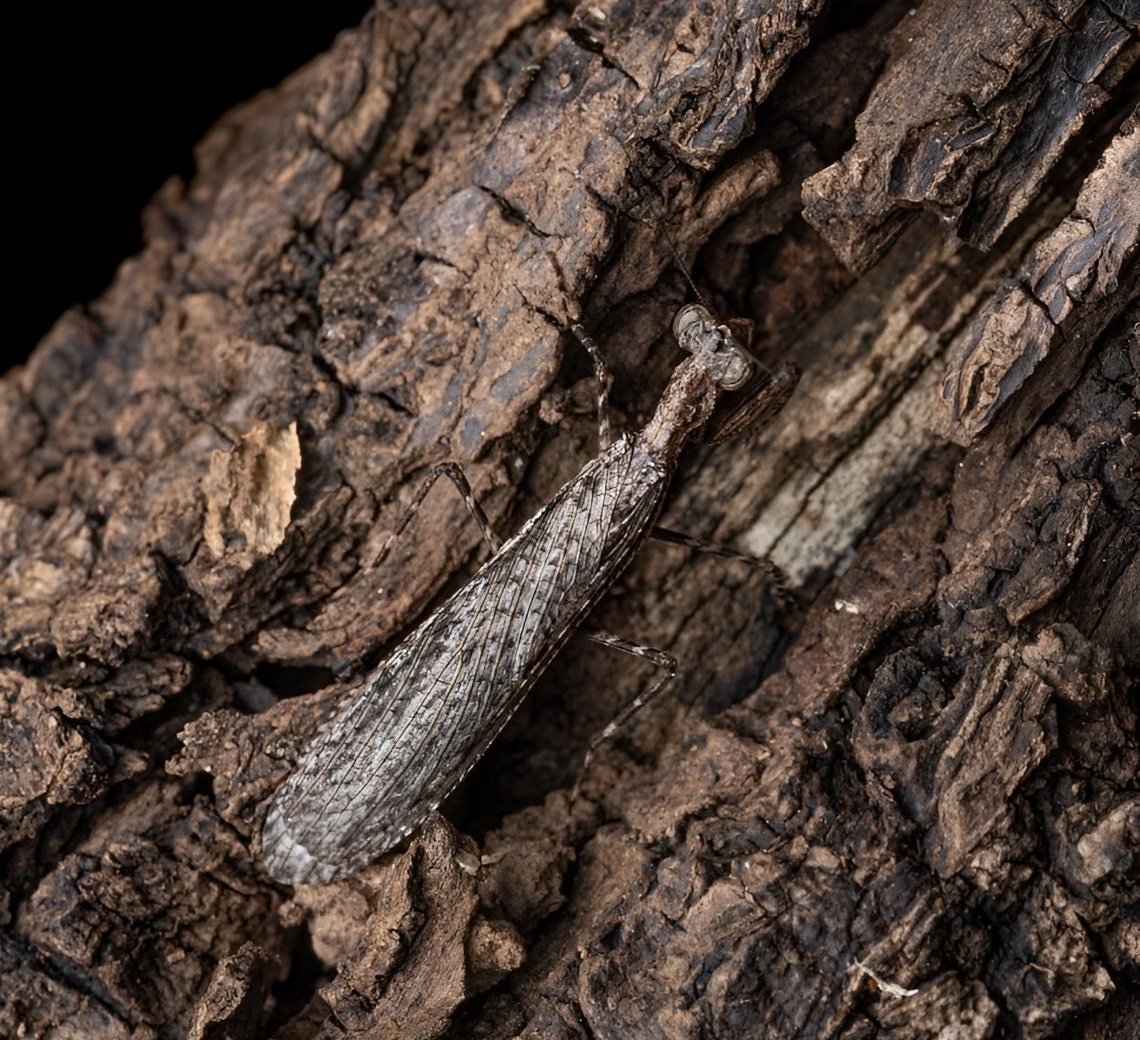
Live habitus of  Rivetina archibaldi sp. nov. (A, C) male and (B, D) female.

Family Rivetinidae Ehrmann & Roy, 2002
Subfamily Rivetininae Ehrmann & Roy, 2002

Tribe Rivetinini Ehrmann & Roy, 2002

Genus Rivetina Berland & Chopard, 1922

Rivetina archibaldi Kolnegari, sp. nov.
 
Diagnosis.— The metazone minimum width is distinctly smaller in Rivetina archibaldi sp. nov. (mean = 1.78 mm) than in all examined congeners. The new species is morphologically similar to R. dolichoptera but differs in the shape of the pronotum, the shorter supra-anal plate, and distinct features of the male genitalia.

Etymology.— The specific epithet archibaldi is dedicated to Dr. George Archibald, a renowned conservationist who has devoted more than half a century of his life to the protection of wildlife, especially cranes (Aves, Gruidae), around the world. His lifelong efforts have played a central role in saving several crane species from extinction and in promoting the conservation of these legendary and symbolic birds across continents, including in the Middle East and Iran. The name honors his remarkable contribution to avian conservation and his inspiring legacy in global ornithology.


 Mahmood Kolnegari, Elias Handal and Mahdi Zare Khormizi. 2026. Rivetina archibaldi sp. nov. (Mantodea, Rivetinidae), A New praying mantis from the Zagros Oak Forests of Iran. Journal of Orthoptera Research. 35(2): 283-292. DOI: doi.org/10.3897/jor.35.174839 [12 Jun 2026]

Thursday, June 11, 2026

[Entomology • 2026] Kongobatha spinosistyla, K. serpens & K. rufilineaStriking, Slender, and Secretly Spinose: A Revision of the Snake Mantises of the Genus Kongobatha (Mantodea: Nanomantidae: Fulciniinae: Neomantini)


Kongobatha spinosistyla Connors, 

in Connors, Yeeles, Lach et  Rentz, 2026
 
Abstract
Kongobatha is one of the most commonly encountered of all Australian mantis genera, and yet despite this, very little is known about the taxonomy or biology of the genus. Described to include a single Australian species, K. diademata, the only subsequent work on the genus has been the description of a second species from New Guinea, K. papua. We here describe three additional speciesK. spinosistyla Connors sp. nov., K. serpens Connors sp. nov., and K. rufilinea Connors sp. nov., and redescribe K. diademata and K. papua in detail, the latter of which is recorded from Australia for the first time. We also describe for the first time the unusual, heavily spinose styli of male Kongobatha. These are apparently unique among Mantodea as a whole, but their function remains unknown. 

Mantodea, mantis, snake mantis, Australia, New Guinea, taxonomy, styli, citizen science

Male and female Kongobatha spinosistyla (Rainforest Snake Mantis), Kuranda, North Queensland.
photo: Maurice Allan


MATTHEW G. CONNORS, PETER YEELES, LORI LACH and DAVID C.F. RENTZ. 2026. Striking, Slender, and Secretly Spinose: A Revision of the Snake Mantises of the Genus Kongobatha (Mantodea: Nanomantidae: Fulciniinae: Neomantini).  Zootaxa. 5807(1); 45-84. DOI: doi.org/10.11646/zootaxa.5807.1.2 [2026-05-08]

Tuesday, December 16, 2025

[Entomology • 2025] Ameles serpentiscaudaThe Snake-tail Mantis: A New endemic Species of Dwarf Mantis (Mantodea: Amelidae) reveals A distinctive Mating Behavior and Complex Communication Patterns


Ameles serpentiscauda
Battiston, Maioglio, Corneti, Forni & Luchetti, 2025


Abstract
A new species of dwarf mantis, Ameles serpentiscauda sp. nov. endemic to Sardinia (Italy) is described. This taxon displays a highly elaborate courtship behavior, characterized by coordinated movements of the abdomen, cerci and terminalia, which is reported here for the first time, and compared with known behavioral traits in the genus Ameles. An integrative framework has been used, combining these ethological data with detailed morphology and molecular phylogenetics. The latter approach places A. serpentiscauda as the sister taxon to A. andreae, despite pronounced divergence in wing morphology. This finding underscores the lability of wing development within Amelini, contrary to historical taxonomic assumptions. Behavioral clustering further supported the close relationship between A. serpentiscauda and A. andreae, highlighting a potential phylogenetic signal in courtship displays. However, distance‐matrix comparisons and linear modeling reveal that neither morphology nor phylogeny alone reliably predict behavioral divergence, suggesting hints of convergent adaptation. The discovery of a complex and idiosyncratic behavior in A. serpentiscauda reveals an unexpected communicative ability within solitary Mantodea. Moreover, our results demonstrate that ethological traits possess untapped potential as taxonomic characters, but should be approached with caution, as they may reflect repeated adaptations, rather than shared ancestry.

Key words: Ameles, courtship, behavior, phylogeny, ethology, morphology


Roberto Battiston, Oscar Maioglio, Simona Corneti, Giobbe Forni and Andrea Luchetti. 2025. The Snake-tail Mantis: A New endemic Species of dwarf mantis, Ameles serpentiscauda sp. nov., reveals a distinctive Mating Behavior and Complex Communication Patterns. Ethology Ecology & Evolution. DOI: doi.org/10.1080/03949370.2025.2571110 [24 Nov 2025]


Monday, December 1, 2025

[Entomology • 2025] Tenomaculosa hexapunctata • A New monotypic Genus of the Tribe Tenoderini (Mantodea: Mantidae: Tenoderinae) from the southern Thailand


Tenomaculosa hexapunctata  
Tarapipattanakun & Unnahachote, 2025
 

A new genus and species Tenomaculosa hexapunctata gen. et sp. n. of praying mantis (Mantodea) is described from the southern Thailand. The new genus distinguished from related genera by the presence of six distinct black spots on the internal surfaces of the profemur and, in lateral view, by widened posterior part of the pronotum. Additionally, unidentified species of the genus Mesopteryx Saussure, 1870 is found in Thailand for the first time. A key to the genera of the subtribe Tenoderina in the Oriental region is also given.

Key words: Mantodea, praying mantises, Mantidae, Tenoderinae, Tenoderini, Oriental region.

Tenomaculosa hexapunctata gen. et sp. n.:
 A – holotype male in dorsal view; B – head in frontal view; C – inner side of prothoracic leg.

Fore legs of the subtribe Tenoderina genera:
A – Mesopteryx sp.; B – Tenodera cf. fasciata; C – Tenodera aridifolia; D – Tenospilota nova;
E, F – Tenomaculosa hexapunctata gen. et sp. n.

Tenomaculosa hexapunctata gen. et sp. n., male genitalia and terminalia.
A – ventral view of left phallomere; B – ventral view of ventral phallomere; C – ventral view of right phallomere; D – supraanal plate and cerci; E – subgenital plate.

Genus Tenomaculosa Tarapipattanakun et Unnahachote, gen. n.

DIFFERENTIAL DIAGNOSIS. Tenomaculosa gen. n. can be distinguished from Tenospilota by the pronotum being thicker towards the end in lateral view (in Tenospilota, the thickness is equal throughout the entire pronotum). The internal surfaces of the profemur presents six distinct black spots (only one large black spot is present around the tibial spur groove). The forewings without any pattern (with dark patches present in the discoidal areas), and the hindwings are transparent (with five black horizontal stripes patterns on the discoidal area).

ETYMOLOGY. The genus name is a combination of the word “Teno” referring to the related genus Tenodera, which shares some characteristics, and the Latin word “maculosa”, meaning spotted, in reference to the black spots on the profemur. 


Tenomaculosa hexapunctata Tarapipattanakun et Unnahachote, sp. n. 

ETYMOLOGY. The specific name “hexapunctata” is a combination of the word “hexa” meaning six, and the word “punctata” which is a Latin word meaning points. The name refers to the six black points on the inner side of the profemur of a new species.     


 Tarapipattanakun P. and Unnahachote T. 2025. A New monotypic Genus of the Tribe Tenoderini (Mantodea: Mantidae: Tenoderinae) from the southern Thailand. Far Eastern Entomologist. 538: 1-11. DOI: doi.org/10.25221/fee.538.1
 facebook.com/pannphathn.tharaphiphathnkul/posts/1349561093332018


Tuesday, June 24, 2025

[Entomology • 2025] Aethalochroa kaltenbachi • A New Species of Aethalochroa Wood-Mason, 1877 (Mantodea: Toxoderidae) from mainland SE Asia, with A Reassessment of Oestomantis Giglio-Tos, 1914


 Aethalochroa kaltenbachi
Schwarz & Unnahachote, 2025

ตั๊กแตนตำข้าวมังกร  ||  DOI: doi.org/10.1080/00379271.2025.2486825 
 
Summary
Aethalochroa kaltenbachi n. sp. is described from Thailand and Malaysia. The new species differs from congeners by very deep paramedian furrows on the vertex and much larger foliaceous lobes on the walking legs. The Javan genus Oestomantis Giglio-Tos, 1914 falls into the character variability observed for Aethalochroa Wood-Mason, 1877 and is downgraded here to subgenus level. An updated key to the genus is provided.

Keywords: Praying mantises, Toxoderinae, Aethalochroini, taxonomy, morphology, Oriental region


 Aethalochroa kaltenbachi n. sp., live, Adult female
 (photo: Nachanon Chotimongkol) 


Aethalochroa kaltenbachi n. sp.


 Christian J. Schwarz and Thornthan Unnahachote. 2025. A New Species of Aethalochroa Wood-Mason, 1877 (Mantodea: Toxoderidae) from mainland SE Asia, with A Reassessment of Oestomantis Giglio-Tos, 1914. Annales de la Société entomologique de France (N.S.): International Journal of Entomology. DOI: doi.org/10.1080/00379271.2025.2486825 [14 May 2025]

Une nouvelle espèce d’Aethalochroa Wood-Mason, 1877 (Mantodea : Toxoderidae) d’Asie du Sud-Est, et commentaires à propos d’Oestomantis Giglio-Tos, 1914
Resumé: Aethalochroa kaltenbachi n. sp. est décrite de Thaïlande et de Malaisie. La nouvelle espèce diffère de ses congénères par des sillons paramédians très profonds sur le vertex et par des lobes foliacés beaucoup plus grands sur les pattes médianes et postérieures. Le genre javanais Oestomantis Giglio-Tos, 1914 tombe dans la variabilité des caractères observés pour Aethalochroa Wood-Mason, 1877, et est rétrogradé ici au niveau de sous-genre. Une clé d’identification pour le genre est proposée.

บทสรุป. ตั๊กแตนตำข้าวชนิดใหม่ในสกุล Aethalochroa Wood-Mason, 1877 (Mantodea : Toxoderidae) จากแผ่นดินเอเชียตะวันออกเฉียงใต้และความคิดเห็นเกี่ยวกับสกุล Oestomantis Giglio-Tos, 1914.
ตั๊กแตนตำข้าวชนิดใหม่ Aethalochroa kaltenbachi n. sp. ถูกบรรยายจากประเทศไทยและมาเลเซีย ตั๊กแตนตำข้าวชนิดนี้สามารถจำแนกจากชนิดอื่นๆ ในสกุลเดียวกันจากลักษณะของร่องลึกข้างตารวมบริเวณส่วนหัว และแผ่นขยายที่ส่วนของขาคู่กลางและขาคู่หลังที่มีขนาดใหญ่กว่าชนิดอื่นๆ อย่างชัดเจน นอกจากนั้นในการศึกษาครั้งนี้ ลักษณะของตั๊กแตนตำข้าวสกุล Oestomantis Giglio-Tos, 1914 จากชวา ที่ถูกมองว่าเป็นเพียงแค่ความแปรผันภายในระดับสกุล ส่งผลให้สถานะของตั๊กแตนตำข้าวดังกล่าวถูกลดระดับจากระดับสกุลให้อยู่ในสถานะสกุลย่อยของสกุล Aethalochroa Wood-Mason, 1877 เท่านั้น รวมถึงกุญแจในการจำแนกระดับชนิดของสกุล Aethalochroa Wood-Mason, 1877 ก็ถูกระบุไว้ในการศึกษาครั้งนี้ด้วยเช่นกัน.


Saturday, March 22, 2025

[Entomology • 2025] Sinaiella azadi • A New praying mantis Species (Mantodea: Toxoderidae) from Western Asia (Iran and Armenia)


Sinaiella azadi  
Kolnegari, Schwarz, Ghrejyan & Borer, 2025  

 
Abstract
The Mantodea fauna of Iran comprises nine families and at least 40 species. Scientific surveys conducted by Iranian entomologists have recently led to an increased knowledge on the diversity and biology of mantises. Among the Mantodea species dispersed in Iran, the family Toxoderidae has been regarded as a group of highly cryptic praying mantids with greatly elongated bodies in common. Up to now, six species of this family have been reported from Iran, entirely from the southern half of the country. Herein, we describe Sinaiella azadi sp. nov. from the Markazi Province, in central Iran. Moreover, our ex-situ investigation led to the identification of this new species from a preserved collection in Armenia. These findings considerably extend the known distribution of the genus Sinaiella Uvarov, 1924 beyond the Arabian Peninsula. We also discuss the genus and include a proposed dichotomous key to the Sinaiella species.

Mantodea, Arabian Peninsula, Lobothespis vignai, Markazi Province, Persian Plateau, Yerevan


Sinaiella azadi sp. nov.
A‒C) Holotype male. A) Antepenultimate instar. B) Last instar. C) Adult.
D, E) Allotype female. D) Antepenultimate instar. E) Adult. 
Gurehzar, Shazand County, Markazi Province, Iran, type locality of Sinaiella azadi sp. nov.

 Sinaiella azadi sp. nov.


Mahmood KOLNEGARI, Christian J. SCHWARZ, Tigran GHREJYAN and Matthias BORER. 2025. Sinaiella azadi sp. nov. (Mantodea: Toxoderidae); A New praying mantis Species from Western Asia (Iran and Armenia).  Zootaxa. 5594(1); 98-110 DOI: doi.org/10.11646/zootaxa.5594.1.4 [2025-02-27]   Researchgate.net/publication/389393887_Sinaiella_azadi_sp_nov_a_new_praying_mantis_species_from_Western_Asia_Iran_and_Armenia

Wednesday, November 13, 2024

[Entomology • 2024] Arria qinlingensis • A remarkable New Praying Mantis (Mantodea: Haaniidae) from China


Arria qinlingensis
Wu,  Zhang & Liu, 2024 


ABSTRACT
A new species of mantis, Arria qinlingensis sp. n., is described based on both male and female specimens collected from Qinling Mt., China. This new species has similar external morphology to A. leigongshanensis (Ge and Chen, 2008); these two species represent a mysterious evolutionary clade in the genus Arria Stål, 1877. The discovery of this moss-mimicking mantis species represents the northernmost distribution of the genus Arria. Illustrations and ecological images of Arria species in China are presented, and the images of the final-instar nymph for both sexes of A. leigongshanensis (Ge and Chen, 2008) and the ootheca of Arria qinlingensis sp. n. are illustrated. The distribution of the two species in China is discussed and mapped.
 
KEYWORDS: Dictyoptera, morphology, taxonomy, new species, Oriental Region


Chao Wu, Jia-Zhi Zhang and Chun-Xiang Liu. 2024. Arria qinlingensis sp. n., A remarkable New Praying Mantis from China (Mantodea: Haaniidae). Journal of Natural History.  58(9-12); 408-421. DOI: doi.org/10.1080/00222933.2024.2319894 
佛坪保护区发现了秦岭缺翅螳!

Saturday, October 12, 2024

[Entomology • 2024] Phyllothelys qingjinum • Integrated Taxonomy reveals A New Praying Mantis Species of Phyllothelys Wood-Mason, 1876 (Mantodea: Hymenopodidae) from Yunnan, China


Phyllothelys qingjinum Liu, Wu, Ye, & Liu, 

in Q. Liu, Wu, Ye et X. Liu, 2024.

Abstract
Background: The genus Phyllothelys Wood-Mason, 1876 (Mantodea, Hymenopodidae) includes 22 species, with China being a major diversity hotspot, hosting 15 species in four groups.

New information: A new species of this genus from Malipo, Yunnan, China, is described herein, namely Phyllothelys qingjinum sp. nov. A comprehensive taxonomic description, including geometric morphometric analysis, genetic distance and molecular phylogenetic analysis, were employed to illustrate its distinctiveness. This discovery fills a significant distribution gap for the P. werneri species group in southern Yunnan and emphasises the need for further exploration in this region.

Keywords: Mantodea, Phyllothelys, new species, taxonomy, Yunnan

Holotype of Phyllothelys qingjinum sp. nov.
 A Dorsal view; B Ventral view.


Living habitus and distribution of Phyllothelys qingjinum sp. nov.
A, B Living habitus by Danyang Zhou (Ziyang, Sichuan, China), published with permission;
C Distribution of P. qingjinum sp. nov. and other species in P. werneri species group, created under SimpleMapper (https://www.simplemappr.net. Accessed 07 June 2024).

Phyllothelys qingjinum Liu, Wu, Ye, & Liu, sp. nov.

Etymology. The species name is derived from the Chinese word ‘青衿’ (Qingjin), which refers to the green cross-collared deep robe in ancient Hanfu. This term metaphorically refers to the distinct green colouration on the dorsal edge of the pronotum of this species when it is alive.


 Qinpeng Liu, Chao Wu, Bowen Ye and Xingyue Liu. 2024. Integrated Taxonomy reveals A New Praying Mantis Species of Phyllothelys Wood-Mason, 1876 (Mantodea, Hymenopodidae) from Yunnan, China. Biodiversity Data Journal. 12: e132161. DOI: doi.org/10.3897/BDJ.12.e132161


Friday, June 21, 2024

[Entomology • 2024] Holaptilon abdullahii, H. iranicum, ... • The Six Dwarfs of the Middle East: Revision of the enigmatic Praying Mantis Genus Holaptilon (Mantodea: Gonypetidae: Gonypetinae) with the Description of Four New Species under Integrative Taxonomy


[a] Holaptilon abdullahii sp. nov.  [d-e] H. iranicum sp. nov.
[f] H. khozestani sp. nov. [h-i] H. tadovaniensis sp. nov. 
[c] H. brevipugilis [j] H. pusillulum
 
in Mirzaee, Battiston,  Ballarin, Sadeghi, Simões, Wiemers et Schmitt, 2024.

Abstract
The dwarf-mantid genus Holaptilon Beier, 1964 is composed of small-sized ground-runner species distributed in the Middle East. Due to their elusive lifestyle, little is known about their behaviour, distribution, and phylogeny. The genus Holaptilon was once established for a single species, H. pusillulum Beier, 1964, based on material collected in Jerusalem, Israel. Later, H. brevipugilis Kolnegari, 2018, and H. yagmur Yılmaz and Sevgili, 2023 were described from Iran and Turkey, respectively. In this study, integrated morphology, molecular analyses, and ecology were used to revise the genus Holaptilon and define the boundaries of its species. New data on this genus are presented, based on Holaptilon specimens collected from various provinces of Iran, Israel, Jordan, and Turkey. Extensive analyses, including examinations of male and female genitalia, morphometrical analysis, and morphological hypervolumes were conducted to distinguish its species morphologically. In addition, four molecular markers (mitochondrial and nuclear) were studied to gain a better understanding of species delimitation and phylogenetic relationships. As a result, impressive inter- and intraspecific variability was recovered. In addition to the three already known species, four new species with their distributions restricted to Iran (H. abdullahii sp. nov., H. khozestani sp. nov., H. iranicum sp. nov., and H. tadovaniensis sp. nov.) are here described, and H. yagmur Yılmaz and Sevgili, 2023 is synonymized with H. brevipugilis Kolnegari, 2018. The integrative approach was essential for an adequate classification in Holaptilon taxonomy and also helpful in the clarification of problematic and cryptic Mantodea species. Additional information concerning the life cycle, ecological aspects, spermatophore feeding, as well as geographic range and historical biogeography of Holaptilon species is also provided.

Keywords: Autecology, biogeography, morphology, species delimitation, species descriptions, systematics

Genus Holaptilon life habitus:
Holaptilon abdullahii sp. nov., paratype male from Soroo, Busheher province (29.569N, 51.947E). b H. abdullahii sp. nov., paratype female from Kangan, Busheher province (27.843N, 52.064 E).
H. brevipugilis male and female from Arak (34.128N, 50.07E) (photo credit: Mahmood Kolnegari).
d H. iranicum sp. nov., holotype male from Arjan, Fars province (29.569N, 51.947E). e H. iranicum sp. nov., paratype female from Arjan, Fars province (29.569N, 51.947E).
f H. khozestani sp. nov., holotype male from Malagha, Khozestan province (31.607N, 49.998E). g H. khozestani sp. nov., paratype female from Dehdez, Khozestan province (31.733N, 50.222E).
H. tadovaniensis sp. nov., paratype female from Tadovan, Fars (28.853N, 53.326E). i H. tadovaniensis sp. nov., holotype male from Tadovan, Fars (28.853N, 53.326E).
H. pusillulum male from Jerusalem, Israel (28.853N, 53.326E) (photo credit: More Yosef Avi). k H. pusillulum female from Jerusalem, Israel (31.737N, 35.077E) (photo credit: Chaym Turak).


 Holaptilon pusillulum Beier, 1964
Holaptilon brevipugilis Kolnegari, 2018

Holaptilon abdullahii Mirzaee and Battiston, sp. nov.
 Holaptilon iranicum Mirzaee and Sadeghi, sp. nov.

 Holaptilon khozestani Mirzaee and Battiston, sp. nov.
 Holaptilon tadovaniensis Mirzaee and Sadeghi, sp. nov.


 Zohreh Mirzaee, Roberto Battiston, Francesco Ballarin, Saber Sadeghi, Marianna Simões, Martin Wiemers and Thomas Schmitt. 2024. The Six Dwarfs of the Middle East: Revision of the enigmatic Praying Mantis Genus Holaptilon (Mantodea: Gonypetidae: Gonypetinae) with the Description of Four New Species under integrative taxonomy. Arthropod Systematics & Phylogeny. 82: 89-117. DOI: 10.3897/asp.82.e112834

Thursday, May 16, 2024

[Entomology • 2021] Arria muscoamicta • First Record of the Genus Arria (Mantodea: Haaniidae: Arriini) from Thailand, with the Description of A New Species of Moss-dwelling Praying Mantis


 Arria muscoamicta Unnahachote & Shcherbakov, 

in Unnahachote, Shcherbakov et Pinkaew, 2021. 
photos by W. Pathomwattananuruk & W. Khaikaew. 

Abstract
Arria muscoamicta Unnahachote & Shcherbakov, sp. nov. is described based on a male from central Thailand. This is the first record of Arria Stål, 1877 from the country. The new species is closely allied to A. leigongshanensis (Ge & Shen, 2008) from China, differing by the absence of prozonal tubercles, the elongated pronotum, nine tibial anteroventral spines, and the truncated hindwings. The new species is a moss-camouflaging mantis living at high altitude. The taxonomic problems of the genus are briefly discussed.

Keywords: Camouflage, predatory insect, Southeast Asia, taxonomy

 Arria muscoamicta sp. nov. in life aspect
 A adult male (the holotype), dorsal view B adult male (the holotype), lateral view C male nymph.
A, B W. Pathomwattananuruk, published with permission C W. Khaikaew, published with permission.

Systematic accounts
Order Mantodea Burmeister, 1838
Family Haaniidae Giglio-Tos, 1915
Subfamily Haaniinae Giglio-Tos, 1915

Tribe Arriini Giglio-Tos, 1919

Genus Arria Stål, 1877

Arria muscoamicta Unnahachote & Shcherbakov, sp. nov.

 
Differential diagnosis: 
A. muscoamicta sp. nov. is similar to the type species of Arria, A. cinctipes, in foreleg armament and shape of the prothorax and wings; it fits the current concept of the genus Arria (but see Discussion).
Arria muscoamicta sp. nov. can be distinguished from the most similar species, A. leigongshanensis, by the following characters: 1) pronotum distinctly longer; MzL/PzL = 1.97 [vs MzL/PzL = 1.24], 2) prozone without distinct pair of conical spines posteriorly [vs with distinct pair of conical spines posteriorly, anteriad of supracoxal sulcus], 3) foretibia have nine anteroventral spines [vs 11–13 anteroventral spines], 4) apical lobe of hindwing almost truncated [vs more or less parabolic].
Arria muscoamicta sp. nov. can also be easily distinguished from A. cinctipes by the following characters: 1) six tibial posteroventral spines [vs seven tibial posteroventral spines], 2) lack of a pair of small conical tubercles in prozone posteriorly [presence of a pair of small conical tubercles in prozone posteriorly]; from A. meghalayensis by six tibial posteroventral spines [vs seven tibial posteroventral spines]; from A. oreophilus by following characters: 1) present of conical tubercles on dorsal surface of pronotum [vs lack of conical tubercles, relatively smooth in male], 2) forewing not narrows distally [vs forewing narrows distally]; from A. sticta and A. pallida by the apex of hindwing more or less truncate [vs pointed apex].

Etymology: The name of the species means “clothed by moss” in Latin and refers to the moss-like colouration and morphology of the adults and especially the nymphs.


 Thornthan Unnahachote, Evgeny Shcherbakov and Nantasak Pinkaew. 2021. First Record of the Genus Arria (Mantodea, Haaniidae, Arriini) from Thailand, with the Description of A New Species of Moss-dwelling Praying Mantis. ZooKeys. 1028: 49-60. DOI: 10.3897/zookeys.1028.62347

Tuesday, March 19, 2024

[Entomology • 2024] Acromantis lobofemorata • A New Species of Acromantis Saussure, 1870 (Mantodea: Hymenopodidae) from India


Acromantis lobofemorata 
Kamila & Sureshan, 2024


Abstract
Acromantis lobofemorata sp. nov., a new praying mantis species of the subfamily Acromantinae (Mantodea: Hymenopodidae), is described from the Southern states of India. The specimens of the present species were misidentified and referred as Acromantis insularis on several occasions by earlier workers in India. The new species can be easily identified from other species of the genus by the presence of a mid-lobe on the upper margin of the fore femora, a small medial mesofemoral lobe and well-developed denticles on pronotum laterally. A preliminary key for the identification of the Indian Acromantis species is also provided.

Keywords: Acromantis, new species, praying mantids, south India


Ambayathingal P. Kamila and Pavittu Meethal Sureshan. 2024. Description of A New Species of Acromantis Saussure, 1870 (Mantodea: Hymenopodidae) from India. Journal of Insect Biodiversity and Systematics. 10(2); 273–284. DOI: 10.61186/jibs.10.2.273


Thursday, December 21, 2023

[Entomology • 2023] Inimia nat • A Revision of the Genus Ima Tindale (Mantodea: Nanomantidae: Fulciniinae) with the Description of A New Genus


Inimia nat  
 Connors, Yeeles, Lach & Rentz, 2023 

photo: Brendan James
 
Abstract
Ima fusca is one of a number of unusual and infrequently collected Australian mantises about which relatively little is known. Long considered a single species, morphological studies instead revealed the presence of a second cryptic species. We here describe this species as Ima corymbia sp. nov. and redescribe both Ima and Ima fusca in detail. Additionally, we describe a unique, robust species allied to Ima that was discovered with the aid of citizen science, Inimia nat gen. et sp. nov. In light of this discovery, we provide keys to both the Australian Fulciniini genera and to the species of Ima. Finally, we provide detailed behavioural and ecological records for all three species, including the peculiar host plant specificity of Ima spp. We document and discuss this specificity in depth and suggest several possible reasons for its occurrence.

Keywords: Mantodea, mantis, paperbark mantis, Inimia, Australia, Queensland, citizen science, host plant specificity, taxonomy


Ima corymbia sp. nov.
A. Dorsal habitus, allotype female. B. Dorsal habitus, holotype male.
C. Male genitalic complex, dorsal view. D. Male genitalic complex, ventral view.
A–B. Scale = 10mm. C–D. Scale = 1mm. 


Matthew G. Connors, Peter Yeeles, Lori Lach, David C.F. Rentz. 2023. A Revision of the Genus Ima Tindale (Mantodea: Nanomantidae: Fulciniinae) with the Description of A New Genus.  Zootaxa. 5380(3); 201-226. DOI: 10.11646/zootaxa.5380.3.1

Wednesday, May 31, 2023

[Entomology • 2023] Microphotina cristalino • A New Species of Microphotina Beier, 1935 (Mantodea: Photinaidae) from the southernmost region of Amazonia


 Microphotina cristalino 
 Lanna, Fiat, Herculano, Rivera & Peloso, 2023


ABSTRACT
A new species of Microphotina Beier, 1935 (Mantodea: Photinaidae: Microphotinini), Microphotina cristalino sp. nov., is described from Mato Grosso, Brazil based on two male specimens. The new species extended the distribution of Microphotina to the southern limits of the Amazon rainforest, in the Cerrado-Amazônia ecotone. A synthesis of the taxonomy, systematics, natural history, and geographic distribution of Microphotina spp. is provided, along with an updated dichotomous key to species. The hypothesis that Microphotina represents a canopy-dwelling lineage is formulated. The role of praying mantises as flagship species for insect and Amazon conservation is briefly discussed.

Keywords: conservation, Microphotinini, natural history, praying mantis, species discovery

 Microphotina cristalino sp. nov., ♂, holotype (MPEG 05050654).
A. Live specimen photographed in studio. B-C. Pinned specimen.
B. Dorsal view. C. Ventral view.
Scale bars = 5mm.


 Microphotina cristalino sp. nov., ♂, holotype (MPEG 05050654), cryptic behavior.
A. Lateral view showing head almost in prognathous position.
B. Dorso-lateral view, with forelegs laterally coupled to pronotum. Photographed in studio.

Microphotina cristalino sp. nov.

Etymology: The specific epithet derives from RPPN Cristalino where the new species was discovered, a private reserve that plays an important role in protecting the biodiversity of one of the most threatened areas in the Amazon biome. ‘Cristalino’ is the main river in the region and also happens to mean ‘translucid’ in Portuguese, which alludes to the translucent quality of the body and crystal-clear wings of our new species. Because the name refers to the reserve, the river, and the Portuguese word, we choose to use it as a noun in apposition to name the new species.

Reserva Particular do Patrimônio Natural (RPPN) 
Private Natural Heritage Reserve

Leonardo Moutinho Lanna, Lucas Linhares Fiat, João Felipe Herculano, Julio Rivera and Pedro Peloso. 2023. A New Species of Microphotina Beier, 1935 from the southernmost region of Amazonia (Mantodea: Photinaidae). European Journal of Taxonomy. 870(1); 87–106. DOI: 10.5852/ejt.2023.870.2121