Showing posts with label Author: R. Bustam.. Show all posts

Monday, July 13, 2026

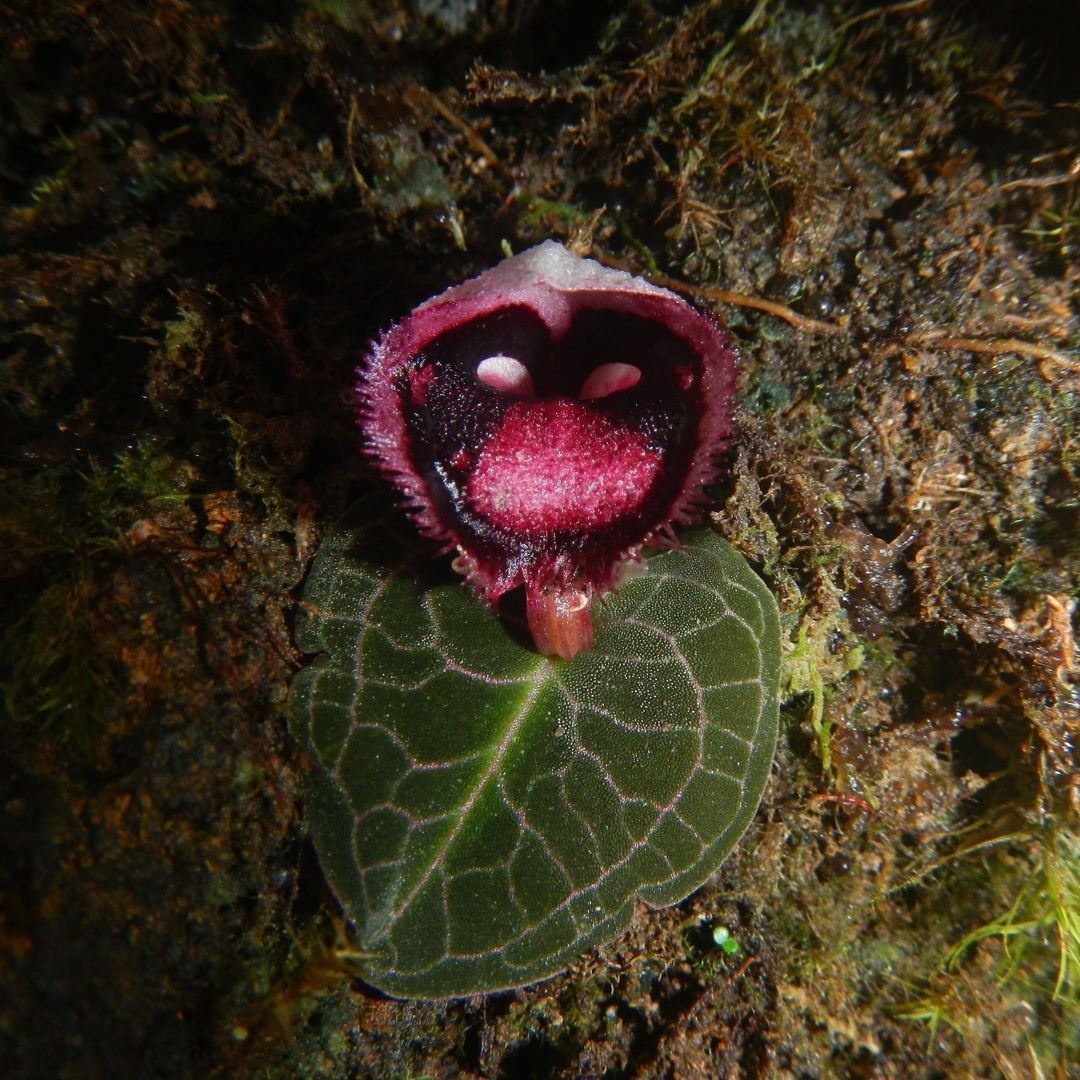
[Botany • 2026] Corybas apoensis (Orchidaceae: Diurideae) • A New endemic Species from Mt. Apo, Philippines


Corybas apoensis Agad, Tandang, R.Bustam. & Salas, 

in Agad, Mallari, Tandang, Bustamante et Salas, 2026.

Abstract
Corybas apoensis, a new species of tribe Acianthinae endemic to Mindanao, is described herein. Among the currently recognized species of the tribe, it most closely resembles C. viridisepalus in overall floral morphology, particularly in having upright flowers borne on a slender, cylindric, erect ovary and the flower possessing a dorsal sepal and labellum tinged with conspicuous carmine veins. Both species further share a pilose labellum. However, this notable new species is distinct by having white floral background and a dorsal sepal being densely papillate on the abaxial surface. We also provided a summarized key morphological characteristics that distinguishes our new species from the later.

Monocots, Helmet orchid, Rare, Diurideae, Malesia, Taxonomy


Corybas apoensis Agad, Tandang, R.Bustam. & Salas, sp. nov.


KIER C. AGAD, ARCHELITO L. MALLARI, DANILO N. TANDANG, RENE ALFRED ANTON BUSTAMANTE and DARYL S. SALAS. 2026. Corybas apoensis (Orchidaceae), A New endemic Species from Mt. Apo, Philippines.  Phytotaxa. 766(1); 84-90. DOI: doi.org/10.11646/phytotaxa.766.1.6 [2026-07-07]
 

Monday, December 22, 2025

[Botany • 2025] Clerodendrum kelli (Lamiaceae) • A New Species from Carranglan, Nueva Ecija, Philippines, and Lectotypification of Clerodendrum mindorense


Clerodendrum kelli R.Bustam., A.B.Tobias & Ples, 

in Ples, Patykowski, Udasco, Altomonte, Tobias et Bustamante, 2025. 
Gard. Bull. Singapore. 77(2) 

ABSTRACT
Clerodendrum kelli R.Bustam., A.B.Tobias & Ples—a new species of the genus Clerodendrum L. (Lamiaceae) from the montane forests of Carranglan, Nueva Ecija, Luzon Island, Philippines—is described and illustrated. The species shares morphological features that are uncommon for the genus with both Clerodendrum quadriloculare (Blanco) Merr. (purple abaxial leaf surfaces) and C. mindorense Merr. (reduced fruiting calyx lobes), but differs from both in having lax (vs dense/compact) inflorescences bearing flowers with shorter corolla tubes and reddish-pink (vs green or purple) calyces with ovate (vs triangular or lanceolate) lobes. Additionally, a lectotype for C. mindorense is assigned. Preliminary assessment of its conservation status following IUCN guidelines places Clerodendrum kelli in the category of Critically Endangered (CR B1ab(iii)+2ab(iii)).

 Keywords. Lamiales, Luzon Island, Pantabangan-Carranglan Watershed Forest Reserve, understorey shrub

Clerodendrum kelli R.Bustam., A.B.Tobias & Ples.
A. Flowering twig. B. Leaf. C. Flower. D. Anther. E. Stigma. F. Developing fruit and fruiting calyx without lobes.
 Illustrated by Julieferd Torres.

Clerodendrum kelli R.Bustam., A.B.Tobias & Ples. 
A. Habit. B. Leaves, adaxial and abaxial surface. C. Flowers and immature fruits. D. Inflorescence and flowers (front view). E. Longitudinal section of flower. F. Inflorescence and flowers (side view).
(Photos: A, E, A.B. Tobias; B, D, J.P. Collantes; C, J.A. Mansibang; F, J.M. Agcaoili)

Clerodendrum kelli R.Bustam., A.B.Tobias & Ples, sp. nov.

 This species shares characters that are uncommon for the genus with both Clerodendrum quadriloculare (Blanco) Merr. (purple abaxial leaf surfaces) and Clerodendrum mindorense Merr. (reduced fruiting calyx lobes). However, it differs from both in having lax (vs dense/compact) inflorescences bearing flowers with shorter (1.2–1.5 vs 2–3 and 4.5–11 cm long) corollas and reddish-pink (vs green or purple) calyces with ovate (vs triangular or lanceolate) lobes.

Etymology and uses. The specific epithet kelli is the Bugkalot name for this species. The Bugkalot recognise Clerodendrum kelli as a species that occurs in the colder areas of the mountain; they traditionally mix extracts from the mashed leaves of this plant with food preparations for sick dogs to restore their health (Udasco, pers. comm.).


Ples, D.J.R., Patykowski, J., Udasco, L.C., Altomonte, J.C., Tobias, A.B. & Bustamante, R.A.A. 2025. Clerodendrum kelli (Lamiaceae), A New Species from Carranglan, Nueva Ecija, Philippines, and lectotypification of Clerodendrum mindorenseGard. Bull. Singapore. 77(2); 225 - 224.
https://www.nparks.gov.sg/sbg/research/publications/gardens'-bulletin-singapore/-/media/sbg/gardens-bulletin/gbs_77_02_y2025/77_02_07_y2025_v77p2_gbs_pg225.pdf


Wednesday, November 12, 2025

[Botany • 2025] Nepenthes megastoma (Nepenthaceae) • A micro-endemic Pitcher Plant from Puerto Princesa Subterranean River National Park, Palawan, Philippines


Nepenthes megastoma A.S.Rob., R.Bustam. & Altomonte.

in Altomonte, Collantes, Mangussad, Bustamante et Robinson, 2025. 

Abstract
Nepenthes megastoma is described and illustrated as a new species from the Puerto Princesa Subterranean River National Park, a UNESCO World Heritage Site in Palawan Philippines. This carnivorous tropical pitcher plant is currently known from just three locations in the Mount Saint Paul karst formation, where it grows on vertical limestone walls. Morphologically, N. megastoma is characterised by its highly branched stems, campanulate pitchers, peltate tendril exsertion, dimorphic upper pitchers, and unidirectionally upturned female flowers. It is assessed as Critically Endangered under the IUCN Red List criteria, based on its restriction to three subpopulations comprising few total individuals. Pitcher morphology suggests a degree of ecological-functional convergence with N. campanulata of Borneo, though overall morphology indicates a probable close affinity with the widespread Palawan endemic N. philippinensis.

Taxonomy, non-core Caryophyllales, Malesia, new species, Eudicots 


Drone views of Nepenthes megastoma Location 1 with red arrows indicating plants.
 a. Habitat on vertical limestone walls at c. 250 m elevation. b. Clumps of plants appear to follow vertical seams in the rock wall c. On approach the yellowish green pitchers become apparent, as do co-occurring plants like Dracaena sp. At both locations, the plants appear associated with dark rock that has become encrusted and discoloured over time through accumulation of organic matter. Note that this is the same subpopulation featured in Clarke et al. 2014: fig. 6, confirming a decline in total individuals. d. Closest possible approach without digital magnification. Photographs by J. Altomonte.

Nepenthes megastoma characteristics.
a. Lower-intermediate pitcher with strong colouration. b. Stout form of upper pitcher with mediolateral flaring. c. Elongate form of upper pitcher. d. Magnification of stem showing winged phyllode bases with slight basal swelling. e. Suberect terminal growth showing peltate phyllode tips. f. Female inflorescence demonstrating universally upturned flowers with fruit in advanced development. Photographs by J.P. Collantes (a) and A. Robinson (b–f).

Nepenthes megastoma A.S.Rob., R.Bustam. & Altomonte.
a. Habit, suberect terminal growth bearing upper pitchers and female inflorescence. b. Section of stem showing characteristic phyllode bases which are shortly decurrent and slightly swollen. c. Abaxial view of phyllode with most prominent venation indicated. d. Attached elongate form of upper pitcher. e. Lower surface of lid showing general distribution of glands. f. Profile section through peristome and upper wall of pitcher. g. Magnification of trichomes, with stellate trichomes and peltate scales (lepides) shown. h. Dissected lower pitcher in profile. i. Stout form of upper pitcher in profile. j. Elongate form of upper pitcher in profile. k. Female flowers with developing fruit (above) and male flowers at anthesis (below). Based on Collantes & Langbao 1 and supplemented with photographs and measurements made of material in situ. Illustration by A. Robinson.


Nepenthes megastoma A.S.Rob., R.Bustam. & Altomonte, sp. nov. 
 

 Type:—PHILIPPINES. Palawan, Barangay Cabayugan: Mount St Paul, on limestone cliffs, 200 m a.s.l., 23 June 2023, Collantes & Langbao 1 (holotype PNH 259144 [one sheet, barcode 01-001582]; isotypes PNH 259145 [three sheets, barcodes 01-001583 (sheet 1 of 6), 01-001584 (sheet 2 of 6), 01-001585 (sheet 3 of 6)]; MEL 2541012A [sheet 4 of 6], MEL 2541013A [sheet 5 of 6], MEL 2541014A [spirit collection from sheet 5 of 6], MEL 2541015A [sheet 6 of 6]). 
– Nepenthes campanulata sensu Clarke et al. (2014: 7–13, fig. 6). 
– Nepenthes sp. ‘Saint Paul Cliffs’ sensu McPherson (2023: 1988–1991, figs. 2395–2398). 


Diagnosis:—Nepenthes megastoma superficially resembles N. campanulata but differs in the production of (differences in parentheses): large growths, individual stems to 2.8 m long and 1.2 cm in dia., branching basally or medially to form pendent clumps to 10 m long (to ~35 cm, mostly basally branching to form short clumps, stems to 0.4 cm dia.), phyllodes elliptic-subobovate and 20–38 cm long with shortly decurrent base and slight abaxial basal swelling (spathulate-lanceolate, to 9 cm long, base amplexicaul without swelling), pitchers trimorphic, comprising uniform lower pitchers and two forms of upper pitcher (pitchers monomorphic), pitchers brittle, peristome pronounced, to 5.5 mm wide, lid ±suborbicular, to 5 cm dia. (pitchers flexible, peristome very narrow, typically ≤ 2 mm, lid ovate-elliptic, to 2 cm long), inflorescences to 48 cm long, partial peduncles dense, mostly 2-flowered, female flowers ascending, unidirectionally upturned (Fig. 6f) but borne on pedicels evenly distributed about rachis (inflorescences ≤ 20 cm long, lax with few flowers, partial peduncles mostly 1-flowered, female flowers spreading, not unidirectionally upturned), and an indumentum of dimorphic trichomes present on most surfaces (almost entirely glabrous except below peristome and around spur).

Etymology:—The epithet megastoma is constructed from the Greek-derived prefix mega- (large) and the Greek word stoma (mouth), meaning ‘large mouth’, a reference to the diameter of the pitcher opening, which is greater than that of the rest of the pitcher in all pitcher forms.


Nepenthes megastoma
a. Generalised view of the type of habitat that comprises Location 2. b. Individual clumps of N. megastoma (red arrows) growing overhead on sheltered cliff walls. c. Groups of ants (red arrows) were frequently observed feeding beneath the lids. d. Large clump of plants observed from below, comprising what appeared to be two multibranched males and one female e. Female plant viewed from below, showing various inflorescences and pitchers with uncommon single coils. Photographs by A. Robinson.


John Charles A. ALTOMONTE, John Paul R. COLLANTES, Vernaluz MANGUSSAD, Rene Alfred Anton BUSTAMANTE and Alastair S. ROBINSON. 2025. Nepenthes megastoma (Nepenthaceae), A micro-endemic Pitcher Plant from Puerto Princesa Subterranean River National Park, Palawan, Philippines. Phytotaxa. 728(2); 93-107. DOI: doi.org/10.11646/phytotaxa.728.2.1 [2025-11-12]

Tuesday, July 15, 2025

[Botany • 2025] Habenaria diwata (Orchidaceae: Orchidoideae) • A New Species from Mount Malinao, Albay Province, Luzon Island, Philippines


Habenaria diwata R.Bustam., J.Collantes & M.R.B.Altamirano,

in Altamirano, Collantes et Bustamante, 2025.
Gardens’ Bulletin Singapore. 77(1);

ABSTRACT
 A new species, Habenaria diwata R.Bustam., J.Collantes & M.R.B.Altamirano
(Orchidaceae: Orchidoideae), is described from Mount Malinao, Luzon Island, Philippines.
Habenaria diwata most closely resembles the Taiwanese species H. tsaiana T.P.Lin in having
bipartite petals with an entire posterior lobe and a tripartite labellum with an entire mid-lobe
and subdivided side lobes, but differs by its shorter lateral sepals (9–11 mm long vs 12.5–13.5
mm long in H. tsaiana), anterior petal lobes that are mostly entire, with the lower margin
lacerate or unequally bifid at the apex (vs subdivided into two segments), shorter labellum
base (1 mm vs 1.5–2 mm) and labellum side lobes subdivided into two filiform segments (vs
subdivided into three filiform segments). Differences of H. diwata from a similar Philippine
species, H. lingulosa Ames, are briefly discussed. This discovery raises the current number
of recognised Habenaria species in the Philippines to 22. Illustrations and information on its
distribution, habitat, phenology, and proposed conservation status are provided.

Keywords. Bicol Region, endemic, Habenaria sect. Medusaeformes, mossy forest, terrestrial
orchid

Habenaria diwata R.Bustam., J.Collantes & M.R.B.Altamirano.
A. Flowering plant, upper part. B. Basal part showing stem and roots. C. Ventral view of perianth and column. D. Lateral view of flower. E. Dissected perianth with ventral view of sepals, petals and labellum. F. Floral Bract. G. Lateral view of column and ovary. H. Lateral view of spur. I. Ventral view of column. J. Pollinaria.
From the holotype, PTI-SLP1 27. (Photos: J.P.R. Collantes)


Habenaria diwata R.Bustam., J.Collantes & M.R.B.Altamirano, sp. nov. 

Habenaria diwata most closely resembles the Taiwan endemic H. tsaiana T.P.Lin in its bipartite petals with an entire posterior lobe and a tripartite labellum with an entire midlobe and subdivided side lobes. Habenaria diwata differs by its shorter lateral sepals (9–11 mm long vs 12.5–13.5 mm long in H. tsaiana), anterior petal lobes that are mostly entire, lacerate or unequally bifid at the apex (vs subdivided into two segments), shorter labellum base (1 mm vs 1.5–2 mm), and labellum side lobes subdivided into two filiform segments (vs subdivided into three filiform segments). Detailed morphological differences between the species are presented in Table 1.

Etymology. The specific epithet refers to Philippine mythology and folklore deities who guard the natural world (Landa, 1968). The pale, whitish green flowers are reminiscent of the ghostly white female representations of diwata in popular culture, while the dormancy in its life cycle in turn echoes the ephemeral nature of these spiritual beings. 


Altamirano, M.R.B., Collantes, J.P.R. & Bustamante, R.A.A. 2025. Habenaria diwata (Orchidaceae: Orchidoideae), A New Species from Mount Malinao, Albay Province, Luzon Island, Philippines. Gardens’ Bulletin Singapore. 77(1); 101 - 112.


Thursday, September 5, 2024

[Botany • 2024] Homalomena brachygyna (Araceae) • A New Species from Palawan Island, Philippines


 Homalomena brachygyna J.Collantes, K.Z.Hein, & R.Bustam.,  

in Collantes, Chua-Mangussad, Hein et Bustamante, 2024. 
 
Abstract
Homalomena brachygyna, a new species from the riparian forest of San Vicente, Palawan, is herein described. This novel addition to the Homalomena species of the Philippines bridges the gap of more than 100 years since the last described species from the country. It is also the second endemic Homalomena species in the island of Palawan. Descriptions, photographs, as well as notes on its habitat and ecology, phenology, and preliminary IUCN conservation assessment are provided.

Aroideae, Homalomena Clade, Homalomena selaburensis Complex, Luzon, Malesia, Monocots


 Homalomena brachygyna J.Collantes, K.Z.Hein, & R.Bustam. sp. nov.

Illustrated by Julieferd Torres

 Homalomena brachygyna J.Collantes, K.Z.Hein, & R.Bustam. sp. nov.


John Paul Collantes, Vernaluz Chua-Mangussad, Khant Zaw Hein and Rene Alfred Anton Bustamante. 2024. Homalomena brachygyna (Araceae), A New Species from Palawan Island, Philippines.  Phytotaxa. 664(1); 59-67. DOI: doi.org/10.11646/phytotaxa.664.1.5 
  facebook.com/phtaxa/posts/900291165490385
  facebook.com/groups/philippineplants/permalink/8304898092922118


Tuesday, August 13, 2024

[Botany • 2024] Bulbophyllum bokodense (Orchidaceae: Epidendroideae) • A New Species of Bulbophyllum sect. Polymeres from Benguet Province, Luzon Island, Philippines


Bulbophyllum bokodense M.N.Tamayo, Magtoto & R. Bustam., 

in Tamayo, Magtoto, Penales, Baquiran et Bustamante, 2024.
 
Abstract
A new species of orchid, Bulbophyllum bokodense, is herein described and illustrated from Benguet Province, Luzon Island, Philippines. It closely resembles Bulbophyllum rinkei endemic to New Guinea, but is distinct by having a broader leaf, a shorter inflorescence, an acute petal apex, glabrous auricles, a slightly canaliculate labellum, mid lobe and apex of labellum devoid of concavity, and a longer stelidia. A detailed description, photographs, and illustration are also provided. Preliminary conservation assessment of the new species following IUCN guidelines suggest a conservation status of data deficient (DD).

Monocots, Cordillera Central Range, Dendrobieae, endemic, epiphyte, Mt. Pulag


Bulbophyllum bokodense M.N.Tamayo, Magtoto & R. Bustam.


Maverick N. Tamayo, Liezel M. Magtoto, Patrick James F. Penales, Ethel Ruth A. Baquiran and Rene Alfred Anton Bustamante. 2024. Bulbophyllum bokodense (section Polymeres, Orchidaceae), A New Species from Benguet Province, Luzon Island, Philippines.  Phytotaxa. 662(2); 187-194. DOI: doi.org/10.11646/phytotaxa.662.2.7


Thursday, May 30, 2024

[Botany • 2024] Psychotria pendens (Rubiaceae: Psychotrieae) • A New ultramafic Species from Central Palawan, Philippines


Psychotria pendens M. Bautista & R. Bustam.,

in Bautista, Chua-Mangussad, Cervancia et Bustamante, 2024.

Abstract
Psychotria pendens from the lowland ultramafic forest of Mt. Victoria, Palawan Island, Philippines is herein described as a new species of Rubiaceae. The new species is morphologically similar to P. rubiginosa (Gitingensis species group) by having monochotomous inflorescence and oblanceolate to oblong-elliptic leaves but is distinguished by its large, leaf-like, valvate stipules with biattenuate to biacuminate tips, pendent inflorescence, glabrous abaxial leaf surface, narrowly triangular bracts, and glabrous calyx. Molecular analysis revealed that this newly discovered species belongs to the Pacific Psychotria clade, and is allied to the Philippine species P. luzoniensis and Hawaiian species P. mariniana. The species is assessed as Critically Endangered (CR) based on the IUCN Red List categories and criteria.

Psychotria, Malesia, Mt. Victoria, Palawan, Eudicots


Psychotria pendens M. Bautista & R. Bustam., sp. nov.


Mary Ann C. Bautista, Vernaluz Chua-Mangussad, Jehson Cervancia and Rene Alfred Anton Bustamante. 2024. Psychotria pendens (Rubiaceae, Psychotrieae), A New ultramafic Species from Central Palawan, Philippines.  Phytotaxa. 649(3); 252-260. DOI: 10.11646/phytotaxa.649.3.2

Thursday, January 25, 2024

[Botany • 2024] Bulbophyllum barcelonae & B. pelseri (Orchidaceae: Epidendroideae) • Two New Species of Bulbophyllum sect. Polymeres from Pantabangan-Carranglan Watershed Forest Reserve, Luzon Island, Philippines


Bulbophyllum barcelonae  Garrino & R. Bustam.,

in Garrino, Mansibang, Aumentado, Ang, Udasco, Diego, Altomonte, Tamayo, Magtoto et Bustamante, 2024. 
 
Abstract
Two new species of Bulbophyllum, B. barcelonae and B. pelseri are described here from the Pantabangan-Carranglan Watershed Forest Reserve, Luzon Island, Philippines. Bulbophyllum barcelonae resembles B. charisae, but differs by having smaller vegetative parts, ovate petals with a rounded apex, and a labellum with two ridges that are strongly angled outwards the adaxial surface, rounded proximal crests, and a canaliculate abaxial surface. Bulbophyllum pelseri resembles B. aureobrunneum but differs by having caducous sheath covering the pseudobulbs, punctulate leaf surface, shorter leaves, absence of transverse callus in median portion of labellum, median portion with short, rounded ridge, rounded apex, and triangular stelidia. These discoveries increase to 207, the known species of Bulbophyllum in the Philippines.

Keywords: Asparagales, biodiversity, Dendrobieae, Epidendroideae, Malesia, taxonomy


Abigail L. Garrino, Jayson A. Mansibang, Jamie Ann M. Aumentado, Yu Pin Ang, Leonardo C. Udasco Jr, Jean Marie Diego, John Charles Altomonte, Maverick N. Tamayo, Liezel M. Magtoto and Rene Alfred Anton Bustamante. 2024. Two New Species of Bulbophyllum (Orchidaceae, sect. Polymeres) from Pantabangan-Carranglan Watershed Forest Reserve, Luzon Island, Philippines. Nordic Journal of Botany, e04187. DOI: 10.1111/njb.04187

Monday, May 22, 2023

[Botany • 2023] Corybas hamiguitanensis (Orchidaceae) • A New Species from a UNESCO World Heritage site in the Philippines


Corybas hamiguitanensis Tandang, Galindon, R.Bustam.,

in Tandang, Docot, Galindon, Reyes, Tadiosa, Tandang, Moran et Bustamante, 2023. 
 
Abstract
A new species of helmet orchid, Corybas hamiguitanensis, is herein described and illustrated. It is the first species of the genus recorded in Mindanao Island, Philippines. This novel species occupies varied climatic zones along different altitudinal gradients ranging from lowland evergreen rainforest up to the mossy forest of Mount Hamiguitan Range Wildlife Sanctuary.

Keywords: Acianthinae, Diurideae, endemic, Malesia, Mindanao, Plant diversity, Monocots


𝑪𝒐𝒓𝒚𝒃𝒂𝒔 𝒉𝒂𝒎𝒊𝒈𝒖𝒊𝒕𝒂𝒏𝒆𝒏𝒔𝒊𝒔 Tandang, Galindon, R.Bustam.


Danilo N. Tandang, Rudolph Valentino A. Docot,  John Michael Galindon, Tomas Reyes Jr., Edwin R. Tadiosa, Sue Dixie A. Tandang, Cecilia B. Moran and Rene Alfred Anton Bustamante. 2023. Corybas hamiguitanensis (Orchidaceae), A New Species from a UNESCO world heritage site in the Philippines. Phytotaxa. 598(1); 80-88. DOI: 10.11646/phytotaxa.598.1.6

Tuesday, November 30, 2021

[Botany • 2021] Ardisia kalimbahin (Primulaceae: Myrsinoideae) • A New Species from the Philippines


Ardisia kalimbahin  Magtoto

in Magtoto, Tamayo, Udasco & Bustamante, 2021. 

Abstract
Ardisia kalimbahin is herein described and illustrated as a new species. It is the latest addition to the richness of Ardisia in the Philippines. It closely resembles A. romanii Elmer but is distinct in having shorter petiole, shorter elliptic leaves, racemose inflorescence, longer and sparsely puberulent pedicels, magenta corolla lobes, basifixed anthers, shorter filaments, and a beaked stigma. Based on current collection and available herbarium specimens, Ardisia kalimbahin is distributed in the islands of Palawan (Aborlan), Mindoro, and Luzon (Carranglan). Available data is not enough to assess its conservation status; hence, it is proposed as data deficient (DD).

Keywords: Ericales, Malesia, Myrsinoideae, Southeast Asia, taxonomy, Eudicots


Ardisia kalimbahin


Liezel M. Magtoto, Maverick N. Tamayo, Leonardo C. Udasco Jr. and Rene Alfred Anton Bustamante. 2021. Ardisia kalimbahin (Primulaceae, Myrsinoideae), A New Species from the Philippines. Phytotaxa. 525(4); 295-300. DOI: 10.11646/phytotaxa.525.4.4