Showing posts with label Author: W. T. White. Show all posts

Tuesday, October 7, 2025

[Ichthyology • 2025] Etmopterus westraliensis • A New Species of Lanternshark (Squaliformes: Etmopteridae) from Western Australia, with Redescription of Etmopterus brachyurus


Etmopterus westraliensis
Ng, White, Liu & Joung, 2025 


Abstract
Etmopterus westraliensis is described as a new species based on six specimens collected from Western Australia, eastern Indian Ocean. The new species is assigned to the Etmopterus lucifer group due to its slender, elongate anterior and posterior branches of the flank markings. It shares the following combination of morphological characters with two congeners, Etmopterus brachyurus and Etmopterus samadiae: dermal denticles hook-like, a naked area present on underside of snout, denticles present on dorsal fins in mature individuals, the origin of flank-marking base anterior to a vertical line through origin of the second dorsal fin, caudal-fin base marking thin and slender and a relatively short posterior caudal-fin marking. The new species differs from E. brachyurus in having a longer caudal-fin base marking, ventral portion of caudal-fin base marking much longer than wide, and differs from E. samadiae in having a longer mouth, different shape of the naked area on underside of snout, thinner posterior branch of flank marking, caudal-fin base marking tip tapering and more monospondylous centra. The new species is also distinguished from E. brachyurus and E. samadiae by the mean genetic distance for the NADH2 gene, that is, 0.028 and 0.040, respectively. E. brachyurus is redescribed here based on the holotype together with additional specimens collected from the northwestern Pacific.

  Keywords: deep sea, Etmopterus brachyurus, Etmopterus lucifer group, taxonomy, Western Australia

Etmopterus westraliensis n. sp., fresh condition. 
 Paratype, CSIRO H 9025‐22, immature male 174 mm TL.
Photos copyright: CSIRO, Australian National Fish Collection. 

Etmopterus westraliensis 


Shing-Lai Ng, William T. White, Kwang-Ming Liu and Shoou-Jeng Joung. 2025. Etmopterus westraliensis, A New Species of Lanternshark (Squaliformes: Etmopteridae) from Western Australia, with Redescription of Etmopterus brachyurusJournal of Fish Biology. DOI: doi.org/10.1111/jfb.70162 [18 September 2025] 

Sunday, May 14, 2023

[Ichthyology • 2023] Apristurus ovicorrugatusWhat came first, the Shark or the Egg? Discovery of A New Species of Deepwater Shark (Carcharhiniformes: Scyliorhinidae) by investigation of Egg Case Morphology


Apristurus ovicorrugatus
 White, O'Neill, Devloo-Delva, Nakaya & Iglésias, 2023


Abstract
Apristurus ovicorrugatus, a new species of deepwater catshark, is described from northwestern Australia. Unique egg cases belonging to an unknown species of Apristurus prompted a more detailed investigation of Apristurus specimens off northwestern Australia. One specimen previously identified as A. sinensis collected off Dampier Archipelago was found gravid with a single egg case. Removal of this egg case confirmed that this species was responsible for producing the unique egg cases previously recorded. The egg cases of this species have strong T-shaped longitudinal ridges on the dorsal and ventral surfaces which are unique in the genus Apristurus. The ridges most closely resemble those present in Bythaelurus canescens from South America, but are larger and always T-shaped. The holotype is closest morphologically to A. sinensis but differs in having a medium brown buccal cavity (vs. jet black), ridged egg cases (vs. smooth egg cases), fewer intestinal spiral valve turns and larger pectoral fins. The holotype is also similar, and closest on a molecular level, to A. nakayai with which it shares a unique synapomorphic character, the white shiny iris (apomorphic within the genus). A late-term embryo removed from an egg case superficially resembled the holotype except in having two parallel rows of enlarged dermal denticles on the dorsolateral predorsal surface. Recent nomenclatural changes to the genera Apristurus and Pentanchus are discussed and challenged. This study highlights the important contribution that egg case morphology has on oviparous elasmobranch taxonomy.

Keywords: Apristurus brunneus group, discovery, egg cases, genetics, new species, Pentanchidae

Lateral view of Apristurus ovicorrugatus n. sp. holotype (CSIRO H 3161-01, adult female 467 mm LT):
(a) fresh; (b) preserved

Dorsal view of trawled egg cases of Apristurus ovicorrugatus n. sp. (CSIRO H 8056-01); top egg case contained a 68.7 mm late-term embryo.
Scale bar = 10 mm

Egg case of Apristurus ovicorrugatus n. sp. (CSIRO H 9058-01) attached to octocoral (Thouarella sp.)

 Apristurus ovicorrugatus n. sp.

Synonymy: Apristurus sp.?: Human, 2011: 199, Figures 1, 6 (northwestern Australia); 
Apristurus sinensis (in part): Last & Stevens, 2009: 195 (northwestern Australia in part).
Vernacular: Ridged-egg Catshark.

Diagnosis: A small Apristurus species with the following combination of characters: eyes with shiny white iris (when fresh); head moderately long and relatively narrow, head length 23.8% LT, interorbital space 6.4% LT; snout moderately elongate, preoral length 10.0% LT, preorbital length 10.9% LT; mouth wide, its width 9.5% LT; pelvic–anal space 5.9% LT; anal fin large, base length 15.2% LT, posterior margin 11.5% LT; prepectoral length relatively long, about 21.1% LT; labial furrows long, not confined to mouth corners, uppers longer than lowers (3.8 vs. 2.4% LT); no enlarged denticles on upper or lower caudal fin; duodenum of intestine moderately sized, 15 intestinal spiral valves; 35 monospondylous centra; 33 precaudal-diplospondylous vertebrae; precaudal centra 68; females mature by 467 mm LT; egg case small (50.4–60.6 mm long), with 5–7 strong T-shaped ridges on dorsal and ventral surfaces.

 Etymology: Name derived from a combination of the Latin ovi (egg; genitive singular of ovum) and corrugatus (corrugated) in allusion to the corrugated egg cases that this species exhibits which are unique for the genus Apristurus. The name ovicorrugatus is treated as an adjective.
 

William T. White, Helen L. O'Neill, Floriaan Devloo-Delva, Kazuhiro Nakaya and Samuel P. Iglésias. 2023. What came first, the Shark or the Egg? Discovery of A New Species of Deepwater Shark by investigation of Egg Case Morphology. Journal of Fish Biology. DOI: 10.1111/jfb.15415

phys.org/news/2023-05-species-shark-unique-egg-cases.html 

Monday, November 4, 2019

[Ichthyology • 2019] Akheilos suwartanai • A New Genus and Species of Catshark (Carcharhiniformes: Scyliorhinidae) from eastern Indonesia


 Akheilos suwartanai  
White, Fahmi & Weigmann, 2019 

Ambon Catshark  || DOI: 10.11646/zootaxa.4691.5.2

Abstract
A new genus and species of catshark is described based on a single specimen collected off Ambon in the Maluku Islands of eastern Indonesia. Akheilos suwartanai belongs to the subfamily Schroederichthyinae which differs from the other catsharks in a combination of: similar sized dorsal fins, supraorbital crests present, pseudosiphon present on claspers, broad subocular ridges under eyes, posterior nasal flaps present, tips of rostral cartilage fused into a rostral node. It represents the first record of this subfamily outside of the Americas. Akheilos differs from the other genus in the subfamily, Schroederichthys in a combination of: clasper groove not fused dorsally, ventral lobe of caudal fin produced, more intestinal valve turns, anal fin slightly larger than second dorsal fin, and in colour pattern.

Keywords: Pisces, Schroederichthys, Schroederichthyinae, new genus, new species, catshark, Indonesia

Figure 1. Akheilos suwartanai n. sp., holotype, MZB 18227, adult male, 537 mm TL, in (A) lateral, (B) dorsal and (C) ventral views.

Family Scyliorhinidae Gill, 1862 
Subfamily Schroedericthyinae Compagno, 1988 

Genus Akheilos n. gen. White, Fahmi & Weigmann

Etymology. Name comes from the Greek mythological sea daemon Akheilos who was a handsome boy transformed into a shark by the goddess Aphrodite as punishment for his boasting that he was more beautiful than her.

Akheilos suwartanai White, Fahmi & Weigmann, n. sp. 
Ambon Catshark

Etymology. Named after the first director of the Research and Development Center of Oceanology, Indonesian Institute of Sciences (LIPI) in Ambon, Atjep Suwartana.

William T. White, Fahmi Fahmi and Simon Weigmann. 2019. A New Genus and Species of Catshark (Carcharhiniformes: Scyliorhinidae) from eastern Indonesia. Zootaxa. 4691(5); 444–460. DOI: 10.11646/zootaxa.4691.5.2  


Thursday, January 3, 2019

[Ichthyology • 2019] Carcharhinus obsolerusLost before Found: A New Species of Whaler Shark (Carcharhiniformes: Carcharhinidae) from the Western Central Pacific known only from Historic Records


Carcharhinus obsolerus
White, Kyne & Harris, 2019

Lost Shark  || DOI: 10.1371/journal.pone.0209387  
Painting by Lindsay Marshall (www.stickfigurefish.com.au

Abstract
Carcharhinus obsolerus is described based on three specimens from Borneo, Thailand and Vietnam in the Western Central Pacific. It belongs to the porosus subgroup which is characterised by having the second dorsal-fin insertion opposite the anal-fin midbase. It most closely resembles C. borneensis but differs in tooth morphology and counts and a number of morphological characters, including lack of enlarged hyomandibular pores which are diagnostic of C. borneensis. The historic range of C. obsolerus sp. nov. is under intense fishing pressure and this species has not been recorded anywhere in over 80 years. There is an urgent need to assess its extinction risk status for the IUCN Red List of Threatened Species. With so few known records, there is a possibility that Carcharhinus obsolerus sp. nov. has been lost from the marine environment before any understanding could be gained of its full historic distribution, biology, ecosystem role, and importance in local fisheries.

Fig 1. Lateral view of Carcharhinus obsolerus sp. nov. (NMW 61463; female holotype 433 mm TL).
A. Preserved specimen; B. Painting by Lindsay Marshall (www.stickfigurefish.com.au). 

Fig 2. Head of Carcharhinus obsolerus sp. nov. (NMW 61463; Holotype). 433 mm TL female:
A. lateral view; B. ventral view.

Fig 5. In situ teeth of Carcharhinus obsolerus sp. nov. (ANSP 77121, paratype). 370 mm TL female:
A. upper teeth; B. lower teeth.

Carcharhinus obsolerus White, Kyne & Harris sp. nov.  

Synonymy: Carcharhinus sp.: [Compagno, 1979]: 517, 520, 523, 536 (Borneo); [Compagno, 1988]: 319, 321, 327 (Vietnam, Borneo, and Thailand); [Compagno et al., 1998]: 1359, fig (Vietnam, Borneo, and Thailand)
Carcharhinus porosus: [Compagno et al., 2005]: 71 (Borneo, Saigon, and Bangkok)
Carcharhinus undescribed small species: [Compagno, 1984]: 497 (Borneo, Vietnam, and Thailand)
Carcharhinus sp. (= ‘Carcharhinus porosus’): [Compagno et al., 1998]: 1322.
Carcharhinus sp. A: [Compagno et al., 2005]: 307, fig, pl. 62 (Borneo, Vietnam, and Thailand); [Voigt et al., 2011]: 103, fig 50

Holotype: NMW 61463, female 433 mm TL, Bangkok, Thailand, no date or collector recorded.

Paratypes: ANSP 76859, female late-term embryo 339 mm TL, Ho Chi Minh City, Vietnam, Dec. 1934, coll. H. Rutherfurd; ANSP 77121 (paratype of Carcharhinus tephrodes Fowler), female 370 mm TL, Baram, Sarawak, Malaysian Borneo, 1897, coll. A.C. Harrison Jr. & H.M. Hiller.

Diagnosis.: A small species of Carcharhinus with: a slender body and tail; no interdorsal ridge; head parabolic in dorsal view, relatively wide, interorbital space 11.2–12.0% TL; eyes relatively large, length 2.4–2.9% TL, 10.0–15.1 times in head length; no row of enlarged hyomandibular pores alongside each mouth corner; upper anterior teeth broadly triangular and serrated, with large and coarse (non-lobate) serrations basally; lower anterior teeth with narrower, mostly straight cusps; cusps of upper and lower anterolateral teeth with apical margin slightly recurved; no lateral cusplets; total tooth row counts 27–31/26–29; posterior edge of the mandibular plate with an elongate and crescentic indentation; second dorsal-fin origin well posterior of anal-fin origin, about opposite anal-fin midbase, second dorsal-fin origin to anal-fin origin 1.3–2.5% TL, 0.3–0.6 times second dorsal-fin base; first dorsal fin triangular, not falcate, origin about opposite first third of pectoral-fin inner margin length, free rear tip just anterior to pelvic-fin origins, length 1.7–1.9 times height, inner margin 1.9–2.5 in base; second dorsal fin much smaller than first, slightly smaller than anal fin; base 1.4–2.0 times height; height 22–31% of first dorsal-fin height; anal fin height 1.2–1.5 times second dorsal height, base 1.1–1.2 times second dorsal-fin base; total vertebral counts 114–120, monospondylous precaudal counts 36–40, diplospondylous precaudal counts 18–19, diplospondylous caudal counts 56–66, precaudal counts 54–58; no distinct black markings on fins.
....


Distribution: Uncertain; collection records indicate southern South China Sea (Gulf of Thailand, Vietnam, Malaysian Borneo).

The distribution of Carcharhinus obsolerus is uncertain. Given that this species has not been seen in many decades, a better understanding of the distribution of this species is unlikely unless archaeological or paleontological records are found. While Baram in Sarawak is likely an accurate collection locality, both Bangkok and Ho Chi Minh City specimens may have been caught in other South-east Asian locations and brought into these cities where bigger markets exist. Thus, there is a possibility it had a much more restricted distribution than the three known specimens allude to, but it cannot be ruled out that it had a wider distribution in the South-east Asian region.


Etymology: The specific name is Latin for ‘extinct’ (obsolerus) in allusion to the fact that the species has not been recorded in many decades. Proposed English vernacular name: Lost Shark.


William T. White, Peter M. Kyne and Mark Harris. 2019. Lost before Found: A New Species of Whaler Shark Carcharhinus obsolerus from the Western Central Pacific known only from Historic Records. PLoS ONE. 14(1): e0209387. DOI: 10.1371/journal.pone.0209387  


Tuesday, November 14, 2017

[Ichthyology • 2017] Centrophorus longipinnis & C. lesliei • Revision of the Genus Centrophorus (Squaliformes: Centrophoridae): Part 2—Description of Two New Species of Centrophorus and Clarification of the Status of Centrophorus lusitanicus


Centrophorus longipinnis
 White, Ebert & Naylor, 2017


Abstract

Centrophorus specimens with a distinctive long-based first dorsal fin (long-finned species) have previously been considered to be Centrophorus lusitanicus first described from Portugal. Critical examination of the original description and illustration reveal that C. lusitanicus should be considered a junior synonym of C. granulosus. However, the specimen considered to be the syntype of C. lusitanicus in the Natural History Museum in London is clearly a long-finned species and not conspecific with C. granulosus. A more detailed investigation revealed that this specimen should not be considered a syntype and was likely not originally collected off the coast of Portugal. Investigation of long-finned specimens of Centrophorus from the Indo-West Pacific and Eastern Atlantic revealed that two undescribed species exist and are herein formally described as Centrophorus lesliei and C. longipinnis. The two species are similar morphologically and belong to the long-snout Centrophorus group (e.g. C. isodon and C. harrissoni) but are clearly separable based on their very long first dorsal fins. The two species differ in relative length of the first dorsal fin and several other characters. They also differ genetically. Nonmetric multidimensional ordination based on morphometric data reveals both species level and ontogenetic differences. A short erratum is also provided for Part 1 of this revision of the Centrophorus due to two figure related errors which may cause some confusion.

Keywords:  Pisces, Centrophorus, new species, Eastern Atlantic, Indo-West Pacific, genetics, taxonomy

FIGURE 11. Lateral view of Centrophorus longipinnis n. sp.:
 (A) adult male holotype (NMMB-P 15756, 720 mm TL); (B) female paratype (CSIRO H 8104 - 01, 855 mm TL); (C) female paratype (CSIRO H 7990 - 02, 825 mm TL); (D) late-term embryo paratype (CSIRO H 8103 - 02, 346 mm TL).

Centrophorus longipinnis n. sp.
Longfin Gulper Shark

 Etymology. Specific name a combination of the Latin longus (long) and pinna (fin) in allusion to the very distinctive long-based first dorsal fin this species possesses.

Distribution. Type material from off Taiwan (Cheng-gong and Da-xi fish landing sites—local fishing grounds), Indonesia (off southwest Java and eastern Lombok), and Papua New Guinea (Huon Gulf) (Fig. 10). Compagno et al. (2005) reported this species off Puerto Princesa City in the Philippines (JPAG 226, tissue accession GN4348); differed slightly in ND2 sequence and specimen not examined in this study. Limited depth information available as most specimens collected from fish landing sites; caught from depths of 330–460 m in Papua New Guinea (P. Neira, pers. comm.).


Centrophorus lesliei n. sp.
African Gulper Shark

Etymology. Named after Dr Robin Leslie (Fisheries Branch, Department of Agriculture, Forestry and Fisheries in South Africa) who has contributed greatly to our knowledge of southern African chondrichthyans and provided numerous important specimens and tissue samples for various projects.

Distribution. Type specimens were from the Mozambique Channel (Madagascar and Mozambique), and off Senegal, Côte d’Ivoire, Equatorial Guinea, and Togo at depths of 340– 500 m. The BMNH and ZMB specimens were most likely collected by Anchieta from Angola or Mozambique in the 1800’s. Additional specimens examined by Munoz-Chapuli & Ramos (1989) were recorded as being collected from Morocco, the Canary Islands, and Ghana at depths of 370– 610 m.


William T. White, David A. Ebert and  Gavin J. P. Naylor. 2017. Revision of the Genus Centrophorus (Squaliformes: Centrophoridae): Part 2—Description of Two New Species of Centrophorus and Clarification of the Status of Centrophorus lusitanicus Barbosa du Bocage & de Brito Capello, 1864Zootaxa. 4344(1)86–114. DOI:  10.11646/zootaxa.4344.1.3

White, W.T., Ebert, D.A., Naylor, G.J.P., Ho, H.-C., Clerkin, P., Verissimo, A. and Cotton, C. 2013. Revision of the genus Centrophorus (Squaliformes, Centrophoridae), Part 1—Redescription of Centrophorus granulosus (Bloch & Schneider), a senior synonym of C. acus Garman and C. niaukang Teng. Zootaxa. 3752(1); 35–72.  DOI:  10.11646/zootaxa.3752.1.5

Monday, March 20, 2017

[Ichthyology • 2017] Notoraja sereti • A New Species of Velvet Skate (Rajiformes: Arhynchobatidae) from Papua New Guinea


Notoraja sereti 
White, Last & Mana, 2017  

Abstract

A new arhynchobatin skate, Notoraja sereti n. sp., is described based on three specimens collected from off Madang (Papua New Guinea) at depths of 800–980 m. This medium-size Notoraja skate shares with other velcro skates from the Western Pacific, N. alisae, N. fijiensis, N. inusitata and N. longiventralis, a ventral surface covering of fine denticles giving the skin a velvety feel. Notoraja sereti differs from all of these species in having a shorter snout (preorbital length 10.1–11.1 vs. 11.5–14.5% TL, prenasal length 8.2–8.9 vs, 9.8–12.1% TL), shorter head (dorsal head length 15.2–16.2 vs. 17.1–19.3% TL, ventral head length 21.6–22.9 vs. 22.9–25.9% TL), fewer pectoral-fin radials (total radials 58–60 vs. 61–74), and fewer vertebrae (predorsal diplospondylous centra 66–71 vs. 72–82, predorsal centra 90–95 vs. 98–107, total centra 126–131 vs. 135–152).

Keywords: Pisces, Notoraja, new species, velcro skate, Papua New Guinea


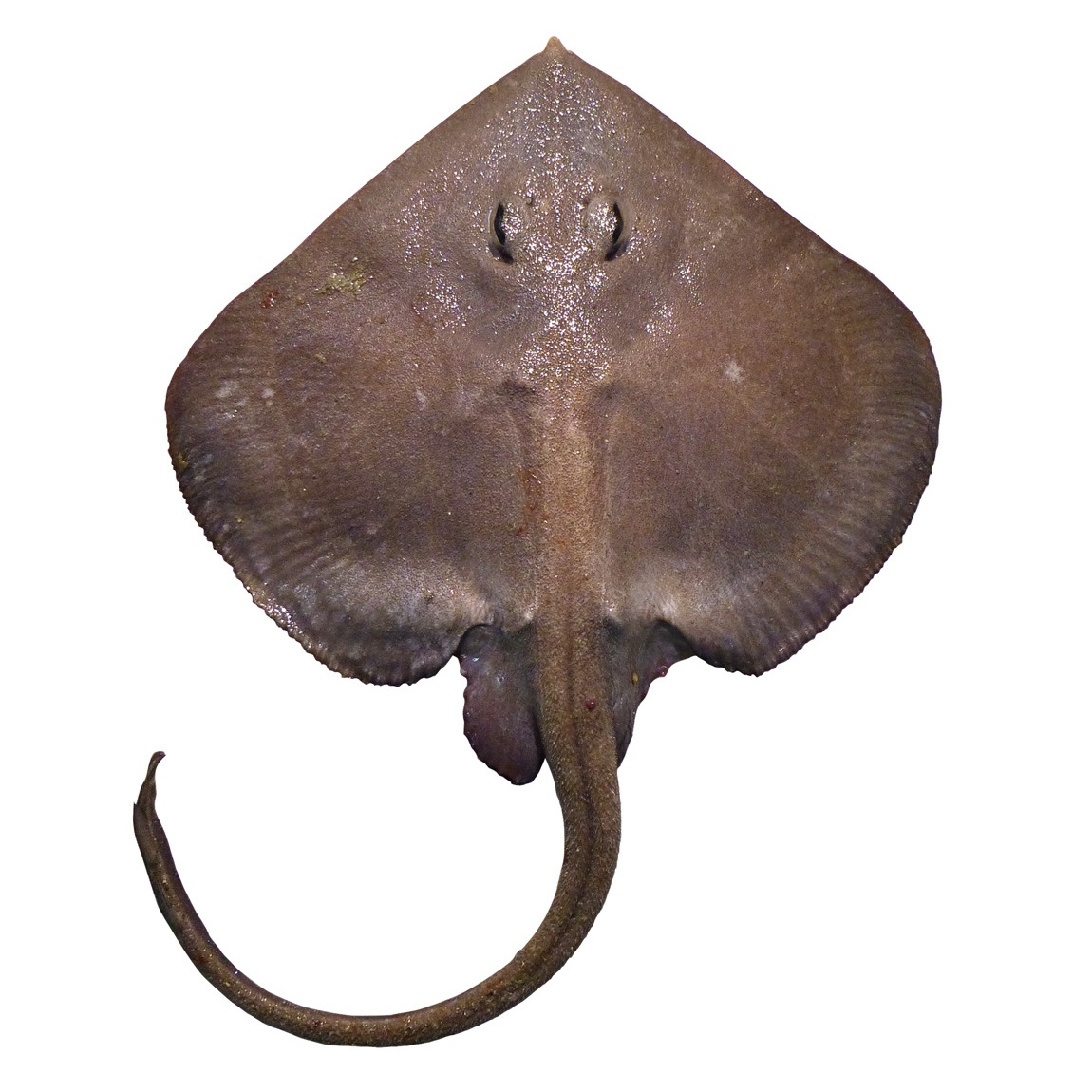
FIGURE 1: Dorsal view of the holotype of Notoraja sereti n. sp. (NTUM 10067, female 459 mm TL) immediately post-capture. 


Etymology. Named after the highly respected French ichthyologist, Dr. Bernard Séret, who has contributed greatly to the taxonomy of sharks and rays, and in particular to our knowledge of skates of the genus Notoraja. English name: Papuan Velvet Skate.


White, William T., Peter R. Last & Ralph R. Mana. 2017. A New Species of Velvet Skate, Notoraja sereti n.sp. (Rajiformes: Arhynchobatidae) from Papua New Guinea. Zootaxa. 4244(2); 219–230.  DOI:  10.11646/zootaxa.4244.2.4

Saturday, December 31, 2016

[Ichthyology • 2016] Urogymnus acanthobothrium • A New Euryhaline Whipray (Myliobatiformes: Dasyatidae) from Australia and Papua New Guinea


Urogymnus acanthobothrium 
Last, White, Kyne, 2016


Abstract

The Mumburarr Whipray, Urogymnus acanthobothrium sp. nov. is described from a single specimen taken from the Cambridge Gulf, Western Australia, and from images of 10 other specimens from northern Australia and Papua New Guinea (all observed but not collected). It is a very large ray that attains at least 161 cm disc width, making it amongst the largest of the whiprays. The ventral tail below the caudal sting has a low, short-based fold. A ventral tail fold (or a dorsal fold) has not been recorded for any other himanturin stingray in the Indo-West Pacific. Molecular data suggest it is most closely related to a similar but more widely distributed cognate, U. granulatus. Both of these species share a suboval disc shape, similar squamation patterns, and the tail posterior to the sting is entirely white (at least in small individuals). U. acanthobothrium sp. nov. differs from U. granulatus in having a longer and more angular snout, longer tail, more posteriorly inserted caudal sting, lacks white flecks on the dorsal surface, and the ventral disc is uniformly white (rather than white with a broad black margin). It co-occurs with two other morphologically distinct Urogymnus in the region (U. asperrimus and U. dalyensis). Like U. dalyensis it occurs in both brackish and marine waters. A key is proved to the members of the genus Urogymnus.

Keywords: Pisces, Urogymnus acanthobothrium, Dasyatidae, giant whipray, new species, Australia, Papua New Guinea


Peter R Last, William T White, Peter M Kyne. 2016. Urogymnus acanthobothrium sp. nov., A New Euryhaline Whipray (Myliobatiformes: Dasyatidae) from Australia and Papua New Guinea.
Zootaxa. 4147(2);  DOI:  10.11646/zootaxa.4147.2.4

Monday, December 19, 2016

[Ichthyology • 2016] Three New Stingrays (Myliobatiformes: Dasyatidae) from the Indo–West Pacific; Himantura australis, Taeniura lessoni & Telatrygon biasa


 Taeniura lessoni  
Last, White & Naylor, 2016  


Abstract

Three undescribed stingrays were discovered as part of a broader revision of the family Dasyatidae that formed part of the Chondrichthyan Tree of Life project. This research forms part of a sequence of papers on rays aimed at describing unnamed species for inclusion in a multi-authored guide to rays of the world. The first part of this series focused on a redefinition of genera of the family Dasyatidae. The new Indo–West Pacific taxa are represented by separate genera from three dasyatid subfamilies: Himantura australis sp. nov. (northern Australia and Papua New Guinea), Taeniura lessoni sp. nov. (Melanesia) and Telatrygon biasa sp. nov. (Indo–Malay Archipelago).

Himantura australis sp. nov., which belongs to a complex of four closely related reticulate whiprays, differs subtly from its congeners in coloration, morphometrics and distribution. Taeniura lessoni sp. nov. is the second species in a genus containing the widely-distributed T. lymma, which is possibly the most abundant stingray in shallow coral-reef habitats of the Indo–Pacific, with the new species apparently restricted to Melanesia. Taeniura lessoni sp. nov. is distinguishable by the absence of a distinctive pair of vivid blue longitudinal stripes on the dorsolateral edges of the tail which is one of the most distinctive features of T. lymma. Telatrygon biasa sp. nov. belongs to a small, recently designated genus of stingrays represented by four species in the tropical Indo-West Pacific. Telatrygon biasa sp. nov. differs from these species in morphometrics. The new species differs markedly from T. zugei in its NADH2 sequence. Telatrygon crozieri is resurrected as a valid northern Indian Ocean representative of the T. zugei complex.

Keywords: Pisces, Dasyatidae, Himantura australisTaeniura lessoniTelatrygon biasaTelatrygon crozieri, new species, Indo–West Pacific


Peter R. Last, William T. White and Gavin Naylor. 2016. Three New Stingrays (Myliobatiformes: Dasyatidae) from the Indo–West Pacific. Zootaxa. 4147(4);  DOI:  10.11646/zootaxa.4147.4.2
Taeniura lessoni - A New Species of Blue-spotted Stingray https://reefs.com/2016/08/05/taeniura-lessoni-new-species-blue-spotted-stingray/ via @reefscom


Saturday, December 10, 2016

[Ichthyology • 2016] Galeus corriganae • A New Species of Deepwater Catshark (Carcharhiniformes: Pentanchidae) from Papua New Guinea


Galeus corriganae 
White, Mana & Naylor, 2016

Abstract

A new species of catshark, provisionally placed in the genus Galeus, is described from Papua New Guinea based on 7 specimens collected during recent deepwater surveys of the region. The new species, Galeus corriganae, is closest to G. priapus from New Caledonia and G. gracilis from northwestern Australia but differs in several morphological characters. A reclassification of the catshark groups is required to revise the familial and generic arrangement of the group.

Keywords: Pisces, Galeus, catshark, new species, Papua New Guinea, Pentanchidae


William T. White, Ralph R. Mana and Gavin J. P. Naylor. 2016. Galeus corriganae sp. nov., A New Species of Deepwater Catshark (Carcharhiniformes: Pentanchidae) from Papua New Guinea. Zootaxa.  4205(3); 255–264. DOI: 10.11646/zootaxa.4205.3.5

Introducing Corrigan's Catshark - Galeus corriganae - a new catshark from Papua New Guinea named after Dr Shannon Corrigan @CTOL_Project  twitter.com/WillWhitesharks/status/806291117901651968


Tuesday, December 6, 2016

[Ichthyology • 2016] Narcine baliensis • A New Species of Electric Ray (Chondrichthyes: Torpediniformes) from southeast Asia


Narcine baliensis 
 De Carvalho & White, 2016  


Abstract

A new species of numbfish, Narcine baliensis, sp. nov., is described from the tropical eastern Indian Ocean from Indonesia. It is superficially similar to N. brevilabiata and N. atzi in aspects of its color pattern, but is distinguished from both congeners in details of its color pattern, in tooth band morphology, and in proportions of its dorsal fins, among other features. Narcine baliensis, sp. nov., is unique in having a dorsal color pattern composed of large, circular, ovoid or elongate dark brown spots or blotches on dorsal disc along with more numerous small (about eye-sized or slightly greater) brownish, subcircular spots, with large blotches and small spots surrounded by a very slender creamy-white pattern, as well as in having broadly circular upper and lower tooth bands of about the same width and shape. The genus Narcine is now composed of 20 valid species, but uncertainty remains concerning the identification and morphological variation of some of its species in the tropical Indo-West Pacific region.

Keywords: Pisces, Narcinidae, lesser electric rays, numbfishes, taxonomy, morphology, Indonesia


Geographical distribution.— Known from four specimens from southern Indonesia. The holotype was collected during the JETINDOFISH Survey (Gloerfelt-Tarp & Kailola, 1984) from between the islands of Bali and Lombok in depths of about 60 m. The paratypes were collected from the Cilacap fishing port in Central Java from bycatch landings of the local trammel net fishery, which operates off southern Java where it is based. The image of the live specimen was taken farther east on the other side of Wallace's line from the island of Komodo.Narcine baliensis probably occurs at least off most of Java and the western Lesser Sunda Islands, therefore crossing Wallace's line between Bali and Lombok. As far as presently known, N. baliensis and the Australian species of Narcine (= Narcinops Whitley, 1940; Carvalho et al., unpubl.) are the only numbfishes to occur east of the line.

Etymology.— Named in reference to the nearby island of Bali, close to the type locality between the islands of Bali and Lombok, Indonesia.


Marcelo R. De Carvalho and William T. White. 2016.  Narcine baliensis, A New Species of Electric Ray from southeast Asia (Chondrichthyes: Torpediniformes).
 Zootaxa. 4127(1);  DOI:  10.11646/zootaxa.4127.1.8