Showing posts with label Bolivia. Show all posts

Friday, January 9, 2026

[Herpetology • 2023] Urostrophus chungarae • Total Evidence Phylogenetic Analysis of Leiosauridae (Squamata) with Focus on the ‘para-anoles’ and Description of A New Urostrophus Species from the Bolivian Andes


Urostrophus chungarae
 Carvalho, Laspiur, Klaczko, Rivas, Rodrigues, Aurélio de Sena & Céspedes, 2023
 
 
Abstract
Only since the late 1980s have lizard specialists begun incorporating phylogenetic information to the classification of leiosaurids. These are among the most enigmatic South American lizards, with 35 currently recognised species arranged in six genera. To evaluate their relationships, we assembled a data set based on published and novel information containing 135 morphological characters and 11,235 DNA base pairs (14 loci) for up to 52 terminals, including outgroups. We performed 13 analyses based on different optimality criteria (parsimony, maximum likelihood, and coalescent approach) and indel coding strategies (gaps coded as missing data or as a fifth state). We also evaluated the impact of phenotypic evidence on the phylogeny of leiosaurids, and investigated the level of informativeness and potential sources of topological conflict using a Quartet Sampling analysis. Phylogenetic analyses supported the monophyly of major leiosaurid clades, including subfamilies Enyaliinae and Leiosaurinae, and the ‘para-anoles’ clade (Urostrophus Anisolepis). However, Urostrophus was inferred as paraphyletic, with U. vautieri forming a clade with Anisolepis. These relationships motivate the synonymization of Anisolepis Boulenger, 1885 with Urostrophus Duméril & Bibron, 1837. The monophyly of Pristidactylus and, surprisingly, of Enyalius, were also challenged, underscoring the need for additional phylogenetic work. Finally, we described Urostrophus chungarae sp. nov. from the Torotoro National Park, Potosí, Bolivia. This apparently rare leiosaurid was inferred as sister to U. gallardoi, a Chacoan species distributed in northern Argentina and southeastern Bolivia. We conclude with a revised classification of Leiosauridae and by pointing out a number of unresolved issues that require further systematic investigation.
 
Key words: Bolivian Andes, leiosaurid phylogeny, lizard systematics, new classification, quartet sampling, sp. nov., synonymy, Urostrophus chungarae


André L. G. Carvalho, Alejandro Laspiur, Julia Klaczko, Luis Rolando Rivas, Miguel Trefaut Rodrigues, Marco Aurélio de Sena and Ricardo Céspedes. 2023. Total Evidence Phylogenetic Analysis of Leiosauridae (Squamata) with Focus on the ‘para-anoles’ and Description of A New Urostrophus Species from the Bolivian Andes.  Systematics and Biodiversity. 21(1); 2200306. DOI: 10.1080/14772000.2023.2200306    

Wednesday, January 7, 2026

[Ornithology • 2026] Hylophilus moxensis • A New Species of Greenlet (Vireonidae, Hylophilus poicilotis/amaurocephalus group) from Bolivia


 Hylophilus moxensis
van Els, Montenegro-Avila, Avalos, T. Wijpkema & J.T. Wijpkema, 2026


ABSTRACT
 We assess the relationships of an undescribed taxon of Hylophilus (Aves, Passeriformes, Vireonidae) greenlet to the group containing Rufous-crowned Hylophilus poicilotis Temminck, 1822 and Grey-eyed Greenlet H. amaurocephalus Nordmann, 1835, two morphologically very similar species with a turbulent taxonomic past, using a mitochondrial (NADH2) and three nuclear genes (MUSK, ACO1, SPIN1). We recovered the two named species as sister taxa, having diverged ca. 3.5 mya, and both are distinct at each locus and with the combined multilocus dataset, confirming their previous recognition as species. By comparison, we found the isolated population from Beni, Bolivia, is sister to the branch containing both H. poicilotis and H. amaurocephalus. The Beni population is diagnostically distinct from similar H. amaurocephalus by the lack of black streaks or brown patch on the auriculars, and from H. poicilotis by the lack of black patch on the auriculars. Based on this combination of phylogenetic and morphological evidence, we describe this population of greenlet as a species separate from the other two. We compare vocalizations in the three species: the species from Beni has calls with harmonics as in female calls of H. amaurocephalus, but appears to have a distinct song with V-shaped notes. The newly-described Hylophilus is a resident endemic to marshland scrub in the semi-open landscape of the seasonally inundated savannas of Beni in central Bolivia, separated geographically by about 2000 km from its sister species.

KEYWORDS: Beni savannas, Llanos de Moxos, avifauna, Hylophilus, greenlet, phylogenetics. 

Beni Greenlet Hylophilus moxensis sp. nov. in habitat near San Ramón, Beni, Bolivia, 10 January 2024 (Tini Wijpkema). Notice the pale brownish grey auriculars, combined with dark lores, dark base of commissure, rufous on the entire crown and frons, and dark irides.

Hylophilus moxensis sp. nov.

 
P. van Els, M. Montenegro-Avila, N.A. Avalos, T. Wijpkema & J.T. Wijpkema. 2026. A New Species of Greenlet from Bolivia in the Hylophilus poicilotis/amaurocephalus group (Vireonidae). Avian Systematics. 3; 17-37. (1 January 2026) 

Monday, May 5, 2025

[Mammalogy • 2025] Myotis guaraniUnveiling the Shelf Life: A New cryptic Species of Myotis (Chiroptera: Vespertilionidae) from South America revealed by an integrative taxonomy approach


Myotis guarani   
Novaes, Cláudio, Bertocchi, Oliveira, Semedo, Saldanha, Wilson & Moratelli, 2025

Photo: Guilherme S. T. Garbino.
 
Abstract
Myotis is a diverse genus of vesper bats with a global distribution. Currently, over 35 Neotropical species are recognized, but molecular studies suggest the existence of a large number of distinct evolutionary lineages, revealing cryptic diversity. Thus, this genus poses a challenge for systematists since its high species diversity is not reflected in phenotypic differences. Using an integrative approach, we identified and described here a new species of Myotis. Ecological niche modeling indicates a strong association with the South American Chaco, Pantanal, and Cerrado ecoregions—spanning Argentina, Bolivia, Paraguay, and Brazil. Phylogenetic inference, genetic divergence, and morphological analyses support the recognition of the new species. Additionally, we present a set of external and skull diagnostic characters by comparing them with other Neotropical Myotis species. Specimens of this new species have been deposited in biological collections for more than 120 years. This discovery underscores the importance of systematic studies based on multiple lines of evidence and highlights the crucial role of natural history museums as biological repositories.

Argentina, Bolivia, Brazil, Chaco, ecological niche modeling, integrative taxonomy, Pantanal, Paraguay, phylogeny, species delimitation 

Myotis guarani collected in Mato Grosso, Brazil.
Photo: Guilherme S. T. Garbino.

 
Roberto Leonan M Novaes , Vinícius C Cláudio , Natasha A Bertocchi , Karoliny de Oliveira , Thiago B F Semedo , Juliane Saldanha , Don E Wilson , Ricardo Moratelli. 2025. Unveiling the Shelf Life: A New cryptic Species of Myotis (Chiroptera, Vespertilionidae) from South America revealed by an integrative taxonomy approach. Journal of Mammalogy. gyaf016. DOI: doi.org/10.1093/jmammal/gyaf016 [27 March 2025]

Resumo: Myotis é um gênero diverso de morcegos vespertilionídeos com distribuição global. Mais de 35 espécies neotropicais são atualmente reconhecidas, porém, estudos moleculares indicam um número maior de linhagens evolutivas distintas, indicando existência de diversidade críptica. Logo, esse gênero impõe um desafio para a taxonomia, pois a sua alta diversidade de espécies não é refletida fenotipicamente. Usando uma abordagem integrativa, nesse estudo identificamos e descrevemos uma nova espécie de Myotis. Modelagem de nicho ecológica indicou uma forte associação ao Chaco, Pantanal e Cerrado da Argentina, Bolívia, Brasil e Paraguai. Inferências filogenéticas, divergência genética e análises morfológicas corroboram o reconhecimento da nova espécie. Adicionalmente, apresentamos um conjunto de caracteres diagnósticos (externos e cranianos) identificados a partir de comparações com outras espécies neotropicais de Myotis. Os espécimes dessa nova espécie foram depositados em coleções biológicas por mais de 120 anos. Essa descoberta reforça a importância de estudos sistemáticos baseados em múltiplas linhas de evidências e o papel dos museus de história natural como repositórios biológicos.

Argentina, Bolívia, Brasil, Chaco, delimitação de espécies, filogenia, modelagem de nicho ecológico, Pantanal, Paraguai

Saturday, March 29, 2025

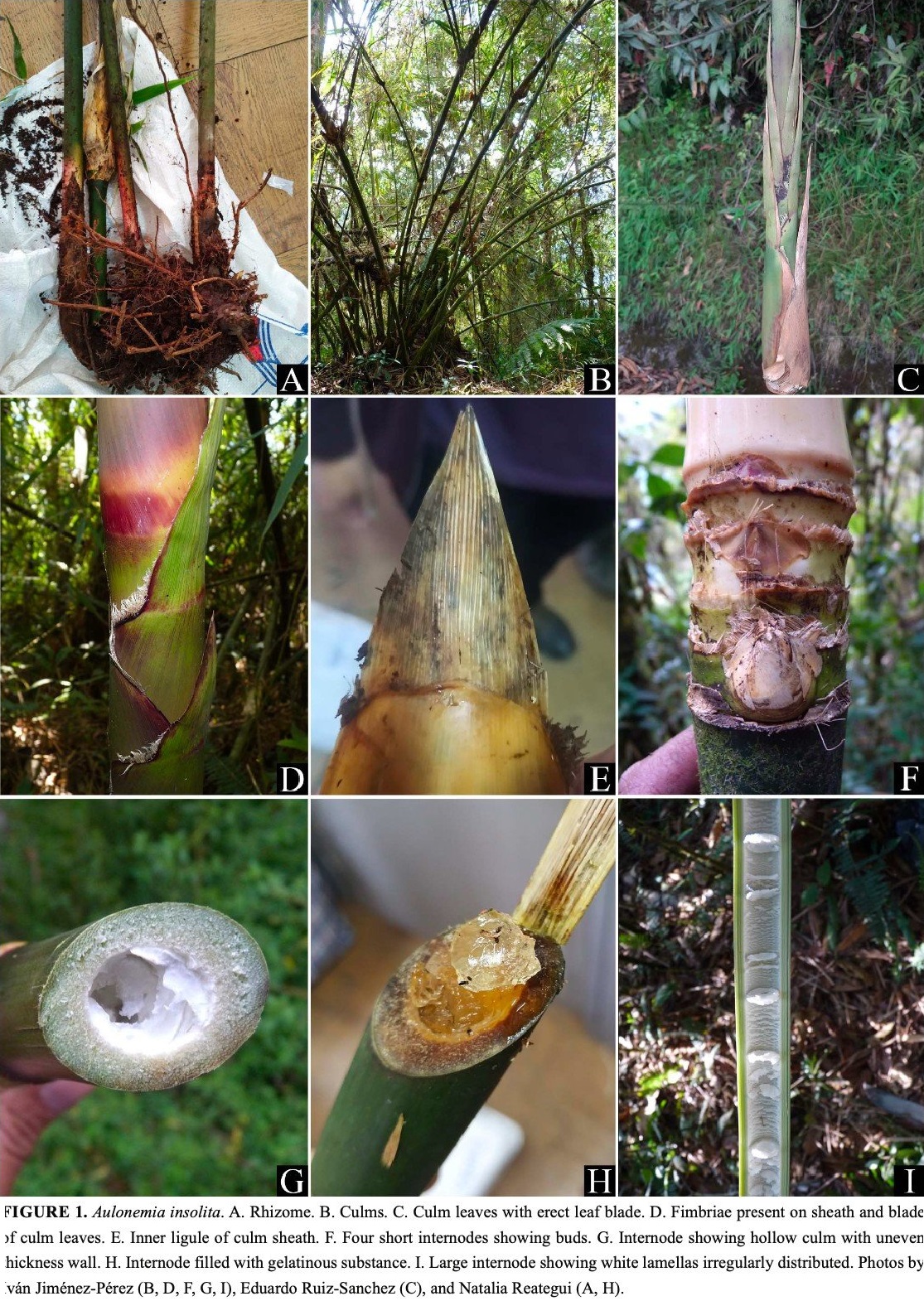
[Botany • 2025] Aulonemia insolita (Bambusoideae: Bambuseae: Arthrostylidiinae) • A New remarkable Woody Bamboo Species with internode dimorphism endemic to Bolivia and Peru


 Aulonemia insolita   

in Jiménez-Pérez, Reátegui, Malpartida-Garayet Ruiz-Sanchez, 2025.
 
Abstract
Species belonging to the genus Aulonemia have distribution across Mexico, Central America, northern and central Andes, the Guiana shield and southern Brazil. Three Aulonemia species: Aulonemia hirtula, A. queko, and A. herzogiana are known to have dimorphic internodes. In this study, we describe a new species of Aulonemia, characterized by culms with a pattern of one long internode followed by four to five shorter internodes. Notably, this species exhibits erect culm leaf blades, an uncommon trait within the genus. This study provides a comprehensive description of this new Aulonemia species, along with a distribution map, photographs and a morphological key to the species of Aulonemia with dimorphic internodes.

Central Andes, dimorphic internodes, erect culm leaf blades, reflexed culm leaf blades, Monocots


Ivan JIMÉNEZ-PÉREZ, Natalia REÁTEGUI, Celia Fiorella MALPARTIDA-GARAY and Eduardo RUIZ-SANCHEZ. 2025. Aulonemia insolita (Bambusoideae: Bambuseae: Arthrostylidiinae) A New remarkable Woody Bamboo Species with internode dimorphism endemic to Bolivia and Peru. Phytotaxa. 694(3); 223-234. DOI: doi.org/10.11646/phytotaxa.694.3.2  [2025-03-24] 

Tuesday, December 24, 2024

[Ichthyology • 2022] Moema juanderibaensis • A New Species of the Seasonal Killifish Genus Moema (Cyprinodontiformes: Rivulidae) from the Piraí watershed in the Southwest Amazon Basin


Moema juanderibaensis
 Drawert, 2022 

 
Abstract
Moema, a genus of the Rivulidae family, currently comprises 20 valid species. Most of these species inhabit temporary pools in the Amazon basin and only one species is found in the upper Paraguay basin. A new member of this genus from the upper Río Madeira drainage is here described. Males of the new species differ from all congeners by the combination of a color pattern consisting of oblique, sometimes chevron-like, irregular rows of red and light blue double-dots on body; dark yellowish to golden pectoral fins with no visible markings; and a stripe pattern on the ventral section of caudal fin with a very narrow black marginal line, intermittent or even absent. The existence of infrageneric species groups within Moema, the geographic distribution and taxonomic aspects of the species present in the Ríos Mamoré and Iténez/Guaporé rivers drainages, and the observation of intraspecific aggression between males and amphibious lifestyle in the new species are discussed.

Keywords: Bolivian Amazon basin; New species; Rivulids; Taxonomy; Temporary water bodies
 
Moema juanderibaensis, MNKP 16539, holotype, male, 41.9 mm SL
(24 days after collection, left side),
Bolivia, Santa Cruz, Santa Rosa del Sara.

Moema juanderibaensis, MNKP 16539, holotype, male, 41.9 mm SL
(2 days after collection, right side),
Bolivia, Santa Cruz, Santa Rosa del Sara.

Moema juanderibaensis, new species

Diagnosis. Moema juanderibaensis differs from congeners by a unique combination of the following characters on males: pattern of oblique, sometimes chevron-like, irregular rows of red and light blue double-dots on flanks; dark yellowish to golden pectoral fin with no visible markings (dots or spots); and ventral part of caudal-fin stripe pattern with very narrow black marginal line, intermittent or even absent (vs. never in this combination). The new species is distinguished from Moema apurinan, M. beucheyi, M. funkneri, M. hellneri, M. heterostigma, M. nudifrontata, M. pepotei, M. piriana, M. portugali, M. quiii, M. schleseri, and M. staecki by the oblique arrangement of red and light blue double-dots on flanks (vs. flank color pattern arranged in horizontal lines or rows of dots). It differs from M. manuensis, M. obliqua, M. peruensis, M. rubrocaudata, M. schleseri, and M. wischmanni by the presence of red dots on flanks mostly arranged in oblique, sometimes chevron-like, rows (vs. absence of dots, or arranged in vertical rows or randomly distributed). It is distinguishable from M. boticarioi, M. kenwoodi, and M. obliqua by the absence of dots, spots or any other markings on pectoral fins of males (vs. presence of dark reddish-brown dots, few dark green dots or longitudinally elongated dark brown spots); from M. claudiae by the absence of black humeral blotch in males (vs. presence); and from M. schleseri by the ground color of pectoral fins (brown-yellowish to golden vs. hyaline) and color pattern of ventral section of caudal fin (thin black marginal line, sometimes intermittent and inconspicuous or even absent, and broad deep orange to red stripe vs. ventralmost black stripe broad, and orange stripe with dark red dots). Additionally, it is also distinguished from M. boticarioi by the absence of brown dots or other marks on dorsum (vs. dorsum with brown dots).

Etymology. Named juanderibaensis in reference to the name of the ranch “Juan Deriba” where the type locality is situated. An adjective.


Heinz Arno Drawert. 2022. A New Species of the Seasonal Killifish Genus Moema (Cyprinodontiformes: Rivulidae) from the Piraí watershed in the Southwest Amazon basin.   Neotrop. ichthyol. 20(4). DOI: 10.1590/1982-0224-2022-0067   

Resumen: Moema, un género de la familia Rivulidae, actualmente comprende 20 especies válidas. La mayoría de estas especies habitan en charcos temporales de la cuenca amazónica y solo una especie se encuentra en la cuenca alta del Río Paraguay. Un nuevo miembro de este género de la cuenca alta del Río Madeira es descrito aquí. Los machos de la especie nueva se diferencian de todos los congéneres por la combinación de un patrón de color de filas irregulares oblicuas, a veces en forma de chevrón, de puntos dobles rojos y azul claro en el cuerpo; aletas pectorales de color amarillento oscuro a dorado sin marcas visibles; y un patrón de rayas en la sección ventral de la aleta caudal con una línea marginal negra muy estrecha, intermitente o incluso ausente. Se discute la existencia de grupos infragenéricos de especies dentro de Moema, la distribución geográfica y aspectos taxonómicos de las especies presentes en el drenaje de los Ríos Mamoré e Iténez/Guaporé, y la observación de agresión intraespecífica entre machos y estilo de vida anfibio en la nueva especie.
Palabras clave: Cuenca amazónica de Bolivia; Cuerpos de agua temporales; Nueva especie; Rivúlidos; Taxonomía

Sunday, November 17, 2024

[Entomology • 2024] Aspistomella duo, A. quinquincisa, A. tres, Ulivellia arcuata, U. pseudinsolita, ... • Revision of the Aspistomella Group of Genera (Diptera: Ulidiidae: Pterocallinae: Lipsanini)


Adults of bamboo-inhabiting Ulidiidae from Peru.
[B] Aspistomella lobioptera on a bamboo culm; [D] Aspistomella sachavaca sp. nov.;
[E–F] Ulivellia laetitiae sp. nov. on a bamboo culm showing wings during courtship or territorial behaviour.  

in Kovac, Kameneva, S. V. Korneyev, Araújo, Savaris, Smit, Schneider, Schreiber et V. A. Korneyev, 2024. 
 (All photographs by John T. Smit.)
 
Abstract
Twenty-three species of the genera Aspistomella Hendel, 1909, Polyteloptera Hendel, 1909, and Ulivellia Speiser, 1929 occurring in South America (Colombia, Peru, Bolivia, and Brazil) form a monophyletic lineage sharing certain combinations of plesiomorphies and apomorphies with similar larval biology. The name Aspistomella Hendel, 1909 is a new senior subjective synonym of Paraphyola Hendel, 1909. The group of genera is extended by the addition of six known species, Aspistomella angustifrons (Hendel, 1909) comb. nov., A. crucifera (Hendel, 1909) comb. nov., A. lobioptera Hendel, 1909, A. heteroptera Hendel, 1909, A. lunata (Hendel, 1909) comb. nov., Polyteloptera apotropa Hendel, 1909, and Ulivellia inversa Speiser, 1929, and 17 previously unknown speciesAspistomella duo Kovac, Kameneva & V. Korneyev, sp. nov., A. enderleini Kameneva & V. Korneyev, sp. nov., A. garleppi Kameneva & V. Korneyev, sp. nov., A. obliqua Kameneva, V. Korneyev & Savaris, sp. nov., A. pachitea Kameneva & V. Korneyev, sp. nov., A. quinquincisa Kameneva & V. Korneyev, sp. nov., A. sachavaca Smit & Kameneva, sp. nov., A. schnusei Kameneva & V. Korneyev, sp. nov., A. steyskali Kameneva & S. Korneyev, sp. nov., A. teresensis Araújo, V. Korneyev & Savaris, sp. nov., A. tres Kovac, Kameneva & V. Korneyev, sp. nov., Ulivellia amnoni Smit, sp. nov., U. arcuata Kovac & Kameneva, sp. nov., U. laetitiae Smit, sp. nov., U. pseudinsolita Kameneva & V. Korneyev sp. nov., and U. tenoris Kovac & Kameneva sp. nov. are described. A key to the genera and species is given. Among the Lipsanini, this group of genera is easily recognised by the combination of an enlarged, anteriorly produced epistome (lower part of the face) and a low clypeus (in the other lipsanine genera the clypeus is high and the epistome is not enlarged), which supports its monophyly, and the differentiated short parafrontal setulae and long and strong frontal and interfrontal setae, which is a synapomorphy of a larger monophyletic lineage that also includes Chaetopsis Loew, 1868 and related taxa, as well as Amethysa Macquart, 1835, Euphara Loew, 1868 and their relatives. As far as is known, most species of this larger lineage are associated with various Poaceae plants. The species included here in the Aspistomella group are also associated with neotropical tall grasses: bamboo (Guadua) and wild cane (Gynerium). Aspistomella and Ulivellia larvae inhabit water-filled internode cavities (= “bamboo phytotelmata”) of living bamboo culms of Guadua angustifolia. Newly emerged larvae use tunnels made by lepidopteran borers (Crambidae caterpillars) to penetrate the hard bamboo walls. Aspistomella and Ulivellia larvae are saprophagous and adapted to an aquatic lifestyle. The last instar larvae jump easily and pupate in the soil. The external morphology, cuticular sensilla and cephalopharyngeal skeletons of the third instar larvae of five Aspistomella and Ulivellia species (one with unknown adult stage) were studied by light and scanning electron microscopy. The main features that allow the identification of larvae and puparia are the unique posterior spiracles and the structure of the abdominal creeping welts. The morphological characteristics of Aspistomella and Ulivellia larvae are compared with other Lipsanini and their feeding habits with other ulidiids. An identification key for Aspistomella and Ulivellia is given. The adaptations to life in bamboo phytotelmata found in both neotropical Aspistomella and Ulivellia and in oriental members of the closely related family Tephritidae are discussed.

Diptera, Acalyptratae, Tephritoidea, taxonomy, distribution, biology, adults, larvae, identification key, bamboo, Neotropical Region

Adults of bamboo-inhabiting Ulidiidae from Peru. A–C, Aspistomella lobioptera on a bamboo culm; D, Aspistomella sachavaca sp. nov.; E–F, Ulivellia laetitiae sp. nov. on a bamboo culm showing wings during courtship or territorial behaviour. (All photographs by John T. Smit.)

 Aspistomella duo Kovac, Kameneva & V. Korneyev, sp. nov., 
A. enderleini Kameneva & V. Korneyev, sp. nov., 
A. garleppi Kameneva & V. Korneyev, sp. nov., 
A. obliqua Kameneva, V. Korneyev & Savaris, sp. nov., 
A. pachitea Kameneva & V. Korneyev, sp. nov., 
A. quinquincisa Kameneva & V. Korneyev, sp. nov., 
A. sachavaca Smit & Kameneva, sp. nov., 
A. schnusei Kameneva & V. Korneyev, sp. nov., 
A. steyskali Kameneva & S. Korneyev, sp. nov., 
A. teresensis Araújo, V. Korneyev & Savaris, sp. nov.
A. tres Kovac, Kameneva & V. Korneyev, sp. nov.

Ulivellia amnoni Smit, sp. nov.
U. arcuata Kovac & Kameneva, sp. nov., 
U. laetitiae Smit, sp. nov.
U. pseudinsolita Kameneva & V. Korneyev sp. nov., 
U. tenoris Kovac & Kameneva sp. nov.


Damir Kovac, Elena P. Kameneva, Severyn V. Korneyev, Alexandre Santos Araújo, Marcoandre Savaris, John T. Smit, Alexander Schneider, Robert Schreiber and Valery A. Korneyev. 2024. Revision of the Aspistomella group of genera (Diptera: Ulidiidae: Pterocallinae: Lipsanini).  Zootaxa. 5530(1); 1-117. DOI: doi.org/10.11646/zootaxa.5530.1.1

Sunday, November 10, 2024

[Botany • 2024] Telipogon minutus (Orchidaceae: Cymbidieae: Oncidiinae) • A New Species from Bolivia


Telipogon minutus  M.Zárate & C.Martel,

in Zárate et Martel, 2024.   

Abstract
Telipogon minutus, from the Carrasco National Park in the Bolivian Yungas, is proposed as a new species. Plants of T. minutus, which reach up to 4 cm in height, are the smallest known Bolivian Telipogon. The new species is characterized by its oblong to ovate labellum, which is weakly sub-auriculate and retuse at the base, with a semi-circular stigma, a column with two lateral lobes and a mammillary protuberance at the apex, and two tufts of setae with trifurcate apices. A description, figures, and a distributional map of the new taxon are provided, along with a discussion of the differences between the new species and morphologically similar Telipogon species.

Keywords: Andes, Bolivian Yungas, miniature Telipogon, Orchidaceae, taxonomy

Telipogon minutus.
A. Epiphytic habit on a small tree branch, side view. B. Flowers, frontal view. Note the maroon coloration at the labellum base and the two tufts of setae on the column. C. Detail of flower. D. Flower, side view. E. Column, close-up view from above.
Photographs by M. Zárate.

Telipogon minutus M.Zárate & C.Martel, sp. nov.  

Diagnosis: Similar to Telipogon huancavelicanus Collantes & C.Martel, but differing by its obovate petals (vs. oblanceolate petals), the oblong-ovate labellum (vs. sub-pandurate), the base of the labellum sub-auriculate and retuse (vs. base with two well defined, diver-gent auricles), the semicircular stigma (vs. rectangular) the anterior border of the stigma swollen into a mammillary dome (vs. without a mammillary dome), only two tufts of setae emerging from lateral lobes of the column (vs. three tufts of setae), and the setae trifurcate at the apex (vs. irregularly branched at the apex).

Etymology: From the Latin minutus, meaning “very small,” referring to the small size of the plants. Telipogon minutus is the smallest species among the Bolivian Telipogon.


Modesto Zárate and Carlos Martel. 2024. A New Species Telipogon (Oncidiinae) from Bolivia. LANKESTERIANA. 24(3); 233–237. DOI: doi.org/10.15517/lank.v24i3.62111


Thursday, October 10, 2024

[Herpetology • 2024] Chironius whipala • A New Species of Sipo Snake, Chironius (Serpentes: Colubridae), from the Yungas of Bolivia


Chironius whipala
Quinteros-Muñoz, Gómez-Murillo, Camacho-Badani, Aguayo, Carpio-Real, Pérez, Marca, Gonzales & Torres-Carvajal, 2024  


Abstract   
A new snake of the genus Chironius is described based on external morphological characters and phylogenetic evidence. The new species occurs in Bolivia, both in the humid montane forests of the Yungas of Cochabamba and in Santa Cruz. It differs from all congeners in having 10 dorsal scale rows at midbody, an entire cloacal plate, keeled paravertebral rows, lightly colored lower portions of the supralabials, a yellow snout, a short hemipenis, and lacking postocular stripes, proximal enlarged spines on the hemipenis, and apical pits. Adults and juveniles have an emerald green background color. The new species is recovered as the sister taxon of C. leucometapus, which is known from the Amazonian slopes of the Andes between central Peru and northern Ecuador. We also provide an identification key to the species of Chironius with 10 dorsal rows at midbody. 

Keywords. Carrasco National Park, hemipenes, phylogeny, reptiles, Squamata, systematics

General view of Chironius whipala sp. nov. in life.
(A) juvenile male, paratype MHNC-R 3100; (B) adult male, paratype MHNC-R 3133; (C) juvenile female, paratype MHNC-R 3135; (D) adult female, paratype MNKR 4834.
Photographs by Oliver Quinteros-Muñoz (A, B, C) and Lucindo Gonzales (D).

Chironius whipala sp. nov.

Etymology. The specific name “whipala” comes from the original Aymara language, which means “emblem,” i.e., the emblem of the original people of the Andes of Bolivia and an emblem that honors and symbolizes respect for our Pachamama (Mother Earth). According to an anonymous Aymara phrase, “where there is a wiphala, love and respect for Mother Earth (Pachamama) and the universe will be represented.”


Oliver Quinteros-Muñoz, Pedro Gómez-Murillo, Teresa Camacho-Badani, Rodrigo Aguayo, Rene Carpio-Real, Edson Pérez, Bladimir Marca, Lucindo Gonzales, Omar Torres-Carvajal. 2024. A New Species of Sipo Snake, Chironius (Serpentes: Colubridae), from the Yungas of Bolivia. Amphibian & Reptile Conservation. 18(1&2): 58–67 (e333).


Monday, September 30, 2024

[Entomology • 2024] Bothynus sartorei • A New Species of Bothynus Hope (Coleoptera: Scarabaeidae: Dynastinae: Pentodontini) from Bolivia with A Key to the Bolivian Species of Bothynus


Bothynus sartorei 
Ratcliffe & Cave, 2024

 
Abstract
Bothynus sartorei Ratcliffe & Cave sp. nov. is described as a new species from Arani, Cochabamba, Bolivia. The new species is compared with the similar B. minor Steinheil from Argentina and B. nyx Ratcliffe from Bolivia. A description, diagnosis for distinguishing the species, illustrations, and a distribution map are provided for the new species. A key to the Bolivian species of Bothynus Hope is presented.

Coleoptera, scarab beetle, South America, taxonomy


Brett C. Ratcliffe and Ronald D. Cave. 2024. Description of A New Species of Bothynus Hope (Coleoptera: Scarabaeidae: Dynastinae: Pentodontini) from Bolivia with A Key to the Bolivian Species of BothynusJournal of Insect Biodiversity. 54(2); 42-47. DOI: doi.org/10.12976/jib/2024.54.2.2 

Thursday, August 22, 2024

[Botany • 2024] Ceiba guarani (Malvaceae: Bombacoideae) • A New Species from sub-Andean southern Bolivia and the Sierras of northwestern Argentina


Ceiba guarani  Catari, Angulo & Drawert, 

in Catari, Drawert et Angulo, 2024. 

Abstract
Based on observations made during botanical surveys in the southern sub-Andean of Bolivia, analysis of collected material, review of herbarium material and online databases, we determined that the Ceiba populations of the xeric Bolivian-Tucuman forests, previously identified as Ceiba chodatii, correspond to a new species. Given that the morphological, ecological and distributional characteristics differ from those observed in populations of C. chodatii, we propose Ceiba guarani sp. nov. Our field observations and distribution data from the revised specimens indicate that C. chodatii is naturally restricted to the Chaco plains and a strip of the southern Subandean foothills, whereas Ceiba guarani is distributed mainly in the Subandean ranges.

Keywords: Bolivian-Tucuman forest, Bombacoideae, Chaco, Neotropical flora

Taxonomic details of Ceiba guarani. A: Detail of stamens and stigma. B: Immature fruit. C: Leaf. D: Flower.


Ceiba guarani Catari, Angulo & Drawert sp. nov. 

Calyx campanulate, 30 to 60 mm long. Petals white to pale yellow and pubescent on the outside. Staminal appendages yellow and slightly pilose. Staminal tube divided in the distal third forming free filaments. Petiolules 6 to 18 mm long. 
 
Etymology: The specific epithet guarani is conferred in reference to the Guarani indigenous people. With the name we honor this people who historically and still live in the southern sub-Andean region in the Departments of Chuquisaca, Santa Cruz and Tarija.


Juan C. Catari, Heinz A. Drawert and Alcibiades A. Angulo. 2024. Ceiba guarani (Malvaceae, Bombacoideae), A New Species from sub-Andean southern Bolivia and the Sierras of northwestern Argentina. Bonplandia. 33(2); 257-269. DOI: doi.org/10.30972/bon.3327698

Tuesday, June 11, 2024

[Ichthyology • 2024] Austrolebias ayoreode • Redescription of Austrolebias accorsii (Cyprinodontiformes: Rivulidae) and Description of A New Species of the Genus from the upper Paraguay River Basin


Austrolebias ayoreode
 Drawert & Ergueta, 2024


Abstract
Austrolebias accorsii is redescribed based on specimens from type-locality, nearby temporary pools, and other locations within the same hydrologic unit. Additionally, a novel Austrolebias species is described, exclusively found in two temporary waterbodies in “Abayoy”, a unique vegetation type situated in the transitional zone between the Dry Chaco, Chiquitano Dry Forest, and Pantanal Flooded Savannas ecoregions in southeastern Bolivia, bordering Paraguay, where the last voluntarily isolated indigenous people outside the Amazon in America reside. Diagnostic characters for both species are presented. Within Austrolebias two species groups are recognized with different morphological characters, geographical distribution, and ecological traits of their habitats. Furthermore, we suggest the usage of median and interquartile range rather than mean and standard deviation to analyze morphometric and meristic data of rivulids, given the typically non-Gaussian distribution of this data.

Keywords: Chaco; Killifish; Seasonal fish; Taxonomy; Temporary water bodies

Austrolebias ayoreode. Males (immediately after collection).
Two uppermost: MNKP 16590, paratypes, 34.7–34.8 mm SL, Bolivia, Santa Cruz, Cordillera, Charagua Iyambae Guarani Autonomous Territory, Ñembi Guasu Conservation and Ecological Importance Area.
Lower six: MNKP 16587, paratypes, 21.2–34.7 mm SL, collected with uppermost.

Austrolebias ayoreode. Male and female (1 day after collection).
Above: MNKP 16612, holotype, male, 50.7 mm SL, Bolivia, Santa Cruz, Cordillera, Charagua Iyambae Guarani Autonomous Territory, Ñembi Guasu Conservation and Ecological Importance Area.
Below: MNKP 16587, paratype, female, 38.1 mm SL, collected with holotype.

Austrolebias ayoreode. Females (immediately after collection).
Above: MNKP 16590, paratype, 26.1 mm SL; Bolivia, Santa Cruz, Cordillera, Charagua Iyambae Guarani Autonomous Territory, Ñembi Guasu Conservation and Ecological Importance Area.
Below: MNKP 16587 (vertically flipped), paratype, female, 38.1 mm SL, collected with MNKP 16590.

Austrolebias ayoreode, new species 

Diagnosis. Austrolebias ayoreode males differs from all congeners, except A. accorsii, A. ephemerus,and A. vandenbergi, by presence of 1–3 transverse rows of scales on basal anterior and median portion of anal fin. Males of A. ayoreode can be distinguished from A. accorsii, A. ephemerus, A. melanoorus, A. queguay, and A. vandenbergi by presence of whitish to pale yellowish dots on flanks usually vertically aligned in unarranged rows (vs. absent in A. accorsii; mostly coalesced in vertical bars in A. ephemerus, A. melanoorus, and A. queguay; absent or, when rarely present, sparse and scattered in A. vandenbergi); from A. accorsii and A. vandenbergi by urogenital papilla mostly ...


Etymology. The name ayoreode is an eponym conferred in reference to the indigenous Ayoréode people, who historically occupied vast expanses of the northern Dry Chaco, and of whom a few groups still persist in the area of the type-locality of this species, standing as the last indigenous people in voluntary isolation outside of the Amazon in the Americas. Through this nomenclature, we intent to perpetuate the memory of the existence of the Ayoréode and emphasize the imperative of preserving their ancestral territory, which also is the habitat of the species described herein.


Heinz Arno Drawert and Carlos Ergueta. 2024. Redescription of Austrolebias accorsii (Cyprinodontiformes: Rivulidae) and Description of A New Species of the Genus from the upper Paraguay River basin.   Neotrop. ichthyol. 22 (2); DOI: 10.1590/1982-0224-2024-0001  

Wednesday, June 5, 2024

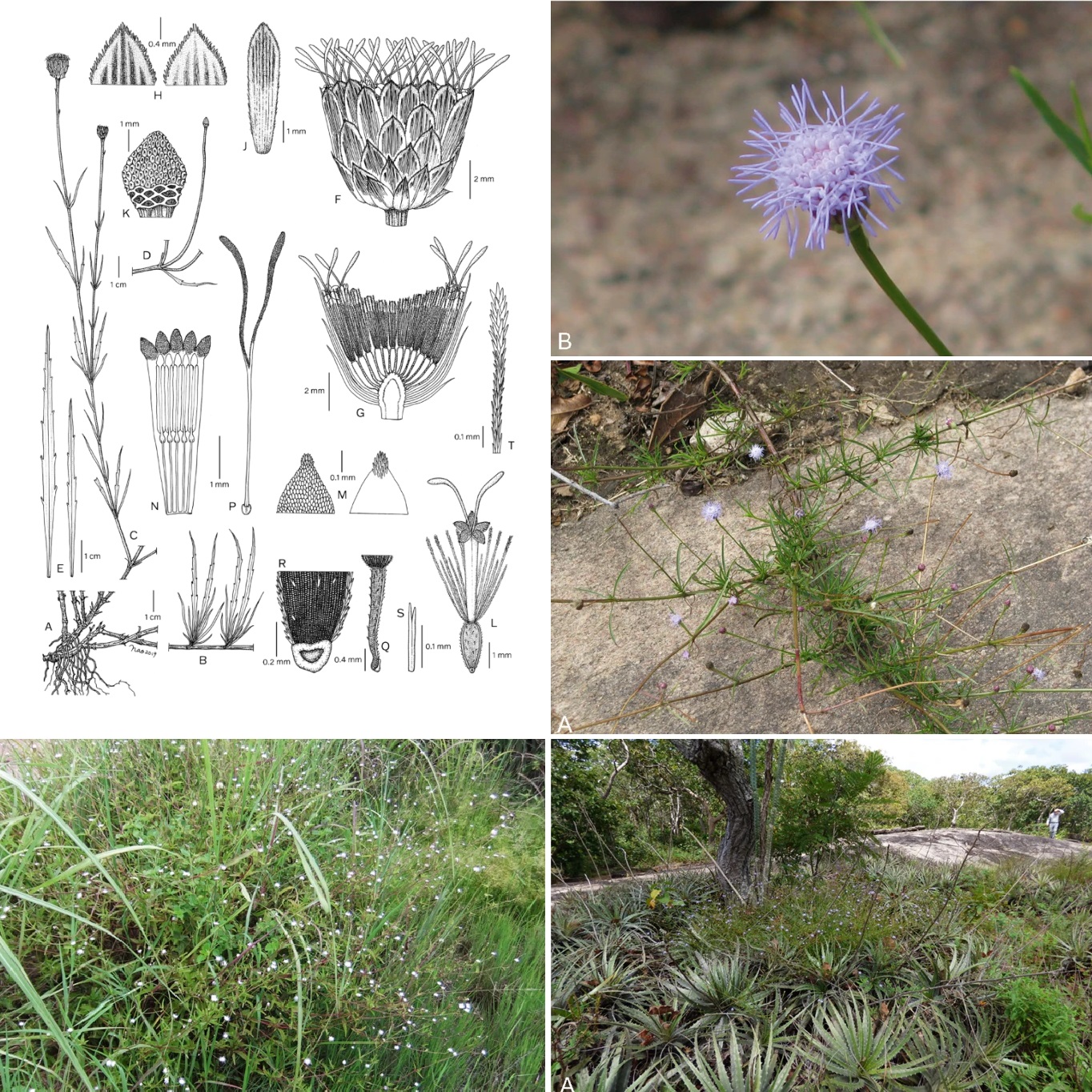
[Botany • 2024] Praxelis cleggiae (Asteraceae: Eupatorieae: Praxeliinae) • A New Species from the Granite Inselbergs in the east of the Departamento de Santa Cruz, Bolivia


Praxelis cleggiae D.J.N.Hind & S.L.Edwards,

in Hind et Edwards, 2024.
 
Summary
Praxelis cleggiae (Compositae: Eupatorieae: Praxeliinae) is described and illustrated from the granite inselbergs (upon which it is most common), and on road crown chippings on old roads, in the Departamento de Santa Cruz, Bolivia; it has a disjunct distribution and is also found on the Serranía San Simón, in the San Ignacio Schist belt, Departamento de Beni. Material of this species was mostly determined as P. insignis (Malme) R.M.King & H.Rob., a Brazilian species, described from the metamorphosed sandstone of what is now the Parque Nacional da Chapada dos Guimarães in Mato Grosso State. The two species have some superficial resemblance, but differ significantly in plant size, internode length (relative to leaf length), branching, leaf shape and size, phyllaries, achenes and pappus. The total number of species of Praxelis recognised in Bolivia is now seven, and 20 species in the genus worldwide. 

Key Words: Asteraceae, ChromolaenaEupatoriopsis, Island-like Systems, Praxeliopsis


Praxelis cleggiae. A rootstock; B prostrate stem portion with axillary clusters/tufts of leaves; C upper part of flowering stem; D apical part of flowering stem bearing one old capitulum, post-dehiscence of phyllaries and achenes, showing just the conical receptacle; E leaves; F capitulum; G l.s. capitulum; H middle phyllary apex — l.h. showing abaxial view, r.h. showing adaxial view; J innermost phyllary; K detail showing surface of receptacle; L floret; M detail of corolla lobe apex (l.h. view of adaxial surface, r.h. view of abaxial surface); N corolla opened out showing position of anther cylinder; P style and style arms; Q achene (obcompressed) in lateral view showing asymmetric carpopodium facing right (towards attachment point on receptacle); R base of achene showing adaxial surface and carpopodium; S detail of setula from achene body; T detail of apex of pappus seta.
 A, C, D, F – T from Wood et al. 24182 (holotype in K); B & E from Wood et al. 13202 (K). 
Drawn by Naoko Yasue.


Praxelis cleggiae D.J.N.Hind & S.L.Edwards, sp. nov.

RECOGNITION. Praxelis cleggiae is similar to P. insignis in that both species are procumbent and spreading, commonly have a single capitulum per inflorescence (if terminal) or inflorescence branch, and possess inconspicuously bracteolate pedicels. Praxelis cleggiae is distinguished from P. insignis in possessing markedly longer internodes (c. 2 – 9 cm vs c. 0.3 – 0.8 cm), with leaves scarcely longer than internode (vs leaves c. 3 – 6+ times longer than ...

ETYMOLOGY. The species is named after Rosemary (Rosie) Clegg, formerly TIPAs Bolivia Co-ordinator, at RBG, Kew, now a post graduate student being co-supervised by the first author of this paper. Rosie first brought the issue of this species to the attention of the first author when she began assessing the species for Red Data listing, at which point a critical assessment was made of the material.

 
D. J. Nicholas Hind and Sara L. Edwards. 2024. Praxelis cleggiae (Compositae: Eupatorieae: Praxeliinae), A New Species from the Granite Inselbergs in the east of the Departamento de Santa Cruz, Bolivia.  Kew Bulletin. DOI: s12225-024-10189-1