Showing posts with label Tepui. Show all posts

Saturday, December 13, 2025

[Herpetology • 2025] Adhaerobufo wokomungensis • A New Species of Adhaerobufo (Anura: Bufonidae) from the Wokomung Massif, Guyana, confirms A Key synapomorphy in its sister Genus Rhaebo


Adhaerobufo wokomungensis
Kok & Means, 2025
 
 
Abstract  
A new species of toad in the genus Adhaerobufo is described from the Wokomung Massif in the Pantepui region of Guyana, South America. The new species is morphologically similar to – and has previously been confused with – A. nasicus but is unique among Adhaerobufo in lacking a bright, conspicuous white stripe or white spots on the lower lip in adults in life, in lacking visible preorbital and pretympanic crests and in having tubercles between Fingers I-III in males and a small projecting prepollex in both sexes. An updated distribution map for A. nasicus is provided. The colour of parotoid macrogland secretions in Adhaerobufo is reported as a new diagnostic character to distinguish the genus from Rhaebo, its sister taxon.

KEYWORDS: Pantepui, parotoid macrogland secretions, systematics, taxonomy


Adhaerobufo wokomungensis sp. nov.  
Adhaerobufo nasicus (in part) Dias et al. 2024: 14
 
Etymology: Named after the type locality, the Wokomung Massif in west-central Guyana; adjective in the nominative case.

Definition and diagnosis: A bufonid of the genus Adhaerobufo as diagnosed based on 1) molecular phylogenetic evidence (Dias et al. 2024; Fig. 5), 2) white parotoid macrogland secretions (see Discussion and Fig. 1), and 3) suctorial tadpole (Dias et al. 2024). Adhaerobufo wokomungensis sp. nov. is characterised by the following morphological characters, the combination of which distinguishes it from the only two known congeners (A. ceratophrys and A. nasicus): 1) medium-sized toad with a robust body and a SVL of 41.6-45.3 mm in males (n = 2), 60.9 mm in the only known female, 2) snout pointed in dorsal view, round in lateral view, head slightly wider than long, 3) tympanum indistinct, 4) outer edge of the eyelid with rounded dermal projection, 5) low canthal crest, loreal region concave, 6) underlip lacking a bright, conspicuous white stripe or white spots in live adults, 7) preorbital, pretympanic and parietal crests absent, low supraorbital, low postorbital, low supratympanic crests present, 8) nostrils oval, directed posterolaterally, below the canthus rostralis, 9) single enlarged rictal tubercle absent, 10) choanae medium-sized, ovoid, ... 

Adhaerobufo wokomungensis sp. nov. in life.
A) Holotype (IRSNB4223, male, 45.3 mm snout-vent length), B) paratypes in situ, in amplexus (IRSNB4224, male, and IRSNB4225, female),
C) uncollected male, D) white parotoid macrogland secretions produced by the same specimen as illustrated in C. Photos D.B. Means.

Underlip condition in live Adhaerobufo nasicus (A – bright white; IRSNB15678), Adhaerobufo wokomungensis sp. nov. (B – unmarked; holotype, IRSNB4223) and Adhaerobufo ceratophrys (C – bright white; QCAZ55426). Note also the condition of the dermal projection on the outer edge of the eyelid and of the preorbital and pretympanic crests.
Photos P.J.R. Kok (A), D.B. Means (B), and courtesy Diego Quirola-BIOWEB,  https://bioweb.bio (C). Images not at scale.


Philippe J.R. Kok, D. Bruce Means. 2025. A New Species of Adhaerobufo (Amphibia, Bufonidae) from the Wokomung Massif, Guyana, confirms A Key synapomorphy in its sister Genus RhaeboJournal of Vertebrate Biology. 74 (25085), 25085.1-10. DOI: doi.org/10.25225/jvb.25085 (11 November 2025)

Monday, November 10, 2025

[Arachnida • 2025] Tepuithele nangaritza • A New Genus in the mygalomorph Spider (Mygalomorphae: Ischnothelidae) from Ecuador


Tepuithele nangaritza
Dupérré & Tapia, 2025 


 Abstract  
A new genus from the mygalomorph family Ischnothelidae is described from Ecuador. Tepuithele n. gen. was collected in the Tepui formation found in the Zamora Chinchipe province, Ecuador. The new species, Tepuithele nangaritza n. sp. (♂♀), possesses a unique combination of morphological characters not found in any other members of the family: male chelicerae with large forward prongs, leg I without tibial apophysis, and metatarsus I without keel. Images of both male and female are presented, in addition to a distribution map.

KEYWORDS: cheliceral prong, diversity, taxonomy, Tepui formation


Tepuithele n. gen.
  Tepuithele nangaritza n. sp.

 
Nadine Dupérré and Elicio Tapia. 2025. A New Genus in the mygalomorph Spider Family Ischnothelidae, Tepuithele n. gen., from Ecuador. Arachnology. 20(2); 238-244. DOI: doi.org/10.13156/arac.2025.20.2.238 (7 July 2025) 

Friday, May 9, 2025

[Herpetology • 2024] Neblinaphryne imeri • A New Species of Neblinaphryne (Anura: Brachycephaloidea: Neblinaphrynidae) from Serra do Imeri, Amazonas State, Brazil


 Neblinaphryne imeri 
Fouquet, Moraes, Grant, Recoder, Camacho, Ghellere, Barutel & Rodrigues, 2024
 

Abstract
The highlands of the Guiana Shield (Pantepui) in northern South America harbor a unique fauna and flora. However, this diversity remains poorly documented, as many Pantepui massifs remain little explored or unexplored, mainly because their access is very challenging. Considering amphibians, 11 genera are endemic or sub-endemic to Pantepui, and one of them, Neblinaphryne, is monospecific and was recently described from the Neblina massif, at the border between Brazil and Venezuela. We recently undertook an expedition in the nearby, previously uninventoried Imeri massif and discovered a new species of this genus. We describe this new species herein as Neblinaphryne imeri sp. nov., combining molecular, external morphological, acoustic, osteological and myological data. The new species shares with the other Neblinaphryne species (N. mayeri) minuscule septomaxillae and pointed terminal phalanges, confirming the morphological diagnostic characters of the genus. Nevertheless, the new species can promptly be distinguished from N. mayeri by having the head wider than long, a distinct color pattern, and prominent tubercles on the eyelid and humeral region, as well as osteological and genetic differences. These two species are likely endemic to their respective massifs, providing a striking new example of speciation by isolation within Pantepui, which was possibly mediated by climate and elevation, as previously hypothesized for many other lineages endemic to this region.

Amphibia, Amazonia, Amphibian, Biodiversity, Frog, Guiana Shield, Pantepui, Taxonomy, Systematics


Neblinaphryne imeri 


Antoine FOUQUET, Leandro J.C.L. MORAES, Taran GRANT, Renato RECODER, Agustín CAMACHO, José Mário GHELLERE, Alexandre BARUTEL and Miguel Trefaut RODRIGUES. 2024. A New Species of Neblinaphryne (Anura: Brachycephaloidea: Neblinaphrynidae) from Serra do Imeri, Amazonas state, Brazil. Zootaxa. 5514(1);73-90. DOI: doi.org/10.11646/zootaxa.5514.1.5 [2024-09-25] 
https://jornal.usp.br/uspnews/a-new-species-of-frog-appears-in-the-upper-amazon/

Tuesday, October 1, 2024

[Herpetology • 2024] Adhaerobufo gen. n. • The Remarkable Larval Morphology of Rhaebo nasicus (Werner, 1903) (Anura: Bufonidae) with the Erection of A New bufonid Genus and insights into the Evolution of Suctorial Tadpoles


Adhaerobufo gen. nov.
 Adhaerobufo ceratophrys (Boulenger, 1882) comb. nov.,
Adhaerobufo nasicus (Werner, 1903) comb. nov.

in Dias, Phillips, Pereyra, Means, Haas et Kok, 2024.
Photos by D. Bruce Means and Pedro H. Dias

Abstract
Tadpoles serve as crucial evidence for testing systematic and taxonomic hypotheses. Suctorial tadpoles collected in Guyana were initially assigned to Rhaebo nasicus through molecular phylogeny. Subsequent analysis of larval and adult morphological traits revealed synapomorphies within the clade encompassing R. nasicus and R. ceratophrys, prompting the recognition of a new genus described herein as Adhaerobufo. The new genus is distinguished from other bufonids by specific phenotypic traits including an enlarged, suctorial oral disc with distinct papillae arrangements, and the presence of certain muscles and narial vacuities at the larval stage. However, only a few adult external characteristics (e.g., enlarged eyelids, infraocular cream spot), seem to be reliably discriminative from related genera. This study underscores the significance of larval morphology in anuran systematics and offers new insights into the evolution of suctorial and gastromyzophorous larvae within bufonids.

Keywords: Evolution, Larval traits, Musculoskeletal system, Pantepui, Suctoriality, Systematics, Taxonomy

Living tadpole of  Rhaebo” nasicus in right lateral (A), dorsal (B), and ventral (C) views.
Photos by D. Bruce Means

The tadpole of Rhaebo” nasicus (CPI10704) at stage 38 in lateral (A), dorsal (B), and ventral (C) views.
Scale bar = 1.0 mm. Photos by Pedro H. Dias

Adhaerobufo gen. nov.
 
Type species: Bufo nasicus (Werner, 1903) comb. nov.
 
Content: Adhaerobufo ceratophrys (Boulenger, 1882) comb. nov., and Adhaerobufo nasicus (Werner, 1903) comb. nov.

Etymology: Adhaerobufo gen. nov. (gender masculine) is derived from the Latin adhaerens, meaning adherent and the Latin būfo, meaning toad. The name refers to the unique suctorial morphology of their tadpoles.

Definition and diagnosis:
Adhaerobufo gen. nov. can be differentiated from all other Bufonidae by the combination of the following characters: (1) tadpole with enlarged, suctorial, oral disc; (2) tadpole oral disc with a complete row of marginal papillae; (3) tadpole oral disc with multiple rows of submarginal papillae on the lower lip and by a single row of marginal papillae on the upper lip; (4) tadpole oral disc with an uninterrupted second anterior row of keratodonts; (5) presence of the m. interhyoideus posterior at larval stage; (6) presence of the m. rectus abdominis anterior at larval stage; (7) presence of narial vacuities in the buccopharyngeal cavity at larval stage; (8) projecting, enlarged eyelid in adults; (9) presence of an infraocular cream spot in adults, (10) sphenethmoid relatively narrow, overlapping only the medial ends of the palatines; and (11) posterior process of the prootic prominent and notched.

Kamana Creek, upstream within 100 m of Kamana Waterfall, draining Mt. Kopinang low waters where tadpoles of Adhaerobufo were collected (A) and an unnamed stream on the slopes of Maringma-tepui where tadpoles were also observed (B).
Amplexing couple of A. nasicus (C and D).
Photos by D. Bruce Means (A, C, D) and Philippe J. R. Kok (B)

Geographical distribution of Adhaerobufo gen. nov. in northwestern Guyana, eastern Venezuela and upper Amazon Basin. Inset map of South America, highlighting the geographical area occupied by the genus (A). Known distribution of A. ceratophrys and A. nasicus (B).
 Examples of macrohabitats in which the new genus is present; Kaieteur Falls in Guyana (C), uplands and highlands of western Guyana (D), and lowlands, Amazon Forest, Icá River, Brazil (E).
Shape files of the geographical distribution were downloaded from the IUCN website. 
Adult and tadpole are from A. nasicus
Photos by: Philippe Kok (C and D) and Pedro H. Dias (E)

Torrential environments that were colonized by suctorial/gastromyzophorous larvae of bufonids. Adult of Atelopus sp. in Tacarcuna, Colombia (A); fast flowing waters occupied by Atelopus elegans at Isla Gorgona, Colombia (B);
larvae of Ansonia guibei attached to rocks of fast flowing streams in Borneo (C and D).
Photos by Marco A. Rada (A), David Velázquez (B), and Alexander Haas (C and D)

 
Pedro Henrique dos Santos Dias, Jackson R. Phillips, Martín O. Pereyra, D. Bruce Means, Alexander Haas and Philippe J. R. Kok. 2024. The Remarkable Larval Morphology of Rhaebo nasicus (Werner, 1903) (Amphibia: Anura: Bufonidae) with the Erection of A New bufonid Genus and insights into the Evolution of Suctorial Tadpoles. Zoological Letters. 10: 17. DOI:  doi.org/10.1186/s40851-024-00241-0


Saturday, September 14, 2024

[Herpetology • 2024] Stefania imawari & S. upuigmaeHead in the Clouds: Two New microendemic Tepui-summit Species of Stefania (Anura: Hemiphractidae)


Main colour pattern variation in Stefania imawari sp. nov.
Kok, 2024


Abstract
In addition to the type locality (the summit of Aprada-tepui, Bolívar State of Venezuela), the distribution of the egg-brooding frog Stefania satelles was long thought to include several isolated tabletop mountain (tepui) summits surrounding the large Chimantá Massif in Bolívar State (hence the Latin name “satelles”). However, multilocus molecular phylogenetic analyses have revealed that this taxon includes several undescribed morphologically cryptic species, and that S. satelles should be restricted to its type locality. Two tepui-summit species confused under that name in the literature remain to be named, and the present paper aims at describing these populations previously referred to as Stefania sp. 3 and S. sp. 5. Stefania sp. 3 is only known from the small summit of Angasima-tepui, while S. sp. 5 is only reported from the small summit of Upuigma-tepui, both mountains being located south of the Chimantá Massif. These new, phylogenetically distinct species are described based on external morphology and osteology and in comparison to close relatives in the S. ginesi clade, which consists exclusively of tepui summit species. Both new species have highly restricted geographic ranges (less than 3 km2) and should be listed as Critically Endangered according to IUCN criteria.

Keywords: Homoplasy, Morphology, Osteology, Pantepui, Systematics, Taxonomy
 
Main colour pattern variation in Stefania imawari sp. nov.
 (A). IRSNB 4218, male, 48.9 mm SVL. (B). IRSNB 4213, immature female, 38.0 mm SVL.
(C). IRSNB 4215, male, 44.1 mm SVL. (D). IRSNB 4214, male, 44.4 mm SVL.
(E). IRSNB 4219, male, 44.6 mm SVL. (F). IRSNB 4220, female, 55.4 mm SVL.
Photos by the author

Stefania imawari sp. nov.

Etymology. The specific epithet imawari is a noun used in apposition and refers to the malicious spirits that inhabit the tepuis, according to Pemón traditional beliefs (Arturo Berti, pers. comm.). The Pemón are indigenous people living in the southeast region of Venezuela, including the area surrounding the type locality.

Holotype of Stefania upuigmae sp. nov. (IRSNB 4222, female, 53.1 mm SVL).
(A). Dorsolateral view in life. (B). Ventral view of the specimen freshly euthanized.
Photos by the author

Stefania upuigmae sp. nov.

Etymology. The specific epithet upuigmae is a noun in the genitive case and refers to the type locality, the summit of Upuigma-tepui, also locally known as “El Castillo”. 


Distribution of species in the Stefania ginesi clade (A). Distribution map of the Stefania ginesi clade as currently understood. .... Inset photos by the author. (B). Aerial photograph of the southern part of the Chimantá massif, taken facing southwest showing the distribution of Stefania imawari sp. nov. and S. upuigmae sp. nov.
Photo by C. Brewer-Carías

 
Philippe J.R. Kok. 2024. Head in the Clouds: Two New microendemic Tepui-summit Species of Stefania (Anura: Hemiphractidae). Zoological Letters. 10: 14. DOI: doi.org/10.1186/s40851-024-00237-w

Monday, February 19, 2024

[Herpetology • 2024] Neblinaphryne mayeri & Caligophryne doyleiRelicts in the Mist: Two New Frog Families, Genera and Species (Anura: Neblinaphrynidae & Caligophrynidae) highlight the Role of Pantepui as A Biodiversity Museum throughout the Cenozoic


 Neblinaphryne mayeri
 Caligophryne doylei
Fouquet, Kok, Recoder, Prates, Camacho, Marques-Souza, Ghellere, McDiarmid & Rodrigues, 2024

 
Highlights: 
• We discovered two new frog species from the Neblina massif, Pantepui.
• Both species represent deeply rooted new lineages within Brachycephaloidea.
• Morphological data also support the creation of two new family and genus-level taxa.
• These results confirm the role of “museum” played by Pantepui during Cenozoic.

Abstract
The iconic mountains of the Pantepui biogeographical region host many early-diverging endemic animal and plant lineages, concurring with Conan Doyle’s novel about an ancient “Lost World”. While this is the case of several frog lineages, others appear to have more recent origins, adding to the controversy around the diversification processes in this region. Due to its remoteness, Pantepui is challenging for biological surveys, and only a glimpse of its biodiversity has been described, which hampers comprehensive evolutionary studies in many groups. During a recent expedition to the Neblina massif on the Brazil-Venezuela border, we sampled two new frog species that could not be assigned to any known genus. Here, we perform phylogenetic analyses of mitogenomic and nuclear loci to infer the evolutionary relationships of the new taxa and support their description. We find that both species represent single lineages deeply nested within Brachycephaloidea, a major Neotropical clade of direct-developing frogs. Both species diverged >45 Ma from their closest relatives: the first is sister to all other Brachycephaloidea except for Ceuthomantis, another Pantepui endemic, and the second is sister to Brachycephalidae, endemic to the Brazilian Atlantic Forest. In addition to these considerable phylogenetic and biogeographic divergences, external morphology and osteological features support the proposition of two new family and genus-level taxa to accommodate these new branches of the amphibian tree of life. These findings add to other recently described ancient vertebrate lineages from the Neblina massif, providing a bewildering reminder that our perception of the Pantepui’s biodiversity remains vastly incomplete. It also provides insights into how these mountains acted as “museums” during the diversification of Brachycephaloidea and of Neotropical biotas more broadly, in line with the influential “Plateau theory”. Finally, these discoveries point at the yet unknown branches of the tree of life that may go extinct, due to global climate change and zoonotic diseases, before we even learn about their existence, amphibians living at higher elevations being particularly at risk.

Keywords: Amazonia, Biogeography, Guiana Shield, Neotropics, Phylogeny, Taxonomy


Class Amphibia Linnaeus, 1758.
Order Anura Duméril, 1805.
Superfamily Brachycephaloidea Günther, 1858.


Neblinaphrynidae fam. nov.

Neblinaphryne gen. nov.
 
Etymology. The generic name refers to the Pico da Neblina massif and is a combination of “neblina” meaning “fog” in Portuguese and Spanish, and “phryne”, meaning “toad” in Ancient Greek.

Neblinaphryne mayeri sp. nov.

Distribution. Known only from the Neblina massif, Pantepui, northeastern South America.

Etymology. The specific epithet mayeri is a noun in the genitive case, honoring General Sinclair James Mayer from the division “Sistema Defesa, Indústria e Academia” (SisDIA) of the Brazilian Army for his tireless work to provide logistical support and make the expedition to Pico da Neblina possible. Since then, General Mayer has promoted collaborations between the Army and our research group at the University of São Paulo, an effort that has already led to the collection of several species new to science from remote sites in Amazonia.


Caligophrynidae fam. nov.
 
Caligophryne gen. nov.

Etymology. The generic name is formed by “caligo”, a Latin word for “mist”, and “phryne”, a word meaning “toad” in Ancient Greek.

Caligophryne doylei sp. nov.

Etymology. The specific epithet doylei is a noun in the genitive case, honoring Sir Arthur Conan Doyle for his influential novel “The Lost World”, in which he depicted ancient creatures surviving until the present era on the isolated summit of a remote table-top mountain, like the frog we describe here.

Distribution. Known only from the Neblina massif, Pantepui, northeastern South America.


Antoine Fouquet, Philippe J. R. Kok, Renato Sousa Recoder, Ivan Prates, Agustin Camacho, Sergio Marques-Souza, José Mario Ghellere, Roy W. McDiarmid and Miguel Trefaut Rodrigues. 2024. Relicts in the Mist: Two New Frog Families, Genera and Species highlight the Role of Pantepui as A Biodiversity Museum throughout the Cenozoic. Molecular Phylogenetics and Evolution. In Press, 107971. DOI: 10.1016/j.ympev.2023.107971


Tuesday, August 22, 2023

[Herpetology • 2023] Paikwaophis krukiHiding in the Mists: Molecular phylogenetic position and Description of A New Genus and Species of Snake (Dipsadidae: Xenodontinae) from the Remote Cloud Forest of the Lost World


Paikwaophis kruki 
Kok & Means, 2023

 
Abstract
Pantepui s.l. is a remote, biodiverse region of ~400 000 km2 containing at least five endemic reptile genera and a number of ancient vertebrate lineages. Here, we describe an additional endemic snake genus and species, Paikwaophis kruki  gen. nov., sp. nov. (Dipsadidae: Xenodontinae), recently collected in the Pantepui cloud forest that sits at the base of the steep cliffs of Roraima-tepui and Wei-Assipu-tepui (table mountains of the Eastern Tepui Chain) in Guyana, South America. Multilocus molecular data strongly support Paikwaophis  gen. nov. to be most closely related to Xenopholis Peters, 1869, although both genera are strikingly different morphologically. Osteological and other phenotypic data suggest that Paikwaophis is semi-fossorial; its diet includes minute lizards. Paikwaophis is currently the only known Pantepui endemic snake genus. The immature female holotype is the only known specimen. 

Keywords: anatomy, BDNF nuDNA gene, c-mos nuDNA gene, cytb mtDNA gene, Guiana Shield, Guyana, 12S rRNA gene, 16S rRNA gene, ND4 mtDNA gene, osteology

Phylogenetic relationships of the family Dipsadidae inferred from a concatenated dataset of six genes (four mtDNA and two nuDNA genes; 3772 bp) using Bayesian inference. Statistical supports for both Bayesian and maximum likelihood (IQ-TREE) analyses are provided at nodes (see key, lower right inset). Photographs are by D.B.M. (Paikwaophis kruki) and courtesy of the Reptiles of Ecuador book project (Xenopholis scalaris).


 Three-dimensional model of the skull of the holotype of Paikwaophis kruki (RBINS 2734) based on μCT imagery. A, dorsal view. B, lateral view. C, ventral view.
Abbreviations: bo, basioccipital; bs, basisphenoid; col, columella; cp, compound bone; cps, conchal process of septomaxilla; d, dentary; ecp, ectopterygoid; exo, exoccipital; f, frontal; mx, maxillary; na, nasal; occ, occipital; p, parietal; pal, palatine; pfr, prefrontal; pmx, premaxilla; po, postorbital; pro, prootic; psp, parasphenoid rostrum; pt, pterygoid; q, quadrate; smx, septomaxilla; so, supraoccipital; st, supratemporal; su, supraorbital; v, vomer.


Family Dipsadidae Bonaparte, 1838
Subfamily Xenodontinae Cope, 1893

Paikwaophis gen. nov.
 
Type species: Paikwaophis kruki sp. nov.

Etymology: The generic name is derived from the river name ‘Paikwa’ (referring to the type locality) and the Greek ‘ophis’ (meaning snake).

Generic diagnosis: Paikwaophis can be differentiated from all other Xenodontinae (and Dipsadidae) by the combination of the following morphological characters: head poorly distinct from neck; body robust, slightly wider than high; tail short, ~13% of total length in female; snout short and blunt; rostral wider than high, visible from above; undivided nasal; paired internasals; paired prefrontals; subtriangular frontal; absence of loreal; presence of minute cephalic sensory pits; eye medium in size, with vertically oval pupil, iris dark reddish orange; single supraocular; one preocular, two postoculars; three rows of temporals; chinshields medium in size, anterior chinshields projecting frontolaterally; body scales rhomboid, smooth, lacking keels or apical pits, 17 dorsal scale rows without reduction; subcaudals paired; anal entire; aglyphous, presence of a diastema; low number of teeth: 7 prediastemal maxillary teeth, 2 enlarged postdiastemal maxillary teeth, 8 pterygoid teeth, 5 palatine teeth, 12 dentary teeth; neural spines smooth, ungrooved and not laterally expanded; 175 trunk vertebrae; absence of hypapophyses on posterior vertebrae; caudal vertebrae with distinct haemapophyses; lacrimal foramen large and vertically ovoid; and postorbital bone highly reduced, free from the frontal bone.

Holotype of Paikwaophis kruki (RBINS 2734).
A, dorsal view in life (photograph by D.B.M.). B, dorsolateral view of anterior body in life (photograph by D.B.M.). C, ventral view in preservative (photograph by P.J.R.K.).

  Paikwaophis kruki  gen. nov., sp. nov.

Etymology: The specific epithet ‘kruki’ is a noun in the genitive case, honouring Professor Andrzej Kruk (born 1971), the current Dean of the Faculty of Biology and Environmental Protection at the University of Łódź, Poland, for his friendship and his influential contribution in enhancing the quality of research at the University of Łódź.


Philippe J. R. Kok and D. Bruce Means. 2023. Hiding in the Mists: Molecular phylogenetic position and Description of A New Genus and Species of Snake (Dipsadidae: Xenodontinae) from the Remote Cloud Forest of the Lost World. Zoological Journal of the Linnean Society. zlad082. DOI: 10.1093/zoolinnean/zlad082

Friday, July 28, 2023

[Herpetology • 2023] Stefania lathropae Out of Sight, but Not Out of Mind: A Name for the Stefania (Anura: Hemiphractidae) from the Summit of Murisipán-tepui (Bolívar State, Venezuela)


Stefania lathropae 
 Kok, 2023


Abstract
Previous molecular analyses of the frog genus Stefania have shown that species boundaries in that group are often difficult to delineate when solely based on morphology. As a consequence, “taxonomically cryptic” species are not uncommon in the genus. Several highland Stefania species remain to be described, some potentially critically endangered due to their highly restricted geographic ranges. One case is the microendemic Stefania population from the summit of Murisipán-tepui, a poorly explored table-top mountain in the Los Testigos Massif, a small tepui mountain range located north to the much larger Chimantá Massif in southern Venezuela. That population, mistaken as S. satelles for two decades, was later reported as Stefania sp. 2 and belongs to the S. ginesi clade. The new species is phylogenetically distinct but phenotypically similar to S. satelles, a taxon restricted to its type-locality, i.e. the summit of Aprada-tepui in Venezuela. The new species is described based on morphology and cranial osteology. Molecular divergences with S. satelles are high (> 8%) in the barcoding fragment of 16S rRNA. Amended definitions for the two other described species in the S. ginesi clade (S. ginesi and S. satelles) are also provided. The new species should be listed as critically endangered according to IUCN criteria.

KEYWORDS: Cranial osteology, homoplasy, morphology, Pantepui, symplesiomorphy, systematics

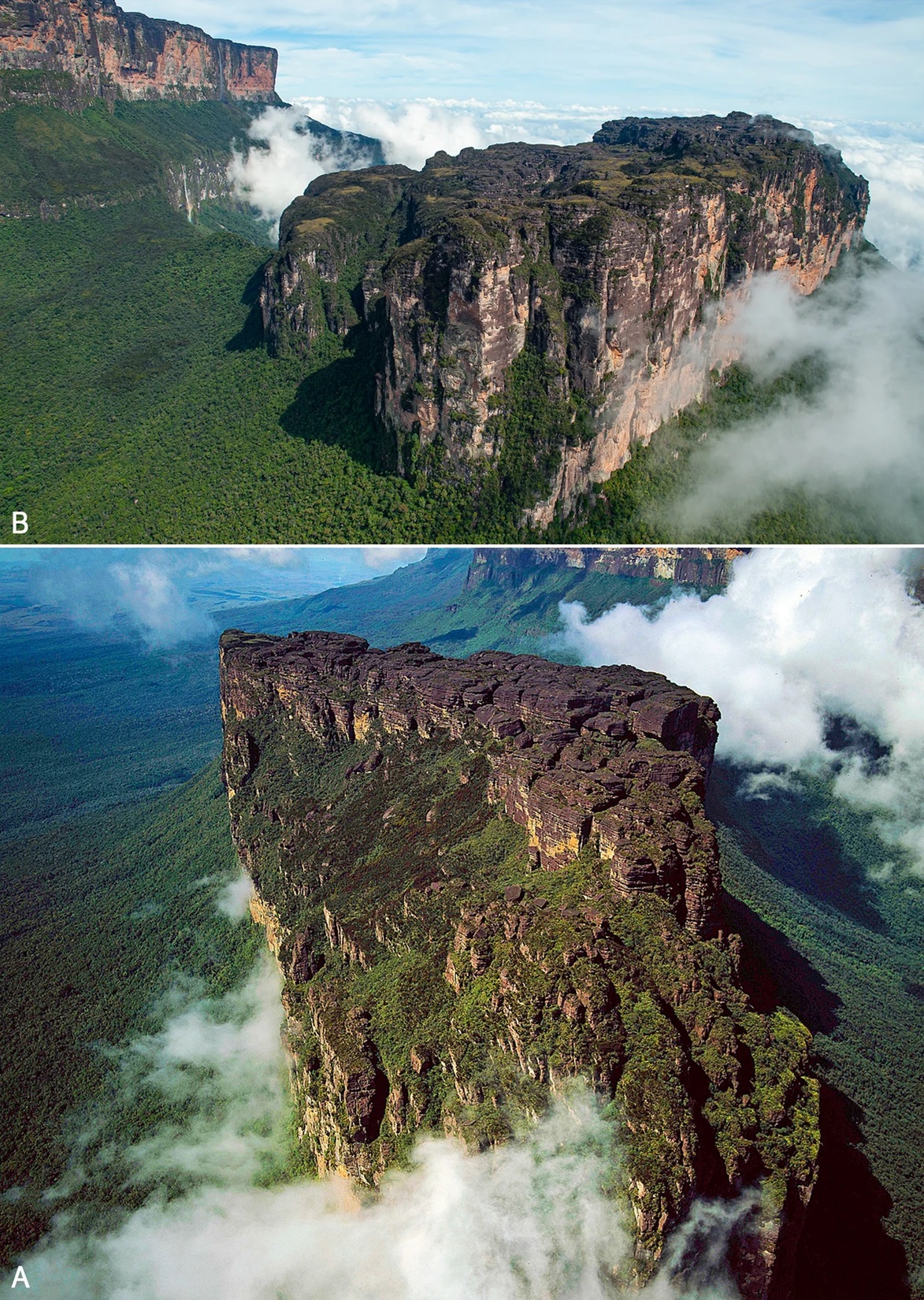
Top left: aerial photograph of Murisipán-tepui, terra typica of Stefania lathropae sp. nov., taken facing southeast. Top right: type locality of Stefania lathropae sp. nov. along a lagoon on the southern summit of Murisipán-tepui.
Bottom left: dorsolateral view of the holotype of Stefania lathropae sp. nov.  in life (IRSNB 4208, male, 40.0 mm SVL). Bottom right: ventral view of the specimen freshly euthanized.
Photos Philippe J.R. Kok.

Macrohabitat and main colour pattern variation in Stefania lathropae sp. nov. 
Top left: deep crevice and typical vegetation on the southern summit of Murisipán-tepui. Top right: IRSNB 4211 (female; field number PK3654).
Bottom left: IRSNB 4210 (female; field number PK3652). Bottom right: IRSNB 4209 (female; field number PK3656).
Photos Philippe J.R. Kok.

Phylogenetic relationships of the Stefania ginesi clade modified from Kok et al. (2016), based on 2,359 base pairs of nuclear and mitochondrial DNA (Bayesian statistical supports are provided at nodes, asterisks indicate values > 95%), and comparison of crania of S. ginesi, S. satelles, and Stefania lathropae sp. nov. in dorsal, lateral, and frontal views. Green circles highlight the condition of the contact between the maxillary process of the nasal and the maxilla. Blue arrows highlight the condition of the frontoparietal crests. Green arrows highlight the condition of the contact between the posterodorsal projection of the maxilla and the orbital/zygomatic ramus of the squamosal. Photos
Philippe J.R. Kok.

Stefania lathropae sp. nov.
Stefania satelles (in part) Señaris et al. 1997: 33–37
Stefania satelles (in part) Gorzula & Señaris 1999: 47
Stefania satelles (in part) McDiarmid & Donnelly 2005: 513, 521
Stefania satelles (in part) Kok et al. 2016: 6
Stefania sp. 2 Kok et al. 2017: 175–176
 
Definition and diagnosis: Stefania lathropae sp. nov. is characterized by the following morphological characters, the combination of which distinguishes it from all known congeners: 1) a small species of Stefania, max. SVL in preserved females 55.5 mm, 40.0 mm in preserved males; 2) head not distinctly longer than wide, about as wide as long; 3) canthus rostralis with a few low tubercles, angular, concave, canthal stripe present in life, usually tapering towards nostrils; 4) loreal region with a few low tubercles; 5) upper eyelid with a few low tubercles, none of them distinctly enlarged; 6) frontoparietal ridges present but low and barely visible (in life/preservative); 7) frontoparietal crests barely developed (on cranium); 8) constriction of the frontoparietal bones at the level of the anterior epiotic eminence; 9) low, sometimes extensive, exostosis on the cranium; 10) premaxillae slightly projecting posteriorly in lateral view; 11) posterodorsal projection of maxilla absent or highly reduced, not in contact with orbital/zygomatic ramus of squamosal; 12) maxillary process of the nasal not in contact with the maxilla; 13) horizontal length of tympanum more than 50% horizontal length of eye in both sexes; 14) vomerine teeth 3-8; 15) toes basally webbed, no significant difference in toe webbing between sexes; 16) dorsal skin (in life) tuberculate; 17) ventral skin (in life) granular; 18) absence of conspicuous outer tarsal tubercles (in life); 19) absence of multiple conspicuous dark brown bars on flanks and lips, presence of white dorsolateral stripes (in life); 20) in living adults, iris unicolour, copper, with extensive dark brown reticulations.

Etymology: The specific epithet lathropae is a noun in the genitive case, honouring Canadian herpetologist Amy Lathrop (born 1967). Amy was likely the first scientist to put her hands on several new Stefania species collected in the Pakaraima Mountains of Guyana, all later described with Ross D. MacCulloch, her colleague from the Royal Ontario Museum (Toronto, Canada).


Philippe J.R. Kok. 2023. Out of Sight, but Not Out of Mind: A Name for the Stefania (Anura: Hemiphractidae) from the Summit of Murisipán-tepui (Bolívar State, Venezuela). Journal of Vertebrate Biology. 72 (23024), 23024.1-16. DOI: 10.25225/jvb.23024 

Tuesday, June 6, 2023

[Herpetology • 2023] Stefania maccullochi Bones and All: A New Critically Endangered Pantepui Species of Stefania (Anura: Hemiphractidae) and A New Osteological Synapomorphy for the Genus


 Stefania maccullochi Kok, 2023

Abstract
The hemiphractid frog genus Stefania is one of the many ancient (near-) endemic lineages of vertebrates inhabiting the biodiverse Pantepui biogeographical region in the Guiana Shield Highlands of northern South America—the famous “Lost World” of Arthur Conan Doyle. Previous molecular analyses of the genus Stefania have indicated that species boundaries and phylogenetic relationships are often incongruent with morphological traits in that clade. A substantial number of “taxonomically cryptic” species, often microendemic, remain to be described. This is notably the case for an isolated population from the summit of Wei-Assipu-tepui, a small table-top mountain at the border between Guyana and Brazil. That population was previously known as Stefania sp. 6 and belongs to the Sriveroi clade. The new species is phylogenetically distinct, but phenotypically extremely similar to Sriveroi, a taxon found only on the summit of Yuruaní-tepui in Venezuela and recovered as sister to all the other known species in the S. riveroi clade. The new taxon is described based on morphology and osteology. Data about genetic divergences within the S. riveroi clade are provided. A new synapomorphy for the genus Stefania is proposed: the presence of a distal process on the third metacarpal. Amended definitions are offered for the three other species in the S. riveroi clade (S. ayangannae, S. coxi, S. riveroi). The new species should be listed as Critically Endangered according to IUCN criteria.

Keywords: Endemism, Genetic distances, Homoplasy, Morphology, Osteology, µCT scanning, Symplesiomorphy, Systematics, Taxonomy

Summit of Wei-Assipu-tepui, terra typica of Stefania maccullochi sp. nov.
A Aerial photograph taken facing southwest (photo Adrian Warren). B Aerial photograph taken facing northwest (photo by the author)

Phylogenetic relationships of the Stefania riveroi clade modified from [Kok, et al. 2017], based on 2301 base pairs of nuclear and mitochondrial DNA (Bayesian statistical supports are provided at nodes), and comparison of crania in dorsal and lateral views. Circles and arrows highlight potential diagnostic characters: blue circles highlight absence/presence/location of a constriction in the frontoparietal bones; blue arrows highlight the condition of the frontoparietal crests; red arrows highlight the condition of (1) the contact between the posterodorsal projection of the maxilla and the orbital/zygomatic ramus of the squamosal, and (2) the contact between the maxillary process of the nasal and the maxilla.
Inset photos by P. J. R. Kok (Stefania maccullochi sp. nov. and S. riveroi) and D. B. Means (S. ayangannae and S. coxi)

Holotype of Stefania maccullochi sp. nov. (NHMUK 2023.3184, female, 62.9 mm SVL)
A Dorsolateral view in life. B Ventral view of the specimen freshly euthanized.
Photos by P. J. R. Kok.

Stefania maccullochi sp. nov.  

Stefania sp. Villarreal et al. 2002: 48.
Stefania sp. “Wei-Assipu” Kok et al. 2012: Supplemental Information.
Stefania sp. 6 Kok et al. 2017: 175–176.

Definition and diagnosis: 
Stefania maccullochi sp. nov. is characterized by the combination of the following morphological characters that distinguish it from all known congeners: (1) a large species of Stefania, max SVL in preserved females 72.9 mm, 54.6 mm in preserved males; (2) head not distinctly longer than wide, about as wide as long; (3) canthus rostralis smooth, prominent, rounded, concave, canthal stripe present in life, sometimes inconspicuous, rarely broad; (4) loreal region with a few low tubercles; (5) upper eyelid mostly smooth, absence of enlarged triangular appendage on its posterior upper part, although a conical tubercle may be present medially; (6) frontoparietal ridges conspicuous, low (in life/preservative); (7) frontoparietal ...
...

Main color pattern variation in Stefania maccullochi sp. nov.
A IRSNB 15854, male. B NHMUK 2023.3188 (PK2098), female.
C IRSNB 15855, female. D NHMUK 2023.3193 (PK2148), male.
E NHMUK 2023.3192 (PK2137), male. F NHMUK 2023.3187 (PK2084), male.
Photos by P. J. R. Kok

Various females of  Stefania maccullochi sp. nov. carrying eggs and juveniles.
A and B. Uncollected female carrying 9 juveniles.
C. NHMUK 2023.3190 (PK2122), carrying 10 eggs/metamorphs. D. NHMUK 2023.3185 (PK2063), carrying 2 near-term juveniles.
E and F. IRSNB 15853, carrying 4 near-term juveniles.
 Photos by P. J. R. Kok.

Etymology: The specific epithet maccullochi is a noun in the genitive case, honoring Canadian herpetologist Ross Douglas MacCulloch (born 1948) for his seminal contribution to the systematics and taxonomy of the genus Stefania in particular, and to the knowledge of the amphibians and reptiles of Guyana in general.

Main macrohabitats on the summit of Wei-Assipu-tepui. The cliff visible in the background of A is the eastern flank of Roraima-tepui.
Photos by P. J. R. Kok.


Conclusions: 
Stefania maccullochi sp. nov. is a microendemic and morphologically/taxonomically cryptic species belonging to the S. riveroi clade. The S. riveroi clade, as presently understood, is restricted to the highlands and uplands (1200–2400 m elevation) of the Eastern Tepui Chain in Venezuela/Guyana/Brazil, and the Pakaraima Mountains in western Guyana. The new species is only known from the small summit (ca. 3 km2) of Wei-Assipu-tepui, an isolated table-top mountain at the border between Guyana and Brazil. Stefania maccullochi sp. nov. is considered critically endangered according to IUCN criteria. Although morphologically highly similar to S. riveroi from the summit of Yuruaní-tepui, a table-top mountain in Venezuela, S. maccullochi sp. nov. has been shown to be sister to S. ayangannae, a species occurring on two major tepuian massifs in western Guyana. Stefania maccullochi sp. nov. and S. ayangannae are easily diagnosed by size, osteology, skin texture, and color pattern. The striking morphological similarity between S. riveroi (sister to the three other species in the S. riveroi clade) and S. maccullochi sp. nov. is probably a consequence of symplesiomorphy and/or homoplasy. Examination of the skeletal morphology of the new species and comparison with congeners highlighted a previously unnoticed osteological synapomorphy for the genus: the presence of a distal process on the third metacarpal. This description brings the number of described Stefania species to 20, all (near-) endemic taxa inhabiting the biodiverse Pantepui biogeographical region.
 

Philippe J. R. Kok. 2023.  Bones and All: A New Critically Endangered Pantepui Species of Stefania (Anura: Hemiphractidae) and A New Osteological Synapomorphy for the Genus. Zoological Letters. 9: 11. DOI: 10.1186/s40851-023-00209-6