Wednesday, March 13, 2013

[Primatology • 2013] Moolah, Misfortune or Spinsterhood? The Plight of the Slender Loris Loris lydekkerianus in Southern India


Slender Loris Loris lydekkerianus 

Photographers threatening the already-maligned slender loris 

Caught in a beam of torchlight, the eyes of the slender loris reflect back a striking glow. In an effort to better understand these shy, nocturnal primates, a team of researchers set out to the Western Ghats of India. The resulting paper: Moolah, Misfortune or Spinsterhood? The Plight of the Slender Loris (Loris lydekkerianus) in Southern India was published in the Journal of Threatened Taxa in January of 2013. Forest walks and interviews with the Kani people, who live in close proximity to the lorises, supported evidence of a surprising new threat to the lorises: photographers.

Endemic to both the Eastern and Western Ghats, the gray slender loris is represented by two subspecies, Loris lydekkerianus lydekkerianus and Loris lydekkerianus malabaricus. These insectivorous animals are distributed throughout wet evergreen forests, particularly in scrub forests and plantations and occur in greatest abundance in disturbed areas. Both subspecies are listed as a Least Concern Species by the IUCN Red List, and protected under the Indian Wildlife Act.


Despite their protected status the soft and wide-eyed loris, popularized by viral YouTube videos and Internet photos, has become a major commodity in the illegal pet trade. But, their live insect diet makes caring for them difficult and incredibly sensitive lorises do not fare well in captivity. Lorises are also surrounded by myth and folklore. Some lorises are captured for their purported medicinal properties, though this is becoming less common. Among the Kani people, at least, the loris is seen as a bad omen; an unmarried woman who glances at the animal is doomed to life-long spinsterhood, and a loris sighting in the forest predicts bad luck for the harvest of non-timber forest products.
........................


Kanagavel, A., Sinclair, C., Rajkumar, S., Raghave R. 2013. Moolah, Misfortune or Spinsterhood? The Plight of the Slender Loris (Loris lydekkerianus) in Southern India. Journal of Threatneed Taxa. 3585-3588.

Photographers threatening the already-maligned slender loris 

[Paleontology / Ootaxa • 2013] Dinosaur eggs in the Upper Cretaceous of the Coll de Nargó area, Lleida Province, south-central Pyrenees, Spain | Oodiversity, biostratigraphy and their implications / Four dinosaur egg species identified in Lleida; Megaloolithus & Cairanoolithus


artist's impression of the egg laying of an Ampelosaurus.
Art: J.A. Penas - SINC.

Abstract
The Coll de Nargó area (Lleida Province, south-central Pyrenees) has yielded thousands of dinosaur eggs distributed in more than 30 levels across 370 m of Upper Cretaceous Tremp Formation deposits. Two stratigraphic units yielding dinosaur eggshells, eggs and clutches, can be distinguished. Multiple eggshells were collected from up to 75 different in situ clutches, located in consecutive stratigraphical levels throughout the Mas de Pinyes section. Four different oospecies have been recognized: Megaloolithus aureliensis, Megaloolithus siruguei, Megaloolithus cf. baghensis and Cairanoolithus cf. roussetensis. In absence of typical biochronological markers, fossil eggshells may have potential as a tool for dating. Based on these ootaxa, three oozones can be established along the stratigraphic section. The lower assemblage is composed by M. aureliensis, M. siruguei and Cairanoolithus cf. roussetensis; the middle one consists only of M. siruguei, while the upper oozone is characterized by M. cf. baghensis. Results suggest that the age of Coll de Nargó rocks ranges from the latest Campanian to the beginning of the Late Maastrichtian. Also reported is the first evidence of the oogenus Cairanoolithus outside of France, where it was regarded as an endemic ootaxon. The Coll de Nargó area is considered to be one of the most important dinosaur nesting areas in Europe recurrently used by several dinosaurs during a long time span. Finally, the presence of fossilized eggshell membrane in several specimens from Coll de Nargó contributes to understanding the taphonomic process of megaloolithid eggs in this area.

Keywords: Dinosaur eggs; Nesting site; Megaloolithus; Upper Cretaceous; Coll de Nargó, Spain


Four dinosaur egg species identified in Lleida 
A study headed by the Miquel Crusafont Catalan Palaeontology Institute has for the first time documented detailed records of dinosaur egg fossils in the Coll de Nargó archaeological site in Lleida, Spain. Up until now, only one type of dinosaur egg had been documented in the region. 


Albert G. Sellés, Ana María Bravo, Xavier Delclòs, Ferran Colombo, Xavier Martí c, Jaume Ortega-Blanco, Carme Parellada, Àngel Galobart. 2013. Dinosaur eggs in the Upper Cretaceous of the Coll de Nargó area, Lleida Province, south-central Pyrenees, Spain: Oodiversity, biostratigraphy and their implications. Cretaceous Research. 40: 10 -20. http://dx.doi.org/10.1016/j.cretres.2012.05.004


[Herpetology • 2012] Analytical methods for the geometric optics of thermal vision illustrated with four species of pitvipers (Viperidae)


Fig. 1. Representative variation in external anatomy of the facial pit.
(A) Copperhead, Agkistrodon contortrix. (B) Western diamondback rattlesnake, Crotalus atrox. (C) Crotalus basiliscus. (D) Eyelash viper, Bothriechis schlegelii. (E) Viridovipera (Trimeresurus) gumprechti. (F) White-lipped tree viper, Cryptelytrops (Trimeresurus) albolabris.
Variation in the relative size of the facial pit opening is conspicuous (A versus E) but the optical significance depends entirely on the relationship to internal anatomy. The arboreal species (D,E,F) show a marked constriction or grooving of the face in front of the pits that appears to increase the sensory field overlap compared with the rounded nose of terrestrial species (A,B), although C. basiliscus (C) shows a similar feature with small grooves anterior to the pits.
Photo credits: A,D,E, G. Westhoff; B, present study; C, H. Krisp; F, C. M. L. Burnett.

The pitviper facial pit is a pinhole camera-like sensory organ consisting of a flask-shaped cavity divided into two chambers by a suspended membrane. Neurophysiological studies and simplified optical models suggest that facial pits detect thermal radiation and form an image that is combined with visual input in the optic tectum to form a single multispectral image. External pit anatomy varies markedly among taxonomic groups. However, optical function depends on unknown internal anatomy. Therefore, we developed methods for relating anatomy to optical performance. To illustrate, we constructed detailed anatomical models of the internal anatomy of the facial pits of four individuals of four pitviper species using X-ray tomography sections of fresh material. We used these models to define the point spread function, i.e. the distribution of radiation from a point source over the pit membrane, for each species. We then used optical physics, heat transfer physics and computational image processing to define the thermal image formed on the pit membrane for each species. Our computed pit membrane images are consistent with behavioral observations if the sensitivity of membrane receptors equals the most sensitive (ca. 0.001°C) laboratory estimates. Vignetting (variation in optical aperture size with view angle) and differences between body and environmental temperatures can create temperature variation across the membrane that greatly exceeds image temperature contrasts, potentially impairing imaging. Spread functions plotted versus source point azimuth and elevation show distinct patterns that suggest new research directions into the relationships among the optical anatomy, ecology, behavior and sensory neurophysiology of pitvipers.

Key words: pitviper, sensory anatomy, sensory physiology, snake, facial pit, loreal pit, optics, heat transfer, image analysis.


George S. Bakken, Samantha E. Colayori and Taihung Duong. 2012. Analytical methods for the geometric optics of thermal vision illustrated with four species of pitvipers. The Journal of Experimental Biology. 215, 2621-2629. doi:10.1242/jeb.063495

Tuesday, March 12, 2013

[Invertebrate • 2013] The Semi-Aquatic Freshwater Earthworms of the genus Glyphidrilus Horst, 1889 from Thailand (Oligochaeta, Almidae) with re-descriptions of several species | Thailand: Astonishing Ten New Species of Semi-Aquatic Freshwater Earthworms Revealed


The semi-aquatic earthworm genus Glyphidrilus, characterized by distinctive rounded anterior and square-shaped posterior as well as by the enlarged epidermal formation called wings.
photo: Somsak Panha 

Abstract
The semi-aquatic freshwater earthworm genus Glyphidrilus Horst, 1889 from Thailand was investigated based on extensive recent collecting. The species in this genus were characterized by their external and internal morphological characters of the location of wings, genital openings, genital organ structures and their locations, as well as the dimensions of body length and number of segments. Several type specimens were compared with both previous and newly collected materials. Ten new species are described from several river systems in Thailand; as Glyphidrilus borealis sp. n., Glyphidrilus chaophraya sp. n., Glyphidrilus chiensis sp. n., Glyphidrilus huailuangensis sp. n., Glyphidrilus kratuensis sp. n., Glyphidrilus quadratus sp. n., Glyphidrilus trangensis sp. n., Glyphidrilus wararamensis sp. n., Glyphidrilus vangthongensis sp. n. and Glyphidrilus vesper sp. n. Each species is endemic to a single river system. All 26 previously described species are re-described, and eight lectotypes have been designated. An identification key and a morphological comparison summary are provided.

Keywords: Oligochaeta, Almidae, Earthworms, New species, Glyphidrilus, Thailand, Taxonomy


Photographs showing the (A) general characteristics of Glyphidrilus Horst, 1889, B tail tips of two individuals of Glyphidrilus in the normal position on the soil surface and (C) Glyphidrilus cocoons.
ZooKeys:  DOI: 10.3897/zookeys.265.3911

____________________________


Thailand: Astonishing Ten New Species of Semi-Aquatic Freshwater Earthworms Revealed
The semi-aquatic earthworms in the genus Glyphidrilus are somewhat unfamiliar species that live between the terrestrial and freshwater ecosystems of rivers, streams, canals, ponds, swamps and paddy systems. Remarkably, each species is endemic to a single water basin, carrying its own signature of evolution from their common origin. 

A study describing ten newly discovered species of the genus has been published in the open access journal ZooKeys.

In Thailand, the species demonstrate astonishing biodiversity due to the monsoon climate contributing to drastic river system changes and a large variety of microhabitats. While general interconnections among these allow for gene flow, their great diversity leads to independent evolution and specialization in isolation.
The animals orient themselves vertically, with their bodies in the wet soil along the banks and tails placed on the soil surface. Among the interesting characteristics of these worms is a rounded body tip, while the end is square shaped. When twisted, the posterior end, which is normally above the soil surface, forms U-shaped channels. These are used to allow water circulation down the burrow. This is probably an evolutionary adjustments that ensures oxygen transport to the deeper surface of the worms, while their bodies remain in the burrows.

This picture shows the variety of habitats in which the worms are found , including rivers, streams, canals, ponds, swamps and paddy systems.
photo: Somsak Panha

Another peculiar feature are the so-called "wings," or the expanded part of epidermis near the body tip. The function of the wings is still unknown to scientists, but it has been suggested that they evolved to assist breathing in such aquatic habitats. Because the wings will be located deep in the burrow at a low oxygen supply and are absent in sexually immature juveniles, a more conventional explanation might be that they are used to aid copulation rather than respiration.


Among the natural habitats of these worms are the rice fields in Thailand, which serve as a reservoir and breeding ground for the animals. The worms turn out to play an important role in the development of rice farming, being a facilitator in the decomposition of organic matter to be a natural fertilizer, as well as improving the soil properties for better rice root system. The species also assist the release of essential minerals in some chemical fertilizers, though not in pesticides, which prove to be lethal to the worms.

The increased use of pesticides in agriculture puts these species in danger. The author Dr. Somsak Panha, from the Animal Systematics Research Unit, Chulalongkorn University in Bangkok, Thailand, comments: "The worms will survive in areas using chemical fertilizers but not those using chemical pesticides. However, the worms did well in areas of organic farming and so are likely to be sensitive to modern agrochemical contamination of the environment. They may play an important role in organic rice farming." 

Ratmanee Chanabun, Chirasak Sutcharit, Piyoros Tongkerd, Somsak Panha. 2013. The semi-aquatic freshwater earthworms of the genus Glyphidrilus Horst, 1889 from Thailand (Oligochaeta, Almidae) with re-descriptions of several species. ZooKeys. 265 (0): 1 DOI: 10.3897/zookeys.265.3911

[Herpetology • 2012] Anolis sierramaestrae • a new species of of “Anolis chamaeleolis” species group (Squamata: Polychrotidae) from Eastern Cuba


Abstract
 A new species of anole, Anolis sierramaestrae sp. nov., belonging to the “chamaeleolis” species group of the family Polychrotidae, is described from the mountain region in the vicinity of La Mula village, Santiago de Cuba province, Cuba. The species represents the sixth so far known species of the “chamaeleolis” species group. It resembles Anolis chamaeleonides Duméril et Bibron, 1837, but differs markedly in larger body size, long and narrow head shape, higher number of barb-like scales on dewlap, small number of large lateral scales on the body and dark-blue coloration of the eyes. 

Key words. Taxonomy, new species, herpetofauna, Polychrotidae, Chamaeleolis, Anolis,Great Antilles, Caribbean, Neotropical region.


Veronika Holáňová, Ivan Rehák & Daniel frynta. 2012. Anolis sierramaestrae sp. nov. (Squamata: Polychrotidae) of the “chamaeleolis” species group from Eastern Cuba. Acta Societatis Zoologicae Bohemicae (Acta Soc. Zool. Bohem.) 76: 45–52.  http://www.anoleannals.org/wp-content/uploads/2013/01/Holanova-et-al.-Anolis_sierramaestrae.2012.pdf

Monday, March 11, 2013

[Ornithology • Conservation] Parrots of India in Illegal Trade


TRAFFIC helps to claw back illegal parrot trade in India


 —A parrot in captivity is one of the more visible symbols of illegal trade in India, where all native wildlife is fully protected. To help enforcement officers identify the 12 native parrot species, and thereby clip the wings of the illegal bird trade, TRAFFIC India with support from WWF-India has produced an identification poster entitled “Parrots of India in Illegal Trade.”

The posters will be distributed to Police, Customs, Forest Departments, Railway Protection Forces and educational institutions including schools and colleges.   

Despite the blanket ban since 1990-91 on trade in all Indian bird species, hundreds of parrots are collected and traded annually in the country.

They are taken from the wild and smuggled to various parts of India and beyond. The bulk of the trade is in three to four week old chicks. 


Parrots are caught using nets and bird-lime. Adult parrots are traded throughout the year, with chicks arriving in trade between December and June. For every bird that reaches the market place, several are believed to die en route. 

Of the 12 native species, eight are regularly found being illegally traded. They include Alexandrine, Rose-ringed, Plum-headed, Red-breasted, Malabar, Himalayan and Finsch’s Parakeets and Vernal Hanging-parrot. 

For centuries, parrots have been kept as pets mainly because they are straightforward to keep and easy to replace because of the large numbers in trade. This has in turn created demand that has led to an organized illegal trade in parrots. 


Abrar Ahmed, ornithologist and a bird trade consultant to TRAFFIC India said, “The Alexandrine Parakeet is one of the most sought after species in the Indian live bird trade and is traded in large volumes throughout the year.

“The chicks are collected from forested areas and transported to bird markets in Delhi, Mumbai, Hyderabad, Patna, Lucknow and Kolkata. 

“Many specimens are smuggled by Indian dealers via Pakistan, Nepal and Bangladesh to bird markets in various parts of the world”. 

“Alarmingly, three species of Indian parrots—Nicobar, Long-tailed & Derby’s Parakeets—are considered by IUCN as Near Threatened with extinction, with illegal trade posing a significant threat.”

MKS Pasha, Co-ordinator of TRAFFIC India said: “Few know that our favourite and well-known ‘mithu’ is a protected species in India. Their chicks are captured remorselessly from the wild, and many to not make it to their final destination.” 

“The parrot trade is substantial and well organized, but it can be counteracted through concerted enforcement actions at the grassroot level and mass awareness campaigns. 

“TRAFFIC India’s new poster is a step in this direction. We hope it will also inspire children and young people too, because they are the ones who will influence future change and can play a significant role in curtailing the demand for our native wildlife.”


TRAFFIC helps to claw back illegal parrot trade in India

WWF India Distributes Poster On 12 Illegally-Traded Native Parrot Species | Asian Scientist Magazine

Sunday, March 10, 2013

[Herpetology • 2013] Spatial Ecology of Rainbow Frog Scaphiophryne gottlebei in the Canyons of the Isalo Massif, Madagascar | Frogs radio-tracked for first time in Madagascar


A radio-tagged Scaphiophryne gottlebei individual from the Zahavola site.
Photo by Gonçalo Rosa

Abstract
The Rainbow Frog Scaphiophryne gottlebei lives within the humid canyons that cross the Isalo Massif, central-southern Madagascar. Knowing that a single haplotype dominates the largest part of its distribution range raised questions about the dispersal ability of the species. We affixed external radio transmitters to 36 individuals of S. gottlebei to understand whether the adults of this species actively displaced from the canyon they inhabit. We studied 13 males and 7 females in 2009 and 7 males and 9 females in 2011 over two periods (November–December 2009 and January–February 2011). Study sessions were chosen due to the different meteorological conditions: the first is the beginning of the rainy season, which corresponds to the start of reproduction; and the second being the end of the rainy season, which corresponds to a wetter period during which individuals are more likely to be feeding in order to increase body weight. Our results revealed that there is no significant difference in the activity patterns between sexes and that rain and temperature stimulate the dispersal rate. The distance covered by the individuals did not differ between males and females; the range varied from a few centimeters to approximately 50 m, although two individuals displaced more than 100 m in a single day. These data suggest that individuals of this species are quite phylopatric to the canyons they inhabit. The generalized haplotype sharing observed might then be explained by passive dispersal of larvae and metamorphosed individuals during the intense cyclonic floods.

Keywords: Amphibians, Ecology, Radiotelemetry, Rainbow Frog


Franco Andreone, Paolo Eusebio Bergo, Vincenzo Mercurio, and Goncalo M. Rosa. 2013. Spatial Ecology of Scaphiophryne gottlebei in the Canyons of the Isalo Massif, Madagascar. Herpetologica, 69(1), 11–21. http://dx.doi.org/10.1655/HERPETOLOGICA-D-12-00005

2003. A Radio Transmitter Belt for Small Ranid Frogs


Frogs radio-tracked for first time in Madagascar | Scaphiophryne gottlebei 

Researchers have radio-tracked frogs for the first time in Madagascar. The effort, undertaken by a group of European scientists, is detailed in the current issue of Herpetologica.

Thursday, March 7, 2013

[Herpetology • 2013] Lost and found: One of the world's most elusive amphibians, Pseudophilautus stellatus (Kelaart 1853) rediscovered


Pseudophilautus stellatus (Kelaart 1853) 
Spotted Shrub Frog

Rediscovered one of the world's most elusive amphibians after 156 Years
photo: Kasun Pradeepa

Abstract
Pseudophilautus stellatus (Kelaart 1853) has been rediscovered from the Peak Wilderness, Central Hills of Sri Lanka. The species, till now known only from its lost holotype, was the first shrub frog described from Sri Lanka, and had not been reported since then. It was thought to have become extinct for nearly 157 years, being the amphibian species "lost" for the longest amount of time. Here we designate a neotype from the material collected at what we consider its type locality, having considered characters of the lost holotype and provide a complete description. We have conducted a molecular phylogenetic analysis, on which basis the species is well differentiated from all other Pseudophilautus sequenced so far, and placed in a clade together with P. femoralis, P. frankenbergi, P. mooreorum, and P. poppiae. 

Key words: extinct amphibian, Peak Wilderness, Pseudophilautus, Pseudophilautus stellatus, rediscovery, Sri Lanka


L. J. Mendis Wickramasinghe et al. 2013. Lost and found: One of the world's most elusive amphibians, Pseudophilautus stellatus (Kelaart 1853) rediscovered. Zootaxa. 3620 (1): 112–128

[Paleontology • 2013] Arcanosaurus ibericus • A new varanoid squamate from the Early Cretaceous (Barremian–Aptian) of Burgos, Spain


 Abstract
A new anguimorph lizard from the late Barremian–Aptian of the Salas de los Infantes area (Cameros Basin, Iberian Peninsula) is described here as Arcanosaurus ibericus gen. et sp. nov. It corresponds to the first squamate remains from the Burgos Province. The unique combination of morphological and microanatomical characters enables us to erect a new genus and species that we tentatively assign to Varanoidea despite the strange seemingly absence on the axis of a posterior hypapophysis. The combination of both microanatomical and geological data suggests an essentially terrestrial mode of life. This discovery reveals itself particularly interesting concerning the evolutionary history of varanoids as this new Spanish taxon might correspond to the oldest terrestrial varanoid known to date.

Keywords: Squamata; Varanoidea; Vertebrae; Paleoecology; Varanoid evolutionary history


 Arcanosaurus ibericus n. gen. et sp. (Late Barremian–Aptian; Viajete, Burgos, Spain)

    Reptilia Linnaeus, 1758
    Squamata Oppel, 1811
    Anguimorpha Fürbringer, 1900

    Varanoidea Gray, 1827

    Genus Arcanosaurus gen. nov.

    Derivation of name. From the Spanish arcano (Latin, arcanus): mysterious.

    Type and only species. Arcanosaurus ibericus sp. nov.

Derivation of name. From the Latin ibericus, referring to the Iberian Peninsula.


Conclusion
The unique combination of characters observed in Arcanosaurus ibericus supports a tentative attribution to the Varanoidea. The analysis of the microanatomical and geological data suggests an essentially terrestrial mode of life for this Spanish new taxon. The oldest Varanoidea is the pythonomorph Kaganaias from the Valanginian–Hauterivian (Early Cretaceous) of Japan, thought to have lived in freshwater swampy environment far from the sea (Evans et al., 2006). The other oldest varanoids are known from the Late Cretaceous, in marine (pythonomorphs; review in Houssaye, in press) or terrestrial (e.g. Norell et al., 1992; Gao and Fox, 1996; Nydam, 2000; Laurent et al., 2002; Pereda Suberbiola, 2009) deposits. If Arcanosaurus ibericus, from the late Barremian–Aptian of the Burgos Province, indeed belongs to the Varanoidea, it would thus be the oldest terrestrial form known to date. The discovery of this new taxon in Spain is thus of particular interest regarding the evolutionary history of varanoids.

2013. A new varanoid squamate from the Early Cretaceous (Barremian–Aptian) of Burgos, Spain. DOI: http://dx.doi.org/10.1016/j.cretres.2012.11.005

Wednesday, March 6, 2013

[PaleoMammalogy • 2013] Mid-Pliocene warm-period deposits in the High Arctic yield insight into camel evolution | Remains of Extinct Giant Camel Discovered in High Arctic


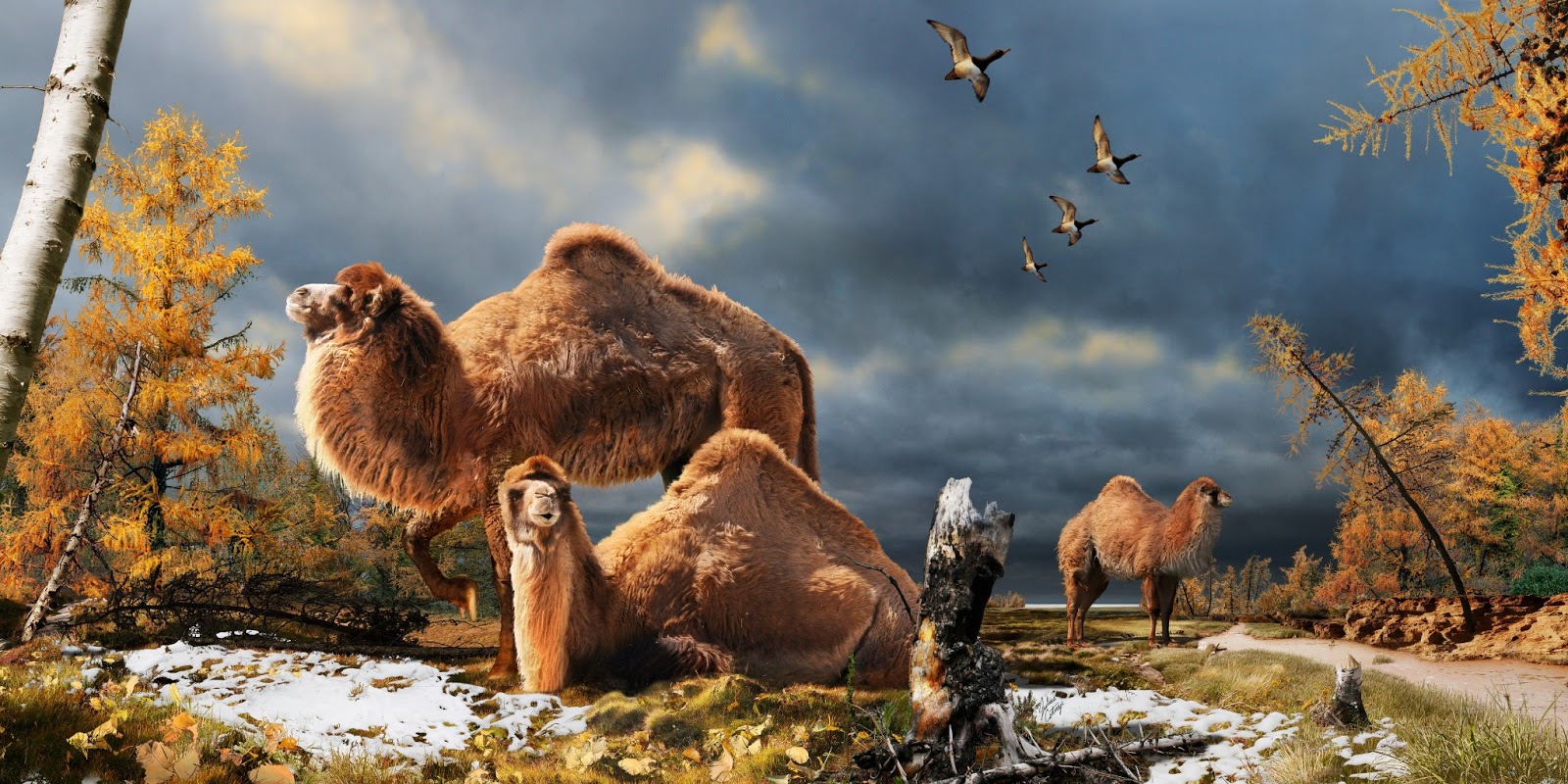
Illustration of the High Arctic camel on Ellesmere Island during the Pliocene warm period, about three and a half million years ago. The camels lived in a boreal-type forest. The habitat includes larch trees and the depiction is based on records of plant fossils found at nearby fossil deposits.
Art: Julius Csotonyi

Abstract
 The mid-Pliocene was a global warm period, preceding the onset of Quaternary glaciations. Here we use cosmogenic nuclide dating to show that a fossiliferous terrestrial deposit that includes subfossil trees and the northern-most evidence of Pliocene ice wedge casts in Canada’s High Arctic (Ellesmere Island, Nunavut) was deposited during the mid-Pliocene warm period. The age estimates correspond to a general maximum in high latitude mean winter season insolation, consistent with the presence of a rich, boreal-type forest. Moreover, we report that these deposits have yielded the first evidence of a High Arctic camel, identified using collagen fingerprinting of a fragmentary fossil limb bone. Camels originated in North America and dispersed to Eurasia via the Bering Isthmus, an ephemeral land bridge linking Alaska and Russia. The results suggest that the evolutionary history of modern camels can be traced back to a lineage of giant camels that was well established in a forested Arctic.

Subject terms: Biological sciences, Evolution, Climate science, Palaeontology

___________________________


Remains of Extinct Giant Camel Discovered in High Arctic by Canadian Museum of Nature 

— A research team led by the Canadian Museum of Nature has identified the first evidence for an extinct giant camel in Canada's High Arctic. The discovery is based on 30 fossil fragments of a leg bone found on Ellesmere Island, Nunavut, and represents the most northerly record for early camels, whose ancestors are known to have originated in North America some 45 million years ago.

The fossils were collected over three summer field seasons (2006, 2008 and 2010) and are about three and a half million years old, dating from the mid-Pliocene Epoch. Other fossil finds at the site suggest this High Arctic camel lived in a boreal-type forest environment, during a global warm phase on the planet.

The research, by Natalia Rybczynski, Ph.D., and co-authors including John Gosse, Ph.D. (at Dalhousie University, Halifax, Nova Scotia), and Mike Buckley, Ph.D. (at the University of Manchester, England), is described in the March 5, 2013, edition of the online journal Nature Communications


"This is an important discovery because it provides the first evidence of camels living in the High Arctic region," explains Dr. Rybczynski, a vertebrate palaeontologist with the Canadian Museum of Nature, who has led numerous field expeditions in Canada's Arctic. "It extends the previous range of camels in North America northward by about 1200 km, and suggests that the lineage that gave rise to modern camels may have been originally adapted to living in an Arctic forest environment."

The camel bones were collected from a steep slope at the Fyles Leaf Bed site, a sandy deposit near Strathcona Fiord on Ellesmere Island. Fossils of leaves, wood and other plant material have been found at this site, but the camel is the first mammal recovered. A nearby fossil-rich locality at Strathcona Fiord known as the Beaver Pond site has previously yielded fossils of other mammals from the same time period, including a badger, deerlet, beaver and three-toed horse.

The fossil bones of the High Arctic camel laid out in Natalia Rybczynski's lab at the Canadian Museum of Nature. The fossil evidence consists of about 30 bone fragments, which together form part of a limb bone of a camel.

Determining that the bones were from a camel was a challenge. "The first time I picked up a piece, I thought that it might be wood. It was only back at the field camp that I was able to ascertain it was not only bone, but also from a fossil mammal larger than anything we had seen so far from the deposits," explains Rybczynski, relating the moment that she and her team had discovered something unusual.

Some important physical characteristics suggested the fossil fragments were part of a large tibia, the main lower-leg bone in mammals, and that they belonged to the group of cloven-hoofed animals known as artiodactyls, which includes cows, pigs and camels. Digital files of each of the 30 bone fragments were produced using a 3D laser scanner, allowing for the pieces to be assembled and aligned. The size of the reconstituted leg bone suggested it was from a very large mammal. At the time in North America, the largest artiodactyls were camels.

Full confirmation that the bones belonged to a camel came from a new technique called collagen fingerprinting that was pioneered by Dr. Mike Buckley at the University of Manchester in England. Profiles produced by this technique can be used to distinguish between groups of mammals.

Minute amounts of collagen, the dominant protein found in bone, were extracted from the fossils. Using chemical markers for the peptides that make up the collagen, a collagen profile for the fossil bones was developed. This profile was compared with those of 37 modern mammal species, as well as that of a fossil camel found in Yukon, which is also in the Canadian Museum of Nature's collections.

The collagen profile for the High Arctic camel most closely matched those of modern camels, specifically dromedaries (camels with one hump) as well as the Yukon giant camel, which is thought to be Paracamelus, the ancestor of modern camels. The collagen information, combined with the anatomical data, allowed Rybczynski and her colleagues to conclude that the Ellesmere bones belong to a camel, and is likely the same lineage as Paracamelus.

The research team's camp at the Fyles Leaf Bed Site on Ellesmere Island, Nunavut, near Strathcona Fiord during the 2008 field season.
photo: Martin Lipman

"We now have a new fossil record to better understand camel evolution, since our research shows that the Paracamelus lineage inhabited northern North America for millions of years, and the simplest explanation for this pattern would be that Paracamelus originated there," explains Rybczynski. "So perhaps some specializations seen in modern camels, such as their wide flat feet, large eyes and humps for fat may be adaptations derived from living in a polar environment."

Natalia Rybczynski from the Canadian Museum of Nature collects a fossil of the High Arctic camel in 2008 at the Fyles Leaf Bed site on Ellesmere Island, Nunavut. She uses toilet paper to gently wrap the bone for transport to the field camp.

The scientific paper also reports for the first time an accurate age of both the Fyles Leaf Bed site and the Beaver Pond site—at least 3.4 million years old. This was determined by Dr. Gosse at Dalhousie University using a sophisticated technique that involves dating the sands found associated with the bone. The date is significant because it corresponds to a time period when the Earth was 2°C to 3°C warmer than today, and the Arctic was 14°C to 22°C warmer.

The bones of the High Arctic camel are housed in the Canadian Museum of Nature's research and collections facility in Gatineau, Quebec, on behalf of the Government of Nunavut.

Other contributors to the report include C. Richard Harington, Ph.D. and Researcher Emeritus at the Canadian Museum of Nature; Roy Wogelius, Ph.D., at the University of Manchester; and A.J. Hidy, Ph.D., at Dalhousie University.

Support for the research was provided by the Canadian Museum of Nature, the Natural Sciences and Engineering Research Council (Canada), the National Geographic Society (for the 2006 field season), the Northern Scientific Training Program (Aboriginal Affairs and Northern Development Canada), the W. Garfield Weston Foundation, the Polar Continental Shelf Project of Natural Resources Canada (logistics), and the Natural Environment Research Council (United Kingdom).

The Canadian Museum of Nature is Canada's national museum of natural history and natural sciences. It promotes awareness of Canada's natural heritage through signature and travelling exhibitions, public education programmes, scientific research and a dynamic web site (nature.ca), as well as the maintenance of a 10.5 million-specimen collection. The museum's legacy of Arctic research dates back 100 years to the first Canadian Arctic Expedition of 1913.

Natalia Rybczynski, John C. Gosse, C. Richard Harington, Roy A. Wogelius, Alan J. Hidy & Mike Buckley. 2013. Mid-Pliocene warm-period deposits in the High Arctic yield insight into camel evolution. Nature Communications 4, Article number: 1550 doi:10.1038/ncomms2516

Giant Camel

[Conservation • 2013] Elephants in the Dust: The African Elephant Crisis


Elephants in the Dust - The African Elephant Crisis

The African elephant, the largest remaining land mammal on the planet, is facing the greatest crisis in decades. Reports of mass elephant killings in the media vividly illustrate the situation across many African elephant range States. This Rapid Response Assessment provides an overview of the current state of the African elephant alongside recommendations for action to ensure its protection.


Surges in poaching, the illegal ivory trade and accelerating habitat and range loss have put African elephant populations at risk. This Rapid Response Assessment provides an overview of the status of elephants, poaching and illegal ivory trafficking along the entire ivory trade supply chain.

Findings presented here were obtained from a range of  sources, including The Convention on International Trade in Endangered Species of Wild Fauna and Flora (CITES) Monitoring the Illegal Killing of Elephants (MIKE) Programme, the Ele  phant Trade Information System (ETIS), the IUCN/SSC African Ele  phant Specialist Group (AfESG), the African and Asian Elephant Database, the International Consortium on Combating Wildlife Crime (ICCWC), expert consultations and a range of other sources.

__________________________


Elephant poaching doubled & illegal ivory trade tripled in recent years  
Enhanced law Enforcement, international collaboration and reducing demand required to avert crisis

— Populations of elephants in Africa continue to be under severe threat as the illegal trade in ivory grows - with double the numbers of elephants killed and triple the amounts of ivory seized, over the last decade.

According to a new report entitled “Elephants in the Dust – The African Elephant Crisis”, increasing poaching levels, as well as loss of habitat are threatening the survival of African elephant populations in Central Africa as well as previously secure populations in West, Southern and Eastern Africa.

........................


[PaleoOrnithology] Reconstructions of some phorusrhacids | terror birds (Family Phorusrhacidae)


Reconstructions of some phorusrhacids compared to the extant Cariama. (A) Cariama cristata; (B) Mesembriornis milneedwardsi; (C) Psilopterus bachmanni; (D) Andalgalornis steuletti; (E) Phorusrhacus longissimus; (F) Paraphysornis brasiliensis; and (G) Brontornis burmeiteri. A man’s silhouette (1.75 m) is used as scale. (Drawing by Eduardo Brettas.)

From: ‘Living dinosaurs : the evolutionary history of modern birds’
edited by Gareth Dyke and Gary Kaiser.


Gareth Dyke & Gary Kaiser, 2011. Living Dinosaurs: the Evolutionary History of Modern Birds. John Wiley & Sons (Chichester, UK), pp. 422. ISBN 978-0-4706-5666-2. Hardback, index, refs.

Dyke & Kaiser’s Living Dinosaurs: the Evolutionary History of Modern Birds | Tetrapod Zoology, Scientific American Blog Network http://blogs.scientificamerican.com/tetrapod-zoology/2012/08/26/dyke-kaiser-living-dinosaurs-the-evolutionary-history-of-modern-birds/ 

[Ornithology • 2013] The De Novo Assembly of Mitochondrial Genomes of the Extinct Passenger Pigeon (Ectopistes migratorius with Next Generation Sequencing


Abstract

The information from ancient DNA (aDNA) provides an unparalleled opportunity to infer phylogenetic relationships and population history of extinct species and to investigate genetic evolution directly. However, the degraded and fragmented nature of aDNA has posed technical challenges for studies based on conventional PCR amplification. In this study, we present an approach based on next generation sequencing to efficiently sequence the complete mitochondrial genome (mitogenome) of two extinct passenger pigeons (Ectopistes migratorius) using de novo assembly of massive short (90 bp), paired-end or single-end reads. Although varying levels of human contamination and low levels of postmortem nucleotide lesion were observed, they did not impact sequencing accuracy. Our results demonstrated that the de novo assembly of shotgun sequence reads could be a potent approach to sequence mitogenomes, and offered an efficient way to infer evolutionary history of extinct species.

Passenger pigeon, Ectopistes migratorius


Passenger Pigeon, Ectopistes migratorius, juvenile (left), male (center), female (right)
offset reproduction of watercolor by Louis Agassiz Fuertes


Hung C-M, Lin R-C, Chu J-H, Yeh C-F, Yao C-J, et al. 2013. The De Novo Assembly of Mitochondrial Genomes of the Extinct Passenger Pigeon (Ectopistes migratorius) with Next Generation Sequencing. PLoS ONE. 8(2): e56301. doi:10.1371/journal.pone.0056301

Tuesday, March 5, 2013

[Ichthyology • 2013] Radiocesium in Pacific Bluefin Tuna Thunnus orientalis in 2012 Validates New Tracer Technique


Abstract
The detection of Fukushima-derived radionuclides in Pacific bluefin tuna (PBFT) that crossed the Pacific Ocean to the California Current Large Marine Ecosystem (CCLME) in 2011 presented the potential to use radiocesium as a tracer in highly migratory species. This tracer requires that all western Pacific Ocean emigrants acquire the 134Cs signal, a radioisotope undetectable in Pacific biota prior to the Fukushima accident in 2011. We tested the efficacy of the radiocesium tracer by measuring 134Cs and 137Cs in PBFT (n = 50) caught in the CCLME in 2012, more than a year after the Fukushima accident. All small PBFT (n = 28; recent migrants from Japan) had 134Cs (0.7 ± 0.2 Bq kg–1) and elevated 137Cs (2.0 ± 0.5 Bq kg–1) in their white muscle tissue. Most larger, older fish (n = 22) had no 134Cs and only background levels of 137Cs, showing that one year in the CCLME is sufficient for 134Cs and 137Cs values in PBFT to reach pre-Fukushima levels. Radiocesium concentrations in 2012 PBFT were less than half those from 2011 and well below safety guidelines for public health. Detection of 134Cs in all recent migrant PBFT supports the use of radiocesium as a tracer in migratory animals in 2012.

Daniel J. Madigan, Zofia Baumann, Owyn E. Snodgrass, Halim A. Ergül, Heidi Dewar and Nicholas S. Fisher. 2013. Radiocesium in Pacific Bluefin Tuna Thunnus orientalis in 2012 Validates New Tracer Technique. Environ. Sci. Technol. 47 (5), 2287–2294.
DOI: 10.1021/es4002423


Pacific bluefin tuna are picking up radioactive cesium released in Japan's 2011 nuclear disaster. Scientists can determine the fish's migratory habits by testing for this radioactive signature.
Credit: Ugo Montaldo / Shutterstock

Scientist uses Fukushima radiation to reveal swimming secrets of Pacific bluefin tuna 
—Trace radiation from the Fukushima nuclear disaster is showing up in Pacific bluefin tuna. By measuring that radiation, scientists are gaining valuable insight about the fish's early migratory habits.
http://bit.ly/1098esc via @physorg_com @Seasaver