Wednesday, September 28, 2022

[Botany • 2022] Bulbophyllum phanquyetii (Orchidaceae: Epidendroideae) • A New Species from the Limestone Area of northern Vietnam


Bulbophyllum phanquyetii  Vuong, Aver. & V.S. Dang, 

in Dang, Averyanov, Dang, Maisak, ... et Truong, 2022. 
facebook.com: Vuong Truong

Abstract
Bulbophyllum phanquyetii, from Lai Chau Province was found and described as a new species for science. The new species looks similar to B. guttulatum and B. umbellatum but differs in the connate upper margin of lateral sepals, verruculose sepals and petals, and triangular stelidia. In addition, B. tianguii found in Ha Giang Province is firstly recorded for the orchid flora of Vietnam.

Keywords: Bulbophyllum section Brachyantha, Ha Giang province, Lai Chau province, eastern Indochina, plant diversity, the orchids, Monocots


Minh Quan Dang, Leonid V. Averyanov,  Van Son Dang, Tatiana Maisak, Van Huong Bui, Bao Ngan Tu, Van Canh Nguyen, Ba Vuong Truong. 2022. A New Species, Bulbophyllum phanquyetii and A New National Record of B. tianguii (Orchidaceae) from the Limestone Area of northern Vietnam. Phytotaxa. 566(2); 227-232. DOI: 10.11646/phytotaxa.566.2.7

[Arachnida • 2022] Nemesia shenlongi • A New Trapdoor Spider Species (Araneae: Mygalomorphae: Nemesiidae) from southern Spain that exhibits an as yet unknown Defence Strategy


Nemesia shenlongi 
Pertegal, Sánchez García, Molero-Baltanás & Knapp, 2022 


Abstract
 The description of the new trapdoor spider species Nemesia shenlongi sp. n. is provided, together with details of its habitat and burrow structure. The spider uses a round ball made of soil particles and saliva to plug part of its burrow and leave an isolated chamber for protection. The ball differs from all known ‘burrow-blocking structures’ produced by Nemesiidae, for example, Nemesia manderstjernae Koch, 1871, and N. fagei (Frade & Bacelar, 1931), in that it is not packed in silk and is not attached to the burrow wall. The new species is compared with morphologically similar Nemesia spp. as well as with N. fagei. 

Keywords. Ecology, Nemesiidae, phenology, taxonomy, trapdoor spiders, western Mediterranean. 

Nemesia shenlongi sp. n., ♀, paratype (MNCN 20.02/20441).
a. Living specimen. b. Carapace, dorsal. c. Maxillae; labiumand sternum, ventral. d. Spinnerets, ventral. e. Spermathecae, ventral.
 Scale bars: b = 5 mm; c–d = 1 mm; e = 0.5 mm. 

Nemesia shenlongi sp. n. 

Etymology. The species is named after the wish-granting mythological dragon, Shenlong, that can be summoned by collecting all seven Dragon Balls.
 

Cristian Pertegal, Iñigo Sánchez García, Rafael Molero-Baltanás & Stephen Knapp. 2022. Description of A New Trapdoor Spider Species from southern Spain that exhibits an as yet unknown Defence Strategy (Araneae: Mygalomorphae: Nemesiidae). Bonn Zoological Bulletin. 71; 109-118. DOI: 10.20363/bzb-2022.71.2.109 

Descripción de una especie nueva de araña trampera del sur de España que presenta una estrategia de defensa hasta ahora desconocida (Araneae: Mygalomorphae: Nemesiidae) Resumen. Se aporta la descripción morfológica de la nueva especie de araña trampera Nemesia shenlongi sp. n. junto a detalles de su hábitat y la estructura de su madriguera. Esta araña utiliza una bola que fabrica con partículas de suelo y saliva para bloquear parte de su madriguera y dejar una cámara aislada donde protegerse. La bola difiere de todas las ‘estructuras de bloqueo de madrigueras’ conocidas que la familia Nemesiidae fabrica, por ejemplo, Nemesia manderstjernae Koch, 1871, y N. fagei (Frade & Bacelar, 1931), en que no está envuelta en seda y no está unida a la pared de la madriguera. La nueva especie se compara con otras especies morfológicamente similares, así como con N. fagei, que muestra un comportamiento similar. 
Palabras clave. Arañas tramperas, ecología, fenología, Mediterráneo occidental, Nemesiidae, taxonomía.

Tuesday, September 27, 2022

[Ichthyology • 2022] Lethrinops atrilabris • A New Species of Deep-water Lethrinops (Cichlidae) from Lake Malawi


Lethrinops atrilabris 
 Turner, 2022


Abstract
A new species of cichlid fish, Lethrinops atrilabris is described from specimens collected by trawling at a depth of around 90m off Monkey Bay, southern Lake Malawi. It is assigned to the genus Lethrinops on the basis of its vertical flank barring, lack of enlarged cephalic lateral line canal pores and the form of the lower jaw dental arcade. It can be distinguished from congeneric species by its male breeding dress of contrasting flank barring and dark ventral surface, most strikingly on the lips, throat and chest, its relatively small known maximum size (<75mm SL), large eyes (38-41% head length), laterally compressed body (depth 2.5-2.7 times max head width) and lower gillraker count (13-14).

Keywords: New species, Lake Malawi, cichlidae, Lethrinops

Lethrinops atrilabris sp. nov. Fresh coloration.
Above: one of the type specimens photographed shortly after capture.
Below: probable L. atrilabris, collected from trawl catch at 95-105m depth, East of Domwe Island, SE Arm, 4th March 2016. Cambridge University collection, identification not confirmed.

Lethrinops atrilabris sp. nov.

Diagnosis: the lower jaw dentition ‘Lethrinops-type’. Mature males with a melanic pattern of strongly contrasting dark vertical flank bars on a pale background, and a dark area on the jaws and the underside of the head and chest. In addition, the species can be identified by its relatively small adult body side (not known to exceed 73mm SL), large eye, short, rounded snout, ventrally-placed mouth, 13-14 ceratobranchial gill rakers and laterally compressed body.

Etymology: ‘Atri-‘ from plural of the adjective ‘ater’ (Latin) = black + ‘labris’ from plural of labrum (Latin)= lip, in reference to the black lips of the males in breeding dress.
 

George F. Turner. 2022. A New Species of Deep-water Lethrinops (Cichlidae) from Lake Malawi. Journal of Fish Biology.  DOI: 10.1111/jfb.15208

[Botany • 2022] Tulipa toktogulica (Liliaceae) • A Cryptic, Endangered New Species from the western Tien-Shan, Kyrgyzstan


Tulipa toktogulica B.D.Wilson & Lazkov, 

in Wilson, Lazkov, Shalpykov & Brockington, 2022. 
 
Abstract
Tulipa toktogulica (T. sect. Kolpakowskianae; Liliaceae) is a cryptic new species from the Toktogul area of the Jalal-Abad Region, Kyrgyzstan. It is similar to T. talassica, with which it shares the characteristically elongated tunic, but it is genetically and geographically distinct. It has a combination of morphological traits shared between the closely related species T. talassica, T. tetraphylla and T. ferganica, but the combination of its traits is unique. Unlike most other members of the genus, this new species has a scent. It is here also assessed as endangered due to its narrow range and continuing threats from overgrazing.

Keywords: Central Asian flora, Tulipa sect. Kolpakowskianae, Tulipa subgenus Tulipa, Tulipa talassica, tulips, Monocots


Tulipa toktogulica B.D.Wilson & Lazkov
A. Side view of a flower. B. Flower from above. C. Side view of a closed flower. D. Inner and outer tepals, stamen and ovary. E. Prolonged tunic on bulb. F. Seed pod. G. Habitat at population one. H. Habitat at population two and three. I. Habitat at population four.
Photos by Brett Wilson.

Tulipa toktogulica B.D.Wilson & Lazkov, sp. nov.  

This species is most similar to Tulipa talassica in its prolonged tunic but it has broad stamens like those of T. tetraphylla and only three leaves, unlike T. tetraphylla, which usually has four or more leaves. Flowers of the new species have a faint scent, which is not present in these other Central Asian species except T. kolbintsevii Zonneveld in Zonneveld & de Groot (2012: 1294).
...

Etymology:—Named after the Toktogul region. We hope that naming it after this area will improve awareness of the diversity of the flora of this region and hence its conservation.


 Brett Wilson, Georgy A. Lazkov, Kaiyrkul T. Shalpykov and Samuel F. Brockington. 2022. Tulipa toktogulica (Liliaceae), A Cryptic, Endangered New Species from the western Tien-Shan, Kyrgyzstan. Phytotaxa. 566(1); 1-12. DOI: 10.11646/phytotaxa.566.1.1

[Arachnida • 2022] Origin and Diversification of Free-living Stick Spiders of Sri Lanka including the Description of Four New Species of Rhomphaea and Two New Species of Neospintharus (Araneae: Theridiidae)


A, B Rhomphaea shanthi sp. nov. 
G, H R. jacko sp. nov.  J, K R. marani sp. nov. 
P–S R. martini sp. nov.

Tharmarajan & Benjamin, 2022

Abstract
Sri Lanka is a biologically diverse South Asian island, and together with the Western Ghats (Southern India) is one of the 36 world’s most biologically diverse areas. Here, we investigated the origin and diversification of Rhomphaea and Neospintharus of Sri Lanka using sequences of three genes: mitochondrial cytochrome c oxidase I (COI) and 16S rRNA (16S); and nuclear 28S rRNA (28S). Our phylogeny included 32 taxa (30 ingroup and 2 outgroup). We used Bayesian Inference and maximum likelihood methods to reconstruct the placement of species, divergence time estimations and their foraging behavior with an emphasis on species from Sri Lanka. Our phylogenetic hypothesis support the monophyly of Argyrodinae as well as the monophyly of Rhomphaea, where Rhomphaea is a sister group of Neospintharus. Further, our analysis also suggests that Sri Lanka was colonized by Argyrodinae several times. Additionally, the following new species are described: Rhomphaea shanthi sp. nov., Rhomphaea jacko sp. nov., Rhomphaea martini sp. nov., Rhomphaea marani sp. nov., Neospintharus kandelensis sp. nov. and Neospintharus ohiyiaensis sp. nov.

Habitus of Rhomphaea species of Sri Lanka.
A–F Rhomphaea shanthi sp. nov. G–I R. jacko sp. nov. J–O R. marani sp. nov. P–S R. martini sp. nov.
A–C, G- I, J–L, P–R male habitus; D–F, M–O, S female habitus.
A, D, G, J, M, P dorsal view; B, E, H, K, N, Q, S lateral view; C, F, I, L, O, R ventral view.
Scale bars = 1 mm (D–F, B, G–I, J, L, M–O, P, R), 2 mm (S), 0.5 mm (A, C, N, Q).


Mathura Tharmarajan and Suresh P. Benjamin. 2022. Origin and Diversification of Free-living Stick Spiders of Sri Lanka including the Description of Four New Species of Rhomphaea L. Koch, 1872 and Two New Species of Neospintharus Exline, 1950. PLoS ONE. 17(9): e0273105. DOI: 10.1371/journal.pone.0273105
 

[Entomology • 2022] Zaglyptogastra piyachudasringi • A New Species of Zaglyptogastra Ashmead (Hymenoptera: Braconidae: Braconinae) from Thailand


Zaglyptogastra piyachudasringi
Chansri, Quicke & Butcher, 2022

 
Zaglyptogastra Ashmead, 1900 was erected for a large, distinctive Braconinae wasp, Z. abbotti, collected in Lower Siam (Thailand) (Ashmead 1900). Although nine species are known from the Indo-Australian region, only three are recorded from mainland Indochina: Z. abbotti Ashmead, 1990 (Thailand), Z. vitalisi (Turner, 1919) (Thailand, Laos) and Z. vietnamica Long & Mai, 2015 (Vietnam) (El-Heneidy & Quicke, 1991; Long & Mai, 2015). In 2021, two further Asia species, Z. exilis Li, van Achterberg & Chen, 2021 and Z. tricolor Li, van Achterberg & Chen, 2021 were described from China (Li et al. 2021).

Keywords: Hymenoptera, Braconidae, Braconinae 


Zaglyptogastra piyachudasringi sp. nov. 

Distribution. Sakaerat Environmental Research Station, Nakhon Ratchasima province, Thailand. Host. Unknown. 

Etymology. Named after Piya Chudasring, late friend of the second author.


Kittipum Chansri, Donald L. J. Quicke and Buntika A. Butcher. 2022. A New Species of Zaglyptogastra Ashmead (Hymenoptera: Braconidae: Braconinae) from Thailand.  Zootaxa. 5188(2); 189-194. DOI: 10.11646/zootaxa.5188.2.8

Monday, September 26, 2022

[Paleontology • 2022] Serpentisuchops pfisterae • A Long-snouted and Long-necked Polycotylid Plesiosaur from the Late Cretaceous of North America


Serpentisuchops pfisterae
Scott Persons, Street & Kelley, 2022

Artwork by Nathan Rogers. twitter.com/NathanERogers

Highlights
• Serpentisuchops is a polycotylid plesiosaur, from the Cretaceous of Wyoming
• Unlike most plesiosaurs, it has both a long neck and large, elongated jaws
• The partial skeleton indicates the animal was over seven meters long
• The long jaws and neck likely aided in rapid lateral striking to snag fast, small prey

Summary
Plesiosaurs are a group of Mesozoic marine diapsids. Most derived plesiosaurs fall into one of two typical body forms: those with proportionately small heads, short snouts, and elongated necks, and those with large heads, elongated snouts, and short necks. Serpentisuchops pfisterae is a polycotylid plesiosaur from the Upper Cretaceous Pierre Shale that presents the trait combination of both an elongate snout and elongate neck (consisting of 32 vertebrae). Phylogenetic analysis places Serpentisuchops within the Polycotylinae, indicating that its long snout is an ancestral trait, while its long neck is secondarily derived and convergent with that of ancestral plesiosaurs, contemporaneous elasmosaurids, and some more basal members of the Polycotylidae. The conical, recurved, and narrow teeth are consistent with a piscivorous diet. The tall and anteroposteriorly broad cervical neural spines indicate large epaxial muscles, suggesting that Serpentisuchops used both its neck and snout in fast lateral strikes aimed at proportionately small prey.

Holotype of Serpentisuchops pfisterae. Specimen GPM5001 from the Upper Cretaceous Pierre Shale Formation, of Wyoming

Plesiosauria de Blainville, 1835.
Plesiosauroidea Welles, 1943.
Polycotylidae Williston, 1908.

Serpentisuchops pfisterae Persons, Street, and Kelley, 2022, gen. et sp. nov.

Holotype: Specimen GPM5001 at the Glenrock Paleon Museum in Glenrock, Wyoming, USA, a partial skull, lower jaw, and vertebral column, plus left ileum and pubis (Figure 1).
 
Horizon and Locality Old Woman Anticline (Gill and Cobban, 1966), upper half of the upper member of the Pierre Shale, lower Maastrichtian (Upper Cretaceous), 69.59 (±0.36) to 70.00 (±0.45) million years ago (Ogg et al., 2012).

Diagnosis: A polycotylid having 36 dentary alveoli; a mandibular symphysis dominated by the dentaries and in which each angular extends for less than 0.3% of the total symphysis length (6 mm in the holotype); a pre-dorsal vertebra series of 32 cervical vertebrae and 4 pectoral vertebrae; posterior cervical vertebrae with neural spines that broaden anteroposteriorly into expanded dorsal tips; an ilium with a sacral end that is the anteroposteriorly widest and mediolaterally thinnest part of the ilium and is neither rounded nor tapered, but forms an abrupt and anteroposteriorly straight edge; and a pubis with a posterolateral edge that extends anteriorly and curves strongly to form a posterolateral projection that is hook-shaped in dorsal and ventral view. In addition, Serpentisuchops presents a unique combination of characters: as in Polycotylus, the splenial is not visible dorsally and the left and right angulars never converge on the ventral surface of the mandible; as in Dolichorhynchops, the dorsal vertebrae have anteroposteriorly elongate centra and neural spines with anteroposteriorly long and flat distal tips; the medioposterior edge of the pubis is strongly curved, but does not end in a prominent posterior projection (as it does in Dolichorhynchops tropicensis) and does not extend as far posteriorly as the ischial articulation facet.


Hypothetical flesh reconstruction of Serpentisuchops pfisterae
by Nathan Rogers.

Etymology: Serpentisuchops from serpent (Latin), snake, suchus (Latin), crocodile, and ops (Greek), face; and pfisterae for Anna Pfister, the landowner whose generosity afforded the scientific study and donation of the type specimen.

 
Walter Scott Persons, Hallie P. Street and Amanda Kelley. 2022. A Long-snouted and Long-necked Polycotylid Plesiosaur from the Late Cretaceous of North America. iScience.  DOI: 10.1016/j.isci.2022.105033
https://today.cofc.edu/2022/09/26/cofc-paleontologists-uncover-strange-new-prehistoric-sea-monster/


[Herpetology • 2022] Xenopeltis intermedius • Integrative Taxonomy Reveals A New Cryptic Species of Xenopeltis Gray, 1831 (Ophidia: Macrostomata: Xenopeltidae) from Central Highlands, Vietnam


 Xenopeltis intermedius 
Orlov, Snetkov, Ermakov, Nguyen & Ananjeva, 2022  


Abstract
Herein, we describe a new cryptic snake species of the genus Xenopeltis from Central Highlands of Vietnam: Kon Plông District, Kon Tum Province based both on morphological and molecular data. Xenopeltis intermedius sp. nov. is distinguished from the two known species by a combination of the following morphological characters. Xenopeltis intermedius sp. nov. differs from X. unicolor and X. hainanensis by the number of ventrals and subcaudals. The skull is less elongated than in X. unicolor and somewhat more elongate than in X. hainanensis. X. intermedius demonstrates differences in size, shape proportions and relief of the parietal bone and the number of teeth from X. hainanensis and X. unicolor. We provide a COI-based estimation of diversity of the genus Xenopeltis. Genetic divergence (p-distance) between Xenopeltis sp. nov. from Kon Tum Province, Central Highlands region of Vietnam, and two other congeners was 5.7% (for X. hainanensis) and 12.9% (for X. unicolor). The new species is currently known only from one locality from Central Highland and was recorded from 1500 to 2500 m a.s.l. in the evergreen polydominant forests in the mountainous regions of Kon Tum Province. This is the third species of Xenopeltis from Vietnam.

Keywords: Xenopeltis intermedius sp. nov.; xenopeltid snakes; taxonomy; morphology; Central Highland; Vietnam; cytochrome c oxidase subunit I


 Paratype of Xenopeltis intermedius sp. nov. ZISP 30355 in life.

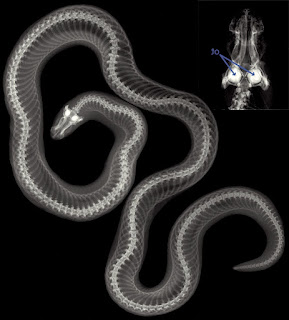
X-ray photo of the head of Xenopeltis intermedius sp. nov. ZISP 30357; ot, otoliths.

  Habitat of Xenopeltis intermedius sp. nov. at the type locality.

Xenopeltis intermedius sp. nov.

 
Nikolai L. Orlov, Pavel B. Snetkov, Oleg A. Ermakov, Tao Thien Nguyen and Natalia B. Ananjeva. 2022. Integrative Taxonomy Reveals A New Cryptic Species of Xenopeltis Gray, 1831 (Ophidia: Macrostomata: Pythonoidea: Xenopeltidae) from Central Highlands, Vietnam. Russian Journal of Herpetology. 29(4); 237-249. DOI: 10.30906/1026-2296-2022-29-4-237-249


[Invertebrate • 2022] Callistoctopus xiaohongxu • Morphological Description and mitochondrial DNA-based Phylogenetic Placement of A New Species of Callistoctopus Taki, 1964 (Cephalopoda, Octopodidae) from the southeast waters of China


Callistoctopus xiaohongxu 
Zheng, Xu & Li, 2022


Abstract
In this study, we described a new species of octopus and named it Callistoctopus xiaohongxu sp. nov. based on nine specimens captured in the waters of southeast China. Callistoctopus xiaohongxu sp. nov. is a small to moderate-sized octopus. The most characteristic and defining morphological features are the reddish-orange to reddish-brown skin, gills with 8 or 9 lamellae per demibranch, \∧/-shaped funnel organ, and small suckers. Fragments obtained from the mitochondrial cytochrome c oxidase subunit I (COI) gene of nine specimens were 593 bp in length, and the genetic distance among the specimens of C. xiaohongxu sp. nov. and the other 16 octopods ranged from 11.13 to 21.09%. Topologies resulting from ML and BI analyses of the COI gene showed a highly supported monophyletic clade (bootstrap value [BS] = 94%, posterior probability [PP] = 100%) containing all the specimens identified as C. xiaohongxu sp. nov.

Keywords: Callistoctopus xiaohongxu sp. nov., COI gene, new species, octopus, taxonomy


Callistoctopus xiaohongxu sp. nov., holotype, male, 45.5 mm ML (OUC-201808200301)
A photograph of dorsal view B photograph of ventral view.
Scale bars: 10 mm (A, B).

Callistoctopus xiaohongxu sp. nov.
A proximal portion of arms 1–3 (left side), male, 49.5 mm ML (OUC-201812050301) B funnel organ, male, 53.2 mm ML (OUC-201812050302) C oral view of basal portion of arms, male, 63.2mm ML (OUC-201812050304) D distal portion of hectocotylus, male, 63.2 mm ML (OUC-201812050304).
Abbreviations: c, calamus; l, ligula. Scale bars: 10 mm (B, C, D).

Order Octopoda Leach, 1818
Family Octopodidae d’Orbigny, 1840

Genus Callistoctopus Taki, 1964
Type species: Callistoctopus ornatus (Gould, 1852).

 Callistoctopus xiaohongxu sp. nov.

Diagnosis: Small to moderate size (ML 41.7–83.3 mm). Colour of skin reddish-orange to reddish-brown, no papillae or patch. One or two lines of black chromatophores on the lateral margins of arms under the skin (Fig. 2A). Head narrow (HWI 23.0–39.1). Arms of moderate length (ALI 154.9–336.3), thin (AWI 8.7–18.0). Web deep (WDI 15.7–22.9). Suckers small (SDI 5.0–6.9) and biserial. Enlarged suckers absent. Funnel organ \ /\ /-shaped, long (FLI 51.0–68.5). Gills with 8–9 lamellae per demibranch. Ligula moderate size (LLI 7.0–11.6) with groove.

Callistoctopus xiaohongxu sp. nov.
A live specimen B net-like structure on web.

Etymology: The name ‘xiaohongxu’, which refers to its small body size and reddish body colour, is the phonetic translation of the local Chinese name of this species in Zhangzhou, where specimens were collected.

Distribution: According to fishermen in Zhangzhou, this species is distributed in the East China Sea and the South China Sea, mainly in Quanzhou, Fujian Province to Shanwei, Guangdong Province.


Xiaodong Zheng, Chenxi Xu and Jiahua Li. 2022. Morphological Description and mitochondrial DNA-based Phylogenetic Placement of A New Species of Callistoctopus Taki, 1964 (Cephalopoda, Octopodidae) from the southeast waters of China. ZooKeys. 1121: 1-15. DOI: 10.3897/zookeys.1121.86264


[Herpetology • 2022] Boana guarinimirim • A New Cryptic Species of Boana (Hylidae: Hylinae: Cophomantini) of the B. polytaenia Clade from the Brazilian Atlantic Forest


Boana guarinimirim
Marinho, Bang, Vidigal & Giaretta, 2022

 
Abstract
A recent systematic revision pointed out that the name Boana polytaenia has been applied to a nonmonophyletic assemblage because populations identified as B. polytaenia from the northern Mantiqueira and southern Espinhaço mountain ranges are not closely related with the species' nominal clade. In this sense, specimens from these two biogeographic regions were recovered within two clades named Boana sp. 3 and Boana sp. 4, respectively. Here we characterized and compared external morphologies, calls, and DNA of specimens of the clade of B. polytaenia and from the two candidate species (Boana sp. 3 and Boana sp. 4). From these comparisons we herein describe a new cryptic species. Boana guarinimirim sp. nov. differs from its closely related species by the presence of a supracloacal crest, calcar appendage, and conspicuous discs on toes. Nevertheless, the new species could not be completely discriminated from its distantly related taxon B. polytaenia. We applied the new name to the clade distributed throughout the northern Mantiqueira range (Boana sp. 3), but the new name could also be applied to the clade from southern Espinhaço range (Boana sp. 4). Additional sampling efforts and new sources of evidence, such as larvae morphology and chromosomal features, should evaluate whether the lineages are conspecifics.

  Color variation of Boana guarinimirim sp. nov. in life.
Dorsolateral view of the paratypes AAG-UFU 6773 (top left), AAG-UFU 6800 (top right), AAG-UFU 6772 (bottom left), and dorsal view of AAG-UFU 6774. Scratch markings produced during aggressive interactions can be noticed on the dorsum of specimens.

 Holotype (CFBH 46043) of Boana guarinimirim sp. nov. in life.
 (A) Dorsolateral; (B) ventral and (C) dorsolateral view showing the coloration of hidden surfaces of thighs.

 
Pedro Marinho, Davi L. Bang, Izadora Vidigal and Ariovaldo A. Giaretta. 2022. A New Cryptic Species of Boana (Hylinae: Cophomantini) of the B. polytaenia Clade from the Brazilian Atlantic Forest. J. of Herpetology, 56(3):278-293. DOI: 10.1670/21-045
 

[Entomology • 2022] Tegostoma burtoni • The Genus Tegostoma (Lepidoptera: Crambidae: Odontiinae) in Armenia, with Description of A New Species


Tegostoma burtoni
Šumpich, Karsholt, Savenkov & Roweck, 2022


Abstract
A small but beautifully coloured species of Tegostoma Zeller, 1847, which was collected by the authors in Armenia, has turned out to be unnamed and is here described as Tegostoma burtoni sp. nov. The description is supported by morphology and DNA barcodes . Photographs of the adults and genitalia of both sexes are provided. Tegostoma lepidalis (Herrich-Schäffer, 1851) and Pyrausta gulpembe Kemal & Koçak, 2018 are recorded as new species for Armenia.

Tegostoma burtoni sp. nov.
1–4. Adults: 1. Holotype, male; 2–4. Paratypes; 2–3. Males; 4. Female;
5–6. Head (enlarged): 5. Male; 6. Female.
All coll. NMPC.

 Tegostoma burtoni sp. nov.
 
Diagnosis: Tegostoma burtoni sp. nov. is similar to some other Tegostoma species, mainly T. lepidalis (Herrich-Schäffer, 1851), and to Pyrausta gulpembe Kemal & Koçak, 2018 in external appereance, but it differs by its smaller wingspan. It differs from all Tegostoma species of comparable size by the distinctive purple colour of the forewings.
 
Etymology: The species name is derived from the name of John Andrew Burton, a worldwide active conservationist, in honour of his strong support of establishing nature reserves in Armenia. It is to his merit to have established the Artsakh Nature fund and that more than 30,000 hectares of unique habitats are now protected within the borders of the Caucasus Wildlife Refuge.

Note: The nature reserve is named after the old name of the village Gorovan, which has later become Goravan. But the official name of this protected area remained in its original spelling. Therefore, the names of the municipality and the protected area differ.

 
Jan Šumpich, Ole Karsholt, Nikolay Savenkov and Hartmut Roweck. 2022. The Genus Tegostoma in Armenia, with Description of A New Species (Crambidae, Odontiinae). Nota Lepidopterologica. 45: 269-278. DOI: 10.3897/nl.45.87795

[Entomology • 2018] Pharmacis cantabricus • A New Species of Pharmacis Hübner, 1820 (Lepidoptera: Hepialidae) from Spain with A Brief Review of the Genera Pharmacis and Korscheltellus Börner, 1920


Pharmacis cantabricus 
Kallies & Farino, 2018


Abstract
We here describe a new ghost moth (Hepialidae) species, Pharmacis cantabricus sp. n. from the Picos de Europa National Park, Cantabria, in northern Spain. The new species belongs to a group of mostly day-flying species that are restricted to the European Alps and some mountain ranges of southern Europe. Based on morphology and analysis of mitochondrial COI gene sequences, the new species is closely related to Pharmacis aemilianus (Constantini, 1911), an endemic of the Italian Apennines. However, Pharmacis cantabricus sp. n. can easily be distinguished from all related species based on both external and genitalic characters. We briefly review and illustrate all species of the genus Pharmacis Hübner, 1820 and discuss its relationship with the related genus Korscheltellus Börner, 1920. We reinstate Hepialus castillanus Oberthür, 1883 as a distinct species and transfer it to Korscheltellus (stat. rev., comb. n.).

Pharmacis species.
5–8. Pharmacis cantabricus sp. n., Spain, Picos de Europa. 5. Male, holotype, alar expanse 33 mm (MfN). 6. Male, paratype, alar expanse 30 mm. (CAK). 7. Female, paratype, alar expanse 31 mm (CAK). 8. Female, paratype, alar expanse 35 mm (CFG).
9–10. P. aemilianus, Italy, Abbruzi, Pescocostanzo. 9. Male, alar expanse 34 mm (MfN). 10. Female, alar expanse 52 mm (MfN).
 11. P. pyrenaicus pyrenaicus, male, France, Pyrenees, alar expanse 25 mm (CAK). 12. P. pyrenaicus alticola, male, Pyrenees, alar expanse, 27.5 mm (MfN).

Live Pharmacis specimens.
25. P. anselminae, male, Italy, Valle de Aosta. 26. P. bertrandi, male, France, Haute Alps. 27. P. carna, male, Poland, Tatra Mts,. 28. P. aemilianus, male, Italy, Central Apennines.
29–31. Pharmacis cantabricus sp. n., males (29, 30), female (31), Spain, Picos de Europa.
 Images 25, R. Bryner; 26, A. Longieras; 27, J. Wenta; 28, P. Mazzei.


 Pharmacis cantabricus sp. n. 

Diagnosis: Males of P. cantabricus sp. n. can be differentiated from males of all other species by the white forewing markings, which are usually reduced to an often ill-defined white streak near the base, an irregular white patch just anterior of vein A, and a third white patch between veins A and CuA2 near the anal angle. The extent of these white markings is, however, variable. In some specimens they are further reduced or even absent (as in the female in Fig. 8), in others they form an almost continuous white line (as in female in Fig. 7). Pharmacis cantabricus sp. n. differs from most other species of Pharmacis, with the exception of P. aemilianus, ...


 Axel Kallies and Teresa Farino. 2018. A New Species of Pharmacis Hübner, 1820 from Spain with A Brief Review of the Genera Pharmacis and Korscheltellus Börner, 1920 (Lepidoptera, Hepialidae). Nota Lepidopterologica. 41(2): 225-249. DOI: 10.3897/nl.41.26835

Resumen: Describimos una nueva especie de Hepialidae, Pharmacis cantabricus sp. n. del Parque Nacional de Picos de Europa, Cantabria, España septentrional. La nueva especie pertenece a un grupo de especies de vuelo diurno cuya distribución se limita a los Alpes europeos y otras cadenas montañosas de Europa meridional. Según estudios morfológicos y análisis de secuencias del gen mitocondrial COI, la nueva especie es más próxima a Pharmacis aemilianus (Constantini, 1911), un endemismo de los Montes Apeninos en Italia. Sin embargo, Pharmacis cantabricus sp. n. se distingue fácilmente de todas las especies relacionadas en sus caracteres externos y genitales. Evaluamos brevemente e ilustramos todas las especies del género Pharmacis Hübner, 1820 y comentamos su relación con el género emparentado Korscheltellus Börner, 1920. Restituimos Hepialus castillanus Oberthür, 1883 como especie y la trasladamos a Korscheltellus (stat. rev., comb. n.).