Thursday, October 30, 2014

[Herpetology • 2014] Rana kauffeldi | Atlantic Coast Leopard Frog • Cryptic Diversity in Metropolis: Confirmation of a New Leopard Frog Species (Anura: Ranidae) from New York City and Surrounding Atlantic Coast Regions


Atlantic Coast Leopard Frog | Rana kauffeldi 
Feinberg, Newman, Watkins-Colwell, Schlesinger, Zarate, Curry, Shaffer & Burger, 2014 

Abstract
We describe a new cryptic species of leopard frog from the New York City metropolitan area and surrounding coastal regions. This species is morphologically similar to two largely parapatric eastern congeners, Rana sphenocephala and R. pipiens. We primarily use bioacoustic and molecular data to characterize the new species, but also examine other lines of evidence. This discovery is unexpected in one of the largest and most densely populated urban parts of the world. It also demonstrates that new vertebrate species can still be found periodically even in well-studied locales rarely associated with undocumented biodiversity. The new species typically occurs in expansive open-canopied wetlands interspersed with upland patches, but centuries of loss and impact to these habitats give some cause for conservation concern. Other concerns include regional extirpations, fragmented extant populations, and a restricted overall geographic distribution. We assign a type locality within New York City and report a narrow and largely coastal lowland distribution from central Connecticut to northern New Jersey (based on genetic data) and south to North Carolina (based on call data).
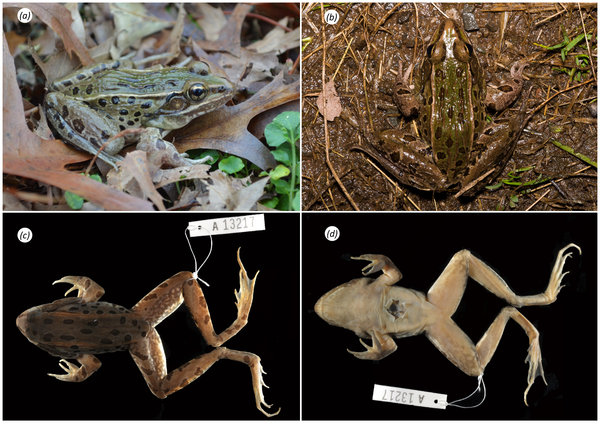

Figure 2. Photographs of Rana kauffeldi sp. nov. holotype (YPM 13217).
Male frog presented live: (a) whole body, dorsolateral view and (b) dorsal view; and preserved: (c) dorsal view and (d) ventral view.
Photographs taken by BRC (a), BZ (b), and GWC (c–d). doi: 10.1371/journal.pone.0108213.g002

Diagnosis and Description

Rana kauffeldi sp. nov.

urn:lsid:zoobank.org:act:149ED690-FA7D-4​216-A6A1-AA48CC39B292.

Holotype: YPM 13217, adult male (Fig. 2, Table 1), collected from Bloomfield region, Richmond County (Staten Island), NY, United States, on 15 November 2011, by B. R. Curry.

Etymology: The specific epithet is a patronym in recognition of Carl F. Kauffeld who studied the R. pipiens complex in the NY/NJ-metro area and concluded that three distinct species, including an undocumented central species, occurred there.

Common Name: We propose the common name ‘Atlantic Coast Leopard Frog’ for this species.


Jeremy A. Feinberg, Catherine E. Newman, Gregory J. Watkins-Colwell, Matthew D. Schlesinger, Brian Zarate, Brian R. Curry, H. Bradley Shaffer and Joanna Burger. 2014. Cryptic Diversity in Metropolis: Confirmation of a New Leopard Frog Species (Anura: Ranidae) from New York City and Surrounding Atlantic Coast Regions. PLoS ONE, 2014; 9 (10): e108213 DOI: dx.doi.org/10.1371/journal.pone.0108213

Wednesday, October 29, 2014

[Paleontology • 2014] Zaraapelta nomadis • The Ankylosaurid Dinosaurs of the Upper Cretaceous Baruungoyot and Nemegt formations of Mongolia


Life restoration of Zaraapelta nomadis
Illustration: Danielle Dufault | DOI: 10.1111/zoj.12185

Abstract
The discovery of a new ankylosaurid skull with some unusual features from the Baruungoyot Formation of Mongolia prompted a systematic review of ankylosaurid specimens from the Baruungoyot and Nemegt formations. Dyoplosaurus giganteus was found to possess no diagnostic features and is regarded as a nomen dubium. The holotype of Tarchia kielanae (previously synonymized with Tarchia gigantea) has one autapomorphy, an accessory postorbital ossification with surrounding furrow, and Tar. kielanae is here considered a valid species, making the combination Tar. gigantea unnecessary. An accessory postorbital ossification is also found in the holotype of Minotaurasaurus ramachandrani, and this species is here considered a junior synonym of Tar. kielanae. The newly described skull from the Baruungoyot Formation forms the holotype of a new genus and species, Zaraapelta nomadis gen. et sp. nov., diagnosed by unusual bilayered ornamentation on the squamosal horn and extensive postocular ornamentation. Two distinct tail club handle morphotypes are present in the Nemegt Formation and probably represent two different species. However, it is impossible to assign either tail club morphotype to the single valid species from the formation, Saichania chulsanensis, because of a lack of overlapping material. A revised phylogenetic analysis including newly identified characters found Zaraapelta nomadis to be most closely related to Tar. kielanae.  

Keywords: Ankylosauria; Ankylosauridae; Campanian; Dinosauria; Gobi Desert; Maastrichtian


skull of Zaraapelta nomadis.
photo: Jessica Tansey


Zaraapelta nomadis gen. et sp. nov.
Holotype: MPC D100/1338, a partial skull missing the rostrum.

Etymology: Zaraapelta nomadisзараа (Mongolian) hedgehog, in reference to the spiky appearance of the skull, and pelta (Latin), a small shield, in reference to the osteoderms found on all ankylosaurs; nomadis, from nomas (Latin), nomad, in reference to Mongolian travel company Nomadic Expeditions, which has facilitated many years of palaeontological fieldwork in the Gobi Desert.

Holotype locality and horizon: 43°28.345′N, 99°51.032′E (WGS 84), Hermiin Tsav, Gobi Desert, Mongolia; Baruungoyot Formation (Mid−Upper Campanian, Jerzykiewicz, 2000).

Diagnosis: Ankylosaurine ankylosaurid with bulbous cranial ornamentation. Unlike other ankylosaurs, squamosal horn has unique smooth-textured keel offset from the rest of the squamosal horn by a distinct and abrupt change to a granular texture; elaborate pattern of postocular caputegulae covering entire postocular region between squamosal and quadratojugal horns, with more postocular caputegulae than Ano. lambei, Sa. chulsanensis, or Tar. kielanae.


Victoria M. Arbour, Philip J. Currie and Demchig Badamgarav. 2014. The Ankylosaurid Dinosaurs of the Upper Cretaceous Baruungoyot and Nemegt formations of Mongolia. Zoological Journal of the Linnean Society. 


 Mongolian armoured dinosaur with spiky helmet shows Gobi Desert was hotspot for ankylosaur diversity.

[Herpetology • 2014] Cnemaspis kottiyoorensis • Description of a New Ground-Dwelling Cnemaspis Strauch, 1887 (Squamata: Gekkonidae), from Kerala, India; Allied to C. wynadensis (Beddome, 1870)


Abstract

A new species of ground dwelling gecko, Cnemaspis kottiyoorensis sp. nov. is described from the hills of Kannur and Wayanad district of Kerala, India. This medium sized, robust Cnemaspis differs from all other Indian congeners in possessing heterogeneous dorsal scales composed of granular scales with more or less regularly arranged longitudinal rows of keeled, conical tubercles running down the back; two supranasals and a long internasal separating the nasal scales; subtriangular mental with two widely separated enlarged postmentals and 1 – 3 small median scales; 19 or 20 subdigital lamellae on finger IV and 20 or 21 on toe IV; 4 or 5 femoral pores on each thigh; no preanal pores; sub-cylindrical tail without whorls of enlarged tubercles on the dorsal aspects; uniform, hexagonal median subcaudals; six supralabials and six or seven infralabials. Morphological characters and natural history traits suggest the affinity of the new species is with Cnemaspis wynadensis. Characters useful in distinguishing the new species from C. wynadensis are also provided.

Keywords: ground-dwelling; Cnemaspis kottiyoorensis sp. nov.; Cnemaspis wynadensis; Kerala; India


Vivek Philip Cyriac and P. K. Umesh. 2014. Description of a New Ground-Dwelling Cnemaspis Strauch, 1887 (Squamata: Gekkonidae), from Kerala, Allied to C. wynadensis (Beddome, 1870)Russian Journal of Herpetology. 21(3):187-194.

[Herpetology • 2014] First Record of the Gekkonid Genus Cnemaspis Strauch, 1887 from Gunung Mulu National Park, Sarawak, East Malaysia may Represent an Undescribed Species


ABSTRACT 
We provide confirmed photographic evidence for the previously overlooked occurrence of the polyphyletic Asian gecko genus Cnemaspis from Gunung Mulu National Park, the world-renowned UNESCO natural heritage site in northern Sarawak, East Malaysia. This new record from Sarawak province represents a remarkable range extension for Cnemaspis cf. kendallii by 550 km to the northeast and denotes the most northern occurrence of the genus in Borneo. Our new finding makes it very likely that these gekkonid lizards also inhabit appropriate limestone karst habitats in adjacent Sabah, Brunei, and Kalimantan. Given the visible differences in the Mulu specimen compared to those from the remaining distribution range on Borneo and the Malaysian Peninsula together with the fact that numerous Cnemaspis species are restricted to small areas, it seems plausible that another undescribed, rather cryptic and possibly locally endemic Bornean species is involved. Lastly, the new record contributes to the importance of the Mulu National Park as a major conservation area in East Malaysia of international concerns.


 Andre Koch and Sebastian Schulz. 2014. First Record of the Gekkonid Genus Cnemaspis Strauch, 1887 from Gunung Mulu National Park, Northern Sarawak, East Malaysia may Represent an Undescribed Species. Asian Herpetological Research. 5(3):209-212.
DOI: dx.doi.org/10.3724/SP.J.1245.2014.00209

Tuesday, October 28, 2014

[Botany • 2014] Three New Ginger Species (Zingiberaceae) from Laos; Curcuma corniculata and C. flammea (Curcuma subg. Ecomata) & Zingiber jiewhoei (Zingiber sect. Zingiber)


Abstract
Three new Zingiberaceae species from Laos, Curcuma corniculata and C. flammea (Curcuma subg. Ecomata), and Zingiber jiewhoei (Zingiber sect. Zingiber), are described and illustrated here.

Keywords: Curcuma; Laos; Zingiber; Zingiberaceae; gingers; new species; vulnerable


J. Leong-Škorničková; O. Šída; S. Bouamanivong; K. Souvannakhoummane; K. Phathavong. 2014. Three New Ginger Species (Zingiberaceae) from Laos. Blumea - Biodiversity, Evolution and Biogeography of Plants. 59; 106–112

[Herpetology • 2014] A Taxonomic Revision of the Asian Keelback Snakes, genus Amphiesma (Serpentes: Colubridae: Natricinae), with Description of A New Species


Abstract
The Asian keelback snakes (genus Amphiesma) are a widely distributed group of Old World natricines, inhabiting a variety of niches and exhibiting significant morphological variation. Recent molecular phylogenies suggest that this genus is not monophyletic, and that additional cryptic diversity is also likely present. We conducted a phylogenetic analysis of the group based on 3162 bp of one mitochondrial gene (Cyt. b) and three nuclear genes (C-mos, Rag1, NT3), sampling 18 species in addition to those sequenced in previous works. All analyses consistently show that Amphiesma consists of three distinct, monophyletic lineages with strong support. We divide Amphiesma into three genera, Amphiesma, Hebius, and Herpetoreas. The genus Amphiesma is monotypic, Herpetoreas contains three species, and Hebius comprises the remaining 39 species. On the basis of a combination of molecular analyses and external morphological comparisons, we describe a new species in the Herpetoreas group from China as H. burbrinki sp. nov. Several other species are shown to be non-monophyletic or contain significant levels of intraspecific genetic diversity. Another Old World natricine genera, Xenochrophis is also found to be non-monophyletic. Our results indicate that further taxonomic revisions are needed in Natricinae, at multiple levels.

Keywords: Natricinae, Amphiesma, Hebius, Herpetoreas, Snakes, new species, Southeastern Asia, systematics


Guo, Peng, Fei Zhu, Qin Liu, Liang Zhang, Jian X. Li, Yu Y. Huang & R. A. Pyron. 2014. A Taxonomic Revision of the Asian Keelback Snakes, genus Amphiesma (Serpentes: Colubridae: Natricinae), with Description of A New Species. Zootaxa 3873(4): 425–440.

[Botany • 2014] A New Combination and New Records of Tetrastigma (Vitaceae) from Thailand


A: Tetrastigma assimile (Kurz) C.L.Li ex P.Kochaiphat & Trias-Blasi;
B: T. macrocorymbum Gagnep. ex J.Wen, Boggan & Turland, and
C-D: T. triphyllum (Gagnep.) W.T. Wang var. triphyllum

 Abstract 
Four species of Tetrastigma are newly recorded for Thailand, including T. assimile (Kurz) C.L.Li ex P.Kochaiphat & Trias-Blasi, T. macrocorymbum Gagnep. ex J.Wen, Boggan & Turland, T. pyriforme Gagnep., and T. triphyllum (Gagnep.) W.T. Wang var. triphyllum. A new combination, T. assimile (Kurz) C.L.Li ex P. Kochaiphat & Trias-Blasi is provided.

Keywords: Vitaceae; Tetrastigma; Southeast Asia; Thailand


 Phongsakorn Kochaiphat, Anna Trias-Blasi and Pimwadee Pornpongrungrueng. 2014. A New Combination and New Records of Tetrastigma (Vitaceae) from Thailand. Phytotaxa. 183(4):272-278. DOI:  10.11646/phytotaxa.183.4.6

Monday, October 27, 2014

[BioGeography / Herpetology • 2014] Crossing the Line: Increasing Body Size in a trans-Wallacean Lizard Radiation (Cyrtodactylus, Gekkota)


Figure 1. Dated phylogeny (Bayesian MCC tree) for Cyrtodactylus estimated with concatenated nuclear and mitochondrial dataset showing divergence dates and ancestral state reconstructions for body length (blue smallest, green intermediate and red largest); taxon names and posterior probabilities are given in the electronic supplementary material, figure S1; exact ages and sizes of all nodes (with 95% highest posterior density (HPD) intervals) are in electronic supplementary material, file SI_4. Yellow shading denotes the two clades occurring in the Australopapuan region. Grey bars at right denote maximum body size for each species (in mm), with grey shading denoting larger-bodied clades in Asian and Australopapuan regions.


Abstract
The region between the Asian and Australian continental plates (Wallacea) demarcates the transition between two differentiated regional biotas. Despite this striking pattern, some terrestrial lineages have successfully traversed the marine barriers of Wallacea and subsequently diversified in newly colonized regions. The hypothesis that these dispersals between biogeographic realms are correlated with detectable shifts in evolutionary trajectory has however rarely been tested. Here, we analyse the evolution of body size in a widespread and exceptionally diverse group of gekkotan lizards (Cyrtodactylus), and show that a clade that has dispersed eastwards and radiated in the Australopapuan region appears to have significantly expanded its body size ‘envelope’ and repeatedly evolved gigantism. This pattern suggests that the biotic composition of the proto-Papuan Archipelago provided a permissive environment in which new colonists were released from evolutionary constraints operating to the west of Wallacea.

Keywords: Asia; Cyrtodactylus; ecological release; insular gigantism; New Guinea; Wallace's Line


Paul M. Oliver, Phillip Skipwith and Michael S. Y. Lee. 2014. Crossing the Line: Increasing Body Size in a trans-Wallacean Lizard Radiation (Cyrtodactylus, Gekkota). Biology Letters. DOI: 10.1098/rsbl.2014.0479

Geckos crossed the line and got bigger

Sunday, October 26, 2014

[Mammalogy / Venom • 2014] Anaphylactic Shock following the Bite of A Wild Kayan Slow Loris (Nycticebus kayan): Implications for Slow Loris Conservation


Figure 1. This subadult slow loris bit the victim’s finger intensely resulting in a severe wound.
(Panel A) Subadult Nycticebus kayan before the victim handled it – already a large drop of saliva can be seen protruding from the animal’s mouth. (Panel B) The bite site 12 days after the bite.
(Photos by G. Madani) DOI: 10.1186/1678-9199-20-43

Abstract
Background
Asian slow lorises (Nycticebus spp.) are one of few known venomous mammals, yet until now only one published case report has documented the impact of their venomous bite on humans. We describe the reaction of a patient to the bite of a subadult Nycticebus kayan, which occurred in the Mulu District of Sarawak in 2012.

Findings
Within minutes of the bite, the patient experienced paraesthesia in the right side of the jaw, ear and right foot. By 40 minutes, swelling of the face was pronounced. The patient was admitted to Mulu National Park Health Clinic/Klinik Kesihatan Taman Mulu Tarikh, at which time he was experiencing: swollen mouth, chest pain, mild abdominal pain, nausea, numbness of the lips and mouth, shortness of breath, weakness, agitation and the sensation of pressure in the ears due to swelling. The blood pressure was 110/76, the heart ratio was 116 and oxygen saturation was 96%. The patient was treated intramuscularly with adrenaline (0.5 mL), followed by intravenous injection of hydrocortisone (400 mg) and then intravenous fluid therapy of normal saline (500 mg). By 8 h10 the next day, the patient’s condition had significantly improved with no nausea, and with blood pressure and pulse rate stable.

Conclusions
A handful of anecdotes further support the real danger that slow loris bites pose to humans. As the illegal pet trade is a major factor in the decline of these threatened species, we hope that by reporting on the danger of handling these animals it may help to reduce their desirability as a pet.

Keywords: Anaphylaxis; Hypersensitivity; Systemic reaction; Malaysia; Adrenaline; Necrosis; Paresthesia; Animal bite; Mammal venom; Hematuria


George Madani and K Anne-Isola Nekaris. 2014. Anaphylactic Shock following the Bite of A Wild Kayan Slow Loris (Nycticebus kayan): Implications for Slow Loris Conservation. Journal of Venomous Animals and Toxins including Tropical Diseases. 20:43  doi: dx.doi.org/10.1186/1678-9199-20-43

When cute turns deadly – the story of a wildlife biologist who was bit by a venomous slow loris, and lived to tell the tale http://news.mongabay.com/2014/1024-dasgupta-slow-loris-bite.html

Thursday, October 23, 2014

[Paleontology • 2014] Resolving the Long-standing Enigmas of A Giant Ornithomimosaur Deinocheirus mirificus


 Deinocheirus mirificus
reconstruction: Michael Skrepnick

The holotype of Deinocheirus mirificus was collected by the 1965 Polish–Mongolian Palaeontological Expedition at Altan Uul III in the southern Gobi of Mongolia. Because the holotype consists mostly of giant forelimbs (2.4 m in length) with scapulocoracoids, for almost 50 years Deinocheirus has remained one of the most mysterious dinosaurs. The mosaic of ornithomimosaur and non-ornithomimosaur characters in the holotype has made it difficult to resolve the phylogenetic status of Deinocheirus. Here we describe two new specimens of Deinocheirus that were discovered in the Nemegt Formation of Altan Uul IV in 2006 and Bugiin Tsav in 2009. The Bugiin Tsav specimen (MPC-D 100/127) includes a left forelimb clearly identifiable as Deinocheirus and is 6% longer than the holotype. The Altan Uul IV specimen (MPC-D 100/128) is approximately 74% the size of MPC-D 100/127. Cladistic analysis indicates that Deinocheirus is the largest member of the Ornithomimosauria; however, it has many unique skeletal features unknown in other ornithomimosaurs, indicating that Deinocheirus was a heavily built, non-cursorial animal with an elongate snout, a deep jaw, tall neural spines, a pygostyle, a U-shaped furcula, an expanded pelvis for strong muscle attachments, a relatively short hind limb and broad-tipped pedal unguals. Ecomorphological features in the skull, more than a thousand gastroliths, and stomach contents (fish remains) suggest that Deinocheirus was a megaomnivore that lived in mesic environments.


Altangerel Perle, a Mongolian paleontologist, with the arms of Deinocheirus in Ulaanbaatar State Museum
 Photographer: Louie Psihoyos


Deinocheirus mirificus
,
from the Greek for “terrible hand, which is unusual”.


Figure 1: Deinocheirus mirificus.
a, MPC-D 100/127. b, MPC-D 100/128. c, Composite reconstruction of MPC-D 100/127 with a simple proportional enlargement of MPC-D 100/128. Scale bar, 1 m. The human outline is 1.7 m tall.
The holotype and the two new specimens provide almost all skeletal information of Deinocheirus.

Figure 2: Skull of Deinocheirus mirificus (MPC-D 100/127).


Figure 3: Postcranial skeletons of Deinocheirus mirificus (MPC-D 100/127, MPC-D 100/128).

Figure 4: Phylogenetic relationships of Deinocheirus mirificus within Ornithomimosauria.
a, Hypothetical fleshed-out reconstruction of Deinocheirus mirificus (by Michael Skrepnick). b, Time-scaled strict consensus tree of the six most-parsimonious trees from our analysis (tree length = 2,927, consistency index = 0.22, retention index = 0.59; Supplementary Information). In this hypothesis Deinocheirus is a derived taxon of the Deinocheiridae, which is the sister-group of the Ornithomimidae.

a, Photo to show in situ gastralia, gastroliths, and stomach contents. Blue and green arrows represent gastralia and gastroliths. Red rectangle is an area of scattered fish remains and gastroliths. Red circle is an area where broken fish bones are aggregated. b, Enlarged photo of scattered fish remains (vertebrae, scales) with gastroliths in a.


Yuong-Nam Lee, Rinchen Barsbold, Philip J. Currie, Yoshitsugu Kobayashi, Hang-Jae Lee, Pascal Godefroit, François Escuillié and Tsogtbaatar Chinzorig. 2014. Resolving the Long-standing Enigmas of A Giant Ornithomimosaur Deinocheirus mirificus.
Nature. http://dx.doi.org/10.1038/nature13874


Deinocheirus Exposed: Meet The Body Behind the Terrible Hand http://on.natgeo.com/1xaIeZv via @ngphenomena
Bizarre dinosaur reconstructed after 50 years of wild speculation http://gu.com/p/42kdq

Wednesday, October 22, 2014

[Herpetology • 2014] Strophurus horneri | Arnhem Phasmid Gecko • A New Phasmid Gecko (Squamata: Diplodactylidae) from the Arnhem Plateau: more new Diversity in Rare Vertebrates from northern Australia


Arnhem Phasmid Gecko | Strophurus horneri  
Oliver & Parkin, 2014
FIGURE 4. A) Strophurus horneri sp. nov. seen and photographed in southern Kakadu National Park.
Note prehensile tail and pink tongue. Photograph: Brendan Schembri.
FIGURE 3. Strophurus horneri sp. nov. in life. Holotype NMVD72591 photographed at Yirrkakak.
Photograph: Rich Glor.
FIGURE 5. Habitat of Strophurus horneri sp. nov. at Namarragon Gorge, Kakadu National Park.
Photograph: Stuart Young.

Abstract
The Arnhem Plateau is a rugged expanse of sandstone escarpment in the Australian Monsoonal Tropics with a highly endemic biota. Here we describe a new species of small spinifex dwelling Strophurus (phasmid gecko) that also appears to be endemic to this region. Strophurus horneri sp. nov. can be diagnosed from all congeners by aspects of size, coloration and scalation. Even with the description of this new species, however, levels of morphological and genetic diversity within Strophurus from the stone country of the Northern Territory suggest additional divergent lineages are present. A number of recent studies have now provided preliminary evidence of evolutionary diversity within the Arnhem Plateau, but data remains scant and almost nothing is known about how topography and historical processes have shaped the endemic biota of this region.

Keywords: Australian Monsoonal Tropics, endemism, lizard, Kakadu National Park, sandstone, spinifex


Distribution and habitat. Strophurus horneri sp. nov. is known only from the Arnhem Plateau region in the Top End of the Northern Territory. The holotype was collected on the northern edge of the Arnhem Plateau in the vicinity of Yirrkakak. Other specimens have been observed at other localities along the western edge of the Arnhem Plateau (Brendan Schembri, Mitchell Scott pers. comm.), and this species may occur throughout the western and northern Arnhem Plateau (Fig. 1). 
Where data is available, all specimens were found in well developed spinifex patches on or at the base of large sandstone escarpment or boulders (Fig. 5). The longitudinal striped patterning evident in life provides excellent camouflage in this habitat. Brendan Schembri (pers. comm.) reports that this species was comparatively easy to find in long unburnt spinifex in a sheltered gully in southern Kakadu. The potential role of fire frequency in shaping the distribution and abundance of this taxon warrants further investigation.

Etymology. Named in honor of Dr. Paul Horner, Emeritus Curator of the Museum and Art Gallery of the Northern Territory, in recognition of his significant contributions to Australian reptile systematics.

Oliver, Paul M. & Tom Parkin. 2014. A New Phasmid Gecko (Squamata: Diplodactylidae: Strophurus) from the Arnhem Plateau: more new Diversity in Rare Vertebrates from northern Australia. Zootaxa. 3878(1): 37–48.

Tuesday, October 21, 2014

[Ornithology • 2014] First Record of the Nesting Biology of the Red-vented Barbet, Megalaima lagrandieri (Aves: Piciformes: Megalaimidae), an Indochinese endemic


Fig. 4. A, Parent Red-vented Barbet Megalaima lagrandieri on the nesting hole.
B–F, with different food items: B, lizard Bronchocela smaragdina; C, figs; D, fruit of Knema sp.;
E, bush cricket Zabalius sp.; and F, cicada.

Abstract
We report on the nesting biology of the red-vented barbet (Megalaima lagrandieri) in its natural habitat in Loc Bac forest (southern Vietnam, Lam Dong Province). Two active nests containing nestlings and one nest in the process of excavation were observed during 2012 and 2013. Both parents participated in the provisioning of their brood throughout the day, making a maximum of 52 daily visits with food. The nestlings’ diets consisted of fleshy fruits, insects and spiders as well as vertebrates. Plant matter was added to the nestlings’ diet from the initial days of feeding, and its proportion increased over time. We provide a first description of the red-vented barbet nesting hole and comment on the hardness of the wood. A description of the two-week-old nestlings is also provided.

Key words. Asian barbets, cavity nesting, Brinell’s test, frugivory, nestling period


Vitaly L. Trounov and Anna B. Vasilieva. 2014. First Record of the Nesting Biology of the Red-vented Barbet, Megalaima lagrandieri (Aves: Piciformes: Megalaimidae), an Indochinese endemic. RAFFLES BULLETIN OF ZOOLOGY. 62: 671–678

[Paleontology • 2014] Maaradactylus kellneri • A New toothed Pterosaur (Pterodactyloidea: Anhangueridae) from the Early Cretaceous Romualdo Formation, NE Brazil


Maaradactylus kellneri 
Bantim, Saraiva, Oliveira & Sayão, 2014
A new species of pterosaur, discovered from the northeastern Brazil, distinguished from others by numerous teeth and the size of the crest, which occupies 40% of its skull.
Illustration: Maurilio Oliveira

Abstract

A new species of pterosaur, Maaradactylus kellneri gen. nov., sp. nov. (Archosauria: Pterosauria) from the Romualdo Formation (Aptian/Albian), is herein described. The specimen (MPSC R 2357) was found at Sítio São Gonçalo, Santana do Cariri city (State of Ceará, northeast Brazil) and consists of the skull, atlas and axis, and represents one of the largest skulls of the Anhangueridae from the Araripe Basin described. The autapomorphies of the new pterosaur include the following characters: a premaxillary sagittal crest that is relatively long and high, beginning at the anterior part of the skull (rostrum) and extending to the 22nd pair of alveoli, not covering the nasoantorbital fenestra or the choanaes, and also the presence of 35 pairs of alveoli; smooth palatal ridge, which starts on the 5th pair of alveoli and ends on the 13th pair; palate is convex shaped in the anterior region; choanae not extending laterally; small and convex palatal elevation; the 5th, 6th and 7th alveoli smaller than the 4th and 8th; the alveoli decreasing in size from the 9th to the 12th and increasing from the 13th to 18th, and from the 18th to the 35th they are arranged in triplets. Furthermore, the lateral surface of the premaxillary crest shows grooves and tridimensional structures that may have housed blood vessels.

Keywords: Pterosauria, Anhangueridae, Araripe Basin, Romualdo Formation, Brazil


The generic name refers to Maara, in the legends of the Cariri the daughter of a chief, by sorcery changed into a river monster with long teeth, devouring fishermen. The suffix ~dactylus is common in the names of pterosaurs and is derived from Greek δάκτυλος, daktylos, "finger", referring to the long (fourth) wing finger. The specific name honours Alexander Kellner, Brazil's foremost pterosaur expert.


 Renan A. M. Bantim, Antônio A. F. Saraiva, Gustavo R. Oliveira and Juliana M. Sayão. 2014. A New toothed Pterosaur (Pterodactyloidea: Anhangueridae) from the Early Cretaceous Romualdo Formation, NE Brazil. Zootaxa. 3869 (3): 201–223. doi: dx.doi.org/10.11646/zootaxa.3869.3.1.


Monday, October 20, 2014

[Herpetology • 2014] Description of Four New West African Forest Geckos of the Hemidactylus fasciatus Gray, 1842 complex, revealed by coalescent species delimitation


Fig. 1. [A] Living specimen of Hemidactylus fasciatus (not collected) from Liberia;
[B] Living specimen of Hemidactylus kyaboboensis sp. n. from the type locality.

Fig. 6. [A] Living specimen of Hemidactylus ituriensis (AMNH 10273) from Akenge;
[B] Living specimen of Hemidactylus coalescens sp. n. (ZFMK 87679, holotype) from the type locality;
and [C] uncollected living specimen of Hemidactylus biokoensis sp. n. from Bioko Island
(Reserva científica de la Caldera de San Carlos, 3°14’2.39”N, 8°37’38.60”E.).

Abstract
The gecko Hemidactylus fasciatus is widespread in rainforest regions of equatorial Africa, from Guinea to Cameroon. Recently, this taxon was identified as a cryptic complex of at least five species, using multilocus genetic data and coalescent models for species delimitation. Here, we provide the formal descriptions of four new species from tropical West and Central Africa. As typical for cryptic species, the new species are genetically distinct, but difficult to distinguish using external morphology. However, coloration, shape of the body crossbands, and body size, are important distinguishing characters for this complex.

We provide a new taxonomy for this complex that includes the following forest gecko species: H. fasciatus is now restricted to West Africa occurring eastwards to the Dahomey Gap, Hemidactylus kyaboboensis sp. n. is known only from within the Dahomey Gap, H. eniangii sp. n. is distributed from the Dahomey Gap to western Cameroon, H. coalescens sp. n. occurs from central Cameroon to southern Gabon, H. biokoensis sp. n. is restricted to Bioko Island, and H. ituriensis, herein recognized as full species, is known from several localities in eastern Africa.

Key words: Africa, rainforest, Sauria, Gekkonidae, Hemidactylus fasciatus complex, Hemidactylus ituriensis.


Fig. 7. Species tree for the Hemidactylus fasciatus species group based on a coalescent-based Bayesian analysis of 1,087 single nucleotide polymorphisms (Leaché et al. 2014). Posterior probabilities are shown on branches. Museum specimen records were downloaded from the HerpNET database, and geographic distribution was predicted using Maxent. Populations with uncertain taxonomic placement are indicated with “?”. Type localities are: [A]= H. kyaboboensis sp. n.; [B]= H. eniangii sp. n.; [C]= H. biokoensis sp. n.; and [D]= H. coalescens sp. n.


Philipp Wagner, Adam D. Leaché & Matthew K. Fujita. 2014. Description of Four New West African Forest Geckos of the Hemidactylus fasciatus Gray, 1842 complex, revealed by coalescent species delimitation. Bonn zoological Bulletin. 63 (1): 1–14

Sunday, October 19, 2014

[Ichthyology • 2014] Tanakia latimarginata • A New Species of Bitterling (Teleostei: Cyprinidae) from the Nakdong River, South Korea

Tanakia latimarginata
Kim, Jeon & Suk, 2014

ABSTRACT
 Tanakia latimarginata, new species, is described from the Nakdong River, South Korea. It is distinguished from closely related species in that it has a black distal margin on the anal-fin of mature males that is greater than the diameter of the pupil posteriorly to the midpoint of the fin, a light colored ovipositor in mature females, an irregularly shaped fifth infraorbital bone, and a parietal branch of the supraorbital sensory canal that reaches to or extends past the border between the frontal and parietal. Phylogenetic analyses utilizing mitochondrial (cytochrome b) and nuclear (myh6) DNA sequences support a sister group relationship between T. latimarginata and T. lanceolata.


 Daemin Kim, Hyung-Bae Jeon and Ho Young Suk. 2014. Tanakia latimarginata, A New Species of Bitterling from the Nakdong River, South Korea (Teleostei: Cyprinidae). Ichthyological Exploration of Freshwaters. 25(1):59-68.
http://www.pfeil-verlag.de/04biol/pdf/ief25_1_05.pdf
researchgate.net/publication/265907793_Tanakia_latimarginata_a_new_species_of_bitterling_from_the_Nakdong_River_South_Korea_(Teleostei_Cyprinidae)
Chang, Chia-Hao; Li, Fan; Shao, Kwang-Tsao; Lin, Yeong-Shin; Morosawa, Takahiro; Kim, Sungmin; Koo, Hyeyoung; Kim, Won; Lee, Jae-Seong; He, Shunping; Smith, Carl; Reichard, Martin; Miya, Masaki; Sado, Tetsuya; Uehara, Kazuhiko; Lavoué, Sébastien; Chen, Wei-Jen; Mayden, Richard L. (in press). Phylogenetic relationships of Acheilognathidae (Cypriniformes: Cyprinoidea) as revealed from evidence of both nuclear and mitochondrial gene sequence variation: Evidence for necessary taxonomic revision in the family and the identification of cryptic species. Molecular Phylogenetics and Evolution.  81; 182–194 doi: dx.doi.org/10.1016/j.ympev.2014.08.026