Friday, November 29, 2019

[Botany • 2019] Chrysosplenium macrospermum (Saxifragaceae) • A New Species of Chrysosplenium from Northeastern China


Chrysosplenium macrospermum Y.I.Kim & Y.D.Kim

in Kim, Shin, Lee, et al., 2019. 
천지괭이눈 | 天池金腰 ||  DOI: 10.3897/phytokeys.135.39036

Abstract
This study describes and illustrates Chrysosplenium macrospermum Y.I.Kim & Y.D.Kim, a new plant species from Changbaishan Mt. (Baekdusan Mt.) in northeastern China. The species is most similar to Chrysosplenium valdepilosum in the series Pilosa but is readily distinguishable by short arching sterile branches, multiple (up to 3) flowering stems, and smooth surfaced seeds (without tubercles), which are ca. 30–50% larger than those of other members in the series.

Keywords: Saxifragales, seed morphology, sterile branch, taxonomy

Figure 1. Chrysosplenium macrospermum Y.I.Kim & Y.D.Kim, sp. nov. A flowering individual B fruiting individual C inflorescence and bracteal leaves D infructescence and bracteal leaves E seed F seed coat, enlarged G flower (top view) H capsule, after dehiscence (top view) I stamen at various stages J capsule with persistent sepals (side view) K capsule, sepals removed L capsule, longitudinal section. 

Figure 2. Chrysosplenium macrospermum Y.I.Kim & Y.D.Kim, sp. nov. A fruiting individual B infructescence, bracteal leaves and seeds in capsules C plant habit during flowering D fruiting individual showing short arch-shaped sterile branches and thick fibrous roots.

Chrysosplenium macrospermum Y.I.Kim & Y.D.Kim, sp. nov.

Diagnosis: Chrysosplenium macrospermum is most similar to Chrysosplenium valdepilosum (Ohwi) S.H. Kang & J.W. Han, 2011 (see Han et al. 2011), but the former is readily distinguishable by short arching sterile branches, multiple (up to 3) flowering stems, and smooth surfaced seeds (without tubercles), which are ca. 30–50% larger than those of other members in the series Pilosa (Figure 3).

Etymology: The specific epithet of the new species refers to the distinctly larger size of the seeds compared with those of other members in the series Pilosa.

Vernacular name: Cheon Ji Gwaeng I Nun (Korean pronunciation); 천지괭이눈 (Korean name), Tiān Chí Jīn Yāo (Chinese pronunciation); 天池金腰 (Chinese name)


Distribution: Chrysosplenium macrospermum is only known from Changbaishan Mt. in Jilin Province of China, at an elevation of ca. 2,600 m. To date, only a few subpopulations with approximately 5,000 individuals have been discovered near Tianchi Crater Lake. In the absence of additional data, we presently score it as Data Deficient (DD) according to the IUCN Red List criteria (IUCN 2001).

Ecology: Chrysosplenium macrospermum occurs in alpine tundra, where it grows in humid and semi-shaded areas near the Tianchi volcanic crater along with Papaver radicatum var. pseudoradicatum (Kitag.) Kitag., Bistorta ochotensis Kom., Micranthes laciniata (Nakai & Takeda) S. Akiyama & H. Ohba, Sedum rosea (L.) Scop., and Pedicularis verticillata L. The flowering period of this species is from late May to early July, and the fruiting period is from July to August.


 Yong-In Kim, Jae-Seo Shin, Sangwoo Lee, Jia-Hui Chen, Sangho Choi, Jin Hee Park and Young-Dong Kim. 2019. A New Species of Chrysosplenium (Saxifragaceae) from Northeastern China.  PhytoKeys. 135: 39-47. DOI: 10.3897/phytokeys.135.39036

[Paleontology • 2020] The Oldest Lambeosaurine Dinosaur from Europe: Insights Into the Arrival of Tsintaosaurini


 Lambeosaurine Dinosaur from the Upper Cretaceous northeastern Spain.

in Conti, Vila, Sellés, et al., 2020. 
 Illustration: Oscar Sanisidro  www.icp.cat  

Abstract
Hollow-crested lambeosaurine hadrosaurids represent one of the latest and most rapid radiations of ornithischian dinosaurs, attaining a nearly global distribution during the Late Cretaceous. Although their presence in Europe is well documented, there are questions about the origin and timing of their arrival in this continent. The analysis of old and newfound lambeosaurine specimens from the Els Nerets locality (eastern Tremp Syncline, northeastern Spain) have shown that the ornithopod dinosaurs from this classic site belong to Lambeosaurinae. Recent chronostratigraphic data places the locality in the lower Maastrichtian, implying that the Els Nerets lambeosaurine is the first occurrence of the clade in Europe. The Els Nerets lambeosaurine exhibits some noticeable pelvic features only shared with the Asian taxon Tsintaosaurus spinorhinus and thus we hypothesize a close taxonomic affinity between the lambeosaurine from Els Nerets and the Eurasian Tsintaosaurini. Members of this tribe would have dispersed into the Ibero-Armorican Domain not later than the early Maastrichtian, coexisting with endemic dinosaurian groups for some time.

Keywords: Anatomy, Phylogeny, Biogeography, Cretaceous, Hadrosauridae, Lambeosaurinae


 Simone Conti, Bernat Vila, Albert G. Sellés, Àngel Galobart, Michael J. Benton and Albert Prieto-Márquez. 2020. The Oldest Lambeosaurine Dinosaur from Europe: Insights Into the Arrival of Tsintaosaurini. Cretaceous Research. 107; 104286. DOI: 10.1016/j.cretres.2019.104286


El primer dinosaure lambeosaurí d’Europa va viure als actuals Pirineus  www.icp.cat/index.php/ca/sala-de-premsa-4/noticies-icp/item/2968-primer-dinosaurie-lambeosauri-europa-icp

[Botany • 2019] Muscari sabihapinari (Asparagaceae) • A New Species from South Anatolia, Turkey


Muscari sabihapinari Eroğlu, Pinar & Fidan

in Eroğlu, Pinar & Fidan, 2019. 
Hanım müşkürüm  ||  DOI: 10.1111/njb.02514

Abstract
We describe Muscari sabihapinari (Asparagaceae: Scilloideae) as a new species from the Adana and Sivas provinces in South Anatolia, Turkey. It grows in rocky‐stony steppe habitats. Muscari sabihapinari shows general aspect similar to that of M. anatolicum, M. atillae and M. discolor but is easily distinguished from them by its bulb, leaf and flower characteristics. A complete morphological description, identification key, pollen characteristics, detailed photographs, comparative photographs and comparison table with the closely related species are presented.

Keywords: Asparagaceae, Muscari, new species, taxonomy, Turkey


Muscari sabihapinari Eroğlu, Pinar & Fidan, sp. nov. 

Etymology: This species was named to the memory of the late Sabiha Pınar—mother of the second author of the article. We propose that the Turkish common name of this new species—“Hanım müşkürüm”—be used as per the guidelines of Menemen et al. (2016).


 Huseyin Eroğlu, Süleyman Mesut Pinar and Mehmet Fidan. 2019. Muscari sabihapinari sp. nov. (Asparagaceae) from Anatolia, Turkey. Nordic Journal of Botany. 37(11). DOI: 10.1111/njb.02514


Thursday, November 28, 2019

[Herpetology • 2019] Cyrtodactylus muangfuangensis • A New Species of Cyrtodactylus (Squamata: Gekkonidae) from Vientiane Province, northern Laos


Cyrtodactylus muangfuangensis  
Sitthivong, Luu, Ha, Nguyen, Le & Ziegler, 2019


Abstract
A new species of the genus Cyrtodactylus from Vientiane Province, northern Laos is described based on morphological and molecular data. Cyrtodactylus muangfuangensis sp. nov. can be distinguished from remaining congeners by the following combination of characters: maximum SVL 83.9 mm; dorsal pattern consisting of dark nuchal loop, nape band and five dark transversal bands between limb insertions; intersupranasals two; dorsal tubercles present on occiput, body, hind limbs and tail base; 15 or 16 irregular dorsal tubercle rows at midbody; lateral folds clearly defined, without interspersed tubercles; 31–37 ventral scales between ventrolateral folds; six precloacal pores and 15 femoral pores in males, which are interrupted by six to eight poreless scales; six precloacal pitted scales plus in total 10–15 pitted femoral scales in females, which are separated by six to eight poreless scales; enlarged precloacal and femoral scales present; two or three postcloacal tubercles; median subcaudal scales transversely enlarged. In molecular analyses, the new species is strongly supported as a member of the Cyrtodactylus phongnhakebangensis species group, and weakly corroborated as a sister taxon to C. pageli. Pairwise genetic comparison shows that it is at least 18% divergent from other congeners in the species group based on a fragment of the mitochondrial cytochrome C oxidase subunit I gene.

Keywords: Reptilia, Cyrtodactylus muangfuangensis sp. nov., morphology, phylogeny, taxonomy


Cyrtodactylus muangfuangensis sp. nov.


Saly Sitthivong, Vinh Quang Luu, Ngoan Van Ha, Truong Quang Nguyen, Minh Duc Le and Thomas Ziegler. 2019. A New Species of Cyrtodactylus (Squamata: Gekkonidae) from Vientiane Province, northern Laos. Zootaxa. 4701(3); 257–275. DOI: 10.11646/zootaxa.4701.3.3

[Paleontology • 2019] On Targaryendraco wiedenrothi gen. nov. (Pterodactyloidea, Pteranodontoidea, Lanceodontia) and Recognition of A New Cosmopolitan Lineage of Cretaceous Toothed Pterodactyloids


Targaryendraco wiedenrothi (Wild, 1990) 

in Pêgas, Holgado & Leal, 2019.
Illustration: Vítor Silva 

Holotype SMNS 56628 (Hauterivian, Engelbostel clay pit, Hannover).
in Rodrigues & Kellner, 2013. 

ABSTRACT
Ornithocheirus wiedenrothi, from the Hauterivian (Early Cretaceous of Germany), is a taxon represented by three-dimensional remains of the lower jaw and wing elements. Its phylogenetic affinities have for long been elusive, though several works had already pointed out that it probably did not belong within the wastebasket genus Ornithocheirus. In the present contribution, we redescribe this species, assigning it to the new genus Targaryendraco and offering updated morphological comparisons. Subsequently, we present a phylogenetic analysis in which we recover a clade formed by Targaryendraco, Aussiedraco, Barbosania, Aetodactylus, Camposipterus and Cimoliopterus. This newly recognised clade is interesting in being quite cosmopolitan and spanning from the Hauterivian to the Cenomanian, like its sister-group, the Anhangueria. The recognition of this clade helps fill the temporal gap between the Anhangueria and Cimoliopterus, and also demonstrates that the diversity of Cretaceous toothed pterosaurs was higher than previously thought.

KEYWORDS: Pterosaur phylogeny, systematics, taxonomy, skull morphology, Targaryendraconia


Systematic palaeontology
Pterosauria Kaup, 1834
Pterodactyloidea Plieninger, 1901
Ornithocheiroidea Seeley 1870 sensu Bennett, 1994
Pteranodontoidea Marsh, 1876 sensu Kellner 2003

Lanceodontia Andres et al. 2014

Targaryendraconia new clade

Type genus: Targaryendraco gen. nov. 
Content: Targaryendraco, Aussiedraco, Barbosania, Aetodactylus, Camposipterus and Cimoliopterus.

Cimoliopteridae new clade 
Type genus: Cimoliopterus. 
Content: Aetodactylus, Camposipterus and Cimoliopterus.


‘Ornithocheirus’ wiedenrothi, holotype SMNS 56628 (Hauterivian, Engelbostel clay pit, Hannover), anterior part of the mandibular symphysis. A dorsal view B respective line drawing C left lateral view D respective line drawing.
 Abbreviations: d – dentary, sul – sulcus. Arrows and numbers indicate alveoli or teeth and their respective position.
 Scale bar = 10 mm.

Rodrigues & Kellner, 2013. DOI: 10.3897/zookeys.308.5559

Targaryendraconidae new clade 

Type genus: Targaryendraco gen. nov. 
Content: Targaryendraco, Aussiedraco and Barbosania.


Targaryendraco gen. nov. 

Etymology A combination of Targaryen and draco (from the Latin word for dragon), in reference to the fictional dragons of the saga A Song of Ice and Fire that exhibit dark-coloured bones. This refers to the dark colour of the type specimen of Targaryendraco wiedenrothi comb. nov., as well as to the classic association between pterosaurs and dragons (e.g. Seeley 1870). This reference also honours the fact that pterosaurs have inspired some biological aspects of the dragons featured in the novels. 

Type species Ornithocheirus wiedenrothi Wild 1990. 

Targaryendraco wiedenrothi (Wild 1990) comb. nov.


Rodrigo V. Pêgas, Borja Holgado and Maria Eduarda C. Leal. 2019. On Targaryendraco wiedenrothi gen. nov. (Pterodactyloidea, Pteranodontoidea, Lanceodontia) and Recognition of A New Cosmopolitan Lineage of Cretaceous Toothed Pterodactyloids. Historical Biology: An International Journal of Paleobiology. DOI: 10.1080/08912963.2019.1690482 

Taissa Rodrigues and Alexander Wilhelm Armin Kellner. 2013. Taxonomic Review of the Ornithocheirus complex (Pterosauria) from the Cretaceous of England. ZooKeys. 308: 1-112. DOI:  10.3897/zookeys.308.5559


Wednesday, November 27, 2019

[PaleoIchthyology • 2019] Cretodus houghtonorum • A New Large Late Cretaceous Lamniform Shark from North America, with Comments on the Taxonomy, Paleoecology, and Evolution of the Genus Cretodus


  Cretodus houghtonorum
Shimada & Everhart, 2019


ABSTRACT
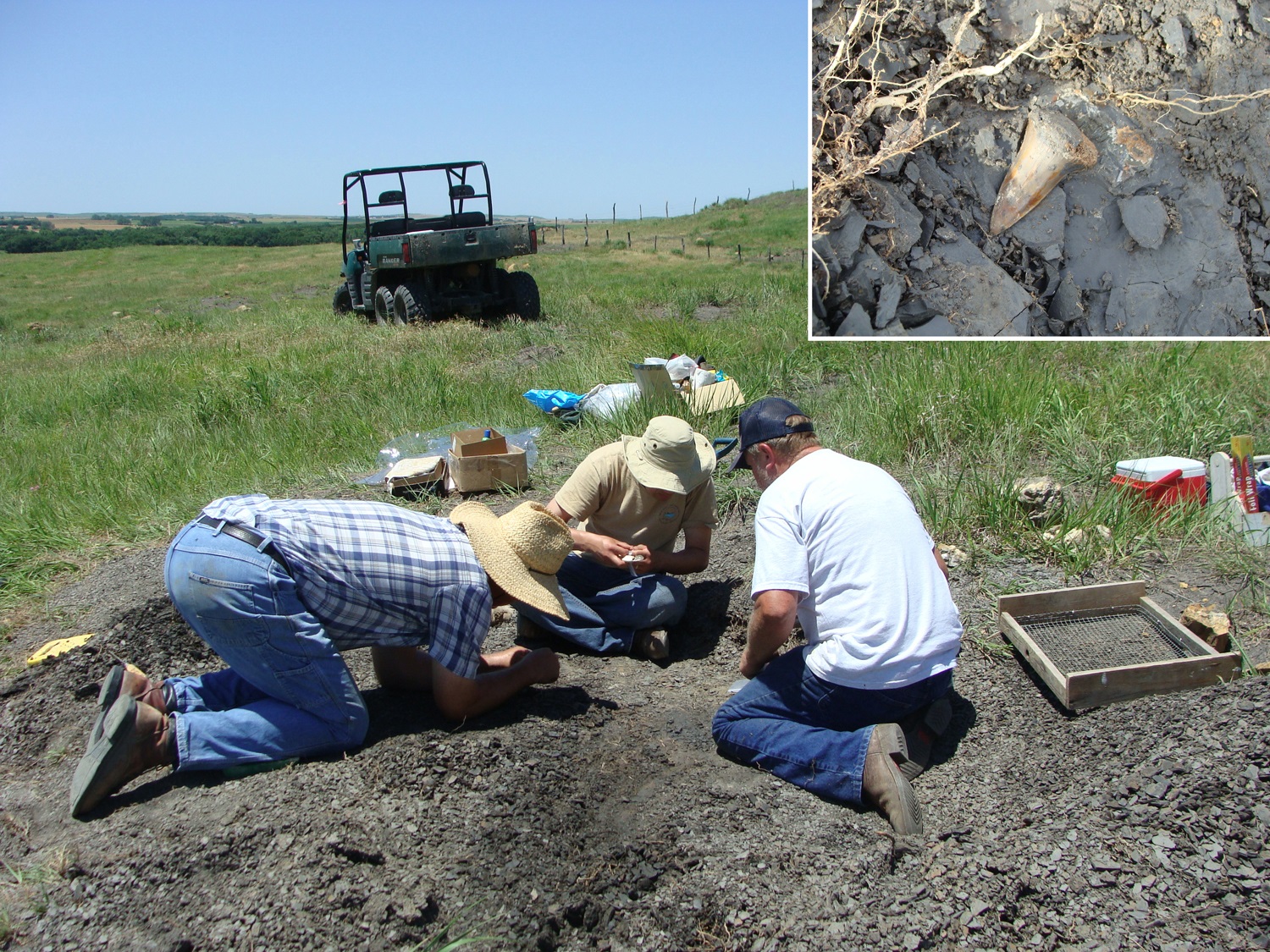
We describe a partial skeleton of the Late Cretaceous shark, Cretodus, collected from the Blue Hill Shale (middle Turonian) in north-central Kansas, U.S.A. It consists of 134 disarticulated teeth, 61 vertebrae, 23 placoid scales, and fragments of calcified cartilage. The scale morphology suggests that Cretodus was a rather sluggish shark, and the vertebral morphology affirms its placement into Lamniformes. With a strong tendency towards monognathic heterodonty, the dental morphology indicates that the specimen belongs to a new species, Cretodus houghtonorum, sp. nov., increasing the total known species of Cretodus to five. The five species can be divided into three distinct groups: the longiplicatus/semiplicatus-grade, gigantea/houghtonorum-grade, and crassidens-grade. Cretodus, that successively evolved by broadening the tooth crown. The individual of C. houghtonorum, sp. nov., is estimated to be about 515 cm in total length (TL). Our vertebra-based growth analysis suggests that the shark was about 118 cm TL at birth and that the species had an estimated maximum growth length of 684 cm TL. The large size at birth indicates that the intrauterine cannibalism behavior of embryos seen in extant lamniforms had already evolved by the Late Cretaceous. Where C. houghtonorum, sp. nov., preferred nearshore environments, the specimen co-occurred with isolated teeth of Squalicorax and fragments of two dorsal fin spines of a hybodont shark, circumstantially indicating that the individual of Cretodus fed on the much smaller hybodont and was scavenged by Squalicorax.


SYSTEMATIC PALEONTOLOGY

Class CHONDRICHTHYES Huxley, 1880
Subclass ELASMOBRANCHII Bonaparte, 1838

Cohort EUSELACHII Hay, 1902
Subcohort NEOSELACHII Compagno, 1977

Order LAMNIFORMES Berg, 1958

Family PSEUDOSCAPANORHYNCHIDAE Herman, 1979

Included Genera— Cretodus Sokolov, 1965; Eoptolamna, Kriwet, Klug, Canudo, and Cuenca-Bescos, 2008a; Leptostyrax Williston, 1900; Protolamna Cappetta, 1980; Pseudoscapanorhynchus Herman, 1977.

Genus CRETODUS Sokolov, 1965

Included Species— Cretodus crassidens (Dixon, 1850); C. gigantea (Case, 2001); C. houghtonorum, sp. nov. (this study); C. longiplicatus Werner, 1989; C. semiplicatus (Agassiz, 1843).


CRETODUS HOUGHTONORUM, sp. nov.

    Lamna semiplicata Agassiz, 1843: Cappetta, 1973:506, figs. 3.7, 3.7’.
    Odontaspis macrota Agassiz, 1843: Edward, 1976:67, fig. 1d–h.
    Cretodus semiplicatus (Agassiz, 1843): Wolberg, 1985a:10, figs. 3.10–3.21; Wolberg, 1985b:4, fig. 3f, g, j.
    Cretodus crassidens (Dixon, 1850): Welton and Farish, 1993:98, 1a, b, 2, two leftmost teeth on row ‘a’ and third tooth from the left on row ‘b’ on p. 99 (others on pp. 98–99 questionable).
    Cretodus semiplicatus (Agassiz, 1843): Williamson et al., 1993:figs. 5.6–5.8.
    Cretodus crassidens (Dixon, 1850): Cappetta and Case, 1999:21, fig. 2a–h; Cicimurri, 2004a:9–10, fig. 5e; Shimada, 2006b:166, figs. 3b, 4d; Becker et al., 2010:255, 257, figs. 5.6–5.9, 6.1?
    Cretodus sp.: Shimada et al., 2010a:fig. 4c.
    Cretodus crassidens: Bice and Shimada, 2016:177, fig. 3h (not 3g); Ouroumova et al., 2016: fig. 2l.

Diagnosis— Cretodus differing from all other known species of the genus by having teeth with moderately wide principal cusp, small lateral cusplets relative to principal cusp in tall, erect teeth, ‘V’-shaped crown base, relatively narrow tooth neck on lingual face, ‘V’-shaped basal root concavity, and short root lobes.

Etymology— The species name, houghtonorum, is in honor of Keith and Deborah Houghton, the owners of the land where the Cretodus specimen was found and who kindly donated the specimen to FHSM for the purpose of this present study.


Kenshu Shimada and Michael J. Everhart. 2019. A New Large Late Cretaceous Lamniform Shark from North America, with Comments on the Taxonomy, Paleoecology, and Evolution of the Genus Cretodus. Journal of Vertebrate Paleontology. e1673399. DOI: 10.1080/02724634.2019.1673399

Dinosaur-era shark fossil discovered in Kansas; researchers name it Cretodus houghtonorum
Fossil dig leads to unexpected discovery of 91-million-year-old shark new to science  phys.org/news/2019-11-fossil-unexpected-discovery-million-year-old-shark.html 

Tuesday, November 26, 2019

[Paleontology • 2020] Lajasvenator ascheriae • An Early Cretaceous, Medium-sized Carcharodontosaurid Theropod (Dinosauria, Saurischia) from the Mulichinco Formation (upper Valanginian), Neuquén Province, Patagonia, Argentina


Lajasvenator ascheriae 
 Coria, Currie, Ortega & Baiano, 2019

Highlights: 
• A new genus and species of carcharodontosaurid theropod (Lajasvenator ascheriae) is described.
• Lajasvenator is the oldest Cretaceous carcharodontosaurid record.
• Lajasvenator represents the first Lower Cretaceous, South American carcharodontosaurid.

Abstract
A new carcharodontosaurid taxon, Lajasvenator ascheriae gen. et sp. nov. is described. The new taxon is based on two specimens: MLL-PV-Pv-005 is a partial skeleton represented by a portion of the snout, partially articulated presacral vertebral series, four articulated caudal vertebra and fragments of the pelvic girdle; MLL-PV-Pv-007 includes the anterior ends of both dentaries, a quadratojugal, and fragments of cervical vertebrae, ribs and a possible tarsal bone. Lajasvenator is unique in having anterior projections on cervical prezygapophyses, lip-like crests on the lateral surfaces of cervical postzygapophyses, and bilobed anterior processes on cervical ribs. Lajasvenator material was collected from the terrestrial sandstones of the Valanginian Mulichinco Formation. It is the oldest carcharodontosaurid record from South America. This medium sized theropod was found associated with remains of the dicraeosaurid sauropod Pilmatueia, indeterminate diplodocid remains, and a yet unidentified iguanodontian-like ornithopod.

Keywords: Lajasvenator, Carcharodontosauridae, Theropoda, Valanginian, Patagonia


Restoration of Lajasvenator ascheriae showing which bones have been collected.

Systematic Paleontology
Theropoda Marsh, 1881 
Tetanurae Gauthier, 1986 
Allosauroidea Currie and Zhao, 1993 
Carcharodontosauridae Stromer, 1931 

  Lajasvenator ascheriae gen. et sp. nov.

Etymology: Lajas, referring the city of Las Lajas, within the jurisdiction of which the specimen was found; venator, Latin, hunter; ascheriae, after Susana Ascheri, for her kindness in allowing us to work on her land.


Rodolfo A. Coria, Philip J. Currie, Francisco Ortega and Mattia A. Baiano. 2019. An Early Cretaceous, Medium-sized Carcharodontosaurid Theropod (Dinosauria, Saurischia) from the Mulichinco Formation (upper Valanginian), Neuquén Province, Patagonia, Argentina. Cretaceous Research. In Press. DOI: 10.1016/j.cretres.2019.104319


Friday, November 22, 2019

[Entomology • 2019] NGS-barcodes, Haplotype Networks Combined to External Morphology Help to Identify New Species in the Mangrove Genus Ngirhaphium Evenhuis & Grootaert, 2002 (Diptera: Dolichopodidae: Rhaphiinae) in Southeast Asia


 Ngirhaphium thaicum Samoh & Grootaert

in Samoh, Satasook & Grootaert, 2019.
  RAFFLES BULLETIN OF ZOOLOGY.  67

Abstract
 A review is given of the Ngirhaphium species of Southeast Asia and two new species are described from Thailand. Ngirhaphium meieri Samoh & Grootaert, new species is described from a mangrove in Takua Pa district, Phang Nga Province, peninsular Thailand. NGS-barcodes (313 bp) are congruent with traditional taxonomic delimitation. Ngirhaphium caeruleum Grootaert & Puniamoorthy sensu lato seems to consist of a species-complex with 32 haplotypes and has a wide distribution in the southern part of the South China Sea. There is a 4.2 % genetic difference between the Thai/Cambodian population and the Singapore/Brunei populations in N. caeruleum: despite the many haplotypes and differences in male terminalia, the Thai and Cambodian haplotypes formed a haplotype group, while the Singapore and Bruneian specimens formed another haplotype group. Nonetheless, the Thai population is morphological distinct enough to be considered a morpho-species: it is here described as N. thaicum Samoh & Grootaert, new species. An updated distribution of the six Southeast Asian Ngirhaphium species is given with additional taxonomic notes, a key to the species and a phylogenetic diagram. We find that the Andaman Sea coast to be the most diverse with four species while the South China Sea region has only two species both belonging to the caeruleum species complex. N. sivasothii Grootaert & Puniamoorthy is common and occurring from Singapore up to the Thai coast of the Andaman Sea, with 28 haplotypes. Remarkable in all species is the limited distribution of the haplotypes, where most seem endemic to a limited area and thus provide information about the origin of the distribution. 

Key words: Dolichopodidae, Ngirhaphium, NGS-barcodes, peninsular Thailand

TAXONOMY:  
Family Dolichopodidae 
Subfamily Rhaphiinae 

Genus Ngirhaphium Evenhuis & Grootaert 

Ngirhaphium Evenhuis & Grootaert, 2002: 310.

 Type species by original designation: 
Ngirhaphium murphyi Evenhuis & Grootaert, 2002.

Ngirhaphium caeruleum species complex 

Ngirhaphium thaicum Samoh & Grootaert, new species
Fig. 4. habitus female. Scale = 1 mm.
Fig. 3. male habitus. Scale = 1 mm. 

Ngirhaphium thaicum Samoh & Grootaert, new species

Distribution. Trat, Prachuap Kirikan, Chumphon, Surat Thani Province, and Cambodia. Gulf of Thailand (South China Sea).

 Remarks. This is one of the largest Ngirhaphium species. They prefer open areas without canopy cover and with soft mudflat.


Ngirhaphium meieri Samoh & Grootaert, new species

Etymology. The species is dedicated to Rudolf Meier, head of Evolutionary Biology Laboratory, Department of Biological Sciences at the National University of Singapore (NUS), who provided us an opportunity to learn and do a molecular study of the marine dolichopodid flies. 

Distribution. Phang Nga and Ranong provinces, Thailand, Andaman Sea (Indian Ocean).

 Remarks. The new species is morphologically similar to N. sivasothii and even more to N. chutamasae. Differences can be found in the key to the Southeast Asian species here below.


Ngirhaphium caeruleum Grootaert & Puniamoorthy, 2014

Ngirhaphium chutamasae Samoh, Boonrotpong & Grootaert, 2015

Ngirhaphium murphyi Evenhuis & Grootaert, 2002

Ngirhaphium sivasothii Grootaert & Puniamoorthy, 2014 


Abdulloh Samoh, Chutamas Satasook and Patrick Grootaert. 2019. NGS-barcodes, Haplotype Networks Combined to External Morphology Help to Identify New Species in the Mangrove Genus Ngirhaphium Evenhuis & Grootaert, 2002 (Diptera: Dolichopodidae: Rhaphiinae) in Southeast Asia. RAFFLES BULLETIN OF ZOOLOGY.  67; 640–659. 

[PaleoEntomology • 2019] Eogeometer vadens • Geometrid Caterpillar (Lepidoptera, Geometridae) in Eocene Baltic Amber


Eogeometer vadens
 Fischer, Michalski & Hausmann, 2019


Abstract
Lepidoptera have little fossilization potential due to the presence of delicate structures and hence are exceptional findings, even in ambers that allow their preservation in sufficient detail for interpretation. From Eocene Baltic amber, the volumetrically largest known deposit of amber, there has been no reliable report of any member of the Macrolepidoptera (informal group of higher moths and all butterflies). Any such lepidopteran fossil would provide insight into evolutionary processes during the Eocene, long after flowering plants had completed their initial radiation. Here, we report on a first geometrid caterpillar from Baltic amber which is described as the oldest evidence for the subfamily Ennominae (tribe Boarmiini) and as one of the oldest records of the currently mega-diverse family. The new finding provides an important calibration point for molecular clock analyses within the family Geometridae and predates the basal divergence of Boarmiini from 32–38 to 44 Mya. It also predates the occurrence of this highly specialized form of caterpillar locomotion that allows for rapid movement.

Figure 1: Looping geometrid caterpillar from Baltic amber. It is situated in a dorsal to lateral aspect with the Geometridae-type prolegs clearly visible.
Scale bar equals 1 mm.

The software Helicon Focus Mac 7.0.1 was used (https://www.heliconsoft.com/helicon-focus-history-of-changes-mac/).


Eogeometer vadens nov. gen., nov. spec

Systematics: 
Order LEPIDOPTERA Linnaeus, 1758
Clade DITRYSIA Börner, 1925

Superfamily GEOMETROIDEA Leach, 1815
Family GEOMETRIDAE Leach, 1815

Genus Eogeometer nov. gen.

Etymology: The prefix ‘Eo’ refers to the Eocene, ‘geometer’ to the family name.

 Eogeometer vadens nov. spec.

Holotypus: Specimen SNSB-ZSM-LEP amb002 (Fig. 1)

Locus typicus: Amber mine of Yantarni, Russia

Stratum typicum: “Blaue Erde” Horizon (Upper Eocene – Lower Oligocene)

Etymology: The species name ‘vadens’ - “walking” refers to the looping manner of locomotion.

Repository: Bavarian State Collection of Zoology, Munich, Germany; accession number SNSB-ZSM-LEP amb002.

Diagnosis of genus: 
The genus Eogeometer is established for this Eocene geometrid caterpillar presumably belonging to the tribe Boarmiini. A differential diagnosis will be given when more Eocene geometrids will become known. Attribution to any extant geometrid genus would be highly speculative. The amber larva shares the character combination of supposed conifer-feeding (see below) and a conspicuous semicircular anal plate with only a few extant geometrid larvae (see discussion), which, however, do not show a longitudinal stripe pattern.

Description of species: 
The looping caterpillar is 5 mm in length; the body is long and approximately cylindrical, smooth, but with transversal wrinkles. Along the uppermost ventral side of thorax and abdomen runs a longitudinal protruding and darkish stripe. The head diameter is about 1.5 times the diameter of the body, hypognathous and rounded; both parts of the head capsule show a symmetric spotty dark and light pattern. The legs are well developed (first right leg is missing); prolegs are well developed at abdominal segments A6 and A10 (one proleg of A10 is broken off and is preserved at some distance to the head of the caterpillar); only rudimentary prolegs are present at abdominal segment 5. There is a shield-like protrusion from the ventral side of A10. The setae D1, D2 are positioned at the edge of the longitudinal, dark protrusion. L1, L2 and SV1 are present in lateral positions. MD1, MSD1, MSD2, SD1, SD2 are seemingly absent (Setal map as Supplementary Information).

Taphonomy: The geometrid inclusion occurs within a flat piece of non-autoclaved Baltic amber with dimensions 30 mm by 20 mm, and a height of 4 mm. At one edge, about 5 mm were removed from the sample for IR analysis. The caterpillar is situated centrally within the amber, close to an internal boundary of two resin flows. The only syninclusions preserved adjacent the caterpillar are two different but poorly preserved mites. Some pyrite is present in cracks of the amber.


Thilo C. Fischer, Artur Michalski and Axel Hausmann. 2019. Geometrid Caterpillar in Eocene Baltic Amber (Lepidoptera, Geometridae). Scientific Reports. 9: 17201. DOI: 10.1038/s41598-019-53734-w

Erste Großschmetterlings-Raupe im Baltischen Bernstein entdeckt idw-online.de/-CxmEAA


[Paleontology • 2020] Albadraco tharmisensis • A New Species of Large-sized Pterosaur from the Maastrichtian of Transylvania (Romania)


Albadraco tharmisensis 
Solomon, Codrea, Venczel & Grellet-Tinner, 2020


Highlights: 
• A new large-sized azhdarchid pterosaur is described.
• Although not fully-grown, Albadraco represents a new azhdarchid species.
• It is intermediate between giant and medium-sized azhdarchids.
• It indicates highly diverse ecosystems from Hațeg Island.

ABSTRACT
The Upper Cretaceous “Hațeg Island” is not only renowned mostly for its peculiar assemblage of dwarf dinosaurs, but also for its Azhdarchidae pterosaurs including giant specimens (e.g. Hatzegopteryx thambema) and medium-sized ones (e.g. Eurazhdarcho langendorfensis), discovered in the Hațeg and Transylvanian basins of Romania. Here, we report a new species of azhdarchid pterosaur, Albadraco tharmisensis gen. et sp. nov. The material refers to two well-preserved “beak” fragments and a cervical vertebra. These fossils were discovered together in a fossil assemblage in the Maastrichtian Șard Formation, located in the southwestern area of the Transylvanian Basin (Alba District, Romania). The association of a premaxilla and a mandibular symphysis from the same specimen is the first ever reported in Europe. The fourth cervical exhibits the best three-dimensional preservation of any azhdarchid mid-cervical vertebra in Transylvania, as all specimens reported previously are poorly preserved (e.g. in E. langendorfensis) or incomplete like the specimen from Pui with a broken condyle. Albadraco tharmisensis represents a new species of a large–sized azhdarchid from the “Hațeg Island”. Its size fits between that of E. langendorfensis and H. thambema, hence confirming the co-existence of medium, large, and giant–sized azhdarchids during the Maastrichtian in Transylvania. The possibility of Ad. tharmisensis being a young Hatzegopteryx is also discussed.

Keywords: Azhdarchidae, beak, Europe, Transylvanian Basin, Maastrichtian


Albadraco tharmisensis gen. et sp. nov.


 Alexandru A. Solomon, Vlad A. Codrea, Márton Venczel and Gerald Grellet-Tinner. 2019. A New Species of Large-sized Pterosaur from the Maastrichtian of Transylvania (Romania). Cretaceous Research. In Press. DOI: 10.1016/j.cretres.2019.104316