Sunday, August 25, 2019

[Herpetology • 2019] Bothrops monsignifer • A New Species of Pitviper of the Genus Bothrops (Serpentes: Viperidae: Crotalinae) from the Central Andes of South America


Bothrops monsignifer
Timms, Chaparro, Venegas, Salazar-Valenzuela, Scrocchi, Cuevas, Leynaud & Carrasco, 2019


Abstract
We describe a new species of montane pitviper of the genus Bothrops from the Cordillera Oriental of the Central Andes, distributed from southern Peru to central Bolivia. The new species can be distinguished from its congeners by the characteristic combination of a dorsal body color pattern consisting of triangular or subtriangular dark brown dorsal blotches, paired dark brown parallel occipital stripes, a conspicuous dark brown postocular stripe, the presence of canthorostrals in some specimens, prelacunal fused or partially fused with second supralabial, one scale usually separating internasals, rostral trapezoidal, two canthals oval to rounded, similar size or slightly larger than internasals, three or four medial intercanthals, eight to twelve intersupraoculars, intercanthals and intersupraoculars keeled and frequently slightly keeled, supraoculars oval, one to three suboculars, two to three postoculars, loreal subtriangular, two to six prefoveals, subfoveals absent, two or none postfoveals, one or two scales between suboculars and fourth supralabial, seven or eight supralabials, nine or eleven infralabials, 23–25 middorsal scales, 189–195 ventrals in females and 182–190 in males, 48–58 subcaudals in females and 54–63 in males, exceptionally undivided. The new species is apparently restricted to areas within Andean montane forests that are less humid and devoid of large trees.

Keywords: Reptilia, Andes, Bolivia, morphology, Peru, phylogeny, pitviper species

First specimen of the new species photographed in Bolivia (Refugio Los Volcanes, department of Santa Cruz).
Photo by W. Guzmán.

Bothrops monsignifer sp. nov.  

Etymology: The specific epithet is derived from the Latin (noun) by the union of “mons” (=montane) + “ignifer” (=flame, fire or flash), meaning fire mountain or volcano, in allusion to the location where the first Bolivian specimen was photographed (Refugio Los Volcanes, department of Santa Cruz, Bolivia).

 Juan Timms, Juan C. Chaparro, Pablo J. Venegas, David Salazar-Valenzuela, Gustavo J. Scrocchi, Jairo Cuevas, Gerardo C. Leynaud and Paola A. Carrasco. 2019. A New Species of Pitviper of the Genus Bothrops (Serpentes: Viperidae: Crotalinae) from the Central Andes of South America. Zootaxa. 4656(1); 99–120. DOI: 10.11646/zootaxa.4656.1.4

[Botany • 2019] Pseuderia samarana (Orchidaceae: Podochileae, Eriinae) • A New Species and Genus Record from the Philippines


 Pseuderia samarana Z.D. Meneses & Cootes

in Meneses & Cootes, 2019. 

Abstract
A new species of orchid, Pseuderia samarana Z.D. Meneses & Cootes (Orchidaceae: Podochileae, Eriinae) from Samar Island, Philippines is described and illustrated. This is also a new generic record for the country. It is distinguished from other known species by the combination of the following characters: relatively smaller lanceolate leaves, minutely cuspidate bracts, 2-flowered raceme borne on short peduncle, narrower labellum, and entire clinandrium margins. Notes on its habitat and ecology, distribution, conservation status, and comparison with other closely related New Guinean speciesare also presented.

Keyword: Eriinae, Orchidaceae, Philippines, Podochileae, Pseuderia samarana, Samar Island

Fig. 1. Pseuderia samarana Z.D. Meneses & Cootes.
A: Inflorescences bearing 2 flowers borne on short peduncles B: Habit of Pseuderia samarana C: Fruits.
 Photos A‒B by Zhereeleen D. Meneses, photo C by Jiro T. Adorador. 
A = 1 cm, B = 6 cm, C = 2 cm


Fig. 2. Pseuderia samarana Z.D. Meneses & Cootes
 A: Flowering branch B: Flower at anthesis. Detached floral parts C: Abaxial surface of dorsal sepal D: Abaxial surface of lateral sepal E: abaxial surface of Lateral petal F: Labellum side view, showing adaxial surface G: Abaxial surface of labellum H: Column side view I: Column, front view.
Drawn from the holotype (Z.D. Meneses 213). 
Scale bar: A = 6 cm, B = 0.8 cm, C‒I = 1 cm. Drawn by Jiro T. Adorador.

Pseuderia samarana Z.D. Meneses & Cootes, sp. nov.

Diagnosis. Pseuderia samarana shares similarity with both P. frutex and P. floribunda but the new species significantly differs in its 2-flowered inflorescence (vs. 3‒ 5-flowered in other two species), much narrower labellum (2.5 mm wide vs. 4.5‒5 mm) and entire clinandrium margins (vs. serrulate in P. frutex and dentate in P. floribunda).  
....

Etymology. This new orchid species is named after the type province, Samar. The province forms a large partion of the Samar Island Natural Park. It has several rolling limestone formations which supports a distinct forest type. Samar also houses the headquarters of the park’s Protected Area Management Board which is the governing and managing office of the natural park


Zhereeleen D. Meneses and James Edward Cootes. 2019. Pseuderia samarana (Orchidaceae), A New Species and Genus Record from the Philippines. Taiwania. 64(4); 353-356. DOI: 10.6165/tai.2019.64.353 

In Samar, there’s a new orchid on the block newsinfo.inquirer.net/1156167/in-samar-theres-a-new-orchid-on-the-block via @inquirerdotnet


Friday, August 23, 2019

[Herpetology • 2019] New Species of Lepidodactylus (Squamata: Gekkonidae) from New Guinea and Adjacent Islands; Lepidodactylus aignanus, L. zweifeli, L. mitchelli, L. kwasnickae & L. dialeukos


Lepidodactylus kwasnickae
Kraus, 2019


Abstract
I describe five new species of Lepidodactylus from New Guinea or adjacent islands that are members of Brown & Parker’s (1977) phenetic Groups I and II and belong to the clades identified as the L. orientalis, L. pumilus, and L. novaeguineae groups of Oliver et al. (2018a). One of the new species is restricted to an isolated mountain range on New Guinea; the remainder inhabit offshore islands ranging from 3–250 km from New Guinea. These species are distinguished from their congeners primarily by unique combinations of toe lamellar numbers and shape, numbers and distribution of enlarged precloacal/femoral scales and pores, toe webbing, toe width, and color pattern. These clades are ancient, and the ancestor of one of them has been on the East Papuan Composite Terrane for at least 28 MY, highlighting the long-term importance of that former large island in generating regional biodiversity. At least one, and probably three, of the new species are inhabitants of forest interiors; one occupies disturbed coastal areas; and the habitat of the last is currently unsurmisable. All of the new species likely have restricted geographic distributions, with four of them being limited to one or a few small islands. As a result of their small ranges, rapid habitat conversion in the ranges of some of these species, and the threat of further habitat loss in the others, most of these species are of conservation concern although it is uncertain if any of them is under immediate threat.

Keywords: Reptilia, Adelbert Mts, East Papuan Composite Terrane, Misima, Woodlark, Yapen


Lepidodactylus aignanus sp. nov.

Etymology. The name is a masculine adjective referring to the type locality of Misima Island, whose former name was St. Aignan Island. 


Lepidodactylus zweifeli sp. nov. 

Etymology. The name is a genitive honorific for the collector, Richard Zweifel, whose contributions to knowledge of the herpetofauna of New Guinea and nearby islands were foundational to current understanding.


Lepidodactylus mitchelli sp. nov. 

Etymology. The name is a genitive honorific for my friend, David Mitchell, who has directed a series of conservation organizations in Milne Bay Province for many years, frequently provided logistical support to my expeditions in that same province, and helped collect part of the type series.

Holotype of Lepidodactylus kwasnickae sp. nov. (BPBM 39880).

Lepidodactylus kwasnickae sp. nov. 

Etymology. The name is a genitive honorific for my friend Gretta Kwasnicka who has long provided gracious hospitality and support for my fieldwork in Milne Bay Province.


Lepidodactylus dialeukos sp. nov. 

Etymology. The name is a masculine possessive Greek adjective meaning marked with white. The name is in reference to the numerous narrow white markings that typify this species.


Fred Kraus. 2019. New Species of Lepidodactylus (Squamata: Gekkonidae) from New Guinea and Adjacent Islands. Zootaxa. 4651(2); 305–329. DOI: 10.11646/zootaxa.4651.2.7  
Logging, mining companies lock eyes on a biodiverse island like no other news.mongabay.com/2019/07/logging-mining-companies-lock-eyes-on-a-biodiverse-island-like-no-other/ @Mongabay

Thursday, August 22, 2019

[Paleontology • 2019] Vallibonavenatrix cani • A New Spinosaurid Theropod (Dinosauria: Megalosauroidea) from the late Barremian of Vallibona, Spain: Implications for Spinosaurid Diversity in the Early Cretaceous of the Iberian Peninsula


 Vallibonavenatrix cani
Malafaia, Gasulla, Escaso, Narváez, Sanz & Ortega, 2019   

 twitter.com/HdCiencia 
Reconstruction: José Antonio Peñas 

Abstract
A new medium-sized theropod dinosaur from the Arcillas de Morella Formation (upper Barremian) in Vallibona (Castellón, Spain) is described based on a partial skeleton. Vallibonavenatrix cani, gen. et sp. nov., is diagnosed by five autapomorphies: moderately high dorsal neural spines relative to the centrum height, the presence of deep pleurocoelous fossae and pneumatic foramina in the sacral vertebrae, a strongly pneumatic ilium with large internal cameras, the presence of a broad and flat platform on the ventromedial surface of the postacetabular blade of the ilium, and the strong ventral torsion of the ischium diaphysis. Phylogenetic analysis recovered Vallibonavenatrix cani as a spinosaurid megalosauroid and revealed that the new Iberian form is more closely related to Gondwanan spinosaurines, such as Spinosaurus, Irritator or Angaturama and the Asian taxon Ichthyovenator than it is to its synchronic contemporary European taxon Baryonyx walkeri. The Gondwanan or Asian affinities of Vallibonavenatrix indicate a complex palaeobiogeographic pattern and may be interpreted simultaneously as evidence for contact between Europe and North Africa and between Europe and Asia before the Aptian. This specimen is currently the most complete evidence of a spinosaurid theropod known in the fossil record of the Iberian Peninsula.

Keywords: Vallibonavenatrix, Spinosauridae, Early Cretaceous, Iberian Peninsula, Arcillas de Morella Formation

Figure 3. Mid and posterior dorsal vertebrae of Vallibonavenatrix in anterior (A, E, I), left lateral (B, F, J), posterior (C, G, K), and ventral (D, H, L) views.
Abbreviations: asl, accessory lamina; cdf, centrodiapophyseal fossa; hy, hyposphene; nc, neural canal; ncs, neurocentral suture; ns, neural spine; pcd, pleurocentral depression; pcdl, posterior centrodiapophyseal lamina; pocdf, postzygapophyseal centrodiapophyseal fossa; poz, postzygapophysis; pp, parapophysis; ppdl, paradiapophyseal lamina; prcdf, prezygapophyseal centrodiapophyseal fossa; prdl, prezygodiapophyseal lamina; prz, prezygapophysis; spof, spinopostzygapophyseal fossa; spol, spinopostzygapophyseal lamina; tp, transverse process; vg, ventral groove; vr, ventral ridge.

Figure 1. Geographic location of the locality of Vallibona (Castellón province, Spain) where the material of the holotype of Vallibonavenatrix was found.


Reconstruction: José Antonio Peñas 

Systematic Paleontology

Dinosauria Owen, 1842.
Theropoda Marsh, 1881.
Megalosauroidea (Fitzinger, 1843)
Spinosauridae Stromer, 1915.

Vallibonavenatrix gen. nov.

Etymology. Vallibona-, as the town where the holotype specimen was found, and -venatrix, as the Latin for huntress.

Vallibonavenatrix cani sp. nov.

Etymology. The species epithet honours Juan Cano Forner, who found the holotype specimen.

Type locality and type horizon. The specimen was collected in the locality of Santa Águeda, near the town of Vallibona (Castellón province, Spain). The sediments that contained the fossils belong to the Arcillas de Morella Fm., late Barremian in age (Bover-Arnal et al., 2016).

....


Figure 11. Time-calibrated reduced consensus tree from phylogenetic analysis after pruning Xuanhanosaurus. Capitalized terminal clades have been summarized, but are fully shown in a version of this tree in Table 5 of the Supplementary material. Note that Vallibonavenatrix is nested within “Spinosaurinae”, which is highlighted by a violet box.


 Elisabete Malafaia, José Miguel Gasulla, Fernando Escaso, Iván Narváez, José Luis Sanz and Francisco Ortega. 2019. A New Spinosaurid Theropod (Dinosauria: Megalosauroidea) from the late Barremian of Vallibona, Spain: Implications for Spinosaurid Diversity in the Early Cretaceous of the Iberian Peninsula. Cretaceous Research. In Press.  DOI: 10.1016/j.cretres.2019.104221
#Vallibonavenatrix #dinossáurio #terópode #espinossaurídeo #Cretácico #Castellón

[Ichthyology • 2019] Leptopanchax sanguineus • A New Species of Cynopoeciline Killifish (Cyprinodontiformes, Aplocheilidae), possibly Extinct, from the Atlantic Forest of south-eastern Brazil


Leptopanchax sanguineus  
Costa, 2019


Abstract
Specimens found between 1985 and 1988 in the Magé River Basin, south-eastern Brazil were misidentified as L. splendens. The recent rediscovery of other specimens in the Estrela River Basin near the type locality of L. splendens has clarified the species’ concept, making it possible to recognise the Magé River Basin specimens as a new species. The new species is herein described as Leptopanchax sanguineus sp. nov. and is distinguished from all other cynopoecilines by a unique colour pattern in males, including red bars with sinuous margins. It was collected in a well-preserved, temporary shallow swampy area within dense moist forest, but since 1990 the species has not been found again. Leptopanchax sanguineus sp. nov. is one of three species of cynopoeciline killifishes living in lowland moist forests of the coastal plains of Rio de Janeiro State, where the greatest diversity of endemic cynopoecilines is concentrated. Each of these species has been recorded a single time in the last 30 years, a surprisingly low record attributable to intense deforestation during the last several decades resulting in small fragmented lowland moist forests of today. This study indicates that seasonal killifishes adapted to uniquely live in this kind of habitat should be regarded with special concern in studies evaluating conservation priorities.

Keywords: Biodiversity, conservation, moist tropical forest, systematics, taxonomy


Figure 2. Male fin morphology and life colour patterns in Leptopanchax.
A coloured pencil drawing illustrating Leptopanchax sanguineus sp. nov. in life, about 20 mm SL B L. splendens, UFRJ 6902, 22.7 mm SL
C L. aureoguttatus, UFRJ 6331, 22.3 mm SL D L. itanhaensis, UFRJ 6453, 20.7 mm SL
E L. citrinipinnis, UFRJ 8899, 20.6 mm SL F L. opalescens, UFRJ 8986, 20.2 mm SL.


Leptopanchax sanguineus sp. nov.

Diagnosis: Leptopanchax sanguineus differs from other cynopoecilines, except L. splendens, by the presence of red bars on the whole flank in males (vs. absence); uniquely in L. sanguineus, the bars are broad, wider than the interspace width (vs. narrow, half interspace width or less) and have sinuous margins (vs. straight). Leptopanchax sanguineus is further distinguished from L. splendens by having 15 dorsal-fin rays (vs. 12–14), 6 pelvic-fin rays (vs. 5), 27 scales on the longitudinal series and 9 on the transverse series (vs. 24–25 and 7, respectively), 29 vertebrae (vs. 26–27), pelvic fin tip posteriorly reaching the anal fin in males (vs. reaching urogenital papilla), pelvic-fin bases medially separated, in close proximity (vs. medially united), absence of filamentous rays on the caudal fin (vs. short filamentous rays on the posterior margin of the caudal fin in males), presence of a golden stripe on the distal margin of the dorsal fin in males (vs. white stripe), absence of contact organs on the male pectoral fin (vs. presence) and absence of the dermosphenotic bone (vs. presence). Leptopanchax sanguineus also differs from L. splendens and all other cynopoecilines by the presence of a small red spot on the posterior portion of the iris (vs. spot absent).

Etymology: The name sanguineus, from the Latin, meaning blood-coloured, is an allusion to the predominantly red colouration in males, unique among Neotropical killifishes.

Figure 4. Habitat of Leptopanchax sanguineus sp. nov. in 1988.


 Wilson J. E. M. Costa. 2019. Description of A New Species of Cynopoeciline Killifish (Cyprinodontiformes, Aplocheilidae), possibly Extinct, from the Atlantic Forest of south-eastern Brazil.  ZooKeys. 867: 73-85. DOI: 10.3897/zookeys.867.34034

Abstract: A recent collection of the seasonal killifish found Leptopanchax splendens c. 5 km from the type locality, 74 years after its last record. The species was historically common in its type locality, the Estrela River basin in south‐eastern Brazil, until 1950, after which it was not encountered and thought to have become extinct due to widespread deforestation and urbanization in the region. Despite the rediscovery, this study finds that other recently published reports of L. splendens are misidentifications.

Wilson J. E. M. Costa, José L. O. Mattos and Pedro F. Amorim. 2019. Rediscovery of Leptopanchax splendens (Cyprinodontiformes: Aplocheilidae): A Seasonal killifish from the Atlantic Forest of south‐eastern Brazil that was recently considered extinct. Journal of Fish Biology.  DOI: 10.1111/jfb.13898

Wednesday, August 21, 2019

[Paleontology • 2019] Keresdrakon vilsoni • A New Toothless Pterosaur (Pterodactyloidea) from Southern Brazil with Insights Into the Paleoecology of A Cretaceous Desert


Keresdrakon vilsoni

 Kellner, Weinschütz, Holgado, Bantim & Sayão, 2019

ABSTRACT
  The first pterosaur bone bed from Brazil was reported in 2014 at the outskirts of the town Cruzeiro do Oeste, Paraná State, in the Southern region of the country. Here named 'cemitério dos pterossauros' site, these outcrops were referred to the Goio-Erê Formation (Turonian-Campanian) of the Caiuá Group (Bauru Basin) and revealed the presence of hundreds of isolated or partially articulated elements of the tapejarine pterosaur Caiuajara and fewer amounts of a theropod dinosaur. Here we present a new tapejaromorph flying reptile from this site, Keresdrakon vilsoni gen. et sp. nov., which shows a unique blunt ridge on the dorsal surface of the posterior end of the dentary. Morphological and osteohistological features indicate that all recovered individuals represent late juveniles or sub-adults. This site shows the first direct evidence of sympatry in Pterosauria. The two distinct flying reptiles coexisted with a theropod dinosaur, providing a rare glimpse of a paleobiological community from a Cretaceous desert.

Key words: Paleoecology; Pterosauria; Pterodactyloidea; Keresdrakon vilsoni; Paraná; Cretaceous

Figure 3: Holotype of Keresdrakon vilsoni gen. et sp. nov. (CP.V 2069). Skull and lower jaw are presented in right lateral view.

Abbreviations: cra - skull, cv - cervical vertebra, fe - femur, gas - gastralia, hu - humerus, man - mandible, q - quadrate, ra - radius, ri - ribs, sca - scapula, st - sternum, ti - tíbia; l - left, r - right. Scale bar = 100mm.


SYSTEMATIC PALEONTOLOGY

PTEROSAURIA Kaup 1834
PTERODACTYLOIDEA Plieninger 1901
AZHDARCHOIDEA Nesov 1984
TAPEJAROMORHA Andres et al. 2014

Keresdrakon gen. nov.

Etymology: A combination of Keres, death-spirits who personified violent death in Greek mythology and are associated to doom and/or plunder; and drakon, which is the Ancient Greek word for dragon or huge serpent.

Type species: Keresdrakon vilsoni, type by monotypy.


Keresdrakon vilsoni gen. et sp. nov.

Etymology. In honor to Mr. Vilson Greinert, a volunteer who dedicated hundreds of hours preparing most of the specimens from 'cemitério dos pterossauros' site housed in CENPALEO and in the town of Cruzeiro do Oeste.

Figure 1 Map showing the location of the 'cemitério dos pterossauros' site in Cruzeiro do Oeste (red arrow), Paraná State, southern Brazil. (a) The outcrops of the Bauru Basin (light grey) in Brazil, (b) detail of the Bauru basin with the Rio Paraná (light green), Goio-Erê (light blue), Santo Anastácio (grey) formations, and the Bauru Group (dark grey), and (c) stratigraphic chart showing the relations of the former, including the underlying Serra Geral Formation (green).

Type locality, horizon and age. 'cemitério dos pterossauros' site (53° 03′ 53,4″W; 23° 45′ 34,5″S - contra Langer et al. 2019), Cruzeiro do Oeste, Paraná State, Brazil; Bauru Basin, Caiuá Group, Goio-Erê Formation Cretaceous (Milani et al. 2007, Basilici et al. 2012, Batezelli 2015).

Diagnosis. Azhdarchoid pterodactyloid with the following autapomorphies: short blunt ridge on the dorsal surface of the posterior end of the dentary; foramen on the ventral surface at the anterior half of the proximal articulation of the first phalanx of digit IV; and foramen on lateral surface of the ischium.

The new species can be further distinguished from other azhdarchoid pterosaurs by the following combination of characters: dorsal margin of the premaxillae above the nasoantorbital fenestra rounded; sagittal groove on the dorsal surface of the premaxillae above the nasoantorbital fenestra; ridge on the medial surface of the splenial; ventral bar of the nasoantorbital fenestra thick; lateral pneumatic foramen on mid-cervical vertebra large; and strongly asymmetrical sternal articulation of the coracoid.


Figure 10: Time-calibrated phylogenetic tree showing the relationships of Keresdrakon vilsoni gen. et sp. nov. within the Pterodactyloidea. Intermittent bars show uncertain temporal range. Letters in intermittent bars indicate controversial age hypotheses of the Goio-Erê Formation: (a) Albian-Aptian; (b) Turonian-Campanian. Outgroup relationships are not shown (see Holgado et al. 2019 - Supplementary Information for further details). Stratigraphic chart modified from Cohen et al. (2013).

Figure 16: Sample (CP.V 2374) from bonebed C of Figure 2, showing two caudal vertebrae from Vespersaurus paranaensis (a), the diaphysis of a large first phalanx of manual digit IV of Keresdrakon vilsoni gen. et sp. nov. (b), and bones of Caiuajara dobruskii (c), separated by the white line. 
Abbreviations: cdr - caudal vertebrae, ph1d4 - first phalanx of manual digit IV. Scale bar = 100mm.


Figure 17: Reconstruction of the paleoenvironment showing the possible interaction of the vertebrate fauna recovered from the 'cemitério dos pterossauros' site. Artwork by Maurilio Oliveira.


CONCLUSIONS: 
The coexistence of fossil vertebrates, including pterosaurs, are hard to be proven in the fossil record, specially cases of sympatry. Regarding pterosaurs, there must have been several places along deep time where closely related species might have overlapped and shared similar geographic distribution. The challenge is to find direct evidences of this. The 'cemitério dos pterossauros' site represents the co-occurrence of distinct pterosaur species in the same bone beds, showing that Keresdrakon and Caiuajara were coeval. This site also shows that the dinosaur Vespersaurus paranaensis shared this ancient desert environment with these two flying reptiles. While Caiuajara, despite being small and therefore potentially having a more fragile skeleton, by far outnumber the other taxa and is one of the few examples in the fossil record that might argue for gregarious behavior in pterosaurs, Keresdrakon vilsoni was scarcer and apparently represents a species with solitary behavior. We advocate that both specialized in different feeding items of this most likely depauperate environment. Caiuajara is regarded as being frugivorous and Keresdrakon might have been an opportunistic predator or a scavenger feeding at small animals or carcasses such as that of Vespersaurus. The latter might have made a living by hunting individuals of Caiuajara dobruskii that were abundant. All three were part of a paleobiological community that existed in this region during part of the Cretaceous.

As has been pointed out before (Kellner 2012), the outcrops in the region of Cruzeiro do Oeste, more specifically deposits from the Caiuá Group as the Goio-Erê formation, might turn out to become the `Brazilian Mongolia´ in terms of fossil vertebrates. The hundreds of fossils from two pterosaur species and one theropod dinosaur, as well as the occurrence of a lizard, endorse this potential. It is also likely that the future might show additional taxonomic groups like mammals and other reptiles. More fieldwork and careful collection of specimens might contribute to a better understanding of the ecosystem of ancient Cretaceous deserts that, despite its general depauperate conditions, had areas where life could prosper.


Alexander W.A. Kellner, Luiz C. Weinschütz, Borja Holgado, Renan A. M. Bantim and Juliana M. Sayão. 2019. A New Toothless Pterosaur (Pterodactyloidea) from Southern Brazil with Insights Into the Paleoecology of A Cretaceous Desert. Anais da Academia Brasileira de Ciências. [An. Acad. Bras. Ciênc.] 91; supl. 2.  DOI: 10.1590/0001-3765201920190768 


[Herpetology • 2019] Relicts and Radiations: of An Australasian Lizard Clade (Gekkota: Diplodactyloidea) with east Gondwanan Origins


in Skipwith, Bi & Oliver, 2019.

Highlights: 
• Ultraconserved elements resolve nearly all problematic relationships of diplodactyloid geckos.
• Phylogenenomic estimates differs greatly from Sanger estimates at species-level rather than reaffirms previously proposed relationships.
• Molecular dating confirms young crown ages of New Caledonian and New Zealand diplodactylids relative to mainland Australian radiations.
• No mass extinction event associated with Eocene-Oligocene cooling detected.
• Tail moprhology suggests that the environment has influenced tail shape extensively.

Abstract
Australasia harbors very high squamate diversity and is a center of endemicity for a number of major lineages. However, despite this diversity, the diplodactyloid geckos of Australia, New Caledonia, and New Zealand (comprised of three endemic families and > 200 species) are the only extant squamates with unequivocal Mesozoic origins in the region. Diplodactyloid geckos also exhibit notable phenotypic and ecological diversity, most strikingly illustrated by the functionally limbless pygopods. Here, we present the first phylogenomic analyses of the pattern and timing of diplodactyloid evolution, based on a dataset of more than 4,000 ultraconserved elements (UCEs) from 180 species. These analyses fully resolve nearly all nodes, including a number of intergeneric relationships that have proven problematic in previous studies. The hypothesis that New Caledonia and New Zealand clades represent independent post-KT boundary colonization events of Tasmantis from Australian ancestors is confirmed. Phylogenetic relationships recovered here further highlight contrasting patterns of diversity, most strikingly between insular and/or morphologically highly derived clades that have diversified rapidly, as opposed to other species poor and phylogenetically divergent relictual lineages on mainland Australia. Our new timetree suggests slightly older branching times than previous analyses and does not find a mass extinction event in the early Cenozoic. Finally, our new phylogeny highlights caudal variation across the clade. Most strikingly, the distinctive leaf-tail morphology shown by one family may in fact be plesiomorphic.


Conclusion: 
This study represents the first phylogenomic attempt to address the higher-level relationships of an Australasian group of squamates. Our findings resolve many problematic relationships for a biogeographically unique and ecomorphologically diverse lineage. In so doing they highlight both remarkable phylogenetic relicts and instances of marked and potentially convergent ecomorphological evolution. Our study highlights the power of implementing genome-scale data to address questions in macroevolution, and the need for similar frameworks for other diverse and highly endemic Australasian radiations.


 Phillip L. Skipwith, Ke Bi and Paul M. Oliver. 2019. Relicts and Radiations: of An Australasian Lizard Clade with east Gondwanan Origins (Gekkota: Diplodactyloidea). Molecular Phylogenetics and Evolution. In Press.  DOI: 10.1016/j.ympev.2019.106589 

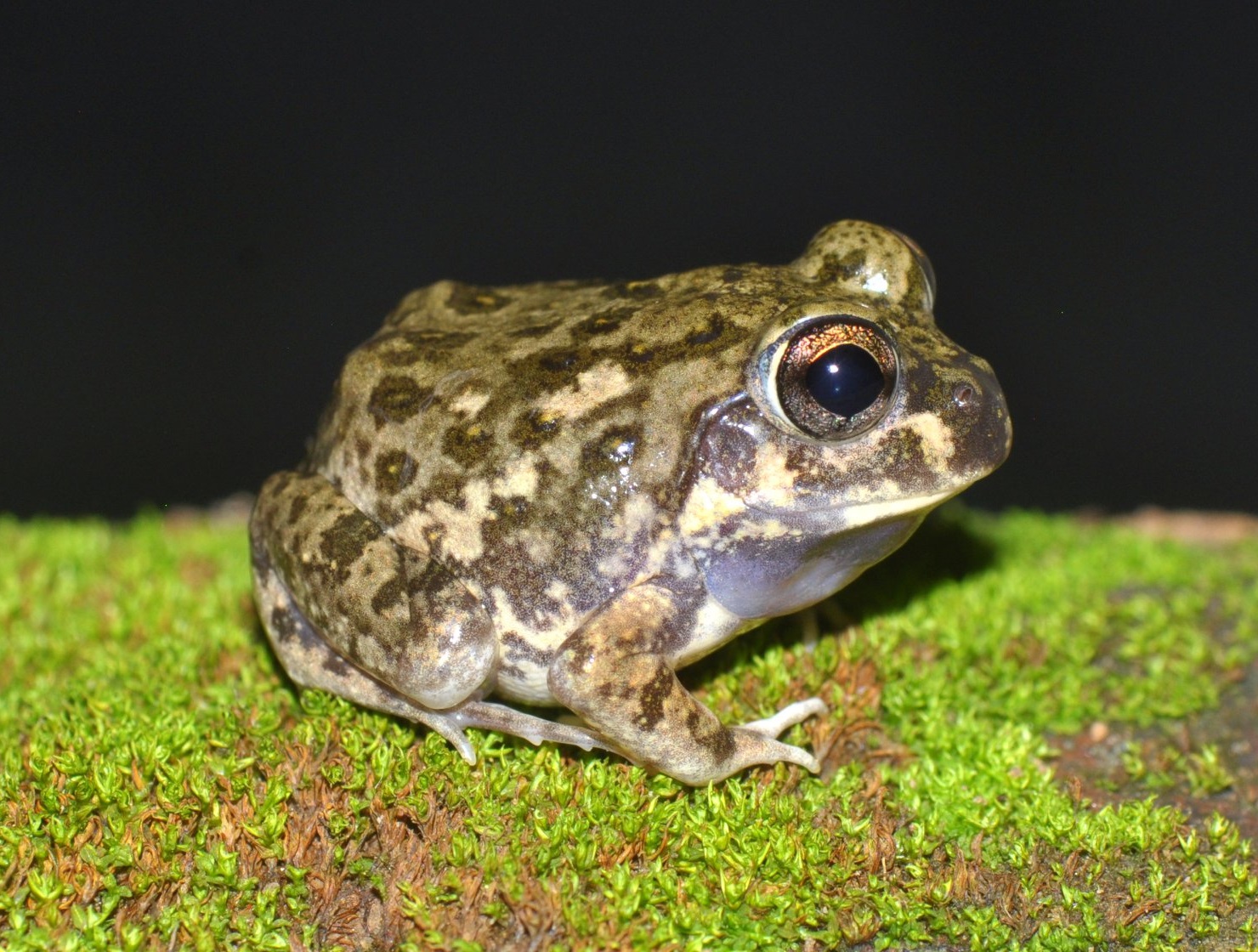
[Herpetology • 2019] Sphaerotheca magadha • A New Species of Sphaerotheca Gunther, 1859 (Anura: Dicroglossidae) from the Agro Ecosystems of Chota Nagpur Plateau, India


Sphaerotheca magadha
Prasad, Dines, Das, Swamy, Shinde & Vishnu, 2019

 Rec. Zool. Surv. India. 119(3)
Magadha Burrowing Frog  ||  RecordsofZsi.com

Abstract
Members of the genus Sphaerotheca are known to have the distribution in the low to mid elevation landscapes of South Asia. Most of the descriptions are either from homestead areas or from agro ecosystems except for a couple of species described from the mid elevated forest areas. The taxonomic uncertainties prevalent in the group was attended very recently, limiting the descriptions of five species to India, two species to Nepal and one each to Pakistan and Sri Lanka (one undescribed species from Myanmar). Here a new species assignable to the morphological 'Breviceps group' is described from the agro ecosystems of Jharkhand based on a combination of morphological, phylogenetic and geographical studies using integrated taxonomic approach. Besides, the distribution status of Sphaerotheca pashchima is discussed and the possibility of a new species occurring in Myanmar is pointed out.

Keywords: Agro Ecosystem, Jharkhand, New Species, Plateau, Sphaerotheca.

Figure 3. Sphaerotheca magadha sp. nov. in life.


Sphaerotheca magadha sp. nov. 

Field Diagnosis:  
Morphology: In the field, Sphaerotheca magadha sp. nov. does not have any morphologically similar congeneric sympatric species, and it can be easily identified on the basis of the combination of morphological characters like medium size, stumpy and squat body, wider head width than head length, rounded snout, angled canthus rostralis, first finger longer than the second (and sub equal to third finger), short hind limbs which do not touch when folded at right angles to the body, tibiotarsal articulation reaching front of shoulders, moderate webbing, distinct shovel shaped inner metatarsal tubercle and a prominent tarsal tubercle. For comparisons of the new species Sphaerotheca magadha sp. nov. with its phylogenetic sister species Sphaerotheca breviceps and its congeners, see section below. 

Geography: This species is known from low to mid elevation (380 m) agricultural lands of semi urbanized Nawadih village, Jharkhand (Figure 5). This species is geographically 1600 km away (aerial distance) from the type locality of the phylogenetic sister species S. breviceps and 1800 km away (aerial distance) from the type locality of the morphologically similar species S. rolandae. Additional sampling and genetic studies are required to establish the range limits of the phylogenetic sister (S. breviceps) and the morphologically similar species (S. rolandae).


Etymology The specific epithet is derived from the term ‘Magadha’, an ancient kingdom located on the Indo-Gangetic plains in the eastern Indian state Jharkhand. Suggested common name: ‘Magadha burrowing frog’ species epithet is treated as noun in apposition to generic name. 

Distribution and Natural history Sphaerotheca magadha sp. nov. is known specifically from Joungi and Nawadih village of Koderma district of Jharkhand in Chota Nagpur Plateau. Chota Nagpur Plateau is having geological significance in terms of the continental drift theory (Mani, 1974; Ghosh et al., 2015). We found this species to be common locally on the road side muddy puddles and it was observed calling and breeding during pre-monsoon showers of June.


Vishal Kumar Prasad, K. P. Dines, Abhijit Das , Priyanka Swamy, Ajinkya D. Shinde and Jadhav Bapurao Vishnu. 2019. A New Species of Sphaerotheca Gunther, 1859 (Amphibia: Anura: Dicroglossidae) from the Agro Ecosystems of Chota Nagpur Plateau, India. Rec. Zool. Surv. India. 119(3); 197-210. DOI: 10.26515/rzsi/v119/i3/2019/132173 RecordsofZsi.com/index.php/zsoi/article/view/132173


Tuesday, August 20, 2019

[Arachnida • 2019] Chilobrachys jonitriantisvansicklei • A New Specis of Chilobrachys (Araneae: Theraphosidae) from A Fragmented Forest Patch in the Wet Zone of Sri Lanka [Another from Sri Lanka, After 126 years]


Chilobrachys jonitriantisvansicklei
Nanayakkara, Sumanapala & Kirk, 2019


The mygalomorph spider family Theraphosidae is represented by 980 species in 144 genera globally (World Spider Catalogue 2018). Within the family Theraphosidae sites the genus Chilobrachys. The genus Chilobrachys is found in South and East Asia, with 27 described species to date (World Spider Catalogue 2018). They are ground dwelling spiders, living in burrows lined with silk and other debris (Nanayakkara, 2013, Nanayakkara 2014b). In Sri Lanka the genus is represented by only one species, namely Chilobrachys nitelinus Karsch, 1892 (Pocock 1900a, Nanayakkara 2014b), which also happens to be the type species (species typica) for the genus. 

The new species of Chilobrachys was collected from a fragmented rainforest patch, 347 hectares in extent, located in the Kalutara District, Western Province of Sri Lanka. The specimens were collected from burrows on a soil embankment covered with bryophytes, along the road, with a clear tubular extension made up of soil and other debris. Interestingly, the majority of the known members of the genus Chilobrachys are shades of brown, black or grey, and lack vibrant colours or iridescent sheens on their dorsal surface. The collected specimen on the other hand has a metallic turquoise-blue sheen on all four legs and also an iridescent sheen on the carapace and abdomen. As such, the collected specimen, differs greatly from the other members of the genus, including C. nitelinus, thereby warranting its taxonomy description as a new species. The discovery was part of an ongoing, island-wide study on the mygalomorph spiders in Sri Lanka. Here we describe the second species of Chilobrachys from Sri Lanka after 126 years.

Systematics
 Family: Theraphosidae, Thorell, 1870 
Genus: Chilobrachys Karsch, 1892 

Chilobrachys jonitriantisvansicklei sp. nov.


Etymology: The specific name refers to co-founder of Idea Wild Joni Triantis Van Sickle, who was kind enough to donate research equipment to the first author and Idea Wild’s continuous support to further research in fauna and flora around the globe.


Ranil P. Nanayakkara, Amila P. Sumanapala and Peter Kirk. 2019. Another from Sri Lanka, After 126 years; Chilobrachys jonitriantisvansicklei sp. nov. (Araneae: Theraphosidae) from A Fragmented Forest Patch in the Wet Zone of Sri Lanka. Journal of British Tarantula Society. 34(2).
ResearchGate.net/publication/335135799_Chilobrachys_jonitriantisvansicklei_from_the_wet_zone_of_Sri_Lanka