Showing posts with label Brachycephalus. Show all posts

Friday, January 19, 2024

[Herpetology • 2024] Brachycephalus herculeus • A New Species of Brachycephalus (Anura: Brachycephalidae) from the northern portion of the State of Rio de Janeiro, southeastern Brazil


Brachycephalus herculeus
Folly, Condez, Vrcibradic, Rocha, Machado, Lopes & Pombal, 2024


Abstract
Brachycephalus is a genus of small ground-dwelling anurans, endemic to the Brazilian Atlantic Forest. Recent molecular analyses have corroborated the monophyly of three species groups within this genus (B. ephippium, B. ephippium, and B. ephippium). In the meantime, the genus has been targeted as a group with recent taxonomic issues owing to its interspecific morphological similarity and genetic conservatism. Herein, we describe a new species of Brachycephalus from the northern portion of Serra do Mar mountain range, in the state of Rio de Janeiro, Brazil. It belongs to the B. ephippium species group, exhibiting moderate hyperossification of the skull and vertebral column. The new species can be distinguished from all other congeners based on morphological, acoustic, and molecular data. Furthermore, we provide information on osteology and natural history of the new species.

Keywords: Atlantic Forest, Brachycephaloidea, osteology, pumpkin toadlet, Serra do Mar

Four specimens of Brachycephalus herculeus, new species, in life.
Photographs by C. F. D. Rocha (A), C. F. B. Haddad (B) and T. H. Condez (C, D).

Brachycephalus herculeus sp. nov.

Diagnosis: Brachycephalus herculeus sp. nov. is distinguished from all its congeners by the following combination of characters: (1) skin on head and dorsum with dermal ossification; (2) skull with hyperossification of postorbital crests, which can be seen externally; (3) fourth presacral vertebra with transverse processes hyperossified, not ornamented and not visible externally; (4) urostyle crest extending up to 2/3 of urostyle length; (5) long oesophageal process of hyolaryngeal apparatus; (6) general color in life orange with dorsal green irregular patch; (7) presence of osteoderms; (8) presence of black connective tissue scattered over dorsal musculature; (9) medium body size for the genus (SVL of adults: 11.8–14.7 mm for males and 13.9–15.2 mm for females; (10) advertisement call characterized by one note repeated in sequence, commonly comprised of 8–12 pulses.

Etymology: Herculeus is a Latin adjective meaning very great, difficult, or dangerous; requiring the strength or courage of Hercules to challenge or accomplish a mission, as herculean labor or task (derived from Greek Mythology). The specific epithet was chosen to represent the “herculean” task that is, for such a small species, to survive in one of the most threatened forest environments in the world, the Brazilian Atlantic Forest.


 Manuella Folly, Thais H. Condez, Davor Vrcibradic, Carlos F. D. Rocha, Alessandra S. Machado, Ricardo T. Lopes and José P. Pombal Jr. 2024. A New Species of Brachycephalus (Anura: Brachycephalidae) from the northern portion of the State of Rio de Janeiro, southeastern Brazil. Vertebrate Zoology. 74: 1-21. DOI: 10.3897/vz.74.e103573

Monday, July 17, 2023

[Herpetology • 2023] Brachycephalus tabuleiro • A New Species of Brachycephalus (Anura: Brachycephali­dae) from Serra do Tabuleiro, Southern Brazil


Brachycephalus tabuleiro
Mângia, Santana, de Oliveira Drummond, Sabagh, Ugioni, Costa & Wachlevski, 2023


Abstract
The number of described species of Brachycephalus has rapidly increased in the last decade (n = 22, which represents 56% of the total). Species of the genus Brachycephalus are mostly distributed in isolated mountaintops from Bahia (northeastern Brazil) to Santa Catarina states (southern Brazil), each one occupying only one or a few adjacent mountaintops. Herein, we described a new species of Brachycephalus of the B. pernix group, from Serra do Tabuleiro in Santa Catarina state, which also represents the southernmost known species. The new species can be distinguished from its congeners by a combination of characters, including the following: (1) “bufoniform” body; (2) small adult SVL: 9.57–11.10 mm for males and 10.88–12.70 mm for females; (3) head proportionally small (HL/SVL 19–28%) and eye proportionally large (ED/HL 36–56%); (4) dorsum texture rough; (5) snout shape rounded in dorsal and lateral views; (6) general dorsal body color olive green with head, arms and legs yellow-orangish scattered with olive green, and an orangish vertebral stripe spotted with white and brown colors; (7) skull and skeleton without hyperossification; (8) frontoparietal and sphenethmoid not fused; (9) advertisement with one or two high-frequency notes (6,115–6,562 Hz), and 2–4 pulses per note. The type locality is adjacent to Parque Estadual da Serra do Tabuleiro, a protected area, but we observed various agricultural activities in this locality, including the presence of exotic plants, which can change the amount and the quality of leaf litter, somehow compromising the population of the new species. Another aggravating factor is that the municipality of São Bonifácio has conflicts over land use with irregular occupation and unfinished expropriation processes in Parque Estadual da Serra do Tabuleiro. Considering that Brachycephalus sp. nov. is probably a mountaintop microendemic species, it is paramount that future studies quantifying the new species’ full distribution and evaluating population trends to accurately assess its conservation status.

Keywords: Amphibia, Atlantic Forest, Brachycephalus pernix group, endemism, integrative taxonomy, pumpkin toadlet, Santa Catarina State

Live specimens of Brachycephalus tabuleiro.
A UNIFESSPA 113 (adult male), B MHNCI 11498 (adult female), C MNRJ 93859 (adult male, holotype), D MHNCI 11498 (adult female),
E MNRJ 93859 (adult male, holotype) and UNIFESSPA 113 (adult male), F CHSA.A 1404 (adult female), G and H ZUFMS-AMP 14531 (adult not sexed).
Photos: Diego José Santana (A, B, C, D, E), Milena Wachlevski (F, G, H).

Brachycephalus tabuleiro. Behavior.
A MHNCI 11498 (adult female), B UNIFESSPA 113 (adult male), C ZUFMS-AMP 14531 (adult not sexed), D UNIFESSPA 112 (adult male).
Photos: Diego José Santana (A, B), Milena Wachlevski (C, D).

Brachycephalus tabuleiro sp. nov.

Diagnosis: Brachycephalus tabuleiro is a new species of the B. pernix group and can be distinguished from its congeners using the following combination of characters: (1) “bufoniform” body; (2) small adult SVL: 9.57–11.10 mm for males (n = 6), 10.88–12.70 mm for females (n = 3); (3) head proportionally small (HL/SVL 19–28%) and eye proportionally large (ED/HL 36–56%); (4) dorsum texture rough; (5) snout shape rounded in dorsal and lateral views; (6) general dorsal body color olive green with head, arms and legs yellow-orangish scattered with olive green, and an orangish vertebral stripe spotted with white and brown colors; (7) background yellow-orangish in the ventral region with reticulated green stains, mainly concentrated in the peripheral portion; (8) fingers I and IV greatly reduced, represented externally by a small lump, finger II reduced but distinct, and finger III larger and robust; (9) tips of the fingers I, II, and III rounded; (10) toes I and V present but externally indistinguishable, toe II greatly reduced, toe III short and distinct, and toe IV larger and robust; (11) tips of the toes II, III, and IV rounded; (12) skull and skeleton without hyperossification; (13) frontoparietal and sphenethmoid not fused; (14) premaxillary odontoids presents; (15) relative lengths of the transverse processes in descending order: III > IV > V > II > VI > VII >VIII; (16) radius and ulna fused, (17) phalangeal formula of fingers 1-2-3-1; (18) phalangeal formula of toes 0-2-3-4-0; (19) advertisement with one or two high-frequency notes (6115.4–6562.5 Hz), and 2–4 pulses per note.

Etymology: The species is named for the type locality in the Serra do Tabuleiro. The Parque Estadual da Serra do Tabuleiro is the largest remnant of the Atlantic Rainforest in southern Brazil.

Type locality environment of Brachycephalus tabuleiro at Serra do Tabuleiro, São Bonifácio municipality, Santa Catarina state, Brazil.


 Sarah Mângia, Diego José Santana, Leandro de Oliveira Drummond, Leandro Talione Sabagh, Luiz Ugioni, Paulo Nogueira Costa and Milena Wachlevski. 2023. A New Species of Brachycephalus (Anura: Brachycephali­dae) from Serra do Tabuleiro, Southern Brazil. Vertebrate Zoology. 73: 575-597. DOI: 10.3897/vz.73.e102098


Monday, February 27, 2023

[Herpetology • 2018] Brachycephalus actaeus • A New Species of Brachycephalus (Anura: Brachycephalidae) from the coast of Santa Catarina State, southern Atlantic Forest, Brazil


Brachycephalus actaeus
 Monteiro, Condez, Garcia, Comitti, Amaral & Haddad, 2018


Abstract
We describe a new species of Brachycephalus from municipality of São Francisco do Sul and municipality of Itapoá, in the state of Santa Catarina, Brazil, southern Atlantic Forest. The new species is known from six localities from near sea level up to 250 meters and represents the first record of a “pumpkin-toadlet” occurring in the lowlands. Morphological traits and phylogenetic analysis of a fragment the 16S mtDNA gene place the new species in the Brachycephalus pernix group. The new species is supported by external morphology, osteology, advertisement call, and mtDNA divergence. It is characterized, among other traits by a dorsal body color dark green with a dark brown vertebral stripe, and an orange background; snout-vent length of 9.2–10.8 mm in males and 11.1–12.4 mm in females; and advertisement call short (0.02–0.03 seconds), composed of one high-frequency note (dominant frequency 6.6–7.3 kHz). We observed synchronized alternation in the emission of vocalizations among neighbor males, indicating that males of the new species are able to hear and use vocalizations to interact with each other. We provide descriptions of clutch, eggs, and juvenile and observations on parental care. The new species has not been recorded within any protected area and can be threatened by human-induced habitat loss and modification.

Keywords: Amphibia, Brachycephaloidea, elevational range, morphology, taxonomy


  Color variation in Brachycephalus actaeus sp. nov.
(A) Dorsolateral and (B) ventral views of CFBH 39864 (paratype), adult female, from municipality of Itapoá, state of Santa Catarina. (C) Dorsolateral and (D) ventral views of CFBH 39863 (paratype), adult female, from municipality of Itapoá, state of Santa Catarina. (E) Dorsolateral and (F) ventral views of CFBH 39876 (paratopotype), adult male, from municipality of São Francisco do Sul, state of Santa Catarina. (G) Dorsolateral and (H) ventral views of CFBH 39846 (paratype), adult male, from municipality of São Francisco do Sul, state of Santa Catarina, Brazil.

  Eggs of Brachycephalus actaeus sp. nov.
(A) Male left, CFBH 39861 (paratype) and female right, CFBH 39860 (paratype), after oviposition.
(B) Detail of the eggs of B. actaeus sp. nov.

Brachycephalus actaeus

Etymology.
The specific epithet actaeus is a Latin adjective that means situated on the edge. It is derived from the Latin word acta, which was incorporated from Greek, and means shore, coast, or beach. The name is used in allusion to the typical habitat of the new species, the coastal lowlands of the Atlantic Forest. 


Juliane Petry De Carli Monteiro, Thais Helena Condez, Paulo Christiano De Anchietta Garcia, Estevão Jasper Comitti, Ivan Borel Amaral and Célio Fernando Baptista Haddad. 2018. A New Species of Brachycephalus (Anura, Brachycephalidae) from the coast of Santa Catarina State, southern Atlantic Forest, Brazil. Zootaxa. 4407(4); 483–505. DOI: 10.11646/zootaxa.4407.4.2 


Sunday, October 23, 2022

[Herpetology • 2022] Brachycephalus clarissae • A New Species of Brachycephalus (Anura: Brachycephalidae) from A Montane Atlantic Rainforest of Southeastern Brazil, with A Reappraisal of the Species Groups in the Genus


Brachycephalus clarissae
Folly, Vrcibradic, Siqueira, Rocha, Machado, Lopes & Pombal, 2022


Abstract
Toadlets of the genus Brachycephalus are endemic to the Brazilian Atlantic Rainforest, where they inhabit the forest floor leaf litter. These miniaturized frogs are commonly known as flea-toads or pumpkin toadlets depending on their phenotypic characteristics. Herein, we describe a new species of the genus Brachycephalus from montane forests (970–1200 m a.s.l.) in the Serra dos Órgãos mountain range, in the state of Rio de Janeiro, southeastern Brazil. The new species is characterized by having a small body size within the genus (maximum SVL 9.6 mm in males and 10.9 mm in females), a noticeably granular dorsum with an X-shaped mark and a median row of small yellow tubercles, a yellow background color with red blotches on ventral surfaces, a lateral dark brown stripe, and the absence of hyperossification in the skeleton. Morphological features of the new taxon resemble those of both flea-toads and pumpkin toadlets. Based on our molecular phylogenetic hypothesis, the new species is recovered sister to the clade formed by the monophyletic B. ephippium and B. vertebralis species groups (previously considered as lineages of a more inclusive B. ephippium group). We also reinforce the suggestion of not using the name B. didactylus group because it does not represent a monophyletic taxon. The new species probably has an extremely restricted geographic distribution, and its discovery reinforces the importance of the Serra dos Órgãos mountains for the conservation of the Atlantic Rainforest anuran biodiversity.

Lateral (A, C) and ventral (B, D) views of Brachycephalus clarissae, new species, in life.
 Paratypes (A, B) MNRJ 56505, and (C, D) MNRJ 56516 from Theodoro de Oliveira, municipality of Nova Friburgo, state of Rio de Janeiro, Brazil.

Brachycephalus clarissae, new species
 
Etymology.—The specific name honors our friend and colleague Clarissa Canedo, a Brazilian herpetologist who has been contributing to the knowledge of the Neotropical anurofauna in the past 20 years, including the systematics and evolution of brachycephaloid frogs.
 
 
Manuella Folly, Davor Vrcibradic, Carla C. Siqueira, Carlos F. D. Rocha, Alessandra S. Machado, Ricardo T. Lopes, and José P. Pombal Jr. 2022.  A New Species of Brachycephalus (Anura, Brachycephalidae) from A Montane Atlantic Rainforest of Southeastern Brazil, with a Reappraisal of the Species Groups in the Genus. Ichthyology & Herpetology. 110(3); 585-601. DOI: 10.1643/h2020144

Sunday, March 27, 2022

[Herpetology • 2021] Ischnocnema crassa • A New Species of Ischnocnema (Anura: Brachycephalidae) from the Mountainous Region of Atlantic Forest, southeastern Brazil, with A New Phylogeny and Diagnose for Ischnocnema parva Series


Ischnocnema crassa
 Silva-Soares, Ferreira, Ornellas, Zocca, Caramaschi & Cruz, 2021

rã gordinha de Santa Teresa | Santa Teresa’s Chubby Rain Frog  ||  DOI: 10.11646/zootaxa.5082.3.1 

Abstract
We describe a new species of Rain Frog from Brazil’s Atlantic Forest, which harbors high richness, endemism and threatened species of anurans. Ischnocnema crassa sp. nov. is a leaf litter breeder from the montane rainforest of Santa Teresa, state of Espírito Santo, southeastern Brazil. Remarkably, the new species is so far unique amongst Ischnocnema for having moderate hand webbing between fingers. Ischnocnema crassa sp. nov. is the third species belonging to I. parva series and we present a new phylogeny based on molecular data and propose a new diagnosis for the series. We provide field and laboratory observations regarding amplexus, antipredator mechanisms, microhabitat preferences and conservation remarks.  Although Santa Teresa is one of the most sampled areas in Brazil, new species are often discovered. Santa Teresa is a priority for amphibian conservation because it harbors 109 species of anurans (9% of Brazil’s species).

 Keywords: Amphibia, Ischnocnema crassa sp. nov., biodiversity, Espírito Santo, morphology, taxonomy, natural history, conservation


Ischnocnema crassa sp. nov., color and dorsolateral patterns in life of type series:
(A) holotype adult male MNRJ93647, and paratypes (B) adult male MNRJ 93650;
(C) subadult female MNRJ 93649; (D) adult female MNRJ 93651;
(E) adultmale MNRJ 93652; and (F) couple in amplex MNRJ 93651-52.

Ischnocnema crassa sp. nov. displaying antipredator mechanisms:
 (A) body inflation; (B) body elevation; (C) hiding
and;(D) death feigning and body inflation with hidden aposematism.

 Ischnocnema crassa sp. nov. 

Etymology. The specific epithet “crassa” (crassa fat) is a Latin name here used as an adjective in allusion toits rounded body shape in general view. Typically, Ischnocnema parva series are usually more elongated.

Common name. Due to its rounded and robust body shape of this little inhabitant of the Brazilian Atlantic Rainforest, we designate to Ischnocnema crassa the common name of “rã gordinha de Santa Teresa”, which, in English, stands for “Santa Teresa’s Chubby Rain Frog.”  


Thiago Silva-Soares, Rodrigo Barbosa Ferreira, Iago Silva Ornellas, Cássio Z. Zocca, Ulisses Caramaschi and Carlos Alberto Gonçalves Cruz. 2021. A New Species of Ischnocnema (Anura: Brachycephalidae) from the Mountainous Region of Atlantic Forest, southeastern Brazil, with A New Phylogeny and Diagnose for Ischnocnema parva Series.   Zootaxa. 5082(3); 201–222.  DOI: 10.11646/zootaxa.5082.3.1  

Friday, June 18, 2021

[Herpetology • 2021] Brachycephalus ibitinga • Notes on the Hyperossified Pumpkin Toadlets of the Genus Brachycephalus (Anura: Brachycephalidae) with the Description of A New Species


Brachycephalus ibitinga 
 Condez, Monteiro, Malagoli, Trevine, Schunck, Garcia & Haddad, 2021


Abstract  
Four species of pumpkin toadlets are currently recognized by the extreme condition of hyperossification in the skull and vertebral column within the genus Brachycephalus. In addition to their larger body size, relative to other congeneric species, Brachycephalus darkside, Brachycephalus ephippium, Brachycephalus garbeanus, and Brachycephalus margaritatus share remarkable osteological features, such as the large paravertebral plates forming an ornamented dorsal bone shield, visible through the integument. We add to the current knowledge of this group by analyzing its diversity and describing a new hyperossified species from some important Atlantic Forest remnants in southeastern Brazil, including those bordering São Paulo, the largest and most populous city in South America. The new species is diagnosed by a combination of morphological, osteological, and bioacoustic characters, with further evidence of mtDNA sequences to confirm its distinction from the other congeners. The parotic and paravertebral bone plates externally bordered with a rough and pale contour can readily distinguish the new species from the other hyperossified species within Brachycephalus. The new species is widely distributed along the Serra do Mar mountain range, including the regionally named Serra de Paranapiacaba, in elevations from 700 to 1000 m above sea level (a.s.l.), in the central coast of the state of São Paulo, southeastern Brazil. We discuss valuable morphological characters within this group of species, reinforce the need for further studies, and highlight the relevance of protected areas for biodiversity conservation in metropolitan regions.

KEYWORDS: Bone shield, Brachycephaloidea, Hyperossification, Miniaturization

Brachycephalus ibitinga sp. nov. 
CFBH 44450, adult female, Parque das Neblinas, municipality of Bertioga.
 Photo by T.H. Condez. 

Brachycephalus ibitinga sp. nov. 
CFBH 42337, adult male, Reserva Biologica de Paranapiacaba, municipality of Santo André. 
 Photo by T.H. Condez.

Brachycephalus ibitinga sp. nov. 
CFBH 19348, adult female, Parque Estadual da Serra do Mar, Nucleo Curucutu, municipality of Itanhaém.
photo by L.R. Malagoli.


Brachycephalus ibitinga sp. nov.
 
Brachycephalus cf. nodoterga: Pie et al. (2013:167), in part
Brachycephalus sp.: Trevine et al. (2014:129), in part; Bornschein et al. (2019a:16), in part
Brachycephalus sp. 4: Condez et al. (2020:671), in part

Etymology.— The specific epithet ibitinga is a Portuguese noun derived from the indigenous Tupi-Guarani words yby + tinga. These words mean respectively ‘‘land’’ and ‘‘white,’’ which together compose a name applied to describe the fog, or mist condition characteristic from the mountains at the Atlantic Forest, where the new species occurs. In Portuguese, the translation for this weather condition is ‘‘Neblina’’: the whitish perception and limited visibility typically caused by fine water droplets suspended in the atmosphere. The type locality ‘‘Parque das Neblinas’’ is also named after this atmospheric condition.


Thais H. Condez, Juliane P.C. Monteiro, Leo R. Malagoli, Vivian C. Trevine, Fabio Schunck, Paulo C.A. Garcia and Célio F.B. Haddad. 2021. Notes on the Hyperossified Pumpkin Toadlets of the Genus Brachycephalus (Anura: Brachycephalidae) with the Description of A New Species. Herpetologica. 77(2); 176-194. DOI: 10.1655/HERPETOLOGICA-D-20-00031

Saturday, May 1, 2021

[Herpetology • 2021] Brachycephalus rotenbergaeHidden by the Name: A New Fluorescent Pumpkin Toadlet from the Brachycephalus ephippium Group (Anura: Brachycephalidae)


Brachycephalus rotenbergae  
Nunes, Guimarães, Moura, Pedrozo, Moroti, Castro, Stuginski & Muscat, 2021


Abstract
Species of Brachycephalus has been having taxonomical issues due its morphological similarity and genetic conservatism. Herein, we describe a new species of Brachycephalus from the south Mantiqueira mountain range and semidecidual forests in the municipalities of Mogi das Cruzes, Campinas and Jundiaí, state of São Paulo, Brazil, based on an integrative approach. It can be distinguished from all species of the B. ephippium species group based on morphological characters (especially osteology and head shape), advertisement call and divergence in partial mitochondrial DNA gene sequences (16S). The new species is genetically similar to B. margaritatus and morphologically similar to B. ephippium. It can be differentiated from B. ephippium by the presence of dark faded spots on skull and post-cranial plates, presence of black connective tissue connective tissue scattered over dorsal musculature, parotic plate morphology, smaller snout-vent length (adult SVL: males 13.46–15.92 mm; females 16.04–17.69 mm) and 3% genetic distance. We also present natural history data and discuss the robustness of the integrative approach, geographic distribution, genetic data, behaviour, fluorescence in ontogeny, and conservation status.

Brachycephalus rotenbergae sp. nov. lightened by a UV flashlight (395 nm wavelength).
Deatil of fluorescence in dorsal and cephalic shields.

Natural history observations of Brachycephalus rotenbergae sp. nov.
(A) Inguinal amplexus; (B) An amplected couple of hiding under the juçara palm (E. edulis) root system;
(C) Mouth gaping defensive behaviour; (D) One specimen near a yellow/orange mushroom, notice the similarity of color and size;
(E) One juvenile specimen; (F) Two juvenile specimens, but the smaller one is darker.

Brachycephalus rotenbergae sp. Nov.

Diagnosis: Brachycephalus rotenbergae sp. nov. can be assigned to the genus Brachycephalus by observed phalangeal reduction, an arciferal pectoral girdle in which the ossified procoracoid and epicoracoid cartilages are fused to the clavicle, coracoid, and scapula, a suprascapula expanded with a prominent cleithrum, and the absence of a sternum (putative synapomorphies; see Hedges et al. [54]). A member of the B. ephippium species group by the presence of dermal co-ossification (putative synapomorphy; see [55]). The new species can be diagnosed from its congeners by the following combination of characters: (1) bufoniform body; (2) bright orange overall body coloration; (3) presence of skull and post-cranial plates; (4) presence of faded dark spots over skull and post-cranial plates; (5) absence of metacarpal and metatarsal tubercles; (6) rounded snout; (7) paravertebral plates forming a trapezoidal bony shield; (8) absence of osteoderms; (9) laterally expanded parotic plates; (10) flat paravertebral plates; (11) paravertebral plates not projected over vertebral spines; (12) presence of black connective tissue scattered over dorsal musculature; (13) head wider than long (mean HL/HW ~ 90% for both male and females); (14) adult SVL 13.46–15.92 mm for males and 16.04–17.69 mm for females; (15) advertisement call with dominant frequency of 2.84–4.52 kHz, note duration of 0.13–014 s, and at rate 2.50–3.42 note/s, each note had 8–13 pulses, emitted at rate 50.56–71.82 pulses/s.

Etymology: The epithet rotenbergae is a patronym in honor to Elsie Laura K. Rotenberg, founder, and leader of the Projeto Dacnis, a Brazilian NGO dedicated to research and conservation of Atlantic Forest domain.

Study areas for the natural history observations of Brachycephalus rotenbergae sp. nov.
 (A) São Francisco Xavier, Projeto Dacnis, and (B) Reserva das Araucárias.

 
Ivan Nunes, Carla S. Guimarães, Pedro Henrique A. G. Moura, Mariana Pedrozo, Matheus de Toledo Moroti, Leandro M. Castro, Daniel R. Stuginski and Edelcio Muscat. 2021. Hidden by the Name: A New Fluorescent Pumpkin Toadlet from the Brachycephalus ephippium group (Anura: Brachycephalidae). PLoS ONE. 16(4): e0244812. DOI: 10.1371/journal.pone.0244812

Tuesday, July 28, 2020

[Herpetology • 2020] Rediscovery of the Toadlet Brachycephalus bufonoides Miranda-Ribeiro, 1920 (Anura: Brachycephalidae) with Osteological and Acoustic Descriptions


 Brachycephalus bufonoides Miranda-Ribeiro, 1920

in Folly, Amaral, Carvalho-e-Silva & Pombal, 2020.

Abstract
Brachycephalus bufonoides was described as a “variety” of B. ephippium based on two specimens which 90 years later was considered full species. Besides its brief original description, nothing else is known for this species. Herein we report the rediscovery of the pumpkin-toadlet Brachycephalus bufonoides from Nova Friburgo, State of Rio de Janeiro, the second most populous area within the Atlantic Forest in Brazil. A detailed osteological description of this species was also provided, including skull, hyolaryngeal skeleton and postcranium skeleton. The laryngeal skeleton of Brachycephalus genus was depicted for the first time. We conducted a molecular phylogenetic analysis of Brachycephalus using DNA sequences comprising two fragments of mitochondrial gene (16S). Both analysis with Bayesian inference and maximum parsimony supported the recognition of B. bufonoides as an exclusive lineage, allocated within the B. ephippium species group in B. vertebralis lineage. We improved the diagnosis and variation of the species, including more collected specimens, coloration in vivo and advertisement call description. Compared with its congeners, B. bufonoides has skin on head and dorsum with dermal hyperossification; skull with hyperossification of postorbital crests; a pair of hyperossified bulges about equidistant between postorbital crests; fourth presacral vertebra with transverse process hyperossified, ornamented and sacral diapophyses hyperossified, which can be seen externally (lineage of B. vertebralis sensu Condez et al. 2020); presence of dermal ossification as separated bulges of each vertebrae; general background color orange with different intensities of dark orange blotches on dorsum, including bordering of sacral region; absence of osteoderms and presence of warts on the dorsolateral surface of body; medium body size (SVL of adults: 12.0–14.5 mm for males and 14.7–16.3 mm for females; Table 1); rough dorsum; advertisement calls with 13 to 17 pulses; presence of pulse period modulation; and advertisement calls with notes longer than 0.2 s (0.22 to 0.31 s). Herein an important contribution for the taxonomy and systematics of this genus is provided, including a large amount of novel information for B. bufonoides from different sources (i.e., molecular, morphological variation, bioacoustic), allowing it to be included in future studies of species delimitation and relationships within Brachycephalus. Also, the discovery of this species reiterates the importance of Nova Friburgo for the conservation of the Atlantic Forest biodiversity.

Keywords: Atlantic Forest; Brachycephaloidea; Morphology; Natural History; Taxonomy; Anura


 Brachycephalus bufonoides (ZUFRJ 15525) in life. 

 Brachycephalus bufonoides Miranda-Ribeiro, 1920


FIGURE 6. Bayesian Inference tree (lnL = -4368.48) for 16S sequences (999 aligned basepairs, 78 terminals; 2 partitions = for the two fragments: each GTR+G) of species of Brachycephalus. Thicker clades refer to those also found by maximum parsimony. Clade support values include posterior probabilities above branches and parsimony bootstrap below branches. Branches were colored according to their classification into B. pernix (blue), and B. ephippium (green), according to Ribeiro et al. (2015).
Photos provided by C. de Luna-Dias (B. ephippium), R. Sawaya (B. nodoterga and B. hermogenesi), and C.F.B. Haddad (B. vertebralis). Photos modified of Alves et al. (2009) (B. pitanga), Haddad et al. (2010) (B. toby), Condez et al. (2016) (B. sulfuratus), Ribeiro et al. (2015) (B. auroguttatus, B. fuscolineatus, B. leopardus, B. mariaeterezae, and B. verrucosus), Bornschein et al. (2016) (B. albolineatus), Ribeiro et al. (2017) (B. coloratus), and Monteiro et al. (2018a) (B. actaeus). 


Manuella Folly, Lucas Coutinho Amaral, Sergio Potsch de Carvalho-e-Silva and José P. Pombal Jr. 2020. Rediscovery of the Toadlet Brachycephalus bufonoides Miranda-Ribeiro, 1920 (Anura: Brachycephalidae) with Osteological and Acoustic Descriptions. Zootaxa. 4819(2); 265–294. DOI: 10.11646/zootaxa.4819.2.3


Thursday, October 4, 2018

[Herpetology • 2018] Brachycephalus mirissimus • A New Species of Brachycephalus (Anura: Brachycephalidae) from southern Brazil


Brachycephalus mirissimus  
Pie, Ribeiro, Confetti, Nadaline & Bornschein, 2018

   DOI:  10.7717/peerj.5683 

Abstract 
A new miniaturized frog of the genus Brachycephalus (Anura: Brachycephalidae) is described from Morro Santo Anjo in the municipality of Massaranduba, Santa Catarina, southern Brazil. Specimens were collected from the leaf litter between 470 and 540 above sea level. The new species is distinguished from all its congeners by the combination of the following characters: (1) body robust and bufoniform; (2) size snout-vent length 9.9–11.7 mm for males and 10.0–12.9 mm for females; (3) smooth dorsum; (4) general color (in life) orange with white dots and stripe in the middle of the head and along its vertebral column; (5) iris completely black; (6) advertisement call composed of note groups; (7) isolated notes with 1–3 pulses; and (8) short isolated notes (0.002–0.027 s). An estimate of the male density of the new species is also presented. Phylogenetic information indicates that the new species is part of the southernmost clade of Brachycephalus, which includes Brachycephalus fuscolineatus, B. albolineatus, and B. boticario. The severe anthropogenic impacts in and around the type locality indicate that immediate actions should be taken to ensure the long-term preservation of the new species.
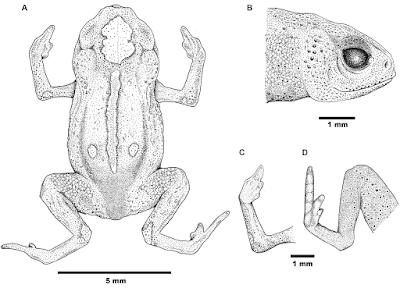

Figure 2: Drawings of the holotype of Brachycephalus mirissimus.
 Holotype of Brachycephalus mirissimus (MHNCI 10793), adult male: (A) dorsal view of the body; (B) lateral view of the head; (C) ventral view of right hand; (D) ventral view of right foot. Drawing by Verônica R. Apolônio.  


 Figure 3: Holotype of Brachycephalus mirissimus (MHNCI 10793), adult male, in life in lateral (A), dorsal (B) and ventral view (C).
Notice in C, from the left to right, two white arrows indicated the presence of the linea masculinea, a pair of bands of fibrous connective tissue present only in males of the species and the vocal sac.
Black bar in C = 5 mm. Photographs by Luiz F. Ribeiro. 

Brachycephalus mirissimus sp. nov.

Diagnosis. Brachycephalus mirissimus is a member of the genus Brachycephalus based on its position in a phylogenetic tree (Fig. 5). B. mirissimus is a member of the B. pernix group, as defined by Ribeiro et al. (2015) and modified above, by having a bufoniform body shape and linea masculina (Figs. 3C and 4H). B. mirissimus is distinguished from all of the species in the genus by the following combination of characters: (1) body robust and bufoniform; (2) size SVL 9.9–11.7 mm for males and 10.0–12.9 mm for females (Table 1); (3) smooth dorsum (Figs. 3 and 4); (4) general color (in life) orange with white dots and stripe in the middle of the head and along its vertebral column (Figs. 3 and 4); (5) iris completely black (Fig. 3A); (6) advertisement call composed of note groups; (7) isolated notes with 1–3 pulses; and (8) short isolated notes (0.002–0.027 s).


Figure 4: Variation in coloration of paratypes of Brachycephalus mirissimus.
(A–F) dorsal view; (G and H) ventral view.
(A) MHNCI 10802; (B) MHNCI 10799; (C) MHNCI 10803; (D) MHNCI 10794;
 (E) MHNCI 10801; (F) MHNCI 10800; (G) MHNCI 10796; (H) MHNCI 10803. Notice in H the white arrow indicated the linea masculinea. Black bar in H = 5 mm.
Photographs by Luiz F. Ribeiro.


Figure 6: Map indicating the location of the type locality of Brachycephalus mirissimus (yellow dot), as well as other species of the genus that are found in the region (state of Santa Catarina, southern Brazil) (indicated clockwise): B. mirissimus, B. fuscolineatus, B. boticario and B. albolineatus.
 Original photographs by Luiz F. Ribeiro. 
Map data by Google.

Phylogenetic relationships. The phylogenetic analysis of species of the B. pernix species group places B. mirissimus as part a clade which includes B. fuscolineatus and B. boticario (Fig. 5), which are the southernmost species of the genus and are distributed in the region of the new species (Fig. 6).

Figure 8: Vegetation at the type locality of Brachycephalus mirissimus, at 535 m above sea level, characterized by high-elevation forest (Floresta Ombrófila Densa Montana).
(A) The middle and low strata of the forest, evidencing the habitat of Brachycephalus mirissimus in the leaf litter.
(B) General view of the Morro Santo Anjo’s forest.
 Photographs by Luiz F. Ribeiro 

Figure 8: Vegetation at the type locality of Brachycephalus mirissimus, at 535 m above sea level, characterized by high-elevation forest (Floresta Ombrófila Densa Montana).
(A) The middle and low strata of the forest, evidencing the habitat of Brachycephalus mirissimus in the leaf litter. (B) General view of the Morro Santo Anjo’s forest.
Figure 9: Impacts at the type locality of Brachycephalus mirissimus.
 In (A) Morro Santo Anjo with plantation of Pinus sp. along the slope. In (B) forest boundary with palm plantation of Archontophoenix alexandrae.
Photographs by Luiz F. Ribeiro.

Habitat, abundance, and distribution. We recorded B. mirissimus calling throughout the day under the leaf litter, but with more intense vocal activity in the morning and later in the day. We did not hear the species throughout the study area, as it showed a patchy distribution, and it is not homogeneously abundant in these patches. In the patch where it appeared particularly abundant, we heard 14 males in 202 m2, resulting in one calling male per 14.5 m2.

The species is known from the type locality (Fig. 6), where it was found in a patchy distribution between 470 and 540 m a.s.l. in montane forest (Floresta Ombrófila Densa Montana; Fig. 8) that reaches about 18–28 m in height. We did not find the species in montane forest with a lower canopy (<10 m), which was in a very steep terrain. We estimate its “actual” extent of occurrence to be 56.8 ha (calculated excluding forested areas in very steep terrains). That estimate resulted in three in-line polygons, distant from each other by 190 and 60 m, which became isolated due to replacement of the original vegetation by Eucalyptus sp., Pinus sp. and palm plantations of Archontophoenix alexandrae H. Wendl. & Drude (Fig. 9; areas encompassed by polygons are 28.3, 23.1, and 5.4 ha). The historical extent of occurrence (i.e., before the deforestation) taken the above criteria, resulted in a continuous polygon of 111.8 ha.
...


Remarks. The type locality of B. mirissimus is 17.4 km distant in a straight line from the type locality of B. albolineatus, 18.9 km distant from the type locality of B. fuscolineatus, and 19.5 km distant from the type locality of B. boticario.


Marcio R. Pie, Luiz F. Ribeiro, André E. Confetti, Mário J. Nadaline and Marcos R. Bornschein​. 2018. A New Species of Brachycephalus (Anura: Brachycephalidae) from southern Brazil.  PeerJ. 6:e5683.  DOI:  10.7717/peerj.5683