Showing posts with label River Dolphin. Show all posts

Thursday, March 21, 2024

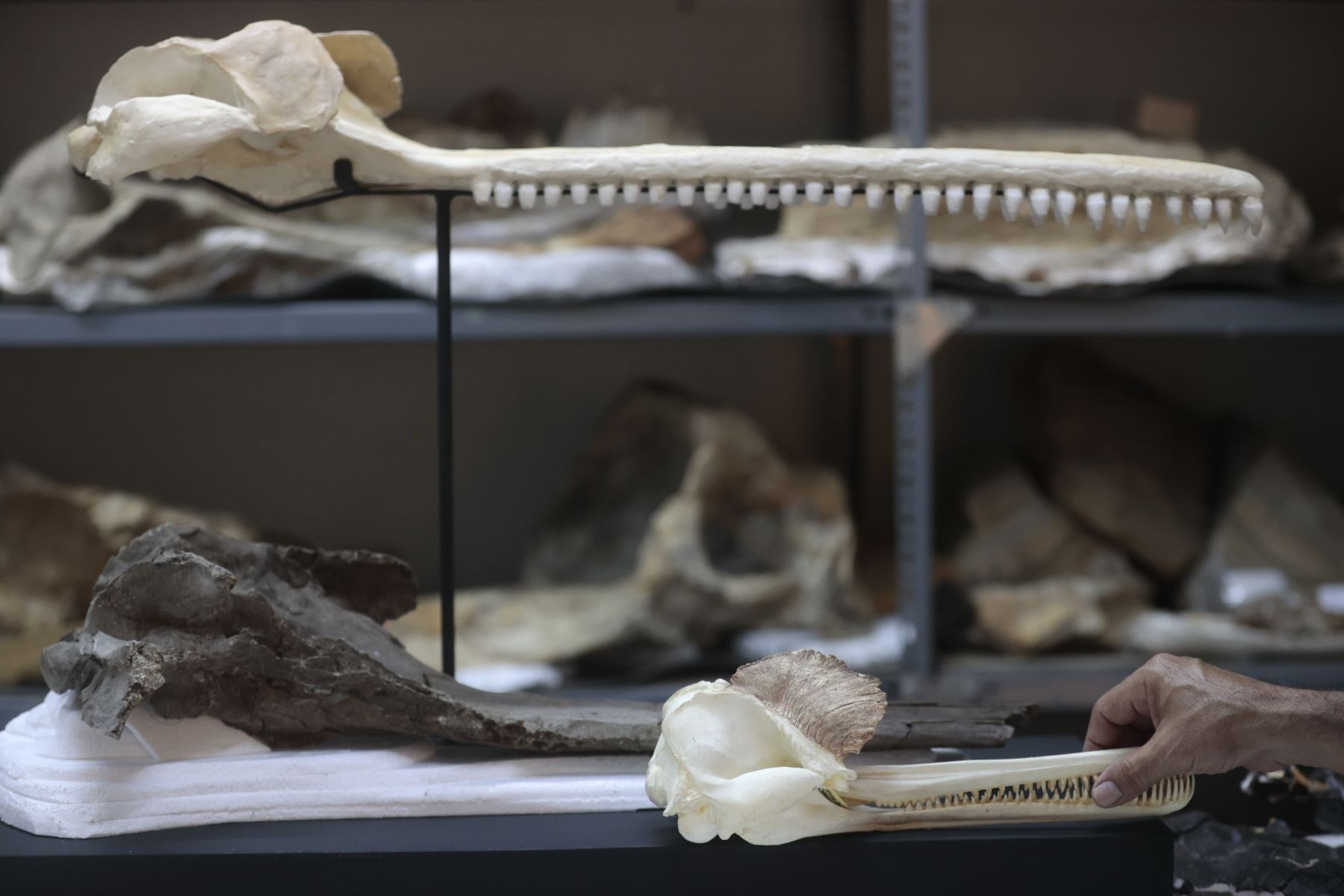
[PaleoMammalogy • 2024] Pebanista yacuruna • The Largest Freshwater Odontocete (Odontoceti: Platanistidae) : A South Asian River Dolphin relative from the proto-Amazonia


Pebanista yacuruna
Benites-Palomino, Aguirre-Fernández, Baby, Ochoa, Altamirano, Flynn, Sánchez-Villagra, Tejada, de Muizon & Salas-Gismondi, 2024

Illustration: Jaime Bran  twitter.com/BranArtworks

Abstract
Several dolphin lineages have independently invaded freshwater systems. Among these, the evolution of the South Asian river dolphin Platanista and its relatives (Platanistidae) remains virtually unknown as fossils are scarce. Here, we describe Pebanista yacuruna gen. et sp. nov., a dolphin from the Miocene proto-Amazonia of Peru, recovered in phylogenies as the closest relative of Platanista. Morphological characters such as an elongated rostrum and large supraorbital crests, along with ecological interpretations, indicate that this odontocete was fully adapted to fresh waters. Pebanista constitutes the largest freshwater odontocete known, with an estimated body length of 3 meters, highlighting the ample resource availability and biotic diversity in the region, during the Early to Middle Miocene. The finding of Pebanista in proto-Amazonian layers attests that platanistids ventured into freshwater ecosystems not only in South Asia but also in South America, before the modern Amazon River dolphin, during a crucial moment for the Amazonian evolution.

Biogeographical and paleobiogeographic distribution of Iniidae and Platanistidae through the Neogene. Schematic representation of the region highlighting the presence of epicontinental waters in South America (pale blue).
Extant geographical ranges of the Amazon river dolphin Inia and the South Asian river dolphins Platanista (A). Distribution of fossil Iniidae/Platanistidae records in the Early to Middle Miocene Pebas System (B) and Late Miocene Acre System (C).
 Modified from Benites-Palomino et al. (2021).


Size comparison between “river dolphins”
 White silhouettes indicate the minimum body length calculated or recorded; gray body outlines indicate the largest size recorded or estimated in: 
 Pontoporia blainvillei (C), Pebanista yacuruna† gen. et sp. nov. (D), Inia geoffrensis (E), Platanista gangetica (F), and Lipotex vexillifer (G). 


Systematic paleontology
Odontoceti
Platanistidae

Pebanista yacuruna sp. nov.

Etymology: The generic name Pebanista stresses the relationship between this taxon from the Pebas Fm. (section S1) and the extant Ganges and Indus river dolphins Platanista (Platanista gangetica and Platanista minor). The specific Kichua (northern Quechua) name honors the “yacuruna,” a mythical water creature in the Peruvian Amazonia.

Diagnosis and remarks: 
The holotype skull of Pebanista yacuruna, MUSM 4017, has a preserved condylobasal length of 698 mm and an estimated bizygomatic width of 281 mm. The sutures between the cranial bones (e.g., maxilla-premaxilla suture along the rostrum) are well closed or fused, indicating an adult stage. Pebanista is recognized as a member of Platanistidae by having the vertex of the skull deviated leftwards (Fig. 2, A and B); asymmetry of the premaxillae in the rostrum and facial areas of the skull; braincase anteroposteriorly shorter than wide; and lack of contact of the palatines, with both projecting dorsolaterally (figs. S3 and S4). The rostrum of the holotype specimen is dorsoventrally flattened and elongated, a condition shared with the extinct Pomatodelphis, Prepomatodelphis, and Zarhachis, in contrast to the transversely compressed rostrum of extant Platanista. On the preserved portion, the rostrum is formed by the premaxillae, maxillae, and ...


Artistic reconstruction of Pebanista yacuruna gen. et sp. nov. by Jaime Bran.

 
Aldo Benites-Palomino, Gabriel Aguirre-Fernández, Patrice Baby, Diana Ochoa, Ali Altamirano, John J. Flynn, Marcelo R. Sánchez-Villagra, Julia V. Tejada, Christian de Muizon and Rodolfo Salas-Gismondi. 2024. The Largest Freshwater Odontocete: A South Asian River Dolphin relative from the proto-Amazonia. SCIENCE ADVANCES. 10(12); DOI: 10.1126/sciadv.adk6320


Thursday, February 2, 2023

[Mammalogy • 2022] Morphological Disparity in the Skull of Amazon River Dolphins of the Genus Inia (Cetacea: Iniidae) is inconsistent with A Single Taxon


in Emin-Lima, Machado, Siciliano, Gravena, ... et Oliveira, 2022.

photo by Kevin Schafer.
 
Abstracts 
The taxonomy of the South American river dolphins of the genus Inia has been a focus of intense debate. While traditionally it is thought to be composed of a single species with three geographically structured subspecies (Inia geoffrensis geoffrensis, I. g. humboldtiana, and I. g. boliviensis), recent molecular studies have highlighted substantial differentiation, suggesting the existence of two species (I. geoffrensis and I. araguaiaensis). Despite this evidence, the recognition of the specific status of these taxa has been hindered by inconsistent morphological diagnoses. Here, we aim to provide evidence for the morphological differentiation (or lack thereof) between subspecies and putative species. We employ geometrics and traditional morphometrics to measure skull variation to support efforts of integrative taxonomy. Our results show that morphometric diversity within the group is inconsistent with a single taxon. Morphometric evidence supports the traditional differentiation of three distinct morphotypes within the analyzed sample. These morphotypes largely correspond to described subspecies I. g. geoffrensis, I. g. humboldtiana—the latter differing from the former by size—and I. g. boliviensis, which differs from the remaining groups by shape. Furthermore, morphometric data show no differences between I. g. geoffrensis and a newly proposed species, I. araguaiaensis. Given the conservation importance of this genus and the different threats they are subject to, we strongly suggest an urgent integrative taxonomic treatment of the group to better protect these singular cetaceans.


Renata Emin-Lima, Fabio A Machado, Salvatore Siciliano, Waleska Gravena, Enzo Aliaga-Rossel, José de Sousa e Silva, Junior, Erika Hingst-Zaher and Larissa Rosa de Oliveira. 2022. Morphological Disparity in the Skull of Amazon River Dolphins of the Genus Inia (Cetacea, Iniidae) is inconsistent with A Single Taxon. Journal of Mammalogy. 103(6); 1278–1289. DOI: 10.1093/jmammal/gyac039

 
A taxonomia dos golfinhos de água doce da América do Sul pertencentes ao gênero Inia têm sido foco de intenso debate. Enquanto tradicionalmente considera-se a existência de uma única espécie e três subespécies (Inia geoffrensis geoffrensis, I. g. humboldtiana, and I. g. boliviensis), estudos moleculares recentes evidenciam diferenciação substancial, sugerindo a existência de mais de uma espécie (I. geoffrensis and I. araguaiaensis). Apesar desta evidência, o reconhecimento do status específico desses táxons tem sido limitado pela presença de diagnoses morfológicas inconsistentes. Nosso objetivo no presente trabalho é proporcionar evidências para a diferenciação morfológica (ou a sua ausência) entre as subespécies e as possíveis espécies. Utilizamos morfometria geométrica e tradicional para medir a variação do cranio de forma a sustentar esforços de taxonomia integrativa. Nossos resultados mostram que a diversidade morfométrica dentro do grupo é inconsistente com um único táxon. A evidência morfométrica aponta a diferenciação tradicional de três morfotipos distintos dentro da amostra analisada. Esses morfotipos correspondem em grande parte às subespecies I. g. geoffrensis, I. g. humboldtiana, que diverge da primeira através do seu tamanho, e I. g. boliviensis, que diverge das demais através de sua forma. Ademais, dados morfométricos não mostram diferenças entre Inia g. geoffrensis e a espécie recém proposta, I. araguaiaensis. Dada a importância para conservação desse gênero e as diferentes ameaças às quais estão sujeitos, nós sugerimos enfaticamente um tratamento de taxonomia integrativa para o grupo, de forma a melhor proteger esses cetáceos singulares.

Thursday, March 25, 2021

[Mammalogy • 2020] Platanista gangetica & P. minor • Taxonomic Revision of the South Asian River Dolphins (Platanista): Indus and Ganges River Dolphins are Separate Species


Ganges River dolphin Platanista gangetica (Lebeck, 1801) & 
  Indus River dolphin Platanista minor Owen, 1853

in Braulik, Archer, Khan, .. et Graves, 2021.

photos: Mansur/WCS Bangladesh (top) & WWF‐Pakistan (bottom) 
 
Abstract
South Asian river dolphins (Platanista gangetica) are among the most endangered of the world's cetaceans. The two subspecies in the family Platanistidae, Indus, and Ganges river dolphins (P. g. minor and P. g. gangetica), are both threatened by dams and barrages, declining river flows, fisheries bycatch, and pollution. We examine differences in external and skull morphology between dolphins in each river system to clarify their taxonomic status. Skulls from each river system could easily be differentiated using diagnostic differences in the shape of the frontal bones behind the nasals. This feature was present in all individuals irrespective of size, age, and sex. Ganges river dolphins are sexually dimorphic with females larger than males, but there was no evidence of dimorphism in the small sample of Indus river dolphins. There were no mitochondrial DNA haplotypes shared between the two river systems, and five fixed differences suggested a long‐term (approximately 0.55 million years) absence of gene flow. Diagnosable differences in morphological and genetic characteristics indicate long‐term reproductive as well as geographic isolation of Indus and Ganges river dolphins. We conclude that Indus and Ganges river dolphins should each be recognized as distinct species, and elevate the Indus subspecies, Platanista gangetica minor, to species level, Platanista minor Owen, 1853. Formal redescriptions are provided for both species.

Keywords: endangered species, river dolphins, speciation, taxonomy

Close up images of three skulls from the Ganges and three from the Indus illustrating the extension anteriorly and to the left of the frontal suture in Ganges River dolphins and how it differs clearly from animals in the Indus.

Photograph of surfacing Indus River dolphin (Platanista minor) and 
  Ganges River dolphin (Platanista gangetica)

(photo credit: top - WWF‐Pakistan; bottom - Mansur/WCS Bangladesh).

Dorsal, ventral, and lateral photos of a Ganges River dolphin skull, SMNH45648 from the Stuttgart Germany Collection.

Order Cetartiodactyla Montgelard, Catzefils and Douzery, 1997
Cetacea Brisson, 1762
Odontoceti Flower, 1867

Superfamily Platanistoidea Gray, 1863
Family Platanistidae Gray, 1846

Genus Platanista Wagler, 1830

Platanista gangetica (Lebeck, 1801)

Diagnosis: The skulls can be differentiated from those of P. minor by the presence of a projection at the frontal suture above the nasals and behind the maxillary crests (Figure 4). While there is some overlap in tooth counts between Indus and Ganges river dolphins, all skulls with less than 30 teeth in the upper tooth rows are Ganges river dolphins. The Ganges river dolphin has three unique mtDNA haplotypes (HAP4‐6, see Braulik, Barnett, et al., 2015, GenBank accession numbers KJ629311‐13) with five fixed differences separating it from the Indus river dolphin.

Etymology: This species is known as the Ganges river dolphin after the river system from which it was described. We recommend the English common name Ganges river dolphin for this species.
 It is known by many different local names within its range including, Susu (popular), Soons/Soans/Soos (Hindi and dialects), Shushuk (Bengali), Hiho/Hihu (Assamese), Bhagirath, Socho (Hindi/Maithili: eastern Bihar), Shus or Suongsu (Nepali), Shishumar (probable medieval name in Sanskrit), Pani Suar (name during the Mughal period).


Dorsal, ventral, and lateral photos of an Indus River dolphin skull SMNH45643, the Platanista indi neotype (Pilleri & Gihr, 1977), from the Stuttgart Germany, Collection.

Platanista minor Owen, 1853

 Diagnosis: Indus river dolphin skulls can be differentiated from those of the Ganges river dolphin by the absence of a projection at the frontal suture above the nasals and behind the maxillary crests on the skull (Figure 4). While there is some overlap in tooth counts between Indus and Ganges river dolphins, all skulls with more than 33 teeth in the upper tooth rows are Indus river dolphins. The Indus river dolphin has three unique mtDNA haplotypes (HAP1‐3, see Braulik, Barnett, et al., 2015, GenBank accession numbers KJ629309, KJ629310 & AJ554058) with five fixed differences separating it from the Ganges river dolphin.

Etymology: We recommend the English common name Indus river dolphin for the species. It is known as bhulan in the local languages of Pakistan, and northwest India, where it occurs.


 CONCLUSIONS: 
Indus and Ganges river dolphins are the sole remaining relicts of the entire Platanistoidea cetacean superfamily and thus from the perspective of evolutionary distinctiveness their conservation is of key importance. The recognition of two species of Platanista detailed above requires a re‐evaluation of their conservation status. Both are currently listed as Endangered on the IUCN Red List and are already among the most endangered of all cetaceans. There is now an urgent need to elevate these species to a higher level of conservation concern and priority. This is especially true for the Indus river dolphin, which has declined drastically throughout most of its range due to its massive altered and degraded habitat (Braulik, Noureen et al., 2015). The Ganges river dolphin, although presently more numerous, is under great threat due to proposed and ongoing large infrastructure projects that have the potential to destroy large swaths of the most important habitat for the species (Kelkar, 2017).


Gill T. Braulik , Frederick I. Archer, Uzma Khan, Mohammad Imran, Ravindra K. Sinha, Thomas A. Jefferson, Carl Donovan and Jeff A. Graves. 2021. Taxonomic Revision of the South Asian River Dolphins (Platanista): Indus and Ganges River Dolphins are Separate Species. Marine Mammal Science. DOI: 10.1111/mms.12801

Thursday, April 19, 2018

[PaleoMammalogy • 2018] Macrosqualodelphis ukupachai • A New Large Squalodelphinid (Cetacea, Odontoceti) from Peru Sheds Light on the Early Miocene Platanistoid Disparity and Ecology


Macrosqualodelphis ukupachai  
Bianucci, Bosio, Malinverno, de Muizon, Villa, Urbina & Lambert, 2018

   DOI: 10.1098/rsos.172302 

Abstract
The South Asian river dolphin (Platanista gangetica) is the only extant survivor of the large clade Platanistoidea, having a well-diversified fossil record from the Late Oligocene to the Middle Miocene. Based on a partial skeleton collected from the Chilcatay Formation (Chilcatay Fm; southern coast of Peru), we report here a new squalodelphinid genus and species, Macrosqualodelphis ukupachai. A volcanic ash layer, sampled near the fossil, yielded the 40Ar/39Ar age of 18.78 ± 0.08 Ma (Burdigalian, Early Miocene). The phylogenetic analysis places Macrosqualodelphis as the earliest branching squalodelphinid. Combined with several cranial and dental features, the large body size (estimated body length of 3.5 m) of this odontocete suggests that it consumed larger prey than the other members of its family. Together with Huaridelphis raimondii and Notocetus vanbenedeni, both also found in the Chilcatay Fm, this new squalodelphinid further demonstrates the peculiar local diversity of the family along the southeastern Pacific coast, possibly related to their partition into different dietary niches. At a wider geographical scale, the morphological and ecological diversity of squalodelphinids confirms the major role played by platanistoids during the Early Miocene radiation of crown odontocetes.

KEYWORDS: Odontoceti, Squalodelphinidae, Early Miocene, Peru, phylogeny, palaeoecology


Systematic palaeontology
Cetacea Brisson, 1762
Neoceti Fordyce and Muizon, 2001

Odontoceti Flower, 1867
Platanistoidea Gray, 1863
Squalodelphinidae Dal Piaz, 1917

Type genus. Squalodelphis Dal Piaz, 1917

Other genera included. Huaridelphis, Medocinia, Notocetus, Phocageneus.


Macrosqualodelphis, gen. nov.

Etymology. From ‘Macro’, large, and ‘Squalodelphis’ the type genus of the family. Gender masculine.


Macrosqualodelphis ukupachai, sp. nov.

Holotype and only referred specimen. MUSM 2545 consists of a skull lacking the anterior portion of the rostrum, the ear bones, both mandibles and the hyoid bones. The ventralmost portion of the rostrum and of the basicranium is worn along a plane slightly anterodorsally sloping with respect to the horizontal plane of the skull (erupted portion of maxillary teeth, basioccipital crests, ventral part of exoccipitals and postglenoid processes of squamosals missing). MUSM 2545 also preserves three detached anterior teeth; the atlas, two thoracic, two lumbar and eight caudal vertebrae; the left humerus, radius and incomplete ulna; one phalanx and one metacarpal; and two small fragments of ribs.

Type locality. About 3 km south of the fossiliferous Cerro Colorado locality, Western Ica Valley, Ica Region, southern Peru. 710 m above sea level. The holotype was discovered and collected by one of the authors (M.U.).

Etymology. From ‘Uku Pacha’ (Uku = within, inside; Pacha = Earth), the Inca lower world, located below the Earth's surface, in reference to the discovery of the specimen buried in sediment.


Figure 16. Skeletal remains and inferred body outline of the squalodelphinids from the early Burdigalian of the Chilcatay Fm (Pisco Basin, Peru) and skeletal and body outline of the extant P. gangetica. Body lengths based on the Pyenson & Sponberg [2011] equation for the fossils and on Jefferson et al. [2008] for the extant P. gangetica.


Cranium of the holotype (MUSM 2545) of Macrosqualodelphis ukupachai, from the early Burdigalian of the Chilcatay Fm (Pisco Basin, Peru).

Figure 3. (a) Dorsal view; (b) corresponding explanatory line drawing;   Linear hatching indicates major breaks and cross-hatching areas covered by the sediment.
Figure 4. (a) Ventral view; (b) corresponding explanatory line drawing;  Linear hatching indicates major breaks, cross-hatching areas covered by the sediment and dark shading worn surface.
Figure 5. (a) Right lateral view; (b) corresponding explanatory line drawing; (c) left lateral view. Cross-hatching indicates supporting frame.

Conclusion: 
Macrosqualodelphis ukupachai is a new species of the extinct platanistoid family Squalodelphinidae based on a well-preserved partial skeleton collected from the Early Miocene (ca 19–18 Ma) fossiliferous beds of the Chilcatay Fm outcropping in the Western Ica Valley (southern coast of Peru). The age of this skeleton is further constrained via 40Ar/39Ar dating of a local volcanic ash layer to 18.78 ± 0.08 Ma (early Burdigalian).

Our phylogenetic analysis supports the referral of M. ukupachai to the monophyletic family Squalodelphinidae, of which it constitutes the earliest diverging lineage.

The main distinctive character of M. ukupachai is its large size: its estimated TBL is approximately 3.5 m, significantly larger than all other known squalodelphinids, including N. vanbenedeni (2.5 m) and H. raimondii (2.0 m), both also found in the Chilcatay Fm. Combined with cranial and dental features (robust rostrum less tapered than in other squalodelphinids, large temporal fossa, prominent nuchal and temporal crests, and more robust teeth), the large body size of M. ukupachai suggests that this squalodelphinid was able to prey upon larger prey items. Consequently, M. ukupachai would have been positioned higher along the local trophic chain than the roughly contemporaneous N. vanbenedeni and H. raimondii. Therefore, it is suggested that the squalodelphinid diversity, both locally and worldwide, could be related to their partition into different dietary niches, as is observed in the extant delphinids.

This new record further illustrates the first, Early Miocene, broad radiation of crown odontocetes in marine environments, with a major contribution of homodont platanistoids. This Early Miocene morphological and ecological diversification of platanistoids (including squalodelphinids) was followed by the radiation of delphinidans (porpoises, true dolphins and relatives) during the Middle–Late Miocene. The only extant survivor of the platanistoid ‘golden age’ is the endangered South Asian river dolphin P. gangetica, confined in freshwater ecosystems of the Ganges, Indus and Brahmaputra river basins.


Giovanni Bianucci, Giulia Bosio, Elisa Malinverno, Christian de Muizon, Igor M. Villa, Mario Urbina and Olivier Lambert. 2018. A New Large Squalodelphinid (Cetacea, Odontoceti) from Peru Sheds Light on the Early Miocene Platanistoid Disparity and Ecology. Royal Society Open Science. 5(4)  DOI: 10.1098/rsos.172302

Monday, December 25, 2017

[PaleoMammalogy • 2017] Urkudelphis chawpipacha • A New Tropical Oligocene Dolphin from Montañita/Olón, Santa Elena, Ecuador


Urkudelphis chawpipacha
 Tanaka, Abella, Aguirre-Fernández, Gregori & Fordyce, 2017  


Abstract
A new small probable Oligocene dolphin from Ecuador represents a new genus and species, Urkudelphis chawpipacha. The new taxon is known from a single juvenile skull and earbones; it differs from other archaic dolphins in features including widely exposed frontals at the vertex, a dorsally wide open vomer at the mesorostral groove, and a strongly projected and pointed lateral tuberosity of the periotic. Phylogenetic analysis places it toward the base of the largely-extinct clade Platanistoidea. The fossil is one of a few records of tropical fossil dolphins.


Systematic paleontology
CETACEA Brisson, 1762
NEOCETI Fordyce & de Muizon, 2001

ODONTOCETI Flower, 1867
PLATANISTOIDEA Gray, 1863 sensu Fordyce, 1994

Comment: Urkudelphis chawpipacha shows these synapomorphies of the Platanistoidea (sensu Fordyce, 1994), as recognised previously by Tanaka and Fordyce [2017]: periotic with C-shaped parabullary sulcus; small articular rim, which forms a ridge anterolateral to posterior process of periotic and separated from it by a sulcus. Two phylogenies place Urkudelphis near the base of the Platanistoidea (sensu lato; including Platanistidae, Squalodelphis, Notocetus, Phocageneus, Otekaikea, Waipatiidae, Awamokoa and Squalodontidae [2017]).

Fig 2. Skull, Urkudelphis chawpipacha MO-1 (holotype) in dorsal view. Left, photo, right, line art.

Fig 4. Skull, Urkudelphis chawpipacha MO-1 (holotype) in right lateral view. Upper, photo, lower, line art.

Urkudelphis gen. nov.

Type species: Urkudelphis chawpipacha sp. nov.

Urkudelphis chawpipacha sp. nov.

Diagnosis: Urkudelphis chawpipacha is a small archaic odontocete with the following autapomorphic combination of characters: shallow antorbital notch (character 10); anteromedially oriented anterior edge of the supraorbital process (character 37); weakly dorsally convex nuchal crest in dorsoposterior view (character 119); approximately same sized apertures of the vestibular aqueduct and cochlear aqueduct (character 186); dorsoventrally thin pars cochlearis on the periotic (character 192); inner posterior prominence of the tympanic bulla is anterior to the outer posterior prominence (character 218); very strongly projecting and pointed lateral tuberosity; and an anteroposteriorly long accessory ossicle of the periotic. Urkudelphis chawpipacha differs from early branching odontocetes, including Agorophius, Ashleycetus, Simocetus, Mirocetus and Xenorophus in having the frontals on the vertex at a level behind the postorbital process; anteroposteriorly shorter and transversely wider frontals (approaching a square-shape rather than narrow and elongate); and parallel-sided posterior part of the ascending process of each maxilla forming a narrow elongate face. Urkudelphis differs from Early Miocene Papahu taitapu, Chilcacetus cavirhinus, Arktocara yakataga, Allodelphis pratti and Ninjadelphis ujiharai, having the frontals on the vertex flat and longer than the taxa above, which have more nodular and shorter frontals. Urkudelphis differs from Chilcacetus and Papahu in having a narrow premaxillary sac fossa. Urkudelphis chawpipacha also notably shows: frontals at the vertex invaded posteriorly by the interparietal; and long anteromedial projection of the palatine on the palate. Other diagnostic features of U. chawpipacha are shared with more-crownward Waipatiidae: a shallow suprameatal pit of the squamosal (character 152); an abruptly ventrally deflected anterior process of the periotic (character 172); and a nearly flat dorsal surface of the periotic in lateral view (character 181). In addition, Urkudelphis chawpipacha shares several characters with more-crownward Platanistoidea: a periotic with C-shaped parabullary sulcus (character 175); and a small articular rim, which forms a ridge anterolateral to the posterior process of the periotic and separated from it by a sulcus (character 195).

Holotype: MO-1, an incomplete skull (premaxilla, maxilla, vomer, pterygoid, frontal, parietal, interparietal, alisphenoid, squamosal and supraoccipital), including the right periotic, right tympanic bulla and right malleus.

Etymology: The generic name, Urkudelphis originates from Kichwa “urku” meaning mountain, referring to the type locality of Montañita, and Greek “delphis” for dolphin, which has been used widely as a suffix for dolphin generic names. Chawpipacha results from the combination of chawpi, meaning "half" or “middle” and pacha, meaning "the world" representing the equator, and thus Ecuador in Kichwa.

Type locality: MO-1 was found by one of the authors (JA) and several UPSE students in August 2015 in a boulder that collapsed from a cliff at the coastal locality here named Montañita/Olón (latitude 1°48'50.64" S, longitude 80°45'24.18" W). The Montañita/Olón (MO) locality (Fig 1) lies midway between the towns of Montañita and Olón (Santa Elena Province, Ecuador) and can only be accessed during low tides.
Conclusion: 
A new small dolphin from probable Oligocene (Chattian?) strata in Santa Elena, Ecuador is described as a new species and genus, Urkudelphis chawpipacha. The new taxon is characterized by: an anteromedially oriented anterior edge of the supraorbital process; weakly convex nuchal crest in dorsoposterior view; approximately same sized apertures of vestibular aqueduct and cochlear aqueduct; dorsoventrally thin pars cochlearis on periotic; and inner posterior prominence placed anterior to the outer posterior prominence. Urkudelphis chawpipacha differs from other Oligocene dolphins in the combination of: frontals on the vertex at a level posterior to the postorbital process; shorter and wider frontals; and parallel-sided posterior part of the ascending process of the maxilla. Phylogenetic analysis places it near the base of the largely-extinct clade Platanistoidea. The fossil is one of few fossil Neoceti reported from the equator, and is a reminder that Oligocene cetaceans may have ranged widely in tropical waters.


Yoshihiro Tanaka, Juan Abella, Gabriel Aguirre-Fernández, Maria Gregori and R. Ewan Fordyce. 2017. A New Tropical Oligocene Dolphin from Montañita/Olón, Santa Elena, Ecuador. PLoS ONE. 12(12); e0188380.  DOI: 10.1371/journal.pone.0188380

New ancient dolphin species Urkudelphis chawpipacha discovered in Ecuador http://phy.so/432980137 via @physorg_com


Wednesday, June 7, 2017

[PaleoMammalogy • 2017] Dilophodelphis fordycei • A New Fossil Dolphin Provides Insight Into the Evolution of Supraorbital Crests in Platanistoidea (Mammalia, Cetacea)


Dilophodelphis fordycei
Boersma, McCurry & Pyenson, 2017 

  DOI: 10.1098/rsos.170022 
Image: A. Boersma  @Boersma_Alex 

Abstract

Many odontocete groups have developed enlarged facial crests, although these crests differ in topography, composition and function. The most elaborate crests occur in the South Asian river dolphin (Platanista gangetica), in which they rise dorsally as delicate, pneumatized wings anterior of the facial bones. Their position wrapping around the melon suggests their involvement in sound propagation for echolocation. To better understand the origin of crests in this lineage, we examined facial crests among fossil and living Platanistoidea, including a new taxon, Dilophodelphis fordycei, nov. gen. and sp., described herein, from the Early Miocene Astoria Formation of Oregon, USA. We measured the physical extent and thickness of platanistoid crests, categorized their relative position and used computed tomography scans to examine their internal morphology and relative bone density. Integrating these traits in a phylogenetic context, we determined that the onset of crest elaboration or enlargement and the evolution of crest pneumatization among the platanistoids were separate events, with crest enlargement beginning in the Oligocene. However, we find no evidence for pneumatization until possibly the Early Miocene, although certainly by the Middle Miocene. Such an evolutionary context, including data from the fossil record, should inform modelling efforts that seek to understand the diversity of sound generation morphology in Odontoceti.

KEYWORDS: cetacean, Platanistoidea, river dolphins, Miocene, pneumatization, computed tomography

Systematic palaeontology

Cetacea Brisson, 1762 
Odontoceti Flower, 1867 sensu Fordyce and Muizon, 2001 

Platanistoidea sensu Boersma and Pyenson 2016 
Platanistidae Gray, 1846  sensu Boersma and Pyenson 2016 

Dilophodelphis, gen. nov. 

Type and only included species. Dilophodelphis fordycei, sp. nov.

Etymology. From the Greek words di (double), lophos (crest) and delphis (dolphin), referring to the enlarged supraorbital crests on the dorsal surface of the skull, resembling twin mountain crests. This construction also evokes the dinosaur Dilophosaurus wetherilli Welles 1954, a double-crested theropod recovered from Early Jurassic sequences of the Kayenta Formation in Arizona, USA.

Dilophodelphis fordycei, sp. nov. 

Figure 1. Skull of Dilophodelphis (USNM 214911) in dorsal view.
(a) Illustrated skull with low opacity mask, interpretive line art and labels for skull elements. Dotted lines indicate uncertainty of sutures, and dashed lines highlight fossae. Hatched pattern indicates areas where sediment is obscuring the fossil. (b) Photograph of skull in dorsal view, photography by James Di Loreto, Smithsonian Institution. fr., frontals; max., maxilla; n., nasal; pmx., premaxilla; pmx. sac fossa, premaxillary sac fossa. 

Figure 2. Skull of Dilophodelphis (USNM 214911) in ventral view.
(a) Illustrated skull with low opacity mask, interpretive line art and labels for skull elements. Dotted lines indicate uncertainty of sutures, and dashed lines highlight fossae. Hatched pattern indicates areas where sediment is obscuring the fossil. (b) Photograph of skull in ventral view, photography by James Di Loreto, Smithsonian Institution. fr., frontal; max., maxilla; p., pterygoid; v., vomer. 

The endangered South Asian river dolphin, Platanista gangetica (middle), swimming alongside two of its fossil relatives: the longirostral Pomatodelphis inaequalis (bottom) and the new species Dilophodelphis fordycei (top). None of the species lived together at the same time. Glow-throughs to the skulls highlight the diversity in supraorbital crest shape and size among the members of this family.
Image: Alex Boersma  @Boersma_Alex 


Figure 3. Skull of Dilophodelphis (USNM 214911) in right and left lateral views.
 (a) Illustrated skull in right lateral view and (b) left lateral view with low opacity mask, interpretive line art and labels for skull elements. Dotted lines indicate uncertainty of sutures, and dashed lines highlight fossae. Hatched pattern indicates areas where sediment is obscuring the fossil. (c) Photograph of skull in right lateral view and (d) left lateral view, photography by James Di Loreto, Smithsonian Institution. exocc., exoccipital; m., maxilla; par., parietal; p., pterygoid; sq., squamosal; temp. fossa, temporal fossa; zyg. process, zygomatic process. 


Etymology: The species epithet honours Prof. R. Ewan Fordyce, FRSNZ, native New Zealander and prominent vertebrate palaeontologist. The epithet recognizes his extensive and long-lasting contributions to the field of marine mammal palaeontology, including his commitment to mentoring future scientists, especially in shaping the career paths of the authors herein. The epithet also honours his long-standing interest in the fossil marine mammal record of Oregon, which has yielded pivotal specimens for over a century, including Simocetus rayi Fordyce 2002, which he described.


Alexandra T. Boersma, Matthew R. McCurry and Nicholas D. Pyenson. 2017. A New Fossil Dolphin Dilophodelphis fordycei Provides Insight Into the Evolution of Supraorbital Crests in Platanistoidea (Mammalia, Cetacea). Royal Society Open Science.  DOI: 10.1098/rsos.170022


New, ancient dolphin species had weird skull crests australiangeographic.com.au/news/2017/06/new,-ancient-dolphin-species-had-weird-skull-crests   @ausgeo - Australian Geographic 


Sunday, August 28, 2016

[PaleoMammalogy • 2016] Arktocara yakataga • A New Fossil Odontocete (Mammalia, Cetacea) from the Oligocene of Alaska and the Antiquity of Platanistoidea


Arktocara yakataga 
Boersma & Pyenson, 2016

Artistic reconstruction of a pod of Arktocara yakataga, swimming offshore of Alaska during the Oligocene, about 25 million years ago, with early mountains of Southeast Alaska in the background. The authors speculate that Arktocara may have socialized in pods, like today's oceanic dolphins, while possessing a much longer snout, like its closest living relative in the freshwater rivers of South Asia.
Linocut print art by Alexandra Boersma

Abstract

The diversification of crown cetacean lineages (i.e., crown Odontoceti and crown Mysticeti) occurred throughout the Oligocene, but it remains an ongoing challenge to resolve the phylogenetic pattern of their origins, especially with respect to stem lineages. One extant monotypic lineage, Platanista gangetica (the Ganges and Indus river dolphin), is the sole surviving member of the broader group Platanistoidea, with many fossil relatives that range from Oligocene to Miocene in age. Curiously, the highly threatened Platanista is restricted today to freshwater river systems of South Asia, yet nearly all fossil platanistoids are known globally from marine rocks, suggesting a marine ancestry for this group. In recent years, studies on the phylogenetic relationships in Platanistoidea have reached a general consensus about the membership of different sub-clades and putative extinct groups, although the position of some platanistoid groups (e.g., Waipatiidae) has been contested. Here we describe a new genus and species of fossil platanistoid, Arktocara yakataga, gen. et sp. nov. from the Oligocene of Alaska, USA. The type and only known specimen was collected from the marine Poul Creek Formation, a unit known to include Oligocene strata, exposed in the Yakutat City and Borough of Southeast Alaska. In our phylogenetic analysis of stem and node-based Platanistoidea, Arktocara falls within the node-based sub-clade Allodelphinidae as the sister taxon to Allodelphis pratti. With a geochronologic age between ∼29–24 million years old, Arktocara is among the oldest crown Odontoceti, reinforcing the long-standing view that the diversification for crown lineages must have occurred no later than the early Oligocene.

Systematic paleontology

Cetacea Brisson, 1762
Odontoceti Flower, 1867 sensu Fordyce & Muizon, 2001
Platanistoidea (CCN) (node-based version of Fordyce, 1994)
Allodelphinidae (CCN) (node-based version of Barnes, 2006)

Arktocara, gen. nov. 
LSID: urn:lsid:zoobank.org:act:EE11B95B-8338-496B-97F4-1673ED90E709

The skull of Arktocara yakataga on an 1875 ethnographic map of Alaska drawn by William Healey Dall, a broadly trained naturalist who worked for several US government agencies, including the Smithsonian, and honored with several species of living mammals, including Dall's porpoise (Phocoenoides dalli). Near the skull of Arktocara is a cetacean tooth, likely belonging to a killer whale (Orcinus orca), collected by Aleš Hrdlička, a Smithsonian anthropologist who worked extensively in Alaska, and an Oligocene whale tooth collected by Donald Miller, a geologist who worked for the US Geological Survey, and collected the type specimen of Arktocara. Donald Orth's dictionary of Alaskan place names, published by the USGS, bookends the image.
photo: James Di Loreto, Smithsonian 


Definitions. Crown group Platanista refers to the crown clade arising from the last common ancestor of all lineages descending from Platanista, including two subspecies of Platanista gangetica (P. g. gangetica (Lebeck, 1801) and P. g. minor Owen, 1853), as recognized by The Society for Marine Mammology’ Committee on Taxonomy (2015).

Type and only included species: Arktocara yakataga, sp. nov.

Etymology. The name Arktocara derives from the combination of arktos from Greek and cara from Latin, which together signify “the face of the North.” The only preserved material of the type specimen, USNM 214830 consists of the cranium, or its face, and its type locality is the furthest north that a platanistoid has ever been found.

Age. Same as that of the species.
Diagnosis. Same as that of the species.

Arktocara yakataga, sp. nov. (Figs. 2–10 and Table 1)

The skull of Akrtocara yakataga rests on an 1875 ethnographic map of Alaska drawn by William Healey Dall, a broadly trained naturalist who worked for several US government agencies, including the Smithsonian, and honored with several species of living mammals, including Dall's porpoise (Phocoenoides dalli). Near the skull of Arktocara is a cetacean tooth, likely belonging to a killer whale (Orcinus orca), collected by Aleš Hrdlička, a Smithsonian anthropologist who worked extensively in Alaska, and an Oligocene whale tooth collected by Donald Miller, a geologist who worked for the US Geological Survey, and collected the type specimen of Arktocara. Donald Orth's dictionary of Alaskan place names, published by the USGS, bookends the image.
photo: James Di Loreto, Smithsonian  

Holotype. USNM 214830, consisting of an incomplete skull lacking the rostrum anterior of the antorbital notches, tympanoperiotics, dentition and mandibles (see Fig. 2).

Type locality. The precise geographic coordinates for the type locality of Arktocara yakataga are unknown. The type specimen (USNM 214830) was discovered and collected in 1951 by United States Geological Survey (USGS) geologist Donald J. Miller (1919–1961), who was mapping what was then the Yakataga District of Alaska (now the Yakutat City and Borough) between 1944 and 1963. Archival notes housed with the specimen at USNM state that Miller found the specimen in the Poul Creek Formation within the then-Yakataga District (see Age, below). Therefore, we delimit the area for the type’s provenance to exposures of the Poul Creek Formation in the Yakutat City and Borough, Alaska, USA, in a grid ranging approximately from 60°22′N, 142°30′W to 60°00′N, 143°22′W (see Fig. 1). While the formation has been named from its exposures along Poul Creek, it has been suggested that the most abundant macrofossils from this unit have been collected from outcrops along Hamilton Creek, White River, and Big River near Reare Glacier (Taliaferro, 1932). It is possible that Miller collected USNM 214830 from one of these exposures.

Formation. Poul Creek Formation.

Age. Archival documentation accessioned in the Department of Paleobiology with USNM 214830 indicate that the type specimen was collected from an unknown locality exposed about 400–500 m below the top of the Poul Creek Formation, which has a total stratigraphic thickness of around 1.9 km (Plafker, 1987). The Yakutat terrane of Southeast Alaska consists of the Kulthieth, Poul Creek, and Yakataga Formations (Perry, Garver & Ridgway, 2009; Plafker, Moore & Winkler, 1994; Miller, 1971). The Kulthieth Formation consists of mostly organic-rich sandstones deposited in nonmarine alluvial, deltaic, barrier beach and shallow marine environments, and is Early Eocene to Early Oligocene (∼54–33 Ma) in age based on the fossil assemblages present (Perry, Garver & Ridgway, 2009). The Upper Eocene to possibly Lower Miocene (∼40–20 Ma) Poul Creek Formation conformably overlies the Kulthieth Formation (Plafker, 1987; Miller, 1971). It is estimated to be approximately 1.9 km thick, and is composed of siltstones and organic-rich sandstones, in part glauconitic recording a marine transgression, interrupted by deposits of the Cenotaph Volcanics (Plafker, 1987). Finally, unconformably overlying the Poul Creek Formation is the Miocene to Pliocene Yakataga Formation (Miller, 1971). It is composed mainly of tillite and marine strata (Perry, Garver & Ridgway, 2009).

The Poul Creek Formation itself is broadly constrained to approximately 40–20 million years in age, from the latest Eocene to possibly early Miocene in age (Plafker, 1987; Miller, 1971). The depositional age of the unit has been further constrained to ∼24 to ∼29 Ma, or a mid to late Oligocene age, based on detrital zircon fission-track analyses of young grain-age populations (Perry, Garver & Ridgway, 2009). Using the broadest time duration for the formation (∼20 million years) and the coarse stratigraphic thickness of the sediments within it (∼2 km), a constant rate of sedimentation would suggest that the stratigraphic position of USNM 214830 at 500 m below the top of the formation would be roughly equivalent to an geochronologic age of ∼25 million years, an estimate that is consistent to the detrital zircon analyses. Overall, we propose a late Oligocene, or Chattian age for Arktocara, although we cannot exclude a Rupelian antiquity.

Diagnosis. Arktocara is a small to medium sized platanistoid odontocete (approximately 2.26 m in total length), which belongs, based on one equivocal synapomorphy, to the node-based Platanistoidea: width: width of the premaxillae >50% of the width of the rostrum at the antorbital notch (character 51[1]). More convincingly, Arktocara belongs to Platanistoidea based on its affinities to other members of the Allodelphinidae that possess unequivocal synapomorphies of the Platanistoidea (see ‘Discussion’ for further comments on the relationship of Allodelphinidae within the Platanistoidea). We also note that, for the purposes of this diagnosis, we use a broad definition of Waipatiidae that includes Otekaikea spp. (see Tanaka & Fordyce (2015a)), and Squalodelphinidae sensu Lambert, Bianucci & Urbina (2014). See ‘Discussion’ for further comments on systematics of these groups.

.........


Etymology. The species epithet ‘yakataga’ derives from the Tlingit name for the point of land along the southeast coast of Alaska between modern day Kayak Island and Ice Bay. This point, currently called Cape Yakataga, is located directly southwest of Watson Peak and represents the southeastern boundary of a floodplain drained by the Bering Glacier. The name Yakataga was first published by Tebenkov (1852: map 7), who was a cartographer and hydrographer of the Imperial Russian Navy, as “M[ys] Yaktaga” on an 1849 map of Alaska. The geographic place name has been alternatively spelled Cape Iaktag, Cape Yakaio, Cape Yakatag, and Yokataga Reef (Orth, 1967). According to the Geographic Names Information System (GNIS, 2016), developed by USGS in cooperation with the United States Board of Geographic Names (BGN), the name “Yakataga” means “canoe road,” referring to two reefs that form a canoe passage to the shore of the village.

Figure 12: Distribution map of fossil Allodelphinidae.
Mapped of fossil localities of allodelphinids, projected on a truncated Winkel Tripel map and centered on 25°N and 170°W. Occurrences for fossil data derive from location of type and referred localities for each taxon, are listed alphabetically by region, and are represented by orange dots.

Platanistoids first appear in the fossil record in the late Oligocene, and reach peak richness in the early Miocene (Kimura & Barnes, 2016; Tanaka & Fordyce, 2015a). The oldest platanistoids with solid age constraints are the waipatiids, all found in the Oligocene-Miocene Otekaike Limestone of New Zealand (Graham et al., 2000; Benham, 1935; Fordyce, 1994; Tanaka & Fordyce, 2014; Tanaka & Fordyce, 2015a). Based on both the lithology and the presence of age-diagnostic planktic foraminifera and ostracod species, Waipatia hectori (Benham, 1935) is the oldest reported waipatiid, from the uppermost Duntroonian Stage of the Otekaike Limestone, approximately 25.2 Ma (Tanaka & Fordyce, 2015b). Arktocara is possibly very similar in age to Waipatia hectori, constrained to the Chattian Stage of the upper Oligocene in the Poul Creek Formation, approximately ∼24–29 Ma (Perry, Garver & Ridgway, 2009). Unfortunately, the lack of robust locality data for either Waipatia hectori or Arktocara makes impossible to determine which is the oldest.

Arktocara is, however, very clearly the oldest known allodelphinid, expanding the previously reported age range of Allodelphinidae by as much as 9 million years (Kimura & Barnes, 2016). Other allodelphinids span temporally from the early to middle Miocene, which largely matches the stratigraphic range of other platanistoid lineages (Fig. 11). Interestingly, Arktocara is among the oldest crown Odontoceti, reinforcing the long-standing view that the timing for the diversification for crown lineages must have occurred no later than the early Oligocene.

Lastly, Allodelphinidae appear uniquely limited, in terms of geography, to marine rocks of the North Pacific Ocean, with occurrences in Japan, Alaska, Washington State, Oregon, and California (see Fig. 12; Kimura & Barnes, 2016). Arktocara expands this geographic range to sub-Arctic latitudes. At approximately 60°N in the Yakutat City and Borough, Arktocara is the most northern platanistoid yet reported. The next most northern platanistoid reported is an incomplete and unnamed specimen from the late Chattian marine Vejle Fjord Formation in northern Denmark, approximately 56.7°N, 9.0°E (Hoch, 2000).


Alexandra T. Boersma​ and Nicholas D. Pyenson. 2016. Arktocara yakataga, a new fossil odontocete (Mammalia, Cetacea) from the Oligocene of Alaska and the antiquity of Platanistoidea.  PeerJ. 4:e2321. DOI: 10.7717/peerj.2321

New species of extinct river dolphin discovered in Smithsonian collection bit.ly/2aGgRS8 via @EurekAlertAAAS