Showing posts with label Muridae - Rat. Show all posts

Thursday, September 11, 2025

[Mammalogy • 2025] Crunomys tompotika • Systematics and Historical Biogeography of Crunomys and Maxomys (Rodentia: Muridae: Murinae), with the Description of A New Species from Sulawesi and New Genus-level Classification


Crunomys tompotika Achmadi & Fabre

in Giarla, Achmadi, Fabre, Handika, Chipps, Swanson, Nations, Morni, ..., Rowe et Esselstyn, 2025. 

Abstract
Crunomys and Maxomys are closely related murine genera from forested regions of Southeast Asia and western portions of the Indo-Australian Archipelago. Previous phylogenetic analyses suggested that a taxonomic reappraisal is necessary for these genera, but limited taxon sampling prevented formal changes. We produced a mitochondrial DNA dataset that includes 376 individuals representing all 22 recognized species and a nuclear dataset comprising thousands of ultraconserved elements missing only 1 recognized species. Our phylogenetic inferences consistently show that Crunomys is nested within Maxomys. We transfer all Maxomys species to the older genus Crunomys to resolve the paraphyly. We also conducted a morphological analysis of species from Sulawesi and described a new species of Crunomys from the eastern peninsula of the island. We identify 43 geographically defined mitochondrial haplogroups across all species of Crunomys, many of which also are inferred as distinct in a multilocus species delimitation analysis. Historical biogeographic reconstructions consistently inferred multiple dispersal events to and from oceanic islands and among continental shelf islands and mainland Southeast Asia. On both large continental shelf islands like Borneo and large oceanic islands like Sulawesi, in situ divergence produced high levels of diversity.

Indo-Australian Archipelago, overwater dispersal, Philippines, Rattini, rodents, species delimitation, Sulawesi, Sunda Shelf, Wallacea

View of the cranium and dentary of the holotype Crunomys tompotika sp. nov. (MZB36997/FMNH213454) from Mt. Tompotika, Sulawesi.


Crunomys tompotika sp. nov.
Authority. Anang S. Achmadi and Pierre-Henri Fabre
Mount Tompotika Spiny Rat

Etymology: This species is named for its geographical provenance of Mt. Tompotika, a peak near the tip of the eastern peninsula of Sulawesi, used as a noun in apposition.

Distribution and habitat: Known only from Mt. Tompotika in secondary lowland tropical forest, from near sea level to 760 m. Montane forest is almost certainly present near the summit of Mt. Tompotika (1,540 m), but no trapping was undertaken above 760 m. 


Thomas C Giarla, Anang S Achmadi, Pierre-Henri Fabre, Heru Handika, Austin S Chipps, Mark T Swanson, Jonathan A Nations, Muhd Amsyari Morni, Julius William-Dee, Nurul Inayah, Endah Dwijayanti, Muhammad Rizaldi Trias Jaya Putra Nurdin, Kyra E Griffin, Faisal Ali Anwarali Khan, Lawrence R Heaney, Kevin C Rowe and Jacob A Esselstyn. 2025. Systematics and Historical Biogeography of Crunomys and Maxomys (Muridae: Murinae), with the Description of A New Species from Sulawesi and New Genus-level Classification. Journal of Mammalogy. 106(4); 832–858, DOI: doi.org/10.1093/jmammal/gyaf006 [13 June 2025]

Wednesday, June 25, 2025

[Mammalogy • 2025] Apomys veluzi, A. crinitus & A. minor • Three New Species of Philippine forest mice (Mammalia: Muridae: Apomys), members of A Clade endemic to Mindoro Island


A: Apomys gracilirostris Ruedas, 1995; 

B: Apomys veluzi; C: A. crinitus; D: A. minor
Heaney, Balete, M. R. M. Duya, M. V. Duya, Kyriazis, Rickart, Steppan & Rowsey, 2025

Abstract
Apomys, a Philippine endemic genus of forest mice, occurs throughout most oceanic portions of the archipelago and is its most speciose mammal genus, with 18 species currently recognized. Recent extensive surveys of mammals on Mindoro Island have produced specimens that document the presence of three genetically and morphologically distinct candidate species of Apomys (subgenus Megapomys) previously unknown. These three, plus one previously described relative from Mindoro, constitute a clade of well-supported, reciprocally monophyletic units based on cytochrome b sequence data, all of which are strongly supported using BPP species delimitation. Data from three nuclear genes show less divergence, but species delimitation analyses are consistent with results from cytochrome b. These four taxa are easily diagnosed on the basis of pelage and cranial morphology. Each of the four species occurs allopatrically, though two occur along a single elevational gradient. In this paper, we formally describe the three new species. We estimate that the common ancestor of the four species arrived on Mindoro from Luzon roughly 4.7 Ma, with initial diversification beginning roughly 2.7 Ma, and increasing to the current four species about 1.3 Ma. The three new species increase the number of mammals currently recognized as endemics on Mindoro from nine to twelve. This is a remarkably high number of endemic mammals from an island of its size, and reflects Mindoro’s status as a geologically old island permanently isolated from other oceanic islands in the Philippines by deep water, while also corroborating Mindoro as the smallest island within which endemic speciation by small mammals is known to have occurred.

Mammalia, Asia, biodiversity, biogeography, diversification, elevation, morphometrics, phylogeny, Rodentia, speciation, surveys


 A: Apomys gracilirostris; B: A. veluzi; C: A. crinitus; D: A. minor
 
Large Mindoro forest mouse, A. gracilirostris Ruedas, 1995
Long-haired forest mouse, A. crinitus
 Small mindoro forest mouse, A. minor
 Veluz's forest mouse, A. veluzi


Lawrence R. HEANEY, Danilo S. BALETE, Mariano Roy M. DUYA, Melizar V. DUYA, Christopher C. KYRIAZIS, Eric A. RICKART, Scott J. STEPPAN and Dakota M. ROWSEY. 2025. Three New Species of Philippine forest mice (Apomys, Muridae, Mammalia), members of A Clade endemic to Mindoro Island. Zootaxa. 5647(1); 1-26. DOI: doi.org/10.11646/zootaxa.5647.1.1 [2025-06-12]

discovery of Philippine forest mice—all belonging to the Apomys genus.

Tuesday, April 22, 2025

[Mammalogy • 2024] Phylogeny, Biogeography, and Integrative Taxonomic Revision of the Afro-Arabian Rodent Genus Ochromyscus (Muridae: Murinae: Praomyini)


the Afro-Arabian rodent Genus Ochromyscus (Muridae: Murinae: Praomyini)

in Meheretu, Mikula, Frynta, Frýdlová, Mulualem, Lavrenchenko, Kostin, Elmi, Šumbera et Bryja, 2024. 

Abstract
The analyses of Plio-Pleistocene speciation processes in the Horn of Africa are relevant for understanding the evolution of biodiversity patterns of this understudied part of the world. Here we analyse comprehensive genomic and morphological data of the recently delimited murid genus Ochromyscus, one of the few with Afro-Arabian distribution. Using an integrative taxonomic approach, we delimit three species in the genus: two in eastern Africa (O. brockmani and O. niveiventris) and one in southern Arabia (O. yemeni), and detail their distribution, genetic structure, and evolutionary history. Despite their morphological similarity, the three species split before the Pleistocene, and their interspecific genetic divergence level is comparable to that between sister genera of murine rodents. The split between two taxa living on opposite sides of the Red Sea (O. brockmani vs. O. yemeni) is younger than the separation of their ancestor and O. niveiventris living in eastern Africa. The colonization of Arabia can be explained either by the presence of a relatively recent continental bridge or by the past occurrence of the genus along the eastern coast of the Red Sea and subsequent spreading through the Sinai Peninsula.

ddRAD, Horn of Africa, integrative taxonomy, phylogeography, rodents, Somali-Masai savanna


Ochromyscus brockmani (Thomas, 1906)
Brockman’s white-bellied rocky mouse.

Ochromyscus niveiventris (Osgood, 1910)
Snowy white-bellied rocky mouse. 
The Latin name ‘niveiventris’ means ‘snowy-white-bellied’. 
Because the English genus name is ‘white-bellied rocky mouse’ (Nicolas et al., 2021), we propose to simplify the English name to avoid redundant use of ‘white-bellied’.

Ochromyscus yemeni (Sanborn and Hoogstraal, 1953)
Yemen white-bellied rocky mouse.


Yonas Meheretu, Ondřej Mikula, Daniel Frynta, Petra Frýdlová, Getachew Mulualem, Leonid A Lavrenchenko, Danila S Kostin, Hassan Sh Abdirahman Elmi, Radim Šumbera and Josef Bryja. 2024. Phylogeny, Biogeography, and Integrative Taxonomic Revision of the Afro-Arabian Rodent Genus Ochromyscus (Muridae: Murinae: Praomyini). Zoological Journal of the Linnean Society. 202(1); zlad158. DOI: doi.org/10.1093/zoolinnean/zlad158 [04 November 2023]

Study of mammal evolutionary histories sheds light on existence of continental bridge between Africa and Arabian Peninsula  https://sev-in.ru/en/node/4067

Monday, April 21, 2025

[Mammalogy • 2021] Chingawaemys gen. nov., Montemys gen. nov. & Ochromyscus gen. nov. ... • Phylogenomics of African Radiation of Praomyini Rodents (Rodentia: Muridae: Murinae): First fully resolved Phylogeny, Evolutionary History and Delimitation of Extant Genera


Chingawaemys Lavrenchenko, Mikula & Bryja, gen. nov. 
Congomys Nicolas & Bryja, gen. nov.
Ochromyscus Nicolas, Mikula & Bryja, gen. nov.

Serengetimys 
Nicolas & Bryja, gen. nov. 
Montemys Nicolas & Bryja, gen. nov. 

in Nicolas, Mikula, Lavrenchenko, Šumbera, Bartáková, Bryjová, Meheretu, Verheyen, Missoup, Lemmon, Lemmon et Bryja, 2021. 
 
Highlights: 
• Fully resolved phylogeny of a highly diversified group of African mammals using genome-scale data.
• Mechanisms of adaptive radiation in Late Miocene/Early Pliocene.
• Delimitation of monophyletic genera in Praomyini rodents.
• Discovery of a new mammal genus in Ethiopian forests.

Abstract
The tribe Praomyini is a diversified group including 64 species and eight extant rodent genera. They live in a broad spectrum of habitats across whole sub-Saharan Africa. Members of this tribe are often very abundant, they have a key ecological role in ecosystems, they are hosts of many potentially pathogenic microorganisms and comprise numerous agricultural pests. Although this tribe is well supported by both molecular and morphological data, its intergeneric relationships and the species contents of several genera are not yet fully resolved. Recent molecular data suggest that at least three genera in current sense are paraphyletic. However, in these studies the species sampling was sparse and the resolution of relationships among genera was poor, probably due to a fast radiation of the tribe dated to the Miocene and insufficient amount of genetic data. Here we used genomic scale data (395 nuclear loci = 610,965 bp long alignment and mitogenomes = 14,745 bp) and produced the first fully resolved species tree containing most major lineages of the Praomyini tribe (i.e. all but one currently delimited genera and major intrageneric clades). Results of a fossil-based divergence dating analysis suggest that the radiation started during the Messinian stage (ca. 7 Ma) and was likely linked to a fragmentation of the pan-African Miocene forest. Some lineages remained in the rain forests, while many others adapted to a broad spectrum of new open lowland and montane habitats that appeared at the beginning of Pliocene. Our analyses clearly confirmed the presence of three polyphyletic genera (Praomys, Myomyscus and Mastomys). We review current knowledge of these three genera and suggest corresponding taxonomic changes. To keep genera monophyletic, we propose taxonomic re-arrangements and delimit four new genera. Furthermore, we discovered a new highly divergent genetic lineage of Praomyini in southwestern Ethiopia, which is described as a new species and genus.
Graphical abstract
 
Keywords: Late Miocene, Radiation, Anchored phylogenomics, Rodentia, Tropical Africa, Complete mitochondrial DNA, Taxonomy

Praomys Thomas, 1915


Montemys Nicolas & Bryja, gen. nov. 
Type species: Epimys delectorum Thomas, 1910. 
Ann. Mag. Nat. Hist., ser. 8, 6: 430.

Etymology: The new generic name is a masculine noun composed of Latin “montem” (mountain) and greek “mys” (mouse). Oldfield Thomas described the type species of this genus in 1910 from S Malawi, Mulanje (=Mlanji) Plateau, 5500 ft., and all known populations of the genus are known to live in montane forests of Eastern Africa (Bryja et al., 2014, Carleton and Stanley, 2012).

Species included: Montemys delectorum (Thomas, 1910).

English name: Several names were previously proposed for this species: Delicate Soft-furred Mice, Delectable Soft-furred Mouse, Delicate Praomys and East African Praomys (Wilson et al., 2017). Given that it is no longer included in the genus Praomys and that the term “soft-furred” is usually used for Praomys species, we propose to use the name Delicate Montane Mouse for Montemys delectorum.


Congomys Nicolas & Bryja, gen. nov. 
Type species: Praomys tullbergi lukolelae Hatt, 1934. 
Am. Mus. Novit., 708: 13.

Etymology: The new generic name is a masculine noun composed of “Congo” (geographical name) and “mys” (=mouse). The name acknowledges the Congo Basin, where the two currently known species of this genus are endemic.

Species included: Congomys lukolelae (Hatt, 1934); 
Congomys verschureni (Verheyen & Van der Straeten, 1977).


English names: Several names were previously proposed for C. lukolelae (Lukolela soft-furred mouse, Lukolela Praomys and Lukolela Swamp rat) and C. verschureni (Verschuren’s Praomys or Verschuren Swamp rat) (Wilson et al., 2017). Given that these species are no longer included into the genus Praomys and that the term “soft-furred” is usually used for Praomys species, we propose using the names Lukolela Swamp rat for C. lukolelae and Verschuren’s Swamp rat for C. verschureni.

Myomyscus

 Species included: M. verreauxii (Smith, 1834)

English name: The names Verreaux’s Meadow Mouse, Verreaux’s Myomyscus, Verreaux’s White-footed Rat and White-footed Mouse are commonly used for this species (Wilson et al. 2017). We propose to retain the name Verreaux’s Meadow Mouse for this species.


Ochromyscus Nicolas, Mikula & Bryja, gen. nov. 
Type species: Mus brockmani Thomas, 1906. 
Ann. Mag. Nat. Hist., ser. 7, 18: 298.

Etymology: The new generic name is a masculine noun composed of “ωχρος” [ochros] (which means “pale” in Greek) and “myscus” (derived from myskos = small mouse, diminutive of mys = mouse). The name acknowledges the typical color of these rodents, which has no bright hue.
 
Species included: Ochromyscus brockmani (Thomas, 1906); 
Ochromyscus yemeni (Sanborn & Hoogstraal, 1953).

English name: We propose the name White-bellied Rocky mouse, because the purely white belly is typical of all species within this genus and they are most abundant in rocky outcrops.


Serengetimys Nicolas & Bryja, gen. nov. 
Type species: Rattus pernanus Kershaw, 1921. 
Ann. Mag. Nat. Hist., ser. 9, 8: 568.

Etymology: The new generic name is a masculine noun composed of “Serengenti” (geographical name) and “mys” (=mouse). P. S. Kershaw described the type species of this genus in 1921 from Amala (=upper course of Mara) River in southern Kenya. All known records (except an aberrant specimen from Eastern Tanzania and an unconfirmed record from Rwanda) of this monotypic genus are from the so-called Serengeti ecosystem with prevailing grasslands in northern Tanzania and southern Kenya (Van der Straeten, 1999).

Species included: Serengetimys pernanus (Kershaw, 1921).

English name: Dwarf Serengeti mouse. Happold (2013) proposed the English name “Dwarf Multimammate Mouse”, because it was thought that the species belong to the genus Mastomys (“multimammate mice”). However, our first observation of a lactating female from southern Kenya revealed that they have only five pairs of nipples.

Mastomys 
Mastomys angolensis (Bocage, 1890), comb. nov.


Species included: M. angolensis (Bocage, 1890), M. awashensis Lavrenchenko, Likhnova & Baskevich, 1998, M. coucha (Smith, 1834), M. erythroleucus (Temminck, 1853), M. huberti (Wroughton, 1909), M. kollmannspergeri (Petter, 1957), M. natalensis (Smith, 1834), M. shortridgei (St. Leger, 1933)


Chingawaemys Lavrenchenko, Mikula & Bryja, gen. nov. 
Type species: Chingawaemys rarus
the new species described below.

Etymology: The new generic name is a masculine noun composed of “Chingawa” (geographical name) and the Greek “mys”, referring to mouse, or rat in this case. The name acknowledges the Chingawa Forest, where the single known species of this genus is endemic.

Chingawaemys rarus Lavrenchenko, Mikula & Bryja, sp. nov.

Etymology: The species name is derived from the Latin word “rarus” – rare (see Ecology).

English name: We propose the vernacular name “Chingawa Forest Rat” for Chingawaemys rarus sp. nov. The name reflects that this rare rodent appears to be endemic to the unique Chingawa Forest.


Violaine Nicolas, Ondřej Mikula, Leonid A. Lavrenchenko, Radim Šumbera, Veronika Bartáková, Anna Bryjová, Yonas Meheretu, Erik Verheyen, Alain Didier Missoup, Alan R. Lemmon, Emily Moriarty Lemmon and Josef Bryja. 2021. Phylogenomics of African Radiation of Praomyini (Muridae: Murinae) Rodents: First fully resolved Phylogeny, Evolutionary History and Delimitation of Extant Genera. Molecular Phylogenetics and Evolution. 163, 107263. DOI: doi.org/10.1016/j.ympev.2021.107263 

Tuesday, February 4, 2025

[Mammalogy • 2023] Rattus halmaheraensis, R. obiensis, etc. • Review of Moluccan Rattus (Rodentia: Muridae) with Description of Four New Species

 
Rattus obiensis 
R. halmaheraensis
Fabre, Miguez, Holden, Fitriana, Semiadi, Musser & Helgen, 2023

 
Abstract
Four new species of Rattus are described from the Moluccan islands (Maluku) of Indonesia: Rattus taliabuensis and R. feileri, both from the island of Taliabu, and R. halmaheraensis and R. obiensis from the islands of Halmahera and Obi, respectively. These descriptions are presented as part of a taxonomic review of Moluccan Rattus based on all known specimens in museum collections worldwide. Morphological characters, molecular systematics, and geographical distributions are documented for each of these species. Using both morpho-anatomical and morphometric approaches, we found that the Maluku Islands support Rattus taxa with spiny fur and two distinct morphotypes (1) species with a long tail and short rostrum (R. morotaiensis, R. halmaheraensis, R. obiensis, R. feileri) and (2) species with a short tail and long rostrum (R. taliabuensis, R. feliceus, R. ceramicus, R. elaphinus). Most of the new Moluccan species belong to a clade that includes members of the R. xanthurus species group from Sulawesi and the Australo-Papuan Rattus lineages. Their phylogenetic relationships highlight the role of Wallacea as an important area for diversification of Rattus into the Australo-Papuan region. Finally, the morphologically distinctive taxon Nesoromys ceramicus from Seram was found to be sister species to R. feliceus, and we relegate Nesoromys into the synonymy of the genus Rattus. The close affinities between R. ceramicus and R. feliceus may be an example of in situ island speciation, which has not been observed for small mammals on other Maluku Islands.

Keywords: biodiversity, biogeography, Maluku, molecular systematics, morphology, Murinae, Rattini, Wallacea
 
Dorsal and ventral views of study skins of
(a, d) Rattus feileri sp. nov. (SNSD 11429 holotype);
(b, e) R. elaphinus (AMNH 109322 paratype); and
(c, f) R. taliabuensis sp. nov. (SNSD 11968 holotype).
Scale bar 10 mm. 

Dorsal and ventral views of study skins of
(a, d) Rattus morotaiensis (AM M.7084);
(b, e) R. halmaheraensis sp. nov. (AM M.23652 holotype); and
(c, f) R. obiensis sp. nov. (MZB 38231, holotype).
Scale bars 10 mm.

External appearance (a) of the holotype of Rattus obiensis sp. nov. shortly after capture.
Both fore and hind feet are pictured (b–c and d–e, respectively).


Pierre-Henri Fabre; Roberto Portela Miguez; Mary Ellen Holden; Yuli S. Fitriana; Gono Semiadi; Guy G. Musser and Kristofer M. Helgen. 2023. Review of Moluccan Rattus (Rodentia: Muridae) with Description of Four New Species. Records of the Australian Museum. 75(5): 673–718. DOI: doi.org/10.3853/j.2201-4349.75.2023.1783
  x.com/ArloHinckley/status/1735385182361026951 
Abstrak [Bahasa Indonesia]. Empat spesies baru Rattus dideskripsi dari Kepulauan Maluku, yaitu Rattus taliabuensis dan R. feileri dari Pulau Taliabu, R. halmaheraensis dan R. obiensis masing-masing dari Pulau Halmahera dan Pulau Obi. Deskripsi spesies baru tersebut merupakan bagian dari reviu taksonomi Rattus dari Maluku berdasarkan semua spesimen yang ada di seluruh koleksi museum dunia. Selain spesies baru, juga didokumentasikan karakter morfologi, sistematika molekuler dan persebaran geografis Rattus dari Maluku. Dengan menggunakan pendekatan morfo-anatomi dan morfometri, kami menemukan bahwa Maluku memiliki taksa Rattus dengan rambut duri dan dua morfotipe yang berbeda yaitu (1) berekor panjang dan moncong pendek (R. morotaiensis, R. halmaheraensis, R. obiensis, R. feileri) atau (2) berekor pendek dan moncong panjang (R. taliabuensis, R. feliceus, R. ceramicus, R. elaphinus). Semua spesies baru dari Maluku termasuk dalam satu kelompok anggota R. xanthurus-group dari garis keturunan Rattus Sulawesi dan Australo-Papua. Hubungan kekerabatan mereka menunjukkan peran Wallacea sebagai jalur kolonisasi Rattus menuju ke kawasan Australo-Papua. Terakhir, Nesoromys ceramicus dari Seram yang secara morfologis berbeda, diketahui merupakan sister spesies dari R. feliceus. Oleh karena itu, kami mengusulkan agar genus Nesoromys ditempatkan di dalam genus Rattus. Kedekatan antara R. ceramicus dan R. feliceus kemungkinan merupakan contoh dari spesiasi pulau in situ, yang belum pernah diamati pada mamalia kecil di pulau-pulau lain di Maluku

Thursday, November 30, 2023

[Mammalogy • 2023] Phylogeny and Taxonomy of the Genus Vernaya (Rodentia: Muridae) with the Description of Two New Species


(c) Vernaya meiguites   (d) V. nushanensis 
(a) V. foramena   (b) V. fulva 

Zhao, Wang, Li, Dou, Liu, Yang, Fan, Jiang, Li, Liao, Hu, Jiang, Liu et Chen, 2023

Abstract
The climbing mouse is a rare, small mammal listed as an endangered species on the China species red list. Molecular phylogenetic analyses and the evolutionary history of the genus remain unexplored because of the extreme difficulty in capturing individuals and their narrow distribution. Here, we collected 44 specimens, sequenced one mitochondrial and eight nuclear genes, and integrated morphological approaches to estimate phylogenetic relationships, delimit species boundaries, and explore evolutionary history. Molecular analyses and morphological results supported the validity of these four species. Here, we describe two new species, Vernaya meiguites sp. nov. and Vernaya nushanensis sp. nov., and recognize Vernaya foramena, previously considered a subspecies of Vernaya fulva, as a valid species. The estimated divergence time suggests that the climbing mouse began to diversify during the Pliocene (3.36 Ma).

Keywords: morphometric, new species, taxonomy, Vernaya


Pelage and tail comparisons among species of the genus Vernaya,
(a) Vernaya foramena a1–a4 (museum number SAF201553); (b) Vernaya fulva b1–b4 (museum number SCNU02747);
 (c) Vernaya sp1 c1–c4 holotype (field number 2020MG045, museum number SAF201652); (d) Vernaya sp2 d1–d4 holotype (museum number SAF19287).
(1) ventral view; (2) dorsal view; (3) lateral view; (4) tail variation.

Vernaya meiguites sp. nov. 
Vernaya nushanensis sp. nov.


Songping Zhao, Xuming Wang, Binbin V. Li, Liang Dou, Yingxun Liu, Siyu Yang, Ronghui Fan, Yong Jiang, Quan Li, Rui Liao, Miao Hu, Xuelong Jiang, Shaoying Liu and Shunde Chen. 2023. Molecular Phylogeny and Taxonomy of the Genus Vernaya (Mammalia: Rodentia: Muridae) with the Description of Two New Species. Ecology and Evolution. DOI: 10.1002/ece3.10628
 

Friday, August 19, 2022

[Mammalogy • 2022] Baletemys kampalili • A New Genus and Species of Shrew-like Mouse (Rodentia: Muridae) from A New Center of Endemism in eastern Mindanao, Philippines


Baletemys kampalili 
 Rowsey, Duya, Ibañez, Jansa, Rickart & Heaney, 2022

Illustration by Velizar Simeonovski, based on holotype [FMNH 208788].
 
Abstract
The Philippine archipelago hosts an exceptional diversity of murid rodents that have diversified following several independent colonization events. Here, we report the discovery of a new species of rodent from Mt. Kampalili on eastern Mindanao Island. Molecular and craniodental analyses reveal this species as a member of a Philippine “New Endemic” clade consisting of Tarsomys, Limnomys, and Rattus everetti (tribe Rattini). This new species of “shrew-mouse” is easily distinguished from its relatives in both craniodental and external characteristics including a long, narrow snout; small eyes and ears; short, dark, dense fur dorsally and ventrally; stout body with a tapering, visibly haired tail shorter than head and body length; stout forepaws; bulbous and nearly smooth braincase; narrow, tapering rostrum; short incisive foramina; slender mandible; and narrow, slightly opisthodont incisors. This new genus and species of murid rodent illustrates that murids of the tribe Rattini have exhibited greater species and morphological diversification within the Philippines than previously known and provides evidence that Mt. Kampalili represents a previously unrecognized center of mammalian endemism on Mindanao Island that is deserving of conservation action.

Keywords: biogeography, conservation, diversification, endemism, montane forest, mossy forest, Mt. Kampalili, oceanic island, taxonomy

Baletemys kampalili 
based on FMNH 208788, holotype.
 Illustration by Velizar Simeonovski

Dorsal, ventral, and lateral views of
(A) Baletemys kampalili FMNH 208788
compared to (B) Tarsomys apoensis FMNH 148176,
(C) Limnomys sibuanus FMNH 148174, and
(D) Rattus everetti FMNH 206290.
 Approximately life size.

Dorsal, ventral, and lateral views of Baletemys kampalili FMNH 208788.
Approximately times 2.5 magnification.

Baletemys, new genus
Type species: Baletemys kampalili, new species described below.

Diagnosis: Phylogenetically defined as a member of the endemic Philippine Tarsomys clade of Tribe Rattini in family Muridae (Figs. 3 and 4), distinguished by the following combination of traits: Intermediate in size, ca. 70 g in weight and 135 mm head and body length (Table 2); shrew-like in appearance (Fig. 2), with soft, dense fur, small eyes and ears, and a conical head with a narrow snout; pelage dark russet brown dorsally with moderately sparse guard hairs, and dark grayish ochre ventrally; mystacial vibrissae long, up to ca. 50 mm, reaching beyond tip of ear; two pairs of inguinal mammae; tail proportionally short (74% of HBL), ca. 100 mm, unicolor, and densely covered in dark umber (almost black) hairs both dorsally and ventrally that partially obscure the scales on the tail; claws on manus unusually robust and long, with a nail-like claw on the hallux. Skull (Fig. 7) slender and elongate; incisors slightly opisthodont, nongrooved, and narrow (0.84–0.94 mm wide and 2.00–2.08 mm deep); rostrum long, narrow, and tapering; zygomatic plate narrow, about twice the width of zygomatic arches; orbitotemporal opening proportionally small, with zygomatic arches short and slightly thinner than in other comparably sized Philippine murids, ca. 0.60–0.70 mm at narrowest point (Table 3); descending (anterior) portion of zygomatic arch at shallow angle with respect to dorsal surface of skull, and with lowest extent terminating above the palate. Braincase long and narrow anteriorly but widening posteriorly, smooth and ellipsoidal, without prominent temporal ridges, supraoccipital ridge nearly absent; maximum width of braincase nearly as wide as zygomatic arches; carotid artery with stapedial and internal branches, the former feeding laterally into the otic capsule through a stapedial foramen, and the latter entering the auditory bulla through a foramen adjacent to the basioccipital shelf (see Fig. 56D in Musser and Heaney 1992); auditory bullae weakly inflated compared to its relatives; pterygoid fossa shallow, nearly flush with the plate formed by the basisphenoid and basioccipital bones; medial lacerate and postglenoid foramina continuous or nearly so; incisive foramina short and narrow, terminating 0.65–1.25 mm anterior to molar rows; posterior margin of bony palate extending slightly beyond posterior margins of third molars. Labial cusp t3 elongated into lamina that is mostly continuous with t2 (Fig. 8); labial cusp t3 on M2 tiny but present; lingual cusp t7 and posterior cingulum absent from all upper molars; posterior labial cusplet on m1 and m2 absent. Mandible slender, with angular and condyloid processes approximately equal in length (Fig. 7).

Etymology: We combine the Greek “mys” (mouse) with “Balete,” in honor of the late Danilo S. Balete, whose extensive contributions to understanding Philippine biodiversity, with particular respect to its mammals, were instrumental in characterizing the Philippines as an exceptionally rich center of endemic mammalian diversity, as well as providing exemplary leadership in mentoring of young colleagues and in promoting conservation of the fauna.


Baletemys kampalili, new species

Etymology: This species is named for Mt. Kampalili, where all specimens have been obtained. The specific epithet is used as a noun in apposition. 
We suggest “Kampalili shrew-mouse” or “Kampalili baletemys” as the English common name.

Geographic distribution: Known only from two localities, about 6 km apart, on the southern slopes of Mt. Kampalili, but probably widely distributed above 1,450 m on the peaks surrounding Mt. Kampalili (Fig. 1).
 

Dakota M. Rowsey, Mariano Roy M. Duya, Jayson C. Ibañez, Sharon A. Jansa, Eric A. Rickart and Lawrence R. Heaney. 2022. A New Genus and Species of Shrew-like Mouse (Rodentia: Muridae) from A New Center of Endemism in eastern Mindanao, Philippines. Journal of Mammalogy. gyac057. DOI: 10.1093/jmammal/gyac057
 

Thursday, December 2, 2021

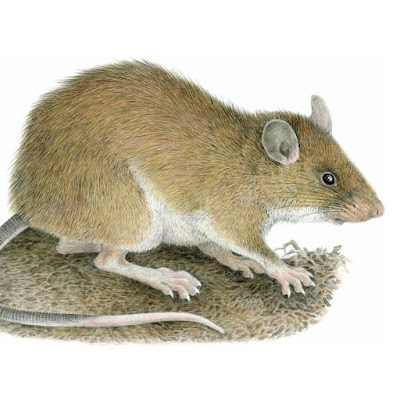
[Mammalogy • 2021] Bullimus carletoni • A New Species of Bullimus (Muridae, Rodentia) from southern Luzon Island, Philippines


Bullimus carletoni 
Heaney, Kyriazis, Balete, Rickart & Bates, 2021


Abstract
The Philippine endemic genus Bullimus is currently considered to include three species, one each from the Late Pleistocene islands of Greater Mindanao, Greater Luzon, and Camiguin. We describe a fourth species, Bullimus carletoni, new species, from the Caramoan Peninsula in southern Luzon based on analyses of molecular and craniodental data. Molecular data suggest that Bullimus colonized Luzon from the southern Philippines and began diversifying on Luzon by ca. 232 kya. This species is associated with partially disturbed forest habitat over limestone and ophiolitic soils, where it is active primarily on the ground at night. Recognition of this species raises the number of endemic mammals on the Bicol Peninsula of southern Luzon to six, emphasizing its importance as a center of endemism.

Keywords: biodiversity, biogeography, endemism, mammals, oceanic island, speciation

Drawing of lateral view of Bullimus carletoni based on FMNH 203244–203246.

 Bullimus carletoni, new species

Etymology.— We take special pleasure in naming this species in honor of our colleague, Michael Dean Carleton, in recognition of his great contributions to scientific knowledge through extensive museum collection-based biodiversity re-search and decades of patient and exemplary efforts as an Associate Editor of the Proceedings of the Biological Society of Washington. 

Distribution.—Documented only from the eastern portion of the Caramoan Peninsula (Fig. 1), with a possible report from the base of Saddle Peak (Balete et al. 2013). 

 
Lawrence R. Heaney, Christopher C. Kyriazis, Danilo S. Balete, Eric A. Rickart and John M. Bates. 2021. A New Species of Bullimus (Muridae, Rodentia) from southern Luzon Island, Philippines. Proceedings of the Biological Society of Washington. 134; 131–148. DOI: 10.2988/0006-324X-134.1.yy


Friday, April 23, 2021

[PaleoMammalogy • 2021] Crateromys ballik, Carpomys dakal & Batomys cagayanensis • Three New Extinct Species from the Endemic Philippine Cloud Rat Radiation (Rodentia, Muridae, Phloeomyini)


Crateromys ballikCarpomys dakal Batomys cagayanensis  

Ochoa, Mijares, Piper, Reyes & Heaney, 2021
Drawing by Velizar Simeonovski.
 
Abstract
The 18 extant members of the Tribe Phloeomyini, the “cloud rats,” constitute an endemic Philippine radiation of arboreal herbivores that range in size from ca. 18 g to 2.7 kg, most occurring in cloud forest above 1,200 m elevation. Although calibrated phylogenies indicate that the Phloeomyini is estimated to have begun diversifying within the Philippines by ca. 10–11 million years ago, no extinct fossil species have been described, severely limiting our understanding of this distinctive radiation. Our studies of fossil and subfossil small mammal assemblages from the lowland Callao Caves complex in NE Luzon, Philippines, have produced specimens of Phloeomyini that date from ca. 67,000 BP to the Late Holocene (ca. 4,000 to 2,000 BP). We identify three extinct species that we name as new members assigned to the genera Batomys, Carpomys, and Crateromys, distinguished from congeners by body size, distinctive dental and other morphological features, and occupancy of a habitat (lowland forest over limestone) that differs from the high-elevation mossy forest over volcanic soils occupied by their congeners. Batomys cagayanensis n. sp. is known only from two specimens from ca. 67,000 BP; Carpomys dakal n. sp. and Crateromys ballik n. sp. were present from ca. 67,000 BP to the Late Holocene. These add to the species richness and morphological diversity of this endemic Philippine radiation of large folivores, and show specifically that the lowland fauna of small mammals on Luzon was more diverse in the recent past than it is currently, and that Luzon recently supported five species of giant rodents (ca. 1 kg or more). All three occurred contemporaneously with Homo luzonensis, and two, the new Carpomys and Crateromys, persisted until the Late Holocene when multiple exotic mammal species, both domestic and invasive, were introduced to Luzon, and new cultural practices (such as making pottery) became evident, suggesting that modern humans played a role in their extinction.

Keywords: biogeography, body size, extinction, fossils, Holocene, Luzon, oceanic islands, paleoecology, Pleistocene, zooarchaeology

Lower molar teeth of the new giant cloud rat,  Carpomys new species (left), compared with the two living species of Carpomys (middle) plus their close relative, Musseromys (right).
Photos by Lauren Nassef, 
Field Museum of Natural History

Collage of fossil cloud rat teeth.
Upper molars of Crateromys new species on the left.
Lower mandibles on the right: top, Carpomys new species. Middle, Batomys new species. Bottom, Crateromys new species.
 Photos by Lauren Nassef, 
Field Museum of Natural History

Artist’s conception of the three extinct cloud rats, based on their living relatives.
From the top, Crateromys, Carpomys, and Batomys.
Drawing by Velizar Simeonovski, 
Field Museum of Natural History

 Callao Cave interior.
Photo by Patricia Cabrera

Callao Cave excavation.
Photo by A. Mijares


Janine Ochoa, Armand S. B. Mijares, Philip J. Piper, Marian C. Reyes and Lawrence R. Heaney. 2021. Three New Extinct Species from the Endemic Philippine Cloud Rat Radiation (Rodentia, Muridae, Phloeomyini). Journal of Mammalogy. gyab023. DOI: 10.1093/jmammal/gyab023

Ang mga buot o “cloud rats” ay kabilang sa isang endemikong radiyasyon sa Pilipinas na tinatawag na tribong Phloeomyini. Ang salitang buot (buut/buwət) ay katawagang gamit sa ilang wika sa Cordillera at hilagang Luzon para sa mga cloud rat at mga kaanyong mammal na naninirahan o umaakyat sa mga punungkahoy. May labing-walong uri ng buot ang kasalukyang matatagpuan sa Pilipinas, at sila ay may timbang mula 18 gramo hanggang 2.7 kilo. Karamihan sa kanila ay naninirahan sa kagubatan na tinatawag na “cloud forest” na natatagpuan sa mga bundok na may elebasyon na higit sa 1,200 m. Base sa genetikong datos, tinatayang ang ninunong lipi ng mga buot ay nakarating sa Pilipinas 14 na milyong taon na ang nakalipas, ngunit dahil sa kakulangan ng mga fossil ay limitado ang ating kaalaman tungkol sa kanilang ebolusyon. Ang mga arkeolohikal na hukay sa iba’t ibang yungib ng Callao (probinsiya ng Cagayan, hilagang-silangang Luzon) ay nakapagtala ng mga fossil na buot na may edad na ~67,000 taon hanggang sa Late Holocene (~4,000–2,000 libong taon). Tatlong napuksang sarihay o species ang aming natuklasan, at base sa kanilang naiibang anyo at ekolohiya, sila ay ipinapangalan bilang bagong kasapi ng mga urihay na Batomys, Carpomys, at Crateromys. Ang Batomys cagayanensis n. sp. ay kilala lamang mula sa dalawang specimen na may edad na ~67,000 taong nakalipas. Ang Carpomys dakal n. sp. at Crateromys ballik n. sp. ay natagpuan sa mga suson ng lupa na may edad mula ~67,000 taon hanggang Late Holocene. Ipinapakita ng mga fossil na ito na mas maraming uri pa ng maliliit na mammal ang nabuhay noon kaysa sa ngayon, at ang Luzon ay minsang nagtaglay ng limang uri ng malalaking buot na may timbang na isang kilo o higit pa. Ang tatlong fossil na buot ay namuhay kasabay ng Homo luzonensis, isang bagong tuklas na uri ng tao noong Pleistocene. Ang Carpomys dakal at Crateromys ballik ay nabuhay hanggang Late Holocene at nalipol sa panahon kung saan iba’t ibang mga mammal na domestikado at ilang ang dinala ng tao sa Luzon; gayundin, lumitaw ang mga bagong tradisyon tulad ng pagpapalayok. Ipinapahiwatig nito na ang mga aktibidad ng modernong tao ay maaaring nagdulot ng kanilang pagkalipol.

biogeography, fossils, Holocene, Luzon, oceanic islands, pagkalipol (extinction), paleoecology, Pleistocene, sukat ng katawan (body size), zooarchaeology

Wednesday, March 31, 2021

[Mammalogy • 2021] Molecular Phylogeny and Morphological Diversity of the Niviventer fulvescens Species Complex (Rodenti: Muridae) with Emphasis on Species from China


(A) Niviventer fengi Ge, Feijó & Yang; 
(B) Niviventer fulvescens (Gray, 1847); 
(D) Niviventer mekongis  (Robinson & Kloss, 1922); 
(E) Niviventer cremoriventer (Miller, 1900). 

in Ge, Feijó, Abramov, Wen, ... et Yang, 2021. 
 
Abstract
The Niviventer fulvescens species complex (NFSC), a group of abundant and taxonomically ambiguous rodent taxa, is distributed from Southeast Asia to south-eastern China. We combined molecular and morphological datasets to clarify the species composition and variation of the NFSC. Our phylogenetic analyses, using molecular data, recovered eight genetic lineages in the NFSC, including a novel, distinct lineage from Jilong, Tibet, China, which is described as a new species, Niviventer fengi sp. nov. The species status of N. fengi is supported by a species delimitation analysis, and it is morphologically distinguished from other members of the NFSC by its greyish dorsal fur, soft hairs covering the whole body and a hairy tail. NFSC species bearing well-developed spines are found at lower elevations. A comprehensive taxonomic revision of the NFSC within China is provided, represented by five species: N. cremoriventer, N. fulvescens, N. huang, N. mekongis comb. nov. and N. fengi. A further study of this species complex, including samples from Southeast Asia, is needed.

Keywords: mammals, molecular phylogeny, morphological comparison, Murinae, new species, rats, rodents


Order Rodentia 
Suborder Myomorpha 

Superfamily Muroidea 
Family Muridae 
Subfamily Murinae 

Genus Niviventer Marshall, 1976 

Comparison of the skin and skull of Niviventer fengi with closely related species. 
Niviventer fengi, A1, A2, IOZCAS JL17111; A3, A4, IOZCASJL17059, HBL = 146. 
Niviventer fulvescens, B1, B2, IOZCAS JD113; B3, B4, JL17057, HBL = 120. 
Niviventer huang, C1, C2, NHM 98.11.1.16; C3, C4, IOZCAS HN2017242, HBL = 125. 
Niviventer mekongis, D1, D2, NHM 26.11.17.13; D3, D4, ZIN102439, HBL = 134. 
Niviventer cremoriventer, E1, E2, KMIOZCAS; E3, E4. KMIOZCAS, HBL = 107.

Niviventer mekongis, D1, D2, NHM 26.11.17.13; D3, D4, ZIN102439, HBL = 134. 
Niviventer cremoriventer, E1, E2, KMIOZCAS; E3, E4. KMIOZCAS, HBL = 107.

Niviventer cremoriventer (Miller, 1900)
 Sundaic arboreal niviventer or dark-tailed tree rat.

Distribution: This species occupies the widest distribution range of members of the NFSC and is widely distributed in the Malay Peninsula, Sunda Islands and Southeast Asia. It was also discovered in Modao River, Jingdong, Yunnan Province, China.

Sympatric species: In China, N. cremoriventer has an overlapping distribution with C. langbianis, N. bukit, and N. mekongis. It is a typical rat of low and middle elevations (183–275 m) with a uniformly dark tail.


 Niviventer fulvescens (Gray, 1847)
Indomalayan niviventer, chestnut white-bellied rat.

Distribution: Nepal, south-western China and northern Indochina. In China it is distributed in higher mountains from south-western Yunnan to south-eastern Tibet.

Sympatric species: The distribution of N. fulvescens largely overlaps with those of N. andersoni and N. niviventer. The last two species also inhabit middle to high-elevation mountains in southern China. Niviventer andersoni is distinguishable by its larger size and bicoloured tail (the one-third near the tip is white) and N. niviventer belongs to the NNSC and has a darker pelage. 


Niviventer huang (Bonhote, 1905) 
 Lowland niviventer, Lowland white-bellied rat.

Distribution: This species is distributed in central and eastern China, including Sichuan, Yunnan, Guangxi, Guangdong, Fujian, Zhejiang, Hunan, Hubei, Guizhou and Hainan Island.

Sympatric species: Niviventer huang occurs in sympatry with N. mekongis in south China, and the confirmed overlapping records are from Lincang Snow Mountain, Lincang and Menghai, both in southern Yunnan Province. 


Niviventer fengi, A1, A2, IOZCAS JL17111; A3, A4, IOZCASJL17059, HBL = 146.
 Niviventer fulvescens, B1, B2, IOZCAS JD113; B3, B4, JL17057, HBL = 120.
 Niviventer huang, C1, C2, NHM 98.11.1.16; C3, C4, IOZCAS HN2017242, HBL = 125. 

Niviventer mekongis (Robinson & Kloss, 1922) comb. nov.
Mekong niviventer, Mekong white-bellied rat. 

Rattus blythi mekongis Robinson & Kloss, 1922: 96. Bak Mat on the Mekong River (N 18º 53′), Laos. 
Rattus bukit condorensis Kloss, 1926: 357. Pulo Condore, near the south-eastern coast of Cochinchina (Con Son Island, south Vietnam).

Distribution: Niviventer mekongis is confined to Vietnam, Laos and southern Yunnan and Guangxi Provinces of China.

Sympatric species: Niviventer mekongis occurs sympatrically with N. cremoriventer and N. bukit. Niviventer cremoriventer is easily distinguishable from N. mekongis by its uniformly black tail. Niviventer bukit is distinguishable from N. mekongis by its shorter TL and darker pelage colouration. 


Niviventer fengi Ge, Feijó and Yang sp. nov. 
 Jilong soft-furred niviventer, Tibetan white-bellied rat.

Etymology: We named this new species in honour of Prof. Zuojian Feng from IOZCAS for the great contribution to the study of mammals in China.

Distribution: This species is known from Jilong Valley, Rikaze, Tibet Province, China, near the Nepalese border. Etymology: We named this new species in honour of Prof. Zuojian Feng from IOZCAS for the great contribution to the study of mammals in China.


Sympatric species: Niviventer fengi is sympatric with N. fulvescens and N. eha, but they are distinct in external morphology.


Deyan Ge, Anderson Feijó, Alexei V Abramov, Zhixin Wen, Zhengjia Liu, Jilong Cheng, Lin Xia, Liang Lu and Qisen Yang. 2021. Molecular Phylogeny and Morphological Diversity of the Niviventer fulvescens Species Complex with Emphasis on Species from China. Zoological Journal of the Linnean Society. 191(2); 528–547. DOI: 10.1093/zoolinnean/zlaa040