Showing posts with label 2006. Show all posts

Saturday, December 4, 2021

[Paleontology • 2021] Effigia okeeffeae • Cranial Functional Morphology of the Pseudosuchian and Implications for Its Ecological Role in the Triassic


 Effigia okeeffeae Nesbitt & Norell, 2006

in Bestwick, Jones, Nesbitt, ... et Butler, 2021. 
Artwork by Mark Witton
 
Abstract
Pseudosuchians, archosaurian reptiles more closely related to crocodylians than to birds, exhibited high morphological diversity during the Triassic with numerous examples of morphological convergence described between Triassic pseudosuchians and post-Triassic dinosaurs. One example is the shuvosaurid Effigia okeeffeae which exhibits an “ostrich-like” bauplan comprising a gracile skeleton with edentulous jaws and large orbits, similar to ornithomimid dinosaurs and extant palaeognaths. This bauplan is regarded as an adaptation for herbivory, but this hypothesis assumes morphological convergence confers functional convergence, and has received little explicit testing. Here, we restore the skull morphology of Effigia, perform myological reconstructions, and apply finite element analysis to quantitatively investigate skull function. We also perform finite element analysis on the crania of the ornithomimid dinosaur Ornithomimus edmontonicus, the extant palaeognath Struthio camelus and the extant pseudosuchian Alligator mississippiensis to assess the degree of functional convergence with a taxon that exhibit “ostrich-like” bauplans and its closest extant relatives. We find that Effigia possesses a mosaic of mechanically strong and weak features, including a weak mandible that likely restricted feeding to the anterior portion of the jaws. We find limited functional convergence with Ornithomimus and Struthio and limited evidence of phylogenetic constraints with extant pseudosuchians. We infer that Effigia was a specialist herbivore that likely fed on softer plant material, a niche unique among the study taxa and potentially among contemporaneous Triassic herbivores. This study increases the known functional diversity of pseudosuchians and highlights that superficial morphological similarity between unrelated taxa does not always imply functional and ecological convergence.


Jordan Bestwick, Andrew S. Jones, Sterling J. Nesbitt, Stephan Lautenschlager, Emily J. Rayfield, Andrew R. Cuff, David J. Button, Paul M. Barrett, Laura B. Porro and Richard J. Butler. 2021. Cranial Functional Morphology of the Pseudosuchian Effigia and Implications for Its Ecological Role in the Triassic. The Anatomical Record. DOI: 10.1002/ar.24827  

Nibbling prehistoric herbivore sheds new light on Triassic diversity

Sunday, November 13, 2016

[Cephalopoda • 2006] Wunderpus photogenicus • A New Octopus (Cephalopoda: Octopodidae) from the Shallow Waters of the Indo-Malayan Archipelago


Wunderpus photogenicus  
 Hochberg, Norman & Finn, 2006 

Abstract 
Wunderpus photogenicus n. gen. and n. sp. is a spectacular long-armed species that occurs on soft sediment habitats in shallow waters (typically less than 20 m deep) in Indo-Malayan waters. It is characterized by small eyes on elongate stalks, a long, conical papilla over each eye and a dramatic and fixed color pattern of white bars and spots over a brown-red background. The distribution of the species is centered in the Indo-Malayan Archipelago and extends from Vanuatu to Papua New Guinea, Indonesia and Malaysia, north to the Philippines. Animals typically emerge at dusk and dawn to forage in the twilight, primarily catching small crustaceans and fishes by flaring the arms and webs over patches of sand or coral rubble to trap enclosed (and typically buried) prey. The species also extends its arms into holes to probe for potential prey. The distinctive color pattern of this species is most pronounced when the octopus is disturbed or threatened by real or perceived attackers. It appears to be a warning display and may represent one of two scenarios: either 1) it warns that the octopus is directly toxic or venomous by nature or; 2) it represents impersonations of toxic or venomous creatures with similar color patterns which cooccur in the same habitat. The new genus and species is compared with, and distinguished from, other long-armed octopuses.

Key words: Wunderpus, octopus, Octopodidae, Cephalopoda, Indo-Malayan Archipelago, taxonomy


FIGURE 4. Wunderpus photogenicus n. sp. Photographs of live animals:
B. Female from Philippines stretched out on substrate; photographed in Steinhart Aquarium (23 mm ML, CASIZ 081006; Photo: D. Chivers);
C. Foraging animal showing suppressed color pattern; in situ photograph, Lembeh Strait, North Sulawesi, Indonesia (Photo: M.D. Norman);
D. Foraging animal showing flared web of speculative pounce posture; in situ photograph, Lembeh Strait, North Sulawesi, Indonesia (Photo: D. Nielsen-Tackett).

Wunderpus photogenicus n. gen. and n. sp.

Etymology: Wunderpus: from the German ‘wünder’ meaning “marvel or wonder”. Specific name in recognition of the considerable photographic interest in this spectacular species in the media in recent years.

 Common Name “Wunderpus”.

Distribution: Wunderpus photogenicus n. sp. is known from shallow waters of the tropical Indo-Malayan Archipelago from Indonesia and the Philippines, east to Papua New Guinea, and the Solomon Islands and Vanuatu (Fig. 6). Reports from underwater photographers and data from collected specimens indicate a depth range from 0.5 to at least 20 m.

FIGURE 4. Wunderpus photogenicus n. sp. Photographs of live animals:
 
A. Alarm display of female from Vanuatu; aquarium photograph (27 mm ML, SBMNH 369471; Photo: A. Kerstitch); B. Female from Philippines stretched out on substrate; photographed in Steinhart Aquarium (23 mm ML, CASIZ 081006; Photo: D. Chivers);  

F.G. Hochberg, Mark D. Norman and Julian K. Finn. 2006. Wunderpus photogenicus n. gen. and sp., A New Octopus from the Shallow Waters of the Indo-Malayan Archipelago (Cephalopoda: Octopodidae). Molluscan Research. 26(3); 128–140. 

Why Do Octopuses Remind Us So Much of Ourselves?
 http://on.natgeo.com/2dmRVDu @NatGeo


Thursday, October 13, 2016

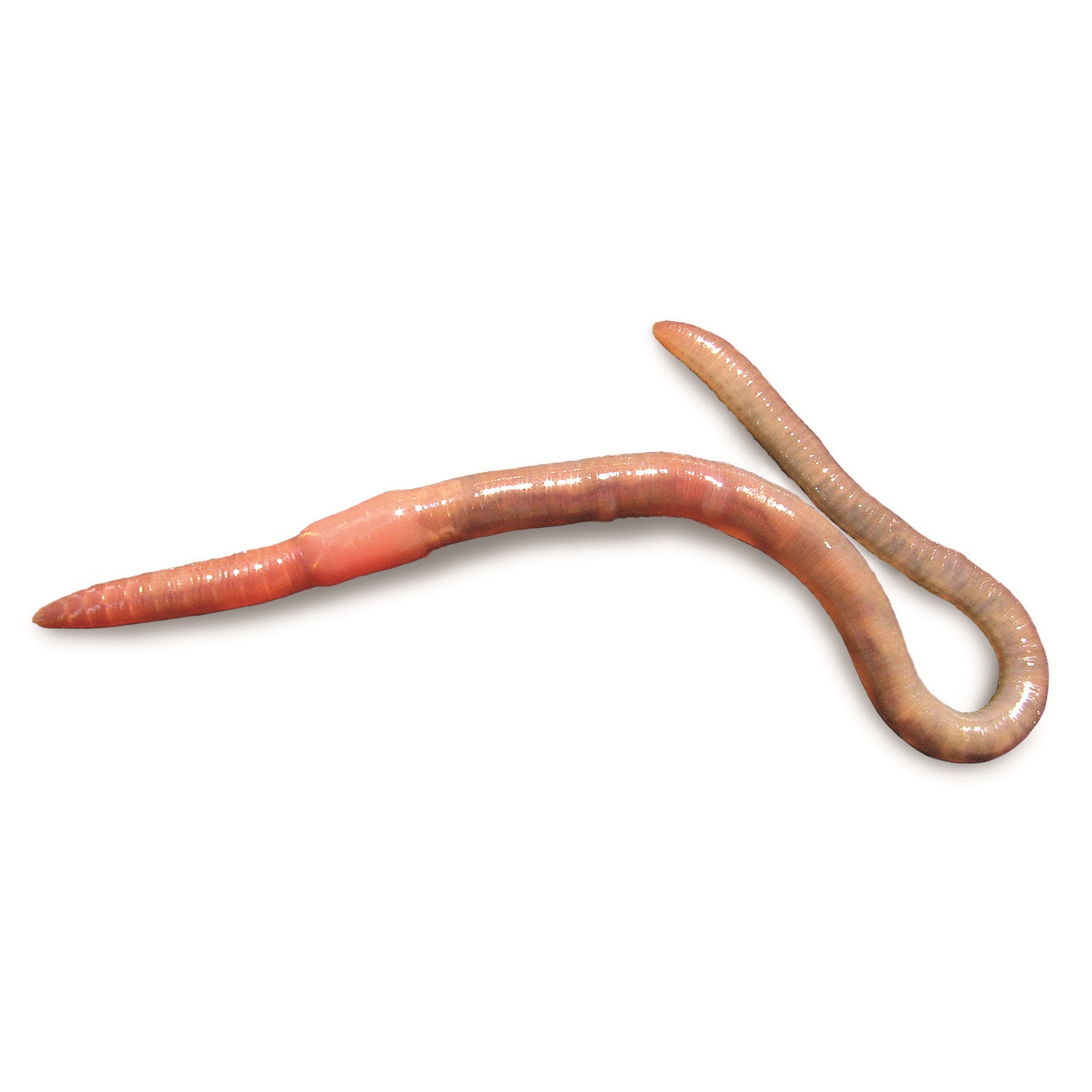
[Invertebrate • 2016] Kazimierzidae • A New Family for the Genus Kazimierzus, earlier recorded to the composite Microchaetidae (Annelida, Oligochaeta)


A live individual of a Kazimierzus sp. 
photo: Samuel James  
  DOI:  
10.3897/AfrInvertebr.57.10042 

Abstract
A review of the genus Kazimierzus Plisko, 2006, based on available type material enriched by study of selected specimens from the earthworm collection gathered at the NMSA and literature, revealed that the species presently accredited to this genus are characterized by unique features and clearly differ from the species of the other genera endorsed to Microchaetidae. Basing on this discovery the genus Kazimierzus is separated from Microchaetidae and Kazimierzidae fam. n. is erected to accommodate the whole 21 species of this genus. Species accredited to the new family Kazimierzidae are listed, their peculiar characters and specific distribution discussed.

Keywords: Kazimierzus, Oligochaeta, South Africa, megadrile, earthworms, indigenous species, Afrotropical region


Taxonomy
Kazimierzidae Nxele & Plisko, fam. n.
http://zoobank.org/3C9091CD-990A-448E-8153-B88671266761

Type genus: Kazimierzus Plisko, 2006: 46.

Diagnosis: Dorsal blood vessel simple throughout the body, rarely enlarging in segments 8 or 9. Excretory system holoic with nephridial bladders proclinate J–shaped. Testes arranged in holandric (male funnels in segments 10 and 11) or metandric (male funnels in segment 11) condition, enclosed or free. Seminal vesicles one or two pairs, confined to one or two segments (in 11 or 12, or in 11 and 12); the latter pair may be extended backwards, behind segment 12 (sometimes to segment 30). Spermathecae testicular or post testicular. Oesophageal gizzard in 7, muscular. Some of the preclitellar septa 4/5–9/10 variably thickened. Calciferous glands not stalked, in one or two segments (9, 10 or 11): encircling oesophagus with vestigial medial and dorsal grooves, or dorsoventral, paired, with obvious medial and dorsal grooves. Secondary annulation of preclitellar segments present; segment 1 and 2 fused appearing as one segment, 4–9, 10 ringleted with 2 or 3 ringlets, annulated or not. Setae minute, eight per segment in four pairs.

Description: Pigmented or not; alive violetish-grey or grey; preserved whitish grey. Body length not exceeding 350 mm, and 2–15 mm wide at tubercula pubertatis. Average number of segments 100–550. Setae minute; on preclitellar segments visible on various segments or easily visible on papillae, on post clitellar segments in regular rows. Female pores paired, in 14. Clitellum saddle-shaped. Tubercula pubertatis variable in shape and location. Papillae present, located variably. Spermathecal pores located in or behind testis segments. Vasa deferentia paired in holandric, one pair in metandric species. Genital glands various in size and position. Spermathecal ampullae with variably shaped ducts.

Distribution: All species presently accredited to Kazimierzus are known from a limited area in the western and south-western Atlantic coast of South Africa. The distribution of these species is poorly known as the most known species have only been collected from their type localities, some species represented only by a holotype. The species are known from variable biotopes: wet, muddy soil, or very dry soil; collected between hard rocks in mountain areas characterized by winter-fall and associated with topography of western escarpment and neighbouring Namaqualand, boardering the Atlantic seaboard. Species occurrence may be expected to continue from the Northern Cape Province to the neighbouring Namibia. The distribution pattern observed in Kazimierzus may be influenced by the soil, vegetation (Succulent Karoo Biome) or habitat transformation although this has never been tested.

Remarks: 
There is currently one genus, Kazimierzus, in this family comprising the following species: Kazimierzus alipentus (Plisko, 1998); K. circulatus (Plisko, 1998); K. crousi (Pickford, 1975); K. davidi (Plisko, 1998); K. franciscus (Pickford, 1975); K. guntheri (Pickford, 1975); K. hamerae (Plisko, 1998); K. imitatus (Plisko, 1998); K. ljungstroemi (Pickford, 1975); K. metandrus (Plisko, 1998); K. obscurus (Plisko, 1998); K. occidualis (Plisko, 1998); K. occiduus (Plisko, 1998); K. pauli (Plisko, 1998); K. pearsonianus (Pickford, 1975); K. pentus (Plisko, 1998); K. peringueyi (Michaelsen, 1913); K. rosai (Michaelsen, 1908); K. senarius (Plisko, 1998); K. sirgeli (Plisko, 1996); K. sophieae (Plisko, 2002).


 Thembeka C. Nxele, J. Danuta Plisko, Tarombeta Mwabvu and T. Oliver Zishiri. 2016. A New Family Kazimierzidae for the Genus Kazimierzus, earlier recorded to the composite Microchaetidae (Annelida, Oligochaeta). African Invertebrates. 57(2); 111-117. DOI:  10.3897/AfrInvertebr.57.10042

Plisko, J.D. 2006. A systematic reassessment of the genus Microchaetus Rapp, 1849: its amended definition, reinstatement of Geogenia Kinberg, 1867, and erection of a new genus Kazimierzus (Oligochaeta: Microchaetidae). African Invertebrates. 47: 31–56.  http://africaninvertebrates.org/ojs/index.php/AI/article/view/255

Unfamiliar bloodline: New family for an earthworm genus with exclusive circulatory system http://blog.pensoft.net/2016/10/12/unfamiliar-bloodline-new-family-for-an-earthworm-genus-with-exclusive-circulatory-system/

Thursday, September 29, 2016

[Herpetology • 2006] Laticauda frontalis (de Vis, 1905) and Laticauda saintgironsi n. sp. from Vanuatu and New Caledonia (Serpentes: Elapidae: Laticaudinae) — A New Lineage of Sea Kraits?


Laticauda saintgironsi 
Cogger & Heatwole, 2006

 
photo: twitter.com/bungarus666 

ABSTRACT 

The sea krait Laticauda colubrina is the most widespread member of its genus, extending from the Bay of Bengal through much of Asia and the Indo-Malayan Archipelago to New Guinea and many islands of the western Pacific Ocean. Unconfirmed records of the species may extend the range to the western coast of Central America. The species is subject to marked geographic variation in a number of morphological and meristic characters that have to date defied finer taxonomic resolution. Two members of this complex previously subsumed under the specific name colubrina are here formally elevated to full species status. One species — Laticauda saintgironsi n.sp. — consists of those populations of L. colubrina s.l. found around the coast and in the coastal waters of the main island of New Caledonia. The second species — Laticauda frontalis (de Vis, 1905) — is a dwarf species found in sympatry and syntopy with Laticauda colubrina in Vanuatu and the Loyalty Islands of New Caledonia.


 Harold G. Cogger and Harold F. Heatwole. 2006. Laticauda frontalis (de Vis, 1905) and Laticauda saintgironsi n.sp. from Vanuatu and New Caledonia (Serpentes: Elapidae: Laticaudinae) — A New Lineage of Sea Kraits?
Records of the Australian Museum. 58: 245–256.

Thursday, July 14, 2016

[Herpetology • 2006] Crocker Range National Park, Sabah, as A Refuge for Borneo’s Montane Herpetofauna


Abstract

Crocker Range National Park in Sabah (East Malaysia), northern Borneo, is an exceptional area for herpetological diversity. Inventories of the Park are incomplete, but show high diversity, as well as regional endemicity shared with the adjacent and more well-known Gunung Kinabalu National Park. The montane ecosystem of the Range offers refuge for a number of rare herpetofaunal taxa, including Stoliczkia borneensis, Rhabdophis murudensis, Oligodon everetti, Philautus bunitus, Ansonia anotis, Sphenomorphus aesculeticola, and undescribed species of squamates of the genera Sphenomorphus and Gongylosoma. The 59 species of amphibians and 45 species of reptiles now recorded from the Range represent 39 and 16.2 per cent of the total Bornean amphibian and reptile fauna, respectively. The high levels of deforestation of the surrounding regions of Borneo, particularly lowland rainforests, highten the importance of protection of primary forests of northern Borneo’s Crocker Range.

Key words. Crocker Range National Park, Sabah, Malaysia, herpetofauna, conservation


Indraneil Das. 2006. Crocker Range National Park, Sabah, as A Refuge for Borneo’s Montane Herpetofauna. Amphibian and Reptile Conservation. 4(1):3-11. DOI:  10.1514/journal.arc.0040015  http://amphibian-reptile-conservation.org/pdfs/Volume/Vol_4/ARC_4_3-11_e15.pdf


Saturday, May 28, 2016

[PaleoIchthyology • 2016] Meemannia eos • The Oldest Actinopterygian Highlights the Cryptic Early History of the Hyperdiverse Ray-Finned Fishes


Meemannia eos 
Life restoration by Brian Choo english.ivpp.cas.cn

Highlights
• Once considered a lobe-fin, Meemannia is the oldest ray-finned fish
• MicroCT reveals ray-fin characters including lateral cranial and spiracular canals
• Meemannia revises hypotheses of bone histology in the ancestor of bony fishes
• “Cosmine”-like tissues are also present in the ray-fin Cheirolepis

Summary
Osteichthyans comprise two divisions, each containing over 32,000 living species: Sarcopterygii (lobe-finned fishes and tetrapods) and Actinopterygii (ray-finned fishes). Recent discoveries from China highlight the morphological disparity of early sarcopterygians and extend their origin into the late Silurian. By contrast, the oldest unambiguous actinopterygians are roughly 30 million years younger, leaving a long temporal gap populated by fragments and rare body fossils of controversial phylogenetic placement. Here we reinvestigate the enigmatic osteichthyan Meemannia from the Early Devonian (∼415 million years ago) of China, previously identified as an exceptionally primitive lobe-finned fish. Meemannia combines “cosmine”-like tissues taken as evidence of sarcopterygian affinity with actinopterygian-like skull roof and braincase geometry, including endoskeletal enclosure of the spiracle and a lateral cranial canal. We report comparable histological structures in undoubted ray-finned fishes and conclude that they are general osteichthyan features. Phylogenetic analysis places Meemannia as an early-diverging ray-finned fish, resolving it as the sister lineage of Cheirolepis plus all younger actinopterygians. This brings the first appearance of ray-fins more in line with that of lobe-fins and fills a conspicuous faunal gap in the otherwise diverse late Silurian-earliest Devonian vertebrate faunas of the South China Block.

Fig.1 Cranial anatomy of Meemannia eos based on High-Resolution Computed Tomography.
A Dorsal view; B Ventral view; C Endocast in dorsal view; D Endocast of Mimipiscis in dorsal view
(Image by LU Jing).


Fig.3 Summary phylogeny, simplified from the strict consensus tree, and the evolution of key Actinopterygian features
(Image by LU Jing).


Jing Lu, Sam Giles, Matt Friedman, Jan L. den Blaauwen and Min Zhucor. 2016. The Oldest Actinopterygian Highlights the Cryptic Early History of the Hyperdiverse Ray-Finned Fishes. Current Biology. DOI:  10.1016/j.cub.2016.04.045 

Oldest Actinopterygian from China Provides New Evidence for the Origin of Ray-Finned Fishes


Min Zhu, Xiaobo Yu, Wei Wang, Wenjin Zhao and Liantao Jia. 2006. A primitive fish provides key characters bearing on deep osteichthyan phylogeny. Nature. 441, 77-80. DOI: 10.1038/nature04563

1st Min Zhu, W. Wang and Xiaobo Yu. 2010. Meemannia eos, a basal sarcopterygian fish from the Lower Devonian of China –expanded description and significance. in D.K. Elliott, J.G. Maisey, X.-B. Yu, D.-S. Miao (Eds.), Morphology, Phylogeny and Paleobiogeography of Fossil Fishes, Verlag Dr. Friedrich Pfeil; 199–214. 

Thursday, December 10, 2015

[Paleontology • 2006] Yinlong downsi • A Basal Ceratopsian with Transitional Features from the Late Jurassic of northwestern China


Yinlong downsi 
Xu, Forster, Clark & Mo, 2006
illustration: Andrey Atuchin || doi: 10.1098/rspb.2006.3566

Although the Ceratopsia and Pachycephalosauria, two major ornithischian groups, are united as the Marginocephalia, few synapomorphies have been identified due to their highly specialized body-plans. Several studies have linked the Heterodontosauridae with either the Ceratopsia or Marginocephalia, but evidence for these relationships is weak, leading most recent studies to consider the Heterodontosauridae as the basal member of another major ornithischian radiation, the Ornithopoda. Here, we report on a new basal ceratopsian dinosaur, Yinlong downsi gen. et. sp. nov., from the Late Jurassic upper part of the Shishugou Formation of Xinjiang, China. This new ceratopsian displays a series of features transitional between more derived ceratopsians and other ornithischians, shares numerous derived similarities with both the heterodontosaurids and pachycephalosaurians and provides strong evidence supporting a monophyletic Marginocephalia and its close relationship to the Heterodontosauridae. Character distributions along the marginocephalian lineage reveal that, compared to the bipedal Pachycephalosauria, which retained a primitive post-cranial body-plan, the dominantly quadrupedal ceratopsians lost many marginocephalian features and evolved their own characters early in their evolution.

Keywords: Ceratopsia; Marginocephalia; Ornithischia; Late Jurassic; Shishugou Formation


Systematic palaeontology

Ornithischia Seeley, 1887.
Heterodontosauriformes new taxon.

Marginocephalia, Sereno (1986).
Ceratopsia Marsh, 1890.

Yinlong downsi gen et sp nov.

  Etymology: Yin’ and ‘long’ mean ‘hiding’ and ‘dragon’ in Chinese, respectively, derived from the movie ‘Crouching Tiger, Hidden Dragon’ which was filmed in the locality where the holotype was found; the specific name is in memory of Mr Will Downs, who joined many palaeontological expeditions in China including the one with us in 2003, shortly before his death.

Holotype: IVPP V14530, a nearly complete skeleton missing only the distal tail (figure 1 and figures 1 and 2 of electronic supplementary material).

Locality and horizon: Wucaiwan, Junggar Basin, Xinjiang, China; upper part of Shishugou Formation, correlated with the Oxfordian stage of the early Late Jurassic (Chen 1996; Eberth et al. 2001).


Figure 2: IVPP V14530. (a) Skull and mandible in lateral view. (b) Skull in dorsal view.
Abbreviations: an, angular; d, dentary; emf, external mandibular fenestra; en, external naris; f, frontal; ff, fossa on frontals; fn, fossa on nasals; itf, infratemporal fenestra; j, jugal; m, maxilla; p, parietal; pa, palpebral; pd, predentary; pm, premaxilla; po, postorbital; q, quadrate; qj, quadratojugal; r, rostral bone; sa, surangular; sq, squamosal; stf, supratemporal fenestra; tr, tubercle row; ts, tubercle on surangular. Scale bar, 2 cm.


 Xing Xu, Catherine A. Forster, James M. Clark and Jinyou Mo. 2006. A Basal Ceratopsian with Transitional Features from the Late Jurassic of northwestern China. Proc. R. Soc. B. 273 (1598): 2135–2140.  doi: 10.1098/rspb.2006.3566

Feng-Lu Han, Catherine A. Forster, James M. Clark & Xing Xu. 2015. Cranial anatomy of Yinlong downsi (Ornithischia: Ceratopsia) from the Upper Jurassic Shishugou Formation of Xinjiang, China.  Journal of Vertebrate Paleontology. DOI: 10.1080/02724634.2015.1029579


"Hey, you! those are not easter eggs!"
by ChrisMasna chrismasna.DeviantAr.com

Thursday, May 14, 2015

[Botany • 2014] Taxonomic Status, Phylogenetic Affinities and Genetic Diversity of A presumed Extinct Genus, Paraisometrum W.T. Wang (Gesneriaceae) from the Karst Regions of Southwest China


Abstract
Background

The karst regions in South China have an abundance of endemic plants that face high extinction risks. The Chinese Gesneriaceae endemic Paraisometrum mileense ( = Oreocharis mileensis), was presumed extinct for 100 years. After its re-discovery, the species has become one of five key plants selected by the Chinese forestry government to establish a new conservation category for plants with extremely small populations. For conservation purposes, we studied the phylogenetic and population genetic status of P. mileense at the three only known localities in Guangxi, Guizhou and Yunnan.

Methodology/Principal Findings

We collected 64 samples (52 species) of Oreocharis and 8 samples from three provinces of P. mileense and generated molecular phylogenies, and inferred that P. mileense represents a relatively isolated and derived taxonomic unit within Oreocharis. Phylogeographic results of 104 samples of 12 populations of P. mileense indicated that the populations in Yunnan have derived from those in Guangxi and Guizhou. Based on AFLP data, the populations were found to harbor low levels of genetic diversity (He = 0.118), with no apparent gradient across the species’ range, a restricted gene flow and significant isolation-by-distance with limited genetic differentiation among the populations across the three provinces (FST = 0.207, P<0.001). The 10 populations in Yunnan were found to represent two distinct lineages residing at different altitudes and distances from villages.

Conclusion/Significance

The low levels of genetic diversity found in P. mileense are perhaps a consequence of severe bottlenecks in the recent past. The distribution of the genetic diversity suggests that all populations are significant for conservation. Current in situ and ex situ measures are discussed. Further conservation actions are apparently needed to fully safeguard this conservation flagship species. Our work provides a model of an integrated study for the numerous endemic species in the karst regions with extremely small populations.


Paraisometrum mileense
photograph: Yu-Min Shui.
doi: 10.1371/journal.pone.0107967


Chen, W. H., Y. M. Shui, J. B. Yang, H. Wang, K. Nishii, F. Wen, Z. R. Zhang & M. Möller. 2014. Taxonomic Status, Phylogenetic Affinities and Genetic Diversity of A presumed Extinct Genus, Paraisometrum W.T. Wang (Gesneriaceae) from the Karst Regions of Southwest China. PLoS ONE. 9(9): e107967. doi: 10.1371/journal.pone.0107967

Paraisometrum mileense, an "extinct" plant rediscovered 
A wild population of P. mileense, thought to be extinct in the wild for 100 years, has been rediscovered in Yunnan, China by the Millennium Seed Bank Partnership.

Saturday, July 19, 2014

[PaleoMammalogy • 2014] Notiolofos cf. arquinotiensis • The Oldest Mammals from Antarctica, early Eocene of the La Meseta Formation, Seymour Island


Figure 1. Geographical and stratigraphical provenance of the remains described here.
Figure 2. View of the north-west side of the Seymour Island. The arrow indicates the position of locality IAA 1/13.

Abstract
New fossil mammals found at the base of Acantilados II Allomember of the La Meseta Formation, from the early Eocene (Ypresian) of Seymour Island, represent the oldest evidence of this group in Antarctica. Two specimens are here described; the first belongs to a talonid portion of a lower right molar assigned to the sparnotheriodontid litoptern Notiolofos sp. cf. N. arquinotiensis. Sparnotheriodontid were medium- to large-sized ungulates, with a wide distribution in the Eocene of South America and Antarctica. The second specimen is an intermediate phalanx referred to an indeterminate Eutheria, probably a South American native ungulate. These Antarctic findings in sediments of 55.3 Ma query the minimum age needed for terrestrial mammals to spread from South America to Antarctica, which should have occurred before the final break-up of Gondwana. This event involves the disappearance of the land bridge formed by the Weddellian Isthmus, which connected West Antarctica and southern South America from the Late Cretaceous until sometime in the earliest Palaeogene.
Keywords: West Antarctica; Palaeogene; Ypresian; tooth and bone morphology; ungulates; Sparnotheriodontidae


Class MAMMALIA Linnaeus, 1758
Order LITOPTERNA Ameghino, 1889
Family SPARNOTHERIODONTIDAE Soria, 1980

Genus NOTIOLOFOS Bond, Reguero, Vizcaíno, Marenssi and Ortiz Jaureguizar, 2009
Type species: Notiolofos arquinotiensis (Bond, Reguero, Vizcaíno and Marenssi, 2006).

Notiolofos cf. N. arquinotiensis (Bond, Reguero, Vizcaíno and Marenssi, 2006)  


 Javier N. Gelfo, Thomas Mörs, Malena Lorente, Guillermo M. López, Marcelo Reguero. in press. The Oldest Mammals from Antarctica, early Eocene of the La Meseta Formation, Seymour Island. Palaeontology. doi: dx.doi.org/10.1111/pala.12121.

Bond, M., Reguero, M. A., Vizcaíno, S. F. and Ortiz-Jaureguizar, E. 2009. Notiolofos, a replacement name for Notolophus Bond, Reguero, Vizcaíno and Marenssi, 2006, a preoccupied name. Journal of Vertebrate Paleontology. 29, 979.

M. Bond, M. A. Reguero, S. F. Vizcaíno and S. A. Marenssi. 2006. A New ‘South American ungulate’ (Mammalia: Litopterna) from the Eocene of the Antarctic Peninsula. In J. E. Francis, D. Pirrie, J. A. Crame (eds). Cretaceous-tertiary high-latitude palaeoenvironments: James Ross Basin, Antarctica. The Geological Society of London. 258(1): 163–176. doi: dx.doi.org/10.1144/GSL.SP.2006.258.01.12.

[PaleoMammalogy • 2006] Notiolofos (Notolophus) arquinotiensis • A New ‘South American ungulate’ (Mammalia: Litopterna) from the Eocene of the Antarctic Peninsula


Abstract

Notolophus arquinotiensis, a new genus and species of the family Sparnotheriodontidae (Mammalia, Litopterna), is represented by several isolated teeth from the shallow-marine sediments of the La Meseta Formation (late Early-Late Eocene) of Seymour Island, Antarctic Peninsula, which have also yielded the youngest known sudamericids and marsupials. The new taxon belongs to the extinct order of ‘South American native ungulate’ Litopterna characterized by the convergence of the later forms with the equids and camelids. Notolophus arquinotiensis shows closest relationships with Victorlemoinea from the Itaboraian (middle Palaeocene) of Brazil and Riochican-Vacan (late Palaeocene-early Eocene) of Patagonia, Argentina. Although still poorly documented, this new taxon shows that the early Palaeogene Antarctic faunas might provide key data concerning the problems of the origin, diversity and basal phylogeny of some of the ‘South American ungulates’ (Litopterna). This new taxon shows the importance of Antarctica in the early evolution of the ungulates and illustrates our poor state of knowledge.


M. Bond, M. A. Reguero, S. F. Vizcaíno and S. A. Marenssi. 2006. A New ‘South American ungulate’ (Mammalia: Litopterna) from the Eocene of the Antarctic Peninsula. In J. E. Francis, D. Pirrie, J. A. Crame (eds). Cretaceous-tertiary high-latitude palaeoenvironments: James Ross Basin, Antarctica. The Geological Society of London. 258(1): 163–176. doi: dx.doi.org/10.1144/GSL.SP.2006.258.01.12.

Bond, M., Reguero, M. A., Vizcaíno, S. F. and Ortiz-Jaureguizar, E. 2009. Notiolofos, a replacement name for Notolophus Bond, Reguero, Vizcaíno and Marenssi, 2006, a preoccupied name. Journal of Vertebrate Paleontology. 29, 979.

 Javier N. Gelfo, Thomas Mörs, Malena Lorente, Guillermo M. López, Marcelo Reguero.  in press. The oldest mammals from Antarctica, early Eocene of the La Meseta Formation, Seymour Island. Palaeontology. doi: dx.doi.org/10.1111/pala.12121.

Saturday, May 17, 2014

[Herpetology • 2006] Paradoxophyla tiarano • A New Narrow-mouthed Frog of the Genus Paradoxophyla (Microhylidae: Scaphiophryninae) from Masoala rainforest, northeastern Madagascar


Paradoxophyla tiarano
Andreone, Aprea, Odierna, & Vences, 2006


Abstract
 A new microhylid frog of the genus Paradoxophyla is described from the rainforests of northeastern Madagascar (Masoala). Paradoxophyla tiarano n. sp. was found in still waters within rainforest. In external morphology it is similar to P. palmata, hitherto the only known species belonging to this genus, but it differs by a much less extended foot webbing. We also provide a description of the probable tadpole of the species, which is a specialized suspension feeder of the typical microhylid type. The new species also differs from P. palmata in karyology and mitochondrial DNA sequences. Paradoxophyla tiarano n. sp. is currently known from Masoala, but we suspect that its distribution might extend over a wider area in northeastern Madagascar.
Key Words. Amphibia, Anura, Microhylidae, Paradoxophyla, New species, Madagascar

Etymology: The specific epithet “tiarano” (pronounced: tee-how-row-noo) is a Malagasy term composed by two words: “tia”, which means “love” and “to love,” “to like,” and “rano,” meaning “water.” The name means “that one loving the water,” and is used as a noun in apposition, underlining the aquatic habits of this frog.


 Andreone, F., Aprea, G., Odierna, G., & Vences, M. 2006. A New Narrow-mouthed Frog of the Genus Paradoxophyla (Microhylidae: Scaphiophryninae) from Masoala rainforest, northeastern Madagascar. Acta Herpetologica. 1: 15-27.

Tuesday, March 18, 2014

[Ichthyology • 2006] Morphology and Distribution of the Cave Knifefish Eigenmannia vicentespelaea Triques, 1996 (Gymnotiformes: Sternopygidae) from Central Brazil, with an expanded Diagnosis and comments on Subterranean Evolution


(upper) Living specimen of Eigenmannia vicentespelaea with relatively well developed eyes and translucent aspect. Note the three longitudinal stripes (LEA: 121.9 mm). Photo: José Sabino.
(lower) Sinkhole of São Vicente Cave System, São Domingos karst area, Goiás State, Central Brazil – type locality of Eigenmannia vicentespelaea Triques, 1996. Photo: E. M. Bichuette


We present herein data on morphology and distribution of the cave knifefish Eigenmannia vicentespelaea Triques, 1996, from the São Domingos karst area, Central Brazil, comparing it to the epigean (surface) species, Eigenmannia sp., found in the same area (but not syntopic with E. vicentespelaea) and also with congeners from other localities. Collecting sites comprising epigean and subterranean stream reaches in São Domingos were sampled during the dry seasons of 1999, 2000, and 2001 using several methods. Preserved specimens of E. vicentespelaea (n=25, including holotype and paratype) and of Eigenmannia sp. (n=15) were compared with focus on morphometric characters, body pigmentation and eye condition. A combination of characters separates E. vicentespelaea from Eigenmannia sp. and other congeners: the length from the tip of the snout to the posterior of the anal fin base, ocular diameter: head length and pre-anal distance: head length proportions, and body pigmentation. A wider morphometric variation in E. vicentespelaea is described than that reported in the original description (based on two specimens).

Key words: Morphometric data, electric fishes, cave environment, São Domingos karst area.


Maria Elina Bichuette and Eleonora Trajano. 2006. Morphology and Distribution of the Cave Knifefish Eigenmannia vicentespelaea Triques, 1996 (Gymnotiformes: Sternopygidae) from Central Brazil, with an expanded Diagnosis and comments on Subterranean Evolution. Neotropical Ichthyology. 4(1); 99-105

Saturday, February 22, 2014

[Ornithology • 2006] Liocichla bugunorum | Bugun Liocichla • A New Species of Liocichla (Aves:Timaliidae) from Eaglenest Wildlife Sanctuary, Arunachal Pradesh, India


Pic. 1. The holotype of Bugun Liocichla Liocichla bugunorum sp nov.
It was photographed on 25.v.2006 at Lama Camp just outside the boundaries of Eaglenest Wildlife Sanctuary, Arunachal Pradesh, India. The overall colour of the bird is olive which tends to look greener in the shade (see Pic. 6) and neutral grey in bright light (a camera flash for instance). This is probably a male bird.

Abstract
This paper describes a new bird species of the genus Liocichla discovered near Eaglenest Wildlife Sanctuary in western Arunachal Pradesh, India. While the taxon most closely resembles L. omeiensis, an endemic of China, the many points of difference in plumage, size and vocalisations indicate a new species. The known population is very small and only three (breeding?) pairs responded to song play back in May 2006. The plumage and the vocalisations are distinctive and therefore the paucity of records suggests a small and highly localized population.


Bugun Liocichla Liocichla bugunorum sp. nov.


Taxonomic status
Evaluating the relative status of taxa is not easy (Helbig et al. 2002), especially when all other congeners are allopatric. Visually and aurally, L. bugunorum is most similar to L. omeiensis but there are many points of difference between them: in vocalisations, ten features of plumage, and size (Table 1). While future surveys may extend their ranges towards each other the balance of probability of finding intermediate populations, showing a cline in all the above differences is low. Furthermore, L. bugunorum differs from L. omeiensis and from L. steerii in its plumage as much as the latter differ between themselves. L. omeiensis was elevated from subspecies (of L. steerii) to species (Cheng 1987). These factors make a strong case for assigning specific rank to the Eaglenest taxon.

 On the lack of a full specimen
Given the very small known population, I felt it would be inappropriate to collect a specimen, especially as that would have affected one of only three known (breeding?) pairs. So only some feathers which had worked loose (after the photographs were taken) were collected as type material. Should the census planned for next season indicate a larger population, steps will be taken to obtain a full specimen after seeking permission from the appropriate authorities.


Etymology: All observations of this taxon, except the first, were carried out during field work under the Eaglenest Biodiversity Project (Athreya 2005, 2006). Local community participation and development have been the cornerstones of our conservation efforts there and Mr Indi Glow of the Bugun tribe has played a very critical role throughout the project. Furthermore, all sightings of the taxon except one have been in Bugun community forest. It gives me great pleasure to acknowledge the contribution of Mr. Indi Glow and others by naming the new taxon after their Bugun tribe. The word Bugun (both ‘u’ rhyme with “put”) is a masculine term used by the community to refer to themselves. It is believed to mean “people of the valley = valley dwellers” but the etymology is uncertain and its origins may lie in another language. The specific name
bugunorum [= (Liocichla) of the Buguns] is the invariable genitive plural of the latinised noun Bugunus.


Athreya, Ramana. 2006. A New Species of Liocichla (Aves:Timaliidae) from Eaglenest Wildlife Sanctuary, Arunachal Pradesh, India. Indian Birds. 2(4): 82-94.

A. Townsend Peterson and Monica Pape. 2006. Potential geographic distribution of the Bugun Liocichla Liocichla bugunorum, a poorly-known species from north-eastern India. Indian Birds. 2 (6): 146–149.

Saturday, November 2, 2013

[Palaeontology • 2006] Najash rionegrina • A Cretaceous Terrestrial Snake with Robust Hindlimbs and A Sacrum


It has commonly been thought that snakes underwent progressive loss of their limbs by gradual diminution of their use. However, recent developmental and palaeontological discoveries suggest a more complex scenario of limb reduction, still poorly documented in the fossil record. Here we report a fossil snake with a sacrum supporting a pelvic girdle and robust, functional legs outside the ribcage. The new fossil, from the Upper Cretaceous period of Patagonia, fills an important gap in the evolutionary progression towards limblessness because other known fossil snakes with developed hindlimbs, the marine Haasiophis, Pachyrhachis and Eupodophis, lack a sacral region. Phylogenetic analysis shows that the new fossil is the most primitive (basal) snake known and that all other limbed fossil snakes are closer to the more advanced macrostomatan snakes, a group including boas, pythons and colubroids. The new fossil retains several features associated with a subterranean or surface dwelling life that are also present in primitive extant snake lineages, supporting the hypothesis of a terrestrial rather than marine origin of snakes.

......................


Squamata Oppel, 1811
Serpentes Linnaeus, 1758

Najash rionegrina gen. et sp. nov.

Etymology. From Hebrew Najash, the legged biblical snake; rionegrina, for Río Negro Province, Argentina, where the fossil was found.


Apesteguía, Sebastián and Hussam Zaher. 2006. A Cretaceous Terrestrial Snake with Robust Hindlimbs and A Sacrum. Nature. 440 (7087): 1037–1040. doi:  10.1038/nature04413

Wednesday, September 25, 2013

[Ornithology • 2013] Discovery of the critically endangered Flores Hawk-Eagle Nisaetus floris on Alor island, Indonesia


The Flores Hawk Eagle Nisaetus floris was first treated as a separate species by Gjershaug et al. (2004) because it is morphologically distinct from Changeable Hawk Eagle N.cirrhatus; it was previously considered to be a subspecies of the latter. It is now an Indonesian endemic only known to occur on Flores, Sumbawa and Lombok as well as on two satellite islands, Satonda near Sumbawa and Rinca near Flores. Komodo was mentioned by Coates & Bishop (1997) as part of the range but no further details were provided. However further confirmation came in November 2011 when a bird was photographed on a tiny island just 800 m from Komodo, perched in mangroves, presumably examining a colony of fruit bats roosting there.

......


Collaerts P, Collaerts E, Verbelen P, Trainor C.R. 2013. Discovery of the critically endangered Flores Hawk-Eagle Nisaetus floris on Alor island, Indonesia. BirdingASIA. 19:48-51.

[Ornithology • 2006] Taxonomy and Conservation status of Hawk-eagles (genus Nisaetus) in South-East Asia


Javan Hawk-eagle Spizaetus bartelsi 
by Trond Haugskott

Morphological, vocal and molecular data have been used to reevaluate the taxonomy of some Asian Nisaetus taxa. This name is used instead of Spizaetus because the latter genus is polyphyletic with clades in Asia, South America and Africa. The Changeable Hawk-eagle complex (N. cirrhatus cirrhatus, N. c. limnaeetus, N. c. floris, N. lanceolatus and N. philippensis) has been studied. We propose that Nisaetus floris (Flores Hawk-eagle) should be treated as a distinct species, whereas the taxonomic status of Nisaetus c. cirrhatus and N. c. limnaeetus is still uncertain. We also propose that the Philippine Hawk-eagle should be split into two species Nisaetus philippensis and N. pinskeri. In the Mountain Hawk-eagle Nisaetus nipalensis complex, we propose that Nisaetus kelaarti (Legge’s Hawk-eagle) should be treated as a distinct species. The conservation status of Nisaetus floris, Nisaetus kelaarti and Nisaetus bartelsi has been evaluated from population density estimates, which are based on territory size. N. floris and N. bartelsi qualify for the category “Endangered” on the IUCN Red List, whereas N. kelaarti qualifies as “Near Threatened”. The changes in taxonomy of Nisaetus floris and N. kelaarti meet the qualification for being included in the Red List. 


Gjershaug, Jan Ove. 2006. Taxonomy and Conservation status of Hawk-eagles (genus Nisaetus) in South-East Asia. Doctoral theses at NTNU (Norwegian University of Science and Technology). pp. 91. 

Thursday, August 1, 2013

[Paleontology • 2006] Europasaurus holgeri • Bone Histology indicates 'Insular Dwarfism' in a new Late Jurassic Sauropod Dinosaur from northern Germany


adult and a juvenile sauropod Europasaurus holgeri 
an Upper Jurassic scenery showing one of the large islands in the Lower Saxony Basin in northern Germany
illustration: Gerhard Boeggemann

Sauropod dinosaurs were the largest animals ever to inhabit the land, with truly gigantic forms in at least three lineages. Small species with an adult body mass less than five tonnes are very rare, and small sauropod bones generally represent juveniles. Here we describe a new diminutive species of basal macronarian sauropod, Europasaurus holgeri gen. et sp. nov., and on the basis of bone histology we show it to have been a dwarf species. The fossils, including excellent skull material, come from Kimmeridgian marine beds of northern Germany, and record more than 11 individuals of sauropods 1.7 to 6.2 m in total body length. Morphological overlap between partial skeletons and isolated bones links all material to the same new taxon. Cortical histology of femora and tibiae indicates that size differences within the specimens are due to different ontogenetic stages, from juveniles to fully grown individuals. The little dinosaurs must have lived on one of the large islands around the Lower Saxony basin. Comparison with the long-bone histology of large-bodied sauropods suggests that the island dwarf species evolved through a decrease in growth rate from its larger ancestor.

 a late Jurassic Scene on one of the large island in the Lower Saxony basin in northern Germany. It shows an adult and a juvenile specimen of the sauropod Europasaurus holgeri and several iguanodons passing by.

  Europasaurus by ~Olorotitan on @deviantART 


 Sander, P. M., Mateus, O., Laven, T., Knötschke, N. 2006. Bone histology indicates insular dwarfism in a new Late Jurassic sauropod dinosaur. Nature. 441: 739-741. doi: dx.doi.org/10.1038/nature04633