Showing posts with label Records of the Australian Museum. Show all posts

Tuesday, February 4, 2025

[Mammalogy • 2023] Rattus halmaheraensis, R. obiensis, etc. • Review of Moluccan Rattus (Rodentia: Muridae) with Description of Four New Species

 
Rattus obiensis 
R. halmaheraensis
Fabre, Miguez, Holden, Fitriana, Semiadi, Musser & Helgen, 2023

 
Abstract
Four new species of Rattus are described from the Moluccan islands (Maluku) of Indonesia: Rattus taliabuensis and R. feileri, both from the island of Taliabu, and R. halmaheraensis and R. obiensis from the islands of Halmahera and Obi, respectively. These descriptions are presented as part of a taxonomic review of Moluccan Rattus based on all known specimens in museum collections worldwide. Morphological characters, molecular systematics, and geographical distributions are documented for each of these species. Using both morpho-anatomical and morphometric approaches, we found that the Maluku Islands support Rattus taxa with spiny fur and two distinct morphotypes (1) species with a long tail and short rostrum (R. morotaiensis, R. halmaheraensis, R. obiensis, R. feileri) and (2) species with a short tail and long rostrum (R. taliabuensis, R. feliceus, R. ceramicus, R. elaphinus). Most of the new Moluccan species belong to a clade that includes members of the R. xanthurus species group from Sulawesi and the Australo-Papuan Rattus lineages. Their phylogenetic relationships highlight the role of Wallacea as an important area for diversification of Rattus into the Australo-Papuan region. Finally, the morphologically distinctive taxon Nesoromys ceramicus from Seram was found to be sister species to R. feliceus, and we relegate Nesoromys into the synonymy of the genus Rattus. The close affinities between R. ceramicus and R. feliceus may be an example of in situ island speciation, which has not been observed for small mammals on other Maluku Islands.

Keywords: biodiversity, biogeography, Maluku, molecular systematics, morphology, Murinae, Rattini, Wallacea
 
Dorsal and ventral views of study skins of
(a, d) Rattus feileri sp. nov. (SNSD 11429 holotype);
(b, e) R. elaphinus (AMNH 109322 paratype); and
(c, f) R. taliabuensis sp. nov. (SNSD 11968 holotype).
Scale bar 10 mm. 

Dorsal and ventral views of study skins of
(a, d) Rattus morotaiensis (AM M.7084);
(b, e) R. halmaheraensis sp. nov. (AM M.23652 holotype); and
(c, f) R. obiensis sp. nov. (MZB 38231, holotype).
Scale bars 10 mm.

External appearance (a) of the holotype of Rattus obiensis sp. nov. shortly after capture.
Both fore and hind feet are pictured (b–c and d–e, respectively).


Pierre-Henri Fabre; Roberto Portela Miguez; Mary Ellen Holden; Yuli S. Fitriana; Gono Semiadi; Guy G. Musser and Kristofer M. Helgen. 2023. Review of Moluccan Rattus (Rodentia: Muridae) with Description of Four New Species. Records of the Australian Museum. 75(5): 673–718. DOI: doi.org/10.3853/j.2201-4349.75.2023.1783
  x.com/ArloHinckley/status/1735385182361026951 
Abstrak [Bahasa Indonesia]. Empat spesies baru Rattus dideskripsi dari Kepulauan Maluku, yaitu Rattus taliabuensis dan R. feileri dari Pulau Taliabu, R. halmaheraensis dan R. obiensis masing-masing dari Pulau Halmahera dan Pulau Obi. Deskripsi spesies baru tersebut merupakan bagian dari reviu taksonomi Rattus dari Maluku berdasarkan semua spesimen yang ada di seluruh koleksi museum dunia. Selain spesies baru, juga didokumentasikan karakter morfologi, sistematika molekuler dan persebaran geografis Rattus dari Maluku. Dengan menggunakan pendekatan morfo-anatomi dan morfometri, kami menemukan bahwa Maluku memiliki taksa Rattus dengan rambut duri dan dua morfotipe yang berbeda yaitu (1) berekor panjang dan moncong pendek (R. morotaiensis, R. halmaheraensis, R. obiensis, R. feileri) atau (2) berekor pendek dan moncong panjang (R. taliabuensis, R. feliceus, R. ceramicus, R. elaphinus). Semua spesies baru dari Maluku termasuk dalam satu kelompok anggota R. xanthurus-group dari garis keturunan Rattus Sulawesi dan Australo-Papua. Hubungan kekerabatan mereka menunjukkan peran Wallacea sebagai jalur kolonisasi Rattus menuju ke kawasan Australo-Papua. Terakhir, Nesoromys ceramicus dari Seram yang secara morfologis berbeda, diketahui merupakan sister spesies dari R. feliceus. Oleh karena itu, kami mengusulkan agar genus Nesoromys ditempatkan di dalam genus Rattus. Kedekatan antara R. ceramicus dan R. feliceus kemungkinan merupakan contoh dari spesiasi pulau in situ, yang belum pernah diamati pada mamalia kecil di pulau-pulau lain di Maluku

Sunday, March 31, 2024

[Crustacea • 2023] Amathillopis lowry • Amathillopsidae (Amphipoda) from New Zealand, including the Description of A New Species


Amathillopis lowry
 
Abstract
Amathillopis lowry, a new species of the family Amathillopsidae is described from the south west Pacific. In situ images show this amphipod species new to science clinging to a stalked sponge in 4600-metre depth. This increases the number of New Zealand amathillopsid amphipods to three.


Anne-Nina Lörz and Rachael A. Peart. 2023. Amathillopsidae (Crustacea: Amphipoda) from New Zealand, including the Description of A New Species. Records of the Australian Museum.  
  75(4); 459-470. DOI: 10.3853/j.2201-4349.75.2023.1885

Monday, December 11, 2023

[Paleontology • 2023] Metacirolana jimlowryi & Cirolana madelinae • A New Species of Metacirolana Kussakin, 1978 (Crustacea: Isopoda: Cirolanidae) from Cretaceous Amber of Myanmar, Electrolana a junior synonym of Cirolana Leach, 1818


Metacirolana jimlowryi Bruce & Rodcharoen, 2023 sp. nov. 
 Cirolana madelinae (Schädel, Hyžny & Haug, 2021) comb. nov.

 
Abstract
Electrolana madelinae Schädel, Hyžny & Haug, 2021 was described from two excellently preserved isopod specimens from ca. 40-million-year-old amber from Myanmar. Appraisal of the two specimens and their comparison to extant genera and species of Cirolanidae show that the genus Electrolana Schädel, Hyžny & Haug, 2021 is a junior synonym of Cirolana Leach, 1818, and that the holotype and paratype represent two distinct species. The holotype is placed in the combination Cirolana madelinae (Schädel, Hyžny & Haug, 2021) comb. nov., and the paratype, a species of Metacirolana Kussakin, 1979, is here diagnosed and named Metacirolana jimlowryi sp. nov. Brunnaega roeperi Polz, 2005 is transferred to Cirolana roeperi (Polz, 2005) comb. nov.

Metacirolana jimlowryi sp. nov.:
A, dorsal view; B, pereopod 1; C, pereopod 6 (pereopod perspective partly reconstructed).
Drawn from Schädel et al. (2021).

Cirolana madelinae (Schädel, Hyzny & Haug, 2021), comb. nov.:
A, dorsal view; B, pereopod 1; C, pereopod 6 (partly reconstructed).
 Drawn from Schädel et al. (2021).


Niel L. Bruce and Eknarin Rodcharoen. 2023. Electrolana Schädel, Hyžný & Haug, 2021 (Crustacea: Isopoda: Cirolanidae), a junior synonym of Cirolana Leach, 1818 and A New Species of Metacirolana Kussakin, 1978 from Cretaceous Amber of Myanmar. Records of the Australian Museum. DOI: 10.3853/j.2201-4349.75.2023.188
  facebook.com/100077605126095/posts/375494278380740
https://journals.australian.museum/?journal=1&title=&author=&year=2023&keyword=

Wednesday, January 19, 2022

[Invertebrate • 2021] Aridulodrilus molesworthae • A New Genus and Species of Earthworm (Oligochaeta: Megascolecidae) from Semi-arid Australia


 Aridulodrilus molesworthae 
 Dyne, 2021


Abstract
A new genus and species of terrestrial oligochaete, Aridulodrilus molesworthae (Megascolecidae) is described from a new species found in a semi-arid habitat in New South Wales, Australia. The location of this species provides additional evidence that localized landscape and pedologic factors have allowed isolated populations of native earthworms to persist in areas where low rainfall averages were previously thought to preclude their occurrence. The genus has a combination of morphological features that distinguish it from all other Australian genera. While it shares some features with genera in Western Australia, the wide geographic gap (some 2300 km) appears to preclude any close phylogenetic affinity with these taxa.

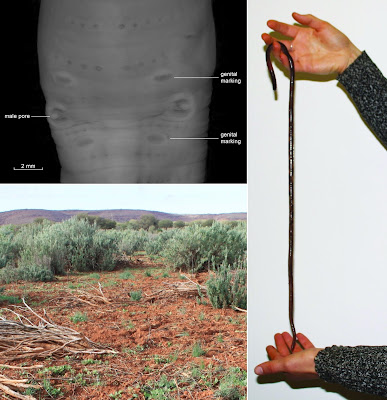
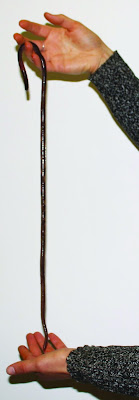
Live extended specimen of Aridulodrilus molesworthae gen. et sp. nov.

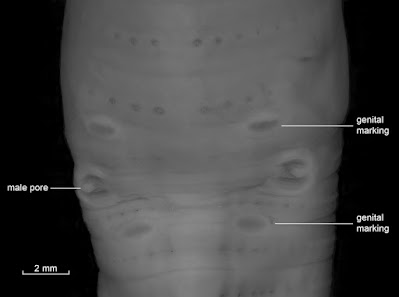
Male field of holotype of  Aridulodrilus molesworthae gen. et sp. nov. 

Oligochaeta 

Megascolecidae Rosa, 1891

Aridulodrilus gen. nov.

Diagnosis. Large worms (over 250 mm in length). Setae more than 15 per segment throughout. Dorsal pores present. Male pores from racemose prostates paired on XVIII. Firm oesophageal gizzard in V; calciferous glands and oesophageal caeca absent; intestinal gizzards and typhlosole lacking. Nephridia meronephric, avesiculate, and astomate, tufted anteriorly. Caudal modifications of the excretory system (e.g., ureters) absent. Spermathecae three pairs, spermathecal diverticula clavate and single; several internal chambers (i.e., multiloculate but not sessile). Penial and genital setae absent. 

Etymology: From the Latin aridulo-drilus—semi-desert worm.

 Distribution. Western New South Wales, Australia (restricted). 

Remarks. The closest generic relative appears to be Austrohoplochaetella Jamieson, 1971, differentiated by the lack, in Aridulodrilus gen. nov., of any caudal excretory system elaboration (such as megameronephridia, nephrostomes, bladders or ureters). Also Aridulodrilus gen. nov. lacks an intestinal typhlosole.


 Aridulodrilus molesworthae sp. nov.

Etymology: The species is named for the manager of the property on which the species was detected—Ms Rosalind Molesworth.

Habitat of Aridulodrilus molesworthae gen. et sp. nov. 


Geoffrey R. Dyne. 2021. A New Genus and Species of Earthworm (Oligochaeta: Megascolecidae) from Semi-arid Australia. Records of the Australian Museum. 73(4);123–129. DOI: 10.3853/j.2201-4349.73.2021.1769


Wednesday, December 15, 2021

[Herpetology • 2020] Litoria aplini • A New Species of Treefrog (Anura: Pelodryadidae) from Papua New Guinea


 Litoria aplini
Richards & Donnellan, 2020

Aplin’s Treefrog || DOI: 10.3853/j.2201-4349.72.2020.1729

Abstract
We describe a new species in the Australopapuan pelodryadid frog genus Litoria from upper hill forest (940 m a.s.l.) on the northern slopes of Papua New Guinea’s central cordillera. The new species is moderately small (male body length = 31.9–35.1 mm) and slender (head width/body length = 0.29–0.30), with extensive golden-yellow markings ventrally. It is most similar to Litoria iris, L. majikthise, L. ollauro, and L. verae but differs from them by a suite of morphological and colour features. The advertisement call is a series of short buzzes and clicks reminiscent of calls produced by both L. iris and L. ollauro. Phylogenetic analysis of mitochondrial ND4 nucleotide sequences shows that the new species is closest to L. iris and L. majikthise but shows a net sequence divergence of 14–15% from both of these taxa. The new species is unusual in being found calling from forest on limestone substrate where free-standing water is rarely encountered.


Pelodryadidae Günther, 1858 

Litoria Tschudi, 1838 

Type series of  Litoria aplini in life:
(A) SAMA R71463; (B) SAMA R71465;
(C) SAMA R71464; (D) SJR12834 (PNGNM);
(E) SAMA R71463, in ventral view; and (F) SAMA R71463, ventral surfaces of hind limb.

Litoria aplini sp. nov. 

Diagnosis. Litoria aplini sp. nov. is diagnosed morphologically from all congeners by the combination of body size moderately small (male SVL 31.9–35.1 mm); snout relatively broad (EN/IN = 0.79–0.84) (Table 4); presence of crenulated folds on outer edge of tarsi; webbing on hands extending to slightly past penultimate tubercle on fourth finger; presence of prominent ivory conical tubercles below vent and on ventral surfaces of thighs; and in the following colour in life traits - belly golden-yellow posteriorly, hidden surfaces of limbs predominantly blue with dark brown mottling except for discrete golden-yellow patch on posteroventral surface of thighs. The advertisement call is a short buzz normally followed by 1–7 clicks, the latter most commonly comprising two pulses. From a genetic perspective, apomorphic nucleotide states at 12 sites in the mitochondrial ND4 gene reliably diagnose L. aplini from the eight most closely related species (Table 2).

 Etymology. The species epithet is an honorific for Dr Ken Aplin, in recognition of his immense contributions to New Guinean herpetology and in gratitude for his friendship and selfless collaboration with the authors over many years. Ken’s tremendous intellect, boundless energy, and unfailing humour in the field are sorely missed. We recommend the common name “Aplin’s Treefrog” for this beautiful species. 

. Closely related species that could be confused with Litoria aplini:
(A) Litoria iris (SAMA R71615), adult male in life (Hindenburg Range, Western Province); (B) Litoria iris showing bright colours on hidden surfaces of the hind legs (unvouchered animal, Hela Province); 
(C) Litoria majikthise (SAMA R65042), in life, Muller Range, Western Province);
(D, E) Litoria majikthise (SAMA R65042), showing colour ventrally and on hidden surfaces of hind limbs;
and (F) Litoria ollauro, Milne Bay Province, photo courtesy of Fred Kraus.
 

Stephen J. Richards and Stephen C. Donnellan. 2020. Litoria aplini sp. nov., A New Species of Treefrog (Pelodryadidae) from Papua New Guinea. Records of the Australian Museum. 72(5); 325-337. DOI: 10.3853/j.2201-4349.72.2020.1729


Nyctimene cephalotes aplini (Chiroptera)
Microperoyctes aplini (Peramelemorphia)
Alormys aplini (Rodentia) | Uromys aplini (Rodentia)
Litoria aplini (Anura)

Thursday, May 20, 2021

[Mammalogy • 2021] Nyctophilus holtorum • A New Bat Species (Chiroptera: Vespertilionidae) from southwestern Western Australia, previously Assigned to Gould’s Long-eared Bat Nyctophilus gouldi Tomes, 1858


Nyctophilus holtorum  
Parnaby, King & Eldridge, 2021

photo: Terry Reardon
 
Abstract
A distributional isolate in southwestern Western Australia previously assigned to Gould’s Long-eared Bat Nyctophilus gouldi Tomes, 1858 is demonstrated to be a distinct and previously unnamed cryptic species, based on a lack of monophyly with eastern populations and substantial DNA sequence divergence (5.0 %) at the mitochondrial gene COI. Morphologically both species are alike and overlap in all measured characters but differ in braincase shape. The new species has one of the most restricted geographic ranges of any Australian Vespertilionidae and aspects of its ecology make it vulnerable to human impacts.

Frontal view of AM M.39811, male, paratype of Nyctophilus holtorum sp. nov. showing enlarged dorsal snout mound posterior to the noseleaf. Scale 5 mm.

Holt’s Long-eared bat (Nyctophilus holtorum sp. nov.) is confined to the forests of southwest Western Australia.
photo: Terry Reardon

Nyctophilus holtorum sp. nov.

Diagnosis: A species of medium body size for the genus, closely resembling N. gouldi sensu stricto in external appearance, cranial and dental morphology but differs by an average sequence divergence of 5.0 % at the mitochondrial gene COI. It differs further in that the braincase tends to be broader for N. gouldi sensu stricto of equivalent GSL (Figs 3 and 4), as reflected by greater MASB (Fig. 3a); the anterior of the braincase tends to be more inflated laterally, and the skull tends to be relatively shorter e.g., FA vs. GSL (Fig. 3c) and FA vs. CM3 (Fig. 3d).
...

Etymology. Named in honour of the late Dr John Holt and Mrs Mary Holt in recognition of their generous long-term support of Australian biodiversity research and conservation. 

Distribution. Restricted to four IBRA regions in far southwestern Western Australia (Fig. 6). We are aware of only one voucher-based locality record from the southern Avon Wheatbelt (from the Tambellup district), a region that has been extensively cleared of native vegetation. The specimen (WAM M.593) was collected by F. R. Bradshaw and registered in 1923 (probably Frederick Robert Bradshaw of Tambellup, Whittell, 1954). The species is primarily found in taller marri and jarrah forests with a dense shrubby understory. Two other Nyctophilus species are sympatric with N. holtorum sp. nov., N. major and N. geoffroyi. 
Common name. Holt’s Long-eared Bat.

 
Harry E. Parnaby, Andrew G. King and Mark D. B. Eldridge. 2021. A New Bat Species from southwestern Western Australia, previously Assigned to Gould’s Long-eared Bat Nyctophilus gouldi Tomes, 1858. Records of the Australian Museum.  73(1); 53–66. DOI:  10.3853/j.2201-4349.73.2021.1766

Holt’s Long-eared Bat: A new cryptic species discovered in Western Australia


Saturday, August 19, 2017

[Gastropoda • 2017] Attenborougharion gen. nov. (Mollusca: Pulmonata: Helicarionidae): A Likely Case of Convergent Evolution in southeastern Tasmania


Attenborougharion rubicundus (Dartnall & Kershaw, 1978)

Hyman & Köhler, 2017  

Abstract
Helicarion Férussac, 1821 from southeastern Australia currently comprises five species of endemic semislugs. Analyses of comparative morphological data and partial sequences of the mitochondrial genes cytochrome c oxidase subunit I (COI) and 16S rRNA (16S) reveal that one of these species, Helicarion rubicundus Dartnall & Kershaw, 1978, which is restricted to southeastern Tasmania, is not closely related to the other known species of this genus. This species is distinguished from Helicarion in several key morphological characters, such as the bright two-toned red and green colouration of its larger body with a flattened tail that is keeled only at the tip, the triangular shape of the pneumostome, the degree and type of folding present in the spermoviduct and free oviduct, the presence of a longer, more slender bursa copulatrix, the presence of a small epiphallic caecum and a hooked flagellum, and the presence of irregular longitudinal pilasters in the penial interior in contrast to the v-shaped rows of papillose lamellae seen in Helicarion. Moreover, the mitochondrial phylogeny provides evidence that this species is phylogenetically distinct from Helicarion as well as any other currently described genus from southeastern Australia. Based on these findings, we here describe a new genusAttenborougharion, for this species.

Keywords: Helicarionoidea; morphology; mitochondrial DNA; land snail; taxonomy.


Figure 1. Living animal of Attenborougharion rubicundus from Forestier Peninsula (QVM 9:15514).
photo: Simon Grove, TMAG. 

Systematics 

Attenborougharion gen. nov.
 Type species. Helicarion rubicundus Dartnall & Kershaw, 1978.

Etymology. Named for Sir David Attenborough, Lifetime Patron of the Australian Museum, in recognition of his lifetime’s contribution to the fields of natural science and conservation. The Latin noun arion refers to a “kind of snail or slug”; masculine.

A new genus of snail has been named Attenborougharion in honour of Sir David Attenborough.
Photographer: James Morgan /  AustralianMuseum.net.au 

Diagnosis External appearance. Large, shell ear-shaped, flattened, thin, golden, glossy, whorls rounded, base membraneous. Protoconch with radial wrinkles near suture; otherwise sculptured with very faint beading and indistinct to absent spiral grooves; teleoconch with very fine, indistinct spiral grooves and more prominent radial growth lines. Body colour green and burgundy. Mantle lobes and shell lappets of moderate size, none fused; shell lappets elongate, lacking pigmented warts; slime network prominent; caudal horn well-developed. Keel confined to very tip of tail; most of tail dorsally

Attenborougharion rubicundus (Dartnall & Kershaw, 1978) comb. nov. 
Helicarion rubicundus Dartnall & Kershaw, 1978: 2; Kershaw, 1980: 213.

Distribution and conservation status: Attenborougharion rubicundus is found only on the Tasman and Forestier Peninsulas in Tasmania (Taylor, 1991; Otley et al., 1999). The total known extent of occurrence of this species is 85 sq.km., leading to its listing as Vulnerable on the IUCN Red List of Threatened Species. In addition to its restricted range, within this area Attenborougharion rubicundus inhabits only closed wet forests and is not found in dry forests or damp sclerophyll forests (Otley eal., 1999), making it vulnerable to habitat loss through the effects of climate change as well as habitat destruction through changed land use.


  Isabel T. Hyman and Frank Köhler. 2017. Attenborougharion gen. nov. (Mollusca: Pulmonata: Helicarionidae): A Likely Case of Convergent Evolution in southeastern Tasmania. Records of the Australian Museum. 69(2): 65–72.  DOI: 10.3853/j.2201-4349.69.2017.1676

Monday, August 14, 2017

[Mammalogy • 2017] Nyctimene wrightae • A New Tube-nosed Fruit Bat (Pteropodidae: Chiroptera) from New Guinea, A Re-diagnosis of N. certans and N. cyclotis, and A Review of their Conservation Status


Nyctimene wrightae Irwin, 2017


Abstract
 The tube-nosed fruit bat genus Nyctimene comprises 18 species found in the Philippines, Wallacea, Melanesia and the Solomon Islands but species taxonomy has remained problematic. A review of the cyclotis group, consisting of N. cyclotis and N. certans from New Guinea is presented, using morphological and genetic data. Historically, the taxonomy of the cyclotis group has been severely impeded by the lack of illustrations or photographs of the majority of the types. This led authors to differ in their treatment of these species, suggesting that the distinct taxa N. cyclotis and N. certans might be conspecific. Here, N. cyclotis and N. certans are recognized as full species and are re-diagnosed. I describe Nyctimene wrightae sp. nov., a widespread New Guinean species which is tentatively placed in the cyclotis group. These three species and the sympatric N. a. papuanus, of similar body-size, are morphologically distinguished using discriminant function analyses and non-metric characters. An identification key is provided. Species distribution and conservation status are evaluated. The IUCN threat status recommended for each species is: N. wrightae sp. nov. Least Concern; N. certans (known from < 200 specimens) with unknown population size and trends, Data Deficient; and N. cyclotis, known from only two male specimens, Vulnerable. Further research is required on the basic ecology of all of these species, which remains virtually unknown. 

Keywords. Nyctimene; taxonomy; revision; Papua New Guinea; Indonesia; cryptic species; conservation; IUCN threat category; Happy tube-nosed fruit bat

Nyctimene wrightae sp. nov. Female with young pup attached, showing characteristic long ears with thickened edge and short, brown hair (photograph courtesy of Debra Wright).


Nyctimene wrightae sp. nov.

Etymology. With great pleasure I name this bat after Dr Debra Wright, Director for Wildlife Conservation Foundation, PNG 1996–2003, the co-founder of PNG Research Foundation and PNG Institute of Biological Research. She has tirelessly given her energy and considerable skills to capacity building and training Papuan New Guinean scientists. She provided logistic assistance for my team and I, helped me secure funding, provided access to facilities, and gave moral and intellectual support throughout my field-work. Her good humour, boundless energy, passion and generosity meant that despite spending many years together in remote places, we have formed a lifelong friendship. It was this cryptic bat species that started my whole journey with Nyctimene

Common name. Happy tube-nosed fruit bat. Field assistants Toby Kamli and Rafael Kaneg, noticed the difference between this species and N. a. papuanus in the hand and called this species the hamamas bat, which in Tok Pisin means the happy bat, due to the wide “smile” characteristic of this species. I therefore propose the happy tube-nosed fruit bat as the common name, alluding to the “smile” that seems to result from the broad dental arcade and palate and very short rostrum, which are diagnostic characters of the species.


  Nancy Irwin. 2017. A New Tube-nosed Fruit Bat from New Guinea, Nyctimene wrightae sp. nov., A Re-diagnosis of N. certans and N. cyclotis (Pteropodidae: Chiroptera), and A Review of their Conservation Status. Records of the Australian Museum. 69(2): 73–100. DOI: 10.3853/j.2201-4349.69.2017.1654
Yoda bat gets happy: New species officially recognised - News and events, The University of York https://www.york.ac.uk/news-and-events/news/2017/research/happy-tube-nosed-fruit-bat

Monday, December 22, 2014

[Herpetology • 2014] Varanus sparnus | Dampier Peninsula Goanna • A New Diminutive Species of Varanus from the Dampier Peninsula, western Kimberley region, Western Australia


Varanus sparnus Doughty, Kealley, Fitch & Donnellan, 2014

ABSTRACT  
Varanus lizards in Australia are moderately diverse and include a radiation of small-bodied species that occur in arid or tropical environments. Varanus brevicauda is the smallest species, with an elongate body and short prehensile tail and is associated with spinifex clumps in arid environments. Recently collected unusual specimens at the north-western edge of the range of V. brevicauda on the Dampier Peninsula, Western Australia, had an even more elongate body and also co-occurred with typical V. brevicauda. This led us to conduct a morphological and molecular genetic systematic appraisal of the two morphotypes. We found that the more elongate specimens were highly divergent genetically from both typical V. brevicauda and another related species, V. eremius,
with the three lineages forming a polytomy. Morphologically, the elongate specimens are most similar to V. brevicauda, but possess a more elongate body, less robust head and limbs, distinctive scales on the front of the arms that are large, squarish and lacking surrounding granules and a plainer pattern and colouration. The co-occurrence of both forms on the Dampier Peninsula in combination with the extent and pattern of genetic divergence and presence of key morphologically diagnostic traits unequivocally demonstrates that more elongate form is a new species, which we describe here. The new species may be of conservation concern owing to the small range of the only known specimens and development proposals in the area.

KEYWORDS: Goanna, monitor lizard, Varanus brevicauda, Varanus sparnus sp. nov.


TAXONOMY
Family Varanidae Merrem, 1820
Genus Varanus Merrem, 1820

TYPE SPECIES:  Varanus sparnus sp. nov.
[Dampier Peninsula Goanna]


Paul Doughty, Luke Kealley, Alison Fitch and Stephen C. Donnellan. 2014. A New Diminutive Species of Varanus from the Dampier Peninsula, western Kimberley region, Western Australia. Records of the Western Australian Museum. 29 128–140. 

Friday, January 10, 2014

[Herpetology • 2013] Ctenophorus mirrityana | Barrier Range Dragon • Taxonomic Assessment of the Ctenophorus decresii complex (Reptilia: Agamidae) reveals A New Species of Dragon Lizard from western New South Wales


 male Barrier Range Dragon Ctenophorus mirrityana sp. nov.
from Silverton Wind Farm site, 35 km north west of Broken Hill, NSW
(photo S. Sass)

Abstract
 We describe a new species of agamid lizard, Ctenophorus mirrityana sp.nov. currently known from two disjunct populations in western New South Wales. The species is a member of the C. decresii species complex, and was formerly recognized as an outlying population of C. decresii due to similarities in dorsal colour pattern and adjacent distributions. Previous work documented deep molecular divergence, across multiple loci, with no genetic admixture between the new species and proximal C. decresii populations. We find that the new species differs in morphology from all other members of the species complex and is characterized by distinct male throat and lateral coloration, a small head size relative to snout-vent length, a large number of labial scales, and a lack of tubercular scales. We also identify two geographically structured lineages (northern and southern) within C. decresii as requiring further taxonomic investigation, based on notable genetic and morphological (including colour) divergence. We find that divergence in coloration is associated with genetic and body form differentiation within the C. decresii species complex.

Keywords: Agamidae; Barrier Range; colour variation; Ctenophorus mirrityana; reptilian morphology

Barrier Range Dragon Ctenophorus mirrityana

Etymology. The specific epithet mirrityana is a word meaning “out in the sunlight” in the local Aboriginal language (Paakantyi; Hercus, 1993), in reference to the conspicuousness of the species during hot weather. There are several rock engravings depicting lizards at Mutawintji National Park (McCarthy & Macintosh, 1962), some of which may represent this species given it’s prominence in the area. We propose Barrier Range Dragon as the species’ common name.


McLean, Claire A., Adnan Moussalli, Steve Sass, and Devi Stuart-Fox. 2013. Taxonomic Assessment of the Ctenophorus decresii complex (Reptilia: Agamidae) reveals A New Species of Dragon Lizard from western New South Wales. Records of the Australian Museum. 65(3): 51–63. 

New species of lizard found with help of locals