Showing posts with label Gymnophthalmidae. Show all posts

Thursday, February 6, 2025

[Herpetology • 2025] Echinosaura embera • A New Species of Hedgehog-lizard of the Genus Echinosaura (Squamata: Gymnophthalmidae) from Colombia and Panama with A Reevaluation of the Conservation Status of the Genus


 Echinosaura embera 
 Vásquez-Restrepo & Daza, 2025 


Abstract
The gymnophthalmid semi-aquatic lizards of the genus Echinosaura have been subject to taxonomic scrutiny in recent years. Here, we combine previously available and new morphological and phylogenetic evidence to describe a new species formerly known under the name E. palmeri. Our results are consistent with previous phylogenetic hypotheses and recover an overlooked evolutionary lineage which is both morphologically and genetically different from the other ones currently recognized within the genus. This species is diagnosable based on external and hemipenial morphology and is phylogenetically related to E. centralis, E. palmeri, and E. panamensis. The new species inhabits the northern portion of the Pacific region in Colombia and the Darien zone between Colombia and Panama. We also re-evaluate and propose a new IUCN extinction risk categorization for the nine species in the genus, assessing three uncategorized species, removing two species from a threatened category, and including a previously considered Least Concern species into a threatened status.

Reptilia, Chocó, morphology, Neotropical, systematics, taxonomy

  Echinosaura embera in life,
A: MHUA-R 12591 (holotype) from Chigorodó, Antioquia, Colombia,
B: CBUCESD 1867 (paratype) from Carmen de Atrato, Chocó, Colombia.
Photos: Juan M. Daza and Juan D. Vásquez-Restrepo, respectively.


Juan D. VÁSQUEZ-RESTREPO and Juan M. DAZA. 2025. A New Species of Hedgehog-lizard of the Genus Echinosaura (Squamata: Gymnophthalmidae) from Colombia and Panama with A Reevaluation of the Conservation Status of the Genus.  Zootaxa. 5583(1); 128-142. DOI: doi.org/10.11646/zootaxa.5583.1.7 [2025-01-31]  

Wednesday, January 10, 2024

[Herpetology • 2023] Petracola amazonensis & P. shurugojalcapi • Two New Species of gymnophthalmid lizards of the Genus Petracola (Gymnophthalmidae: Cercosaurinae) from the Andes of northeastern Peru, and their phylogenetic relationships


Petracola amazonensis P. shurugojalcapi 
 Mamani, Vargas, Chaparro & Catenazzi, 2023

facebook.com/LuisMamaniCcasa

Abstract
The small and semi-fossorial lizards of the genus Petracola are distributed in the Andes from central to northern Peru, on both sides of the dry valley of the Marañon River. Very little is known about the taxonomy of Petracola, but it is presumed that this genus harbors a higher number of species than is currently known. Here, we used a Maximum Likelihood (ML) molecular phylogenetic analysis using concatenated fragments of four mitochondrial genes (12S, 16S, cyt-b, and ND4) and one nuclear gene (c-mos), and the revision of museum specimens, to determine the species diversity of populations of Petracola on both sides of the Marañon River. Our results show that Petracola is a monophyletic genus composed of three independent lineages. The frst lineage includes two undescribed species from the right side of the Marañon River, which we describe herein. The second lineage corresponds to P. ventrimaculatus, and the third lineage includes P. waka which contains undescribed species. Among the two new species from the right side of the Marañon River, P. amazonensis can be identifed by having only the frst superciliary expanded to the dorsal surface, two pairs of genials in contact, absence of a loreal scale, venter orange with black spots forming a transverse band, absence of precloacal pores, and a maximum SVL of 43.0 mm in females; whereas P. shurugojalcapi can be identifed by having two genials in contact, absence of a loreal scale, two discontinuous superciliaries, black venter, dorsum dark brown or black with some cream spots, and an absence of precloacal pores. The two new species increase the diversity of this genus to seven species, four of which inhabit the right side of the dry valley of the Marañon River. However, like other genera of gymnophthalmid Andean lizards, the diversity of Petracola is still underestimated. 

Keywords. Andean lizard, Cercosaurini, dry valley, endemic species, northern Andes, Marañon River, semi-fossoriality

Holotype in life of Petracola amazonensis from Upa (MUBI 11485, SVL= 43.0 mm, TL = 42.3 mm, female).

Petracola amazonensis sp. nov.

Etymology. The specifc epithet, amazonensis, is an adjective in reference to the type locality in the Department of Amazonas, northern Peru.


Holotype in life of Petracola amazonensis from Upa 
(MUBI 11485, SVL= 43.0 mm, TL = 42.3 mm, female).
Holotype in life of Petracola shurugojalcapi from La Jalca Grande 
(PFAUNA 431, SVL = 51.0 mm, TL = 39.0 mm, adult female).

Type locality of  P. amazonensis, Upa, 
District of Chiliquin, Province of Chachapoyas, Department of Amazonas.
Type locality of P. shurugojalcapi, Área de Conservación Privada Llamapampa-La Jalca, 
District of la Jalca Grande, Province of Chachapoyas, Department of Amazonas.
   
Petracola shurugojalcapi sp. nov. 

Etymology. The specifc epithet, shurugojalcapi, treated as a noun in apposition, is a combination of two local words: “shurugo” the local name for a gymnophthalmid lizard and “jalcapi” that means “from Jalca” in the Quechua language. The specific name was proposed by the inhabitants of La Jalca Grande.


Luis Mamani, Víctor J. Vargas, Juan C. Chaparro, Alessandro Catenazzi. 2023. Two New Species of gymnophthalmid lizards of the Genus Petracola (Squamata: Cercosaurinae) from the Andes of northeastern Peru, and their phylogenetic relationships.  Amphibian & Reptile Conservation. 17(1&2) [Taxonomic Section]: 161-173

Monday, August 7, 2023

[Herpetology • 2021] Selvasaura almendarizae • A New Species of Microtegu Lizard Genus Selvasaura (Gymnophthalmidae: Cercosaurinae) from Amazonian Ecuador


Selvasaura almendarizae
Torres-Carvajal, Parra, Sales Nunes & Koch, 2021 

 DOI:  10.1670/20-142

ABSTRACT
We describe a new species of Microtegu lizard (Selvasaura) from the Amazonian slopes of the Andes in Ecuador. Among other characters, the new species differs from the only other known species of Selvasaura, namely, Selvasaura brava from Peru, in having more femoral pores in males and a unilobed hemipenis. We present the first description of the skull of Selvasaura, along with a molecular phylogeny of Cercosaurinae and genetic distances as additional evidence supporting delimitation of the new species.

Specimens of Selvasaura almendarizae sp. nov. in life.
 (A, B) paratype QCAZ 9140, SVL = 39.73 mm; (C, D) uncollected specimens from Bigal River Biological Reserve, Napo Province (see map in Fig. 9).
Photographs by S. R. Ron (A, B), A. Anker (C), and T. Garcia (D).

Selvasaura almendarizae sp. nov.  
 Proposed standard English name: Almendáriz's Microtegus 
Proposed standard Spanish name: Microtegúes de Almendáriz

Diagnosis.—The new species belongs to Selvasaura as defined by Moravec et al. (2018). However, in the absence of morphological synapomorphies defining Selvasaura, the new species is assigned to Selvasaura based on phylogenetic evidence (Fig. 8; see also Moravec et al., 2018). Selvasaura almendarizae sp. nov. differs from S. brava (Table 1) in having more femoral pores in males (9– 12 vs. 7–9, respectively), fewer gular collar scales (7–9 vs. 9–11), fewer transverse rows of dorsals (25–32 vs. 33–36), fewer scales around midbody (29–32 vs. 32–34), and fewer lateral scale rows (5 vs. 6–7). The new taxon can be further distinguished from S. brava and other Cercosaurinae species in having a unilobed hemipenis, which among microteiids has been reported only in a few species within Gymnophthalminae (Calyptommatus sp., Nothobachia ablephara, and Scriptosaura catimbau) and Alopoglossidae (Alopoglossus brevifrontalis, Alopoglossus festae, Alopoglossus kugleri, Alopoglossus myersi, and Alopoglossus plicatus; Nunes, 2011; Herna´ndez Morales et al., 2020). 

Etymology.—The specific name is a noun in the genitive case and is a patronym for Ana Almendáriz former curator of Herpetology in the Museo de Historia Natural Gustavo Orce´s at Escuela Polite´cnica Nacional del Ecuador. Ana Almendáriz is an Ecuadorian herpetologist who has made important contributions to the study of amphibians and reptiles from Ecuador including more than a dozen species descriptions. For more than three decades, she also has trained many young herpetologists


Omar Torres-Carvajal; Vanessa Parra; Pedro M. Sales Nunes and Claudia Koch. 2021. A New Species of Microtegu Lizard (Gymnophthalmidae: Cercosaurinae) from Amazonian Ecuador. Journal of Herpetology. 55(4); 385–395. DOI:  10.1670/20-142
RESUMEN.—Describimos una especie nueva de lagartija microtegu (Selvasaura) de las estribaciones amazo´nicas de los Andes del Ecuador. Aparte de otras caracterı´sticas, la especie nueva difiere de la u´nica otra especie conocida de Selvasaura, Selvasaura brava del Peru´, por poseer ma´s poros femorales en los machos y un hemipene unilobado. Presentamos por primera vez la descripcio´n del cra´neo de Selvasaura, junto con una filogenia molecular de Cercosaurinae y distancias gene´ ticas como evidencia adicional para la delimitacio´n de la especie nueva.

Monday, May 8, 2023

[Herpetology • 2023] Selvasaura mamaduluae • A New Species of Microtegu (Gymnophthalmidae: Cercosaurinae) of the Cordillera del Cóndor, Ecuador


Selvasaura mamaduluae
Brito-Zapata, Guayasamin, Parra, Torres-Carvajal & Reyes-Puig, 2023


Abstract
We describe a new species of lizard of Selvasaura genus from Cordillera del Cóndor, in southeastern Ecuador. The new species is morphologically different from the other three species of Selvasaura mainly in its smaller body size (SVL: male 32.4 mm, female 33.5 mm) and coloration patterns; from the geographically closest species S. almendarizae, it differs mainly by having pentagonal frontoparietal scales, a higher number of transversal scales on the neck, and a longitudinal dorsal stripe more homogenous and weakly delimited by black. Phylogenetically, the new species is inferred within the genus Selvasaura as sister species of S. almendarizae, although this relationship has a low posterior probability. With this description, we recognize four species of Selvasaura, two of which are reported from Ecuador. The new species is known from two localities in the Cordillera del Cóndor that have serious threats such as large-scale mining and land-use change, among others.

Keywords: Montane forest, diversity, phylogeny, Saura, Selvasaura


Live photos of Selvasaura mamaduluae sp. nov. 
Holotype (ZSFQ 4409, male) in dorsolateral (A, B) and ventral (C) views;
paratype ZSFQ 1361 (female) in dorsolateral (D) and ventral (E) views.
The scale applies only to photographs on a white background.
Photos: David Brito-Zapata

Selvasaura mamaduluae sp. nov.


David Brito-Zapata, Juan M. Guayasamin, Vanessa Parra, Omar Torres-Carvajal and Carolina Reyes-Puig. 2023. A New Species of Microtegu (Gymnophthalmidae: Cercosaurinae) of the Cordillera del Cóndor, Ecuador. Revista Latinoamericana De Herpetología, 6(2), 17–37. DOI: 10.22201/fc.25942158e.2023.2.575

Thursday, April 27, 2023

[Herpetology • 2023] Selvasaura candesi • A New Species of Microteiid Lizard (Gymnophthalmidae: Cercosaurini) from A Remote Area in the Peruvian Andes


Selvasaura candesi
Chávez, García-Ayachi & Catenazzi, 2023


Abstract
We describe a new species of Selvasaura lizard from the western slopes of the eastern Andes of central Peru. Among other characters, the new species differs from congeners in having keeled dorsal scales and more transverse rows of scales on dorsum. We present a phylogeny as additional evidence supporting delimitation of the new species.

Key Words: New species, eastern Andes, central Peru, phylogeny

Selvasaura candesi sp. nov.
Dorsal (left) and ventral (right) views of
(A, B) the male holotype (CORBIDI 21865, SVL = 49.5 mm),
(C, D) male paratype (CORBIDI 21866, SVL = 49.1 mm), and
(E, F) juvenile paratype (CORBIDI 21867, SVL = 28.3 mm).


 Selvasaura candesi sp. nov.
 
Diagnosis: A medium sized lizard (adult males SVL 28.3–49.5 mm, n=2) characterized by the following combination of morphological features: 1) body slender, dorsoventrally depressed in males, females unknown; 2) head slightly short, pointed, about 1.6 times longer than wide; 3) ear opening distinct, moderately recessed; 4) nasals separated by an undivided frontonasal; 5) prefrontals, frontal, frontoparietals, parietals, interparietal, and postparietals present; 6) parietals polygonal, slightly longer than wide; 7) supraoculars four, anteriormost fused (2 individuals) or not (1 individual) with anteriormost superciliary; 8) superciliary series complete, consisting in four scales; 9) nasal plate divided posterior to nostril; 10) loreal present, in contact with second supralabial; 11) supralabials seven; 12) genials in four pairs, first and second pairs in contact; 13) collar present, containing 9–10 enlarged scales; 14) dorsals in 40–41 transverse rows, rectangular, nearly twice as long as wide, subimbricate, keeled; 15) ventrals in 24–25 transverse rows; square to rectangular, juxtaposed, smooth; 17) scales around midbody 38–43; 18) lateral scales at midbody reduced in size, in 8–9 rows; 19) limbs pentadactyl, all digits clawed;20) forelimb reaching anteriorly the third supralabial; 21) subdigital lamellae under Finger IV 14–16; 22) subdigital lamellae under Toe IV 19–21; 23) femoral pores per thigh 9–10 in males; 24) rectangular preanal scales large, four in number; 25) tail about 0.4 times longer than body; 26) caudals larger than wide, subimbricate, rugose dorsally, smooth ventrally; 27) lower palpebral disc transparent, undivided; 28) dorsal surface of head, body and limbs brown with black speckling, dorsal surface of tail pale brown to reddish brown; a thick yellowish brown vertebral stripe on dorsum, a row of 1–2 faded black rings on each flank; throat creamy white with minute black spots or blotches within each scale; belly yellow (creamy white in juveniles) with minute black spots within each scale; ventral surfaces of limbs yellow or yellowish orange; anal area saffron yellow or reddish yellow; tail red or reddish orange in males (pale red in juveniles) with fine black speckling; iris pale orange in males.

Etymology: The specific epithet “candesi” refers to the acronym CANDES (Consultores Asociados en Naturaleza y Desarrollo) in recognition of their efforts supporting the herpetological research in Peruvian territory.


 Germán Chávez, Luis A. García-Ayachi and Alessandro Catenazzi. 2023. A New Species of Microteiid Lizard (Gymnophthalmidae, Cercosaurini, Selvasaura) from A Remote Area in the Peruvian Andes. Evolutionary Systematics. 7(1): 123-132. DOI: 10.3897/evolsyst.7.99118


Monday, March 27, 2023

[Herpetology • 2022] Proctoporus otishi • A New Species of Andean Lizard, Proctoporus (Gymnophthalmidae: Cercosaurinae), from the highland of Parque Nacional Otishi in Peru


 Proctoporus otishi 
 Mamani & Rodriguez, 2022

 Photos by Lily O. Rodríguez.
 
Abstract
The gymnophthalmid Andean lizards of the genus Proctoporus (Gymnophthalmidae, Cercosaurinae) are semifossorial species that inhabit the montane forests, inter-Andean valley, and humid grasslands across the Cordillera de los Andes from Peru to Argentina. The distribution range of Proctoporus is discontinuous, with many places lacking herpetological surveys. Here, based on morphological data, we describe a new species of Proctoporus from a remote location on a mountaintop north of the Cordillera de Vilcabamba in southeastern Peru. The new species is readily distinguished from all other species of Proctoporus by the presence of three anterior infralabials, three rows of pregular scales and the absence of enlarged pregular scales. With this new species, the species diversity has increased to 19 since 18 species have previously been identified.

Key words: Reptilia, biodiversity, Andes, escalator to extinction, mountaintop, semifossorial lizard.


 the Paratype of Proctoporus otishi sp. nov. (MUSM 20753, SVL = 49.6 mm, TL = 68.7 mm, female) in life.
 Photos taken by Lily O. Rodríguez.

Proctoporus otishi sp. nov. 

Diagnosis: (1) Frontonasal subequal, longer or shorter than frontal; (2) nasoloreal suture absent; (3) two supraoculars; (4) four superciliaries; (5) two postoculars; (6) palpebral disc undivided and transparent; (7) four supralabials anterior to the posteroventral angle of the subocular; (8) three anterior infralabials; (9) six genials and four in contact; (10) three rows of pregulars; (11) dorsal body scales quadrangular, keeled, sub imbricate; (12) 32–35 scales around midbody; (13) 33–38 transverse dorsal rows; (14) 20–21 transverse ventral rows; (15) 22–25 longitudinal dorsal rows; (16) 10 longitudinal ventral rows; (17) two rows of continuous series of small lateral scales separating dorsals from ventrals per side; (18) 5–6 posterior cloacal plate scales; (19) two anterior preanal plate scales; (20) four femoral pores per hind limb in a male, absent in females; (21) preanal pores absent; (22) 11–13 subdigital lamellae on finger IV; 16–17 subdigital lamellae on toe IV; (23) limbs not overlapping when addressed against body; (24) pentadactyl, digits clawed; (25) in life, the dorsum is purple brown with tiny cream-colored spots, the flanks have enlarged cream-colored spots distributed irregularly from head to tail and the surface of the forelimbs and hindlimbs are similar to the flanks (Fig. 3); in preservative, the dorsum, head, and dorsal surface of the tail are dark brown, the flanks of the body, tail and dorsal surface of the limbs are dark brown with small and irregular cream-colored spots, and the venter, throat, and ventral surface of the limbs and tail are dark brown (Fig. 2). The measurements are shown in Table 1.
...

Etymology. The specific epithet otishi is a term that refers to the place where the new species was found—Parque Nacional Otishi, north of the Cordillera de Vilcabamba in Peru.

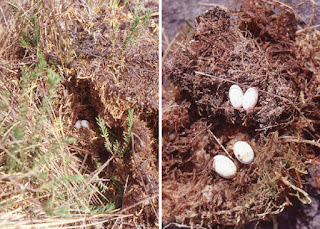
Eggs of Proctoporus otishi sp. nov. found under mosses.
Photos taken by Lily O. Rodríguez.


Luis Mamani and Lily O. Rodriguez. 2022. A New Species of Andean lizard, Proctoporus (Gymnophthalmidae: Cercosaurinae), from the highland of Parque Nacional Otishi in Peru. Zootaxa. 5213(1):75-85. DOI: 10.11646/zootaxa.5213.1.5

Thursday, January 5, 2023

[Herpetology • 2023] Proctoporus titans • A New Species of Proctoporus (Gymnophthalmidae: Cercosaurinae) from the Puna of the Otishi National Park in Peru


Proctoporus titans 
Lehr, Cusi, Fernandez, Vera & Catenazzi, 2023

 
Abstract
We describe a new species of Proctoporus from the scientifically unexplored southern sector of the Otishi National Park (Region Cusco) in Peru, on the basis of molecular and morphological characters. Seven type specimens were obtained from six localities between 3241–3269 m a.s.l. within a radius of ca. 1.5 km in a Puna valley. Nine adult specimens (four males, five females) from Chiquintirca (Region Ayacucho, ca. 85 km airline from the type locality) are considered referred specimens. Males of the new species have a snout–vent length of 41.3–53.9 mm ( = 46.7, n = 6), females have a snout–vent length of 43.6–52.6 mm ( = 48.1, n = 8). The new species has dorsal scales striated, four supraoculars, four anterior supralabials, loreal and prefrontal scales absent, two pairs of genials (rarely one or three), three rows of pregulars, and five to seven femoral pores in males (absent in females). Sexual dimorphism is evident in the ventral coloration: males have neck, chest, and belly dark gray to black, whereas females have neck, chest, and belly pale gray with a diffuse dark gray fleck in the center of each scale, and an orange iris with a fringed pupil in both sexes.

Keywords: reptiles; lizards; Andean montane forests; Region Ayacucho; Region Cusco; Region Junín; protected areas; narco-trafficking

Systematics
Family Gymnophthalmidae Fitzinger, 1826 
Subfamily Cercosaurinae Gray, 1838

Genus Proctoporus Tschudi, 1845

Proctoporus titans sp. nov. Lehr, Cusi, Fernandez, Vera and Catenazzi, 2023.

 Life holotype of Proctoporus titans sp. nov. (MUSM 40916)
in dorsolateral (A), dorsal (B), and ventral views (C). SVL 53.9 mm.

  Life female of Proctoporus titans sp. nov. (MUSM 40915, paratype)
 in dorsolateral (A), dorsal (B), and ventral views (C). SVL 46.0 mm.

Etymology: The species epithet titans is used in reference to the Titan community of Illinois Wesleyan University, including former, current, and future students, faculty, and staff. We dedicate this species in recognition of the Titans’ mission “To go out and do well, but more importantly, to do good.”

  Habitat and natural history of Proctoporus titans sp. nov. 
 (A): Panorama of the valley in southern view over the Pantano la Esperanza swamp toward the mountain ridge and swamp, taken 25 May 2022 at 11:44 AM.
(B): western slope of the valley with Peruvian feathergrass in southeastern view taken from the campsite on 21 May 2022 at 8:22 AM. (C): Kitamarapó Waterfall in close aspect taken 25 May 2022 at 11:20 AM.
(D): type locality of P. titans sp. nov. in western view taken on 17 May 2022 at 11:10 AM. (E): Hatchling (MUSM 40917) of P. titans sp. nov., taken on 17 May 2022 at 9:46 AM.


Edgar Lehr, Juan C. Cusi, Maura I. Fernandez, Ricardo J. Vera and Alessandro Catenazzi. 2023. A New Species of Proctoporus (Reptilia, Gymnophthalmidae, Cercosaurinae) from the Puna of the Otishi National Park in Peru. Taxonomy. 3(1); 10-28. DOI: 10.3390/taxonomy3010002 
https://reptilesmagazine.com/new-lizard-species-of-the-genus-proctoporus-discovered-in-peru/


Tuesday, May 10, 2022

[Herpetology • 2022] Calyptommatus frontalis • Morphological Variation and Genealogical Discordance in Caatinga Sand Lizards Calyptommatus Rodrigues 1991 (Squamata: Gymnophthalmidae) with the Description of A New Species


Calyptommatus frontalis 
 Recoder, Marques-Souza, Silva-Soares, Ramiro, Castro & Rodrigues, 2022


Abstract
In the last decades, a remarkable fauna of psammophilous and fossorial squamates was discovered in sandy habitats of the semiarid Caatinga of northeast Brazil. Despite the increasing accumulation of genetic data from this unique fauna, an incomplete knowledge of its diversity still hampers a better understanding of its origins and diversification. The fossorial lizard genus Calyptommatus (Gymnophthalmidae) is endemic to sandy habitats of the Caatinga, being currently represented by four allopatric species. In this study, we used morphological and molecular data to assess population-level variation in Calyptommatus. We found a new morphotype of Calyptommatus from the state of Bahia, Brazil, readily distinguished from congeners by the presence of a frontal scale. Morphological, nuDNA and geographic data support the recognition of a new species herein described as Calyptommatus frontalis sp. nov. Nevertheless, genetic data revealed mito-nuclear+morphology discordance, with populations with frontal scales distributed in three distantly related mtDNA clades, suggesting either potential historical and/or current introgressions or incomplete lineage sorting. Further data are needed to clarify the status of the two other mtDNA clades displaying a frontal scale.
 · 
 Keywords: Reptilia, Caatinga, contact zone, endemism, phylogeny, reptiles, taxonomy

Paratype of Calyptommatus frontalis sp. nov. in life
 from Brejo do Poção, Buritirama, state of Bahia, northeast Brazil.


Renato Sousa Recoder, Sergio Marques-Souza, Thiago Silva-Soares, Carolina Nisa Ramiro, Thiago Marcial Castro and Miguel Trefaut Rodrigues. 2022. Morphological Variation and Genealogical Discordance in Caatinga Sand Lizards Calyptommatus Rodrigues 1991 (Squamata: Gymnophthalmidae) with the Description of A New Species. Zootaxa. 5129(3); 374-398. DOI:  10.11646/zootaxa.5129.3.3


Tuesday, December 14, 2021

[Herpetology • 2021] Echinosaura fischerorum • A New and very Spiny Lizard (Squamata: Gymnophthalmidae) from the Andes in northwestern Ecuador


Echinosaura fischerorum
Yánez-Muñoz, Torres-Carvajal, Reyes-Puig, Urgiles-Merchán & Koch, 2021

Photographs by J. P. Reyes-Puig & M. A. Urgiles-Merchán

Abstract 
We describe a new species of Neotropical spiny-lizard of the genus Echinosaura from the Imbabura and Carchi Provinces on the western slopes of the Andes in northwestern Ecuador. The new species mostly resembles E. horrida. However, it can be distinguished from all congeners by having keeled enlarged dorsal scales forming a paired vertebral row, two paravertebral series of short oblique rows of projecting scales, and a pair of spine-like scales on temporal and nuchal regions. We also provide a detailed description of the osteology of the skull and pectoral girdle of the new species and present a phylogenetic hypothesis for Echinosaura based on three mitochondrial genes (12S, 16S, ND4) and one nuclear gene (c-mos).


Squamata Oppel, 1811

Gymnophthalmidae Merrem, 1820

Echinosaura Boulenger, 1890


Live type specimens of Echinosaura fischerorum sp. nov. showing color variation in dorsal view.
 (A) DHMECN 15208, male (Holotype); (B) DHMECN 15209, male; (C) DHMECN 15211, male; (D) DHMECN 16109, female; (E) DHMECN 16110, male.
Scale bars = 10 mm. 
Photographs by Juan P. Reyes-Puig (A, B, C); Miguel A. Urgiles-Merchán (D); Andrew Better (E).

Echinosaura fischerorum sp. nov. 
Proposed standard Spanish name: Lagartijas espinosas de los Fischer
Proposed standard English name: Fischers’ Spiny Lizards


Diagnosis. The new species can be distinguished from all congeners by the combination of the following characteristics: (1) snout pointed; (2) internasal single; (3) frontonasals paired; (4) frontal single; (5) frontoparietal paired; (6) supraoculars three, large; (7) supralabials five; (8) infralabials four; (9) postmental single; (10) chin shields enlarged, in one pair; (11) dorsum with a vertebral row of paired, enlarged, keeled scales; (12) two paravertebral series of short oblique rows of projecting scales, with scales increasing in size posteriorly on each row so that the most posterior scale of each row is a greatly enlarged, projecting spine; (13) spiny scales forming oblique lines on body flanks; (14) ventral scales squared, keeled; (15) subdigital lamellae on fourth finger 14–18; (16) subdigital lamellae on fourth toe 24–27; (17) femoral pores per hind limb in males 7–9; (18) dorsal surface of tail with two longitudinal rows of enlarged keeled scales that are more conspicuous on the anterior half of tail; (19) subcaudals per caudal segment three (anterior third of tail excluded); (20) tip of snout with creamy orange marks; (21) dorsal background dark brown with creamy orange paravertebral blotches extending onto anterior end of tail; (22) intense orange nuchal spines; (23) base of tail dorsally with a pair of pale orange blotches; (24) venter gray, marmorated with black and dark brown; (25) femoral pores yellowish cream; (26) premaxillary tooth loci 11–12; (27) maxillary tooth loci 17–18; (28) dentary tooth loci 22–23; (29) nasal bones in medial contact along most of their length; (30) postfrontal expands posteriorly to form part of the anterior border of the supratemporal fenestra.

Live specimens of six species of Echinosaura.
(A)Echinosaura fischerorum sp. nov., male (no voucher), Reserva Manduriacu, Pichincha, Ecuador; (B) E. horrida, male (DHMECN 13913), Cerro Zapallo, Esmeraldas, Ecuador;
(C) E. palmeri, male (no voucher), Timbiqui, Colombia; (D) E. brachycephala, male (QCAZ 11911), Reserva Ecológica Bosque Nublado Santa Lucía, Pichincha, Ecuador;
(E) E. keyi, male (QCAZ 8074), Reserva Otokiki, Esmeraldas, Ecuador; (F) E. orcesi, male (QCAZ 15026), Reserva Tesoro Escondido, Esmeraldas, Ecuador.
 Photographs by Mario H. Yánez-Muñoz (B); Jaime Culebras (A, C); Diego Quirola (D, E); Santiago R. Ron (F).


Distribution and Natural History: Echinosaura fischerorum sp. nov. is known from the western slopes of the Andes in northwestern Ecuador, Imbabura and Carchi Provinces, between 1,495–1,750 m (Fig. 17). All known specimen records lie in the lower montane forest ecosystem of the Mira river basin within the Dracula Reserve, a 1,136 ha private protected area managed by the Ecominga Foundation. The record from Imbabura province corresponds to a photograph by Jaime Culebras from Manduriacu Reserve, also managed by the Ecominga Foundation. Most known localities of E. fischerorum sp. nov. are in close proximity to the Ecuador-Colombia border and we expect that this species might also be present in neighboring Colombia. Most specimens were observed active among tree roots during the day and collected in pitfall traps along forest ridges near streams. Gravid females were collected in April and November. One female paratype (DHMECN 15210) contained two large oval eggs in the oviduct and several snail shells in the stomach (Fig. 16).

Etymology. The specific epithet is a patronym in honor of Beat Fischer and Urs Fischer, donors who have contributed significantly to the consolidation of the Dracula Reserve in the sectors of Peñas Blancas and El Pailón, which not only protect the populations of this new endemic species, but also important populations of threatened amphibians and reptiles of the Mira river basin.


Conclusions: 
Fieldwork in the western foothills of the Andes in northwestern Ecuador led us to the discovery of a new species of Echinosaura and increased the number of known species of this genus to eight.

Our phylogenetic analyses support the monophyly of Echinosaura fischerorum sp. nov. While its sister species E. horrida is relatively widespread in the tropical lowland rainforest of western Ecuador between sea level and ∼1,500 m, the record of E. fischerorum sp nov. from Manduriacu suggests that this species is most likely widespread between Manduriacu Reserve and Río Mira at slightly higher elevations.

 
Mario H. Yánez-Muñoz, Omar Torres-Carvajal, Juan P. Reyes-Puig, Miguel A. Urgiles-Merchán and Claudia Koch. 2021. A New and very Spiny Lizard (Gymnophthalmidae: Echinosaura) from the Andes in northwestern Ecuador. PeerJ. 9:e12523. DOI: 10.7717/peerj.12523


Monday, August 30, 2021

[Herpetology • 2021] Selvasaura evasa • An Elusive New Species of Gymnophthalmid Lizard (Gymnophthalmidae: Cercosaurinae) from the Andes of northern Peru


Selvasaura evasa 
Echevarría, Venegas, García-Ayachi & Nunes, 2021

Elusive Microtegus | Microtegúes elusivo || DOI: 10.3897/evolsyst.5.68520
Photographs by L. Y. Echevarría and P. J. Venegas.

Abstract
We describe a new species of Selvasaura from the montane forests of the eastern slopes of the Andes in northern Peru, based on external and hemipenial morphological characters and previous phylogenetic analyses. The new species can be differentiated from the other two Selvasaura species in having keeled dorsal scales usually flanked by longitudinal striations, in adults and juveniles; adult males with a yellow vertebral stripe bordered by broad dark brown stripes on each side and a unilobed hemipenis surrounded by the branches of the sulcus spermaticus. The description of the new species contributes information about new states of diagnostic characters of Selvasaura and natural history.

Key Words: Arboreality, Bromeliad, Gymnophthalmidae, Hemipenial morphology, Peruvian Yungas ecoregion, Taxonomy

Figure 2. Dorsolateral (A) and ventral (B) views of Selvasaura evasa sp. nov. holotype, CORBIDI 15119, in life.
Photographs by L.Y. Echevarría. 

Figure 3. Paratypes of Selvasaura evasa sp. nov.:
dorsolateral (A) and ventral (B) views of adult female CORBIDI 15118;
dorsolateral (C) and ventral (D) views of adult male CORBIDI 18900;
dorsolateral (E) and ventral (F) views of juvenile CORBIDI 19955.
Photographs A, B by L. Y. Echevarría and C–F by P. J. Venegas.
 
Selvasaura evasa sp. nov.
 Unnamed Clade 3 (Torres-Carvajal et al. 2016) in part.
Selvasaura sp. (Moravec et al. 2018) in part.
Selvasaura sp. (Torres-Carvajal et al. in press) in part.

  Proposed Standard English Name: Elusive Microtegus 
Proposed Standard Spanish Name: Microtegúes elusivo

Diagnosis: Selvasaura evasa sp. nov. can be distinguished from S. brava (character states in parentheses) by having 0–3 lateral rows of reduced scales at midbody (6–7); 9–12 femoral pores in males (7–9); keeled dorsal scales, usually flanked by longitudinal striae in adults and juveniles (slightly rugose in adults and slightly keeled in juveniles); ventral surface of tail orange in adult males (yellowish white); and a unilobed hemipenis (bilobed). Selvasaura evasa sp. nov. can be distinguished from S. sp. Ecuador (character states in parentheses) by having a larger size, SVL 41.9–46.1 mm, n = 3, in adult males (maximum SVL 39.7 mm); keeled dorsal scales, usually flanked by longitudinal striae (striated); 33–38 transverse rows of dorsal scales (25–32); 10–12 longitudinal rows of ventral scales at midbody (8–10); 9–10 scales on collar (7–9); a yellow vertebral stripe with broad dark brown stripes on each side in adult males (cream or gray with scattered black marks along sides).

Etymology: The specific epithet evasa is derived from the Latin adjective ēvāsa meaning scaped and refers to the evasive nature of this species. The first specimens of Selvasaura evasa sp. nov. were collected in 2014 despite continuous surveys, since 2003 in 20 localities along the montane forests of Amazonas and San Martín departments, it is only known from four localities.
 

 Lourdes Y. Echevarría, Pablo J. Venegas, Luis A. García-Ayachi and Pedro M. Sales Nunes. 2021. An Elusive New Species of Gymnophthalmid Lizard (Cercosaurinae, Selvasaura) from the Andes of northern Peru. Evolutionary Systematics. 5(2): 177-187. DOI: 10.3897/evolsyst.5.68520


Monday, August 16, 2021

[Herpetology • 2021] Potamites hydroimperator • A New Riparian Andean Potamites (Reptilia, Gymnophtalmidae) from El Sira Mountains, central Peru, with Comments on P. ecpleopus Cope 1875, and on the Taxonomy and Biogeography of Potamites


Coloration in life of males of all species of Potamites Doan & Castoe, 2005 ocurrying in Peru.

A–B. Potamites hydroimperator sp. nov. 
Chávez, Malqui & Catenazzi, 2021

 C–D. P. ecpleopus Cope, 1875. E–F. P. erythrocularis Chávez & Catenazzi, 2014.
G–H. P. juruazensis Avila-Pires & Vitt, 2001. I–J. P. montanicola Chávez & Vasquez, 2012. 
 K–L. P. strangulatus Cope, 1868. M–N. P. trachodus Uzzell, 1966. 

Photographs by Germán Chávez (A–B, G–J, M–N) and 
Alessandro Catenazzi (C–F, K–L).

ABSTRACT
We describe a new species of riparian lizard from the foothills and submontane forest of El Sira Communal Reserve, Departamento de Huánuco, Peru, at elevations from 540 to 760 m. We name the new species Potamites hydroimperator sp. nov. because it is the only lizard living in streams in this isolated mountain. The new species is distinguishable from other congeners (except P. ecpleopus) by having longitudinal rows of keeled scales on dorsum, and males with 5–8 lateral ocelli on each flank. Potamites hydroimperator sp. nov. differs from P. ecpleopus by being smaller, having dorsal scales on forelimbs smooth or slightly keeled, subconical tubercles on forelimbs weakly present or absent, and four to five superciliar scales. We comment on variation in the pattern of keeling of dorsal scales among Amazonian lowland, Andean foothills and montane species of Potamites, and the potential relevance of this scalation pattern for taxonomic and biogeographic studies. The new species increases our knowledge of the diverse and endemic herpetofauna of El Sira, and of diversity within the genus Potamites. Despite El Sira’s status as natural protected area, gold mining activities are destroying the streams where we found P. hydroimperator sp. nov., threatening their populations.

Keywords: riparian, lizard, Potamites, Andean, Sira


Phylum Chordata Haeckel, 1874
Class Reptilia Laurenti, 1768
Order Squamata Oppel, 1811

Family Gymnophtalmidae Merrem, 1820
Subfamily Cercosaurinae Gray, 1838

Genus Potamites Doan & Castoe, 2005

Holotype in life of Potamites hydroimperator sp. nov., CORBIDI 13915 (SVL = 59.4 mm).
 A. Dorsal view.

Holotype in life of Potamites hydroimperator sp. nov., CORBIDI 13915 (SVL = 59.4 mm).
B. Ventral view. C. Dorsolateral view of the head.


Potamites hydroimperator sp. nov.

Potamites ecpleopus – Torres-Carvajal et al. 2016: 70. 
See comments under ʻGeneric allocationʼ.

Diagnosis: A medium-sized Potamites (SVL = 50.5–59.6 mm, n = 5) characterized by the following combination of morphological features: 1) Body slender, slightly depressed laterally, maximum SVL in males 59.6 mm, 51.6    mm in females; 2) head acuminate from dorsal and lateral view, scales on the dorsal surface of the head smooth; 3) frontonasal divided, shorter than frontal, small rounded azygous scale usually present between frontonasal and prefrontals; 4) prefrontals present; 5) frontal present; 6) loreal present, romboid, not in contact with supralabials; 7) nasal partially divided, behind the nostril; 8) supraoculars four, anteriormost not fused with anteriormost superciliar; 9) superciliar series complete, usually five, occasionally four; 10) supralabial-subocular fusion absent; 11) lower palpebral disc oval, transparent, not divided; 12) postoculars three; 13) postparietals 10–11; 14) hemipenis in two pairs, transverse sutures perpendicular with respect to midline of body; 15) dorsals rectangular, subimbricate, granular and keeled; 16) 34–36 longitudinal rows of dorsal keeled scales, 2–3 granular scales between the two paravertebral rows of keeled dorsals; 17) flanks partially covered by subconical low tubercles, absent or poorly present above the insertion of forelimbs; 18) anterolateral and dorsal brachial scales of forelimbs smooth or slightly keeled; 19) 32–36 scales around midbody; 20) 21–22 longitudinal rows of ventral scales; 21) 32–33 total femoral pores in males, two in females, two scales between femoral pores; 22) 14–16 subdigital scales on 4th finger; 23) 21–24 on 4th toe; 24) forelimb reaching anteriorly the fourth supralabial; 25) tail slightly compressed with three rows of lateral scales per two ventral caudals; 26) hemipenis globose (Supp. file 5), lobes indistinct from hemipenial body; 27) hemipenial flounces chevron shaped, lacking calcified spines, laterally oriented and forming two chevrons on distal half of hemipenis while its basal half is covered with four transverse flounces, separated by a small expansion pleat; sulcate flounces about as wide as asulcate flounces; isolated transversal flounces on proximal-central region of asulcate face absent; distal filiform appendages on the hemipenial lobes absent, sulcus spermaticus single; 28) dorsum yellowish brown to dark brown with slightly darker irregular blotches; 5–8 lateral ocelli with a creamy yellow center on each flank in males, a single ocellus with a pale brown center at the level of the insertion of forelimbs on each flank in females; flanks yellowish brown or partially pigmented of vermilion red in adult males; a creamy white to yellow diagonal stripe (continuous or discontinuous) going from 4th or 5thsupralabials to 5th infralabial; ventral coloration in males vermilion red to reddish pink on belly and base of the tail, yellowish pink on ventral surface on limbs, pale blue to grayish blue on ventral surface of the neck and throat, saffron yellow on femoral pores; ventral coloration in females creamy yellow on throat, chest, belly, ventral surface of limbs and base of the tail, with black speckling on throat; ventral surface of the rest of the tail yellowish brown to dark brown in males and females; pupil black surrounded by a yellowish orange to copper ring, iris olive to yellowish brown.
 
Variation of the type series showing the dorsal (left column) and ventral (right column) views of paratypes.
 A–B. ♂, CORBIDI 14468 (SVL = 54.5).
C–D. ♂, CORBIDI 14469 (SVL = 59.6).
E–F. ♀, CORBIDI 14470 (SVL = 51.6).

Etymology: The specific epithet ʻhydroimperatorʼ derives from the Greek word ʻhydroʼ (ʻwaterʼ), and the Latin name ʻimperatorʼ (ʻemperorʼ). The name alludes to the riparian habits of the new species, which is the only lizard in El Sira using the streams as part of its habitat.

Coloration in life of males of all species of Potamites Doan & Castoe, 2005 ocurrying in Peru.
A–B. Potamites hydroimperator sp. nov. (CORBIDI 14468). C–D. P. ecpleopus Cope, 1875 (CORBIDI 9516). E–F. P. erythrocularis Chávez & Catenazzi, 2014 (MUSM 30260). G–H. P. juruazensis Avila-Pires & Vitt, 2001 (CORBIDI 15504). I–J. P. montanicola Chávez & Vasquez, 2012 (CORBIDI 10596). K–L. P. strangulatus Cope, 1868 (CORBIDI 11415). M–N. P. trachodus Uzzell, 1966 (CORBIDI 15515).
Photographs by Germán Chávez (A–B, G–J, M–N) and Alessandro Catenazzi (C–F, K–L).

 
Germán Chávez, Jose Malqui and Alessandro Catenazzi. 2021. A New Riparian Andean Potamites (Reptilia, Squamata, Gymnophtalmidae) from El Sira Mountains, central Peru, with Comments on P. ecpleopus Cope 1875, and on the Taxonomy and Biogeography of PotamitesEuropean Journal of Taxonomy. 760(1); 136-159. DOI: 10.5852/ejt.2021.760.1445