Showing posts with label Liolaemidae. Show all posts

Monday, September 4, 2023

[Herpetology • 2023] Liolaemus kulinko • A New Species of Liolaemus (Iguania: Liolaemidae) from the hot deserts of northern Patagonia, Argentina


 Liolaemus kulinko 
Abdala, Chafrat, Chaparro, Procheret, Valdes, Lannutti, Perez & Quinteros, 2023


ABSTRACT
A new species of Liolaemus is described from southwest of the town of Añelo, Neuquén Province, Argentina. Integrative evidence methodology of external morphological characters and molecular phylogenetic analyses of mitochondrial DNA (cyt-b) is used to place the new species to the species group of Liolaemus boulengeri. The new species is phenotypically close to L. mapuche. The new Liolaemus is medium to large in size (males 77.64–83.98 mm, females 72.88–78.58 mm), with evident sexual dichromatism. Genetic distances of the mtDNA (cyt-b) between the new species and its closest relative species are greater than 3% (L. cuyanus 7.48–12.02%; L. josei 7.56–9.60%; L. puelche 8.23–9.93%; L. mapuche 8.51–9.79%). Molecular and morphological phylogenetic results show L. mapuche as the sister species of the new one. The new species is larger than L. mapuche. Dorsal and ventral scales are more numerous in the new species than in L. mapuche, precloacal pores in females are present in L. mapuche and absent in the new species. It has strict psammophilic habits, using sand mounds and sheltering, under Alpataco (Neltuma alpataco) bushes. The L. boulengeri group now contains 75 species distributed in Argentina, Bolivia, Brazil, Chile, Paraguay, Peru and Uruguay.
 
Keywords: Boulengeri group, Liolaemus, Neuquén, Phylogeny, Taxonomy

Details of Liolaemus kulinko sp. nov., holotype (MPCN-H-469) (SVL 79.93 mm, tail 112.35 mm).
A,  C.  Dorsal  and  ventral  views  of  the  body.  B,  E–F.  Lateral,  ventral  and  dorsal  views  of  the  head.  D.  Ventral view of precloacal pores.
Photographs: P. Chafrat
 
Liolaemus kulinko sp. nov. 

Diagnosis: Liolaemus kulinko sp. nov. belongs to the section of Liolaemus montanus Koslowsky, 1898 of the Liolaemus boulengeri group (Abdala 2007; Abdala et al. 2021c) because it has a patch of enlarged scales on the posterior aspect of the thigh (Etheridge 1995; Abdala 2007) (Fig. 1D). Within the group of L. boulengeri it belongs to the clade of L. melanops, subclade of L. goetschi, and L. cuyanus complex because it has light blue scales on the flanks of the body and tail, a black margin on the posterior border of the paravertebral spots, four to six scales in contact with mental scale (Fig. 1E), presence of a melanic gular ring, evident scapular spots, and the same body shape and similar lepidosis (Abdala 2007; Abdala et al. 2012b, 2021c). It differs from the species of the clades of L. anomalus and L. darwinii by having posterior teeth with crowns of expanded edges and four to six scales in contact with mental scale. It also differs from the species of the clade L. anomalus (Abdala & Juárez Heredia, 2013) (Liolaemus acostai Abdala & Juárez-Heredia, 2013, L. anomalus, L. ditatadi Cei, 1983, L. lentus Gallardo, 1966, L. millcayac Abdala & Juárez-Heredia, 2013, L. pipanaco Abdala & Juárez-Heredia, 2013 and L. pseudoanomalus Cei, 1981) by having less developed palpebral strap or ‘comb’, males with a greater number of precloacal pores, a greater relationship between snout–vent length (SVL) and the tail length (TL). ...


Etymology: The specific epithet ‘kulinko’ means ‘aguada’ in the language of the Mapuche, a group of indigenous inhabitants of south-central Chile and southwestern Argentina, including parts of Patagonia, and refers to the place where the species lives, “Aguada Pichana”.


Cristian S. Abdala, Pablo Anselmo Chafrat, Juan C. Chaparro, Iván Ezequiel Procheret, Julián Valdes, Vanina Lannutti, Laura Perez and Sebastián Quinteros. 2023. A New Species of Liolaemus (Iguania: Liolaemidae) from the hot deserts of northern Patagonia, Argentina. European Journal of Taxonomy. 890(1), 136–164. DOI: 10.5852/ejt.2023.890.2257


Friday, April 21, 2023

[Herpetology • 2023] Liolaemus attenboroughi • A New Lizard Species of the Liolaemus kingii group (Squamata: Liolaemidae) from northwestern Chubut Province, Argentina


Liolaemus attenboroughi 
Sánchez, Morando & Avila, 2023


Abstract
We describe Liolaemus attenboroughi sp. nov., a lizard distributed in the northwestern Patagonian Steppe of Chubut province (Argentina) previously confused with L. kingii (Bell 1843). Recent studies based on molecular evidence supports its evolutionary independence. Here we provide a morphological diagnosis of this lineage, comparisons between three molecular species delimitation methods, and an updated phylogeny of the L. kingii group. Based on current knowledge of its distribution, this new species is allopatric with geographically close species of the L. kingii group.

Keywords: Reptilia, Patagonia, Liolaemus attenboroughi sp. nov., Integrative Taxonomy,


Kevin I. Sánchez, Mariana Morando and Luciano J. Avila. 2023. A New Lizard Species of the Liolaemus kingii group (Squamata: Liolaemidae) from northwestern Chubut Province (Argentina). Zootaxa5264(2); 235-255. DOI: 10.11646/zootaxa.5264.2.5

Tuesday, October 5, 2021

[Herpetology • 2021] Liolaemus warjantay • A New Species of Liolaemus (Squamata: Liolaemidae) from the Reserva Paisajística Subcuenca del Cotahuasi, southwestern Peru


Liolaemus warjantay  
Ubalde-Mamani, Gutiérrez, Chaparro, Aguilar-Kirigin, Cerdeña, Huanca-Mamani, Cárdenas-Ninasivincha, Lazo-Rivera &  Abdala, 2021

Abstract
The diversity of reptiles in the Andes of southwestern Peru is poorly documented. Despite the fact that studies on saurians have intensifed in recent years, mainly in the genus Liolaemus, information gaps on the biodiversity of this area remain. Such is the case of the Reserva Paisajística Subcuenca del Cotahuasi (RPSCC), Department of Arequipa, where populations of an undescribed species of the genus Liolaemus have been discovered recently. These individuals have morphological and molecular characteristics that are not assignable to any of the known species. Here, we describe this new species of Liolaemus, which inhabits the dry Puna of the RPSCC above 4,500 m asl. The combination of morphological and molecular characters differentiates this new species from its closest congeners. Phylogenetic analyses indicate that the new species is part of the L. montanus group and is grouped in a clade alongside L. qalaywa, recently described from a site 133 km northwest of the type locality of this new species. 

Keywords. Andes, Arequipa, dry Puna, protected area, Reptilia, systematics, taxonomy 


Adult males of Liolaemus warjantay sp. nov. in dorsal, lateral, and ventral views:
(A–C) MUSA 5695 (SVL = 88.18 mm);
(D–F) MUSA 5700 (SVL = 89.56 mm, Tail = 123.3 mm);
(G–I) MUSA 5702 (SVL = 86.21 mm, Tail = 123.56 mm);
(J–L) MUBI 17684 (SVL = 86.21 mm, Tail = 123.56 mm);
(M–O) MUSA 5702 (SVL = 84.89 mm, Tail = 117.47 mm).


  Adult females of Liolaemus warjantay sp. nov. in dorsal, lateral, and ventral views:
(A–C) MUSA 5699 (SVL = 70.63 mm, Tail = 99.61 mm);
(D–F) MUSA 5696 (SVL = 88.14 mm);
(G–I) MUSA 5694 (SVL = 85.84 mm, Tail = 118.33 mm);
(J–L) MUBI 17683 (SVL = 92.31 mm, Tail = 107.14 mm).

Liolaemus warjantay sp. nov.

Etymology. The specific name in the Quechua language (“warjantay”) refers to the local name in RPSCC and its surroundings assigned to the high Andean lizards of the genus Liolaemus.


Misshell D. Ubalde-Mamani, Roberto C. Gutiérrez, Juan C. Chaparro,Alvaro J. Aguilar-Kirigin, José Cerdeña, Wilson Huanca-Mamani, Stefanny Cárdenas-Ninasivincha, Ana Lazo-Rivera, and Cristian S. Abdala. 2021. A New Species of Liolaemus (Squamata: Liolaemidae) from the Reserva Paisajística Subcuenca del Cotahuasi, southwestern Peru. Amphibian & Reptile Conservation. 15(2) [Taxonomy Section]: 172–197 (e287). 

Resumen.— La diversidad de reptiles en los Andes del suroeste de Perú está poco documentada, a pesar que en los últimos años se han intensifcado los estudios en saurios, principalmente con el género Liolaemus, aún existen vacíos de información sobre la biodiversidad en esta área. Es el caso de la Reserva Paisajística Sub Cuenca del Cotahuasi (RPSCC), en el departamento de Arequipa, donde poblaciones de una especie no descrita del género Liolaemus, con características morfológicas y moleculares que no son asignables a ninguna de las especies conocidas. A continuación, describimos esta nueva especie de Liolaemus, que habita la Puna seca del RPSCC, por encima de los 4.500 m snm. La combinación de caracteres morfológicos y moleculares lo diferencia de sus congéneres más cercanos. Además, los análisis flogenéticos indican que la nueva especie es parte del grupo L. montanus y está agrupada en un clado junto a L. qalaywa, una especie recientemente descrita, ubicada a 133 km al noroeste de la localidad tipo de la nueva especie. 
Palabras clave. Andes, Arequipa, Área protegida, Puna seca, reptiles, sistemática, taxonomía 


Wednesday, January 27, 2021

[Herpetology • 2021] Liolaemus kunza & L. salitrosusIncreasing Knowledge of the Denizens of Saline Environments through Integrative Taxonomy: New Argentinian Endemic Taxa of Liolaemus (Iguania: Liolaemidae) and their Evolutionary Relationships


Liolaemus kunza Abdala, Semhan & Paz sp. nov. &
 Liolaemus salitrosus Abdala & Paz sp. nov.


in Abdala, Paz, Semhan, ... et Langstroth, 2021.
Photographs: C.S. Abdala.
 
Abstract
The known diversity of the genus Liolaemus continues to increase, principally due to its great degree of endemism, the increasing number of researchers working on it, and advances in the taxonomic and phylogenetic knowledge of the genus. This diversity positions Liolaemus as the second most species-rich tetrapod genus. The present work adds to evidence for the great diversity of Liolaemus through the description of two new species, endemic to saline environments in the Argentinian Puna. Both species are members of the Liolaemus montanus group within the subgenus Eulaemus. To determine the taxonomic status of these lizards, we used integrative taxonomy as a tool, incorporating phylogenetic, morphological, and molecular genetic evidence, as well as the anatomy of hemipenes, statistical morphological analysis, and ecological characteristics. Our analyses supported the conclusion that both sampled populations of lizards are species new to science. One of these is found along the margins of the Antofalla salt flats in the Catamarca Province and the Hombre Muerto salt flats in the Salta Province. The other new species inhabits saline habitats vegetated by Lycium humile, principally between the salt crusts of the Antofalla salt flats. Both species are small to medium sized and can be distinguished from all other species of the L. montanus group by unique combinations of morphological characters, primarily pholidosis and dorsal and ventral colour patterns.

Key words: Argentine, ecology, hemipenis, lizard, morphology, phylogeny, principal components analysis, puna, taxonomy, total evidence


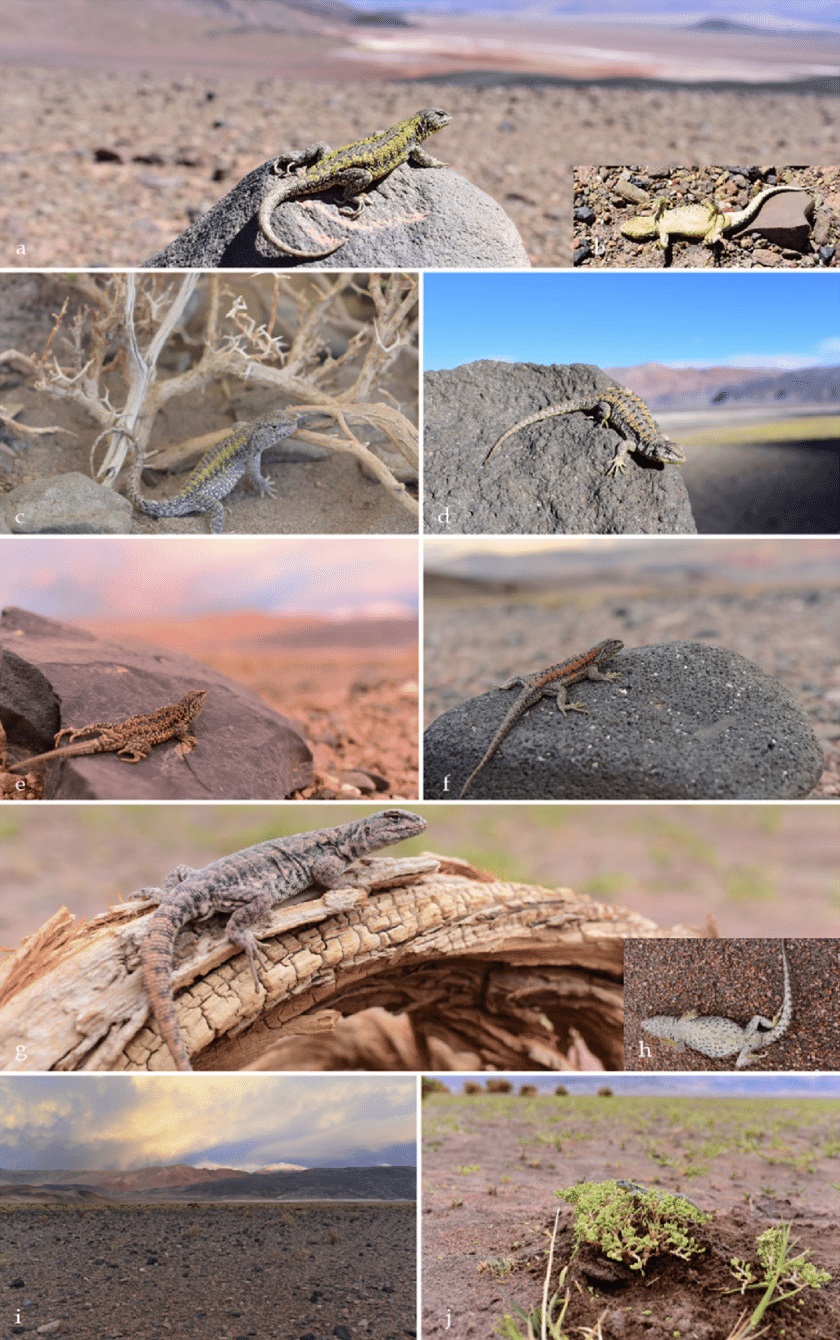
Fig. 1. Specimens of Liolaemus kunza sp. nov.
Holotype (FML 30359), dorso-lateral and ventral view (a, b), yellow morph (FML 30422) (c), brown morph (FML 30464) (d), orange morph (FML 30460) (e), red morph (FML 30466) (f), female specimen from the type locality in dorso-lateral and ventral view (FML 30488) (g, h), difference of habitats that Liolaemus kunza sp. nov. use around the Antofalla and Hombre Muerto salt flats, Ojos de Campo (i), Loro Huasi (j).
Photographs: C. S. Abdala.
 
Liolaemus kunza Abdala, Semhan & Paz sp. nov.

Etymology. We dedicate the scientific name of this species to the extinct Kunza language, which was spoken until the XIX century by peoples of the Altiplano of Argentina, Plurinational State of Bolivia, and Chile.  


Fig. 5. Specimens of Liolaemus salitrosus sp. nov.
Holotype, dorso-lateral and ventral view (FML 30363) (a, b). Variation in dorsum colouration of males (FML 30379-80) (c, d). Female specimen from the type locality in dorso-lateral and ventral view (FML 30372) (e, f). Different habitats that Liolaemus salitrosus sp. nov. use around the lagoons of Antofalla salt flats, Pozo Bravo (g), Laguna Verde (h).
Photographs: C.S. Abdala.

Liolaemus salitrosus Abdala & Paz sp. nov.

 Etymology: The specific epithet salitrosus refers to the peculiar habitat of this species, closely associated with the salt flat, an extreme environment characterized by a hypersaline soil covered with thick saltpetre crusts. 


Cristian S. Abdala, Marcos M. Paz, Romina V. Semhan, Noelia García, Alvaro J. Aguilar-Kirigin, María E. Farías, Pablo Valladares, Roberto Gutiérrez Poblete, Matías A. Quipildor, Julián Valdes and Robert Langstroth. 2021. Increasing Knowledge of the Denizens of Saline Environments through Integrative Taxonomy: New Argentinian Endemic Taxa of Liolaemus (Iguania: Liolaemidae) and their Evolutionary Relationships. Systematics and Biodiversity.  19(2); 135-167. 10.1080/14772000.2020.1844818  


Friday, January 8, 2021

[Herpetology • 2021] Liolaemus galactostictos • A New Species of Liolaemus (Reptilia: Squamata) of the Liolaemus capillitas Clade (Liolaemini, Liolaemus elongatus-kriegi group) from Sierra de Velasco, La Rioja Province, Argentina


Liolaemus galactostictos 
Avila, Vrdoljak, Medina, Massini, Perez, Sites & Morando, 2021

 
Abstract
A new species of the Liolaemus capillitas clade is described. Liolaemus galactostictos sp. nov. differs from other members of its group by a combination of morphological and molecular traits, in particular its black dorsal coloration pattern not found in any other Liolaemus species. Liolaemus galactostictos sp. nov. is only known from its type locality. This new species is found in rocky fields surrounded by grasslands on the top of the Velasco Mountains, a ¨sky island environment¨, in northwestern Argentina. As well as other members of its clade this species seems to be strictly saxicolous, viviparous and feeds on insects.

Keywords: Reptilia, Argentina; Liolaemidae; Liolaemus galactostictos sp. nov.; Liolaemus petrophilus group; Northwestern Argentina

Liolaemus galactostictos sp. nov., paratype adult male.


Liolaemus galactostictos sp. nov.

Etymology. The specific epithet galactostictos is derived from the combination of the Greek words galacto (milk) and stiktos (spotted or dappled), in reference to the evident white mark along the vertebral region on the body.  


Luciano Javier Avila, Juan Esteban Vrdoljak, Cintia Débora Medina, Juan L. García Massini, Cristian Hernán Fulvio Perez, Jack W. Jr. Sites and Mariana Morando. 2021. A New Species of Liolaemus (Reptilia: Squamata) of the Liolaemus capillitas Clade (Squamata, Liolaemini, Liolaemus elongatus-kriegi group) from Sierra de Velasco, La Rioja Province, Argentina. Zootaxa. 4903(2); 194–216. DOI: 10.11646/zootaxa.4903.2.2

Tuesday, September 8, 2020

[Herpetology • 2020] Liolaemus anqapuka Some Color in the Desert: Description of A New Species of Liolaemus (Iguania: Liolaemidae) from southern Peru


Liolaemus anqapuka Huamaní-Valderrama, Quiroz, Gutiérrez, Aguilar-Kirigin, Chaparro & Abdala

in Huamaní-Valderrama, Quiroz, Gutiérrez, Aguilar-Kirigin, ... et Abdala, 2020. 


Abstract
The desert of southern Peru and northern Chile is an area with a high degree of endemism in squamate reptiles. In this work, an endemic new species is described in the genus Liolaemus with a restricted geographical distribution on the western slopes of the La Caldera batholith in the Department of Arequipa, southern Peru, that inhabits the Desert province of southern Peru, between 1,800 and 2,756 m asl. The new species is characterized by a unique combination of morphological and molecular characters that distinguish it from all other Liolaemus species, and it is included in the L. reichei clade within the L. montanus group. Evidence presented shows that the category of threat corresponds to Endangered under the IUCN Red List criteria. 

Keywords. Arequipa, coastal desert, Endangered, La Caldera batholith, Liolaemus insolitus, lizard, Reptilia 


Fig. 3. Adult male of the holotype, Liolaemus anqapuka sp. nov. (MUSA 5573; SVL = 73.5 mm, Tail = 63.9 mm), from the Department of Arequipa, 2,460 m asl.
Photos by C.S. Abdala.

Fig. 4. Male specimens of the Liolaemus anqapuka sp. nov.
 Photos by A. Quiroz (A–D) and C.S. Abdala (E).

Fig. 5. Female specimens of the Liolaemus anqapuka sp. nov.
Photos by A. Quiroz.

Liolaemus anqapuka Huamaní-Valderrama, Quiroz, Gutiérrez, Aguilar-Kirigin, Chaparro, Abdala sp. nov. 

 1885 Ctenoblepharis adspersus—Boulenger, Catalogue of the Lizards in the British Museum (Natural History). Second Edition 2: 136–137. 
1978b “Ctenoblepharus sp.” Péfaur et al. Bulletin de l'Institut Français d'Études Andines VII (1–2): 129–139. 
1982 Liolaemus insolitus Cei and Péfaur, In Actas 8vo Congreso Latinoamericano de Zoología. Pp. 573–686. 
1995 Ctenoblepharys adspersa—Etheridge, American Museum Novitates 3142: 1–34. 
2004 Phrynosaura [sp.] Nuñez, Noticiario Mensual Museo de Historia Natural 353: 28–34. 
2010 Liolaemus cf. insolitus, Gutierrez and Quiroz, Herpetofauna del Sur del Perú, Available: / herpetofaunadelsurdelperu.blogspot.com [Accessed: 13 June 2020]. 
2011 Liolaemus species 2, Langstroth, Zootaxa 2809: 32. 
2020 Liolaemus aff. insolitus7, Abdala et al., Zoological Journal of the Linnean Society 189: 1–29.

Diagnosis. We assign Liolaemus anqapuka sp. nov. to the L. montanus group because it presents a blade-like process on the tibia, associated with the hypertrophy of the tibial muscle tibialis anterior (Abdala et al. 2020; Etheridge 1995) and its placement in the morphological and molecular phylogenies (Fig. 11). Within the L. montanus group, Liolaemus anqapuka sp. nov. differs from L. andinus, L. annectens, L. aymararum, L. cazianiae, L. chlorostictus, L. dorbignyi, L. fabiani, L, forsteri, L. foxi, L. gracielae, L. huayra, L. inti, L. jamesi, L. melanogaster, L. multicolor, L. nigriceps, L. orientalis, L. pachecoi, L. pantherinus, L. patriciaiturrae, L. pleopholis, L. polystictus, L. puritamensis, L. qalaywa, L. robustus, L. scrocchii, L. signifer, L. vallecurensis, L. victormoralesii, L. vulcanus, and L. williamsi, for being species of larger size (SVL greater than 75 mm) unlike L. anqapuka sp. nov., which has a maximum SVL of 73.5 mm. Liolaemus anqapuka sp. nov., has between 58 and 72 (mean = 64.8) scales around the body, which differentiates it from species of the group with more than 80 scales, such as L. cazianiae, L. duellmani, L. eleodori, L. erguetae, L. forsteri, L. gracielae, L. molinai, L. multicolor, L. nigriceps, L. patriciaiturrae, L. pleopholis, L. poecilochromus, L. porosus, L. pulcherrimus, L. robertoi, L. rosenmanni, L. ruibali, and L. vallecurensis; and also from species with less than 55 scales, like L. aymararum, L. jamesi, L. pachecoi, and L. thomasi. Liolaemus anqapuka sp. nov. have 60–72 dorsal scales (mean = 65.5), and differs from L. andinus, L. cazianiae, L. eleodori, L. erguetae, L. forsteri, L. foxi, L. gracielae, L. halonastes, L. molinai, L. multicolor, L. nigriceps, L. patriciaiturrae, L. pleophlolis, L. poecilochromus, L. porosus, L. pulcherrimus, L. robertoi, L. rosenmanni, L. ruibali, L. schmidti, and L. vallecurensis, which have between 75–102 dorsal scales. The number of ventral scales between 73–87 (mean = 81.3) differentiates it from species with more than 90 ventral scales, such as L. andinus, L. cazianiae, L. erguetae, L. eleodori, L. foxi, L. gracielae, L. halonastes, L. hajeki, L. molinai, L. nigriceps, L. patriciaiturrae, L. pleopholis, L. poecilochromus, L. porosus, L. robertoi, L. rosenmanni, and L. vallecurensis. Liolaemus anqapuka sp. nov. has juxtaposed or subimbricate dorsal scales, without keel or mucron, this differentiates it from species with conspicuous keel and mucron, as L. aymararum, L. etheridgei, L. famatinae, L. fttkaui, L. griseus, L. huacahuasicus, L. montanus, L. orko, L. ortizi, L. polystictus, L. pulcherrimus, L. qalaywa, L. signifer, L. tajzara, L. thomasi, L. victormoralesii, and L. williamsi. Females of L. anqapuka sp. nov. present 1–4 (mean = 2.6) precloacal pores, this character differentiates it from species like L. andinus, L. balagueri, L. fttkaui, L. multicolor, L. ortizi, L. polystictus, L. puritamensis, L. robertoi, L. robustus, L. rosenmanni, L. ruibali, L. thomasi, and L. vallecurensis, because they do not present precloacal pores in females.

Etymology. The specifc name refers to the coloration patterns of males. The word “anqapuka” is an original word in the Quechua language (spoken currently in the Peruvian Andes), corresponding to a complex word between “anqa” assigned to the blue color, and “puka” which means orange or red color. 

Distribution and natural history. Liolaemus anqapuka sp nov. is restricted to the western slopes of the La Caldera batholith, Arequipa, Peru, between 1,800 and 2,756 m asl, which includes the upper altitude limit of the La Joya desert (Fig. 6). The distribution is within the Desert biogeographic province (sensu Morrone 2014). Liolaemus anqapuka sp. nov. inhabits arid environments, characteristic of the desert of southern Peru, with sandy-stony substrates and little slope, seasonal herbaceous vegetation, and columnar and prostrate cacti. This species also inhabits sectors without vegetation (Fig. 7). It takes refuge mainly under stones, and in burrows that surround the roots of small bushes, prostrate cacti, and in cavities underground or in hardened sand. 


 Ling Huamaní-Valderrama, Aarón J. Quiroz, Roberto C. Gutiérrez, Álvaro Aguilar-Kirigin, Wilson Huanca-Mamani, Pablo Valladares-Faúndez, José Cerdeña, Juan C. Chaparro, Roy Santa Cruz and Cristian S. Abdala. 2020. Some Color in the Desert: Description of A New Species of Liolaemus (Iguania: Liolaemidae) from southern Peru, and Its Conservation Status. Amphibian & Reptile Conservation. 14(3) [Taxonomy Section]: 1–30 (e250).


Monday, June 29, 2020

[Herpetology • 2020] Liolaemus qalaywa • An Endemic New Species of Andean Lizard of the Genus Liolaemus(Iguania: Liolaemidae) from southern Peru and Its Phylogenetic Position


Liolaemus qalaywa
Chaparro, Quiroz, Mamani, Gutiérrez, Condori, Riva, Herrera-Juárez, Cerdeña, Arapa & Abdala, 2020

 Amphibian & Reptile Conservation. 14(2)

Abstract
Integrative evidence of several external morphological characters and molecular phylogenetic analyses of mitochondrial DNA (12S, cyt-b) are used to place a new species of Andean lizard of the genus Liolaemus (Iguania: Liolaemidae) in the Liolaemus montanus group and as sister group of the clade formed by L. signifer. The new species is characterized by a unique combination of morphometric characteristics, scalation, and color pattern. The L. montanus group now contains seventeen species in southern Peru, distributed along the eastern and western slopes of the Andes. 

Keywords: Andes, Apurimac, Eulaemus, Puna, reptile, systematics, taxonomy


Liolaemus qalaywa sp. nov. 

Diagnosis. We assign L. qalaywa sp. nov. to the L. montanus group because it presents a blade-like process on the tibia, associated with the hypertrophy of the tibial muscle tibialis anterior (Abdala et al. 2019b; Etheridge 1995) and based on molecular phylogeny (Fig. 1). The species of the L. montanus group differ from those of the L. boulengeri group by the complete absence of patches of enlarged scales in the posterior part of the thigh (Abdala 2007). Compared to the species of the L. montanus group, L. qalaywa sp. nov. is a robust lizard differing by its larger size (max SVL = 96.06 mm) from L. andinus, L. audituvelatus, L. balagueri, L. cazianiae, L. chiribaya, L. duellmani, L. eleodori, L. erguetae, L. erroneus, L. etheridgei, L. evaristoi, L. fabiani, L. famatinae, L. fttkaui, L. foxi, L. gracielae
..... 

Etymology. The specifc epithet Qalaywa, refers to the Quechua word for the Liolaemus lizards from the high Peruvian Andes. 


Juan C. Chaparro, Aarón J. Quiroz, Luis Mamani, Roberto C. Gutiérrez, Peter Condori, Ignacio De la Riva, Gabriela Herrera-Juárez, José Cerdeña, Luis P. Arapa and Cristian S. Abdala. 2020. An Endemic New Species of Andean Lizard of the Genus Liolaemus from southern Peru (Iguania: Liolaemidae) and Its Phylogenetic Position. Amphibian & Reptile Conservation. 14(2); 47–63.  

 Resumen.— Utilizamos evidencia integradora de varios caracteres morfológicos externos y análisis flogenéticos moleculares de ADN mitocondrial (12S, cyt-b) que ubican una nueva especie del género Liolaemus (Iguania: Liolaemidae) en el grupo de Liolaemus montanus y como grupo hermano del clado formado por L. signifer. La nueva especie se caracteriza por una combinación única de patrón morfométrico, escamación y color. El grupo montanus del género Liolaemus en Perú contiene diecisiete especies, distribuidas a lo largo de la vertiente oriental y occidental de los Andes en el sur del país. 
Palabras clave. Andes, Apurímac, Eulaemus, Puna, reptiles, sistemática, taxonomía

Sunday, May 31, 2020

[Herpetology • 2020] Unravelling Interspecific Relationships Among Highland Lizards: First Phylogenetic Hypothesis using Total Evidence of the Liolaemus montanus group (Iguania: Liolaemidae)


in Abdala, Quinteros, Semhan, Arroyo, Schulte, et al., 2020.

Abstract
The South American lizard genus Liolaemus comprises > 260 species, of which > 60 are recognized as members of the Liolaemus montanus group, distributed throughout the Andes in central Peru, Bolivia, Chile and central Argentina. Despite its great morphological diversity and complex taxonomic history, a robust phylogenetic estimate is still lacking for this group. Here, we study the morphological and molecular diversity of the L. montanus group and present the most complete quantitative phylogenetic hypothesis for the group to date. Our phylogeny includes 103 terminal taxa, of which 91 are members of the L. montanus group (58 are assigned to available species and 33 are of uncertain taxonomic status). Our matrix includes 306 morphological and ecological characters and 3057 molecular characters. Morphological characters include 48 continuous and 258 discrete characters, of which 70% (216) are new to the literature. The molecular characters represent five mitochondrial markers. We performed three analyses: a morphology-only matrix, a molecular-only matrix and a matrix including both morphological and molecular characters (total evidence hypothesis). Our total evidence hypothesis recovered the L. montanus group as monophyletic and included ≥ 12 major clades, revealing an unexpectedly complex phylogeny.

Keywords: Bayesian analysis, cladistic analysis, lizard, morphological phylogenetics, molecular phylogeny, parsimony analysis, South America, Taxonomy


Regions of body of colour pattern used in the present study, modified from Lobo & Espinoza (1999). A, vertebral line. B, vertebral field. C, dorsolateral stripes. D, paravertebral spots. E, lateral spots. F, scapular region. G, ventrolateral line.


Cristian Simón Abdala, Andrés Sebastián Quinteros, Romina Valeria Semhan, Ana Lucia Bulacios Arroyo, James Schulte, Marcos Maximiliano Paz, Mario Ricardo Ruiz-Monachesi, Alejandro Laspiur, Alvaro Juan Aguilar-Kirigin, Roberto Gutiérrez Poblete, Pablo Valladares Faundez, Julián Valdés, Sabrina Portelli, Roy Santa Cruz, James Aparicio, Noelia Garcia and Robert Langstroth. 2020. Unravelling Interspecific Relationships Among Highland Lizards: First Phylogenetic Hypothesis using Total Evidence of the Liolaemus montanus group (Iguania: Liolaemidae). Zoological Journal of the Linnean Society. 189(1); 349–377. DOI: 10.1093/zoolinnean/zlz114

Wednesday, February 12, 2020

[Herpetology • 2020] Liolaemus balagueri • A New Species of Liolaemus (Iguania: Liolaemidae) of the group L. montanus from the coastal hills of Southern Peru


Liolaemus balagueri  
Paredes, Huamaní-Valderrama, Luque-Fernández, Poblete, et al., 2020


Abstract
The genus Liolaemus presents great diversity among the current tetrapods. It is the second genus with the highest number of valid species described of the Iguana infraorder. In this study, we described a new species of sand lizard from the coastal lomas of Quilca, La Chira and Ocoña that belongs to the subgenus Eulaemus and group of Liolaemus montanus, all in the province of Camaná, department of Arequipa, Peru. To determine the taxonomic status of this new organism, we analyzed morphological, molecular and geographical characters. The morphological characters allowed the characterization and diagnosis of the new species, the molecular data was used to make a Bayesian inference, and the geographic data served to determine potential distribution areas. This lizard diverges from the other species of the Liolaemus montanus group for its small to medium size, several sets of morphological characters, folidosis and color pattern. It is also the only species of the genus where the males have a pattern of lateral spots of rounded shape with dark border and green interior, from the armpits to the middle of the body. Additionally, the molecular phylogenetic results made with the Cyt-b gene indicate that it has no direct relationship with the phenetically similar species described for the group; nevertheless, there is a relationship with geographically close populations, which has not been properly described. Finally, it was determined that this lizard has a very marked endemism and its populations are not abundant.

Keywords: lizard, taxonomy, desert, Camaná, Arequipa

 Fig. 2. A. Side view of a male adult of Liolaemus balagueri sp. nov. in the natural habitat. B. Ventral view of the same specimen.  

Fig. 3. A. Side view of the female paratype (MUSA 5578) of Liolaemus balagueri sp. nov. in side view. B. Ventral view of the same specimen.

Liolaemus balagueri sp. nov.

Etimología: Dedicamos el nombre científico al Dr. Luis Balaguer Núñez (1964-2014), profesor principal e investigador incansable de la Cátedra de Ecología en la Universidad Complutense de Madrid, España. Particularmente, reconocemos su valiosa contribución al conocimiento del funcionamiento de los ecosistemas de las lomas de Atiquipa. Lamentablemente ya ha fallecido, pero dejó una gran escuela de futuros investigadores, tanto en Perú como en España.


Luis Villegas Paredes, Ling Huamaní-Valderrama, César Luque-Fernández, Roberto Carlos Gutiérrez Poblete, Aarón Josué Quiróz and Cristian Simón Abdala. 2020. A New Species of Liolaemus (Iguania: Liolaemidae) of the group L. montanus from the coastal hills of Southern Peru [Una nueva especie de Liolaemus (Iguania: Liolaemidae) perteneciente al grupo L. montanus en las lomas costeras del sur de Perú]. Revista de biologia tropical. 68(1)

Wednesday, December 4, 2019

[Herpetology • 2019] Liolaemus tajzara • A New Species of Liolaemus (Iguania: Liolaemidae) Endemic to the south of the Plurinational State of Bolivia


Liolaemus tajzara Aguilar-Kirigin

in Abdala, Aguilar-Kirigin, Semhan, ... et Aparicio, 2019. 

Abstract
The Liolaemus montanus group is a diverse group of lizards that ranges from central Peru to southwestern Mendoza, Argentina, including much of the Plurinational State of Bolivia (“Bolivia”) and Chile. The species of this group mainly inhabit high elevation areas with cold temperatures. In the last years, several species of this group have been described, mostly in Argentina and Chile. In Bolivia, there are at least thirteen valid species belonging to the L. montanus group. In this study, we describe a new species of the L. montanus group with a marked endemism in the Cordillera de Sama of the Tarija Department, Bolivia, and a combination of unique character states that allows its formal description as a new species. The phylogenetic relationships based on analysis of 159 morphological characters suggest that it belongs to the L. montanus group, and that it is closest to Liolaemus pulcherrimus, which is found allopatrically in a small area of the Jujuy Province, Argentina. The multivariate analyses of 66 morphological characters support the phylogenetic relationships. Statistical analyses of inter-species comparisons of morphological characters are not considered the only methods due to the non-independence of some characters states among species; thus, a phylogenetic analysis is recommended. The detailed revision of specimens of the L. montanus group held in the collections of Bolivia is filling major geographic gaps and improving our understanding of the phylogenetic and biogeographic relationships of this widely distributed group of South American lizards.

Fig 4. Holotype of Liolaemus tajzara sp. nov., dorsolateral view. Photograph: C.S. Abdala.

 Fig 5. Holotype of Liolaemus tajzara sp. nov., ventral view. Photograph: C.S. Abdala.

Liolaemus tajzara Aguilar-Kirigin sp. nov.  
Liolaemus islugensis 
Liolaemus aff. signifer  
Liolaemus sp. 2 “Sama”  
Liolaemus sp. 2 “Torohuaico”  

 Fig 6. Male specimen of Liolaemus tajzara sp. nov., from the type locality. Photograph: C.S. Abdala.

 Fig 7. Female specimen of Liolaemus tajzara sp. nov., from the type locality. Photograph: C.S. Abdala.
  
Etymology: The scientific name for this new species was assigned in reference to the type locality: the surroundings of the Tajzara Basin lagoons in the Reserva Biológica Cordillera de Sama of the Tarija Department, Plurinational State of Bolivia.

Diagnosis: 
Liolaemus tajzara sp. nov. belongs to the L. montanus group because it presents a bladelike process on the tibia, associated with the hypertrophy of the tibialis anticus muscle [20, 67]. The L. montanus group species differ from those of the L. boulengeri group [9, 68] by the complete absence of patches of enlarged scales in the posterior part of the thigh (versus presence of such patches, at least in adult males). Within the L. montanus group, our new species is distinguished from Liolaemus audituvelatus, L. famatinae, L. griseus, Liolaemus insolitus, Liolaemus manueli, Liolaemus omorfi, Liolaemus poconchilensis, Liolaemus reichei, Liolaemus stolzmanni and Liolaemus torresi by their smaller size, with a maximum SVL of less than 65 mm compared to at least 71.9 mm in L. tajzara sp. nov. and, it is distinguished from Liolaemus annectens, Liolaemus aymararum, L. chlorostictus, L. dorbignyi, Liolaemus duellmani, Liolaemus fabiani, Liolaemus filiorum, L. forsteri, Liolaemus foxi, Liolaemus huayra, L. huacahuasicus, Liolaemus igneus, Liolaemus inti, L. jamesi, Liolaemus juanortizi, Liolaemus melanogaster, Liolaemus nigriceps, L. orientalis, L. pantherinus, L. pachecoi, Liolaemus patriciaiturrae, L. pleopholis, Liolaemus polystictus, L. puritamensis, Liolaemus robustus, Liolaemus scrocchii, L. signifer, Liolaemus tacora, Liolaemus vulcanus and, Liolaemus williamsi by their larger size with maximum SVL exceeding 75 mm (often greater than 90 mm) versus the observed maximum of 71.9 mm in L. tajzara sp. nov.
....

Distribution: All known specimens and observations of L. tajzara sp. nov. are from the Reserva Biológica Cordillera de Sama, Yunchara Municipality, Avilez Province, Tarija Department, Plurinational State of Bolivia, mainly in the semi-humid Puna phytogeographic region, at altitudes higher than 3500 m (Figs 11 and 12).


Cristian Simón Abdala, Alvaro J. Aguilar-Kirigin, Romina Valeria Semhan, Ana Lucia Bulacios Arroyo, Julián Valdes, Marcos Maximiliano Paz, Roberto Gutiérrez Poblete, Pablo Valladares Faundez, Robert Langstroth and James Aparicio. 2019. Description and Phylogeny of A New Species of Liolaemus (Iguania: Liolaemidae) Endemic to the south of the Plurinational State of Bolivia. PLoS ONE. 14(12): e0225815. DOI: 10.1371/journal.pone.0225815