Showing posts with label Phycology. Show all posts

Thursday, March 26, 2026

[Phycology • 2026] Lobophora lewmanomontiae, L. ogawae, ... • A Survey along the East Coast of Thailand reveals High Diversity in the Genus Lobophora (Dictyotales: Phaeophyceae): with the Description of Four New Species


Lobophora lewmanomontiae A. M. Klomjit, J. Praiboon & N. Muangmai sp. nov.
 Lobophora ogawae A. M. Klomjit, C. W. Vieira & N. Muangmai sp. nov. 
Lobophora thiemmedhii A. M. Klomjit, C. W. Vieira & N. Muangmai sp. nov. 
Lobophora velasquezii A. M. Klomjit, S. G. A. Draisma & N. Muangmai sp. nov. 

in Klomjit, Draisma, Praiboon, Jurejan, Sutti, Sun, Vieira et Muangmai, 2026. 

 ABSTRACT
Lobophora (Dictyotales, Phaeophyceae) is an ecologically important seaweed genus in tropical and subtropical marine ecosystems. This alga exhibits cryptic diversity and morphological plasticity, which require taxonomic delineations that primarily depend on DNA analyses, complemented by morphological and ecological data. Species diversity and distribution within Southeast Asia remain understudied compared to well-documented regions such as the Caribbean and the western Pacific. This study provides a comprehensive assessment of the genus Lobophora along the east coast of Thailand, integrating DNA-based surveys with morphological analyses. Extensive sampling across the Gulf of Thailand revealed 14 well-supported monophyletic clades of Lobophora. Among these, we described four new species (L. lewmanomontiae sp. nov., L. ogawae sp. nov., L. thiemmedhii sp. nov., and L. velasquezii sp. nov.) and reported three new national records (L. abscondita, L. henae, and L. quangtriensis), thereby bringing the Thai total to 21 species. When combined with previous records, 30 species have now been recorded from Southeast Asia, with 12 of which are endemic to the region. This study also emphasizes the importance of extensive sampling across broader areas, which enhances our understanding of biogeographic distributions and their implications for coastal ecosystem management.

Key words: DNA barcoding; Gulf of Thailand; macroalgae; Phaeophyceae; phylogeny; species diversity; taxonomy

In situ photographs of four new Lobophora species from east coast of Thailand.
(A) Lobophora lewmanomontiae sp. nov. (THNHM-P-2021-0314). (B) Lobophora ogawae sp. nov. (THNHM-P-2021-0310).
(C) Lobophora thiemmedhii sp. nov. (THNHM-P-2022-02470). (D) Lobophora velasquezii sp. nov. (THNHM-P-2022-0237).
Scale bars represent: A, 3 cm; B, 1 cm; C & D, 2 cm.

Lobophora lewmanomontiae A. M. Klomjit, J. Praiboon & N. Muangmai sp. nov. 

Lobophora ogawae A. M. Klomjit, C. W. Vieira & N. Muangmai sp. nov.

Lobophora thiemmedhii A. M. Klomjit, C. W. Vieira & N. Muangmai sp. nov.

Lobophora velasquezii A. M. Klomjit, S. G. A. Draisma & N. Muangmai sp. nov.

Ex situ photographs, transversal (Top) and longitudinal (Bottom) section on holotype specimens.
(A–C) Lobophora lewmanomontiae sp. nov.
(D–F) Lobophora ogawae sp. nov.
(G–I) Lobophora thiemmedhii sp. nov.
(J–L) Lobophora velasquezii sp. nov.
Scale bars represent: A, 2 cm; D & J, 0.5 cm; G, 1 cm.


Distribution pattern of Lobophora species along the east coast of Thailand. The black lines on the map represent the geographic borders of Thai province. The marine territories of the provinces where Lobophora species were identified, are highlighted in colors other than blue. The black dots indicated specific locations where Lobophora samples were collected. The numbers in parentheses next to the species names indicate the number of samples identified in each province. The table on the right lists the Lobophora species found in each province, with circles indicating species presence. Provinces ranked left to right by geographic location starting from east to west and then north to south.


Anirut Klomjit, Stefano G. A. Draisma, Jantana Praiboon, Narapat Jurejan, Suttikarn Sutti, Zhongmin Sun, Christophe Vieira and Narongrit Muangmai. 2026. A Survey along the East Coast of Thailand reveals High Diversity in the Genus Lobophora (Dictyotales, Phaeophyceae): with the Description of Four New Species. Algae. 41(1); 77-94. DOI: doi.org/10.4490/algae.2026.41.2.2 [March 15, 2026] 

Wednesday, May 28, 2025

[Phycology • 2025] Rhodogorgon truncata (Rhodophyta: Rhodogorgonales) • A New Red Alga from the west coast of Thailand


Rhodogorgon truncata Muangmai & Draisma,

in Muangmai, Draisma, Gabriel, Schils, Kato et Yoon, 2025. 

ABSTRACT
The recognition of new species is fundamental to understanding biodiversity and biogeography. Through an integrative taxonomic approach, combining morphological and multilocus molecular data, a new red algal species, Rhodogorgon truncata sp. nov. is described from the west coast of Thailand. The new species differs from the two previously described species in the genus, i.e. R. ramosissima and R. flagellifera, by unique morphological features including compressed and stocky thalli with determinate short branchlets along the upper portion, giving it a truncated and verrucose appearance. Our morphological observations revealed the smaller size, compressed shape, and truncated apices of R. truncata in contrast to the cylindrical, irregularly branched thalli of R. ramosissima and R. flagellifera. Phylogenetic analyses suggest that R. truncata is more closely related to undescribed Rhodogorgon specimens from the Indo-Pacific than to the Caribbean R. ramosissima. The discovery of this new species expands the known diversity within the genus Rhodogorgon and suggests greater, as yet undiscovered, species diversity among poorly studied red algae in the Indo-Pacific Ocean.

KEYWORDS: Andaman Sea, New species, Reef algae, Seaweed, Taxonomy


Rhodogorgon truncata sp. nov. Muangmai & Draisma

 
Narongrit Muangmai, Stefano G. A. Draisma, Daniela Gabriel, Tom Schils,Aki Kato and Hwan Su Yoon. 2025. Rhodogorgon truncata sp. nov. (Rhodogorgonales, Rhodophyta), A New red alga from the west coast of Thailand. Phycologia. DOI: doi.org/10.1080/00318884.2025.2491144  [28 Apr 2025]

ค้นพบสาหร่ายหินปูนสีแดงชนิดใหม่ของโลกจากชายฝั่งทะเลอันดามัน 
จังหวัดภูเก็ตและพังงา ประเทศไทย 
.
รองศาสตราจารย์ ดร.ณรงค์ฤทธิ์ เมืองใหม่ อาจารย์ประจำภาควิชาชีววิทยาประมง ร่วมกับ Dr. Stefano Draisma สถานีวิจัยความเป็นเลิศความหลากหลายทางชีวภาพแห่งคาบสมุทรไทย มหาวิทยาลัยสงขลานครินทร์ Dr. Daniela Gabriel, University of the Azores สาธารณรัฐโปรตุเกส Prof. Tom Schils, University of Guam สหรัฐอเมริกา Prof. Aki Kato, Hiroshima University, ประเทศญี่ปุ่น และ Prof. Hwan Su Yoon, Sungkyunkwan University, สาธารณรัฐเกาหลี
.
ค้นพบและตั้งชื่อสาหร่ายหินปูนสีแดงชนิดใหม่ของโลก Rhodogorgon truncata sp. nov. Muangmai & Draisma จากชายฝั่งทะเลอันดามัน จังหวัดภูเก็ตและจังหวัดพังงา 
.
สาหร่ายสีแดงหินปูนชนิดใหม่นี้มีลักษณะคล้ายกัลปังหา (gorgonians) และพบแพร่กระจายบริเวณแนวปะการังทางชายฝั่งทะเลอันดามัน พบได้ที่ระดับความลึกตั้งแต่ 1 เมตร จนถึง 6 เมตร งานวิจัยนี้เป็นส่วนหนึ่งของการสำรวจความหลากหลายทางชีวภาพของสาหร่ายทะเลบริเวณชายฝั่งทะเลของประเทศไทย 


Saturday, March 22, 2025

[Phycology • 2025] Acetabularia monodisca comb. et stat. nov. (Chlorophyta: Dasycladales) • A Taxonomic Reclassification of An Umbrella Alga from Jaffna, Sri Lanka, with A Key to Acetabularia Species in the Indian Subcontinent


 Acetabularia monodisca  

in Deshaprema et Dissanayake, 2025. 
 
Abstract
A morphometric analysis of Acetabularia crenulata var. monodisca specimens collected from the Jaffna Sea, Sri Lanka, was conducted. Principal Component Analysis (PCA) and descriptive statistics revealed significant morphological divergence between var. monodisca and A. crenulata populations from the Caribbean Sea (the type locality of A. crenulata). These findings support the reclassification of var. monodisca to the species level as A. monodisca. Specifically, A. monodisca is characterized by a single, less caliciform (cup-shaped) disc (whorl) comprised of 53–86 laterally fused gametangial rays, whereas A. crenulata possess a deeply caliciform disc formed by 41–67 gametangial rays.

Biodiversity, Dry zone of Sri Lanka, New combination, Taxonomy, Algae


Supun DESHAPREMA and Sachini DISSANAYAKE. 2025. Acetabularia monodisca, comb. et stat. nov. (Polyphysaceae): A Taxonomic Reclassification of An Umbrella Alga from Jaffna, Sri Lanka, with A Key to Acetabularia Species in the Indian Subcontinent.  Phytotaxa. 693(3); 245-254. DOI: doi.org/10.11646/phytotaxa.693.3.5 [2025-03-14] 

Saturday, March 25, 2023

[Phycology • 2023] Halimeda taiwanensis • Species Diversity and Distribution of the Calcareous Green Macroalgae Halimeda (Chlorophyta: Ulvophyceae) in Taiwan, Spratly Island, and Dongsha Atoll


Halimeda taiwanensis 
Phetcharat, Pattarach, Chen, Wang, Liu & Mayakun, 2023
 

SUMMARY
The calcified green algal genus Halimeda is one of the most ecologically important but morphologically diverse seaweeds in sub-tropical and tropical waters. Because of its high morphological plasticity, the identification of Halimeda species based on morphological characters is challenging without the assistance of molecular analysis. To date, the species diversity of Halimeda in Taiwan and its overseas territories has not been investigated with the assistance of DNA sequencing, and this taxonomic knowledge gap should be filled. The present study initiates a systematic examination of the species diversity and distribution of Halimeda in Taiwan, Spratly Island, and Dongsha Atoll in the South China Sea, using DNA sequence data (plastid tufA gene and rbcL) and morphological data. Our DNA analyses revealed the presence of 10 Halimeda species (Halimeda borneensis, Halimeda cylindracea, Halimeda discoidea, Halimeda distorta, Halimeda macroloba, Halimeda minima, Halimeda opuntia, Halimeda renschii, Halimeda taiwanensis sp. nov., and Halimeda velasquezii) in the waters around Taiwan, Spratly Island, and Dongsha Atoll. The majority of the species could be readily distinguished by their morphological and anatomical characters. The proposed new species, H. taiwanensis, was differentiated not only by our algorithmic species delimitation analyses (statistical parsimony network analysis and automated barcode gap discovery), but also by its morphological features. The proposed new species differs from two externally resembled species, H. cuneata and H. discoidea, in having an undulated segment margin, the complete fusion of medullary siphons at the node, the lack of segment stalk, and the presence of a large primary utricle. Here, we present the up-to-date taxonomic account, molecular diversity, and geographical distribution of Halimeda spp. in Taiwan and associated areas of the South China Sea. Environmental factors that might drive the occurrence and latitudinal distribution of the species are also discussed.

Keywords: genetic diversity, Halimeda, morphology, sea-surface currents, tufA


Sinjai Phetcharat, Kattika Pattarach, Pin-Chen Chen, Wei-Lung Wang, Shao-Lun Liu and Jaruwan Mayakun. 2023. Species Diversity and Distribution of the Calcareous Green Macroalgae Halimeda in Taiwan, Spratly Island, and Dongsha Atoll, with the proposal of Halimeda taiwanensis sp. nov. Phycological Research. DOI: 10.1111/pre.12516

Saturday, August 20, 2022

[Phycology • 2022] Croisettea kalaukapuae, C. haukoaweo, et al. (Rhodophyta: Gigartinales: Kallymeniaceae) • Cryptic Diversity in the Genus Croisettea from Hawaiian Mesophotic Reefs


Croisettea kalaukapuae F.P. Cabrera & A.R. Sherwood

in Cabrera, Huisman, Spalding, .. et Sherwood, 2022. 

ABSTRACT
Recent investigations into the species diversity of red blades in Hawai‘i have yielded several specimens of Kallymeniaceae from Hawaiian Mesophotic Coral Ecosystems. Our combined morphological and mitochondrial COI-5P and plastid rbcL phylogenetic analyses indicated widespread cryptic diversity among those specimens commonly identified as Kallymenia sensu lato based on morphology. These analyses resolved four unique genetic lineages of Hawaiian taxa in the genus Croisettea, which are all restricted to the lower mesophotic depths (c. 60–150 m). Croisettea currently includes three described species distributed in the North Atlantic, Indian and South Pacific Oceans, and the Mediterranean Sea. Croisettea is a new genus record for the Hawaiian Islands, expanding its biogeographic range to the North Pacific. The genus has now been enlarged to include seven species comprising previously described taxa as well as four new Hawaiian taxa (C. kalaukapuae sp. nov., C. haukoaweo sp. nov., C. ohelouliuli sp. nov. and C. pakualapa sp. nov.). The known distributions of the Hawaiian Croisettea species are restricted to areas around their type localities. Although this pattern hints at a remarkable degree of endemicity, both across depth gradients in a reef area and among islands, it is also linked to a limited sampling of the group, suggesting that additional species, and more accurate distributional ranges, remain to be detected not only in Hawai‘i but also worldwide.

KEYWORDS: COI-5P, Deepwater, Endemism, Foliose, Molecular-assisted alpha taxonomy, rbcl, Red algae, Red blades, Systematics, Taxonomy


 Croisettea kalaukapuae sp. nov.
[2] Holotype specimen, male gametophyte (BISH 780911) in situ, collected at Papa’āpoho (Lisianski) at 84 m. 
[3] Paratype specimen (BISH 780917) in situ, collected at Lalo (French Frigate Shoals) at 83 m.  
[4] Live holotype specimen (BISH 780911), cleaned of epiphytes.  
[5] Live holotype specimen (BISH 780917), cleaned of epiphytes.  
[6] Voucher for BISH 780911 (holotype, tetrasporophyte).
Scale bar = 5 cm. 

Croisettea kalaukapuae F.P. Cabrera & A.R. Sherwood sp. nov.

Etymology: The species epithet kalaukapuae honours Laura Kalaukapu Low Lucas Thompson (1925–2020) for her advocacy for Hawai‘i’s cultural and natural resources, especially her significant contributions to the creation of the Papahānaumokuākea Marine National Monument, including her role as a founding member of the NWHI Coral Reef Ecosystem Reserve (see Table S3 for more information on how specific nomenclature was developed using traditional Hawaiian naming practices in collaboration with the Papahānaumokuākea Native Hawaiian Cultural Working Group, CWG).

 Croisettea haukoaweo sp. nov. 
[14] Pressed voucher for BISH 780919 (holotype, vegetative).  

Croisettea ohelouliuli sp. nov.
[17] Pressed voucher for BISH 780920 (holotype, vegetative). 
[18] Pressed voucher for BISH 780921 (paratype, vegetative). 
Scale bar = 5 cm.

Croisettea haukoaweo F.P. Cabrera & A.R. Sherwood sp. nov.

Etymology: The species epithet haukoaweo refers to “the vibrant limu entwined with pūko’ako’a (Halimeda sp.) found in the cool deep waters”. The term ‘hau’ in the name also honours Mr. Skippy Hau, conservationist and retired State of Hawai‘i Division of Aquatic Resources staff on Maui, for his lifetime dedication to the ocean and his community (see Table S3 for more details on how the CWG developed the species name).


Croisettea ohelouliuli F.P. Cabrera & A.R. Sherwood sp. nov.

Etymology: The species epithet ohelouliuli refers to “the dark and vibrant ‘ōhelo” (or algae with no known species attached to it). ‘Ōhelo also describes the colour of the limu in its reference to a mauka (land) plant, Vaccinium reticulatum Smith, and its deep, red-coloured berries and endemicity to Hawai‘i (see Table S3 for more details on how the species name was developed by the CWG).


Croisettea pakualapa F.P. Cabrera & A.R. Sherwood sp. nov.

Etymology: The species epithet pakualapa refers to “a sprawling, tapered limu found on the ridge” (see Table S3 for more details on how the species name was developed by the CWG).

 
Feresa P. Cabrera, John M. Huisman, Heather L. Spalding, Randall K. Kosaki, Celia M. Smith and Alison R. Sherwood. 2022. Cryptic Diversity in the Genus Croisettea (Kallymeniaceae, Rhodophyta) from Hawaiian Mesophotic Reefs. Phycologia.  DOI: 10.1080/00318884.2022.2096823
 

Tuesday, June 28, 2022

[Phycology • 2020] Schizymenia jonssonii (Rhodophyta: Nemastomatales) • A Relict or An Introduction into the North Atlantic after the last Glacial Maximum?


 Schizymenia jonssonii K.Gunnarsson & J.Brodie

in Gunnarsson, Russell & Brodie, 2020. 

Abstract
North-Atlantic records of Schizymenia dubyi extend along the eastern shores of the North Atlantic from Morocco to southern Britain and Ireland, and the species is also recorded from Iceland. A study was undertaken to confirm the identity of the specimens from Iceland that were geographically separate from the main distribution of S. dubyi and in contrast to other species of the genus did not have gland cells. We analyzed rbcL and COI molecular sequence data from Icelandic specimens and compared the results with those for Schizymenia specimens available in GenBank. For both markers, Schizymenia was shown to be a monophyletic genus. The Icelandic specimens were clearly genetically distinct from S. dubyi and formed a well-supported clade with Schizymenia species from the Northern Pacific. Based on these results, we have described a new species, Schizymenia jonssonii, which can be distinguished by molecular phylogeny, its lack of gland cells and by being strictly intertidal. Crustose tetrasporophytes with identical COI and rbcL sequences were found at the same locations as foliose plants. Schizymenia apoda is reported for the first time in the UK, its identity confirmed by rbcL sequence data. In light of these findings, it is likely that by further molecular analysis of the genus Schizymenia in the north-eastern Atlantic and the Mediterranean, a higher diversity of Schizymenia spp. will be discovered in this region.

Keywords: COI, Iceland, molecular phylogeny, phenology, North Atlantic, rbcL, Schizymenia jonssonii

Holotype specimen of Schizymenia jonssonii sp. nov. (BM013844101), collected at Stekkjarvikur, SW Iceland on April 21, 2016.
 Scale = 2 cm.


Life history phases of Schizymenia jonssonii sp. nov. growing in the lower intertidal in Stekkjarvikur, SW-Iceland.
 (a) Blades – gametophyte phase, July 4, 2016. (b) Crusts – tetrasporophyte phase, March 1, 2018.
Scale = 2 cm. 

Schizymenia jonssonii sp. nov. 
(a) Transverse section (T.S.) of blade. (b) Cystocarps between the inner cortex and medulla in T.S. of the blade. Ostioles opening to the surface. (c) Zonate tetrasporangia just below the surface of a sporophyte crust. (d) Tetraspores being released. (e) T.S. of a tetrasporophyte with openings between layers. (f) Rhizoids on the underside of the tetrasporophyte.
 Scale (a–d and f) = 50 μm and (e) = 1 mm.
 
Schizymenia jonssonii K.Gunnarsson & J.Brodie sp. nov.  
 
Diagnosis: Gametophytic phase foliose with surface either flattened or with irregular ridges and depressions. Thallus lacking gland cells. Color dark red to brownish red. Tetrasporophytic phase crustose, with uneven surface having numerous small swellings. Can equally be distinguished by its nucleotide sequences of the mitochondrial COI and plastid rbcL genes.

Etymology: The species is named in honor of the Icelandic phycologist Sigurður Jónsson, for his contribution to the knowledge of Icelandic macroalgae and phycology in general.


Karl Gunnarsson, Stephen Russell and Juliet Brodie. 2020. Schizymenia jonssonii sp. nov. (Nemastomatales, Rhodophyta): A Relict or An Introduction into the North Atlantic after the last Glacial Maximum? Journal of Phycology. 56(2); 324-333. DOI: 10.1111/jpy.12957
 twitter.com/animalculum/status/1541047941296693248


Sunday, June 19, 2022

[Phycology • 2022] Gormaniella terricola • Dynamic Plastid and Mitochondrial Genomes in Chaetopeltidales (Chlorophyceae) and Characterization of A New Chlorophyte Taxon


Gormaniella terricola
Robison, Nelson, Hauser, Lewis & Li, 2022


Abstract
Premise: Chaetopeltidales is a poorly characterized order in the Chlorophyceae, with only two plastid and no mitochondrial genomes published. Here we describe a new taxon in Chaetopeltidales, Gormaniella terricola gen. et sp. nov. and characterize both of its organellar genomes.

Methods: Gormaniella terricola was inadvertently isolated from a surface-sterilized hornwort thallus. Light microscopy was used to characterize its vegetative morphology. Organellar genomes were assembled, annotated, and analyzed using a variety of software packages.

Results: The mitochondrial genome (66,927 bp) represents the first complete mitochondrial genome published for Chaetopeltidales. The chloroplast genome, measuring 428,981 bp, is one of the largest plastid genomes published to date and shares this large size and an incredible number of short, dispersed repeats with the other sequenced chloroplast genomes in Chaetopeltidales. Despite these shared features, the chloroplast genomes of Chaetopeltidales appear to be highly rearranged when compared to one another, with numerous inversions, translocations, and duplications, suggesting a particularly dynamic chloroplast genome. Both the chloroplast and mitochondrial genomes of G. terricola contain a number of mobile group I and group II introns, which appear to have invaded separately. Three of the introns within the mitochondrial genome encode homing endonucleases that are phylogenetically nested within those found in fungi, rather than algae, suggesting a possible case of horizontal gene transfer.

Conclusions: These results help to shed light on a poorly understood group of algae and their unusual organellar genomes, raising additional questions about the unique patterns of genome evolution within Chaetopeltidales.

Keywords: algae, chloroplast genome, Gormaniella, intron, mitogenome, repeats


 Gormaniella terricola

 
Tanner Robison, Jessica M. Nelson, Duncan A. Hauser, Louise A. Lewis and Fay-Wei Li. 2022. Dynamic Plastid and Mitochondrial Genomes in Chaetopeltidales (Chlorophyceae) and Characterization of A New Chlorophyte Taxon. American Journal of Botany. DOI: 10.1002/ajb2.16015

Sunday, May 15, 2022

[Phycology • 2022] Gracilaria khanjanapajiae (Rhodophyta: Gracilariales) • A New Species from the Andaman Coast of Thailand


Gracilaria khanjanapajiae
Saengkaew, Muangmai, Bulan & Zuccarello, 2022


ABSTRACT
Taxonomy and diversity of the Gracilariaceae has been increasingly investigated by using integrated morphological and genetic approaches. The Indo-Pacific is likely a hotspot for diversity of these macroalgae. Collections of flattened Gracilaria samples from Natai beach, Andaman coast of Thailand, were morphologically and genetically analysed. Our results clearly indicated the presence of a new species, G. khanjanapajiae sp. nov., in Thailand. In comparison to other known Indo-Pacific flattened species, G. khanjanapajiae can be distinguished by its dentate blade margin, deep spermatangial conceptacles (verrucosa-type) and numerous lateral and basal nutritive filaments within mature cystocarps. This new species resembles G. srilankia in having similar branching pattern and male reproductive structures, but differs in blade margin features. Phylogenetically, G. khanjanapajiae was more closely related to G. spinulosa from Taiwan than other Thai and Indian Ocean species. This present study highlights the continuing discovery of Gracilaria diversity and distribution in the tropical Indo-Pacific.

KEYWORDS: Agarophyte, Phylogeny, rbcL, Seaweed, Systematics, Taxonomy


Gracilaria khanjanapajiae sp. nov.

 
Jantana Saengkaew, Narongrit Muangmai, Jakaphan Bulan and Giuseppe C. Zuccarello. 2022. Gracilaria khanjanapajiae sp. nov. (Gracilariales, Rhodophyta) from the Andaman Coast of Thailand. Phycologia. DOI: 10.1080/00318884.2022.2062189  


Tuesday, March 22, 2022

[Phycology • 2021] Acetabularia jalakanyakae (Chlorophyta: Dasycladales) • A New Species from Andaman and Nicobar Islands, India


 Acetabularia jalakanyakae   

in Sainia, Madhub, Kohlia, et al., 2021. 

Abstract
Acetabularia (Dasycladales) is an extant genus of a single-celled green alga. There are four species of this genus reported from India, three reported from Andaman and Nicobar Islands. For this study, Acetabularia isolate was collected from a rocky intertidal habitat in the Andaman and Nicobar Islands. Light microscopy and Scanning Electron Microscopy were used for the morphological characterization. The distinct traits of caps of the thalli were prioritized because, traditionally, species delimitations in Acetabularia mainly were based on cap morphology. Our isolate showed morphological similarity with Acetabularia crenulata. However, the number of hairs in the inner ring of lobes of caps and the stalk length were observed to be different from A. crenulata and other closely related species. The phylogenetic tree constructed for partial 18S rDNA using the Maximum Likelihood (ML) method revealed the evolutionary affinity of this new species with Acetabularia dentata. Based on morphological and molecular synapomorphy, a new species of AcetabulariaAcetabularia jalakanyakae is formally proposed herein, and the further implications of this species discovery are discussed.

Keywords: 18S rDNA; Maximum Likelihood (ML) method ;New species; Phylogenetic tree; Scanning electron microscopy; Seaweed 

Acetabularia jalakanyakae sp. nov. collected from Andaman and Nicobar Islands.
 (A) Whole sample; and (B) Lower surface of the cap.
Scale represents 1 mm distance between two bars

Acetabularia jalakanyakae sp. nov.

Etymology: Specific epithet which is feminine noun in genitive means "mermaid" in Sanskrit to refer the aesthesis of the cap that resembles mermaid‘s umbrella.


K. C. Sainia, A. Madhub, R. K. Kohlia, K. Guptac and F. Bast. 2021. Morpho-Molecular Assessment of Acetabularia jalakanyakae sp. nov. (Dasycladales, Chlorophyta), A New Species from Andaman and Nicobar Islands, India. Indian Journal of Geo-Marine Sciences. 50(9); 701-708.  nopr.niscair.res.in/handle/123456789/58646

Sunday, December 26, 2021

[Phycology • 2021] Brilliantia kiribatiensis • A New Genus and Species of Cladophorales (Chlorophyta) from the remote Coral Reefs of the Southern Line Islands, Pacific Ocean


 Brilliantia kiribatiensis
Leliaert, Kelly, Janouškovec, Fox, Johnson, ... et Smith, 2021
 

ABSTRACT
The marine green alga Brilliantia kiribatiensis gen. et sp. nov. is described from samples collected during two expeditions (2009, 2013) from the coral reefs of the Southern Line Islands, Republic of Kiribati, Pacific Ocean. Phylogenetic analysis of sequences of the large- and small-subunit rDNA and the rDNA internal transcribed spacer region revealed that Brilliantia is a member of the Boodleaceae (Cladophorales), containing the genera Apjohnia, Boodlea, Cladophoropsis, Chamaedoris, Phyllodictyon and Struvea. Within this clade it formed a distinct lineage, sister to Struvea elegans, but more distantly related to the bona-fide Struvea species (including the type S. plumosa). Brilliantia differs from the other genera by having a very simple architecture forming upright, unbranched, single-celled filaments attached to the substratum by a rhizoidal mat. Cell division occurs by segregative cell division only at the onset of reproduction. Based on current sample collection, B. kiribatiensis seems to be largely restricted to the Southern Line Islands, although it was also observed on neighboring islands, including Orona Atoll in the Phoenix Islands of Kiribati, and the Rangiroa and Takapoto Atolls in the Tuamotus of French Polynesia. This discovery highlights the likeliness that there is still much biodiversity yet to be discovered from these remote and pristine reefs of the central Pacific.

Keywords: 18S nuclear ribosomal DNA, Chlorophyta, Cladophorales, molecular phylogeny, Siphonocladales, Ulvophyceae


 Brilliantia kiribatiensis gen. et sp. nov. 

 
Frederik Leliaert, Emily L. A. Kelly, Jan Janouškovec, Michael D. Fox, Maggie D. Johnson, Farran M. Redfern, Taati Eria, Andreas F. Haas, Enric Sala, Stuart A. Sandin and Jennifer E. Smith. 2021. Brilliantia kiribatiensis, A New Genus and Species of Cladophorales (Chlorophyta) from the remote Coral Reefs of the Southern Line Islands, Pacific Ocean. Journal of Phycology. DOI: 10.1111/jpy.13230

Friday, January 8, 2021

[Phycology • 2020] Corallina (Corallinales, Rhodophyta) from Tristan da Cunha and the Falkland Islands: Implications for South Atlantic Biogeography


Corallina chamberlainiae J.Brodie & R.Mrowicki

in Brodie, Melbourne, Mrowicki, ... et Scott. 2020. 
 
ABSTRACT
A molecular and morphological taxonomic study of Corallina (Corallinales, Rhodophyta) from Tristan da Cunha and the Falkland Islands revealed Corallina chamberlainiae J.Brodie & R.Mrowicki sp. nov. from both South Atlantic archipelagos, and Corallina cf. caespitosa only in the Falkland Islands. Analysis of mitochondrial COI-5P and plastid psbA resolved C. chamberlainiae as a distinct clade composed of specimens from Tristan and the Falkland Islands (COI-5P), in addition to two matching New Zealand samples (psbA). In psbA analyses, C. cf. caespitosa was close to two species from Japan (as C. pilulifera and C. melobesioides) but was separate from C. caespitosa sensu stricto from Britain and C. ferreyrae (isotype) from Peru. In COI-5P analyses, C. cf. caespitosa was in a clade with C. caespitosa (holotype) and close to, but distinct from, C. ferreyrae and an unidentified South African Corallina species. Application of the Automatic Barcode Gap Discovery (ABGD) and Poisson tree processes (bPTP) for COI-5P lumped C. chamberlainiae into one clade, whereas the Generalized Mixed Yule Coalescent (GMYC) model split it into two well-supported groups, one of which only contained Falkland Island specimens. All three models lumped C. cf. caespitosa with C. caespitosa. C. chamberlainiae closely resembles C. officinalis, the generitype, but is distinguished by smaller size and a more compressed thallus towards the apex. Corallina cf. caespitosa resembles C. caespitosa but is smaller and has fused, palm-like upper fronds. Neither of these taxa is conspecific with C. ferreyrae although C. caespitosa was recently synonymized with C. ferreyrae. C. chamberlainiae and C. cf. caespitosa occupy similar intertidal habitats to their respective, closely related counterparts C. officinalis and C. caespitosa. The results indicate cryptic diversity and suggest that there are many misidentified Corallina species. The paucity of South Atlantic studies of the Corallinales points to the need for a much greater taxonomic effort in this biogeographic region.
 
KEY WORDS: COI-5P, cryptic biodiversity, geniculate Corallinales,  psbA, South Atlantic, taxonomic relationships


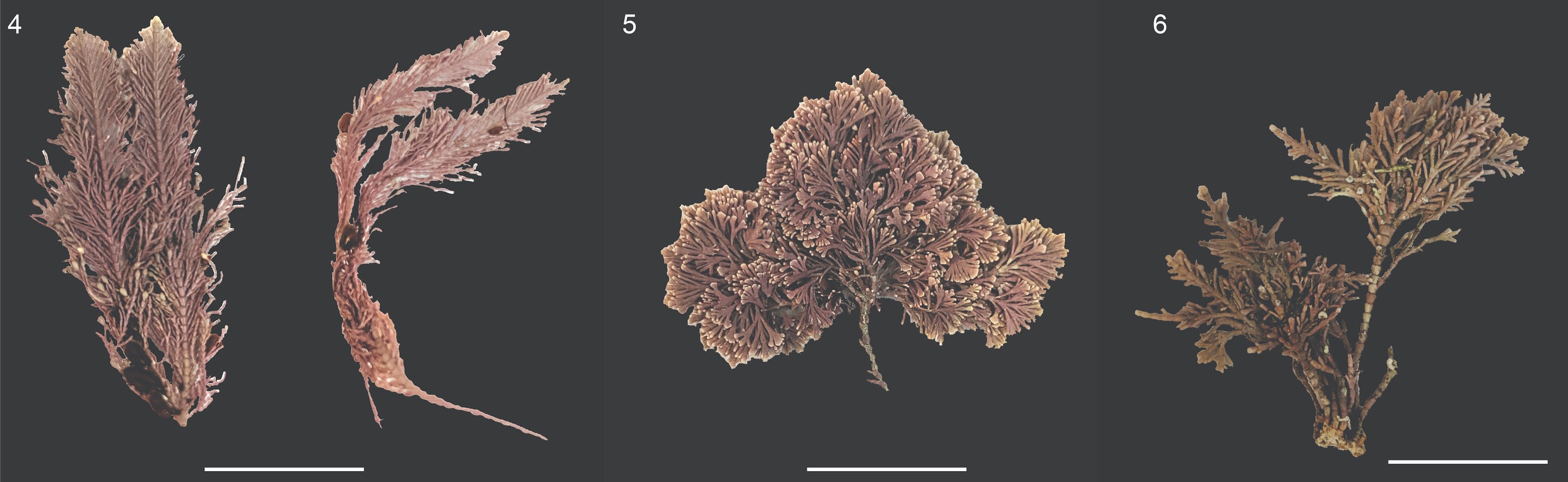
Figs 4–6. Corallina chamberlainiae from Tristan da Cunha and the Falkland Islands. 
4. Holotype, GCORR03, from Gough Island, Tristan da Cunha, collected by Sue Scott, 28.1.2014.
5. Specimen of C. chamberlainiae from the Falkland Islands, FLK386, collected from Cape Orford, West Falkland, 291.2018, J. Brodie and R. Mrowicki.
6. Specimen of C. chamberlainiae from the Falkland Islands, FLK289, collected from Shag Cove, West Falkland, 27.i.2018, J. Brodie and R. Mrowicki.


Figs 4–6. Corallina chamberlainiae from Tristan da Cunha and the Falkland Islands. 
Fig. 4. Holotype, GCORR03, from Gough Island, Tristan da Cunha, collected by Sue Scott, 28.1.2014. Fig. 5. Specimen of C. chamberlainiae from the Falkland Islands, FLK386, collected from Cape Orford, West Falkland, 291.2018, J. Brodie and R. Mrowicki. Fig. 6. Specimen of C. chamberlainiae from the Falkland Islands, FLK289, collected from Shag Cove, West Falkland, 27.i.2018, J. Brodie and R. Mrowicki.


Corallina chamberlainiae J.Brodie & R.Mrowicki sp. nov.  

HOLOTYPE: Gough Island, Tristan da Cunha, coll. Sue Scott, 28 Jan 2014, GCORR03, BM013844023, deposited in the Natural History Museum, London, UK (BM) (Fig. 4).

TYPE LOCALITY: Gough Island, Tristan da Cunha: site GL04, Penguin Island Shore.

ETYMOLOGY: The specific epithet is named after Yvonne Chamberlain (1933–2017), a specialist in the taxonomy of the Corallinales, who studied the seaweeds collected from Gough Island by Nigel M. Wace (Chamberlain, 1965).

HABITAT: Marine, growing attached to rock or other crustose coralline algae on the lower shore and sublittoral fringe, on vertical rocks, along the edge of channels and runnels, in rock pools just below the water line, and on upward-facing rock in the shallow subtidal.

DISTRIBUTION: South Atlantic, recorded from Tristan da Cunha (including the main island of Tristan, Nightingale Island and Gough Island), the Falkland Islands (East and West Falkland) and New Zealand (Ahipara, North Island and Wharekauri, Chatham Islands).


Juliet Brodie, Leanne Melbourne, Robert J. Mrowicki, Paul Brickle, Stephen Russell and Sue Scott. 2020. Corallina (Corallinales, Rhodophyta) from Tristan da Cunha and the Falkland Islands: Implications for South Atlantic Biogeography. European Journal of Phycology. DOI: 10.1080/09670262.2020.1780635