Showing posts with label Odontoceti. Show all posts

Wednesday, May 21, 2025

[PaleoMammalogy • 2025] Eophyseter damarcoi • A New Pliocene Sperm Whale (Odontoceti: Physeteridae) from Vigliano D’Asti, Piedmont, Northwest Italy


 Eophyseter damarcoi 
Bisconti, Daniello, Stecca & Carnevale, 2025


Abstract
A new sperm whale species is described from the late Zanclean (Early Pliocene) of Piedmont, northwest Italy, based on a partial vertebral column and parts of the forelimb. The new taxon, Eophyseter damarcoi gen. nov. sp. nov., is characterized by elongated vertebral centra in the thoracic and lumbar regions of the vertebral column, wider and higher articular facets for the occipital condyles in the atlas, elliptical and dorsoventrally compressed posterior articular facet of the axis-bearing block, ulna with posteriorly convex margin. These characters distinguish Eophyseter damarcoi gen. nov. sp. nov.from other physeteroids and show that the vertebral proportions are differently arranged with respect to those of the extant sperm whale species. A phylogenetic analysis was performed to understand the relationships of Eophyseter damarcoi gen. nov. sp. nov. by adding 20 postcranial characters to a previous character x taxon matrix; it revealed that E. damarcoi gen. nov. sp. nov. forms a clade with P. macrocephalus. A taphonomic analysis suggested that the carcass of the holotype specimen of Eophyseter damarcoi gen. nov. sp. nov. was exploited by sharks and colonized by barnacles and molluscs; however, a quick burial prevented its total destruction by other invertebrates, as usual in the cetacean fossil record from the Pliocene of Piedmont.

Keywords: Italy; Physeteridae; Phylogeny; Eophyseter; Physeteroidea; Piedmont; Pliocene; Postcranial skeleton.

Reconstruction of the sperm whale Eophyseter damarcoi gen. nov sp. nov. (MGPTPU 13864, holotype). 
 B) Piero Damarco, to whom Eophyseter damarcoi gen. nov. sp. nov. is dedicated, applying the final touch to the skeleton MGPT-PU 13864 on display in Asti.

Class MAMMALIA Linnaeus, 1758 
Order Cetacea Brisson, 1762 
Clade Neoceti Fordyce & Muizon, 2001 

Parvorder Odontoceti Flower, 1867 
Superfamily Physeteroidea Gray, 1868 
Family Physeteridae Gray, 1821 

Genus Eophyseter gen. nov.

Etymology: Eo is a Greek word (ήώς) that means dawn, meaning ancestral, old. Physeter derives from the Greek φυσώ meaning blower. Diagnosis of genus: Eophyseter damarcoi gen. nov. sp. nov. shows a unique morphology of the atlas, in the axis-bearing cervical block, in the proportions of the vertebral column and in the ulna. 

Diagnostic characters are the following: (1) the atlas is characterized by articular facets for the occipital condyles that protrude dorsally to the body of the vertebra and reach the height of the superior surface of the neural arch; (2) the articular surface for occipital condyles are comparatively wider than those of all the other physeteroids in which the atlas is preserved, and their ventromedial portion is comparatively longer; (3) in the axis-bearing cervical block, the epiphysis of the 7th cervical vertebra is dorsoventrally compressed and transversely widened to form showing an elliptical outline (it is transversely narrow and rounder in all the other physeteroids in which the axis-bearing block is preserved); (4) the lengths of the vertebral centra are comparatively more elongated than those of physeterids in which the vertebral column is known; in particular, in a long portion of the thoracic and lumbar regions of the vertebral column, the lengths of the centra are almost equal to the corresponding widths and heights (this pattern contrasts with that of extant sperm whales in which the length values are lower than those of heights and widths); (5) the posterior border of the ulna is posteriorly convex rather than being straight or concave as in other physeterids in which the ulna is preserved.

Eophyseter damarcoi gen. nov. sp. nov.

Etymology: The patronymic damarcoi is to honor Piero Damarco (Fig. 2B) who coordinated and executed extensive preparation of the specimen and who dedicated his life to the discovery and curation of the fossil treasures of Piedmont, Northwest Italy

 
Michelangelo Bisconti, Riccardo Daniello, Riccardo Stecca and Giorgio Carnevale. 2025. A New Pliocene Sperm Whale from Vigliano D’Asti, Piedmont, Northwest Italy. RIVISTA ITALIANA di PALEONTOLOGIA e STRATIGRAFIA. 131(1): 139-175. DOI: doi.org/10.54103/2039-4942/22338

Thursday, March 27, 2025

[PaleoMammalogy • 2025] Awakening Patagonia's Sleeping Sperm Whale: A New Description of the Early Miocene Idiorophus patagonicus (Odontoceti: Physeteroidea)


Idiorophus patagonicus   Lydekker, 1894

in Paolucci, Buono et Fernández, 2025.

ABSTRACT
Idiorophus patagonicus is one of the oldest extinct sperm whales known, and was recovered from the Early Miocene Gaiman Formation (Chubut, Argentina). It was described in the late 19th century by Lydekker based on an incomplete skull and has not been reviewed since its original description. Thus, many of its key anatomical features remain unknown, preventing a better understanding of the evolutionary trends in Physeteroidea. Here, we shed light on the anatomical features of Idiorophus patagonicus, its phylogenetic relationships and the palaeobiological aspects of its body size and feeding methods. Phylogenetically, Idiorophus is recovered as the basalmost member of the Physeteridae, or as a stem physeteroid; the most crownward physeteroid known from Patagonia. Idiorophus is a longirostrine species with a peculiar rostrum: it has a shape like the neck of a wine bottle, is tube like, and has the left premaxilla overhanging the right one, suggesting a structural advantage as a reinforcement of the rostrum from external pressures. Idiorophus is also a novelty in the evolution of sperm whale body size, being the oldest physeteroid (Burdigalian) with a large body size (6.61 m). The body size, skull morphology and the teeth wear facet of Idiorophus suggest a raptorial feeding method, which differs markedly from those inferred for the other Miocene Patagonian sperm whales (Diaphorocetus poucheti and Cozzuoliphyseter), suggesting a high ecomorphological disparity of the Patagonian sperm whale assemblage.

Keywords: physeteroid, Gaiman Formation, body size, rostrum morphology, Idiorophus patagonicus, Argentina


Florencia Paolucci, Mónica R. Buono and Marta S. Fernández. 2025. Awakening Patagonia's Sleeping Sperm Whale: A New Description of the Early Miocene Idiorophus patagonicus (Odontoceti, Physeteroidea). Papers in Palaeontology. DOI: doi.org/10.1002/spp2.70007 [25 March 2025]

Wednesday, November 6, 2024

[PaleoMammalogy • 2024] Romaleodelphis pollerspoecki • An archaic Dolphin from the Central Paratethys (Early Miocene, Austria)


Romaleodelphis pollerspoecki
Sanchez-Posada, Racicot, Ruf, Krings & Rössner, 2024 

 
ABSTRACT
A new long-snouted homodont odontocete fossil from the Lower Miocene of Austria (ca. 22.5–22.0 Ma) is formally described and interpreted based on external skull characteristics supplemented by CT and µCT data. The specimen was found in deposits from the Central Paratethys and includes an incomplete and fragmented cranium and mandible as well as ear bones. It differs markedly from previously identified long-snouted archaic dolphins with single-rooted, homodont dentition, and thus is suggestive of a new taxon, for which the name Romaleodelphis pollerspoecki proposed. The geological context of R. pollerspoecki hints at a neritic habitat in close vicinity to estuarine environments. Romaleodelphis pollerspoecki shares key features with certain members of the so-called ‘Chilcacetus clade’ such as the widening of the premaxillae at the rostrum base and the absence of a deep lateral groove along the rostrum; however, a phylogenetic analysis reconstructs R. pollerspoecki in a polytomy with members of this ‘clade’ and a larger clade including many other taxa. To better understand the phylogenetic relationships of these taxa, comprehensive reexamination of Argryocetus and Macrodelphinus will be necessary. Measurements obtained through µCT-based internal anatomical reconstruction of the bony labyrinth indicate that R. pollerspoecki had the ability to hear specialized high-frequency signals similar to modern narrow-band high-frequency (NBHF) specialists. This work further identifies several extinct platanistoids as hearing within the NBHF spectrum, increasing the understanding of the diversity of ecological adaptations in early-diverging odontocetes and providing more examples of convergent evolution of this hearing type.


Romaleodelphis pollerspoecki, gen. et sp. nov.


Catalina Sanchez-Posada, Rachel A. Racicot, Irina Ruf, Michael Krings and Gertrud E. Rössner. 2024. Romaleodelphis pollerspoecki, gen. et sp. nov., An archaic Dolphin from the Central Paratethys (Early Miocene, Austria). Journal of Vertebrate Paleontology.  e2401503. DOI: doi.org/10.1080/02724634.2024.2401503

Archaic dolphin could hear high frequency sounds

Sunday, October 20, 2024

[PaleoMammalogy • 2024] Miodelphinus miensis • A New platanistoid (Odontoceti: Squalodelphinidae) from the Early Miocene of Japan


Miodelphinus miensis
 Tanaka & Nakagawa, 2024


Abstract
Extant Ganges and Indus river dolphins are endangered species, but their relatives were more diverse in the past. The family Squalodelphinidae is a group of Miocene relatives of Ganges and Indus river dolphins. Our knowledge of squalodelphinids increased slowly in the nineteenth century and has expanded dramatically since the 2010s. Italy, Switzerland, eastern USA, Argentina, and Peru are fossil localities of named and well-preserved squalodelphinid fossils. Squalodelphinids are also known from New Zealand, Germany and Venezuela. However, only two specimens of this family have been reported from the North Pacific, in Washington State, USA, and Japan. Here, a new fossil dolphin (including the skull, right and left periotics and bullae, malleus, incus, hyoid bones and ribs) from the Haze Formation, Ichishi Group, Early Miocene (18.7–18.5 Ma) of Mie Prefecture, Japan is named as the new genus and species Miodelphinus miensis. Phylogenetic analysis places Miodelphinus miensis among squalodelphinids. The periotic of Miodelphinus miensis shows a large, posteriorly widened, ventrally opening, funnel-like articular depression between the posterior and articular processes of the periotic. Miodelphinus miensis contributes to expanding our knowledge of squalodelphinid diversity. Squalodelphinids were distributed widely not only in the Atlantic but also the South and North Pacific by the Early Miocene. This suggests that the family had a chronologically deeper origin such as the beginning of the Early Miocene or older.  

Keywords: Cetacea, Odontoceti, Burdigalian, epitympanic hiatus, Squalodelphinidae, new genus and species


  Miodelphinus miensis
 

Yoshihiro Tanaka and Ryohei Nakagawa. 2024. A New platanistoid (Odontoceti: Squalodelphinidae) from the Early Miocene of Japan. Journal of Systematic Palaeontology. 22(1); 2378783. DOI: doi.org/10.1080/14772019.2024.2378783  
  www.city.sapporo.jp/museum/curator/documents/gakugeiinirukakenkyuteisei.pdf

Thursday, March 28, 2024

[Mammalogy • 2024] Orcinus rectipinnus & O. ater • Revised Taxonomy of eastern North Pacific Killer Whales (Orcinus orca): Bigg’s and Resident Ecotypes deserve Species Status


 Bigg’s killer whale Orcinus rectipinnus (Cope in Scammon, 1869)
Resident killer whale Orcinus ater (Cope in Scammon, 1869)

in Morin, McCarthy Fung, Durban, Parsons, Perrin, Taylor, Jefferson & Archer, 2024.

Abstract
Killer whales (Orcinus orca) are currently recognized as a single ecologically and morphologically diverse, globally distributed species. Multiple morphotypes or ecotypes have been described, often associated with feeding specialization, and several studies have suggested taxonomic revision to include multiple subspecies or species in the genus. We review the ecological, morphological and genetic data for the well-studied ‘resident’ and Bigg’s (aka ‘transient’) ecotypes in the eastern North Pacific and use quantitative taxonomic guidelines and standards to determine whether the taxonomic status of these killer whale ecotypes should be revised. Our review and new analyses indicate that species-level status is justified in both cases, and we conclude that eastern North Pacific Bigg’s killer whales should be recognized as Orcinus rectipinnus (Cope in Scammon, 1869) and resident killer whales should be recognized as Orcinus ater (Cope in Scammon, 1869).

Keywords: Cetacea, odontocete, speciation
 

  Vertical images of (a) an adult male Bigg’s killer whale (BKW) from the West Coast Transient population of Bigg’s killer whales and (b) an adult male resident killer whale (RKW) from the sympatric Southern Resident population of resident killer whales.
Images are scaled to the estimated asymptotic lengths of 7.3 m and 6.9 m, respectively. Vertical images were collected using an octocopter drone using methods described by Durban et al. [2022], provided by John Durban and Holly Fearnbach.


Order Artiodactyla Montgelard, Catzefils and Douzery, 1997

 Cetacea Brisson, 1762
   Odontoceti Flower, 1867

     Superfamily Delphinoidea Flower, 1865
       Family Delphinidae Gray, 1821

Orcinus rectipinnus (Cope in Scammon, 1869)

Etymology: In Latin, recti means right or upright, and pinna means fin, feather or wing, most likely referring to the tall, erect dorsal fin of males.

Synonymy: Orca rectipinna Cope in Scammon, 1869: 22; original designation.

Common name: We propose continued use of the common name, ‘Bigg’s killer whale’, for this species, to honour Dr. Michael A. Bigg (1939–1990), who pioneered the study of North Pacific killer whales in the 1970s. This ecotype was formerly known as the ‘transient killer whale’.


Orcinus ater (Cope in Scammon, 1869)
Etymology: In Latin, ater means black or dark, which probably refers to the largely black colour of this species.

Synonymy: Orca ater Cope in Scammon, 1869: 22; original designation.

Common name: We are planning on engaging with North American Indigenous tribal groups and expect to eventually have a consensus common name, but in the meantime, we suggest continued use of ‘resident killer whale’ so as to maintain consistency.

 
Phillip A. Morin, Morgan L. McCarthy Charissa W. Fung, John W. Durban, Kim M. Parsons, William F. Perrin, Barbara L. Taylor, Thomas A. Jefferson and Frederick I. Archer. 2024. Revised Taxonomy of eastern North Pacific Killer Whales (Orcinus orca): Bigg’s and Resident Ecotypes deserve Species Status. R. Soc. Open Sci. 11: 231368. DOI: 10.1098/rsos.231368

Thursday, March 21, 2024

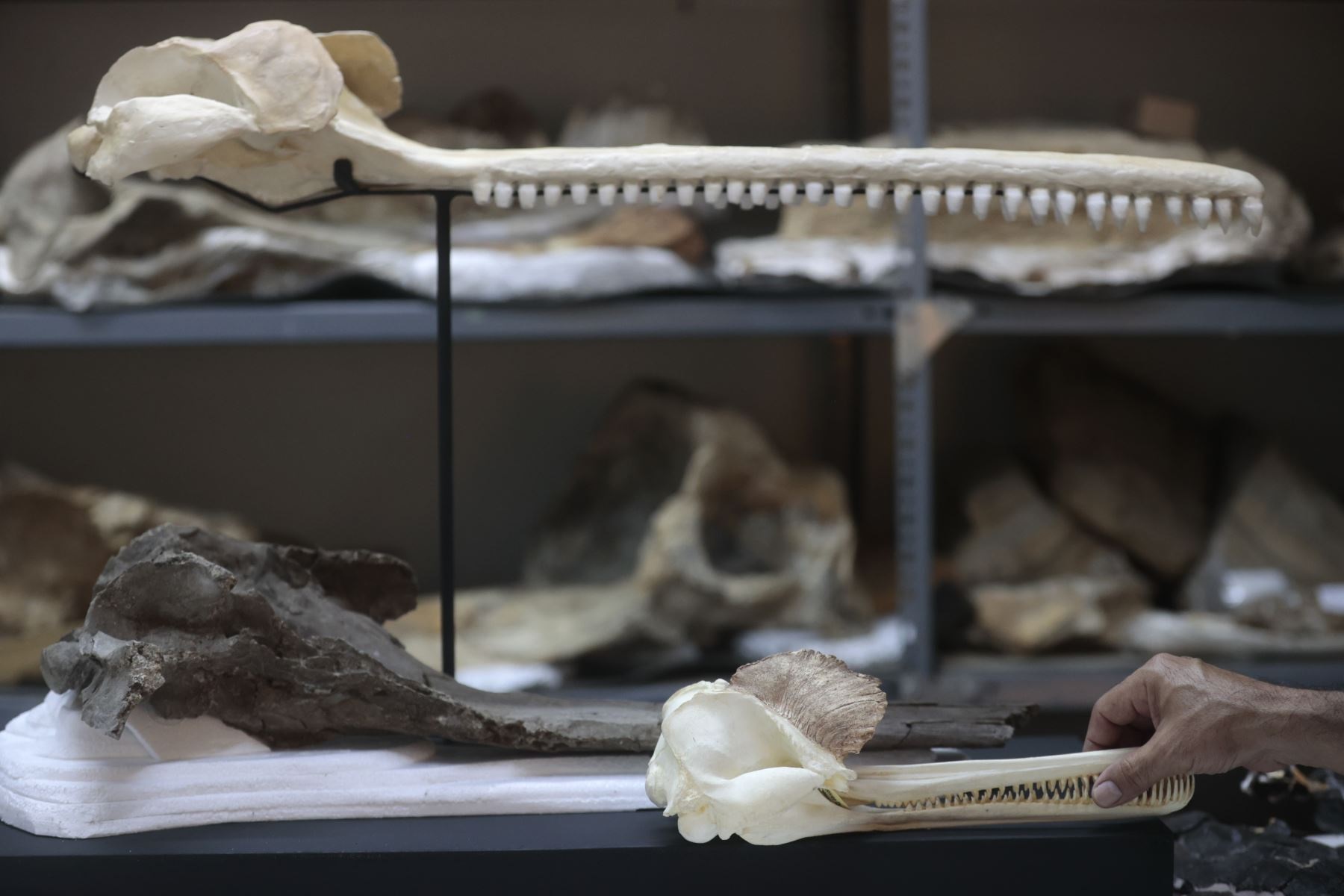
[PaleoMammalogy • 2024] Pebanista yacuruna • The Largest Freshwater Odontocete (Odontoceti: Platanistidae) : A South Asian River Dolphin relative from the proto-Amazonia


Pebanista yacuruna
Benites-Palomino, Aguirre-Fernández, Baby, Ochoa, Altamirano, Flynn, Sánchez-Villagra, Tejada, de Muizon & Salas-Gismondi, 2024

Illustration: Jaime Bran  twitter.com/BranArtworks

Abstract
Several dolphin lineages have independently invaded freshwater systems. Among these, the evolution of the South Asian river dolphin Platanista and its relatives (Platanistidae) remains virtually unknown as fossils are scarce. Here, we describe Pebanista yacuruna gen. et sp. nov., a dolphin from the Miocene proto-Amazonia of Peru, recovered in phylogenies as the closest relative of Platanista. Morphological characters such as an elongated rostrum and large supraorbital crests, along with ecological interpretations, indicate that this odontocete was fully adapted to fresh waters. Pebanista constitutes the largest freshwater odontocete known, with an estimated body length of 3 meters, highlighting the ample resource availability and biotic diversity in the region, during the Early to Middle Miocene. The finding of Pebanista in proto-Amazonian layers attests that platanistids ventured into freshwater ecosystems not only in South Asia but also in South America, before the modern Amazon River dolphin, during a crucial moment for the Amazonian evolution.

Biogeographical and paleobiogeographic distribution of Iniidae and Platanistidae through the Neogene. Schematic representation of the region highlighting the presence of epicontinental waters in South America (pale blue).
Extant geographical ranges of the Amazon river dolphin Inia and the South Asian river dolphins Platanista (A). Distribution of fossil Iniidae/Platanistidae records in the Early to Middle Miocene Pebas System (B) and Late Miocene Acre System (C).
 Modified from Benites-Palomino et al. (2021).


Size comparison between “river dolphins”
 White silhouettes indicate the minimum body length calculated or recorded; gray body outlines indicate the largest size recorded or estimated in: 
 Pontoporia blainvillei (C), Pebanista yacuruna† gen. et sp. nov. (D), Inia geoffrensis (E), Platanista gangetica (F), and Lipotex vexillifer (G). 


Systematic paleontology
Odontoceti
Platanistidae

Pebanista yacuruna sp. nov.

Etymology: The generic name Pebanista stresses the relationship between this taxon from the Pebas Fm. (section S1) and the extant Ganges and Indus river dolphins Platanista (Platanista gangetica and Platanista minor). The specific Kichua (northern Quechua) name honors the “yacuruna,” a mythical water creature in the Peruvian Amazonia.

Diagnosis and remarks: 
The holotype skull of Pebanista yacuruna, MUSM 4017, has a preserved condylobasal length of 698 mm and an estimated bizygomatic width of 281 mm. The sutures between the cranial bones (e.g., maxilla-premaxilla suture along the rostrum) are well closed or fused, indicating an adult stage. Pebanista is recognized as a member of Platanistidae by having the vertex of the skull deviated leftwards (Fig. 2, A and B); asymmetry of the premaxillae in the rostrum and facial areas of the skull; braincase anteroposteriorly shorter than wide; and lack of contact of the palatines, with both projecting dorsolaterally (figs. S3 and S4). The rostrum of the holotype specimen is dorsoventrally flattened and elongated, a condition shared with the extinct Pomatodelphis, Prepomatodelphis, and Zarhachis, in contrast to the transversely compressed rostrum of extant Platanista. On the preserved portion, the rostrum is formed by the premaxillae, maxillae, and ...


Artistic reconstruction of Pebanista yacuruna gen. et sp. nov. by Jaime Bran.

 
Aldo Benites-Palomino, Gabriel Aguirre-Fernández, Patrice Baby, Diana Ochoa, Ali Altamirano, John J. Flynn, Marcelo R. Sánchez-Villagra, Julia V. Tejada, Christian de Muizon and Rodolfo Salas-Gismondi. 2024. The Largest Freshwater Odontocete: A South Asian River Dolphin relative from the proto-Amazonia. SCIENCE ADVANCES. 10(12); DOI: 10.1126/sciadv.adk6320


Monday, February 26, 2024

[PaleoMammalogy • 2024] Aureia rerehua • A New platanistoid Dolphin (Cetacea: Odontoceti) from the Oligocene of New Zealand with a unique feeding method


Aureia rerehua
Meekin, Fordyce & Coste, 2024

 
ABSTRACT
Pre-Miocene, stem odontocetes are known for their procumbent incisors and their function has been the subject of much speculation. Notable among these were Waipatia and several related taxa from New Zealand. Though some studies hypothesise the function of these teeth was for thrusting, the here described Aureia rerehua has unique teeth which might have formed a cage around small fish. These teeth, along with a weak vertex, flexible neck, and the smallest size among its relatives would make it a capable hunter in shallow waters. The addition of A. rerehua along with other taxa to phylogenetic analyses show three broad groups within taxa related to Waipatia and Otekaikea based on the divergence of the function of their teeth and the possible feeding strategies employed to catch prey.

KEYWORDS: Platanistoid, dental splay, waipatiid, Waipatiidae, Waitaki Valley


 A, The skull of Aureia rerehua in dorsal. B, Ventral, C, Left lateral view.
Note the splay of the teeth and facial topography.

Systematic palaeontology
Cetacea (Brisson, 1762)
Odontoceti (Flower, 1867)

Aureia rerehua gen. et sp. nov.

Etymology: The generic name derives from Māori aurei, ‘cloak pin’, referring to the shape of the teeth. The specific name, rerehua, means ‘beautiful’, referring to its well-preserved face.

Diagnosis: 
A. rerehua has features common in other stem odontocetes and some platanistoids; a subcircular fossa in the periotic fossa sensu de Muizon (1987), ventrally deflected anterior processes on the periotics, anterior spines on the tympanic bullae, distinct premaxillary clefts, and well developed antorbital notches (de Muizon, 1987; Geisler and Sanders, 2003; Geisler et al. 2011, 2012; Murakami et al. 2012a, 2012b; Tanaka and Fordyce 2014; Tanaka and Fordyce 2015b; Gaetán et al. 2018). A. rerehua is most like Otekaikea and Waipatia, with an attenuated rostrum, procumbent incisors, fossa for the articular rim of the periotic, and shallow fossae for the sternomastoid muscle (Moore, 1968; de Muizon, 1987; Tanaka and Fordyce, 2015b, 2014, 2017).

A. rerehua has unique basioccipital crests with posteroventral projections, a rectangular nuchal crest, flat ventral surfaces on the posterior process of the periotic, laterally splayed teeth, and a process on the subtemporal crest. Waipatiid-like odontocetes have developed vertices. The vertex of A. rerehua is less pronounced than W. maerewhenua or Otekaikea, shown in Figure 1C, possessing a flatter face like Papahu taitapu (Fordyce, 1994; Aguirre-Fernández and Fordyce, 2014; Tanaka and Fordyce 2014, 2015b). The posterior skull is straighter and steeper than that of other waipatiid-like odontocetes, making the lateral profile of the skull triangular.

  The teeth of Aureia rerehua.
 A series of the best-preserved teeth A are shown along with a section of in situ teeth preserved in the left mandible B.

Conclusion: 
OU22553 is the holotypes for a new species, A. rerehua, closely related to Otekaikea. It differs from other related odontocetes by its weak vertex, laterally splayed and recurved teeth, rectangular nuchal crest, and posterior flange on the basioccipital processes. Its widely splayed teeth are hypothesised to have clasped rather than strike fish. The unique dentition, small size, limited sense of smell, and dorsoventrally shallow skull illustrate a small dolphin foraging along shallow waters where speed and mobility are essential.


Shane Meekin, R. Ewan Fordyce and Amber Coste. 2024. Aureia rerehua, A New platanistoid Dolphin from the Oligocene of New Zealand with a unique feeding method. Journal of the Royal Society of New Zealand. DOI: 10.1080/03036758.2024.2314505
[Special issue: Fossil vertebrates from southern Zealandia]

Tuesday, November 21, 2023

[PaleoMammalogy • 2023] New Skeletons of the Ancient Dolphin Xenorophus sloanii and Xenorophus simplicidens sp. nov. (Cetacea: Odontoceti) from the Oligocene of South Carolina and the Ontogeny, Functional Anatomy, Asymmetry, Pathology, and Evolution of the Earliest Odontoceti


Xenorophus simplicidens 
Boessenecker & Geisler, 2023


Abstract
The early diverging, dolphin-sized, cetacean clade Xenorophidae are a short-lived radiation of toothed whales (Odontoceti) that independently evolved two features long thought to be odontocete synapomorphies: the craniofacial and cochlear morphology underlying echolocation and retrograde cranial telescoping (i.e., posterior migration of the viscerocranium). This family was based on Xenorophus sloanii, which, for the past century, has been known only by a partial skull lacking a braincase and tympanoperiotics, collected around 1900 from the Ashley Formation (28–29 Ma, Rupelian) near Ladson, South Carolina. A large collection of new skulls and skeletons (ChM PV 5022, 7677; CCNHM 104, 168, 1077, 5995) from the Ashley Formation considerably expands the hypodigm for this species, now the best known of any stem odontocete and permitting evaluation of intraspecific variation and ontogenetic changes. This collection reveals that the holotype (USNM 11049) is a juvenile. Xenorophus sloanii is a relatively large odontocete (70–74 cm CBL; BZW = 29–31 cm; estimated body length 2.6–3 m) with a moderately long rostrum (RPI = 2.5), marked heterodonty, limited polydonty (13–14 teeth), prominent sagittal crest and intertemporal constriction, and drastically larger brain size than basilosaurid archaeocetes (EQ = 2.9). Dental morphology, thickened cementum, a dorsoventrally robust rostrum, and thick rugose enamel suggest raptorial feeding; oral pathology indicates traumatic tooth loss associated with mechanically risky predation attempts. Ontogenetic changes include increased palatal vomer exposure; fusion of the nasofrontal, occipito-parietal, and median frontal sutures; anterior lengthening of the nasals; elaboration of the nuchal crests; and blunting and thickening of the antorbital process. The consistent deviation of the rostrum 2–5° to the left and asymmetry of the palate, dentition, neurocranium, mandibles, and vertebrae in multiple specimens of Xenorophus sloanii suggest novel adaptations for directional hearing driven by the asymmetrically oriented pan bones of the mandibles. A second collection consisting of a skeleton and several skulls from the overlying Chandler Bridge Formation (24–23 Ma, Chattian) represents a new species, Xenorophus simplicidens n. sp., differing from Xenorophus sloanii in possessing shorter nasals, anteroposteriorly shorter supraorbital processes of the frontal, and teeth with fewer accessory cusps and less rugose enamel. Phylogenetic analysis supports monophyly of Xenorophus, with specimens of Xenorophus simplicidens nested within paraphyletic X. sloanii; in concert with stratigraphic data, these results support the interpretation of these species as part of an anagenetic lineage. New clade names are provided for the sister taxon to Xenorophidae (Ambyloccipita), and the odontocete clade excluding Xenorophidae, AshleycetusMirocetus, and Simocetidae (Stegoceti). Analyses of tooth size, body size, temporal fossa length, orbit morphology, and the rostral proportion index, prompted by well-preserved remains of Xenorophus, provide insight into the early evolution of Odontoceti.

Keywords: Xenorophidae; Odontoceti; Cetacea; Oligocene; asymmetry

 Geographic and geologic context of Xenorophus fossils from South Carolina.
(A) Map of South Carolina. (B) Simplified geologic map of Oligocene rocks within the Charleston Embayment. (C) Stratigraphic column of the Ashley and Chandler Bridge formations of South Carolina, showing stratigraphic position of age determinations (stars) and silhouettes of the xenorophid assemblage known from each stratum. Modified from Boessenecker et al. ([2023]: Figure 1).

  Systematic Paleontology
Mammalia Linneaus,1758 
Cetacea Brisson, 1762 
Odontoceti Flower, 1867 
Xenorophidae Uhen, 2008 

Xenorophus Kellogg, 1923 


Xenorophus simplicidens sp. nov.
Xenorophus n. sp. Sanders, 1996 
Xenorophus sp. Sanders and Geisler, 2015 

Holotype: CCNHM 8720, a partial skeleton including a nearly complete but crushed skull, right mandible, nearly complete upper and lower dentition, five cervical vertebrae, eight or nine thoracic vertebrae, nine or ten lumbar vertebrae, and at least six ribs, collected in 2017 by Dean Rogers, Everett White, and Joshua Basak from Bed 2 of the Chandler Bridge Formation in the vicinity of North Charleston, Charleston County, South Carolina.

Diagnosis of Species: A large xenorophid dolphin, with approximate adult condylobasal length of 68–74 cm and bizygomatic width of 27–30.8 cm and differing from Xenorophus sloanii in possessing anteroposteriorly shorter nasals (16–19% of bizygomatic width vs. 22–29% in X. sloanii), nasal process of premaxilla lacking lateral overhanging crest adjacent to bony nares in adult specimens, right antorbital fossa longer than left (left longer than right in X. sloanii), rounded anterior margin of bony nares, anteroposteriorly shorter supraorbital process (distance from antorbital notch to posterior edge of supraorbital process 34% of bizygomatic width vs. 43% in X. sloanii), slightly narrower nasals with posterior end narrower than bony nares, left and right palatines separated by an anteroposteriorly long median triangular exposure of maxilla, paroccipital processes not extending posterior to occipital condyles, longer median furrow on the tympanic bulla (except ChM PV 4266), fewer teeth with accessory denticles (only on PC 7–9, as opposed to PC 5–9 in X. sloanii), fewer accessory denticles per tooth (three distal cusps vs. five in X. sloanii; one–three mesial cusps vs. three–four in X. sloanii), widespread striated enamel throughout dentition and nodular enamel only present on PC7–9 and less rugose than in X. sloanii (nodular enamel on PC5–9).


Etymology: simplicidenssimplex + dens—meaning simple teeth in Latin, referring to the reduced cingula and smoother enamel of this species. This name was coined by Albert Sanders and conveyed to the second author prior to his passing.

 Locality and Age: All specimens of Xenorophus simplicidens were collected from the upper Oligocene Chandler Bridge Formation in the Charleston Embayment, ranging in age from 24.7 to 23.5 Ma. 


 Robert W. Boessenecker and Jonathan H. Geisler. 2023. New Skeletons of the Ancient Dolphin Xenorophus sloanii and Xenorophus simplicidens sp. nov. (Mammalia, Cetacea) from the Oligocene of South Carolina and the Ontogeny, Functional Anatomy, Asymmetry, Pathology, and Evolution of the Earliest Odontoceti. Diversity. 15(11), 1154. DOI: 10.3390/d15111154
(This article belongs to the Special Issue Evolution of Crown Cetacea)

Saturday, June 24, 2023

[PaleoMammalogy • 2023] Bridging two Oceans: Small Toothed Cetaceans (Odontoceti) from the Late Miocene Chagres Formation, eastern Caribbean (Colon, Panama)


cf. Acrophyseter sp.,
Scaphokogiinae indet.,
Nanokogia isthmia
Piscolithax sp., 
Isthminia panamensis 

in Benites-Palomino, Vélez-Juarbe, De Gracia & Jaramillo, 2023.
Illustration by Jaime Bran

Abstract
Fossil cetaceans are often found in Miocene marine outcrops across the globe. However, because this record is not homogeneous, the dissimilar increase in occurrences, along with the sampling bias has created regions with extensive records and others with great scarcity. Among these, the Caribbean has remained enigmatic due to the lack of well-preserved cetacean fossils. Here, we report new Caribbean fossil cetaceans from the Upper Miocene Chagres Formation exposed along Piña beach, Eastern Panama, including a scaphokogiine kogiid, an Acrophyseter-like physeteroid and the phocoenid Piscolithax. Along with previous records of the iniid Isthminia panamensis and the kogiine Nanokogia isthmia, the Chagres cetacean fauna shows some similarities with other Late Miocene cetacean communities such as the Californias in the North Pacific, although their closest affinities lie with the eastern South Pacific Pisco Formation, Peru. Such findings indicate that though deep and intermediate Caribbean–Pacific water interchange was reduced by the Middle Miocene due to the shallowing of the Central American Seaway, shallow waters marine connection that persisted until the Pliocene might have facilitated the dispersal of coastal species across both sides of the Isthmus.

Keywords: Miocene, odontocetes, Panama, Chagres Formation, Pisco Formation


Aldo Benites-Palomino, Jorge Vélez-Juarbe, Carlos De Gracia and Carlos Jaramillo. 2023. Bridging two Oceans: Small Toothed Cetaceans (Odontoceti) from the Late Miocene Chagres Formation, eastern Caribbean (Colon, Panama). Biol. Lett. 1920230124. DOI: 10.1098/rsbl.2023.0124

Thursday, June 15, 2023

[PaleoMammalogy • 2023] Nihohae matakoi • A New Dolphin with Tusk-like Teeth (Cetacea: Odontoceti) from the late Oligocene of New Zealand indicates Evolution of Novel Feeding Strategies


Nihohae matakoi 
Coste, Fordyce & Loch, 2023


Abstract
All extant toothed whales (Cetacea, Odontoceti) are aquatic mammals with homodont dentitions. Fossil evidence from the late Oligocene suggests a greater diversity of tooth forms among odontocetes, including heterodont species with a variety of tooth shapes and orientations. A new fossil dolphin from the late Oligocene of New Zealand, Nihohae matakoi gen. et sp. nov., consisting of a near complete skull, earbones, dentition and some postcranial material, represents this diverse dentition. Several preserved teeth are horizontally procumbent, including all incisors and canines. These tusk-like teeth suggest adaptive advantages for horizontally procumbent teeth in basal dolphins. Phylogenetic analysis places Nihohae among the poorly constrained basal waipatiid group, many with similarly procumbent teeth. Features of N. matakoi such as its dorsoventrally flattened and long rostrum, long mandibular symphysis, unfused cervical vertebrae, lack of attritional or occlusal wear on the teeth and thin enamel cover suggest the rostrum and horizontally procumbent teeth were used to injure and stun prey though swift lateral head movements, a feeding mode that did not persist in extant odontocetes.

Keywords: functional morphology, dolphin, palaeoecology, evolution, evolution, phylogeny
Subjects


Systematic palaeontology
CETACEA Brisson, 1762
ODONTOCETI Flower, 1867

Nihohae matakoi, gen. et sp. nov.
 Etymology: 
Genus - From the Māori language, ‘Niho’ for teeth and ‘Hae’ for slashing, in reference to possible use of the teeth.
Species - From the Māori language, ‘Mata’ for face/point and ‘Koi’ for sharp, in reference to the long, flat and thin rostrum ending in pointed sharp teeth.

Pronunciation guide – nee-ho-ha-eh ma-ta-koy


Ambre Coste, R. Ewan Fordyce and Carolina Loch. 2023. A New Dolphin with Tusk-like Teeth from the late Oligocene of New Zealand indicates Evolution of Novel Feeding Strategies. Proc. R. Soc. B. 29020230873. DOI: 10.1098/rspb.2023.0873
 twitter.com/CofCNatHistory/status/1668970793563308035