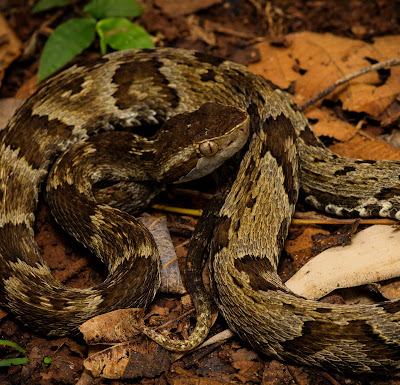
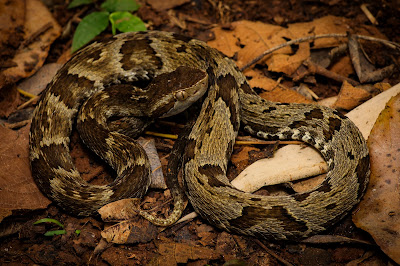
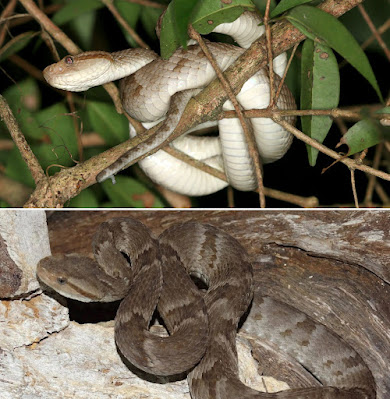
Showing posts with label Crotalinae. Show all posts

Wednesday, December 14, 2022

[Herpetology • 2022] Gloydius chambensis • Phylogenetic and Morphological Analysis of Gloydius himalayanus (Serpentes: Viperidae: Crotalinae), with the Description of A New Species


Gloydius chambensis
Kuttalam, Santra, Owens, Selvan, Mukherjee, Graham, Togridou, Bharti, Shi, Shanker & Malhotra, 2022

Chamba Pitviper  ||  DOI: 10.5852/ejt.2022.852.2003  

ABSTRACT
Gloydius is a widespread pitviper group occurring from Eastern Europe to Korea and Siberia, with only one known species, G. himalayanus (Günther, 1864), found south of the Himalayas. We provide combined genetic and morphological data for G. himalayanus from specimens collected from Himachal Pradesh, India. Bayesian Inference and Maximum Likelihood phylogenetic analysis were performed on four concatenated mitochondrial genes, along with a multi-locus coalescent analysis of these and five additional nuclear genes. Our results indicate that G. himalayanus from the Chamba Valley, in western Himachal Pradesh, are highly distinct from the remaining studied populations. Haplotype networks of each nuclear locus showed that G. himalayanus contains high haplotype diversity with low haplotype sharing between the Chamba Valley population and populations from further west. Principal component analysis and canonical variate analysis conducted on morphological data of live and museum specimens also highlight the morphological distinctiveness of the Chamba population and we herein describe this population as a new species, Gloydius chambensis sp. nov. Recent descriptions of other new species of snakes from this valley underscores its isolation and suggests that further herpetological investigation of the highly dissected landscapes of the western Himalayas is needed to assess the true diversity of the region.
 
Keywords: Western Himalayas, pitviper, multi-locus coalescent, Bayesian phylogenetics, multivariate morphometrics

a–d. Gloydius chambensis sp. nov., holotype, ♂ (Specimen Number 18.13; Churah Valley, HARC R359). a. Whole body b–d. Close-up of the head in dorsal (b), lateral (c) and ventral (d) views. d. The first and 10th ventrals have been marked with black marker to assist with counting scales.
e. A whole body view of specimen 17.v20 from Bhanjraru, Chamba.
Photos provided by J.B. Owens and V. Santra.


Gloydius chambensis sp. nov.

Diagnosis: Gloydius chambensis sp. nov. can be identified by the number of gular scales in contact with the infralabial scales (4–5, mean 4.17), number of sublabial scales (9–10, mean 9.57) and the proportion of the first temporal scale covered by the postocular stripe (covering less than a quarter of the temporal scale).

Etymology: The specific epithet ‘chambensis’ means ‘from Chamba’ in reference to the species being distributed in Chamba District. The suggested common name is the ‘Chamba Pitviper’.


Sourish Kuttalam, Vishal Santra, John Benjamin Owens, Melvin Selvan, Nilanjan Mukherjee, Stuart Graham, Anatoli Togridou, Omesh K. Bharti, Jingsong Shi, Kartik Shanker and Anita Malhotra. 2022. Phylogenetic and Morphological Analysis of Gloydius himalayanus (Serpentes, Viperidae, Crotalinae), with the Description of A New Species. European Journal of Taxonomy. 852(1); 1–30. DOI: 10.5852/ejt.2022.852.2003 

Sunday, October 30, 2022

[Herpetology • 2022] Bothrocophias tulitoi & B. myrringaeHidden in the Highs: Two New Species of the Enigmatic Toadheaded Pitvipers of the Genus Bothrocophias (Serpentes, Viperidae)


Bothrocophias tulitoi
Bothrocophias myrringae 
Angarita-Sierra, Cubides-Cubillos & Hurtado-Gómez, 2022


Abstract
Bothrocophias microphthalmus (Cope, 1875) currently comprises most mid- to highland populations of the genus Bothrocophias in the eastern versant of the Andes. We describe two new species of Bothrocophias from the highlands of the Colombian Andes previously referred to as B. microphthalmus based on morphological and genetic evidence. Our phylogenetic analysis revealed that B. micropthalmus as currently recognized is paraphyletic with respect to B. hyoprora, and the two new taxa are sister lineages. These new toadheaded pitvipers can be morphologically distinguished from their congeners based on the presence of contact between the internasal scales, the number of prefoveal scales, the presence of a lacunolabial scale, the arrangement of supralabial scales, ventral scale counts, the color pattern of the dorsal and ventral surfaces of the body and tail, and hemipenial morphology. We discuss some possible taxonomic scenarios for the lineages found within the B. microphthalmus species complex but refrain from making additional taxonomic changes given our reduced sampling of the southern lineages.

Keywords: Cryptic species, high Andean snakes, integrative taxonomy, medically important snakes, mtDNA, South America, Viperidae

Color in life of Bothrocophias tulitoi sp. nov.
A, C Lateral and dorsal view of a male neonate (paratype INSZ 0128).
B, D Lateral and dorsal view of an adult female (paratype INSZ 0144).
 All specimens from vereda Cienaga La Valvanera, municipality of Garagoa, department of Boyacá, Colombia. 

Bothrocophias tulitoi sp. nov.  
Chresonymy: Bothrocophias microphthalmus. (MLS 1632–34, 1636): Nicéforo-María (1975), Campbell and Lamar (1989): page 255, figure 230; Campbell and Lamar (2004): Volume 1, Plate 473; (MPUJ 1364): Angarita-Sierra et al (2013).

Diagnosis: Bothrocophias tulitoi sp. nov. can be distinguished from all its congeners by the following combination of characters: (1) 150–172 ventral scales in females, 153–162 ventral scales in males; (2) internasal scales in contact or separated by a single small scale; (3) absence of canthorostral scales; (4) absence of lacunolabial scale; (5) one prelacunal scale; (6) hemipenial lobes subconical and ornamented toward the apex by large and dense calyces with spinulate edges; (7) bifurcation point of hemipenial lobes about 3–6 sudcaudal scales; (8) hemipenial body ornamented by numerous dense, large, and strongly calcified mesial spines arranged in oblique lines; (9) in sulcate view, lateral and mesial spines of the hemipenial body homogeneous in size; (10) body surface with less than 28 dark-brown bands dorsally and/or juxtaposed trapezoid-shaped blotches with paler centers; and (11) ventral surface of the tail uniformly bright reddish or orange-reddish speckles with black spots without a regular pattern (Figs 3, 4).

Etymology: We dedicate this species to the late Colombian educator Tulio Manuel Angarita Serrano (1941–2021, father of the first author), known as Tulito (employing the diminutive Spanish suffix “ito”) by his colleagues, friends, and relatives. The specific epithet tulitoi represents the Latin translation of the nickname from the Spanish name Tulito. Professor Angarita-Serrano was a pioneer of the modern Colombian education model that helped catalyze the development of the theoretical and practical tools needed to implement institutional educational projects in Colombian public and private schools (see Angarita-Serrano 1990; Angarita-Serrano 1994; Angarita-Serrano and Chaves 1995; Angarita-Serrano 1996; Angarita-Serrano, 2000). He was also known for being a big thinker, a passionate advocate for the rights to education and free thought, and the development of educational paradigms that have helped Colombians overcome the new social, socioeconomic, and environmental challenges of the third millennium.

Distribution and natural history: (Fig. 8) The known localities of Bothrocophias tulitoi sp. nov. are distributed between 1,650 and 2,700 m a.s.l. in both the central mountains and eastern slopes of the Cordillera Oriental of Colombia in the municipalities Garagoa, Gauteque, and Miraflores (Boyacá); Chámeza, La Salina, and Yopal (Casanare); and Medina and Ubalá (Cundinamarca). Bothrocophias tulitoi sp. nov. appears to be associated with cloud montane, high Andean Forest, and subparamos and is tolerant of disturbed or transformed habitats such as livestock pastures and agricultural fields. Little is known of the natural history of B. tulitoi sp. nov. An adult female from the municipality of Garagoa, Boyacá (INSZ 144), gave birth to 15 offspring (two males and 13 females, eight of which are part of the paratype series: INSZ 128, 130, 134–36, 143, 146, 148) after 11 days in captivity at the INS serpentarium.

Envenomation: A total of 40 snakebite events over the last decade might have been caused by B. tulitoi sp. nov. Both mild and moderate envenomation have been noted in 50% of patients, and no severe cases nor fatalities were reported. Local symptoms reported included oedema (92.5%), pain (87.5%), erythema (47.5%), ecchymosis (20%), paresthesia (17.5%), phlyctens (15%), paresthesia (17.5%), and bruises (7.5%); systemic symptoms included sickness (45%), vomiting (15%), vertigo (12.5%), bradycardia (7.5%), gingivorrhea (7.5%), muscular weakness (5%), hematuria (5%), hypotension (5%), abdominal pain (5%), and altered vision (5%).


Color in life of Bothrocophias myrringae sp. nov., and sexual dimorphism.
 A, B Lateral and dorsal view of the holotype INSZ 0268. C Male exhibiting melanic coloration on dorsal body and head surfaces, as well as conspicuous tricolored ocelli on the infralabial scales (paratype INSV-SR009). D Female exhibiting creamish-yellow to tan coloration on the dorsal body and head surfaces, without tricolored ocelli on the infralabial scales. Both C and D specimens are from vereda de Coasavistá, municipality of Fómeque, Cundinamarca.
Pictures by Ronald A. Díaz-Flores.

Bothrocophias myrringae sp. nov. 
Chresonymy: Bothrocophias microphthalmus. Campbell and Lamar (1989): page 255, figure 229; Campbell and Lamar (2004): Volume 1, Plate 474.
 
Diagnosis: Bothrocophias myrringae sp. nov. can be distinguished from all its congeners by the following combination of characters: (1) 157–161 ventral scales in females, 152–155 ventral scales in males; (2) internasal scales in contact or separated by a single small scale (3) absence of canthorostral scales; (4) lacunolabial scale usually present; (5) hemipenial lobes slim and cylindrical, moderately capitate distally, weakly ornamented toward the apex with large and scarce calyces with weakly spinulate edges; (8) bifurcation point of the hemipenial lobes about 2–4 sudcaudal scales; (9) hemipenial body ornamented by numerous mesial spines that increase in size from the center to periphery of the hemipenial body and arranged in oblique lines; (10) in sulcate view, lateral and mesial spines of the hemipenial body variable in size; (11) sulcus spermaticus walls weakly defined; (12) usually more than 28 dark-brown bands and/or opposite or juxtaposed trapezoid-shaped blotches with paler centers dorsally; and (13) ventral surfaces of the tail with bright reddish or orange-reddish speckles with black spots without a regular pattern and heavily marked with dark pigment towards the base (Fig. 7).

Etymology: The specific epithet myrringae is the Latin translation of the Spanish nickname “Mirringa,” which means “pinch” or something very small. The word “Mirringa” was popularized by Rafael Pombo (1833–1912), a Colombian poet and writer who wrote a popular fable titled “Mirringa Mirronga.” Given the popularity of the fable, as well as the homophonic similarity of “Mirringa” and the name “Myriam,” the nickname “Myrringa” began to be used as a term of endearment. The name of the new species is in honor of the educator Myriam Sierra Guerrero (mother of the first author). She was the philosophical and conceptual advisor of professor Tulio Manuel Angarita Serrano and contributed to the development of the modern Colombian education model that all schools within Colombia currently employ. Professor Sierra Guerrero also helped develop the theoretical framework for the implementation of institutional educational projects in Colombian public and private schools (see Angarita-Serrano 1990; Angarita-Serrano 1994; Angarita-Serrano and Chaves 1995; Angarita-Serran 1996; Angarita-Serrano 2000).

Distribution and natural history: The known localities of Bothrocophias myrringae sp. nov. are from 1754 to 2761 m a.s.l. in both the central mountains and eastern slopes of the Cordillera Oriental of Colombia in the municipalities of La Calera, Choachí, Fómeque, and Guayabetal (Cundinamarca), and El Calvario and San Juanito (Meta, Fig. 9). Bothrocophias myrringae sp. nov. appears to be associated with cloud montane, high Andean Forest, and subparamos but is also tolerant of disturbed or transformed habitats such as livestock pastures and agricultural fields. The new species was found in sympatry with Bothrops atrox in localities from Fómeque. No natural history data are available.

Envenomation: A total of three snakebite events in the last decade might have potentially been caused by B. myrringae sp. nov., all of which were from the municipality of El Calvario (Meta). Each case was categorized as mild, moderate, and severe, respectively, and one fatality was reported. Local symptoms reported included oedema (100%), pain (100%), erythema (66%), and phlyctens (33%); systemic symptoms included respiratory failure (33%) and muscular weakness (33%). Symptoms such as paresthesia ecchymosis, bruising, sickness, vomit, vertigo, gingivorrhagia, hematuria, and altered vision were not reported.

Geographic distribution of Bothrocophias microphtalmus sensu lato, B. tulitoi sp. nov., and B. myrringae sp. nov., including type localities. The background map was obtained from the Esri open database through the following sources: DeLorme. USDS. NPS; USGS. NOAA.
 

 Teddy Angarita-Sierra, Sergio Daniel Cubides-Cubillos and Juan Pablo Hurtado-Gómez. 2022. Hidden in the Highs: Two New Species of the Enigmatic Toadheaded Pitvipers of the Genus BothrocophiasVertebrate Zoology. 72: 971-996. DOI: 10.3897/vz.72.e87313


Wednesday, July 27, 2022

[Herpetology • 2022] Gloydius lateralis • Exploring Cryptic Biodiversity in A World Heritage Site: A New Pitviper (Serpentes: Viperidae: Crotalinae) from Jiuzhaigou, Aba, Sichuan, China


 Gloydius lateralis Zhang, Shi, Jiang & Shi, 

in Zhang, Shi, Li, Yan, ... et Shi, 2022. 
 Jiuzhai pitviper | 九寨蝮  ||  DOI: 10.3897/zookeys.1114.79709

Abstract
This study presents a comprehensive morphological comparison along with molecular phylogeny of the genus Gloydius based on five mitochondrial genes (12S, 16S, COI, cytb, and ND4). The specimens collected from Jiuzhaigou National Nature Reserve are shown to be a new species, Gloydius lateralis sp. nov. Zhang, Shi, Jiang & Shi based on a combination of morphological and molecular accounts. G. lateralis sp. nov. differs from other congeneric species by a series of diagnostic morphological characteristics and forms a strongly supported monophyletic group. The new species is phylogenetically closely related to G. swild, another recently described species from Heishui, Aba, Sichuan.

Keywords: Asian pitviper, Gloydius lateralis, Jiuzhaigou National Nature Reserve, morphology, new species, phylogenetics

Head squamation of holotype of Gloydius lateralis sp. nov. CIB 119377 (JZ02)
A lateral view B ventral view C dorsal view. Scale bar: 10 mm.


Holotype of Gloydius lateralis sp. nov. in life, adult female, CIB 119377 (JZ02)
A dorsolateral view B ventral view. 

Gloydius lateralis Zhang, Shi, Jiang & Shi, sp. nov.

Diagnoses: The above-mentioned specimens were identified as members of the genus Gloydius based on the small body size, bilateral pits, and divided subcaudal scales (Zhao 2006; Shi et al. 2016, 2017, 2018, 2021). G. lateralis sp. nov. differs from other congeneric species by a combination of the following characteristics: (1) relatively larger eyes (ED/HL: 0.145–0.171, n = 5); (2) three palatine teeth; (3) 20 or 21 rows of mid-body dorsal scales; (4) ventrals 151–163 (n = 9); (5) subcaudals 38–49 (n = 6); (6) dorsal body laurel green or light brown with four rows of zigzag, dark brown patches, the medial two rows separated from each other by alternate phyllotaxis pattern in background color; (7) continuous, regular greyish-brown ventrolateral stripe on each side of body and tail.

Paratypes of Gloydius lateralis sp. nov. in life
A, B CIB 119379 (JZ04), adult female in dorsolateral and ventral views
C, D CIB119378 (JZ03), adult female in dorsolateral and ventral views.
 
Etymology: The specific epithet lateralis refers to the unique continuous, regular, greyish-brown ventrolateral stripes at the junction of ventrals and the first row of dorsal scales. The common name is suggested as “Jiuzhai pitviper” in English, “Jiǔ Zhài Fù” (九寨蝮) in Chinese, refer to its type locality, Jiuzhaigou National Nature Reserve.

Distribution and ecology: At present, G. lateralis sp. nov. is only known from Jiuzhaigou National Nature Reserve, Sichuan, China. The type specimens were collected from the middle of June to the end of August. Gloydius lateralis sp. nov. is active on sunny days by the roadside in a hot, dry valley (Fig. 8). This species is sympatric with Protobothrops jerdonii, Rhabdophis nuchalis, and Scincella tsinlingensis. The food spectrum of the new species includes small mammals based on a small patch of fur observed in feces. They fed on suckling mice in captivity.


Mei-Hua Zhang, Sheng-Chao Shi, Cheng Li, Peng Yan, Ping Wang, Li Ding, Jie Du, Anđelka Plenković-Moraj, Jian-Ping Jiang and Jing-Song Shi. 2022. Exploring Cryptic Biodiversity in A World Heritage Site: A New Pitviper (Squamata, Viperidae, Crotalinae) from Jiuzhaigou, Aba, Sichuan, China. ZooKeys. 1114: 59-76.  DOI: 10.3897/zookeys.1114.79709

https://phys.org/news/2022-07-pit-viper-jiuzhaigou-national-nature.html

 Jing-Song Shi, Jin-Cheng Liu, Rohit Giri, ... et Anita Malhotra. 2021. Molecular Phylogenetic Analysis of the Genus Gloydius (Squamata, Viperidae, Crotalinae), with Description of Two New Alpine Species from Qinghai-Tibet Plateau, China. ZooKeys. 1061: 87-108. DOI: 10.3897/zookeys.1061.70420

Thursday, February 3, 2022

[Herpetology • 2022] Bothrops germanoi • Speciation Process on Brazilian Continental Islands, with the Description of A New Insular Lancehead of the Genus Bothrops (Serpentes, Viperidae)


Bothrops germanoi
Barbo, Booker, Duarte, Chaluppe, Portes-Junior, Franco & Grazziotin, 2022

photo: William W. Booker

Abstract
Brazilian continental islands represent a natural laboratory to study speciation driven by recent phenotypic and genotypic divergence. The Bothrops jararaca species group is distributed in the Brazilian Atlantic Forest and on most of the Brazilian continental islands. The group is currently composed of the mainland common lancehead (B. jararaca) and four insular species (B. alcatraz, B. insularis, B. otavioi, and B. sazimai). Here, we evaluate mitochondrial DNA and morphological diversity of the B. jararaca species group and aim to provide additional evidence to understand insularization processes on the Brazilian coast. Our results, interpreted together with a comprehensive review of geomorphological data, provide a new conceptual framework for understanding the colonization process of the Brazilian continental islands. This framework suggests a history of multiple rounds of periodic isolation and reconnection between insular populations and their mainland relatives throughout the last 420,000 years. Furthermore, although some insular populations may have speciated prior to the last glacial maximum, other species likely diverged within the last 11,000 years. Additionally, the repeated evolution of size and dietary shift in the B. jararaca species group suggests a remarkable case of convergent adaptation. Our study provides evidence that the Bothrops from Ilha da Moela (Brazilian state of São Paulo) represents an undescribed species, presenting a distinct phenotype, and an exclusive history of isolation and adaptation. We describe this unique lancehead as a new species and we suggest it should be listed as critically endangered based on its endemicity to a small island that is severely impacted by constant and longstanding human presence.
 
Key words: Bothrops, Serpentes, Viperidae, lancehead, Brazilian Atlantic Forest, Ilha da Moela, peripatric speciation, sea level changes


Bothrops germanoi

 
Fausto E. Barbo, William W. Booker, Marcelo R. Duarte, Betina Chaluppe, José A. Portes-Junior, Francisco L. Franco and Felipe G. Grazziotin. 2022. Speciation Process on Brazilian Continental Islands, with the Description of A New Insular Lancehead of the Genus Bothrops (Serpentes, Viperidae). Systematics and Biodiversity. 20(1); 1-25. DOI: 10.1080/14772000.2021.2017059  

Sunday, January 23, 2022

[Herpetology • 2022] Bothrops jabrensis Isolated by Dry Lands: Integrative Analyses unveil the Existence of A New Species and A previously unknown Evolutionary Lineage of Brazilian Lanceheads (Serpentes: Viperidae: Bothrops)


Bothrops jabrensis 
 Barbo, Grazziotin, Pereira-Filho, Freitas, Abrantes & Kokubum, 2022

Jabre’s Lancehead | jararaca-do-jabre || DOI: 10.1139/cjz-2021-0131
 
Abstract
Here we describe a new species of Lancehead (Bothrops jabrensis sp. nov.) based on three individuals sampled from a previously unknown population from Pico do Jabre, an isolated and small Caatinga moist-forest enclave (CMFE) located in northeastern Brazil. Although this new species has an external morphology resembling those found in representatives of the Bothrops jararaca (Wied-Neuwied, 1824) species group, B. jabrensis can be diagnosed by a combination of meristic and color characters. Molecular phylogenetic analysis indicates the new species represents a unique and highly divergent lineage within Bothrops revealing the existence of a previously unknown phylogenetic lineage that has been evolving as an independent unit for more than 8 million years. Additionally, the estimated divergence time of this lineage conflicts with some proposed scenarios of historical processes associated with the evolution of CMFEs. Finally, the uniqueness of this species indicates its relevance for the maintenance of the phylogenetic diversity of Lanceheads in South America. Like other CMFEs, Pico do Jabre is consistently threatened by poaching, illegal fires, deforestation for agricultural purposes, and illegal logging. The restricted distribution of B. jabrensis, in a small and disturbed CMFE, strongly suggests that this species is critically endangered and is likely approaching extinction as a natural population.

Key words: Bothrops jabrensis, Lancehead, Pico do Jabre, Caatinga moist-forest enclave, brejo de altitude, Brazilian Atlantic Forest, snake taxonomy.


 Bothrops jabrensis sp. nov. 
female, holotype, IBSP 92904
from Pico do Jabre, state of Paraíba, northeastern Brazil.
 
 Photo by M.N.C. Kokubum. 
IBSP - Coleção Herpetológica Alfonse R. Hoge, Instituto Butantan


Bothrops jabrensis sp. nov.

ETYMOLOGY: The specific epithet jabrensis is a noun in reference to the type locality where the new species was found, Pico do Jabre, an altitudinal Caatinga moist-forest enclave located at state of Paraíba, northeastern Brazil. 
We suggest here the common name Jabre’s Lancehead (jararaca-do-jabre, in Portuguese).


 Fausto E. Barbo, Felipe G. Grazziotin, Gentil A. Pereira-Filho, Marco A. Freitas, Stephenson H.F. Abrantes and Marcelo N. de C. Kokubum. 2022. Isolated by Dry Lands: Integrative Analyses unveil the Existence of A New Species and A previously unknown Evolutionary Lineage of Brazilian Lanceheads (Serpentes: Viperidae: Bothrops) from A Caatinga Moist-forest Enclave. Canadian Journal of Zoology. DOI: 10.1139/cjz-2021-0131

Espécie de jararaca descoberta na Caatinga revela história evolutiva até então desconhecida
A descoberta da espécie Bothrops jabrensis trouxe também uma revelação surpreendente: uma nova linhagem evolutiva, até então desconhecida pela ciência, dentro do gênero jararacas

Pesquisadores da UFCG descobrem nova espécie de jararaca
Serpente foi encontrada no Pico do Jabre, ponto culminante da Paraíba. Artigo foi publicado na última terça-feira pela Canadian Science Publishing


Thursday, October 7, 2021

[Herpetology • 2021] Gloydius lipipengi & G. swild • Molecular Phylogenetic Analysis of the Genus Gloydius (Serpentes: Viperidae: Crotalinae), with Description of Two New Alpine Species from Qinghai-Tibet Plateau, China


Gloydius lipipengi Shi, Liu & Malhotra,
Gloydius swild Shi & Malhotra, 

in Shi, Liu, Giri, Owens, ... et Malhotra, 2021. 

Abstract
We provide a molecular phylogeny of Asian pit vipers (the genus Gloydius) based on four mitochondrial genes (12S, 16S, ND4, and cytb). Sequences of Gloydius himalayanus, the only member of the genus that occurs south of the Himalayan range, are included for the first time. In addition, two new species of the genus Gloydius are described based on specimens collected from Zayu, Tibet, west of the Nujiang River and Heishui, Sichuan, east of the Qinghai-Tibet Plateau. The new species, Gloydius lipipengi sp. nov., can be differentiated from its congeners by the combination of the following characters: the third supralabial not reaching the orbit (separated from it by a suborbital scale); wide, black-bordered greyish postorbital stripe extending from the posterior margin of the orbit (not separated by the postoculars, covering most of the anterior temporal scale) to the ventral surface of the neck; irregular black annular crossbands on the mid-body; 23-21-15 dorsal scales; 165 ventral scales, and 46 subcaudal scales. Gloydius swild sp. nov. can be differentiated from its congeners by the narrower postorbital stripe (only half the width of the anterior temporal scale, the lower edge is approximately straight and bordered with white); a pair of arched stripes on the occiput; lateral body lakes black spots; a pair of round spots on the parietal scales; 21 rows of mid-body dorsal scales; zigzag dark brown stripes on the dorsum; 168–170 ventral scales, and 43–46 subcaudal scales. The molecular phylogeny in this study supports the sister relationship between G. lipipengi sp. nov. and G. rubromaculatus, another recently described species from the Qinghai-Tibet Plateau, more than 500 km away, and indicate the basal position of G. himalayanus within the genus and relatively distant relationship to its congeners.

Keywords: Asian pit viper, Gloydius himalayanus, Heishui, molecular phylogeny, osteology, Qinghai-Tibet plateau, Zayu

Figure 6. Type localities of Gloydius lipipengi sp. nov. (red triangles) and G. swild sp. nov. (black triangles), with the collection localities of some other congeneric species. 

Viperidae Gray, 1825

Gloydius Hoge & Romano-Hoge, 1981

Gloydius lipipengi Shi, Liu & Malhotra, sp. nov.
 
Etymology: The specific epithet of the new species from Tibet is dedicated to the senior author’s Master’s supervisor, Professor Pi-Peng Li (Institute of Herpetology, Shenyang Normal University) on Li’s sixtieth birthday. Prof. Li has devoted himself to the study of the herpetological diversity of the Qinghai-Tibet Plateau. The senior author became an Asian pit viper enthusiast and professional herpetological researcher under his instruction. The common name of Gloydius lipipengi sp. nov. is suggested as “Nujiang pit viper” in English, and “Nù Jiāng Fù (怒江蝮)” in Chinese.
 
Diagnosis: 
The specimens of the new species, IVPP OV 2720, IVPP OV 2725 and IVPP OV 2726 were identified as the member of the genus Gloydius based on the small body size, bilateral pits, and divided subcaudal scales (Hoge and Romano-Hoge 1981).

Gloydius lipipengi sp. nov. differs from other congeneric species in the following characteristics: i) third supralabial scale not touching the orbit; ii) a pair of prominent black markings on the occiput; iii) black-bordered greyish cheek stripe extending from the posterior margin of orbit (not separated by the postoculars) to the ventral surface of the neck; iv) black irregular annular crossbands on the mid-body; iv) two rows of black blotches on the ventral side ; v) 23-21-15 circum-body scales; vi) 165 ventral scales; and vii) 46 subcaudal scales.
...

Gloydius lipipengi sp. nov. and G. swild sp. nov. can be differentiated from the species in the G. blomhoffii complex by having three palatine teeth (versus four palatine teeth), from the G. halys complex by having 21 rows of mid-body dorsal scales (versus 22 or 23 rows). Gloydius lipipengi sp. nov. differs from other species in G. strauchi complex by the third supralabial scale not touching the orbit, from G. strauchi, G. huangi, and G. rubromaculatus by having large irregular black markings on the back (versus four irregular longitudinal stripes or discrete blotches in G. strauchi, complete dark brown patches in G. huangi, and large red crossbands in G. rubromaculatus (Wang et al. 2019), from G. monticola by having seven supralabials (versus always six supralabials) and more subcaudal scales (46 pairs versus always fewer than 30 pairs), from G. qinlingensis and G. liupanensis by its greyish brown body colour (versus yellowish-brown body colour) and lacking a lateral white line on each lateral side (versus possessing a lateral white line on each side). Gloydius lipipengi sp. nov. can be differentiated from G. himalayanus by possessing an indistinct canthus rostralis (versus very distinct canthus rostralis; Gloyd and Conant 1990).

Distribution and ecology: At present, Gloydius lipipengi sp. nov. has only been reported from the type locality, Muza village, Zayu, Tibet, China (Fig. 6). The specimen was collected at 09:00 h on leaf litter in forest near the hot, dry valley on the lower reaches of the Nujiang River (Fig. 7). Gloydius lipipengi sp. nov. accepted pink mice in captivity.


Figure 1. Gloydius lipipengi sp. nov. (A, B IVPP OV 2720, holotype)
and Gloydius swild sp. nov. (C IVPP OV 2725, holotype, D IVPP OV, 2726, paratype)
in life, not to scale.

Gloydius swild Shi & Malhotra, sp. nov.

 Etymology: The new species from Heishui, Sichuan is named after the Swild Group (Southwest Wild, http://www.swild.cn/), who discovered the new species and collected the first species during an expedition to the Dagu Holy-glacier, Heishui, Sichuan. The common name of G. swild sp. nov. is suggested as “Glacier pit viper” in English, and “Bīng Chuān Fù (冰川蝮)” in Chinese.
  
Diagnosis: 
Gloydius swild sp. nov. differs from other congeneric species in the following characteristics: i) the narrower postorbital stripe, ii) a pair of round spots on the parietal scales; iii) the absence of the black spots on the lateral body; iv) 21 rows of mid-body dorsal scales; v) a pair of arched stripes on the occiput; vi) 168–170 ventral scales, and vii) 43–46 subcaudal scales.

Morphologically, Gloydius swild sp. nov. is quite similar to G. angusticeps, but differs by the narrower, straight bordered brown postorbital stripe (versus wider postorbital stripe with dentate lower border in G. angusticeps). G. swild sp. nov. differs from G. strauchi, G. huangi, and G. rubromaculatus by the narrow triangular head from dorsal view (versus spoon-shaped head in above-mentioned species), from G. monticola by having seven supralabials (versus always six supralabials) and more subcaudal scales (43–46 pairs versus always fewer than 30 pairs of subcaudal scales), from G. qinlingensis and G. liupanensis by its dark greyish brown background dorsal color (versus yellowish-brown body colour) and lacking a lateral white line on each side (versus possessing a lateral white line on each side), from G. himalayanus by possessing an indistinct canthus rostralis (versus very distinct canthus rostralis; Gloyd and Conant 1990).

Distribution and ecology: Gloydius swild sp. nov. has been found in east part of Qinghai-Tibet plateau and Hengduanshan mountains, Heishui country, north Sichuan, about 15 km away from Dagu Holy-glacier National Geological Park, from along the route of Red Army’s long march (from June to August, 1935). They were found on or under the rocks (especially near the vegetations) on sunny slopes (Figs 6, 7C).


Figure 7. The habitat of Gloydius lipipengi sp. nov. (A Muza Village, Zaty, Tibet, type locality of G. lipipengi sp. nov. B the landscape of the Nujiang River, 15 km from the type locality)
and Gloydius swild sp. nov. (C Heishui, Sichuan) A and B Photographs by Jin-Cheng Liu.


 Jing-Song Shi, Jin-Cheng Liu, Rohit Giri, John Benjamin Owens, Vishal Santra, Sourish Kuttalam, Melvin Selvan, Ke-Ji Guo and Anita Malhotra. 2021. Molecular Phylogenetic Analysis of the Genus Gloydius (Squamata, Viperidae, Crotalinae), with Description of Two New Alpine Species from Qinghai-Tibet Plateau, China. ZooKeys. 1061: 87-108. DOI: 10.3897/zookeys.1061.70420

Monday, June 21, 2021

[Herpetology • 2021] Metlapilcoatlus borealis • Molecular Phylogenetics and Morphometrics Reveal A New Endemic Jumping Pitviper (Serpentes: Viperidae: Crotalinae) from the Sierra Madre Oriental of Mexico


Metlapilcoatlus borealis
Tepos-Ramírez, Flores-Villela, Velasco, Lara, Rubio & Jadin, 2021


Abstract
The jumping pitvipers of the genus Metlapilcoatlus are generally associated with montane environments and are widely distributed from central and southern Mexico to Panama. In this study, we analyzed the phylogenetic position and compared the morphology of a population from the Sierra Madre Oriental, within the Sierra Gorda Biosphere Reserve, to other species of jumping pitvipers. We implemented two mtDNA gene fragments (cyt b and ND4) of 50 specimens of the five Metlapilcoatlus species for phylogenetic reconstruction using Bayesian inference and maximum likelihood. We used a linear discriminant analysis and comparative statistics of external and hemipenial characters to assess the morphological differences among Metlapilcoatlus lineages. Our analyses support a strong genetic and morphological distinction of Metlapilcoatlus nummifer populations established to the north of the Trans-Mexican Volcanic Belt (Hidalgo, Northern Veracruz, and Querétaro) from other Metlapilcoatlus taxa. Based on this evidence we describe the populations from the north as a new species.


the holotype of Metlapilcoatlus borealis [MZFC-35381]
from the locality of San Juan de los Durán, in Jalpan de Serra, Querétaro. 
 
  Photographs by Óscar Flores-Villela (A) and Mauricio Tepos Ramírez (B and C).


Metlapilcoatlus borealis sp. nov. 
 
Etymology.— The specific epithet, borealis, references the northernmost distribution of this taxon with respect to the other taxa of Metlapilcoatlus.


Mauricio Tepos-Ramírez, Oscar Flores-Villela, Julián A. Velasco, Carlos Pedraza Lara, Oscar R. García Rubio and Robert C. Jadin. 2021. Molecular Phylogenetics and Morphometrics Reveal A New Endemic Jumping Pitviper (Serpentes: Viperidae: Metlapilcoatlus) from the Sierra Madre Oriental of Mexico. Journal of Herpetology. 55(2); 181-191. DOI: 10.1670/20-028

Tuesday, March 16, 2021

[Herpetology • 2021] Bothrops oligobalius • Molecular and Phenotypic Data reveal A New Amazonian Species of Pit Vipers (Serpentes: Viperidae: Bothrops)


Bothrops oligobalius 
Dal Vechio, Prates, Grazziotin, Graboski & Rodrigues, 2021. 
 

ABSTRACT
Recent genetic studies have found unclear species boundaries and evidence of undescribed diversity in the poorly studied jararacussu species group within Bothrops. In this contribution, we investigate phenotypic and genetic diversity in the Amazonian snake Bothrops brazili to test previous assertions of unrecognised species diversity within this taxon. Our phylogenetic results and inferences of independently evolving lineages based on molecular data recover two divergent clades within B. brazili, one restricted to areas north and another to areas south of the Amazon River. Phylogenetic relationships between these lineages and other species in the jararacussu species group reveal B. brazili to be paraphyletic, with the northern clade inferred as sister to a clade composed of Atlantic Forest taxa (B. jararacussu, B. muriciensis, B. pirajai). External morphology (number of ventral and subcaudal scales) and colouration patterns (lateral trapezoidal marks) consistently separate the two lineages of B. brazili. We therefore recognise and describe the northern lineage as a new species of Bothrops, improving our knowledge of species diversity within a medically important clade of venomous South American snakes.

KEYWORDSAmazonia, Amazon River, Bothrops brazili, B. jararacussu, B. pirajai, B. muriciencis, species delimitation

Figure 2. Bothrops oligobalius sp. nov. from French Guiana.
Photo by Maël Dewynter.

Bothrops oligobalius sp. nov.

Diagnosis: (1) A robust body species, SVL = 245–805 mm, (2) short tail, TL = 35–113 mm; (3) 23–27 dorsals on the first third of the body; (4) 23–25 dorsals at midbody; (5) 18–21 dorsals on the last third of the body; (6) 156–164 ventrals in females (median = 160) and 154–159 in males (median = 156); (7) anal scale not divided; (8) 42–48 paired subcaudals in females (median = 44.5) and 47–52 in males (median = 48.8); (9) 9–13 lateral trapezoidal marks in each side (median = 11,01 and 11,7 on the right and left side, respectively); (10) postorbital stripe absent or poorly marked; (11) eight supralabials; (12) 10–12 infralabials; (13) second supralabial fused to the prelacunal; (14) belly checkered; (15) absence of vertebral stripe.

Figure 6. Geographic map of South America showing the distribution of Bothrops oligobalius sp. nov. (yellow) and B. brazili (red). Outlined diamonds and circles represent sites with genetic samples available. Diamonds with an inner dot indicate the type locality of each both species. The Amazonian biome is highlighted in green; the Amazon River is also indicated.
Photos: B. oligobalius sp. nov. from French Guiana, by Maël Dewynter;
B. brazili from Porto Velho, RO, Brazil, by Francisco Dal Vechio.


Etymology: The specific name derives from the Greek oligos (few) and balios (spotted, dappled). The name is a reference to the smaller number of lateral trapezoidal marks on the body compared to Bothrops brazili, a name now restricted to the populations south of the Amazon River.

 
Francisco Dal Vechio, Ivan Prates, Felipe G. Grazziotin, Roberta Graboski and Miguel Trefaut Rodrigues. 2021. Molecular and Phenotypic Data reveal A New Amazonian Species of Pit Vipers (Serpentes: Viperidae: Bothrops). Journal of Natural History. 2415-2437. DOI: 10.1080/00222933.2020.1845835  


Sunday, August 25, 2019

[Herpetology • 2019] Bothrops monsignifer • A New Species of Pitviper of the Genus Bothrops (Serpentes: Viperidae: Crotalinae) from the Central Andes of South America


Bothrops monsignifer
Timms, Chaparro, Venegas, Salazar-Valenzuela, Scrocchi, Cuevas, Leynaud & Carrasco, 2019


Abstract
We describe a new species of montane pitviper of the genus Bothrops from the Cordillera Oriental of the Central Andes, distributed from southern Peru to central Bolivia. The new species can be distinguished from its congeners by the characteristic combination of a dorsal body color pattern consisting of triangular or subtriangular dark brown dorsal blotches, paired dark brown parallel occipital stripes, a conspicuous dark brown postocular stripe, the presence of canthorostrals in some specimens, prelacunal fused or partially fused with second supralabial, one scale usually separating internasals, rostral trapezoidal, two canthals oval to rounded, similar size or slightly larger than internasals, three or four medial intercanthals, eight to twelve intersupraoculars, intercanthals and intersupraoculars keeled and frequently slightly keeled, supraoculars oval, one to three suboculars, two to three postoculars, loreal subtriangular, two to six prefoveals, subfoveals absent, two or none postfoveals, one or two scales between suboculars and fourth supralabial, seven or eight supralabials, nine or eleven infralabials, 23–25 middorsal scales, 189–195 ventrals in females and 182–190 in males, 48–58 subcaudals in females and 54–63 in males, exceptionally undivided. The new species is apparently restricted to areas within Andean montane forests that are less humid and devoid of large trees.

Keywords: Reptilia, Andes, Bolivia, morphology, Peru, phylogeny, pitviper species

First specimen of the new species photographed in Bolivia (Refugio Los Volcanes, department of Santa Cruz).
Photo by W. Guzmán.

Bothrops monsignifer sp. nov.  

Etymology: The specific epithet is derived from the Latin (noun) by the union of “mons” (=montane) + “ignifer” (=flame, fire or flash), meaning fire mountain or volcano, in allusion to the location where the first Bolivian specimen was photographed (Refugio Los Volcanes, department of Santa Cruz, Bolivia).

 Juan Timms, Juan C. Chaparro, Pablo J. Venegas, David Salazar-Valenzuela, Gustavo J. Scrocchi, Jairo Cuevas, Gerardo C. Leynaud and Paola A. Carrasco. 2019. A New Species of Pitviper of the Genus Bothrops (Serpentes: Viperidae: Crotalinae) from the Central Andes of South America. Zootaxa. 4656(1); 99–120. DOI: 10.11646/zootaxa.4656.1.4

Tuesday, March 12, 2019

[Herpetology • 2019] Bothrops sonene • A New Species of Bothrops (Serpentes: Viperidae: Crotalinae) from Pampas del Heath, southeastern Peru, with Comments on the Systematics of the Bothrops neuwiedi species group


Bothrops sonene 
Carrasco, Grazziotin, Farfán, Koch, Ochoa, Scrocchi, Leynaud & Chaparro, 2019.


Abstract
We describe a new species of pitviper of the genus Bothrops from the Peruvian Pampas del Heath, in the Bahuaja-Sonene National Park. Pampas del Heath is an area of seasonally flooded savannas and a northwestern extension of the Gran Chaco Boliviano-Paraguayo. The new species is easily distinguished from its congeners by the exclusive combination of dorsal color pattern of body consisting of small C-shaped blotches, postocular stripe originating posteriorly to the eye, covering posterior supralabials, dorsum of the head with paired markings arranged symmetrically, venter cream heavily speckled with brown, prelacunal scale discrete in contact with second supralabial, three to five prefoveals, subfoveal single usually present, postfoveals absent to two, canthals two, seven intersupraoculars, one or two suboculars, two or three postoculars, seven or eight supralabials, nine to eleven infralabials, 26–27 interrictals, 23–25 middorsal scales, 172 ventrals in the female and 169–173 in males, 45 subcaudals in the female and 50 in males. We performed separate and combined phylogenetic analyses based on morphology and five mitochondrial genes and recovered the new species as a member of the Bothrops neuwiedi species group. All lineages of this clade inhabit the South American dry diagonal. This novel species of pitviper increases the known diversity of the genus Bothrops and adds to the number of described taxa from the unique and scarcely known ecosystem of Pampas del Heath.

Keywords: Reptilia, Bothrops mattogrossensis, species delimitation, molecular phylogeny, morphological characters, total evidence


Bothrops sonene


Paola A. Carrasco, Felipe G. Grazziotin, Roy Santa Cruz Farfán, Claudia Koch, José Antonio Ochoa, Gustavo J. Scrocchi, Gerardo C. Leynaud and Juan C. Chaparro. 2019. A New Species of Bothrops (Serpentes: Viperidae: Crotalinae) from Pampas del Heath, southeastern Peru, with Comments on the Systematics of the Bothrops neuwiedi species group. Zootaxa. 4565(3); 301–344. DOI:  10.11646/zootaxa.4565.3.1