Showing posts with label Author: Wood. Show all posts

Monday, January 31, 2022

[Herpetology • 2021] Cyrtodactylus stellatus • A New Insular Species of the Cyrtodactylus pulchellus Group (Reptilia, Gekkonidae) from Tarutao Island, southern Thailand revealed by Morphological and Genetic Evidence


Cyrtodactylus stellatus
Termprayoon, Rujirawan, Ampai, Wood & Aowphol, 2021

ตุ๊กกายเกาะตะรุเตา | Stellar Bent-toed Gecko ||  DOI: 10.3897/zookeys.1070.73659 

Abstract
The bent-toed geckos of the Cyrtodactylus pulchellus group are widely distributed along the Thai-Malay Peninsula. Although taxonomic and phylogenetic studies of this species group have been continuously conducted, only some populations from Thailand have been included, resulting in hidden diversity within this group. In this study, we used morphological and molecular data to clarify the taxonomic status and describe a new population from Tarutao Island, Satun Province, southern Thailand. Cyrtodactylus stellatus sp. nov. can be distinguished from its congeners by the combination of the following morphological characters: body size; tuberculation; number of dark body bands, ventral scales, and femoroprecloacal pores in males; presence of precloacal pores in females; and scattered pattern on dorsum. Phylogenetic analyses of the mitochondrial ND2 gene recovered the new species as the sister species to C. astrum, with an uncorrected pairwise divergence of 9.78–12.37%. Cyrtodactylus stellatus sp. nov. is currently only known from Tarutao Island, Thailand. The discovery of this species suggests that the diversity within the C. pulchellus group remains underestimated and future exploration of unsurveyed areas are needed to further the understanding of this group and its geographic range.

Keywords: Cyrtodactylus astrum, Cyrtodactylus stellatus sp. nov., karst, morphology, phylogeny, taxonomy

Map showing the type locality of Cyrtodactylus stellatus sp. nov. from Tarutao Island, Mueang Satun District, Satun Province, Thailand and the type localities of closely related species, C. astrum, C. dayangbuntingensis, C. langkawiensis, and C. lekaguli.

Adult male holotype of Cyrtodactylus stellatus sp. nov. (ZMKU R 00905) from Tarutao Island, Satun Province.
A specimen in life and immediately before preservative: B dorsal and C ventral views.


 Variation of Cyrtodactylus stellatus sp. nov. 
 A adult female ZMKU R 00899 having 11 dark caudal bands on the original tail and white caudal bands infused with dark pigmentation B immature female ZMKU R 00902 (field number AA 05272) having 12 dark caudal bands on the original tail with immaculate white caudal bands, and C juvenile ZMKU R 00917 having light-yellow color on the body and bearing white tail tip.

Cyrtodactylus stellatus sp. nov.
Stellar Bent-toed Gecko

Diagnosis: Cyrtodactylus stellatus sp. nov. can be distinguished from all other species of the C. pulchellus group by the combination of the following characters: (1) SVL 86.3–95.9 mm in adult males, 86.6–96.1 mm in adult females; (2) 12–15 supralabial and 10–13 infralabial scales; (3) weak tuberculation on body; (4) no tubercles on ventral surfaces of forelimbs, gular region, or in ventrolateral body folds; (5) 32–47 paravertebral tubercles; (6) 19–23 longitudinal rows of dorsal tubercles; (7) 32–40 rows of ventral scales; (8) 20–23 subdigital lamellae on the fourth toe; (9) 24–29 femoroprecloacal pores in adult males; (10) precloacal pores present in adult females; (11) deep precloacal groove in males; (12) dorsum bearing a scattered pattern of white tubercles; (13) four dark dorsal body bands; (14) 10–12 dark caudal bands on original tail; (15) white caudal bands in adults heavily infused with dark pigmentation; and (16) posterior portion of tail in hatchlings and juveniles white.

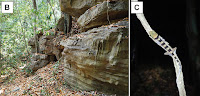
Figure 12. Habitat of Cyrtodactylus stellatus sp. nov. at the type locality, Tarutao Island, Satun Province, Thailand.
A Pha Toe Boo karst formation B karst microhabitat structure and C vegetation (vine) used by a juvenile in karst habitat.


Distribution: Cyrtodactylus stellatus sp. nov. is currently known only from Tarutao Island, Satun Province, Thailand (Figs 1, 12A).

Natural history: 
All specimens of C. stellatus sp. nov. were collected from a karst forest at night (1950–2100 h) with temperatures between 27.1–32.2 °C and relative humidity between 71.4–93.0%. The specimens were found on karst walls, within karst crevices and on nearby karst boulders. Some specimens occurred on tree trunks or vines near the karst formations (Fig. 12). The holotype was found on a karst wall approximately 1 m above the ground within karst forest. Eight specimens (ZMKU R 00900, ZMKU R 00906, ZMKU R 00908, ZMKU R 00911–00912, ZMKU R 00913, and ZMKU R 00915–00916) were found on karst walls from 0.5–3.0 m above the ground. ZMKU R 00907, ZMKU R 00910, and ZMKU R 00914 were found in karst crevices. Three specimens (ZMKU R 00901, ZMKU R 00903, and ZMKU R 00909) were found on karst boulders. Four specimens (ZMKU R 00899, ZMKU R 00902, ZMKU R 00904, and ZMKU R 00917) were perched on vegetation near karst walls or karst boulders.

Two gravid females (ZMKU R 00899–00900) were collected in November 2017 and contained two eggs (externally visible). The juvenile was found on a vine in May 2019. Cyrtodactylus stellatus sp. nov. appears to be nocturnal and sympatric with two other gekkonids, Gehyra mutilata Wiegmann, 1834 and the diurnal species Cnemaspis tarutaoensis Ampai et al., 2019.

Etymology: The specific epithet stellatus is Latin word, meaning starry or starred, and refers to scattered pattern of light-colored tubercles on dorsum and limbs. The name corresponds with the sister taxon C. astrum that shared similar diagnostic character (scattered light-colored tubercles pattern on dorsum).


Korkhwan Termprayoon, Attapol Rujirawan, Natee Ampai, Perry L. Wood Jr and Anchalee Aowphol. 2022. A New Insular Species of the Cyrtodactylus pulchellus Group (Reptilia, Gekkonidae) from Tarutao Island, southern Thailand revealed by Morphological and Genetic Evidence. ZooKeys. 1070: 101-134. DOI: 10.3897/zookeys.1070.73659 

Natee Ampai, Attapol Rujirawan, Perry L. Wood Jr, Bryan L. Stuart and Anchalee Aowphol. 2019. Morphological and Molecular Analyses reveal Two New Insular Species of Cnemaspis Strauch, 1887 (Squamata, Gekkonidae) from Satun Province, southern Thailand. ZooKeys. 858: 127-161. DOI: 10.3897/zookeys.858.34297

 L. L. Grismer, Perry L. Wood, Jr., Evan S. H. Quah, Shahrul Anuar, MohD. A. Muin, Montri Sumontha, Norhayati Ahmad, Aaron M. Bauer, Sansareeya Wangkulangkul, Jesse L. Grismer and Olivier S. G. Pauwels. 2012. A Phylogeny and Taxonomy of the Thai-Malay Peninsula Bent-toed Geckos of the Cyrtodactylus pulchellus complex (Squamata: Gekkonidae): combined morphological and molecular analyses with Descriptions of Seven New Species. Zootaxa. 3520: 1-55. Researchgate.net/publication/234032436 


Tuesday, September 15, 2020

[Herpetology • 2020] Pseudogekko hungkag Unexpected Discovery of Another New Species of Philippine False Gecko (Gekkonidae; Pseudogekko) from the Bicol Peninsula of Luzon Island


Pseudogekko hungkag
 Brown, Meneses, Wood, Fernandez, Cuesta, Clores, Tracy, Buehler & Siler, 2020

Bicol Hollow-dwelling Forest Gecko || DOI: 10.1655/Herpetologica-D-19-00029.1  

Abstract
Philippine False Geckos (genus Pseudogekko) are secretive, delicate, slender-bodied, arboreal members of an obligate forest specialist clade that is substantially more species diverse than previously assumed. Over the last century, few species were added to this Philippine endemic genus. During the last decade, however, revisionary studies have resulted in the recognition of six new species. Several of these appear to be rare, have restricted geographic ranges, or exhibit patchy, fragmented areas of occurrence. In this study we report on the discovery of a second Luzon Island species in the P. brevipes complex, a clade in which members typically have diminutive bodies. Although the new species is readily diagnosed from all congeners, we estimated its systematic affinities with a phylogenetic analysis of DNA sequence data and confirm that it is nested within the P. brevipes clade. The new species constitutes an exception to the general appearance of other members of the P. brevipes complex, in that it has a relatively heavy-bodied, robust stature, separating it phenotypically from all members of the group. Our new species constitutes the second Luzon lineage in this group of rainforest species (considered previously to be restricted to the Negros-Panay and Mindanao Pleistocene aggregate island complexes [PAICs] in the central and southern landmasses of the archipelago). Given the lack of available biodiversity information for the major remaining forests of the Bicol Peninsula, which necessarily come from targeted faunal surveys, the new species' conservation status cannot yet be assessed. In light of the highly fragmented nature of forested habitats of southern Luzon, we suspect the new species might be vulnerable to extinction as a result of habitat loss.


Pseudogekko hungkag sp. nov. 


Rafe M. Brown, Camila G. Meneses, Perry L. Wood Jr., Jason B. Fernandez, Michael A. Cuesta, Michael A. Clores, Claire Tracy, Matthew D. Buehler and Cameron D. Siler. 2020. Unexpected Discovery of Another New Species of Philippine False Gecko (Gekkonidae; Pseudogekko) from the Bicol Peninsula of Luzon Island. Herpetologica. 76(3); 315-329. DOI: 10.1655/Herpetologica-D-19-00029.1   


Wednesday, May 20, 2020

[Herpetology • 2020] Cnemaspis lineatubercularis • Integrative Taxonomy of the Rock-dwelling Gecko Cnemaspis siamensis complex (Squamata, Gekkonidae) reveals A New Species from Nakhon Si Thammarat Province, southern Thailand


Cnemaspis lineatubercularis
Ampai, Wood, Stuart & Aowphol, 2020

Lan Saka Rock Gecko | จิ้งจกนิ้วยาวลานสกา || DOI: 10.3897/zookeys.932.50602

Abstract
The rock-dwelling gecko genus Cnemaspis is one of the most species-diverse genera of gekkonid in Thailand. Earlier studies relied on morphological data to identify species, but cryptic morphology often obscured species diversity in Cnemaspis. In this study, an integrative taxonomic approach based on morphological characters and sequences of the mitochondrial NADH dehydrogenase subunit 2 (ND2) gene were used to clarify current taxonomy of the Cnemaspis siamensis complex and delimit a new species from Lan Saka District, Nakhon Si Thammarat Province, southern Thailand. Cnemaspis lineatubercularis sp. nov. is distinguished from other congeneric species by the combination of morphological characters: (1) maximum snout-vent length (SVL) of 40.6 mm (mean 38.8 ± SD 1.4, N = 12) in adult males and maximum SVL of 41.8 mm (mean 39.5 ± SD 1.9, N = 7) in adult females; (2) 8–9 supralabial and infralabial scales; (3) gular, pectoral, abdominal, and subcaudal scales keeled; (4) rostral, interorbitals, supercilium, palmar scales, and ventral scales of brachia smooth; (5) 5–6 small, subconical spine-like tubercles present on flanks; (6) 19–21 paravertebral tubercles linearly arranged; (7) 27–29 subdigital lamellae under the fourth toe; (8) 4–7 pore-bearing precloacal scales, pores rounded arranged in chevron shape and separated only in males; (9) one postcloacal tubercles each side in males; (10) ventrolateral caudal tubercles present anteriorly; (11) caudal tubercles restricted to a single paravertebral row on each side; (12) single median row of subcaudal scales keeled and lacking enlarged median row; and (13) gular region, abdomen, limbs and subcaudal region yellowish only in males. Genetically, the uncorrected pairwise divergences between the new species and their congeners in the C. siamensis group were between 15.53–28.09%. The new species is currently known only from granitic rocky streams at Wang Mai Pak Waterfall in the Nakhon Si Thammarat mountain range. Its discovery suggests that additional unrecognized species of Cnemaspis may still occur in unexplored areas of southern Thailand.

Keywords: Cnemaspis, morphology, phylogeny, species diversity, taxonomy, Thailand


Figure 3. Male holotype (ZMKU R 00828) of Cnemaspis lineatubercularis sp. nov. from Wang Mai Pak Waterfall, Lan Saka District, Nakhon Si Thammarat Province, Thailand.

Figure 4. Male holotype (ZMKU R 00828) of Cnemaspis lineatubercularis sp. nov. from Wang Mai Pak Waterfall, Lan Saka District, Nakhon Si Thammarat Province, Thailand, in life
A dorsal view B ventral view C lateral view of the head D dorsal view of trunk E precloacal region showing distribution of pore-bearing scales (red arrows) F dorsal view of tail G ventral view of tail.
Scale bar: 10 mm (in dorsal and ventral views).

Cnemaspis lineatubercularis sp. nov.
Lan Saka Rock Gecko
จิ้งจกนิ้วยาวลานสกา - Jing Jok Niew Yaow Lan Saka

Diagnosis: Cnemaspis lineatubercularis sp. nov. can be distinguished from all other Cnemaspis by having the following combination of characters: (1) maximum SVL of 40.6 mm (mean 38.8 ± SD 1.4, N = 12) in adult males and maximum SVL of 41.8 mm (mean 39.5 ± SD 1.9, N = 7) in adult females; (2) 8–9 supralabial and infralabial scales; (3) gular, pectoral, abdominal, and subcaudal scales keeled; (4) rostral, interorbitals, supercilium, palmar scales, and ventral scales of brachia smooth; (5) 5–6 small, subconical spine-like tubercles present on flanks (6) 19–21 paravertebral tubercles linearly arranged; (7) 27–29 subdigital lamellae under the 4th toe; (8) 4–7 pore-bearing precloacal scales, pores rounded, arranged in chevron shape and separated in males; (9) one postcloacal tubercle each side in males; (10) ventrolateral caudal tubercles anteriorly present; (11) caudal tubercles restricted to a single paravertebral row on each side; (12) single median row of subcaudal scales keeled and lacking enlarged median row; and (13) gular region, abdomen, limbs and subcaudal region yellowish only in males. These differences are summarized among geographically close congeners in the siamensis group (Table 5).

Figure 6. Coloration of Cnemaspis lineatubercularis sp. nov. in dorsal (above) and ventral (below) views of A male paratype ZMKU R 00830 and B female paratype ZMKU R 00835. Note yellowish ventral coloration that is present in males but absent in females.


Figure 2. A The single best maximum likelihood tree of the mitochondrial NADH dehydrogenase subunit 2 (ND2) gene and flanking tRNAs from geckos of the genera Cnemaspis, Cyrtodactylus and Hemidactylus, shown in full view
B map illustrating the localities of Cnemaspis siamensis group samples used in this study and
C close-up view of the C. siamensis group. Support values at nodes are bootstrap values from a Maximum Likelihood analysis of the same dataset followed by posterior probabilities of the Bayesian Inference analysis.

Figure 9. Habitats of Cnemaspis lineatubercularis sp. nov. A Wang Mai Pak Waterfall at type locality B microhabitat of holotype in granitic rocky stream (white arrow) C microhabitat of paratypes in granitic rocky outcrops (white arrows) at Wang Mai Pak Waterfall, Lan Saka District, Nakhon Si Thammarat Province, Thailand.


Distribution and natural history: 
Cnemaspis lineatubercularis sp. nov. is known only from Wang Mai Pak Waterfall (96 m a.s.l.), Kam Lon Subdistrict, Lan Saka District, Nakhon Si Thammarat Province, southern Thailand (Fig. 9). The type locality is surrounded by lowland evergreen forest along a river basin in the southern part of the Nakhon Si Thammarat mountain range. Specimens were found only along granitic rocky streams of Wang Mai Pak Waterfall. The rocky boulder microhabitats of this species are dry with cool surface temperatures (24.8–26.7 °C, 73.2–86.1% relative humidity). When disturbed, some individuals retreated deeper into rock crevices, cracks, more shaded areas or beneath rock boulders.

Seven specimens (ZMKU R 00822–00825, ZMKU R 00827, THNHM 28696–28697) were collected during the day (1650–1847 h) and 12 specimens (ZMKU R 00821, ZMKU 00826, ZMKU R 00828–00832, THNHM 28694–28695 and ZMKU R 00833–00835) were collected at night (1913–1951 h).

The male holotype was found during the night (1943 h) perched head down on a vertical surface in a crevice of a granitic rock boulder near a stream. A female paratype (ZMKU R 00832) was found with the male holotype, separated by only a distance of approximately 10 cm.

Paratypes that were found during the day were in shaded areas, crevices of boulders, rock walls and on boulder outcrops near streams. Paratypes found at night were in shaded surfaces of the boulders, within deep crevices, or perched on vegetation near a rocky stream. Three gravid females (ZMKU R 00832–00834) contained one or two eggs during January 2019. Some juveniles (SVL < 30 mm; not collected) were found in rock cracks and perched on a rock near a stream on 25 January 2019.

Cnemaspis lineatubercularis sp. nov. appears to be a diurnal species in that observed specimens during daytime were active and fast-moving when disturbed, but those at night were inactive, slow-moving or asleep on dry granitic rocks and vegetations. At night, Cyrtodactylus lekaguli and Gehyra mutilata were found in syntopy with the new species on a rock wall and vegetation near a stream. 

Etymology: The specific epithet lineatubercularis is taken from linea (Lat. for line) and tubercularis (Lat. for having tubercles), in reference to the new species having paravertebral tubercles linearly arranged.


Natee Ampai, Perry L. Wood Jr, Bryan L. Stuart and Anchalee Aowphol. 2020. Integrative Taxonomy of the Rock-dwelling Gecko Cnemaspis siamensis complex (Squamata, Gekkonidae) reveals A New Species from Nakhon Si Thammarat Province, southern Thailand.  ZooKeys. 932: 129-159. DOI: 10.3897/zookeys.932.50602

Thursday, May 14, 2020

[Herpetology • 2020] Liopeltis tiomanica • A New Liopeltis Fitzinger, 1843 (Squamata: Colubridae) from Pulau Tioman, Peninsular Malaysia


Liopeltis tiomanica 
Som, Grismer, Wood, Quah, Brown, Diesmos, Weinell & Stuart, 2020

DOI: 10.11646/zootaxa.4766.3.6
Photograph by L. Lee Grismer.
twitter.com/LABiology

Abstract
Liopeltis is a genus of poorly known, infrequently sampled species of colubrid snakes in tropical Asia. We collected a specimen of Liopeltis from Pulau Tioman, Peninsular Malaysia, that superficially resembled L. philippina, a rare species that is endemic to the Palawan Pleistocene Aggregate Island Complex, western Philippines. We analyzed morphological and mitochondrial DNA sequence data from the Pulau Tioman specimen and found distinct differences to L. philippina and all other congeners. On the basis of these corroborated lines of evidence, the Pulau Tioman specimen is described as a new species, Liopeltis tiomanica sp. nov. The new species occurs in sympatry with L. tricolor on Pulau Tioman, and our description of L. tiomanica sp. nov. brings the number of endemic amphibians and reptiles on Pulau Tioman to 12.

Keywords: Reptilia, Liopeltis philippina, Liopeltis tricolor, Palawan, taxonomy


FIGURE 2. Holotype (LSUHC 5037) of Liopeltis tiomanica sp. nov. in life.
Photograph by L. Lee Grismer.

Liopeltis tiomanica sp. nov.

Liopeltis tricolor (part): J.L. Grismer et al. 2004: 275; Grismer 2011: 203.
Liopeltis tricolour [sic] (part): Grismer et al. 2006: 178.


Etymology. The specific epithet refers to the new species’ type and only known locality on the island of Pulau Tioman. The specific epithet is feminine, in agreement with the gender of the genus (Poyarkov et al. 2019).


Hannah E. Som, L. Lee Grismer, Perry L. Wood, Jr., Evan S. H. Quah, Rafe M. Brown, Arvin C. Diesmos, Jeffrey L. Weinell and Bryan L. Stuart. 2020. A New Liopeltis Fitzinger, 1843 (Squamata: Colubridae) from Pulau Tioman, Peninsular Malaysia. Zootaxa. 4766(3); 472–484. DOI: 10.11646/zootaxa.4766.3.6


Wednesday, March 18, 2020

[Herpetology • 2020] Cyrtodactylus evanquahi • A New Potentially Endangered Limestone-associated Bent-toed Gecko of the Cyrtodactylus pulchellus (Squamata: Gekkonidae) Complex from northern Peninsular Malaysia


 Cyrtodactylus evanquahi 
Wood, Grismer, Muin, Anuar & Oaks, 2020

Evan Quah’s banded Bent-toed Gecko | Cicak Jari-bengkok Evan Quah ||  DOI: 10.11646/zootaxa.4751.3.2 
facebook.com/EvanQuah

Abstract
A survey of a limestone forest at Gunung Baling, Kedah, West Malaysia lead to the discovery of an undescribed species of Bent-toed Gecko from the Cyrtodactylus pulchellus complex. Cyrtodactylus evanquahi sp. nov. can be distinguished from all other species in the C. pulchellus complex by a suite of morphological and color pattern characteristics: prominent tuberculation, higher number of dark body bands, and a smaller maximum SVL. It is further differentiated from all other species as follows; no tubercles on the ventral surface of the forelimbs, gular region, or in the ventrolateral folds; 31–34 paravetebral dorsal tubercles; 18–23 longitudinal rows of tubercles; 29–33 ventral scales; 22–23 subdigital lamellae on the fourth toe; 32–36 femoroprecloacal pores; a shallow precloacal groove in males; body bands and nuchal loop edged with a thin white line bearing tubercles; no scattered white spots on the dorsum; six or seven dark body bands much thinner than interspaces; 9–11 dark caudal bands on original tail; bands on the original tail separated by immaculate white caudal bands. It is further differentiated by an uncorrected pairwise genetic divergence of 6.50–15.67% from all other congeners in the C. pulchellus complex. It is most closely related to C. pulchellus from Penang Island ∼76 km to the southwest. In addition to the new samples from Gunung Baling, we added four samples of C. bintangrendah from the new locality of Belukar Semang, Perak. The discovery of yet another new species of the C. pulchellus complex from a limestone habitat continues to underscore the high degree of endemism and the importance of these unique habitats for biodiversity, and the continued need for their conservation.

Keywords: Reptilia, Conservation, Gunung Baling, Karst, Kedah, ND2, new species, Southeast Asia

 Cyrtodactylus evanquahi sp. nov. in life, from Gunung Baling, Kedah, Malaysia.
 adult male holotype (BYU 53435).

 Cyrtodactylus evanquahi sp. nov. in life, from Gunung Baling, Kedah, Malaysia.
 juvenile female paratype (BYU 53437).

Cyrtodactylus evanquahi sp. nov. 
English: Evan Quah’s banded Bent-toed Gecko 
Malay: Cicak Jari-bengkok Evan Quah

 Etymology. The specific epithet honors Dr. Evan S. H. Quah, who suggested the urgency to document the herpetofaunal diversity of Gunung Baling, Kedah, which is under constant threat from two cement companies that are actively mining the limestone. He also participated in the only herpetological survey of the area. Dr. Quah is an extremely productive contributor to the study of herpetology in Malaysia and is a champion for conservation of the region.


Perry L. Jr. Wood, L. Lee Grismer, Mohd Abdul Muin, Shahrul Anuar and Jamie R. Oaks. 2020. A New Potentially Endangered Limestone-associated Bent-toed Gecko of the Cyrtodactylus pulchellus (Squamata: Gekkonidae) Complex from northern Peninsular Malaysia. Zootaxa. 4751(3); 437–460. DOI: 10.11646/zootaxa.4751.3.2


Tuesday, July 16, 2019

[Herpetology • 2019] Ptychozoon cicakterbang, P. kabkaebin & P. tokehos • Geographic Structure of Genetic Variation in the Parachute Gecko Ptychozoon lionotum Annandale, 1905 Across Indochina and Sundaland with Descriptions of Three New Species


Ptychozoon cicakterbang 
Grismer, Wood, Grismer, Quah, Thy, et al., 2019


Abstract
An integrative taxonomic analysis of the Ptychozoon lionotum group across its range in Indochina and Sundaland recovers P. lionotum sensu lato Annandale, 1905 as paraphyletic with respect to P. popaense Grismer, Wood, Thura, Grismer, Brown, & Stuart, 2018a and composed of four allopatric, genetically divergent, ND2 mitochondrial lineages. Multivariate and univariate analyses of continuous and discrete morphological and color pattern characters statistically and discretely diagnose each lineage from one another and together, with maximum likelihood and Bayesian inference analyses, provide the foundation for the recognition of each lineage as a new species—hypotheses corroborated with a Generalized Mixed Yule Coalescent species delimitation analysis. Ptychozoon cicakterbang sp. nov. ranges throughout Peninsular Malaysia to Pulau Natuna Besar, Indonesia; P. kabkaebin sp. nov. is endemic to northern and central Laos; and P. tokehos sp. nov. ranges from southern Thailand south of the Isthmus of Kra northward to Chiang Mai, fringing the Chao Phraya Basin and ranging southward through Cambodia to southern Vietnam. Ptychozoon lionotum sensu stricto ranges from northwestern Laos through southern Myanmar to eastern India. The phylogeographic structure within each species varies considerably with P. lionotum s.s. showing no genetic divergence across its 1,100 km range compared to P. cicakterbang sp. nov. showing upwards of 8.2% sequence divergence between syntopic individuals. Significant phylogeographic structure exists within P. tokehos sp. nov. and increased sampling throughout Thailand may require additional taxonomic changes within this species.

Keywords: Reptilia, Asia, Gekkonidae, gliding, integrative taxonomy, phylogeography, species complex

Holotype of Ptychozoon cicakterbang sp. nov. LSUHC 10648 from Gunung Jerai, Kedah, Peninsular Malaysia.
Photograph by L. L. Grismer.


L. Lee Grismer, Perry L. Jr. Wood, Jesse L. Grismer, Evan S. H. Quah, Neang Thy, Somphouthone Phimmachak, Niane Sivongxay, Sengvilay Seateun, Bryan L. Stuart, Cameron B. Siler, Daniel G. Mulcahy, Tashitso Anamza and Rafe M. Brown. 2019. Geographic Structure of Genetic Variation in the Parachute Gecko Ptychozoon lionotum Annandale, 1905 Across Indochina and Sundaland with Descriptions of Three New Species. Zootaxa. 4638(2)151–198. DOI: 10.11646/zootaxa.4638.2.1

Monday, July 1, 2019

[Herpetology • 2019] Cnemaspis tarutaoensis & C. adangrawi Morphological and Molecular Analyses reveal Two New Insular Species of Cnemaspis Strauch, 1887 (Squamata, Gekkonidae) from Satun Province, southern Thailand


จิ้งจกนิ้วยาวเกาะตะรุเตา | Cnemaspis tarutaoensis &
จิ้งจกนิ้วยาวเกาะอาดังราวี | C. adangrawi 

Ampai, Rujirawan, Wood, Stuart & Aowphol, 2019

Abstract
We describe two new insular gecko species of the genus Cnemaspis from Tarutao, Adang, and Rawi islands in Satun Province, southern Thailand. The new species are distinguished from their congeners in having a unique combination of morphological, scalation, and color pattern characters, and by genetic divergence in the mitochondrial NADH dehydrogenase subunit 2 (ND2) gene. Cnemaspis tarutaoensis sp. nov. was found to be a member of the C. kumpoli group, but is distinguished from all other species in that group by having 8–9 supralabials and 8 infralabials; 4–5 pore-bearing precloacal scales, pores rounded; 17–19 paravertebral tubercles randomly arranged; 27–29 subdigital lamellae under the fourth toe; subcaudal region yellowish, with smooth scales and a single enlarged median row; black gular markings in males and females; and 17.24–22.36% uncorrected pairwise sequence divergences. Cnemaspis adangrawi sp. nov. was found to be a member of the C. siamensis group, but is distinguished from all other species in that group by having 10 supralabials and 9 infralabials; 6–8 pore-bearing precloacal scales, pores rounded and arranged in a chevron shape; 23–25 randomly arranged, separated paravertebral tubercle rows; 26–28 subdigital lamellae under the fourth toe; subcaudal scales keeled, without enlarged median row; gular region, abdomen, limbs and subcaudal region yellowish in males only; gular marking absent in males and females; and 8.30–26.38 % uncorrected pairwise sequence divergences. Cnemaspis tarutaoensis sp. nov. occurs in karst formations on Tarutao Island, while Cnemaspis adangrawi sp. nov. is found near granitic, rocky streams on Adang and Rawi islands.

Keywords: Island, rock geckos, species diversity, systematics

Figure 1. Map illustrating the holotype locality (red star) and paratype localities (red circles) of Cnemaspis tarutaoensis sp. nov. at Tarutao Island, Satun Province, Thailand; the holotype locality (green star) and paratype localities (green circles) of Cnemaspis adangrawi sp. nov. at Adang and Rawi islands, Mueang Satun District, Satun Province, Thailand.


Figure 2. The single best maximum likelihood tree of the mitochondrial NADH dehydrogenase subunit 2 (ND2) gene and flanking tRNAs from geckos of the genera Cnemaspis, Cyrtodactylus and Hemidactylus, shown in full view (above) and close-up view of relevant clades (below). Support values at nodes are bootstrap values from a maximum likelihood analysis of the same dataset followed by posterior probabilities of the Bayesian analysis.

 Cnemaspis tarutaoensis sp. nov. from Tarutao Island, Mueang Satun District, Satun Province, Thailand.
A male holotype ZMKU R 00763 B female paratype ZMKU R 00758.

Cnemaspis tarutaoensis sp. nov. 
Tarutao Rock Gecko 
Thai common name: Jing Jok Niew Yaow Ko Tarutao 
- จิ้งจกนิ้วยาวเกาะตะรุเตา

Diagnosis: Cnemaspis tarutaoensis sp. nov. can be distinguished from all other Cnemaspis by having the following combination of characters: (1) adult males with maximum snout-vent length (SVL) 36.4 mm (mean 34.7 ± SD 1.5, n = 7) and females with maximum SVL 34.8 mm (mean 33.7 ± SD 0.6, n = 6); (2) 8–9 supralabials and 8 infralabials; (3) 4–5 pore-bearing precloacal scales, pores rounded; (4) 17–19 paravertebral tubercles, small in size, randomly arranged; (5) 27–29 subdigital lamellae under the 4th toe; (6) subcaudal region yellowish, scales smooth with a single enlarged median subcaudal row; (7) one postcloacal tubercles on each side; (8) no sexual dimorphism in dorsal and ventral patterns; and (9) black gular markings present in males and females. These differences are summarized for geographically close congeners in the kumpoli group (Table 4).

Figure 7. Habitats of Cnemaspis tarutaoensis sp. nov.
A Pha Toe Boo karst formation at type locality B habitat of paratypes in the exterior surface of karst cave at Tham Chorakae C habitat of paratypes in karst outcropped at Tarutao Island, Mueang Satun district, Satun Province, Thailand.

Distribution and natural history: Cnemaspis tarutaoensis sp. nov. is known only from the type locality on Tarutao Island, approximately 40 km off the coast of Thailand. All specimens were found in karst forest near mangroves and karst outcrops near a stream (Fig. 7). Nine specimens (ZMKU R 00759–00760, ZMKU R 00762–00763, ZMKU R 00765–00766, and THNHM 28202–28204) were collected during the day (1100–1805 h) and five specimens (ZMKU R 00758, ZMKU R 00761, ZMKU R 00764, THNHM 28201 and THNHM 28205) were collected during the night (1920–2106 h). The male holotype was found during the day (1724 h) upside down on the interior surface of the karst formation.
Paratypes found during the day (ZMKU R 00759 and 00760, ZMKU R 00762 and 00763, ZMKU R 00765–00766, and THNHM 28202–28204) were in shaded areas, cracks, and crevices of rock boulders. When disturbed, some individuals would retreat into cracks and crevices, or hide in shaded areas of the rock boulder. Paratypes found at night (ZMKU R 00758, ZMKU R 00761, ZMKU R 00764, THNHM 28201 and THNHM 28205) were in deep crevices, within cracks on the shaded (by day) surfaces of boulders, or perched on vegetation near karst. Three gravid females (ZMKU R 00758, ZMKU R 00760, and THNHM 28202) contained two eggs during November 2017. THNHM 28204 (juvenile) was observed on vegetation near a rock boulder on 5 April 2018. At night, Cyrtodactylus cf. astrum was found in syntopy on rock boulders and karst formations with C. tarutaoensis sp. nov.

Etymology: The specific epithet refers to the type locality of the new species.


  Cnemaspis adangrawi sp. nov. from Adang Island, Mueang Satun District, Satun Province, Thailand
A male holotype ZMKU R 00767 B female paratype ZMKU R 00768.

Cnemaspis adangrawi sp. nov. 
Adang-Rawi Rock Gecko 
Thai name: Jing Jok Niew Yaow Ko Adang-Rawi 
- จิ้งจกนิ้วยาวเกาะอาดังราวี

Diagnosis: Cnemaspis adangrawi sp. nov. can be distinguished from all other Cnemaspis by having the following combination of characters: (1) adult males with maximum SVL length 44.9 mm (mean 41.8 ± SD 2.5, n = 11) and females with maximum SVL 43.8 mm (mean 42.5 ± SD 1.5, n = 4); (2) 10 supralabials and 9 infralabials; (3) 6–8 pore-bearing precloacal scales with rounded pores arranged in chevron shape and separated; (4) 23–25 paravertebral tubercles randomly arranged; (5) 26–28 subdigital lamellae under the 4th toe; (6) subcaudal scales keeled and lacking enlarge median row; (7) one postcloacal tubercle each side; (8) gular region, abdomen, limbs and subcaudal region yellowish in males only; (9) mid-gular marking absent in males and females. These differences are summarized for geographically close congeners in the siamensis group (Table 6).

Figure 13. Habitats of Cnemaspis adangrawi sp. nov. A Jonsalad Waterfall at type locality of Adang Island B habitat of paratypes in outcropped near stream at Rawi Island C habitat of paratypes in forest stream near mangrove at Rawi Island, Mueang Satun district, Satun Province, Thailand.

Distribution and natural history: Cnemaspis adangrawi sp. nov. is known only from Adang and Rawi islands, 60 and 61 km off the coast of Thailand, respectively (Fig. 1). All Adang specimens were found in a granitic rocky stream (Fig. 13A). Rawi Island specimens were found in rock outcrops along a stream (Fig. 13B) and along a forest stream near mangroves (Fig. 13C). Sixteen specimens (ZMKU R 00767–00768, ZMKU R 00770–00772, ZMKU R 00775–00776, THNHM 28206–28209, and THNHM 28211–28215) were collected during the day (1047–1823 h) and four specimens (ZMKU R 00769, ZMKU R 00773–00774, and THNHM 28210) were collected at night (1927–2024 h). The male holotype was found during the day (1047 h) on the base of a rock boulder with holes formed by the expansive soil between the ground and rock interface of a nearby stream.

Paratypes found during the day (ZMKU R 00767–00768, ZMKU R 00770–00772, ZMKU R 00775–00776, THNHM 28206–28209, and THNHM 28211–28215) were in crevices of boulders, shaded areas with holes in the soil at the base of a rock wall near a stream, and on boulder outcrops near streams. When disturbed, some individuals would retreat into rock crevices or into holes in the soil at the base of a rock wall. Paratypes found at night (ZMKU R 00769, ZMKU R 00773–00774 and THNHM 28210) were in shaded areas (by day), deep at the base of boulders, or perched on vegetation near a rocky stream. Two gravid females (ZMKU R 00771 and THNHM 28211) contained one or two eggs during November 2017. Some juveniles (not collected) were found in holes in the soil and perched on vegetation near a stream at Rawi Island on 8 April 2018. At night, Cyrtodactylus macrotuberculatus was found in syntopy on the rock wall and vegetation near a stream at Jonsalad Waterfall, Adang Island, with Cnemaspis adangrawi sp. nov.

Etymology: The specific epithet refers to Adang and Rawi islands where the new species is found, and is a noun in apposition.


 Natee Ampai, Attapol Rujirawan, Perry L. Wood Jr, Bryan L. Stuart and Anchalee Aowphol. 2019. Morphological and Molecular Analyses reveal Two New Insular Species of Cnemaspis Strauch, 1887 (Squamata, Gekkonidae) from Satun Province, southern Thailand. ZooKeys. 858: 127-161. DOI: 10.3897/zookeys.858.34297