Showing posts with label Pakistan. Show all posts

Friday, May 29, 2026

[PaleoMammalogy • 2026] Metapterodon anari • Hyaenodonta from the Middle to Late Miocene deposits of the Siwaliks of Pakistan with a brief account of Indian subcontinent hyaenodonts


Metapterodon anari 
Mahmood, Abbas, Jasinski, Babar & Khan, 2026

 reconstruction by Sergey Krasovskiy

Abstract
New fossil material identified as ‘creodonts,’ particularly hyaenodonts, from the Siwaliks of Pakistan provide significant new information on this important group of carnivores. Three hyaenodont taxa are identified based on these new fossils. Deciduous dental remains identified as ?Megistotherium/Hyainailouros sp. provide important new data on large hyaenodonts and their presence in the Miocene of southern Asia. Fossils identified as Hyaenodon cf. H. pervagus potentially provide important new temporal and biogeographic data on a highly speciose genus of hyaenodont. While the genus is known throughout much of the Northern Hemisphere (Asia, Europe, North America), these new fossils represent the first record of the genus from the Siwaliks, expanding its range in southern Asia. They also represent the youngest temporal occurrence of the genus (Middle Miocene). Another fossil represents a new species, Metapterodon anari sp. nov. This genus was previously tentatively identified from the Siwaliks, but this new material provides definitive evidence of its presence. Not only does this confirm its presence in the Miocene Siwalik deposits of the Indian subcontinent but also represents an important temporal occurrence for the genus. It represents the youngest occurrence of the genus worldwide but may also represent the youngest occurrence of any hyaenodont. The new material provides important new data on some of the less well-known ‘creodonts’ of the Siwaliks, and this data is important for not only our understanding of some of the youngest hyaenodonts near their eventual extinction, but the complex mammal communities preserved on the Indian subcontinent.

Keywords: Hyaenodonta, Siwaliks, Metapterodon, Hyaenodon, Miocene, Biostratigraphy


Siwalik fossil referred to Metapterodon anari sp. nov.
 (A–C), PUPC 19/99 (holotype), nearly complete left m3 in A occlusal, B buccal (labial), and C lingual views.
 bk buccal keel, n notch, pcd paraconid, popcd postparacristid, ppcd preparacristid, pprcd preprotocristid, prcd protoconid, tc talonid cuspid, wf wear facet. Scale bar is 10 mm

Metapterodon anari sp. nov.

Diagnosis. A large species of the genus Metapterodon with large distal (= posterior) lower molars; below the apex of m3, inflated paraconid and protoconid separated by extremely narrow, shallow conspicuous notch; protoconid larger and higher than paraconid; presence of large, distinct buccal keel on the base of paraconid; and extremely reduced unicuspidate talonid.

Holotype. PUPC 19/99, nearly complete left m3 (Fig. 3).

Type locality and age. Y311 (10.063 Ma), Sethi Nagri locality, Chakwal, Punjab, Pakistan.

Horizon. Nagri Formation of Middle Siwalik subgroup (early Late Miocene).

Etymology. Named after Mr. Anar Khan (late), a host and guide in Hasnot and surrounding areas, who served national and international researchers for more than 50 years.

Biogeographic distribution of Hyaenodon species.

Biogeographic distribution of Hyaenodon species.

Metapterodon anari sp. nov.
 reconstruction by Sergey Krasovskiy
  
 
Khalid Mahmood, Sayyed Ghyour Abbas, Steven E. Jasinski, Muhammad Adeeb Babar and Muhammad Akbar Khan. 2026. Hyaenodonta from the Middle to Late Miocene deposits of the Siwaliks of Pakistan with a brief account of Indian subcontinent hyaenodonts. PalZ. DOI: doi.org/10.1007/s12542-025-00766-5 [16 April 2026] 

Tuesday, March 31, 2026

[Fungi • 2026] Leucocoprinus roseus (Basidiomycota: Agaricaceae)Molecular Phylogenetic and Morphological Analyses revealed A New Species from Punjab, Pakistan


Leucocoprinus roseus W. Akram, Saba & Asif,  

in Akram, Saba, Asif, Nawaz, F. Ullah, Samen, Maula et M. Ullah, 2026. 
 
Abstract
In this article, we describe a new fungal species, Leucocoprinus roseus, collected in Canal View Park, District Mandi Bahauddin, Punjab, Pakistan. The species is proposed as new based on detailed morphological observations and molecular phylogenetic analysis using nuclear ribosomal DNA internal transcribed spacer (nrITS) sequences. In a phylogenetic reconstruction, L. roseus forms a distinct clade clearly separated from related taxa. It is characterized by small basidiomata, a plano-convex pileus with dark red center becoming pale reddish toward the margins, center covered with squarrose scales, broadly ellipsoid amygdaliform basidiospores and versiform cheilocystidia. A comprehensive description, illustrations, and results of the phylogenetic analysis are provided, along with a comparison with morphologically and genetically related species.

Keywords: molecular phylogeny, Mandi Bahauddin, nrITS, saprotrophic, taxonomy

Macro–Morphological features (a–f) Fresh field pictures of basidiomata of Leucocoprinus roseus.
Photos by: Muhammad Asif and Wajahat Akram.

Leucocoprinus roseus W. Akram, Saba & Asif sp. nov. 

 
Wajahat Akram, Malka Saba, Muhammad Asif, Ayesha Nawaz, Fahim Ullah, Warda Samen, Fazli Maula and Mohsin Ullah. 2026. Molecular Phylogenetic and Morphological Analyses revealed A New Species, Leucocoprinus roseus (Agaricaceae, Basidiomycota), from Punjab, Pakistan. Nordic Journal of Botany.  DOI: doi.org/10.1002/njb.05015 [28 January 2026]

Monday, November 3, 2025

[Cnidaria • 2025] Physalia mikazuki (Hydrozoa: Siphonophorae) blown into Japan’s northeast (Tohoku) at the whim of Marine Ecosystem Change


 Physalia mikazuki Yongstar, Ochiai & Lewis Ames, 
collected from Gamo Beach, Sendai City, Miyagi Prefecture, Japan.  

in Yongstar, Ochiai, Nugraha, Tan, Totsu, Sato-Okoshi et Lewis Ames. 2025. 

The discovery of Physalia mikazuki sp. nov. from the temperate waters of Gamo Beach, Sendai Bay (Miyagi Prefecture) in the Tohoku (northeast) region of Japan, represents a significant addition to the taxonomic and ecological understanding of this genus. Morphological analysis reveals key diagnostic traits, distinguishing it from all known Physalia species. Phylogenetic analyses of the 16S rRNA gene and COI (cytochrome c oxidase subunit 1) regions further confirm its classification as a distinct species, forming a well-supported monophyletic clade separate from other Physalia species. Oceanographic data and Lagrangian particle trajectory simulations suggest that P. mikazuki may have dispersed northward via the recent 100 km northward extension of the Kuroshio Current (KE) in tandem with record-breaking sea surface temperature changes (SST) of more than 2°C in the Tohoku region between 2022 and 2024. Long-term monitoring confirmed no previous reports of Physalia at the type locality of Gamo Beach, Sendai City (Tohoku) prior to 2023, indicating a likely recent introduction. Molecular barcode sequences matching samples from both Pakistan and Mexico indicate a broad Indo-Pacific connectivity for the new species. The occurrence of P. mikazuki sp. nov. in the Tohoku region poses potential ecological and public health concerns, particularly due to its predation on fish larvae and risk of envenomation during beach recreation. This study underscores the importance of integrative experimental design combining taxonomy, molecular data, and oceanographic modeling to understand species range shifts and cryptic diversity in a changing ocean.

Keywords: Portuguese man-of-war, new species, ecosystem change, Kuroshio Extension (KE), distribution range

Phylum Cnidaria Verrill, 1865
Subphylum Medusozoa Peterson, 1979

Class Hydrozoa Owen, 1843
Subclass Hydroidolina Collins, 2000

Order Siphonophorae Eschscholtz, 1829
Family Physaliidae Brandt, 1835

Genus Physalia Lamarck, 1801

 Morphological characteristics of Physalia mikazuki sp. nov. collected from Gamo Beach, Sendai City, Miyagi Prefecture, Japan. Type 112960 (Tohoku University Museum).; Central image: Entire colony displaying the gas-filled pneumatophore and trailing tentacles (scale bar = 5 cm).;
 (A) Lateral view of the pneumatophore with a well-defined wrinkled crest and transparent, sail-shaped float.; (B) Close-up of the dorsal surface beneath the pneumatophore, highlighting clusters of gonodendra, tentacular palpons, and gastrozooids with yellow-tipped oral regions.; (C) Multiple principal tentacles exhibiting characteristic coiled morphology.; (D) Zooid clusters divided into the posterior zone (right), containing six zooid clusters (I–VI) and a protozooid (PZ), and the main zone (left), with densely packed tripartite zooid groups extending aborally. Colony orientation is indicated (anterior, posterior, dorsal, ventral).; (E) Close-up view of the gastrozooids elongate with distally swollen, balloon-like yellow tips, highlighting their feeding structures. Photographs taken of live specimens under natural and aquarium lighting to preserve color and morphology.

Physalia mikazuki sp. nov. Yongstar, Ochiai & Lewis Ames 

Diagnosis: Physalia mikazuki sp. nov. Yongstar, Ochiai & Lewis Ames is distinguished from other members of the genus Physalia by a combination of morphological traits: Pneumatophore length range 9.25–72.4 mm, with maximum known size smaller than that reported for P. physalis (8.1–134 mm) but overlapping with P. utriculus. Coloration of the crest is bluish with deep blue to purple hues and membrane is a translucent bluish-green (vs. dark green/carmine in P. physalis, blue and clear-glassy in P. utriculus, transparent with green patch at anterior apex in P. minuta). Up to six zooid clusters are present in the ...

Distribution: Tohoku and Kanto regions of Japan; Pakistan and Mexico.

Type locality: Gamo Beach, Sendai City, Miyagi Prefecture, Japan.

Etymology: The Japanese word “mikazuki” refers to the “crescent moon” shape of the warrior helmet worn by Samurai Masamune Date (1567 – 1636) of the Tohoku region who founded Sendai City. Vernacular “mikazuki no eboshi” (Japanese), “crescent helmet man-of-war” (English).


Chanikarn Yongstar, Yoshiki Ochiai, Muhammad Izzat Nugraha, Kei Chloe Tan, Ayane Totsu, Waka Sato-Okoshi and Cheryl Lewis Ames. 2025. Physalia mikazuki sp. nov. (Phylum Cnidaria; Class Hydrozoa) blown into Japan’s northeast (Tohoku) at the whim of Marine Ecosystem Change. Front. Mar. Sci. 12:1653958. DOI: doi.org/10.3389/fmars.2025.1653958 [30 October 2025]
https://www.tohoku.ac.jp/en/press/researchers_in_japan_discover_new_jellyfish_species_deserving_of_a_samurai_warrior_name.html

Tuesday, March 25, 2025

[Botany • 2025] Semenovia zhobica (Apiaceae) • A New Species from Northern Balochistan, Pakistan


 Semenovia zhobica  

in N. Khan, Lyskov, Sultan, Ukrainskaja, Samigullin, T. Khan, Ishaq et A. Khan, 2025. 

Abstract
A new species, Semenovia zhobica, is described from Zhob and Musakhail districts of Northern Balochistan, Pakistan, based on morphological and molecular studies. The new species is an intricately branched, robust plant characterized by very long tripinnate leaves with subulate, bifid or trifid segments, umbels in long panicles, indumentum of soft white hairs to densely wooly, mericarps finely puberulous on both surfaces. A detailed morphological description, illustrations, ecology, ethnobotany, phylogenetic analyses based on sequences of nrITS/ETS and a distribution map of the new species are provided. Besides, we perform a lectotypification of the name Semenovia heracleifolia here.

lectotypification, new species, nrITS, nrETS, Semenovia, taxonomy, Umbelliferae, Eudicots

Semenovia zhobica


Nazar KHAN, Dmitry LYSKOV, Amir SULTAN, Uliana UKRAINSKAJA, Tahir SAMIGULLIN, Tahir KHAN, Kamran ISHAQ and Amjad KHAN. 2025. Semenovia zhobica (Apiaceae), A New Species from Northern Balochistan, Pakistan. Phytotaxa. 695(1); 91-104. DOI: doi.org/10.11646/phytotaxa.695.1.4 [2025-03-25]


Sunday, December 15, 2024

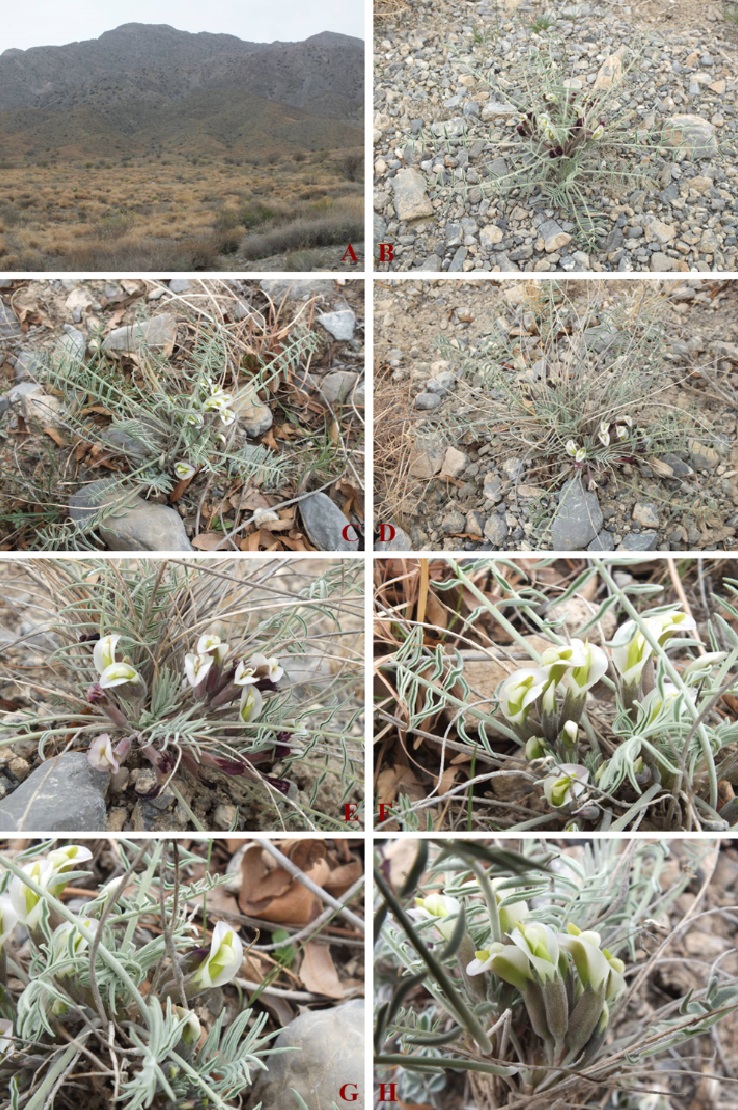
[Botany • 2024] Astragalus quettensis (Fabaceae: Galegeae) • A New Species from Balochistan, Pakistan


Astragalus quettensis A. Khan, A. Sultan & Maassoumi, 

 in KhanSultan, Asghar Maassoumi et Mumtaz, 2024. 
 
Abstract
Astragalus quettensis is described and illustrated as a new species from Hazarganji-Chiltan National Park, near Quetta, Balochistan. The new species is related to Astragalus mirabilis and is characterized by 5–31 mm long tomentose, canescent, linear-lanceolate, folded leaflets in 9–13 pairs with basal leaflets opposite and distal alternate, densely racemose inflorescence or subcapitate with 2–3 flowers lying at the same level, 1–3 cm long, densely covered with off-white spreading hairs, 3.5–5.5 mm long, linear-lanceolate, acuminate, greyish, pilose bracts, 5–13 mm long densely pubescent pedicel with ca. 0.2 mm long, spreading hairs, 9.5–15 mm long densely pubescent calyx with 7.5–12 mm funnel-shaped cup and 2–3 mm long teeth, white and yellowish-green corolla, vexillum 16–23 × 8–12 mm, broadly elliptic, wing 17–21 mm long, keel 18–21 mm long, short-stipitate pubescent legume, 22–26 × 13–18 mm and 3–4 mm long stipe. With regard to the conservation status of the new species, Astragalus quettensis is provisionally assessed as Critically Endangered (CR).

Eudicots, Astragalus, Balochistan, Critically Endangered, Hazarganji-Chiltan National Park, Taxonomy


Astragalus quettensis A. Khan, A. Sultan & Maassoumi, sp. nov.


Amjad KHAN, Amir SULTAN, Asghar MAASSOUMI and Abdul Samad MUMTAZ. 2024. Astragalus quettensis (Galegeae—Fabaceae), A New Species of section Pendulina from Pakistan. Phytotaxa. 636(1); 1-19. DOI: doi.org/10.11646/phytotaxa.636.1.1 
facebook.com/100064560587743/posts/766380305523982

Saturday, December 14, 2024

[Botany • 2022] Allium sulaimanicum (Amaryllidaceae) • A new Allium species and section from Pakistan


Allium sulaimanicum N. Khan, A. Sultan et N. Friesen, 

in N. Khan, Friesen, Sultan, Fritsch, T. Khan et Ishaq, 2022.

A new species, Allium sulaimanicum, is described from northern Balochistan and southern Khyber Pakhtunkhwa in Pakistan based on morphological, molecular, and cytological studies. The new species is characterised by long runner-like cylindrical rhizomes of adult plants, cylindrical bulbs, linear leaves with minute soft hairs along veins, campanulate perigonium, and white to creamy white, ovate to elliptical, 4.5–5-mm-long acute tepals, with brownish to purplish nerves, stamens as long as to slightly longer than tepals, yellow to brick red anthers, hexagonal ovary, and white and papillate/warty along angles. The presence of long herbaceous rhizomes indicated serious isolation of the new species; hence, a new section Sulaimanicum is proposed to accommodate the new species. The new species is diploid with a chromosome number of 2n = 16. Detailed morphological description, illustrations, phylogenetic analyses based on sequences of plastid spacers (rpl32-trnL (UAG) and trnQ-rps16) and nuclear ITS, karyotype features, and a distribution map of the new species are provided.

Keywords: Sulaiman range, ITS, rpl32-trnL, phylogeny, chromosome

 Allium sulaimanicum.
(A, B) Inflorescence (C) Flower section with tepals and stamens (scale bar: c 1.5 mm) (D) seed (scale bar: c 1 mm)
 (Photos by Nazar Khan).


Allium sulaimanicum N. Khan, A. Sultan et N. Friesen sp. nov.  


Nazar Khan, Nikolai Friesen, Amir Sultan, Reinhard M. Fritsch, Tahir Khan and Kamran Ishaq. 2022. Allium sulaimanicum: A new Allium species and section from Pakistan. Front. Plant Sci. 13:1020440. DOI: 10.3389/fpls.2022.1020440 
 

Sunday, November 17, 2024

[Botany • 2024] Astragalus kanjuensis (Fabaceae: Galegeae) • A New Species of Astragalus Sect. Aegacantha from Swat, Pakistan


Astragalus kanjuensis  

in Ullah, Khan, Sultan, Ali et Mumtaz. 2024. 
 
Abstract
A new species Astragalus kanjuensis, is described and illustrated from Kanju Town, Swat, Khyber Pakhtunkhwa Province, Pakistan. The new species is morphologically similar to A. vallis-astoris Podlech & Zarre, but is characterized by densely white pilose young branches, short stipules 3.5–7 mm long, with 1–3 longitudinal nerves, elongate 2.5–6.3 cm long peduncles, pilose with white hairs, two-flowered raceme, whitish-membranous pilose bracts with white hairs, pedicels 3.5–5.5 mm long, densely pubescent with white hairs, relatively long standard up to 32 mm, ovary short-stipitate, style glabrous in the middle, legumes elliptic to oblong, 14–21×4–6.5 mm, beak abruptly curved 2–4 mm densely pubescent with white spreading hairs.

AegacanthaAstragalus, Eudicots


Astragalus kanjuensis sp. nov.


Zahid Ullah, Amjad Khan, Amir Sultan, Ahmad Ali and Abdul Samad Mumtaz. 2024. Astragalus kanjuensis, A New Species of Section Aegacantha (Galegeae-Fabaceae) from Swat, Pakistan.  Phytotaxa. 671(3);211-230. DOI: doi.org/10.11646/phytotaxa.671.3.1

Sunday, August 4, 2024

[Botany • 2024] Tragopogon pashtunianus (Asteraceae: Cichoreae) • A New Species from northern Balochistan, Pakistan


Tragopogon pashtunianus N.Khan, A.Sultan & T.Khan, 

in N. Khan, Sultan, T. Khan et Ishaq, 2024. 

Abstract
A new species Tragopogon is described and illustrated from Northern Balochistan, Pakistan. The new species, here described and illustrated, is found in area west of Zhob city along the Afghanistan border. It comes closest to T. leucanthus, but differs from it, beside other characters, in its narrower leaves, number of phyllaries and a shorter cypsela beak. We have amended the key to Tragopogon in the Flora Pakistan (Fasc. 222, IV) to include the new species.


Tragopogon pashtunianus N.Khan, A.Sultan & T.Khan sp. nov.


Nazar Khan, Amir Sultan, Tahir Khan and Kamran Ishaq. 2024. A New Species of Tragopogon (Cichoreae: Asteraceae) from northern Balochistan, Pakistan. Pakistan Journal of Botany. 57(1): DOI: DO: doi.org/10.30848/PJB2025-1(12)

Monday, April 8, 2024

[Botany • 2023] Oxytropis mandokhailii (Fabaceae) • A New Species from Zhob, Pakistan


Oxytropis mandokhailii N. Khan, A. Sultan et M. Rashid, 

in Khan, Sultan, Rashid et Ishaq, 2023. 

Abstract
A new species Oxytropis mandokhailii (Fabaceae) from Zhob distict of Pakistan is described and illustrated. The new species is characterized by basally fused unequal stipules, heteromorphic leaves and very long stems. Key to Oxytropis species in Flora of Pakistan is amended to reflect the diagnostic characters of O. mandokhailii.  
 

Oxytropis mandokhailii N. Khan, A. Sultan et M. Rashid sp. nov.

Diagnosis: The new species has affinities to Oxytropis margacea by its narrow leaflets, basally connate stipules and inflorescence longer than leaves, but differs by its heteromorphic, longer leaves. Oxytropis margacea has 3-5 cm long leaves while O. mandokhailii has 6-14 cm long leaves. The new species also has longer stems (20-110cm) while O. margacea has 15-20 cm long stems. Calyxin O. mandokhailii is black and white appressed pubescent, while calyx has white minute appressed hairs in O. margacea. The new species also has affinities to Oxytropis cabulica by its peduncle longer than leaves andcalyx with black and white appressed hairs, but differs by its connate stipules opposed to free stipules in O. cabulica, linear to lanceolate leaflets, longer stem up to110 cm long, versus oblong to elliptic leaflets and stem upto 30 cm long in O. cabulica. The new species also differs by its stipitate, unilocular, black and white pubescent legume opposed to subsessile partially bilocular, black pubescent legume in O. cabulica.


Nazar Khan, Amir Sultan, Mahrine Rashid and Kamran Ishaq. 2023. Oxytropis mandokhailii (Fabaceae), A New Species from Zhob, Pakistan. Pakistan Journal of Botany. 55(1);  DOI: 10.30848/PJB2023-1(26)

Tuesday, October 31, 2023

[Fungi • 2023] Mallocybe pakistanica & M. pinicola (Agaricales: Inocybaceae) • New Species of Mallocybe from Pakistan, based on Morphological and Molecular Evidence


Mallocybe pakistanica & B M. pinicola Saba & Khalid,

in Saba, Khalid et Sarwar, 2023. 
 Scale bars: 10 mm 

Abstract
Within the family Inocybaceae, many species of Mallocybe have been reported, but there are only a few reports of this genus from Pakistan. In this study, six collections of Mallocybe were studied by morphological and phylogenetic methods. Phylogenetic analyses, based on sequence data from two different loci (ITS and LSU) using Maximum Likelihood and Maximum Parsimony methods, have been performed to infer species relationships within Mallocybe. Results indicated that these six collections encompass two new species of Mallocybe i.e. M. pakistanica and M. pinicola, from Pakistan. Their detailed morphological descriptions and illustrations are also provided. In addition, comparison with morphologically closely-related taxa is also discussed. Previously, only two species of this genus have been recorded from Pakistan and, with this addition, the total number of reported taxa of Mallocybe has been raised to four from Pakistan. A key to the described taxa of Mallocybe from Pakistan is also provided.

Key words: Asia, molecular systematics, phylogeny, Pinaceae

Holotypes A Mallocybe pakistanica (MSM#0061) B Mallocybe pinicola (MSM#0060).
 Scale bars: 10 mm (A, B).

 Mallocybe pakistanica Saba & Khalid, sp. nov.
 
Diagnosis: Most similar to Mallocybe myriadophylla described from north-western Europe, but differs by the absence of a crowded lamellae, different pileal colouration and somewhat larger basidiospores. Phylogenetically separated from other species of Mallocybe due to unique ITS and LSU sequences.

Etymology: Referring to the country where it was discovered.


 Mallocybe pinicola Saba & Khalid, sp. nov.
 
Diagnosis: Most similar to M. siciliana and M. subtomentosa, but differs by the combination of pileal colour, absence of umbo, size of basidiospores, pyriform to broadly clavate, catenate cheilocystidia and an ecological association with Pines. Phylogenetically separated from other species of Mallocybe due to unique ITS and LSU sequences.

Etymology: Referring to its exclusive association with Pinus.


 Malka Saba, Abdul Nasir Khalid and Samina Sarwar. 2023. New Species of Mallocybe (Agaricales, Inocybaceae) from Pakistan, based on Morphological and Molecular Evidence. MycoKeys. 99: 171-186.  DOI: 10.3897/mycokeys.99.86844

Friday, September 22, 2023

[Botany • 2023] Atriplex pseudotatarica (Amaranthaceae) • A New Species from the Indian Subcontinent


Atriplex pseudotatarica Sukhor. & Nidhan Singh,

in Sukhorukov, Singh, Kushunina, Zaika et Sennikov, 2023. 

Abstract
A new subshrubby C4-species from the lowlands and foothills of India, Pakistan and SE Afghanistan, Atriplex pseudotatarica, is described and illustrated. Previously, it was incorrectly identified as A. crassifolia auct. non C.A.Mey. belonging to a distant C3-group of the genus. A phylogenetic analysis based on nrITS and nrETS revealed its position as sister to A. schugnanica (sect. Obionopsis). Both species share aphyllous inflorescence and smooth bract-like cover, but differ in life form, leaves, seed colour, and geographical distribution. We revised native Indian Atriplex species and excluded some of them from the flora of the country. An improved checklist of the native Atriplex species in India with their corrected synonymy and nomenclature is given, and a new diagnostic key is provided.

Key words: Atriplex, Chenopodiaceae-Amaranthaceae, Indian subcontinent, new species

Atriplex pseudotatarica.
A an overview of the plant B a twig with the inflorescence C a vegetative shoot D a shoot at fruiting. Origin of the material A Haryana, near Asan Khurd village, Nov 2022 B Haryana, near Asan Kalan village, Nov 2022 C Haryana, near Asan Kalan village, Aug 2022 D Haryana, near Panipat town, Oct 2014.
Photographer: A, B A. Sukhorukov, C, D N. Singh.

 Atriplex pseudotatarica Sukhor. & Nidhan Singh, sp. nov.

Etymology: The specific epithet is chosen due to the resemblance of the new species to A. tatarica L., which also has long aphyllous inflorescences.


Alexander P. Sukhorukov, Nidhan Singh, Maria Kushunina, Maxim A. Zaika and Alexander N. Sennikov. 2023. A New Species of Atriplex (Amaranthaceae) from the Indian Subcontinent. PhytoKeys. 229: 167-183. DOI: 10.3897/phytokeys.229.105162


Tuesday, August 30, 2022

[Fungi • 2022] Lepiota sindhudeltana (Basidiomycota: Agaricaceae) • A New Species from Punjab, Pakistan


  Lepiota sindhudeltana Haqnawaz, Niazi, Usman & Khalid, 
 
in Haqnawaz, Niazi, Usman & Khalid, 2022. 
 Photos by: M. Haqnawaz.

Abstract
Lepiota sindhudeltana sp. nov. was found on sandy soil under Saccharum bengalense during fungal surveys to the deltas of the Indus River and the banks of the River Ravi, Punjab, Pakistan. The new species belongs to section Ovisporae, subsection Felininae and is characterized by dull orange appressed squamules on the pileus, thin pileal context, pale yellow lamellae, a stipe rounded to slightly oblong at base, basidiospores broadly ellipsoid to oblong, neither dextrinoid nor amyloid, short, clavate erect pileal hyphae, and narrowly clavate terminal hyphae of the stipitipellis. The closest described species to the new taxon in the phylogenetic tree, based on analysis of ITS and LSU sequences, is L. angusticystidiata. We present the new species with illustrated morphological description, phylogeny, and comparison with related or similar species.

Keywords: Indus Valley, Felininae, biodiversity, Muzaffargarh, pileal elements, Fungi

Fruitbodies of Lepiota sindhudeltana sp nov. (A. Holotype LAH37025).
Scale bars: A–C = 10 cm.
 Photos by: Muhammad Haqnawaz.

Lepiota sindhudeltana Haqnawaz, Niazi, Usman & Khalid sp. nov.

Etymology:— sindhudeltana’ (Latin) refers to the locality of the taxon i.e., the delta of the River Sindh (Indus River).


Muhammad Haqnawaz, Abdul Rehman Niazi, Muhammad Usman and Abdul Nasir Khalid. 2022. Lepiota sindhudeltana sp. nov. (Agaricaceae; Basidiomycota) from Punjab, Pakistan. Phytotaxa. 550(3); 253-262. DOI: 10.11646/phytotaxa.550.3.5

Saturday, August 27, 2022

[Herpetology • 2022] Eremias killasaifullahi & E. rafiqiAppearances Often Deceive in Racerunners: Integrative Approach reveals Two New Species of Eremias (Squamata: Lacertidae) from Pakistan


 Eremias killasaifullahi E. rafiqi 
Masroor, Khan, Nadeem, Amir, Khisroon & Jablonski, 2022


Abstract
Based on newly provided morphological and previously published genetic data, we describe two new distinctive sympatric lacertid lizards of the genus Eremias (subgenus Aspidorhinus) from the arid mountains of northwestern Balochistan Province, Pakistan. The new species, Eremias killasaifullahi sp. nov. and Eremias rafiqi sp. nov. are distinguished from all other species of the subgenus Aspidorhinus (E. afghanistanica, E. fahimii, E. isfahanica, E. kopetdaghica, E. lalezharica, E. montana, E. nikolskii, E. papenfussi, E. persica, E. regeli, E. roborowskii, E. strauchi, E. suphani, and E. velox) by unique morphological characters and genetic differentiation. In the molecular phylogeny of Aspidorhinus, both new taxa are well-supported lineages differentiated from other species of this subgenus by uncorrected p distances from 8.5% to 21.6%, respectively. Both new species belong to E. persica complex where E. rafiqi sp. nov. is partly similar in dorsal color pattern to E. persica but can be distinguished from this species by unique meristic and morphometric characters. Eremias rafiqi sp. nov. is found in Pakistan, Afghanistan, and eastern Iran. Eremias killasaifullahi sp. nov. can be differentiated from E. persica by its distant distribution, dorsal color and pattern, smaller size, and less number of gulars and ventral scales. Eremias killasaifullahi sp. nov. is only known from the type locality and represents the local microendemism, along with other endemic species of reptiles reported from this part of Pakistan. We, however, expect that E. killasaifullahi sp. nov. could have a broader range in northwestern Pakistan and southeastern Afghanistan, which should be an object of following investigations. Our data show that remote areas between Hindu Kush Mountains and Indus River need attention as they most probably represent possible sources of genetic and species diversity in the region.

 Keywords: Reptilia, Afghanistan, Aspidorhinus, Balochistan, microendemism, molecular taxonomy, Palearctic region, Sulaiman Mountains


Rafaqat Masroor, Muazzam Ali Khan, Muhammad Sajid Nadeem, Shabir Ali Amir, Muhammad Khisroon and Daniel Jablonski. 2022. Appearances Often Deceive in Racerunners: Integrative Approach reveals Two New Species of Eremias (Squamata: Lacertidae) from Pakistan.   Zootaxa. 5175(1); 55-87. DOI: 10.11646/zootaxa.5175.1.3


Wednesday, April 13, 2022

[Entomology • 2022] A Revision of the Palaearctic Pimeliini (Coleoptera: Tenebrionidae): A Comparative Analysis and Systematic Position of Eastern European and Asian Taxa with Dorso-lateral Eyes


Dietomorpha gonzalesi S. Chigray & Nabozhenko, 

in 
Chigray, Nabozhenko, Chigray & Abakumov, 2022. 

ABSTRACT
A taxonomic review of tenebrionid platyopoid genera of the subfamily Pimeliinae from Eastern Europe, Central Asia, Afghanistan, Iran and Pakistan is given. This group of taxa was known before 1994 as the tribe Platyopini Motschulsky, 1849, which is now interpreted as a junior synonym of Pimeliini Latreille, 1802. The group is different from other Pimeliini in having dorso-lateral eyes, located above the level of the genae, and it includes the following ultrapsammophilic genera at least from Central and Southern Asia: Apatopsis Semenov, 1891, Habrochiton Semenov-Tjan-Shansky, 1907, Habrobates Semenov, 1903 [= Kawiria Schuster, 1935 syn. nov.], Dietomorpha Reymond, 1938, Przewalskia Semenov, 1893, Mantichorula Reitter, 1889, Platyope Fischer von Waldheim, 1820 [= Homopsis Semenov, 1893 syn. nov.], Earophanta Semenov, 1903. These genera are distributed in almost all large deserts of Palaearctic Asia: Karakum, Kyzylkum, Muyunkum, Taklamakan, Gobi, Registan, Dasht-e-Kawir, Dasht-e-Lut, as well as in other arid and semi-arid sandy landscapes from European Russia to the south of Eastern Siberia. The group of platyopoid genera is polyphyletic. We propose at least two monophyletic branches: the Habrobates genus group (the first four genera mentioned above), which represents the subtribe Habrobatina Nabozhenko & S. Chigray subtrib. nov. and the Platyope genus group (latter four genera) within the nominotypical subtribe. A new species is described from Pakistan (Balochistan): Dietomorpha gonzalesi S. Chigray & Nabozhenko sp. nov. Platyope granulata Fischer von Waldheim, 1820 is recorded for Kazakhstan for the first time. The following synonymy is resurrected: Apatopsis grombczewskii Semenov, 1890 = Apatopsis conradti Semenov, 1890, syn. resurr. Two new combinations resulting from the synonymy of genera are given: Habrobates gabrieli Schuster, 1935 comb. nov. (from Kawiria), Platyope grumi Semenov, 1893 comb. nov. (from Homopsis). Lectotypes are designated for the following taxa: Apatopsis grombczewskii (Semenov, 1891), Apatopsis conradti Semenov, 1891, Habrochiton vernus Semenov-Tjan-Shansky, 1907, Habrobates vernalis Semenov, 1903, Kawiria gabrieli Schuster, 1935, Platyope dilatata Reitter, 1887; Mantichorula semenowi Reitter, 1889, Mantichorula grandis Semenov, 1893, Homopsis grumi Semenov, 1893, Platyope serrata Semenov, 1893, Platyope planidorsis Reitter, 1889, Platyope tomentosa Semenov, 1893. Additional information for type specimens studied by the authors is given for Habrochiton primaeveris Semenov-Tjan-Shansky, 1907 (holotype), Habrobates vejisovi Kelejnikova, 1977, Platyope ordossica Semenov-Tjan-Shansky, 1907 (holotype), Earophanta autumnalis Semenov, 1903 (holotype, junior synonym of E. planidorsis Reitter, 1889), Earophanta loudoni Semenov, 1903 (holotype, junior synonym of Earophanta pilosissima Reitter, 1895), Earophanta pubescens Skopin, 1960 (holotype, paratypes), Earophanta beludzhistana Bogatchev, 1957 (holotype).

Keywords: Tenebrionidae, Pimeliini, new taxa, synonymy, nomenclature

Dietomorpha gonzalesi S. Chigray & Nabozhenko sp. nov., ♀, holotype (MNHP).
C. dorsal view. D. Ditto, ventral view. E. Ditto, anterior view. F. Ditto, posterior view. G. Ditto, dorso-antero-lateral view.
 photographs by David Gonzales.

Fig. 3. Species of the genus Dietomorpha Kühnelt, 1957, habitus.
A. Dietomorpha pardalis Kühnelt, 1957, ♂ (ZIN), dorsal view. B. Ditto, ventral view.
C. Dietomorpha gonzalesi S. Chigray & Nabozhenko sp. nov., ♀, holotype (MNHP), dorsal view. D. Ditto, ventral view. E. Ditto, anterior view. F. Ditto, posterior view. G. Ditto, dorso-antero-lateral view. 
C–G: photographs by David Gonzales.

Dietomorpha gonzalesi S. Chigray & Nabozhenko sp. nov.
 
Etymology: The new species is named after David Gonzales (Saint-Laurent-du-Pape, France), who made a great contribution to the Tenebrionidae of the New and Old Worlds.


Svetlana N. Chigray, Maxim V. Nabozhenko, Ivan A. Chigray and Evgeny V. Abakumov. 2022. A Revision of the Palaearctic Pimeliini (Coleoptera: Tenebrionidae): A Comparative Analysis and Systematic Position of Eastern European and Asian Taxa with Dorso-lateral Eyes. European Journal of Taxonomy. 809(1); 1–71. DOI: 10.5852/ejt.2022.809.1719 [2022-04-05]