Showing posts with label Journal: Acta Chiropterol.. Show all posts

Sunday, August 21, 2022

[Mammalogy • 2022] Miniopterus phillipsi • DNA Barcoding and Morphological Analyses Reveal A Cryptic Species of Miniopterus (Chiroptera: Miniopteridae) from India and Sri Lanka


Miniopterus phillipsi 
 Kusuminda, Mannakkara, Ukuwela, Kruskop, Amarasinghe, Saikia, Venugopal, Karunarathna, Gamage, Ruedi, Csorba, Yapa & Patterson, 2022


Abstract
The genus Miniopterus is a monophyletic assemblage of many species characterized by remarkably conservative morphology. The number of recognized species has more than doubled over the last two decades, mainly with newly recognized Afrotropical and Malagasy species. A molecular phylogenetic analysis based on cytochrome c oxidase subunit I (COI) revealed a monophyletic clade of Miniopterus from Sri Lanka and southern India that is distinct from the other known taxa of this genus. The mean uncorrected pairwise sequence divergence among the three gene sequences of this new Miniopterus lineage was 0.83% (range 0.4–1.2%) and between this and other sampled taxa was 12.7% (range 8.5–15.9%). This lineage was also distinctive in craniodental morphometrics and hence it is herein described as a new species. The newly described species is easily distinguished by its external and cranial dimensions from its smaller (M. pusillus) and larger (M. magnater) congeners in India and Sri Lanka. It is also somewhat smaller than M. fuliginosus in both external and cranial dimensions. This is the first description of a new Miniopterus species from Asia in six decades and from India and Sri Lanka in eight decades. Our study highlights the importance of using both genetic and morphometric analyses in taxonomic studies on South Asian bats.

KEYWORDS: cryptic species, cytochrome oxidase 1, DNA barcode, Miniopteridae, Morphometrics, South Asia, taxonomy

 
Portrait of Miniopterus phillipsi sp. nov. NMSL 2021.03.02.NH

Family Miniopteridae Dobson, 1875
Genus Miniopterus Bonaparte, 1837

Miniopterus phillipsi sp. nov.
Phillips's Long fingered Bat
Synonymy: 
Miniopterus schreibersii Blanford, 1891 (in part): not Vespertilio schreibersii Kuhl, 1817.
Miniopterus fuliginosus Tian et al., 2004 (in part): not Vespertilio fuliginosus Hodgson, 1835.

Diagnosis: Miniopterus phillipsi sp. nov. is distinguished by its intermediate size from both smaller and larger congeners in India and Sri Lanka. M. pusillus is much smaller than M. phillipsi sp. nov. in the external measurements TIB (< 18 mm), FA (< 43 mm), d3m (< 40 mm), d4m (< 38 mm) and d5m (< 36 mm) and in skull length (GSKL < 14.7 mm). M. phillipsi sp. nov. is distinguished from M. magnater by the latter's larger external measurements (HB > 56 mm and d3m > 46 mm) and skull size (GLSK > 16.4 mm — Tables 3 and 4). The new species is generally smaller than M. fuliginosus in both external and cranial dimensions, although there is slight overlap (Figs. 5–7). There are significant differences between M. phillipsi sp. nov. and M. fuliginosus in GSKL (P < 0.001), ZYW (P = 0.026), MAW (P < 0.001), BCW (P = 0.046), LW (P = 0.001), ML (P = 0.001), M3–M3 (P = 0.002), C–M3 (P = 0.002), I1–M3 (P = 0.001) and i1–m3 (P < 0.001). In all of these craniodental characters, M. fuliginosus is larger than M. phillipsi sp. nov. (Tables 4 and 5). Miniopterus phillipsi sp. nov. also differs significantly from M. fuliginosus in the ratio of tibia to forearm length (TIB/FA; P = 0.002) and the ratio of second phalanx of third digit to third metacarpal (d3mp2/d3m; P = 0.023). In M. phillipsi sp. nov., TIB/FA ratio is usually higher (median: 42.16%, range: 41.1–43.9%) than in M. fuliginosus (40.78%, 39.6–42.1%), whereas d3mp2/d3m ratio is lower (83.27%, 79.3–90.4% versus 88.55%, 81.6–90.9%, respectively). The tragus of M. phillipsi sp. nov. is medium-sized in both length and width. The tragus of M. magnater is longer, broader, and more pointed towards the tip than the other three species in India and Sri Lanka. The middle of the tragus is much broader than its base and tip in M. magnater (slightly broader in M. phillipsi sp. nov.). The tragus of M. fuliginosus has parallel margins along most of its length, as does that of M. pusillus. However, the tragus of M. pusillus is shorter in length and barely curved forward compared to the other three species (Fig. 8).


 Etymology: This species is named after W. W. A. Phillips (William Watt Addison Phillips, 1892–1981) in recognition of his immense contributions to studies on the mammals of Sri Lanka and South Asia. Phillips was born and grew up in England and he was a nature lover since his childhood. He was a tea planter by profession and came to Ceylon (now Sri Lanka) in 1911.


Tharaka Kusuminda, Amani Mannakkara, Kanishka D. B. Ukuwela, Sergei V. Kruskop, Chamara J. Amarasinghe, Uttam Saikia, Parvathy Venugopal, Mathisha Karunarathna, Rajika Gamage, Manuel Ruedi, Gábor Csorba, Wipula B. Yapa and Bruce D. Patterson. 2022. DNA Barcoding and Morphological Analyses Reveal A Cryptic Species of Miniopterus from India and Sri Lanka. Acta Chiropterologica. 24(1);1-17. DOI: 10.3161/15081109ACC2022.24.1.001


Monday, August 24, 2020

[Mammalogy • 2020] Miniopterus wilsoni • Cryptic Diversity in the Genus Miniopterus with the Description of A New Species from southern Africa


Miniopterus wilsoni 
Monadjem, Guyton, Naskrecki, Richards, Kropff & Dalton, 2020.


photos: Piotr Naskrecki facebook.com/PiotrNaskrecki

Species richness in the genus Miniopterus has been greatly under-reported, with a large number of taxa having been discovered and described in the past two decades. Using molecular, standard morphometrics and acoustic data, we present evidence for the existence of a new species in Mozambique and neighbouring Malawi. Based on cytochrome b (cyt b) and cytochrome oxidase I (COI), the new species is sister to M. minor, from which it is readily distinguishable by its larger size (including non-overlapping forearm measurements, allowing separation in the field). It is distinguishable from sympatric M. mossambicus, itself a newly described taxon from Mozambique, by forearm measurements and a peach-orange wash to the skin around the eyes. In external appearance, it is most similar to M. fraterculus, from which it is only reliably identifiable by multivariate analysis of craniodental features and by a genetic distance of 6.4% in the cyt b gene; the two species also occupy widely differing geographic ranges. The type locality of the new species is Mount Gorongosa, and all known records are from large mountains in central and northern Mozambique and southern Malawi. Further research is required to establish its geographic range and understand its basic ecology. Considering its relatively restricted distribution to threatened montane habitats, we suggest that its global conservation status be urgently assessed. 

Key words: cryptic species, Miniopteridae, cytochrome b, morphometrics, taxonomy, Mozambique


Miniopterus wilsoni sp. nov. — in flight showing typical features of the genus; the peach-orange wash to the face of this species is not obvious in this photograph (holotype, JAG 444)
  (photographs by Piotr Naskrecki)

Family Miniopteridae Dobson 1875 

Genus Miniopterus Bonaparte 1837 

Miniopterus wilsoni sp. nov. 
Wilson’s Long-fingered Bat

Etymology: This species is named after Edward O. Wilson who has supported and facilitated biodiversity research at Gorongosa National Park over the past decade.
 

Ara Monadjem, Jen Guyton, Piotr Naskrecki, Leigh R. Richards, Anna S. Kropff and Desire L. Dalton. 2020. Cryptic Diversity in the Genus Miniopterus with the Description of A New Species from southern Africa. Acta Chiropterologica. 22(1); 1–19. DOI: 10.3161/15081109ACC2020.22.1.001


Wednesday, March 4, 2020

[Mammalogy • 2020] Miniopterus nimbae • Systematics of West African Miniopterus with the Description of A New Species


Miniopterus nimbae
Monadjem, Shapiro, Richards, Karabulut, Crawley, Nielsen, Hansen, Bohmann & Mourier, 2020


Abstract
The phylogenetic relationships and species limits within the chiropteran family Miniopteridae are poorly known in mainland Africa. Recent systematic studies in Madagascar have shown that this is a species-rich family, yet only eight species are currently recognized or hypothesized for continental Africa. Based on partial cytochrome b sequences and morphometric analysis, we describe a new species of Miniopterus that is endemic to a restricted, montane region of Liberia and Guinea. Furthermore, the taxonomic status of the West African Miniopterus schreibersii villiersi is resolved and shown to be a distinct species, M. villiersi, that is not closely related to M. schreibersii. Finally, the species M. inflatus is revealed to be paraphyletic, with the central African rainforest populations apparently not closely related to the savanna forms in eastern and southern Africa. Based on the results of this study, the number of Miniopterus species in Africa has increased from eight to 11, with more cryptic species likely to be discovered.


Miniopterus nimbae


Ara Monadjem, Julie T. Shapiro, Leigh R. Richards, Hatice Karabulut, Wing Crawley, Ida Broman Nielsen, Anders Hansen, Kristine Bohmann and Tobias Mourier. 2020. Systematics of West African Miniopterus with the Description of A New Species. Acta Chiropterologica. 21(2); 237-256. DOI: 10.3161/15081109ACC2019.21.2.001  

Tuesday, October 15, 2019

[Mammalogy • 2019] Parahypsugo happoldorum • A New Genus and Species of Vesper Bat (Chiroptera: Vespertilionidae) from West Africa, with Notes on Hypsugo, Neoromicia, and Pipistrellus


Parahypsugo happoldorum
Hutterer, Decher, Monadjem & Astrin, 2019


Abstract
We describe a new species of vespertilionid bat from Guinea and Liberia, West Africa. In this context we evaluate previously described taxa from West Africa assigned to Pipistrellus, Neoromicia, and Hypsugo. Based on genetics, morphology and ecology we conclude that the taxon Pipistrellus eisentrauti bellieri should be elevated to species level, and that the taxa bellieri, crassulus, eisentrauti plus the new species form a monophyletic clade for which a new genus name is proposed. The new genus occurs in forested regions south of the Sahara from Senegal to Ethiopia and Somalia, from where further taxa remain to be described.


Parahypsugo happoldorum


Rainer Hutterer, Jan Decher, Ara Monadjem and Jonas Astrin. 2019. A New Genus and Species of Vesper Bat from West Africa, with Notes on HypsugoNeoromicia, and Pipistrellus (Chiroptera: Vespertilionidae). Acta Chiropterologica. 21(1); 1-22. DOI: 10.3161/15081109ACC2019.21.1.001  
Neue Fledermausgattung aus Westafrika

Wednesday, August 7, 2019

[Mammalogy • 2018] Myotis crypticus & M. zenatius • Two New Cryptic Bat Species within the Myotis nattereri Species Complex (Vespertilionidae, Chiroptera) from the Western Palaearctic


Myotis crypticus 
Ruedi, Ibáñez, Salicini, Juste & Puechmaille

in Juste, Ruedi, Puechmaille, Salicini & Ibáñez, 2019. 

Abstract
The Myotis nattereri species complex consists of an entangled group of Western Palaearctic bats characterized by fringing hairs along the rear edge of their uropatagium. Some members are relatively common while others are rare but all forms are morphologically very similar and their taxonomy is unresolved. Recent studies based on different molecular markers have shown that several major and unexpected lineages exist within this group of forest-dwelling bats. All the mitochondrial and nuclear markers tested to date have shown that these major lineages evolved as fully independent and coherent units and therefore each qualifies as distinct species. In the absence of proper morphological diagnosis, these lineages are informally referred to in the literature under different names. We explore here the external and craniodental variation of these lineages. Although all morphological measurements were overlapping between these lineages, we show that lineages can be completely discriminated in a multivariate morphometric space. Consistent with previous molecular reconstructions, these four major lineages represent two pairs of related species, each represented by a named species (Myotis nattereri s. str. and M. escalerai, respectively) and by unnamed forms (Myotis sp. A and Myotis sp. B, respectively). Herein we describe formally these two unnamed forms to clarify the taxonomy within this species complex. This new taxonomic view has important implication for the protection of these species, as three of the four taxa must now be considered as range-restricted species in need of conservation actions.

KEYWORDS: cryptic species, DNA, systematics, speciation, taxonomy

Myotis crypticus pictured on a swarming site from the Jura Mountains in the province of Vaud.

photo: Manuel Ruedi (Natural History Museum of Geneva)

Myotis crypticus sp. nov.
Ruedi, Ibáñez, Salicini, Juste and Puechmaille

Synonyms: 
Myotis nattereri (Kuhl, 1817): Miller (1912) (partim): Simmons (2005) (partim).
Myotis nattereri North Iberia (Kuhl, 1817): Ibáñez et al. (2006)
Myotis sp. (Mayer et al., 2007).
Myotis sp. A (García-Mudarra et al., 2009).
Myotis sp. A and Clade A (Salicini et al., 2011).
Myotis sp. A and M. sp A (Salicini et al., 2013).
Myotis sp. A and Myotis sp. C (Galimberti et al., 2012).
Myotis sp. A (Puechmaille et al., 2012): (Allegrini and Puechmaille, 2013).
M. nattereri 2 (Kuhl, 1817): Ruedi et al. (2013).
Myotis nattereri (Kuhl, 1817): Bogdanowicz et al. (2015).

Diagnosis: Externally, the combination of a long, S-shaped calcar without epiblema, very long and pointed tragus, smooth and unnotched rear edge of ears and presence of stiff hairs along the uropatagium margin distinguish M. crypticus sp. nov. and other members of the M. nattereri species complex from all remaining Eurasian Myotis taxa. The wing membrane insertion at the base of the toe (Fig. 4) as described by Puechmaille et al. (2012) and the pattern of curved nature of the stiff uropatagial hairs (Fig. 5) further distinguish M. crypticus sp. nov. from species related to the M. escalerai clade. The skull shape is very similar to that of M. nattereri s. str. but is relatively more slender in M. crypticus sp. nov., particularly the rostral and occipital regions, which seem narrower in the latter species (Fig. 3). Finally, numerous diagnostic mutations in both mitochondrial and nuclear sequences clearly support the uniqueness of M. crypticus sp. nov. compared to any other species in this group.

Etymology: The epithet crypticus is derived from the Greek ‘kryptos’, which means hidden or concealed, in reference to this species' long history of remaining undetected.


Proposed vernacular names: Kryptisches Mausohr (German), cryptic myotis (English), murin cryptique (French), murciélago ratonero críptico (Spanish).

Distribution: Animals identified as M. crypticus sp. nov. based on molecular characters were recorded in mountain areas of provinces of central and northern Spain (Salicini et al., 2011), southern France (Salicini et al., 2011; Puechmaille et al., 2012), across the Italian Peninsula (Salicini et al., 2011; Galimberti et al., 2012) and probably to the adjacent southwestern parts of Austria (Mayer et al., 2007). Based on nuclear genetic markers (unpublished data), marginal areas to the north and west of the Alps, e.g. in western Switzerland or Rhône-Alpes (France), are also occupied by M. crypticus sp. nov. However, the northern and eastern limits of the distribution of M. crypticus sp. nov. notably in relation to the occurrence of M. nattereri s. str., are unknown. Furthermore, as the populations from Sicily and southern Italy show important genetic discontinuities (Salicini et al., 2013; Bogdanowicz et al., 2015), they deserve further scrutiny as they might present further taxonomic complexity.


Myotis zenatius sp. nov.
Ibáñez, Juste, Salicini, Puechmaille and Ruedi

Synonyms: 
Myotis nattereri (Kuhl, 1817): Brosset (1963): Gaisler (1983): Gaisler (1983–1984): Horáček and Hanák (1984) (partim): Kowalski et al. (1986): Aulagnier and Thevenot (1986): Kowalski and Rzebik-Kowalska (1991).
Myotis nattereri (Kuhl, 1817): Horáček et al. (2000) (partim): Benda et al. (2004): Simmons (2005) (partim): Dieuleveut et al. (2010).
Myotis sp. B (García-Mudarra et al., 2009):  (Puechmaille et al., 2012).
Myotis sp. B and Clade B (Salicini et al., 2011).
Myotis sp. B and Clade B (Salicini et al., 2013).

Diagnosis: Externally, M. zenatius sp. nov. shares all the char acters previously referred to for M. crypticus sp. nov. that distinguish this and the other members of the M. nattereri complex from all remaining European Myotis taxa. The wing membrane is inserted in the mid-metatarsus (Fig. 4) as in M. escalerai but contrary to M. crypticus sp. nov. and M. nattereri s. str. that have the wing membrane inserted at the base of the toe (Puechmaille et al., 2012). This character was first used by Cabrera (1904) in the original description of M. escalerai and later validated by Puechmaille et al. (2012). Similarly, the characteristic stiff fringing hairs bordering the tail membrane show the same distinct pattern described for M. escalerai by Agirre-Mendi and Ibáñez (2012); accordingly, the hairy edge of this membrane looks thicker than in M. nattereri and M. crypticus sp. nov. due to the presence of an additional line of relatively long and conspicuous stiff hairs facing inwards (Fig. 5). The sharing of these two morphological characters between M. escalerai and M. zenatius sp. nov. is in agreement with their phylogenetic relationships, which place them as sister species, while they are distinct from M. nattereri s. str. and M. crypticus sp. nov. Nevertheless, the darker and more greyish dorsal fur colour in adult M. ze natius sp. nov. (resembling a juvenile coloration in other Myotis species) distinguishes the new species from adult M. escalerai. Again, the skull morphology is very similar between M. zena tius sp. nov. and M. escalerai, but is in general more delicate in the new species and slightly smaller in all dimensions (as previously described by Benda et al., 2006), except for the postorbital constriction which is wider in M. zenatius sp. nov. (Table 2). The braincase is also relatively broader and more globose in the new species than in M. escalerai).

Etymology: The epithet zenatius is derived from the word ‘Zanatah’ which refers to a little known Berber tribe that lived in the Maghreb region of North Africa in the Middle Ages. The Zanatah people were famous for their horse riding skills and mobility.

Proposed vernacular names: Zenati Mausohr (German), Zenati myotis (English), murin Zenati (French), murcielago ratonero Zenate (Spanish).

Distribution: The species Myotis zenatius sp. nov. is probably endemic from the Mediterranean region of Morocco and Algeria, and possibly Tunisia. In Morocco it is very rare, known only from three localities in the central part and western coast (Benda et al., 2004), and from one locality in the hills of Rekkam, in the eastern part of the country (Dieuleveut et al., 2010). We add in this study three new localities (see  Supplementary Table S1 (01-AC-20-2-p-285–300_Supplement.pdf)) plus another one in Azrou (Ait-Sebaa) where six additional individuals were biopsied and released. In the Appendix of Salicini et al. (2013), the species is wrongly mentioned from Errachidia. The mistake stems from the switching between the similar names of two caves, Kef Azigza (near Errachidia) where M. zenatius sp. nov. does not occur, and Kef Aïssa (the correct locality). The species is thus rare but widely distributed across Morocco from the northern slopes of the Riff (near Tetouan) to the dry mountains of the Great Atlas (e.g. Wintimdouine Cave). The Atlas Mountains apparently delineate two distinct haplogroups (Salicini et al., 2013) that may represent distinct subpopulations. We can assume that the Algerian populations previously classified as M. nattereri (see e.g., Ko wal ski and Rzebik-Kowalska, 1991) represent M. ze natius sp. nov., given that the distance between the easternmost known locality from Morocco (Rekkam Hills — Dieuleveut et al., 2010) is only around 200 km far from the westernmost known locality from Algeria (near Tlemcen — Kowalski et al., 1986). The new species occurs in the northern parts of Algeria, where it is known only from three localities (Kowalski and Rzebik-Kowalska, 1991; Ahmim, 2017). As no specimen from this country has been analysed genetically, it is however unknown to which extent these represent interconnected or isolated subpopulations.


Natural history: 
Very little is known about this species, which is one of the rarest bats in the Mediterranean. As most identified individuals were captured at cave roosts, including breeding females from nursery colonies, it shares with M. escalerai troglophilous habits through out the year. Such strong cave-dwelling habits mark a significant ecological contrast with the other two species (M. nattereri s. str. and M. crypticus sp. nov.), which roost preferably in tree holes during the summer. Furthermore, the maternity colonies of M. zenatius sp. nov. can reach up to 300 individuals (Kowalski et al., 1986; authors' unpublished data), which are distinctly larger than the tree-dwelling species.


  Javier Juste, Manuel Ruedi, Sébastien J. Puechmaille, Irene Salicini, and Carlos Ibáñez. 2019. Two New Cryptic Bat Species within the Myotis nattereri Species Complex (Vespertilionidae, Chiroptera) from the Western Palaearctic.  Acta Chiropterologica. 20(2); 285-300. DOI: 10.3161/15081109ACC2018.20.2.001


Friday, March 31, 2017

[Mammalogy • 2017] A Taxonomic Revision of the Kerivoula hardwickii complex (Chiroptera: Vespertilionidae) with the Description of A New Species, Kerivoula furva, from Taiwan


 Kerivoula furva 
Kuo, Soisook, Ho, Csorba, Wang & Rossiter, 2017

Abstract
Since its discovery, the taxonomic status of the only species of Kerivoula (Chiroptera: Vespertilionidae: Kerivoulinae) to be found on Taiwan has been confused. Previous studies have assigned this species to either Kerivoula hardwickii or K. titania, both of which occur on continental SE Asia. This uncertainty supports repeated suggestions in the literature that specimens of K. hardwickii collected and/or sampled across SE Asia are likely to represent multiple cryptic taxa. To address these issues, we combined new and existing data from the genus Kerivoula on Taiwan and continental Asia, and performed diagnostic analyses in steps. First, phylogenetic reconstructions based on mitochondrial and nuclear DNA revealed a well-supported group comprising all taxa currently recognized as K. hardwickii, together with the Taiwanese Kerivoula and Kerivoula kachinensis to the exclusion of all other congeneric species. Second, focusing on all members of this monophyletic clade (i.e., K. hardwickii complex) together with K. titania, we used multivariate statistical methods to separate taxa based on morphometric data. Our results provide strong evidence that among these bats, the Taiwanese Kerivoula is a new species that also occurs on continental Asia, for which we provide a formal description and name. In addition, we show that the subspecies K. hardwickii depressa should be elevated to species status [Kerivoula depressa]. We discuss our findings and the caveats of this and similar studies. 


FIG. 4. Photographs of Kerivoula furva sp. n., showing (a) a live individual (no voucher) as well as
 (b) dorsal and (c) ventral views of the skin specimen of holotype (NMNS 17595).

Scale bars in (b–c) =10 mm. Photo (a) by Cheng-Han Chou 

Kerivoula furva sp. n.

Etymology: The proposed English name is ‘Dark woolly bat’.The name refers to the very dark pelage of the new species.


Hao-Chih Kuo, Pipat Soisook, Ying-Yi Ho, Gabor Csorba, Chun-Neng Wang and Stephen J. Rossiter. 2017. A Taxonomic Revision of the Kerivoula hardwickii complex (Chiroptera: Vespertilionidae) with the Description of A New Species.   Acta Chiropterologica. 19(1); 19-39.  DOI: 10.3161/15081109ACC2017.19.1.002


Saturday, November 12, 2016

[Mammalogy • 2011] Taxonomic Revision of the Genus Asellia (Chiroptera: Hipposideridae) with A Description of A New Species, Asellia arabica, from southern Arabia


  Asellia arabica  
Benda, Vallo & Reiter, 2011

from Ain Jarziz, Dhofar, SW Oman, photo by A. Reiter  || DOI:  10.3161/150811011X624749 

Two species are currently recognised within the genus Asellia, a typical inhabitant of arid areas of northern Africa and south-western Asia. Most of the distribution range of the genus is covered by Asellia tridens, while the other species, A. patrizii, is restricted to Ethiopia, Eritrea and several Red Sea islands. We analysed the morphological variation in an extensive set of Asellia samples covering the range of the genus, including most of the available type material. In a representative subset of samples, we employed molecular genetic analysis to infer the phylogenetic relationships within the broadly distributed A. tridens. Morphological comparisons revealed four distinct morphotypes. Except for the endemic A. patrizii, almost all African Asellia were found to belong to the same morphotype as most of the Middle Eastern specimens. This morphotype was unambiguously identified as A. tridens. Two other morphotypes of tentative A. tridens were further recognised based on skull shape differences; one in the southern Arabian region of Dhofar, the other in Socotra and Somalia. Phylogenetic analysis of complete sequences of the mitochondrial cytochrome b gene yielded three main monophyletic groups, which corresponded to the morphotypes revealed for A. tridens. Significant genetic divergences reaching over 5% and 12%, respectively, were discovered between them. Based on the morphological and molecular data obtained, we propose a split of the current A. tridens into three separate species: A. tridens in northern Africa and most of the Middle East, A. italosomalica in Socotra and Somalia, and Asellia sp. nov. in southern Arabia. Molecular dating, along with the available paleontological information and geological history of the Arabian Peninsula, supports an Arabian origin of the contemporary Asellia. While profound divergence of the Socotran form may be linked to the split of Socotra from the southern Arabian coast in the Middle Miocene, the low sequence variation of Asellia in most of Africa and the Middle East suggests a relatively recent colonisation of this vast area during the Pleistocene. The newly described form from southern Arabia most likely represents a relic of aridisation during the Miocene-Pliocene transition.

 Keywords: Asellia, morphology, morphometry, mfDNA, taxonomy, phylogeny


FIG. 10. Portrait of   Asellia arabica sp. nov. from Ain Jarziz, Dhofar, SW Oman
photo by A. Reiter

Asellia arabica sp. nov.

Synonymy: 
Asellia tridens (Geoffroy, 1813): Pockock, 1935: 442; Harrison, 1964: 98; Harrison, 1980: 390; Kingdon, 1990: 37; Harrison and Bates, 1991: 55.
Asellia tridens tridens (Geoffroy, 1813): Harrison, 1957: 5; Kock, 1969: 129; Nader, 1990: 340; Al-Jumaily, 1998: 483.
Asellia patrizii De Beaux, 1931: Al-Jumaily, 2004: 60.

Type locality: Republic of Yemen, Province of Al Mahra, oasis of Hawf (easternmost edge of the country), 16°39’N, 53°03’E, 410 m a.s.l.


Derivatio nominis: The name arabica (Arabian) reflects the area of occurrence of the new species, i.e. the southern part of Arabia

Distribution: Coastal areas of southern Arabia stretching from the Hadramaut Province in south-eastern Yemen (ca. 49°E) to the Dhofar Province in south-western Oman (ca. 55°E), i.e., ca. 650 km of a narrow coastal strip.


Petr Benda, Peter Vallo and Antonín Reiter. 2011. Taxonomic Revision of the Genus Asellia (Chiroptera: Hipposideridae) with A Description of A New Species from southern Arabia. Acta Chiropterologica. 13(2); 245–270. DOI:  10.3161/150811011X624749

Monday, May 9, 2016

[Mammalogy • 2016] Rhinolophus chutamasae Rhinolophus monticolus | Mountain Horseshoe Bat | ค้างคาวมงกุฎภูเขา • Hill Forest Dweller: A New Cryptic Species of Rhinolophus in the ‘pusillus group’ (Chiroptera: Rhinolophidae) from Thailand and Lao PDR


Rhinolophus chutamasae Soisook & Bates, 2022
ค้างคาวมงกุฎภูเขา‬ | Mountain Horseshoe Bat 

Soisook, Karapan, Srikrachang, ... et Bogdanowicz,  2016 
Rhinolophus monticolus  DOI: 10.3161/15081109ACC2016.18.1.005
Chutamas's Horseshoe Bat || DOI: 10.1515/mammalia-2022-0012

A new species of Rhinolophus in the pusillus group is described from Ratchaburi, Kamphaeng Phet and Loei Provinces where it was found in evergreen forest at elevations ranging from 550 to 1,320 m a.s.l. It is distinguished from R. shortridgei and other similar species in the same group by its broad, parallel-sided sella, which is squared-off at the tip, relatively large body size with a forearm length of 42.2–44.1 mm, and bulbous rostral swellings. The echolocation frequency from hand-held individuals is 84.1–93.0 kHz. Bayesian analyses of a 654 bp of cytochrome oxidase subunit I (DNA barcode), and an 878 bp fragment of cytochrome b also support differences at the species level. Three specimens from Loaung Namtha, Lao PDR are referred to this new species based on DNA barcodes. Based on distinctive DNA barcodes and craniodental morphology, the taxon refulgens, is here regarded as a separate species from R. lepidus. Morphological comparisons between similar species are discussed and notes on ecology included.

Key words: new species, Rhinolophus, horseshoe bats, Thailand, evergreen forest, Southeast Asia


Pipat Soisook, Sunate Karapan, Mattana Srikrachang, Ariya Dejtaradol, Kwan Nualcharoen, Sara Bumrungsri,  Sai Sein Lin Oo, Moe Moe Aung, Paul J J Bates, Margarita Harutyunyan, Magdalena M. Buś and Wiesław Bogdanowicz. 2016. Hill Forest Dweller: A New Cryptic Species of Rhinolophus in the ‘pusillus group’ (Chiroptera: Rhinolophidae) from Thailand and Lao PDR. Acta Chiropterologica. 18(1); 117–139. DOI: 10.3161/15081109ACC2016.18.1.005


‪ค้างคาวมงกุฎภูเขา‬ Mountain Horseshoe Bat (Rhinolophus monticolusค้างคาวชนิดใหม่จาก เขตรักษาพันธุ์สัตว์ป่าแม่น้ำภาชี อุทยานแห่งชาติแม่วงก์ และภูสวนทราย เป็นค้างคาวที่อาศัยอยู่ในป่าดิบบนภูเขา คาดว่าเกาะนอนตามซอกหินหรือโพรงไม้ นอกจากประชากรทั้งสามแหล่งที่พบในไทยยังพบที่หลวงน้ำทา ประเทศลาวอีกประชากรหนึ่งด้วย

นอกจากการพบค้างคาวชนิดใหม่ครั้งนี้ การศึกษาทางอนุกรมวิธานของค้างคาวทั้งกลุ่มยังพบว่าสมควรยกระดับฐานะของประชากรชนิดย่อยของค้างคาวมงกุฎจมูกแหลม (Rhinolophus lepidus refulgens) ที่พบทางภาคใต้ของไทย มาเลเซีย สิงคโปร์และอินโดนีเซีย ขึ้นเป็นชนิดต่างหาก เป็น Rhinolophus refulgens ‪ค้างคาวมงกุฎจมูกแหลมใต้‬ (ซึ่งบางตำราก็แยกเป็นคนละชนิดอยู่แล้ว และการศึกษานี้ได้ยืนยันอย่างเป็นทางการ)

ดังนั้นตัวเลขค้างคาวเมืองไทยเพิ่มมาอีกสองชนิด แต่เหนือสิ่งอื่นใดคือความเข้าใจด้านซิสเทมาติคส์ของค้างคาวในวงศ์นี้เคลียร์กว่าเดิมขึ้นอีกนิดหน่อยแล้ว


 Abstract
A new substitute name for Rhinolophus monticolus Soisook, Karapan, Srikrachang, Dejtaradol, Nualcharoen, Bumrungsri, Oo, Aung, Bates, Harutyunan, Bús and Bogdanowicz, 2016, preoccupied by the taxon R. monticola K. Andersen, 1905, is here provided.
Keywords: Chiroptera; nomenclature; Rhinolophidae; substitute name

Pipat Soisook and Paul J. J. Bates. 2022. Replacement name (nomen novum) for Rhinolophus monticolus Soisook et al., 2016.   Mammalia. DOI: 10.1515/mammalia-2022-0012

Sunday, January 31, 2016

[Mammalogy • 2015] Murina kontumensis • A New Species of the Genus Murina (Chiroptera: Vespertilionidae) from the Central Highlands of Vietnam with A Review of the Subfamily Murininae in Vietnam


Murina kontumensis
Son, Csorba, Tu & Motokawa, 2015

The subfamily Murininae has high species diversity in Vietnam, but taxonomic studies are limited. In this paper, we describe a new species of the genus Murina based on a specimen collected from Ngoc Linh Nature Reserve, Kon Tum Province in the Central Highlands of Vietnam. It is a medium-sized species with ‘suilla-type’ dentition. A taxonomic review of Murininae from Vietnam was also conducted based on combined morphological, DNA, and karyological characteristics. Molecular phylogenetic analyses based on the mitochondrial cytochrome coxidase subunit (COI) gene supported the subfamily Murininae, while the genus Murina proved to be paraphyletic in relation to the genera Harpiocephalus and Harpiola. Fourteen species of the genus Murina, one species of Harpiocephalus, and one species of Harpiola are recognized from Vietnam. Murina tiensa is regarded as a junior synonym of M. harrisoni; strong sexual dimorphism was observed in M. harrisoni. Relations between forearm length and total length of skullshowed different trends among species and sexes. Karyotypes of Murina huttoni, M. cyclotis, M. lorelieae, M. beelzebub, M. feae, and Harpiola isodon were 2n = 44, FN = 50, while that of Harpiocephalus harpia was 2n = 44, FN = 52.

Key words: DNA barcode, karyotype, morphology, taxonomy, tube-nosed bats


Nguyen Truong Son, Gabor Csorba, Vuong Tan Tu, Vu Dinh Thong, Wu, Y., Harada, M., Oshida, T., Endo, H. and Motokawa, M. 2015. A New Species of the Genus Murina (Chiroptera: Vespertilionidae) from the Central Highlands of Vietnam with A Review of the Subfamily Murininae in Vietnam. ACTA CHIROPTEROLOGICA. 17(2); 201-232. DOI:  10.3161/15081109ACC2015.17.2.001


Phát hiện loài dơi mới ở Kon Tum - VnExpress http://bit.ly/1VfjlIb

Monday, January 18, 2016

[Mammalogy • 2015] Aselliscus dongbacana • A New Species of the Genus Aselliscus (Chiroptera, Hipposideridae) from the Northeastern Vietnam


Aselliscus stoliczkanus (Dobson, 1871) & Aselliscus dongbacana 
Tu,  Csorba, Görföl, Arai, Son, Thanh & Hassanin, 2015

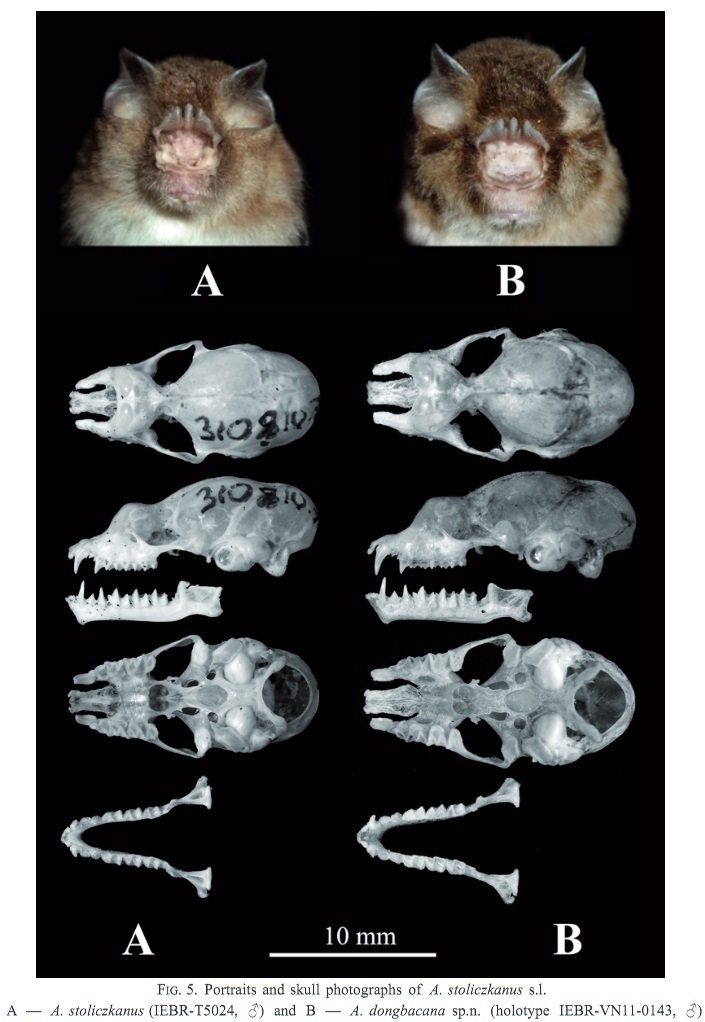
FIG. 5. Portraits and skull photographs of Aselliscus stoliczkanus s.l.
 
— A. stoliczkanus (IEBR-T5024, ♂) and — A. dongbacana sp.n. (holotype IEBR-VN11-0143, ♂)

ABSTRACT

Trident bats found in mainland Southeast Asia are currently subsumed into a single species, Aselliscus stoliczkanus. In this study, we examined morphological and genetic data from different populations from Southeast Asia, with a special focus on specimens from Vietnam. Our analyses support the existence of a further species of Aselliscus in northeastern Vietnam that separated from A. stoliczkanus sensu lato (s.l.) during the late Miocene. Within the latter taxon, we identified five geographic lineages that diverged from each other during the Plio-Pleistocene epoch. Some of them may also correspond to further separate taxa, but additional molecular and morphological data are needed to test this hypothesis. Here with, based on the combined evidences we describe the northeastern Vietnamese population as a separate species.

FIG. 5. Portraits and skull photographs of Aselliscus stoliczkanus s.l.
A A. stoliczkanus (IEBR-T5024, ♂) and B A. dongbacana sp.n. (holotype IEBR-VN11-0143, ♂) 

SYSTEMATIC DESCRIPTION

Aselliscus dongbacana sp. n. (Fig. 5B)

Holotype: IEBR-VN11-0143 (Field no.: Tu.230511.1, tis-sue code: VN11-0143), adult ♂, body in alcohol,skull and baculum removed, collected by V. T. Tu on23 May 2011. Mass: 4.5 g.
  Measurements (in mm) are as follows: FA: 43.8; Head and body length:40.5; Tail: 39.5; Ear length: 12.2; Tibia: 19.7; 3rdmt:32.5; 3rd1: 15.7; 4thmt: 31.5; 4th1: 13.2, cartilage: bi-furcate; and 5thmt: 27.9, 5th1: 13.1, cartilage: bifur-cate. GLS: 14.94; CCL: 13.01; C1C1: 3.57; M3M3:5.55; ZB: 7.61; MB: 7.29; BW: 6.05; CM3: 5.28;ML: 9.42; CM3: 5.66; UCL: 1.51; and LCL: 2.01.The sequence of COI has been deposited in theEMBL/GenBank/DDBJ nucleotide databases withaccession no. KU161543.

Type locality: Na Phong cave, Ba Be National Park, Bac Kan province, Vietnam (22°23’N, 105°36’E; entrance altitude: 280 m a.s.l.)

Etymology: The specific epithet refers to the restricted distribution range of the new species, called ‘Đông Bắc’in Vietnamese. Its proposed English name is ‘Dong Bac’s Trident Bat’ and Vietnamese name is ‘Dơi mũiba lá Đông Bắc’.

Distribution: The species is currently known only from karst areas in Northeastern Vietnam (Fig. 1).


Ecology and habitat: Like other Aselliscus species, A. dongbacana sp.n. is also associated with karst areas, and use caves as roosts both in heavily degraded and intact lime-stone habitats. So far, nothing is known on the diet of A. dongbacana sp. n., but they might forage onsmall nocturnal insects in dense environments like A. stoliczkanus sensu stricto (s.s.) does (Li et al.,2007). However, the differences in skull size and especially in canine length suggest that their food sources may be different. Further studies on the diet of the two taxa is essential for a better understanding of whether food sources are important factors in their diversification. During our surveys, severa lpregnant females of A. dongbacana sp. n. were captured in May, while lactating females were found inJune. These observations confirm that March–July is the primary reproductive period for the new species and also for other insectivorous bats in North Vietnam (Furey et al., 2011).

Conservation status: To date, A. stoliczkanus s.l. has been classified as Least Concern in the IUCN Red List (Bates et al.,2008). However, A. dongbacana sp. n. is endemic to northeast Vietnam and little is known about the current population trends of the species. Unfortunately,like many other regional plants and animals, A. dongbacana sp. n. might be at risk due to various types of roost and habitat destruction, i.e. mining,timber harvesting or cave tourism (Day and Urich,2000; Clements et al., 2006; Furey et al., 2010). Further studies are needed to assess the impacts of habitat changes on A. dongbacana sp. n. to identifyhigh priority conservation areas to protect the species (Hutson et al., 2001; Furey et al., 2010; Kingston, 2010).


The speciation of Aselliscusin mainland Southeast Asia: when and how?
Our molecular dating based on Cytb sequences indicates that the separation between A. dongbacana sp. n. and A. stoliczkanus s.s. took place during thelate Miocene (ca. 7.2 Mya), much earlier than the diversification among subclades of A. stoliczkanus s.s. around the Plio-Pleistocene boundary (ca. 2.8–2.4 Mya — Fig. 2 and Appendix IV). The period of interspecific divergence seems therefore to coincide with the hypothetic climatic and associated vegetation changes in the region during the late Miocene. Indeed, at the beginning of the late Miocene (ca. 10–8 Mya or more recently), the extent and uplift of the Himalayan mountains and the Tibetan Plateau, linked to the development of the Northern Hemispheric ice sheets played an important role in driving the Asian aridification (An, 2000; An et al.,2001; Zhang Y. G. et al., 2009). As a consequence,the cool, dry climate caused the vegetation to change from mixed coniferous and broad-leaved forests to grasslands in Asia, and rainforests of the region were thought to be compressed into different refugia (Morley, 2000; An et al., 2001). At the end of the late Miocene and until the early Pliocene epochs, Southeast Asia was a single block of rainforest, as a consequence of the warm and humid climatic conditions. However, the uplift of Himalaya-Tibetan plateau about 3.6–2.6 Mya and the onset of extensive glaciations on the Northern Hemisphere during the late Pliocene and Pleistocene epochs, led to the development of more open vegetation types and the contraction of the rainforest into several isolated refugia (Morley, 2000; An et al., 2001; Meijaard and Groves, 2006). With this in mind, the current distribution of Aselliscus spp. in Mainland Southeast Asia (Fig. 1) suggests that their separation probably occurred in different glacial refugia across the region during two major phases of aridification in Asia since the late Miocene. Aselliscus bats are very small (body mass ca. 5 g), fly at low speeds and are usually associated with karst areas and for-age in cluttered habitats (Li et al., 2007; Francis,2008). These morphological and ecological features indicate that they might have poor dispersal capacities and high natal philopatry that could prevent gene flow among different isolated populations and facilitate speciation events. Despite their long separation, these taxa were found to have similar morphology and echolocation call features; whereas previous studies indicated that different species of hipposiderid bats are usually recognizable by their call features (i.e., Kingston et al., 2001; Thong et al.,2012). However, given that Aselliscus spp. are associated with karst areas, we hypothesize that their ecological evolution might be under stabilizing selection imposed by the special environmental conditions of karst habitats (i.e., forests and caves) (Bickford et al., 2007) and consequently reduces morphological and acoustic variation between different taxa.


Vuong Tan Tu,  Gábor Csorba, Tamás Görföl, Satoru Arai, Nguyen Truong Son, Hoang Trung Thanh and Alexandre Hassanin. 2015. Description of A New Species of the Genus Aselliscus (Chiroptera, Hipposideridae) from Vietnam. ACTA CHIROPTEROLOGICA. 17(2): 233-254.  DOI: 10.3161/15081109ACC2015.17.2.002