Tuesday, August 30, 2016

[Botany • 2016] Plantago humboldtiana • An Extremely Narrow Endemic New Species (Plantaginaceae) from A Waterfall in southern Brazil: Yet Another New Species from One of the Best-studied Neotropical Areas


Plantago humboldtiana  Hassemer  


Plantago humboldtiana  Hassemer 

Abstract

This article presents and describes Plantago humboldtiana, an extremely narrow endemic rheophytic new species from a waterfall in Corupá, Santa Catarina state, southern Brazil. The new species is unique in presenting a combination of type-G antrorse trichomes on scapes, pendulous inflorescences and 1-seeded pyxidia. Only one population is known to exist, despite intensive search efforts in nearby, similar environments. Its conservation status is assessed as critically endangered (CR) as the only known population is restricted to a dramatically small area, and is subject to extreme fluctuation due to occasional floods, and also to intense visitation by tourists, which can disturb its fragile habitat. We also present an updated identification key to the species of Plantago that occur in Santa Catarina. The recent description of three narrow endemic, threatened new species of Plantago in Santa Catarina, which is the Brazilian state with its flora best studied, highlights the need for more taxonomic research, especially in the neotropics.

Keywords: Lamiales, Identification key, Neotropics, Plantagineae, Rheophyte, Santa Catarina,  South America, Threatened species


Figure 4: Photographs of Plantago humboldtiana. (A) The only known population of Plantago humboldtiana. (B) Detail of the environment. (C) Isolated individual clearly displaying the pendulous inflorescences, one of the key characters of this species. (D) Detail of inflorescence (photograph by Luís Adriano Funez). (E) Overview of Salto Grande waterfall, in Corupá municipality, Santa Catarina state. 

Gustavo Hassemer and Nina Rønsted. 2016. Yet Another New Species from One of the Best-studied Neotropical Areas: Plantago humboldtiana (Plantaginaceae), An Extremely Narrow Endemic New Species from A Waterfall in southern Brazil.
 PeerJ. 4:e2050. DOI: 10.7717/peerj.2050


[Mammalogy • 2016] Ancient Phylogenetic Divergence of the Enigmatic African Rodent Zenkerella and the Origin of Anomalurid Gliding


Abstract

The “scaly-tailed squirrels” of the rodent family Anomaluridae have a long evolutionary history in Africa, and are now represented by two gliding genera (Anomalurus and Idiurus) and a rare and obscure genus (Zenkerella) that has never been observed alive by mammalogists. Zenkerella shows no anatomical adaptations for gliding, but has traditionally been grouped with the glider Idiurus on the basis of craniodental similarities, implying that either the Zenkerella lineage lost its gliding adaptations, or that Anomalurus and Idiurus evolved theirs independently. Here we present the first nuclear and mitochondrial DNA sequences of Zenkerella, based on recently recovered whole-body specimens from Bioko Island (Equatorial Guinea), which show unambiguously that Zenkerella is the sister taxon of Anomalurus and Idiurus. These data indicate that gliding likely evolved only once within Anomaluridae, and that there were no subsequent evolutionary reversals. We combine this new molecular evidence with morphological data from living and extinct anomaluromorph rodents and estimate that the lineage leading to Zenkerella has been evolving independently in Africa since the early Eocene, approximately 49 million years ago. Recently discovered fossils further attest to the antiquity of the lineage leading to Zenkerella, which can now be recognized as a classic example of a “living fossil,” about which we know remarkably little. The osteological markers of gliding are estimated to have evolved along the stem lineage of the AnomalurusIdiurus clade by the early Oligocene, potentially indicating that this adaptation evolved in response to climatic perturbations at the Eocene–Oligocene boundary (∼34 million years ago).

Keywords: Anomaluridae, Mammals, Phylogeny, Bioko Island, Equatorial Guinea, Patagium, Gliding, Eocene, Oligocene


Steven Heritage​, David Fernández, Hesham M. Sallam, Drew T. Cronin, José Manuel Esara Echube and Erik R. Seiffert​. 2016. Ancient Phylogenetic Divergence of the Enigmatic African Rodent Zenkerella and the Origin of Anomalurid Gliding.
PeerJ 4:e2320. DOI: 10.7717/peerj.2320

Researchers seek Zenkerella, an elusive scaly-tailed squirrel that has never been spotted alive by scientists http://phy.so/390543298 via @physorg_com


[Herpetology • 2009] Gloydius lijianlii • A New Species (Squamata, Viperidae) from the northern Coastal Islands along Shandong Peninsula, China


Gloydius lijianlii 
Jiang & Zhao, 2009  

Abstract
  The morphological characteristics of thirteen specimens (7♂♂, 6♀♀) on the snake genus Gloydius from northern coastal islands along Shandong Peninsula have been examined,and also compared carefully with reference to the related species records. They are considered as belonging to a new species. Diagnosis of the new species is given as follows.

  Key Words: Reptilia, Squamata, Viperidae, Gloydius, new species.


JIANG Fan and ZHAO Er-Mi. 2009. Gloydius lijianlii, A New Species from the northern Coastal Islands along Shandong Peninsula, China (Reptilia, Squamata, Viperidae). [in Chinese]. Acta Zootaxonomica Sinica. 34(3): 642-646.
江 帆, 赵尔宓. 2009. 山东半岛北部沿岸岛屿蝮属一新种 ( 爬行纲 , 有鳞目, 蝰科).  http://bbs.pxtx.com/thread-887787-1-1.do

[PaleoOrnithology • 2016] Linyiornis amoena • A New Jehol Enantiornithine Bird from Jiufotang Formation, China, with Three-dimensional Preservation and Ovarian Follicles


Linyiornis amoena 
Wang, Wang, O'Connor, Wang, Xiaoting & Zhang, 2016

ABSTRACT

 We report a new enantiornithine bird, Linyiornis amoena gen. et sp. nov., from the Lower Cretaceous Jiufotang Formation in northeastern China. Traces of ovarian follicles indicate that the specimen represents a female individual. The nearly three-dimensional preservation of the new specimen reveals morphological details rarely visible in other Early Cretaceous enantiornithines, allowing more detailed comparison with Late Cretaceous enantiornithines. Differences in the preserved morphology of the right and left coracoids suggest that the appearance of some features is strongly affected by preservation, indicating that the distribution of these features in compressed specimens may need to be reevaluated. Like Late Cretaceous enantiornithine specimens, the holotype of Linyiornis amoena preserves a hypertrophied pit for muscle attachment on the bicipital crest but clearly did not preserve a fossa for the capital ligament, present in Late Cretaceous taxa; we discuss the functional morphology and implications of these features in Linyiornis amoena.


FIGURE 2. Photograph of the holotype of Linyiornis amoena, gen. et sp. nov., STM11- 80.
A, skeleton on the main slab; B, close-up of the traces of fossilized ovarian follicles. 


 Yan Wang, Min Wang, Jingmai Kathleen O'Connor, Xiaoli Wang, Zheng Xiaoting and Xiaomei Zhang. 2016. A New Jehol Enantiornithine Bird with Three-dimensional Preservation and Ovarian Follicles. JOURNAL OF VERTEBRATE PALEONTOLOGY. 36(3); e1054496. DOI:  10.1080/02724634.2015.1054496  
http://zoobank.org/urn:lsid:zoobank.org:pub:EFFD4348-7376-4201-A948-CEC686E2E0DCSUPPLEMENTAL


[Entomology • 2016] Five New Species of Geranomyia Haliday, 1833 (Diptera, Limoniidae) from China


Geranomyia sp.
Zhang, Zhang & Yang, 2016

Abstract

The following five new species of the genus Geranomyia from China are described and illustrated: Geranomyia baisensis sp. nov., G. degenerata sp. nov., G. longispina sp. nov., G. maculata sp. nov. and G. nigra sp. nov.. Three known species, G. apicifasciata (Alexander, 1930), G. radialis (Alexander, 1930) and G. sparsiguttata (Alexander, 1937), are listed with new distribution data. A key to the species of the genus Geranomyia from China is presented.

Keywords: Diptera, Limoniidae, Geranomyia, new species, China


Xiao Zhang, Zehua Zhang and Ding Yang. 2016. Five New Species of Geranomyia Haliday, 1833 (Diptera, Limoniidae) from China.
 Zootaxa. 4154(2); 139–154. DOI:  10.11646/zootaxa.4154.2.2

[Crustacea • 2016] Parastacus fluviatilis & P. caeruleodactylus • Two New Species of South American Freshwater Crayfish Genus Parastacus Huxley, 1879 (Decapoda: Parastacidae)


 Parastacus fluviatilis Ribeiro, Buckup, Gomes & Araujo, 2016
from highland streams in the state of Rio Grande do Sul, southern Brazil

Abstract

Two new species of Parastacus Huxley, 1879 are described from material collected in the state of Rio Grande do Sul, southern Brazil: Parastacus fluviatilis sp. nov. from highland streams and Parastacus caeruleodactylus sp. nov. from wetlands. Parastacus fluviatilis sp. nov. is distinguished mainly by large chelipeds with dense setae cover on the cutting edge of fingers, telson subtriangular with two lateral blunt spines and strongly concave ventral surface of lateral process of thoracic sternites 6 and 7. Parastacus caeruleodactylus sp. nov. is distinguished mainly by blue cheliped fingers and a large gap between them, reduced abdomen, dorsal and ventral margins of dactylus, propodus and carpus of second pair of pereiopods with tufts of long setae and mid-dorsal carina of exopod of uropods unarmed. According to IUCN Red List criteria both species are considered endangered. Habitat characterization and a method for defining the shape of second abdominal pleura are also provided.

Keywords: Crustacea, burrowing crayfish, freshwater decapods, neotropical crustaceans, parastacid, taxonomy


Felipe Bezerra Ribeiro, Ludwig Buckup, Kelly Martinez Gomes and Paula Beatriz Araujo. 2016. Two New Species of South American Freshwater Crayfish Genus Parastacus Huxley, 1879 (Crustacea: Decapoda: Parastacidae). Zootaxa. 4158(3); 301–324.  DOI: 10.11646/zootaxa.4158.3.1

Monday, August 29, 2016

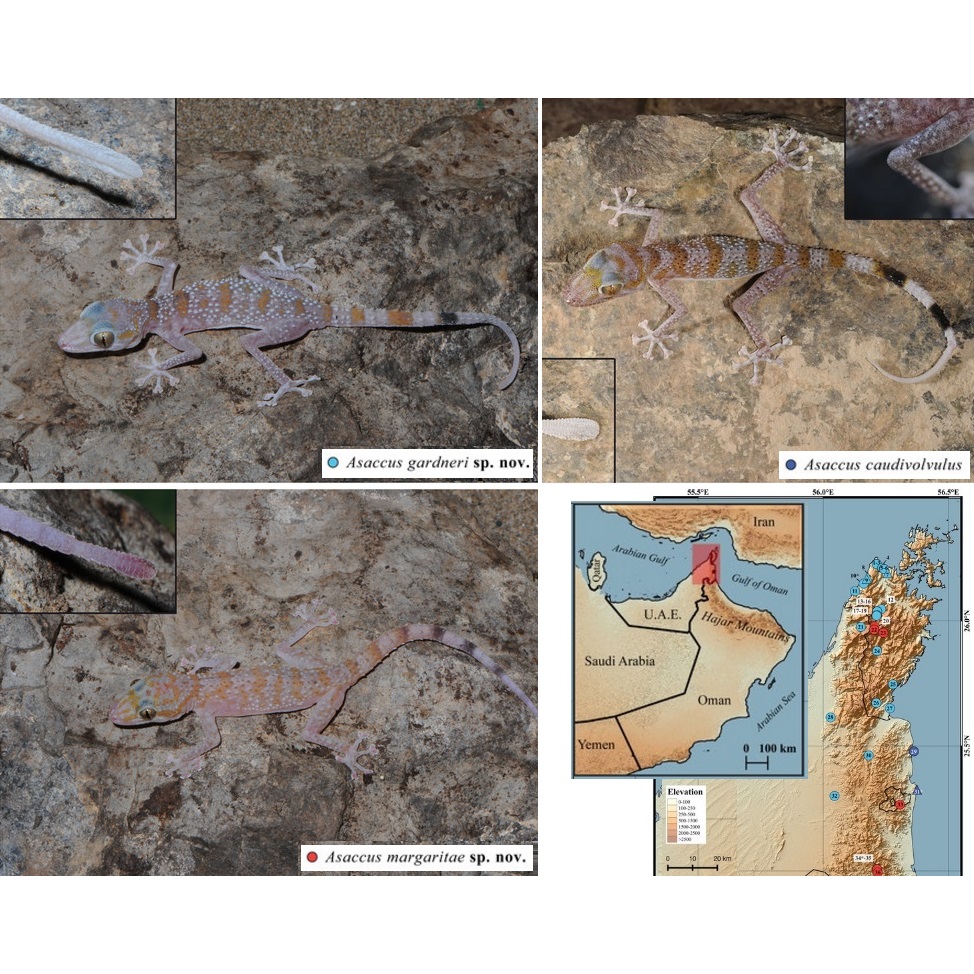
[Herpetology • 2016] Microendemicity in the northern Hajar Mountains of Oman and the United Arab Emirates with the Description of Two New Species of Geckos of the Genus Asaccus (Squamata: Phyllodactylidae); Asaccus gardneri & A. margaritae


 Asaccus gardneri & A. margaritae 
 Carranza​​, Simó-Riudalbas​, Jayasinghe, Wilms & Els, 2016 

 
DOI: 10.7717/peerj.2371

Abstract  
Background
The Hajar Mountains of Oman and the United Arab Emirates (UAE) is the highest mountain range in Eastern Arabia. As a result of their old geological origin, geographical isolation, complex topography and local climate, these mountains provide an important refuge for endemic and relict species of plants and animals with strong Indo-Iranian affinities. Among vertebrates, the rock climbing nocturnal geckos of the genus Asaccus represent the genus with the highest number of endemic species in the Hajar Mountains. Recent taxonomic studies on the Zagros populations of Asaccus have shown that this genus is much richer than it was previously thought and preliminary morphological and molecular data suggest that its diversity in Arabia may also be underestimated.

Methods
A total of 83 specimens originally classified as Asaccus caudivolvulus (including specimens of the two new species described herein), six other Asaccus species from the Hajar and the Zagros Mountains and two representatives of the genus Haemodracon were sequenced for up to 2,311 base pairs including the mitochondrial 12S and cytb and the nuclear c-mos, MC1R and ACM4 genes. Phylogenetic relationships were inferred using both Bayesian and maximum-likelihood approaches and the former method was also used to calibrate the phylogenetic tree. Haplotype networks and phylogenetic trees were inferred from the phased nuclear genes only. Sixty-one alcohol-preserved adult specimens originally classified as Asaccus caudivolvulus from the northern Hajar Mountains were examined for 13 morphometric and the five meristic variables using multivariate methods and were also used to diagnose and describe the two new species.

Results
The results of the molecular and morphological analyses indicate that the species originally classified as Asaccus caudivolvulus is, in fact, an assemblage of three different species that started diversifying during the Mid-Miocene. The molecular phylogenies consistently recovered the Hajar endemic A. montanus as sister taxon to all the other Asaccus species included in the analyses, rendering the Arabian species of Asaccus polyphyletic.

Discussion
Using this integrative approach we have uncovered a very old diversification event that has resulted in a case of microendemicity, where three morphologically and ecologically similar medium-sized lizard species coexist in a very short and narrow mountain stretch. Asaccus caudivolvulus is restricted to a small coastal area of the UAE and at risk from heavy development, while the two new species described herein are widely distributed across the northern tip of the Hajar Mountains and seem to segregate in altitude when found in close proximity in the Musandam Peninsula (Oman). Similarly to other integrative analyses of Hajar reptiles, this study highlights the high level of diversity and endemicity of this arid mountain range, underscoring its status as one of the top hotspots of reptile diversity in Arabia.

Keywords: Phylogeny, Systematics, Arabia, Diversification, Reptiles, Speciation, Taxonomy, Evolution, Mountains, Biogeography


Salvador Carranza​​, Marc Simó-Riudalbas​, Sithum Jayasinghe, Thomas Wilms and Johannes Els. 2016. Microendemicity in the northern Hajar Mountains of Oman and the United Arab Emirates with the Description of Two New Species of Geckos of the Genus Asaccus (Squamata: Phyllodactylidae).  PeerJ. 4:e2371. DOI: 10.7717/peerj.2371


[Ichthyology • 2005] Validity of the Scorpionfish Genus Hipposcorpaena and A Redescription of H. filamentosa Fowler (Scorpaeniformes: Scorpaenidae)


Hipposcorpaena filamentosa  

Fowler, 1938 

The validity of the poorly known monotypic scorpionfish genus Hipposcorpaena Fowler is confirmed, and H. filamentosa Fowler is redescribed. The genus is characterized by the following characters: dorsal fin with 12 spines and 9 soft rays; anal fin with 2 spines and 6 soft rays; pectoral fin with 14 rays; lower pectoral fin rays slender, filamentous; longest ray extending well beyond vertical from posterior end of anal fin base; all dorsal and anal fin soft rays (except last ray of each fin divided into 2 at base), and all pectoral and caudal fin rays unbranched; head and body strongly compressed; body deep, depth 39.5%~41.2% of standard length; body covered with small cycloid scales; no palatine teeth; interorbital ridges present; tympanic spine present; posttemporal spine simple, lacking upper posttemporal spine; lower caudal fin with 1~4 distinct black spots, greater in width than orbit diameter; mature adult size at least 35.2 mm SL.


Key words: Scorpaenidae, Genus, Hipposcorpaena, Redescription, Hipposcorpaena filamentosa.


Hiroyuki Motomura and Hiroshi Senou. 2005. Validity of the Scorpionfish Genus Hipposcorpaena Fowler and A Redescription of H. filamentosa Fowler (Scorpaeniformes: Scorpaenidae).  Zoological Studies. 44(2): 210-218.


[Botany • 2015] Gastrodia madagascariensis • from An Historical Designation to A Description of A New Species (Gastrodieae, Orchidaceae) from Madagascar


Gastrodia madagascariensis 
  H.Perrier ex Martos & Bytebier  
DOI: 
10.11646/phytotaxa.221.1.4

Abstract

Gastrodia madagascariensis, a leafless achlorophyllous orchid, is described and illustrated here. The epithet was originally coined by Perrier de la Bâthie in 1939 for fruiting material found on the eastern coastal plain of Madagascar more than a century ago, but the name was never validly published. This new species is closely related to G. similis from Reunion Island, from which it can be distinguished by the perianth tube spreading towards the apex, the shape of the column and stigma, and the flower colour. The achlorophyllous genus Gastrodia currently comprises five species in the tropical parts of the Afro-Madagascan region, one of which, G. africana, is possibly extinct. We provide an artificial key to distinguish them. In addition, there is also an extratropical species in continental Africa, the introduced G. sesamoides (very local near Cape Town, South Africa).

Keywords: Didymoplexis; Flora of Madagascar; myco-heterotrophy; Perrier de la Bâthie, Monocots, Madagascar


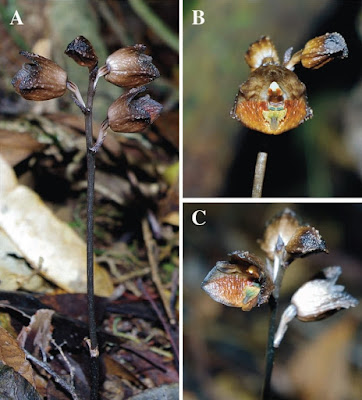
FIGURE 1. Gastrodia madagascariensis   H.Perrier ex Martos & Bytebier  
A. Habit; note the dark color of the peduncle contrasting with the whitish pedicels, and the dark colour of the perianth tube at the apex. B. Open flower, front view; note the perianth tube spreading towards the apex, and the reddish brown (bottom half) and light brown (top half) colour of the perianth tube on the inner surface. C. Open flower, three quarter view; note the emerald green colour of the lip tip and of two tubercular calli borne on the column-foot (also seen on B). D. Dehiscent capsules borne on elongated fruiting pedicels. E. Fusiform rhizome with fine adventitious roots.
Photographs: A.Charbouillot (A–C) and J.-M.Hervouet (D) DOI: 10.11646/phytotaxa.221.1.4 

Diagnosis:— Similar to Gastrodia similis Bosser (2006: 52), from which it can be distinguished by the perianth tube spreading towards the apex, the cordate stigma, and the emerald green lip colour.

Distribution and habitat:— Gastrodia madagascariensis is only known from Ambodiriana Forest near Manompana (Fig. 3). Here, it grows in evergreen, humid forest below 200 m and is more commonly found in the vicinity of the river Manompana and its tributaries.

Etymology:— The epithet madagascariensis refers to Madagascar, where this species is endemic.


Conclusion: 
Since the recent treatment of Gastrodia in Genera Orchidacearum (Kores et al. 2006), the number of species has increased considerably from approximately 20 to 50 species (Hsu & Kuo 2010, 2011, Yeh et al. 2011, Hsu et al. 2012, Tan et al. 2012, Suetsugu 2013, 2014, Hu et al. 2014), making it the most diverse genus in the orchid tribe Gastrodieae. In view of that, investigations into nuclear and mitochondrial markers that would suitably resolve the phylogenetic relationships between the Gastrodia species found in the Asia-Pacific and the Afro-Madagascan region are now needed.


Florent Martos, Steven D Johnson and Benny Bytebier. 2015. Gastrodia madagascariensis (Gastrodieae, Orchidaceae): from An Historical Designation to A Description of A New Species from Madagascar.
Phytotaxa. 221(1): 48–56. DOI: 10.11646/phytotaxa.221.1.4


Résumé: Gastrodia madagascariensis, une orchidée aphylle non-chlorophyllienne, est décrite et illustrée ici. L’épithète fut initialement proposé par Perrier de la Bâthie en 1939 pour décrire une plante en fruit trouvée dans la même région côtière de Madagascar il y a plus d’un siècle, mais sa publication était alors invalide. Cette nouvelle espèce est proche de l’espèce G. similis endémique de l’Île de la Réunion, mais s’en distingue toutefois par un calice campanulé, la forme de la colonne et du stigmate, ainsi que la couleur de la fleur. Le gene non-chlorophyllien Gastrodia comprend aujourd’hui cinq espèces en Afrique tropicale et à Madagascar; l’une d’entre elles, G. africana, étant probablement éteinte. Une clé d’identification de ces espèces est proposée ici. De plus, on recense une sixième espèce sur le continent africain, c’est-à-dire l’espèce introduite G. sesamoides (près de la ville du Cap, Afrique du Sud).
Mots-clés: Didymoplexis; Flore de Madagascar; myco-hétérotrophie; Perrier de la Bâthie


[Entomology • 2016] Cerapanorpa, A New Genus of Panorpidae (Insecta: Mecoptera) from China, with Descriptions of Three New Species


Cerapanorpa obtusa  
(Cheng, 1949)  

Abstract

A new genus of Panorpidae (Mecoptera), Cerapanorpa gen. nov., is erected with Panorpa obtusa Cheng, 1949 as its type species. The new genus can be readily recognized by having a single digitate anal horn on the posterior edge of tergum VI in males, and a broad main plate bearing two pairs of basal plates at the genital plate and a well-developed elongate axis in females. Nineteen described species are transferred from Panorpa Linnaeus, 1758 to the new genus. In addition, three new species, Cerapanorpa liupanshana sp. nov., Cerapanorpa protrudens sp. nov. and Cerapanorpa sinuata sp. nov. are described and illustrated. Panorpa alticola Zhou, 2000 syn. nov. is regarded as a junior synonym of P. obtusa Cheng, 1949. A key to genera of Panorpidae is updated to include the new genus. A key to species of Cerapanorpa is also presented.

Keywords: Mecoptera, Insecta, Panorpidae, Panorpa, Oriental Region, Palearctic Region, East Asia, China


Chao Gao and Bao-Zhen Hua. 2016. Cerapanorpa, A New Genus of Panorpidae (Insecta: Mecoptera) with Descriptions of Three New Species.
Zootaxa. 4158(1); 93–104. DOI: 10.11646/zootaxa.4158.1.5

Sunday, August 28, 2016

[Botany • 2009] Blakea attenboroughii • A New Species (Melastomataceae: Blakeeae) from Tungurahua, Ecuador


Blakea attenboroughii  Penneys 

Abstract
Blakea attenboroughii, a new Ecuadorian endemic is described, illustrated, and com-pared with several allied species, including B. truncata, B. harlingii, and B. brasiliensis. The new species is remarkable for its outer floral bracts that are large, foliaceous, distinctly keeled, decurrent, and basally adpressed to each other, and also for having lavender-to blue-colored anthers. Blakea (Melastomataceae: Blakeeae) is a Neotropical genus comprised of ca. 100 species of woody root climbers, shrubs, and trees that may be terrestrial, hemiepiphytic, or epiphytic (Almeda 2000). Found from Mexico to Bolivia, including several species in the Antilles, these berry-fruited plants are characterized by their solitary to fascicled, axillary flowers, that are subtended by two pairs of decussate bracts, and laterally compressed anthers (Penneys 2007). The species proposed here is currently known only from the type locality within the Reserva Ecológica Cerro Candelaria (Fundación EcoMinga), Tungurahua, Ecuador. This species is distinctive for having large, keeled, and foliaceous outer floral bracts that are basally decurrent and adpressed to each other, as well as for having lavender-to blue-colored anthers. This combination of characters is unique in the genus. Blakea attenboroughii Penneys, sp. nov.


 Penneys, Darin S. and Jost, Lou. 2009. Blakea attenboroughii (Melastomataceae: Blakeeae): A New Species from Ecuador. Proceedings of the California Academy of Sciences. 60(1): 69-72.


[Herpetology • 2014] Leptolalax laui • A New Species of Leptolalax (Anura: Megophryidae) from Southern China


Lau’s Leaf Litter Toad | Leptolalax laui
Sung, Yang & Wang, 2014

Abstract
 A new species, Leptolalax laui sp. nov. is described based on specimens collected from Hong Kong and Shenzhen City, Guangdong Province, China. The new species can be distinguished from other known congeners by morphological and molecular data. The new species is characterized by the following characters: 1) small size (adult males SVL 24.8.1 mm−26.7 mm); 2) near immaculate creamy white chest and belly; 3) broad lateral fringes on toes; 4) head longer or as long as wide; 5) distinct dark brown spots in flank; 6) moderate dermal fringes on fingers; 7) brown or reddish-brown dorsum with fine round scattered tubercles; 8) thin traverse brownish-grey bars on the dorsal surface of tibia and lower arms; 9) longitudinal ridges under toes not interrupted at the articulations.

Keywords: Leptolalax laui sp. nov., morphology, mitochondrial DNA, taxonomy


Diagnosis: The new species is assigned to the subgenus Lalos of the genus Leptolalax based on the following characteristics: small size, rounded finger tips, presence of an elevated inner palmar tubercle not continuous to the thumb, presence of supra-axillary, pectoral, femoral and ventrolateral glands, absence of vomerine teeth, presence of tubercles on eyelids and vertical bars on anterior tip of snout (Delorme et al., 2006; Dubois, 1983; Lathrop et al., 1998). Leptolalax laui sp. nov. is distinguished from its congeners by a combination of 1) medium size (SVL 24.8 mm – 26.7 mm in adult males and 28.1 mm in single adult female), 2) near immaculate creamy-white chest and belly, 3) broad lateral fringes on toes, 4) head longer or as long as wide, 5) distant dark brown spots in flank, 6) moderate dermal fringes on fingers, 7) brown or reddish brown dorsum with fine round scattered tubercles, 8) thin traverse brownish grey bars on the dorsal surface of tibia and lower arms, 9) longitudinal ridges under toes not interrupted at the articulations.  

Etymology: This new species is named in honor of Dr. Michael Wai-Neng Lau from Hong Kong for his longterm herpetological research and conservation in Asia, particularly in South China. As a common name we suggest “Lau’s Leaf Litter Toad” (English name).

Ecology: The species can be found in streams in secondary forests between 100–800 m elevation. Advertisement calls of males of L. laui sp. nov. can be heard in streams from February to September in Hong Kong. Calling males were usually observed within two meters from streams.

Distribution and conservation status: Leptolalax laui sp. nov. is known to occur in a number of sites, including Tai Mo Shan, Tai Po Kau, Shing Mun, Ho Chung, Kadoorie Farm and Botanic Garden, Sunset Peak, Lantau Peak, in Hong Kong, as well as Wutongshan National Forest Park, Shenzhen City, Guangdong Province; yet the exact distribution of this species in China is unknown. With limited information on the distribution of this species, we recommend the species should be listed as Data Deficient in the IUCN Red List of Threatened Species.


Yikhei SUNG, Jianhuan YANG and Yingyong WANG. 2014. A New Species of Leptolalax (Anura: Megophryidae) from Southern China. Asian Herpetological Research. 5(2): 80–90

[Ichthyology • 2016] Periophthalmus pusing • A New Species of Periophthalmus (Teleostei: Gobiidae) from the Lesser Sunda Islands, Indonesia


 Periophthalmus pusing  
Jaafar, Polgar & Zamroni, 2016
 
LKCNHM.nus.edu.sg

Abstract

 We describe Periophthalmus pusing sp. nov., a mudskipper species from the Lesser Sunda Islands. This species closely resembles, and was previously identified as, its congener Periophthalmus gracilis Eggert, 1935. A black spot on the posterior portion of the first dorsal fin, a diagnostic character for P. gracilis, is also present in the new species, and thus led to the earlier confusion. Adults of Periophthalmus pusing sp. nov. (> 30 mm SL) differ from those of Periophthalmus gracilis in having XI–XV spines in the first dorsal-fin (vs. VI–XII in P. gracilis), first dorsal fin taller than depth of body at anus (first dorsal fin shorter than depth of body at anus in Periophthalmus gracilis), interdorsal distance less than half the length of the first dorsal-fin spine (interdorsal distance more than half the length of the first dorsal-fin spine in Periophthalmus gracilis).

Key words. Oxudercinae, mudskipper, cryptic species, ichthyofauna, Sumba Island.


Diagnosis. Adult Periophthalmus pusing sp. nov. are distinguished from all congeners with the following suite of characters: pelvic frenum absent; pelvic fins separate for the entire length; a black spot posteriorly on first dorsal fin, spot usually between ninth and the ultimate spine; first dorsal fin
taller than second dorsal fin; interdorsal distance less than half the length of the first dorsal-fin spine. First dorsal-fin elements XI–XV; second dorsal-fin elements I, 10–I, 12; anal-fin elements I, 10–I, 12; pectoral-fin elements 10–12; longitudinal scale rows 42–54; predorsal midline 14–19.


Etymology. The specific epithet ‘pusing’, meaning ‘giddy’ in Indonesian, is the common name used by the coastal people of the Lesser Sunda Islands to refer to Periophthalmus mudskippers. These fishes are known as ‘Ikan Pusing’ (Indonesian: ikan=fish, pusing=giddy), as it is believed that consuming these fishes causes headaches and giddiness.

Distribution. Presently known to occur only on the island of Sumba, Indonesia (Fig. 4).

Field notes: The general locality in which this mudskipper was found—Kawangu—is a tide-dominated coastal system with relatively low wave action. Within the mangrove forest, P. pusing sp. nov. was found in a variety of microhabitat types in seaward and higher mangrove areas as well as within, and on sloping banks of tidal creeks. This species was syntopic with two congeners: Periophthalmus argentilineatus and Periophthalmus malaccensis. 


Zeehan Jaafar, Gianluca Polgar and Yuliadi Zamroni. 2016. Description of A New Species of Periophthalmus (Teleostei: Gobiidae) from the Lesser Sunda Islands. RAFFLES BULLETIN OF ZOOLOGY. 64; 278–283.