Wednesday, June 29, 2022

[Botany • 2022] Oreocharis guangwushanensis (Gesneriaceae) • A New Species from Sichuan Province, China


Oreocharis guangwushanensis Z.L.Li & Xin Hong, 

in Li, Ma, ... et Hong. 2022. 

Abstract
A new species of Oreocharis, O. guangwushanensis from the Sichuan Province of south-western China, is described and illustrated here. This new species has a pink corolla that is different from other species of Oreocharis in southwest China and, although it is morphologically similar to O. ronganensis and O. reticuliflora, it has significant differences in the colour and shape of the corolla, the apex of the corolla limb, shape and indumentum of the filaments and a shorter pistil. A detailed description, colour photographs, distribution and habitat, as well as the IUCN conservation status, are also provided.

Keywords: Didymocarpoideae, Lithophilous, new taxon, pink flowers, Sichuan flora

Oreocharis guangwushanensis Z.L.Li & Xin Hong
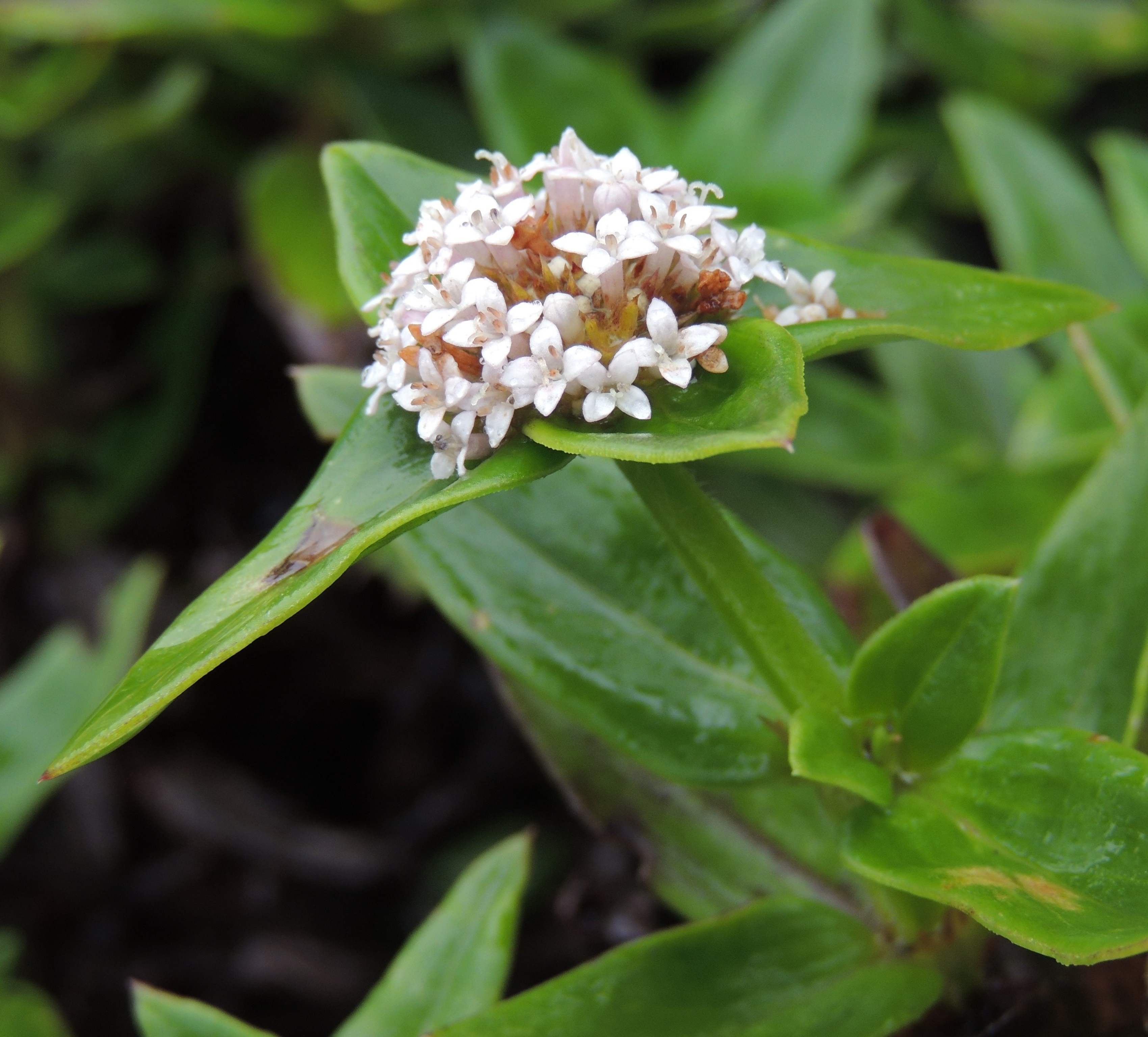
 A flowering plants in natural habitat B plant with pair-flowered cymes C corolla front view D opened corolla
E dissected calyx lobes, outside brown with rusty strigose indumentum (3 left), inside green with brown pilose indumentum on margins (2 right) F peduncle, pedicel and young lateral branch G leaves (left: adaxial surface, right: abaxial surface) H capsule
I immature pistil J immature pistil with calyx K mature pistil with calyx.


 Oreocharis guangwushanensis Z.L.Li & Xin Hong, sp.nov.
 
Diagnosis: Oreocharis guangwushanensis morphologically resembles O. ronganensis and O. reticuliflora. The new species is vegetatively similar to O. ronganensis, but it differs from the latter in that the adaxial lip is 2-lobed to or above the middle (vs. lobed to near base), ovary with white pubescence (vs. glabrous), anthers in pairs (vs. anthers free), shorter tube (9–14 mm vs. 20 mm), shorter pistil (5 mm vs.12–15 mm) and filaments strongly twisted and bent at the top (vs. linear, straight). The new species resembles O. reticuliflora in habit, flower tube and the shape of the calyx, but differs by its pink limbs (vs. limbs with a network of violet stripes), filaments strongly twisted and bent at the top (vs. linear, straight), anthers in pairs (vs. anthers free), ovary with white pubescence (vs. glandular-pubescence) and shorter pistil (5 mm vs. 10–12 mm).


Etymology: The specific epithet is derived from the type locality, Guangwushan Provincial Nature Reserve, Sichuan province, China.

Vernacular name: Guāng Wù Shān Mǎ Líng Jù Tái (Chinese pronunciation); 
光雾山马铃苣苔 (Chinese name).


 Zheng-Long Li, Hai-Jun Ma, Zheng-Rong Ye, De-Chang Meng, Fang Wen and Xin Hong. 2022. Oreocharis guangwushanensis, A New Species of Gesneriaceae from Sichuan Province, China. PhytoKeys. 201: 123-129. DOI: 10.3897/phytokeys.201.77574


Tuesday, June 28, 2022

[Ichthyology • 2022] Pteragogus turdus • A New Species of Wrasse (Perciformes: Labridae) from the Indo-West Pacific Ocean


Pteragogus turdus 
Iino & Motomura, 2022


Abstract
Pteragogus turdus sp. nov. (Labridae) is described on the basis of 65 specimens (18.5–81.4 mm in standard length: SL) from the eastern Indian Ocean (Western Australia) and western Pacific Ocean. The new species is characterized by the following combination of characters: 10 dorsal-fin spines; 10–15 (modally 12, rarely 14 or 15) total gill rakers; dorsal profile of head straight; 10th dorsal-fin spine relatively short, its length 14.3–20.6% (mean 17.0%) of SL; longest pelvic-fin soft ray length 16.5–24.3% (20.4%) of SL; anterior two or three dorsal-fin spines with filamentous membrane tips in terminal phase males; anal-fin spines with relatively short filamentous membrane tips; anterior nostril with dark brown margin; three slightly curved bluish-gray vertical lines usually on cheek below eye when fresh; white stripe usually on head extending from snout tip to upper end of opercle through upper part of iris (distinct in life); large circular or elliptical dark brown blotch (subequal to eye size) margined with faint yellow or orange on upper opercle; a few small dark brown spots on mid-lateral surface of body; no black spots on abdomen; dark brown blotch on membrane between 1st and 2nd dorsal-fin spines (sometimes indistinct in life); dark brown spot usually below base of last dorsal-fin soft ray; pelvic fin generally pale reddish-white with a broad reddish-brown band medially.

Keywords: Taxonomy, Morphology, Distribution, Pteragogus cryptus


 fresh preserved specimen of Pteragogus turdus sp. nov.  
BPBM 16195, holotype, 68.5 mm SL, Alite Reef, Solomon Islands
(photo by J. Randall)


Pteragogus turdus sp. nov. (specimen not collected).
 adult individual, Ishigaki-jima Island, the Ryukyu Islands
 (photo by K. Nishiyama)

Pteragogus turdus sp. nov.
(New English name: Thrush Sneaky Wrasse; 
new standard Japanese name: Tanuki-ohagurobera)

Distribution. Widely known from the eastern Indian Ocean (Western Australia) and western Pacific Ocean (Japan, Taiwan, Thailand, Vietnam, Philippines, Palau, Micronesia, Indonesia, Papua New Guinea, Solomon Islands, eastern Australia, New Caledonia, Fiji, Tonga, and Samoa) (Fig. 4).

Etymology. The specific name “turdus” is derived from Latin meaning “thrush”, in reference to the white stripe extending from the snout tip to the upper end of the opercle and an indistinct reticulated pattern on the body, which are reminiscent of the dusky thrush (Turdus eunomus).


Tomoka Iino and Hiroyuki Motomura. 2022. Pteragogus turdus, A New Species of Wrasse (Perciformes: Labridae) from the Indo-West Pacific Ocean. Ichthyological ResearchDOI: 10.1007/s10228-022-00875-0

【博物館】インド・西太平洋に広く分布するベラ科魚類の新種を発見、国内では屋久島以南に分布

ปลานกขุนทองขี้อาย (Cryptic wrasse) Pteragogus cryptus

[Fungi • 2022] Retiperidiolia gen. nov. (Agaricales: Nidulariaceae)Hidden in the Tropics: A New Genus of Bird’s Nest Fungi (Nidulariaceae), and A Systematic Study of the Genus Mycocalia


  Retiperidiolia reticulata (Petch) Kraisit., Choeyklin, Boonprat. & M.E. Sm.

in Kraisitudomsook, Choeyklin, Boonpratuang, ... et Smith, 2022. 

Abstract
Nidulariaceae (bird’s nest fungi) are an understudied group of fungi, and species of Mycocalia J.T. Palmer are the least known taxa in the family. Mycocalia was previously shown to be polyphyletic, but no further research has been conducted to revise the taxonomy of the genus. Here we conduct a phylogenetic study of Mycocalia species using five loci (ITS, LSU, SSU, TEF1, and RPB2) and morphologically examined Mycocalia collections available in herbaria. Our results indicate that two tropical Mycocalia species, M. aquaphila and M. reticulata, are distantly related to M. denudata, the type species of this genus. Accordingly, we propose the new genus Retiperidiolia to accommodate this phylogenetically and morphologically unique bird’s nest fungus lineage, with R. reticulata as the type species. Retiperidiolia reticulata was originally described from Sri Lanka by Petch in 1919. Because the type specimen is in poor condition and no molecular data can be obtained, we designated an epitype based on a recent collection from Thailand. Species of Retiperidiolia closely resemble Mycocalia species except that the peridiole cortex in Retiperidiolia species has a reticulated pattern and members of this lineage are thus far known only from tropical or subtropical habitats. In addition to phylogenetic and morphological characterization, we revised the taxonomy and provided a revised key to accepted species of Mycocalia and Retiperidiolia.

Keywords: Taxonomy, New genus, Tropical fungi, Thailand, Rediscovery, Fungarium


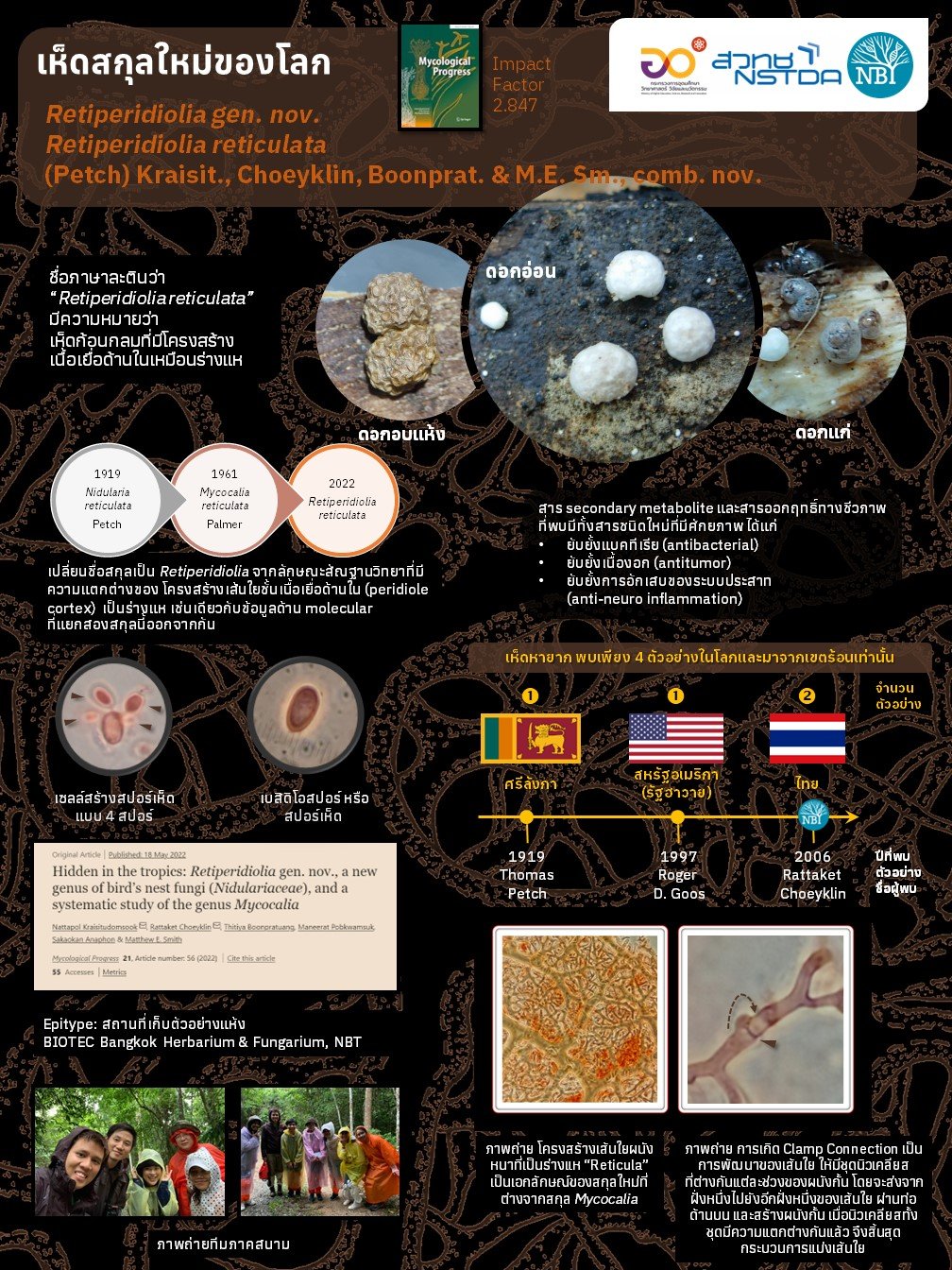
 Morphological features of Retiperidiolia reticulata (BBH-19922 and BBH-44760).
a Immature basidiocarps showing white peridium (scale bar = 10 mm).
b Mature basidiocarps with many light brown peridioles packed inside (scale bar = 5 mm).
 c Peridiole cortex showing dark outer layer and strong reticulation with deeply branched hyphae (scale bar = 20 μm).
d Hyphae from the basidiocarp showing regular septations and clamp connections, stained in Congo red (scale bar = 25 μm).
e Differential interference contrast (DIC) image of mature hyaline basidiospores showing elliptical shape (scale bar = 20 μm).
f DIC image of metamorphosed basidium showing the lecythiform shape (scale bar = 5 μm).
g Basidium with sterigmata and basidiospores, stained in Congo red (scale bar = 5 μm)

Taxonomy
Retiperidiolia Kraisit., Cheoyklin, Boonprat. & M.E. Sm., gen. nov.

Etymology: Retiperidiolia” refers to the key morphological characteristic of this genus, which is the reticulation of the peridiole cortex.


Retiperidiolia reticulata (Petch) Kraisit., Choeyklin, Boonprat. & M.E. Sm., comb. nov. 

Distribution and habitat: epigeous, solitary or in clusters on plant debris in tropical forests. Thus far only definitively documented from Asia [Sri Lanka; Thailand, Satun] and Oceania [United States, Hawaii].

Retiperidiolia aquaphila (Cruz et al.) Kraisit. & M.E. Sm., comb. nov.

Specimens examined: Brazil, Pará, Belém, Mosqueiro Island, on Marachú Beach, leg.


 Nattapol Kraisitudomsook, Rattaket Choeyklin, Thitiya Boonpratuang, Maneerat Pobkwamsuk, Sakaokan Anaphon and Matthew E. Smith. 2022. Hidden in the Tropics: Retiperidiolia gen. nov., A New Genus of Bird’s Nest Fungi (Nidulariaceae), and A  Systematic Study of the Genus Mycocalia.  Mycological Progress. 21: 56. DOI: 10.1007/s11557-022-01807-y

Retiperidiolia: เห็ดกลุ่มรังนก (Bird's Nest Fungi) สกุลใหม่ของโลก
นอกจากแปลกตาแล้วยังพบได้ยากมากที่สุด เนื่องจากขนาดเล็กมาก เพียง 5-10 มม. เท่านั้น ในปัจจุบันมีการค้นพบเฉพาะเขตร้อน โดยครั้งแรกพบที่ประเทศศรีลังกา ปี 1919 ครั้งที่สองพบที่ รัฐฮาวาย สหรัฐอเมริกา และค้นพบอีกครั้งในประเทศไทยในปี 2006 โดยนักวิจัยธนาคารทรัพยากรชีวภาพแห่งชาติ ดร.รัตเขตร์ เชยกลิ่น งานวิจัยนี้เป็นความร่วมมือระหว่าง ธนาคารทรัพยากรชีวภาพแห่งชาติ และ University of Florida โดยมี ดร.ณัฐพล ไกรสิทธิ์อุดมสุข เป็นผู้วิจัยต่อยอด

เอกลักษณ์หลักที่พบจนนำไปสู่การตั้งสกุลใหม่ เป็นผลจากงานวิจัยด้านสัณฐานวิทยา ควบคู่กับอณูชีวโมเลกุล พบว่า ตัวอย่างทั้งสี่มีเอกลักษณ์ที่ชัดเจน บริเวณชั้นเนื้อเยื่อผนังด้านใน หรือ peridiole cortex ที่เป็นโครงสร้างแบบร่างแห และมีผนังเซลล์หนา รวมถึง พบเซลล์สร้างสปอร์มีสองแบบคือ ทั้งที่เป็น 2 และ 4 สปอร์ 
 จึงเป็นที่มาของการตั้งชื่อสกุลใหม่ว่า Retiperidiolia แปลว่า ผนังเนื้อเยื่อด้านใน (peridiole) มีลักษณะเป็นร่างแห (reticula) 

ตัวอย่างจากประเทศไทย ค้นพบที่ อุทยานแห่งชาติทะเลบัน ถึงสองตัวอย่างซึ่งคิดเป็นร้อยละ50 ของที่พบทั่วโลก จะเห็นว่าการค้นพบนั้นเป็นระยะเวลายาวนานและการนำมาวิเคราะห์ใหม่กับตัวอย่างที่พบทั่วโลกทำให้เปิดเผยข้อมูลใหม่ๆ ขึ้นมาอีก ซึ่งผลจากการวิเคราะห์สายสัมพันธ์ทางวิวัฒนาการ (Phylogeny) สนับสนุนข้อมูลด้านสัณฐานวิทยาว่ามีวิวัฒนาการที่แยกออกมาจากสกุล Mycocaria และถ้าท่านพบสองสกุลนี้จุดที่แตกต่างกันอย่างเห็นได้ชัดเจนคือบริเวณโครงสร้างผนังชั้นใน peridiole นั่นเอง

เห็ดดังกล่าวได้รับการตีพิมพ์เผยแพร่ในวารสาร Mycological Progress volume 21, Article number: 56 (2022) ตัวอย่างแห้งของประเทศไทย ถูกเลือกเป็น Epitype เก็บรักษาที่ BIOTEC Bangkok Herbarium & Fungarium (BBH) ประเทศไทย ส่วนตัวอย่างต้นแบบ Holotype เก็บที่ Botanical Garden ประเทศศรีลังกา

ธนาคารทรัพยากรชีวภาพแห่งชาติ (NBT). (2565). Retiperidiolia reticulata (Petch), 17 มิถุนายน 2565. oer.learn.in.th/search_detail/result/273330

[Ichthyology • 2022] Rhonciscus pauco • A New Species of Deep-sea Grunt (Lutjaniformes: Haemulidae) from Puerto Rico


Rhonciscus pauco 
 Tavera​, Schärer-Umpierre & Acero P., 2022

 
Abstract
A fourth species of the genus Rhonciscus (Lutjaniformes: Haemulidae) is described from various specimens collected by small-scale fishers from the insular upper slope of western Puerto Rico. The new species was molecularly recovered as sister to the Eastern Pacific R. branickii, to which it bears many morphological similarities. It is distinguished from other Rhonciscus species by the number of scale rows between the dorsal fin and the lateral line (7), larger and thus fewer scales along the lateral line (48–50), large eyes (9.4–10.4 times in SL), longer caudal peduncle (15.2–20% of SL), larger sized penultimate (14.7–19.1% in SL) and last (7.4–9.5% in SL) dorsal fin spines which translates to a less deeply notched dorsal fin, and its opalescent silver with golden specks live coloration. This grunt, only now recognized by ichthyologists, but well known by local fishers that target snappers and groupers between 200 and 500 m in depth, occurs in far deeper waters than any western Atlantic grunt.

Rhonciscus pauco, sp. nov. OMNH 86864, holotype, 266 mm SL,
from Tres Cerros, Rincón, Puerto Rico.

Rhonciscus pauco, sp. nov. Underwater photograph taken at 218 m depth in western Puerto Rico.
 Image: NOAA NCCOS 2022.

Rhonciscus pauco sp. nov. 
Opalescent Grunt
(Spanish name: Ronco opalescente)

Diagnosis. A species of the genus Rhonciscus with XIII, 12 (total 25) dorsal-fin rays; anal-fin rays III, 7; pectoral-fin rays 15–16, 17(1); rather elongate body, maximum depth 32–37.4% SL; convex predorsal profile; eye large, its diameter 9.4% to 10.4% SL; snout subequal to eye, its length 7.6% to 11.5% SL; very coarse serrations on angle of preopercular margin; pectoral fin long (28–32.5% SL) extending beyond the tip of pelvic fin, barely reaching anus; head length 30–37.3% SL; longest dorsal-fin spine (fifth) (12.1–19.1% SL); relatively long and much thicker second anal-fin spine (16.4–21.8% SL), long caudal peduncle (15.2–20% of SL), and a large size of the penultimate (14.7–19.1% in SL) and last dorsal-fin (7.4–9.5% in SL) spines which translate to a less deeply notched dorsal fin, eye diameter 0.5 to 0.6 times length of anal fin spine; maxilla reaching anterior border of pupil; seven scale rows between dorsal fin and lateral line; 48 to 50 lateral–line scales.

Distribution. Rhonciscus pauco is found on the deep shelf and upper slope of the western coast of the northeastern Caribbean island of Puerto Rico. We are uncertain of the species’ exact range, but fishers report capturing them exclusively in fine sediment habitats distributed between the municipalities of Rincón and Mayagüez, off western Puerto Rico (Fig. 1). No additional information is currently available.

Habitat. Collection depths range from 200–360 m in fine unconsolidated sediment or mud habitats (Fig. 5).

Etymology. The name pauco comes from the fisher’s nickname Paúco, Edwin Font, who already knew of this fish locally called burro or ronco (grunt). Mr. Font was the first to report and provided specimens to MS, although it is recognized by various fishers as a component of the deep-water catch in western Puerto Rico.


Jose Tavera​, Michelle T. Schärer-Umpierre and Arturo Acero P. 2022. A New Species of Deep-sea Grunt, Rhonciscus pauco (Lutjaniformes: Haemulidae), from Puerto Rico. PeerJ. 10:e13502 . DOI: 10.7717/peerj.13502


[Phycology • 2020] Schizymenia jonssonii (Rhodophyta: Nemastomatales) • A Relict or An Introduction into the North Atlantic after the last Glacial Maximum?


 Schizymenia jonssonii K.Gunnarsson & J.Brodie

in Gunnarsson, Russell & Brodie, 2020. 

Abstract
North-Atlantic records of Schizymenia dubyi extend along the eastern shores of the North Atlantic from Morocco to southern Britain and Ireland, and the species is also recorded from Iceland. A study was undertaken to confirm the identity of the specimens from Iceland that were geographically separate from the main distribution of S. dubyi and in contrast to other species of the genus did not have gland cells. We analyzed rbcL and COI molecular sequence data from Icelandic specimens and compared the results with those for Schizymenia specimens available in GenBank. For both markers, Schizymenia was shown to be a monophyletic genus. The Icelandic specimens were clearly genetically distinct from S. dubyi and formed a well-supported clade with Schizymenia species from the Northern Pacific. Based on these results, we have described a new species, Schizymenia jonssonii, which can be distinguished by molecular phylogeny, its lack of gland cells and by being strictly intertidal. Crustose tetrasporophytes with identical COI and rbcL sequences were found at the same locations as foliose plants. Schizymenia apoda is reported for the first time in the UK, its identity confirmed by rbcL sequence data. In light of these findings, it is likely that by further molecular analysis of the genus Schizymenia in the north-eastern Atlantic and the Mediterranean, a higher diversity of Schizymenia spp. will be discovered in this region.

Keywords: COI, Iceland, molecular phylogeny, phenology, North Atlantic, rbcL, Schizymenia jonssonii

Holotype specimen of Schizymenia jonssonii sp. nov. (BM013844101), collected at Stekkjarvikur, SW Iceland on April 21, 2016.
 Scale = 2 cm.


Life history phases of Schizymenia jonssonii sp. nov. growing in the lower intertidal in Stekkjarvikur, SW-Iceland.
 (a) Blades – gametophyte phase, July 4, 2016. (b) Crusts – tetrasporophyte phase, March 1, 2018.
Scale = 2 cm. 

Schizymenia jonssonii sp. nov. 
(a) Transverse section (T.S.) of blade. (b) Cystocarps between the inner cortex and medulla in T.S. of the blade. Ostioles opening to the surface. (c) Zonate tetrasporangia just below the surface of a sporophyte crust. (d) Tetraspores being released. (e) T.S. of a tetrasporophyte with openings between layers. (f) Rhizoids on the underside of the tetrasporophyte.
 Scale (a–d and f) = 50 μm and (e) = 1 mm.
 
Schizymenia jonssonii K.Gunnarsson & J.Brodie sp. nov.  
 
Diagnosis: Gametophytic phase foliose with surface either flattened or with irregular ridges and depressions. Thallus lacking gland cells. Color dark red to brownish red. Tetrasporophytic phase crustose, with uneven surface having numerous small swellings. Can equally be distinguished by its nucleotide sequences of the mitochondrial COI and plastid rbcL genes.

Etymology: The species is named in honor of the Icelandic phycologist Sigurður Jónsson, for his contribution to the knowledge of Icelandic macroalgae and phycology in general.


Karl Gunnarsson, Stephen Russell and Juliet Brodie. 2020. Schizymenia jonssonii sp. nov. (Nemastomatales, Rhodophyta): A Relict or An Introduction into the North Atlantic after the last Glacial Maximum? Journal of Phycology. 56(2); 324-333. DOI: 10.1111/jpy.12957
 twitter.com/animalculum/status/1541047941296693248


Monday, June 27, 2022

[Herpetology • 2022] Calamaria arcana • A New Species of Calamaria (Serpentes: Colubridae: Calamariinae) from Guangdong Province, southern China


Calamaria arcana 
Yeung, Lau & Yang, 2022

Lingnan Reed Snake | 岭南两头蛇  ||  DOI: 10.3897/vz.72.e84516
Photographs by Michael W.N. Lau. 

Abstract
A new species of the genus Calamaria Boie, 1827, Calamaria arcana sp. nov., is described based on a single male specimen collected from Mt. Dadongshan, Guangdong, southern China. The new species can be distinguished from all known congeners by the significant genetic divergence in the mitochondrial cytochrome-b gene fragment (p-distance ≥ 13.9%), and morphologically by the combination of the following characters: (1) ten modified maxillary teeth; (2) four supralabials, second and third supralabials entering orbit; (3) preocular present; (4) mental not touching anterior chin shields; (5) six scales and shields surrounding the paraparietal; (6) 170 ventral scales; (7) 22 paired subcaudals; (8) tail not gradually tapering, abruptly tapering at the tip; (9) dorsal scales reduced to five rows above last subcaudal at tail; (10) dorsum of body and tail brownish; (11) dark collar on nuchal region absent; (12) two outermost dorsal scale rows light yellow with upper margins partly dark pigmented; (13) ventral scales immaculate, without dark outermost corners and pigmentation anteriorly; and (14) absence of distinct dark longitudinal line or scattered spots on the underside of tail. Calamaria arcana sp. nov., represents the fifth species of the genus recorded in China. Following the IUCN Red List Categories and Criteria, we propose the new species to be listed as Data Deficient.

Keywords: Calamaria arcana sp. nov., Calamariinae, integrative taxonomy, morphology, phylogeny, snake, Southeast Asia

  Head of the holotype of Calamaria arcana sp. nov. (KFBG 14611):
 A right side B left side C dorsal view D ventral view.

Holotype of Calamaria arcana sp. nov. (KFBG 14611) in life:
 A dorsolateral view B ventral view C lateral view of left side of head.
Photographs by Michael W.N. Lau. 


Calamaria arcana sp. nov.
 
Calamaria pavimentata – Kadoorie Farm and Botanic Garden (2003); 
Li et al. (2011).

Suggested common names: Lingnan Reed Snake (English), 
岭南两头蛇 (Chinese)

Diagnosis: Calamaria arcana sp. nov. is assigned to the genus Calamaria by its molecular phylogenetic position and the following morphological characters: dorsal scales in 13 rows throughout body, possessing elongate, cylindrical bodies, along with internasals and prefrontals fused, four supralabials and five infralabials (Inger and Marx 1965; Ziegler et al. 2008).

Calamaria arcana sp. nov. could be distinguished from all other species of Calamaria by the combination of the following characters: (1) ten modified maxillary teeth; (2) four supralabials, second and third supralabials entering orbit; (3) preocular present; (4) mental not touching anterior chin shields; (5) six scales and shields surrounding the paraparietal; (6) 170 ventral scales; (7) 22 paired subcaudals; (8) tail not gradually tapering, abruptly tapering at the tip; (9) dorsal scales reduced to five rows above last subcaudal at tail; (10) dorsum of body and tail brownish; (11) dark collar on nuchal region absent; (12) two outermost dorsal scale rows light yellow with upper margins partly dark pigmented; (13) ventral scales immaculate, without dark outermost corners and pigmentation anteriorly; and (14) absence of distinct dark longitudinal line or scattered spots on the underside of tail.


Etymology: The species epithet “arcana” is the nominative form the Latin adjective “arcanus” meaning “hidden”, “secret” and is given in feminine form to match the female genitive declension of the genus name Calamaria. It refers to the fact that this species is difficult to find with only a single specimen discovered during our long term survey in southern China. For common name we suggested as “Lingnan reed snake” in English and “Ling Nan Liang Tou She (岭南两头蛇)” in Chinese, referring to the Lingnan (岭南, means ‘South of the Nanling Mountains’) region where the new species is found. Lingnan is a geographic area referring to the lands in the south of the Nanling Mountains, covering the modern Chinese provinces of Guangdong, Guangxi and Hainan, as well as northern Vietnam.


Ho Yuen Yeung, Michael W. N. Lau and Jian-Huan Yang. 2022. A New Species of Calamaria (Squamata: Colubridae) from Guangdong Province, southern China. Vertebrate Zoology. 72: 433-444. DOI: 10.3897/vz.72.e84516


Sunday, June 26, 2022

[Botany • 2022] Mitracarpus semirianus (Rubiaceae: Spermacoceae) • An overlooked New Species from the “campo rupestre” of Bahia, northeastern Brazil


Mitracarpus semirianus J.A.M.Carmo & Scatigna, 

in Carmo, Scatigna, Shimizu & Simões, 2022.

Abstract
Background and aims – Mitracarpus semirianus, an overlooked new species from the “campo rupestre” of the Chapada Diamantina, in the state of Bahia, northeastern Brazil, is here described and illustrated. Specimens of the new species have been previously identified as M. frigidus or M. lhotzkyanus, with which its distinction is discussed. We also provide an updated description of the latter, with notes on its type specimens. In addition, we comment on the distribution, habitat, and preliminary conservation status of both M. semirianus and M. lhotzkyanus. We also provide an updated identification key to the species of Mitracarpus occurring in Brazil.
Material and methods – This study was based on fieldwork collections and observations and analysis of specimens deposited in herbaria. Preliminary conservation status assessments follow the IUCN Red List criteria.
Key results – Mitracarpus semirianus differs from M. frigidus and M. lhotzkyanus by its glabrous stems, winged at each angle, wing margin hirsute, glabrous leaf blades, and the oblongoid and slightly compressed seeds, with a smooth longitudinal groove dorsally and an inverted “Y”-shaped groove ventrally. The new species is assessed as Endangered according to the IUCN criteria. Furthermore, it is more likely that Riedel, not Lhotzky, collected the original material of the name M. lhotzkyanus. This species is glabrate, not completely glabrous, presenting a generally strigose indumentum on the stems, stipular sheaths, and leaf blades.

Keywords: Espinhaço Range, morphology, Rubioideae, Spermacoce clade, taxonomy


 Mitracarpus semirianus J.A.M.Carmo & Scatigna.  
 A. Branch portion with a terminal glomerule. B. Branch portion with terminal and axillary glomerules. C. Stem and stipule. D. Flower. E. Detail of the exteranal surface of the corolla. F. Dissected corolla, with stamens, style, and stigma. G. Capsule. H. Inferior portion of a dehiscent capsule. I. Seed, dorsal (left) and ventral (right) views. J. Detail of the testa of the seed.
 From J.A.M. Carmo & A.V. Scatigna 420. Drawn by Klei Sousa.

Mitracarpus semirianus J.A.M.Carmo & Scatigna. 
A. Inflorescence. B. Individuals. C. Habitat. D. General view of the site of collection.
 Photographs by João Carmo (A–C) and André Scatigna (D).

Mitracarpus semirianus J.A.M.Carmo & Scatigna, sp. nov. 

Diagnosis – Mitracarpus semirianus is similar to M. frigidus, but differs by the glabrous stems (vs puberulent to glabrous in M. frigidus), winged at each angle (vs ribbed at each angle), wing margin hirsute (vs rib margin hirsute, strigose, or glabrous); elliptic, ovate, or narrowly ovate leaf blades, glabrous (vs narrowly ovate, rarely linear leaf blades, hirsute, pubescent, strigose, or glabrous); terminal glomerules, rarely one axillary (vs terminal and axillary, rarely just terminal); oblongoid, slightly compressed seeds (vs oblongoid to globose seeds), with a smooth longitudinal groove dorsally and an inverted “Y”-shaped groove ventrally (vs cruciform depression dorsally and an “X”-shaped groove ventrally). Mitracarpus semirianus is also similar to M. lhotzkyanus, but differs by the stems winged at each angle (vs ribbed at each angle), wing margin hirsute (vs rib margin strigose to glabrous), leaf blades with strigulose and revolute margin (vs glabrous to strigose margin and slightly revolute near the base), and the oblongoid, slightly compressed seeds (vs oblongoid to ellipsoid seeds), with an inverted “Y”-shaped groove on the ventral surface (vs a rectangular groove on the ventral surface).

Etymology – The specific epithet honours Professor João Semir, who worked at the University of Campinas (Unicamp) and passed away on the 8th of November 2018. Professor Semir dedicated his life to the study of plants. His invaluable contribution to science and society comes in the form of many theses and dissertations produced by his students, as well as works on the Brazilian flora, especially regarding the Compositae and the “campo rupestre”. He played a crucial role in the formation of generations of taxonomists at Unicamp and many other institutions, including the authors of this paper.


 João Carmo, André Scatigna, Gustavo Shimizu and André Olmos Simões. 2022. Mitracarpus semirianus (Spermacoceae, Rubiaceae), An overlooked New Species from the “campo rupestre” of Bahia, northeastern Brazil, with notes on Mitracarpus lhotzkyanusPlant Ecology and Evolution 155(1): 165-177. DOI: 10.5091/plecevo.84548
 

[Botany • 2022] Curcuma stahlianthoides (Curcuma subg. Hitcheniopsis, Zingiberaceae) • A New Species from northeastern Thailand dispersed by Ants


Curcuma stahlianthoides Škorničk. & Soonthornk.,

in Soonthornkalump, Kongphapa, ... et Leong-Skornickova, 2022.
บุศรินทร์  ||  DOI: 10.3767/blumea.2022.67.01.09

Abstract 
Curcuma stahlianthoides, a new species of Curcuma subg. Hitcheniopsis (Zingiberaceae: Zingi­beroideae) from northeastern Thailand is described and illustrated here. The flower morphology of C. stahlianthoides resembles several other species formerly classified in the genus Stahlianthus, but the inflorescences are composed of up to 11 plain green fertile bracts, conforming to the typical inflorescence structure in the genus Curcuma. This combination of characters is similar to C. leonidii from Vietnam, to which it is compared for the diagnostic purposes. Previous molecular results indicate that Stahlianthus should be merged with Curcuma subg. Hitcheniopsis and C. stahlianthoides is the second species providing morphological justification to do so. A detailed description based on living flowering material, colour plates including the flower dissection, and notes on distribution, habitat and phenology are also provided. The status of Vulnerable is proposed for this species based on the IUCN guidelines and criteria. Observations on ant-aided seed dispersal of this species are reported and discussed within present knowledge of myrmecochory in gingers.

Keywords: Curcuma leonidii; Curcuma subg. Hitcheniopsis; Stahlianthus; ant-aided seed dispersal; myrmecochory; vulnerable

Curcuma stahlianthoides Škorničk. & Soonthornk.
 a–b. Inflorescences with flowers shown in different angles in situ; c. flower in bracts (right) and partially removed bract showing the cincinnus (left); d. flower and fruits in partly opened bract, and seeds; e. detail of stamen in front, back and side view; f. flower dissection (Sutthinut Soonthornkalump Sutt-228).
 — Photos: S. Soonthornkalump.

Curcuma stahlianthoides Škorničk. & Soonthornk.
a. Habitat; b. habit of the plants growing in areas shaded by bamboos; c. rhizome with root tubers; d. habit of plants growing in grassy areas in full sun; e. infructescences with dehisced capsules; f. infructescences with seeds being carried away by ants (Sutthinut Soonthornkalump Sutt-228).
— Photos: S. Soonthornkalump.

Curcuma stahlianthoides Škorničk. & Soonthornk., sp. nov. 
(subg. Hitcheniopsis

Similar to Curcuma leonidii Škorničk. & Luu in overall habit, having an inflorescence composed of multiple green bracts, and overall shape of the flowers, but differs in having branched rhizomes with short and stout branches, cream in cross section (vs rhizomes not branched, globose, c. 1 by 1 cm, light orange in cross section), leaf blades narrowly elliptic up to 25 by 2.9 cm, plication obscure (vs elliptic, up to 22 by 6.5 cm, prominently plicate) and labellum white with yellow median band (vs labellum with median band red at base, yellow distally). 

Etymology. The specific epithet ‘stahlianthoides’ refers to the flowers, which are so typical for the alliance of species previously treated in the separate genus Stahlianthus.


Sutthinut Soonthornkalump, Juthamas Kongphapa, Sukontip Vianmana, Natcha Kunlapa and Jana Leong-Skornickova. 2022. Curcuma stahlianthoides (Zingiberaceae), A New Species from northeastern Thailand dispersed by Ants. Blumea - Biodiversity, Evolution and Biogeography of Plants. 67(1); 71–75. DOI: 10.3767/blumea.2022.67.01.09
Researchgate.net/publication/361345600_2022_Curcuma_stahlianthoides_a_new_species_from_northeastern_Thailand_dispersed_by_ants

[Botany • 2022] Vanilla andina (Orchidaceae: Vanilloideae) • A New Species of the Membranaceous-leaved Group from Peru and Ecuador


Vanilla andina Damián & H. Garzón,

in Damián, Garzón, Baquero, ... et Cameron, 2022. 


Abstract
Vanilla andina, a new species belonging to subgen. Vanilla, is described and illustrated based on living material from Peru and Ecuador. The new species is similar to V. armoriquensis but can be easily distinguished by the prominent parallel callus, longitudinal narrow keels that extend above the middle of the lip and broadly obtuse to emarginate midlobe with crispate margins.

Keywords: Vanilla subgenus VanillaVanilla armoriquensisVanilla costaricensis, Andes, Monocots


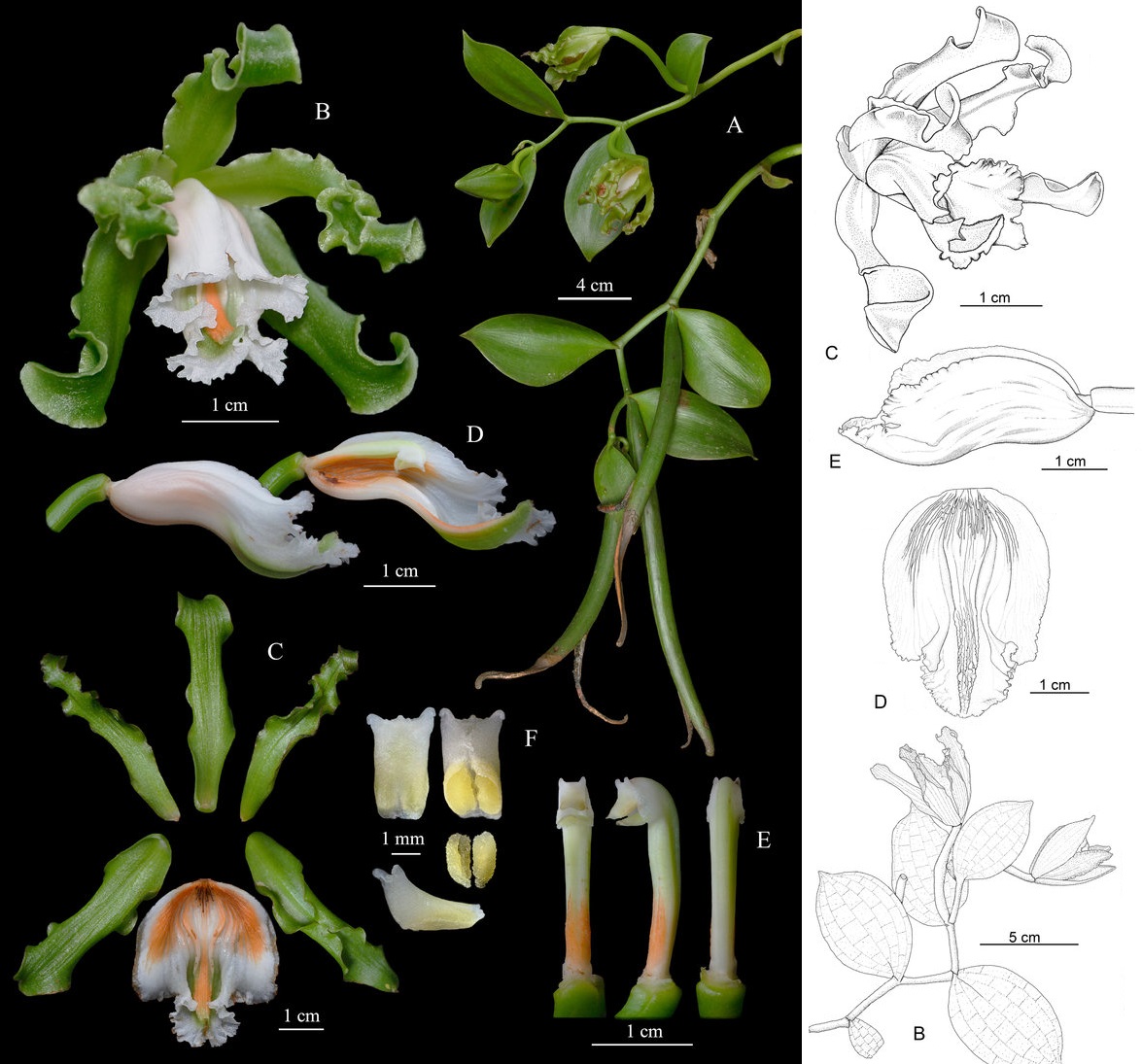
  Line drawing of Vanilla andina based on the Peruvian holotype.
 A. Habit, B. Inflorescence, C. Flower in lateral view, D. Dissected perianth. E. Lip and column, lateral view. F. Column, ventral (right) and lateral view (left). G. Anther cap in dorsal (left) and ventral (right) view.
Drawing by N. Mitidieri.

 Lankester Composite Dissection Plate (LCDP) of Vanilla andina.
 A. Habit. B. Flower. C. Dissected perianth. D. Lip and column (left) and in longitudinal section (right). E. Column, ventral (left), lateral (center) and dorsal (right) view. F. Anther cap in dorsal. (above left), ventral (above right), lateral (below, left) view, with pollinarium (below right).
Photographs by Henry X. Garzón based on M. Jiménez & H. Garzón 1274.


Vanilla andina Damián & H. Garzón, sp. nov. 

Etymology:—The specific epithet of the new taxon is a reference to the Andean mountain range, where the species is found.


Alexander Damián, Henry X. Garzón, Luis Baquero, Marco M. Jiménez, Leisberth Vélez-Abarca, Gabriel A. Iturralde, Nicole Mitidieri, Sergio Olortegui and Kenneth M. Cameron. 2022. Vanilla andina (Vanilloideae, Orchidaceae), A New Species of the Membranaceous-leaved Group from Peru and Ecuador. Phytotaxa. 552(1); 63-72. DOI: 10.11646/phytotaxa.552.1.5 

Resumen: Vanilla andina, una nueva especie del subgen. Vanilla, se describe e ilustra con base en material vivo de Perú y Ecuador. Lanueva especie es similar a V. armoriquensis pero puede distinguirse fácilmente por el prominente callo paralelo, las quillas longitudinales estrechas que se extienden por encima de la mitad del labelo y por el lóbulo medio del labelo ampliamenteobtuso a emarginado con márgenes crispados.

Alexander Damian and Nicole Mitidieri. 2020. Living in the Clouds: A New High-elevation Species of Vanilla (Orchidaceae, Vanilloideae) from Perú. Phytotaxa. 451(2); 154–160. DOI: 10.11646/phytotaxa.451.2.5