Tuesday, June 23, 2015

[Ichthyology • 2012] Metzia bounthobi • A New Species of Metzia (Cypriniformes: Cyprinidae) from Northern Laos


 Pa tep thob | Metzia bounthobi
Shibukawa, Phousavanh, Phongsa & Iwata, 2012
FIGURE 1. Freshly collected specimen of Meztia bounthobi (holotype, 57.0 mm SL, NIFI 4680), Mekong Basin in Sopvan, Nyoi District, Luang Prabang Province, Lao PDR (20°36.5’N, 102°39.1’E), 23 June 2010. Same specimen above and below but on different backgrounds to provide full view of characters of the species.

Abstract
A new cyprinid fish, Metzia bounthobi, is described on the basis of 18 specimens (including 10 specimens in type series) from the Mekong River basin in Phongsaly and Luang Prabang Provinces, northern Laos. The species is distinguished from congeners by having the following diagnostic traits: 18–20 branched anal-fin rays (vs. 10–18 in the others); 49–55 lateral-line scale rows (vs. 35–48); 33–36 predorsal scale rows (vs. 15–20); 20–22 circumpeduncular scale rows (vs. 14–18); 8–10 gill rakers on outer surface of first gill arch (vs. 12–18). The new species also resembles species of Hemiculterella, Ischikauia and at least some species of Anabarilius, in sharing a sharp keel developed only between the base of the pelvic fin and anus, soft last unbranched dorsal-fin ray, and air bladder composed of two chambers; however, M. bounthobi differs in having a considerably rounded snout (vs. pointed in Hemiculterella, Ischikauia and Anabarilius), 18–20 branched anal-fin rays (vs. 8–17 in Hemiculterella, Ischiakuia and Anabarilius), 49–55 lateral-line scale rows (vs. more than 58 in Ischikauia and Anabarilius, except for A. transmontana with 54–57), air bladder with rounded posterior end (vs. posterior end with a small lobe at least in Hemiculterella) and 39–40 vertebrae (vs. 40–43, 42–43 and 43–48 in Hemiculterella, Ischikauia and Anabarilius, respectively).

Key words: Cypriniformes, Cyprinidae, Metzia bounthobi, new species, Laos

FIGURE 1. Freshly collected specimen of Meztia bounthobi (holotype, 57.0 mm SL, NIFI 4680), Mekong Basin in Sopvan, Nyoi District, Luang Prabang Province, Lao PDR (20°36.5’N, 102°39.1’E), 23 June 2010. Same specimen above and below but on different backgrounds to provide full view of characters of the species.
FIGURE 4. Paralaubuca barroni, NUOL-P 4038, 75.4 mm SL, Nyoi District, Luang Prabang Province, Lao PDR. Photographed by T. Phommavong.

Distribution and habitat. Metzia bounthobi is hitherto known only from the Ou River basin (a tributary of the Mekong) in Phongsaly and Luang Prabang provinces of northern Laos. This species was found in upland clear streams with moderate or slow current.

 Etymology. The specific name, bounthobi, is in honour of Bounthob Praxaysombath (NUOL), who was the leading researcher performing the field surveys throughout the NUOL-NEF project on 2007–2010. Eight of all 10 type series of the new species were brought from the project surveys.


Shibukawa, Koichi, Phouvin Phousavanh, Koneuma Phongsa & Akihisa Iwata. 2012. A New Species of Metzia (Cypriniformes: Cyprinidae) from Northern Laos.
  Zootaxa. (3586): 264–271.

Monday, June 22, 2015

[Crustacea • 2015] Uca (Xeruca), A New Subgenus for the Taiwanese Fiddler Crab Uca formosensis Rathbun, 1921 (Decapoda: Ocypodidae), based on morphological and molecular evidence


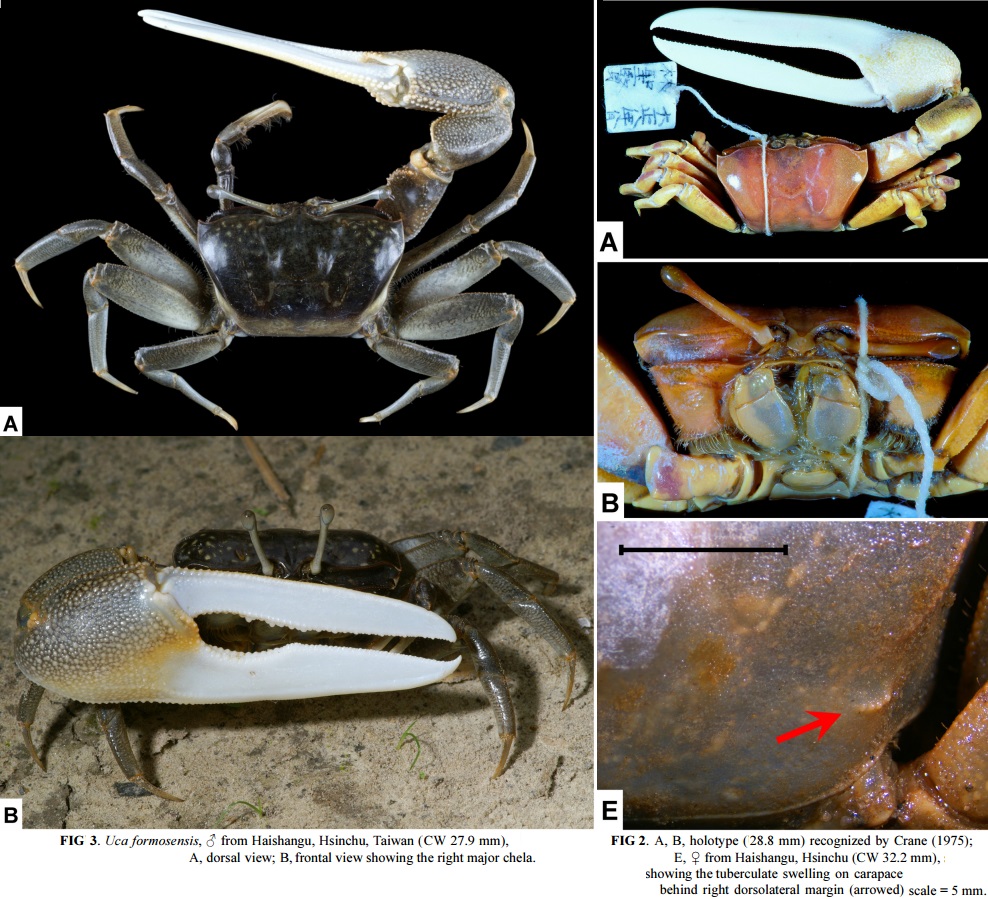
FIGURE 3. Uca formosensis, ♂ from Haishangu, Hsinchu, Taiwan (NCHUZOOL 13673, CW 27.9 mm),
A, dorsal view; B, frontal view showing the right major chela.
FIGURE 2. Uca formosensis. A, B, holotype (USNM 54472, CW 28.8 mm) recognized by Crane (1975);
E, ♀ from Haishangu, Hsinchu (NCHUZOOL 13849, CW 32.2 mm), showing the tuberculate swelling on carapace behind right dorsolateral margin (arrowed) (E) scale = 5 mm.
DOI: 10.11646/zootaxa.3974.2.1

Abstract
The fiddler crab Uca formosensis Rathbun, 1921 (Crustacea: Decapoda: Ocypodidae), restricted to the western part of Taiwan and the offshore Penghu (Pescadores) Islands in the Taiwan Strait, has been placed under the subgenus Uca (Gelasimus) Latreille, 1817 (= Uca (Thalassuca) Crane, 1975) based on only less than a dozen specimens, but later suggested under the subgenus Tubuca Bott, 1973 because the similarity of external morphology. A suite of characters of carapace, major cheliped, gastric mill, male first gonopod, and chela handedness, as well as the phylogenic relationships (mitochondrial 16S rDNA and cytochrome oxidase subunit I, and nuclear 28S rDNA), nevertheless support this species belongs to its own subgenus. A new subgenus Uca (Xeruca) subgen. nov. is herein established for U. formosensis.

Key words: Xeruca, new subgenus, Uca formosensis, fiddler crab, Ocypodidae, taxonomy, Taiwan, 16S rDNA, cytochrome oxidase subunit I, 28S rDNA


Systematic account

Family Ocypodidae Rafinesque, 1815
Subfamily Ocypodinae Rafinesque, 1815

Genus Uca Leach, 1814

Uca (Xeruca) subgen. nov.
Uca (Thalassuca) Crane, 1975: 75 (part); Rosenberg 2001: 840, 848, 851 (part).
Tubuca Bott, 1973: 322 (part).
Uca (Tubuca)—Beinlich & von Hagen 2006: 10, 14, 15, 25 (part); Ng et al. 2008: 241 (part).

Type species. Uca formosensis Rathbun, 1921, by present designation.
Etymology. From the Greek xeros for “dry,” for the high intertidal habitat of the type species, in arbitrary combination with the genus name Uca. Gender feminine.


Shih, Hsi-te. 2015. Uca (Xeruca), A New Subgenus for the Taiwanese Fiddler Crab Uca formosensis Rathbun, 1921 (Crustacea: Decapoda: Ocypodidae), based on morphological and molecular evidence. Zootaxa 3974(2): 151–169. DOI: 10.11646/zootaxa.3974.2.1

Friday, June 19, 2015

[Paleontology • 2015] The Phylogenetic Affinities of the Bizarre Late Cretaceous Romanian Theropod Balaur bondoc (Dinosauria, Maniraptora): Dromaeosaurid or Flightless Bird?


Balaur bondoc
 illustration: Emily Willoughby  via theropoda.blogspot.com DOI: 10.7717/PeerJ.1032

Abstract

The exceptionally well-preserved Romanian dinosaur Balaur bondoc is the most complete theropod known to date from the Upper Cretaceous of Europe. Previous studies of this remarkable taxon have included its phylogenetic interpretation as an aberrant dromaeosaurid with velociraptorine affinities. However, Balaur displays a combination of both apparently plesiomorphic and derived bird-like characters. Here, we analyse those features in a phylogenetic revision and show how they challenge its referral to Dromaeosauridae. Our reanalysis of two distinct phylogenetic datasets focusing on basal paravian taxa supports the reinterpretation of Balaur as an avialan more crownward than Archaeopteryx but outside of Pygostylia, and as a flightless taxon within a paraphyletic assemblage of long-tailed birds. Our placement of Balaur within Avialae is not biased by character weighting. The placement among dromaeosaurids resulted in a suboptimal alternative that cannot be rejected based on the data to hand. Interpreted as a dromaeosaurid, Balaur has been assumed to be hypercarnivorous and predatory, exhibiting a peculiar morphology influenced by island endemism. However, a dromaeosaurid-like ecology is contradicted by several details of Balaur’s morphology, including the loss of a third functional manual digit, the non-ginglymoid distal end of metatarsal II, and a non-falciform ungual on the second pedal digit that lacks a prominent flexor tubercle. Conversely, an omnivorous ecology is better supported by Balaur’s morphology and is consistent with its phylogenetic placement within Avialae. Our reinterpretation of Balaur implies that a superficially dromaeosaurid-like taxon represents the enlarged, terrestrialised descendant of smaller and probably volant ancestors.


Speculative skeletal reconstruction for Balaur bondoc, showing known elements in white and unknown elements in grey. Note that the integument would presumably have substantially altered the outline of the animal in life

Reconstruction of Balaur bondoc, by Emily Willoughby
based on the new interpretation of Cau et al. (2015)

DOI: 10.7717/PeerJ.1032


Andrea Cau​, Tom Brougham​ and Darren Naish​. 2015. The Phylogenetic Affinities of the Bizarre Late Cretaceous Romanian Theropod Balaur bondoc (Dinosauria, Maniraptora): Dromaeosaurid or Flightless Bird? PeerJ. 3: E1032. DOI: dx.doi.org/10.7717/peerj.1032
http://theropoda.blogspot.com/2015/06/dodoraptor-returns.html
https://qilong.wordpress.com/2015/06/18/the-stocky-dragon/
twitter.com/TomHoltzPaleo/status/611508386383982594

Zoltán Csiki, Mátyás Vremir, Stephen L. Brusatte and Mark A. Norell. 2010. An Aberrant Island-Dwelling Theropod Dinosaur from the Late Cretaceous of Romania. Proceedings of the National Academy of Sciences of the United States of America. 107: 15357-15361. DOI: 10.1073/pnas.1006970107

[Entomology • 2015] Holocacista capensis • A New Leafminer on Grapevine and Rhoicissus (Vitaceae) in South Africa within an expanded Generic Concept of Holocacista (Insecta, Lepidoptera, Heliozelidae)


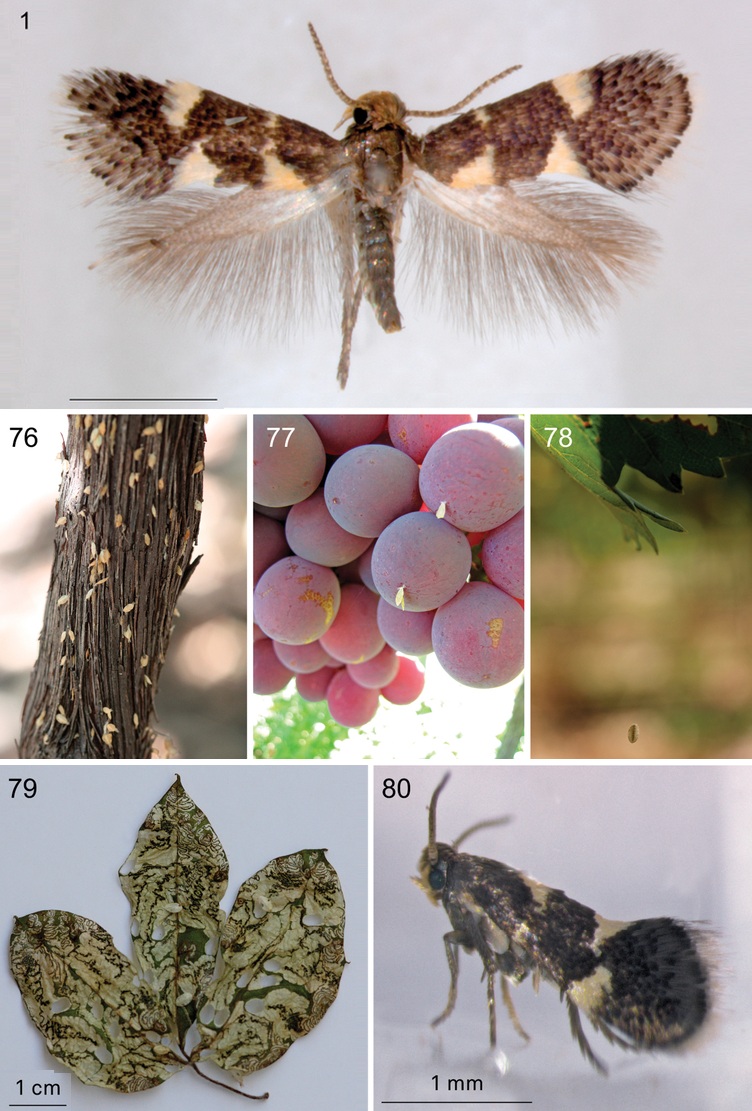
Figures 1 Holocacista capensis: Male holotype, RMNH.INS.24622 Figures 76–80. Holocacista capensis, life history. 76 Trunk of Vitis with many cocoons with exuviae, De Anker, Paarl, 14 February 2013 77 grapes with fresh cocoons attached, Paarl, 25 January 2013 78 larva in cocoon, going down on silken thread, Paarl, 16 January 2013 79 Leafmines in Rhoicissus digitata, reared in laboratory from adults that originated on Vitis from Wellington, 2014 80 Live adult males, reared from Vitis vinifera, from Paarl 80 EvN2013004, 28 January

Abstract
A grapevine leafminer found recently in table grape orchards and vineyards in the Paarl region (Western Cape, South Africa) is described as Holocacista capensis sp. n. It has also been found on native Rhoicissus digitata and bred on that species in the laboratory. It is closely related to Holocacista salutans (Meyrick, 1921), comb. n. (from Antispila), described from Durban in KwaZulu-Natal, but widespread in southern Africa and a native leafminer of various Vitaceae: Rhoicissus tomentosa, R. digitata, R. tridentata and Cissus cornifolia. Holocacista capensis has been found on Vitis vinifera both in Gauteng and Western Cape, the earliest record being from 1950 in Pretoria. The initial host shift from native Vitaceae to Vitis must have occurred much earlier. The species is sometimes present in high densities, but hitherto no sizeable damage to the crops has been noted. 

The genus Holocacista Walsingham & Durrant, 1909, previously known from the single European grapevine leafminer H. rivillei (Stainton, 1855), is expanded and redescribed and for the first time reported from Africa, East and South-East Asia and Australia. It comprises seven named species and at least 15 unnamed species. The following species are also recombined with Holocacista: transferred from Antispilina: South-African H. varii (Mey, 2011), comb. n., feeding on Pelargonium, transferred from Antispila: the Indian species H. micrarcha (Meyrick, 1926), comb. n. and H. pariodelta (Meyrick, 1929), comb. n., both feeding on Lannea coromandelica, and H. selastis (Meyrick, 1926), comb. n. on Psychotria dalzelii. We also remove the following from Antispila: Heliozela anna (Fletcher, 1920), comb. n. and H. argyrozona (Meyrick, 1918), comb. n., whereas the following Indian Vitaceae feeding species are confirmed to belong in Antispila s. str.: Antispila argostoma Meyrick, 1916 and A. aristarcha Meyrick, 1916. Holocacista salutans and H. varii are redescribed and diagnosed against H. capensis and other South African Heliozelidae. DNA barcodes are provided for 13 species of Holocacista.

Keywords: Host shift, leafminers, Vitaceae, viticulture, table grapes, Rhoicissus, Cissus, DNA barcode, genitalia, Holocacista, Antispilina, Antispila, Afrotropics, South Africa, Zimbabwe, India


Figures 1–4. Holocacista species, adult habitus.
13 Holocacista capensis: 1 Male holotype, RMNH.INS.24622 2 Female, Western Cape, Paarl, RMNH.INS.24624 3 Male, Western Cape, Wilderness, reared from Rhoicissus digitata, Genitalia slide EvN4381
4 H. salutans, male, Kwazulu-Natal, Umhlanga Rocks, reared from R. revoilii, Genitalia slide EvN 4383. Scales 1 mm.

Figures 76–82. Holocacista capensis, life history.
76 Trunk of Vitis with many cocoons with exuviae, De Anker, Paarl, 14 February 2013 77 grapes with fresh cocoons attached, Paarl, 25 January 2013 78 larva in cocoon, going down on silken thread, Paarl, 16 January 2013 79 Leafmines in Rhoicissus digitata, reared in laboratory from adults that originated on Vitis from Wellington, 2014 8082 Live adult males, reared from Vitis vinifera, from Paarl 80 EvN2013004, 28 January 81 Windmeul, reared in Leiden, 23 February 2012 82 EvN2013005, 4 February.

Figures 70–75. Holocacista capensis, leafmines on Vitis vinifera, Paarl (7073) and Rhoicissus digitata, Wilderness (74, 75) 70 EvN2013029, 25 January 2013 71 16 January 2013 72 EvN2013029, 25 January 2013 73 2013003, 15 January 2013 74, 75 Vári Ac. No. 1093, 15.iii.1954 (dried leafmines).


Erik van Nieukerken and Henk Geertsema. 2015. A New Leafminer on Grapevine and Rhoicissus (Vitaceae) in South Africa within an expanded Generic Concept of Holocacista (Insecta, Lepidoptera, Heliozelidae). ZooKeys. 507: 41-97. DOI: 10.3897/zookeys.507.9536

New species of leafminer on grapevine in Western Cape came from wild grapes
http://bit.ly/1Qll6FB via @Pensoft @EurekAlertAAAS

Thursday, June 18, 2015

[Herpetology • 2015] Herpetofauna of Gunung Tebu • First Report on the Amphibians and Reptiles of A Remote Mountain, Gunung Tebu in northeastern Peninsular Malaysia


ABSTRACT 
This is the first herpetological survey and checklist of the Mount Tebu (Gunung Tebu) region including the upland areas of Gunung Tebu, the surrounding lowlands of Hutan Lipur Lata Belatan, and the nearby lowland region of Hutan Lipur Lata Tembaka in Terrengganu, northeastern Peninsular Malaysia. Expanding upon the only previous herpetological survey in this region from Gunung Lawit (Dring 1979), we record a total of 106 species including 43 species previously unknown from this portion of Peninsular Malaysia.

Keywords: Southeast Asia; Banjaran Timur; conservation


Alexandra X. Sumarli, L. Lee Grismer, Shahrul Anuar, Mohd Abdul Muin, Evan S.H. Quah. 2015. First Report on the Amphibians and Reptiles of A Remote Mountain, Gunung Tebu in northeastern Peninsular Malaysia. Check List. 11(4): 1679. DOI: 10.15560/11.4.1679

[PaleoMammalogy • 2015] Mystacina miocenalis • Miocene Fossils Reveal Ancient Roots for New Zealand’s Endemic Mystacina (Chiroptera) and Its Rainforest Habitat


[upper] Lesser short-tailed Bat Mystacina tuberculata foraging on South Island, New Zealand
[lower right] Greater short-tailed Bat Mystacina robusta
[lower left] Fig 2. Upper teeth of extinct and extant mystacinid species.
AB, Mystacina miocenalis sp. nov., St Bathans, Central Otago, New Zealand; Early Miocene. A, holotype, CM2013.18.381, right M1. B, paratype, MNZ S.52355, left M2.
CD, Mystacina tuberculata, Predator Cave, Takaka Hill, Nelson, NZ; Holocene. NMNZ S.32400. C, left M1. D, left M2.
E, Mystacina robusta, Exhale Air Cave, Ellis Basin, Mt Arthur, Nelson, NZ; Holocene. NMNZ S.35205, left P4-M3.
To scale; bar = 2 mm. doi: 10.1371/journal.pone.0128871

Mystacina tuberculata foraging on South Island, New Zealand.
photo: Rod Morris || RodMorris.co.nz

Abstract

The New Zealand endemic bat family Mystacinidae comprises just two Recent species referred to a single genus, Mystacina. The family was once more diverse and widespread, with an additional six extinct taxa recorded from Australia and New Zealand. Here, a new mystacinid is described from the early Miocene (19–16 Ma) St Bathans Fauna of Central Otago, South Island, New Zealand. It is the first pre-Pleistocene record of the modern genus and it extends the evolutionary history of Mystacina back at least 16 million years. Extant Mystacina species occupy old-growth rainforest and are semi-terrestrial with an exceptionally broad omnivorous diet. The majority of the plants inhabited, pollinated, dispersed or eaten by modern Mystacina were well-established in southern New Zealand in the early Miocene, based on the fossil record from sites at or near where the bat fossils are found. Similarly, many of the arthropod prey of living Mystacina are recorded as fossils in the same area. Although none of the Miocene plant and arthropod species is extant, most are closely related to modern taxa, demonstrating potentially long-standing ecological associations with Mystacina.

Greater short-tailed Bat Mystacina robusta
Illustration: Peter Schouten  terranature.org


Suzanne J. Hand, Daphne E. Lee, Trevor H. Worthy, Michael Archer, Jennifer P. Worthy, Alan J. D. Tennyson, Steven W. Salisbury, R. Paul Scofield, Dallas C. Mildenhall, Elizabeth M. Kennedy, Jon K. Lindqvist. 2015. Miocene Fossils Reveal Ancient Roots for New Zealand’s Endemic Mystacina (Chiroptera) and Its Rainforest Habitat.

Mystacina tuberculata foraging on South Island, New Zealand.
photo: Rod Morris || RodMorris.co.nz

Fossil of huge 'walking' bat discovered in New Zealand
Fossilized remains of a new bat species, which lived 16 million years ago, walked on four limbs and was three times larger than today's average bat, have been discovered in New Zealand.

[Paleontology • 2015] Wear Biomechanics in the Slicing Dentition of the Giant horned Dinosaur Triceratops


Fig. 1 Triceratops horridus skeleton and dentitions.
(A) Triceratops skeleton. (B) Transverse view of a dentary (lower jaw) tooth family in this dinosaur whose functional teeth wore to vertical slicing faces. The stippling depicted on the bifid roots is the cementum-like tissue described by Hatcher and colleagues (46).  (C) Naturally worn slicing teeth in the lower jaw of MOR 129734 showing the wear-induced bowing out of the central regions of the occlusal faces of the teeth (arrow) to form fuller-like implements.

Herbivorous reptiles rarely evolve occluding dentitions that allow for the mastication (chewing) of plant matter. Conversely, most herbivorous mammals have occluding teeth with complex tissue architectures that self-wear to complex morphologies for orally processing plants. Dinosaurs stand out among reptiles in that several lineages acquired the capacity to masticate. In particular, the horned ceratopsian dinosaurs, among the most successful Late Cretaceous dinosaurian lineages, evolved slicing dentitions for the exploitation of tough, bulky plant matter. We show how Triceratops, a 9-m-long ceratopsian, and its relatives evolved teeth that wore during feeding to create fullers (recessed central regions on cutting blades) on the chewing surfaces. This unique morphology served to reduce friction during feeding. It was achieved through the evolution of a complex suite of osseous dental tissues rivaling the complexity of mammalian dentitions. Tribological (wear) properties of the tissues are preserved in ~66-million-year-old teeth, allowing the creation of a sophisticated three-dimensional biomechanical wear model that reveals how the complexes synergistically wore to create these implements. These findings, along with similar discoveries in hadrosaurids (duck-billed dinosaurs), suggest that tissue-mediated changes in dental morphology may have played a major role in the remarkable ecological diversification of these clades and perhaps other dinosaurian clades capable of mastication.


Gregory M. Erickson, Mark A. Sidebottom, David I. Kay, Kevin T. Turner, Nathan Ip, Mark A. Norell, W. Gregory Sawyer and Brandon A. Krick. 2015. Wear Biomechanics in the Slicing Dentition of the Giant horned Dinosaur Triceratops. Science Advances. 1(5), e1500055.
DOI: 10.1126/SciAdv.1500055


Triceratops May Have Risen To Dominance Because Of Unique Self-Sharpening Teeth

Gregory M. Erickson, Brandon A. Krick, Matthew Hamilton, Gerald R. Bourne, Mark A. Norell, Erica Lilleodden and W. Gregory Sawyer. 2015. Complex Dental Structure and Wear Biomechanics in Hadrosaurid Dinosaurs. 
Science. 
338(6103 ); 98-101. DOI: 10.1126/science.1224495

Wednesday, June 17, 2015

[Herpetology • 2015] Eleutherodactylus ligiae & E. neiba • Two New Species of Frogs of the Genus Eleutherodactylus (Anura: Eleutherodactylidae) from Hispaniola


Fig . 1. Different species of frogs in the genus Eleutherodactylus from Hispaniola.
Variation Eleutherodactylus ligiae sp. nov. : A, paratype MNHNSD 1358 (PRRD 39); Bparatype MNHNSD 1360 (PRRD 44) ; Cparatype MNHNSD 1363 (PRRD 42) .
D  E. alcoae , adult female (PRRD 366) Cueva de los Patos , Barahona . E, E. leoncei (PRRD 258) , adult female Zapotén , Sierra de Bahoruco, Independencia . F, E. armstrongi, adult male (PRRD 529) of Cachote , Sierra de Bahoruco , Barahona . G, E. pictissimus, adult male (PRRD 45) Crossing Sewage , Sierra de Bahoruco , Pedernales . H, E. probolaeus, adult female (PRRD 293) River mouth Yuma , La Romana. I, E. weinlandi, adult female (PRRD 496) of the banks of the River Crossing , Loma de La Canela , Duarte.
Ventral view of : J , E. ligiae (MNHNSD 1363) ; K , E. alcoae ( PRRD 40 ), adult male from road to Cabo Rojo Aceitillar , Pedernales ; L , E. leoncei (PRRD 258) .
Photos: Luis M. Diaz. || SOLENODON. 12

Abstract
Two new species of frogs of the genus Eleutherodactylus are described from two localities in Dominican Republic. Eleutherodactylus ligiae sp. nov. inhabits the pine forests of the western part of Sierra de Bahoruco, and seems to be related to the E. armstrongi species group, particularly to E. alcoae Schwartz and E. leoncei Shreve and Williams. It is a vividly colored frog with black blotches on a yellow background, enlarged digital discs and smooth belly. Eleutherodactylus neiba sp. nov. is a very small, terrestrial species that occurs in the humid rain forests of Sierra de Neiba. It has a squatty habitus, small digital discs, areolate venter, vomerine teeth absent or vestigial and a dark overall coloration. The possible relationships of these species are discussed, but genetic data are necessary for a proper classification.

Key words: Amphibia, Anura, Eleutherodactylus, West Indies, Dominican Republic, Sierra de Bahoruco, Sierra de Neiba, new species, advertisement calls. 


Fig . 4. Two terrestrial frogs of the genus Eleutherodactylus from Hispaniola.
 AEleutherodactylus neiba sp. nov. paratype MNHNSD 1368 (PRRD 477), adult female from Sierra de Neiba, dorsal view (upper) and ventral view (lower). ; B: E. jugans, adult female PRRD 241 from Zapotén, Sierra de Bahoruco, dorsal view (top) and ventral view (lower).
Photos: Luis M. Diaz. || SOLENODON. 12

Sixto J. Incháustegui, Luis M. Díaz and Cristian Marte. 2015. Dos especies nuevas de ranas del género Eleutherodactylus (Amphibia: Anura: Eleutherodactylidae) de La Hispaniola [Two New Species of Frogs of the Genus Eleutherodactylus (Amphibia: Anura: Eleutherodactylidae) from Hispaniola]. SOLENODON. 12; 136-149.

[Herpetology • 2015] Eleutherodactylus beguei • Another New Cryptic Frog related to Eleutherodactylus varleyi Dunn (Anura: Eleutherodactylidae), from eastern Cuba


Fig.1. three related species of Cuban frogs of the genus Eleutherodactylus.
A-BEleutherodactylus beguei sp. nov. ; (A) adult male (paratype MNHNCu 1265) with a marbled pattern; (B) adult male (paratype MNHNCu 1262) with striped pattern.
(C) E. feichtingeri (adult male MNHNCu 1280), from La Munición, Yateras, Guantánamo Province.
(D) E. varleyi (MNHNCu 1230), from the vicinity of Paso de Lesca, Sierra de Cubitas, Camagüey Province.
 Photos: Luis M. Díaz. || SOLENODON. 12

Abstract
A new cryptic frog, Eleutherodactylus beguei sp. nov., is described from the pine forests of La Munición, Yateras, Guantánamo Province, Cuba. It is sympatric with E. feichtingeri, another recently described grass frog closely related to E. varleyi, but differs in morphology, vocalization and DNA sequences of the mitochondrial Cyt-b gene. One female of the new species was found vocalizing in response to a calling male, a behavior that is still poorly documented in anurans. Same male and female were found in axillary amplexus and surrounded by 9 eggs (3.5–3.7 mm in diameter) 5 hours after being isolated in a small container.

Key words: Amphibia, Anura, Eleutherodactylidae, Eleutherodactylus, new species, Terrarana, Euhyas, West Indies, Guantánamo, female reciprocation calls, eggs.


Fig.7. Distribution map of Eleutherodactylus varleyi (triangles),
E. feichtingeri (circles), and E. beguei sp. nov. (star). 
Fig.1. three related species of Cuban frogs of the genus Eleutherodactylus. A-B: Eleutherodactylus beguei sp. nov. ; (A) adult male (paratype MNHNCu 1265) with a marbled pattern; (B) adult male (paratype MNHNCu 1262) with striped pattern. (C) E. feichtingeri (adult male MNHNCu 1280), from La Munición, Yateras, Guantánamo Province. (D) E. varleyi (MNHNCu 1230), from the vicinity of Paso de Lesca, Sierra de Cubitas, Camagüey Province.
 Photos: Luis M. Díaz. || SOLENODON. 12


Distribution. Eleutherodactylus beguei sp. nov. is only known from the vicinity of La Munición, in the southwestern limit of the Humboldt National Park, Municipality of Yateras, Guantánamo Province, Cuba, but it may have a wider distribution on the Meseta del Guaso and elsewhere.

Etymology. We take pleasure in naming this new species after Gerardo Begué Quiala, one of the most outstanding specialists on the biodiversity of the Humboldt National Park and longtime enthusiastic collaborator.


 Luis M. Díaz and S. Blair Hedges. 2015. Another New Cryptic Frog related to Eleutherodactylus varleyi Dunn (Amphibia: Anura: Eleutherodactylidae), from eastern Cuba. SOLENODON. 12: 124-135. http://www.caribbeanahigroup.org/pdf/solenodon12/10new_eleutherodactylus.pdf

Tuesday, June 16, 2015

[Herpetology • 2014] Gehyra serraticauda • A New Gehyra (Gekkonidae: Reptilia) from New Guinea with unique caudal scalation


Gehyra serraticauda 
 Skipwith & Oliver, 2014

ABSTRACT 
We describe a new species of gekkonid gecko in the genus Gehyra from West Papua, Indonesia. Gehyra serraticauda sp. nov. keys to Gehyra, but is distinct from all known species; most notably, it is characterised by a continuous fringe of prominent

Keywords: Gekkonidae, Reptilia


Phillip L Skipwith and Paul Oliver. 2014. A New Gehyra (Gekkonidae: Reptilia) from New Guinea with unique caudal scalation. Zootaxa. 3827(1):57-66. DOI: dx.doi.org/10.11646/zootaxa.3827.1.5

Saturday, June 13, 2015

[Mammalogy • 2015] White-beaked Dolphins Lagenorhynchus albirostris trapped in the Ice and eaten by Polar Bears Ursus maritimus


A polar bear Ursus maritimus eats a white-beaked dolphin Lagenorhynchus albirostris in the Raudfjorden fjord, on the northwestern coast of the Norwegian archipelago of Svalbard, Norway. Melting sea ice has led to more species venturing further north, they are the new preys for polar bears.
Photograph: Samuel Blanc || DOI: 10.3402/polar.v34.26612

Fig. 1 A male polar bear Ursus maritimus on the carcass of a white-beaked dolphin Lagenorhynchus albirostris, 23 April 2014. The bear has started to cover the remains with snow. Just to the left of the dolphin is a hole in the ice, assumed to be a breathing hole that dolphins trapped in the ice have kept open.

ABSTRACT

Polar bears (Ursus maritimus) depend on sea ice, where they hunt ice-associated seals. However, they are opportunistic predators and scavengers with a long list of known prey species. Here we report from a small fjord in Svalbard, Norwegian High Arctic, a sighting of an adult male polar bear preying on two white-beaked dolphins (Lagenorhynchus albirostris) on 23 April 2014. This is the first record of this species as polar bear prey. White-beaked dolphins are frequent visitors to Svalbard waters in summer, but have not previously been reported this far north in early spring. We suggest they were trapped in the ice after strong northerly winds the days before, and possibly killed when forced to surface for air at a small opening in the ice. The bear had consumed most parts of one dolphin. When observed he was in the process of covering the mostly intact second dolphin with snow. Such caching behaviour is generally considered untypical of polar bears. During the following ice-free summer and autumn, at least seven different white-beaked dolphin carcasses were observed in or near the same area. We suggest, based on the area and the degree to which these dolphins had decayed, that they were likely from the same pod and also suffered death due to entrapment in the ice in April. At least six different polar bears were seen scavenging on the carcasses.

Keywords: White-beaked dolphin; polar bear; caching; Arctic; Svalbard.


Fig. 3 An adult polar bear Ursus maritimus feeding on the remains of a white-beaked dolphin Lagenorhynchus albirostris in Raudfjorden on 2 July 2014. The dolphin is presumed to be a member of the same pod as the dolphins eaten by a bear in April.


Jon Aars, Magnus Andersen, Agnès Brenière and Samuel Blanc. 2015. White-beaked Dolphins trapped in the Ice and eaten by Polar Bears. Polar Research 2015, 34, 26612. DOI: 10.3402/polar.v34.26612

Friday, June 12, 2015

[Herpetology • 2015] Cylindrophis jodiae & C. mirzae • Two New Species of the Genus Cylindrophis Wagler, 1828 (Squamata: Cylindrophiidae) from Southeast Asia


Fig. 8. Current distribution pattern of the genus Cylindrophis.
Cylindrophis jodiae Cmirzae
Amarasinghe, Campbell, Hallermann, Sidik, Supriatna & Ineich, 2015
 Amphibian-Reptile-Conservation.org

Abstract
The original description of Anguis ruffa (now Cylindrophis ruffus) given by Laurenti in 1768 is not sufficiently comprehensive for the morphological identification of the species, and the type locality, given as “Surinami,” is in error. However, Schlegel in 1844 corrected the type locality as “Java in Indonesia.” There is also, currently, no proof of the existence of a type specimen of Anguis ruffa. Therefore, we accept Schlegel’s correction of the type locality being Java. Anguis ruffa is here redescribed based on museum specimens collected from Java only. Because the original description of C. r. burmanus is insufficiently comprehensive we here redescribe this species using the presumed type series collected from Myanmar, and we also designate a lectotype. We examined a large number of Cylindrophis specimens deposited in European and Indonesian museums, using morphological and meristic characters, plus coloration. We identified four groups based on the number of scale rows around the midbody (17, 19, 21, and 23). Among the Cylindrophis collections at Natural History Museum, London and Muséum national d’Histoire naturelle, Paris, we have discovered several specimens which do not fit any recognized species descriptions. We here describe two new species chosen from among them: Cylindrophis jodiae sp. nov. from Vietnam and Cmirzae sp. nov. from Singapore. Finally, we provide color plates showing the different body colorations for all the recognized species in the genus Cylindrophis.


Key words. Biogeography, Indonesia, pipe snake, Singapore, taxonomy, Vietnam


Current distribution pattern and Coloration of the genus Cylindrophis
Amarasinghe, Campbell, Hallermann, Sidik, Supriatna & Ineich, 2015 
 Amphibian-Reptile-Conservation.org

• Cylindrophis ruffus (Laurenti 1768) 
Anguis ruffa Laurenti 1768: 71. (Figs. 1, 8; Table 2) 
Synonyms: Cylindrophis resplendens Wagler 1828: pl. 5, fig. 1. 
Type locality, Java. 
Cylindrophis rufa javanica Gray 1849: 112. Type locality, Java. 

Proposed standard English name: Red-Tailed PipeSnake 
Proposed standard Indonesian name: Ular Pipa Ekor Merah


• Cylindrophis burmanus Smith 1943 
Cylindrophis rufus burmanus Smith 1943: 97

Proposed standard English name: Burmese Pipe-Snake


• Cylindrophis jodiae sp. nov. Amarasinghe, Ineich, Campbell & Hallermann
Proposed standard English name: Jodi’s Pipe-Snake 


• Cylindrophis mirzae sp. nov. Amarasinghe, Ineich, Campbell & Hallermann
Proposed standard English name: Mirza’s Pipe-Snake 
Proposed standard Indonesian name: Ular Pipa Mirza


• Cylindrophis aruensis Boulenger, 1920
• Cylindrophis boulengeri Roux, 1911
• Cylindrophis engkariensis Stuebing, 1994

• Cylindrophis isolepis Boulenger, 1896
• Cylindrophis lineatus Blanford, 1881
• Cylindrophis maculatus (Linnaeus, 1758)

• Cylindrophis melanotus Wagler, 1830
• Cylindrophis opisthorhodus Boulenger, 1897
• Cylindrophis yamdena Smith & Sidik, 1998


 A.A. Thasun Amarasinghe, Patrick D. Campbell, Jakob Hallermann, Irvan Sidik, Jatna Supriatna and Ivan Ineich. 2015. Two New Species of the Genus Cylindrophis Wagler, 1828 (Squamata: Cylindrophiidae) from Southeast Asia. Amphibian & Reptile Conservation. 9(1) [General Section]: 34–51 (e98).