Thursday, July 6, 2017

[Paleontology • 2017] Aphaneramma gavialimimus • A New Extreme Longirostrine Temnospondyl from the Triassic of Madagascar: Phylogenetic and Palaeobiogeographical Implications for Trematosaurids


Aphaneramma gavialimimus Fortuny, Gastou, Escuillié, Ranivoharimanana & Steyer, 2017

 DOI: 10.1080/14772019.2017.1335805   Life reconstruction by Marc Boulay | @JournalSystPal 

Aphaneramma gavialimimus
Fortuny, Gastou, Escuillié, Ranivoharimanana & Steyer, 2017


Abstract
Trematosaurids form a very large and remarkable clade of Triassic tetrapods (Temnospondyli: Stereospondyli) with a worldwide geographical distribution. Compared with specimens from Europe, Australia or North America, they remain relatively scarce in African rocks, where they are mainly known in the Early Triassic of Madagascar and South Africa. Longirostrine trematosaurids were only known from Madagascar, represented by the genus Wantzosaurus. However, we describe herein a new species of the longirostrine trematosaurid Aphaneramma, Aphaneramma gavialimimus sp. nov., from the Olenekian (Lower Triassic) of Madagascar. This genus was previously known from the Early Triassic of Europe and Asia. Based on a new nearly complete skull, the new species is characterized by a premaxilla-nasal suture anteriorly directed, not contacting the nostrils; choanae completely included within the palatines; the ventral opening of the orbits in the anterior part of the interpterygoid vacuities; a very elongated nasal covering more than 50% of the prenarial length; and an anteriorly widened cultriform process. Aphaneramma gavialimimus sp. nov., with a skull length of about 40 cm, may be one of the largest known trematosaurids. Its inclusion in a new phylogenetic analysis confirms its close affinities with the North American genus Cosgriffius, and clarifies the relationships of trematosaurids in general and lonchorhynchines in particular. The new species also increases the palaeobiodiversity of marine trematosaurs in Gondwana and allows discussing their apparently rapid cosmopolitanism just after the great Permian–Triassic mass extinction.

Keywords: Lonchorhynchinae, Olenekian, palaeobiogeography, Permian–Triassic mass extinction

Figure 1. Aphaneramma gavialimimus sp. nov., Lower Triassic of Madagascar in dorsal view. A, photograph of the holotype UAAmb007; B, photograph of the plastotype MNHN-6703; C, interpretative drawing. 

Systematic palaeontology

Temnospondyli Zittel, 1888
Stereospondyli Zittel, 1888
Trematosauria Romer, 1947 sensu Yates & Warren, 2000
Trematosauroidea Säve-Söderbergh, 1935 sensu Schoch, 2013

Family Trematosauridae Watson, 1919
Subfamily Lonchorhynchinae Säve-Söderbergh, 1935 sensu Steyer, 2002

Aphaneramma Smith Woodward, 1904
Type species. Aphaneramma rostratum Smith Woodward, 1904
(D ‘Lonchorhynchus obergi’ Wiman, 1910) from the early Olenekian of the Sticky Keep of Spitsbergen, Vikinghøgda Formation, Svalbard Archipelago, Norway.


Definition. All taxa sharing a more recent common ancestor with Aphaneramma rostratum than with Cosgriffius campi.

Aphaneramma gavialimimus sp. nov. 

 Etymology. Imitates a gharial (Gavialis gangeticus), due to the general shape similarity with this hyper-longirostral taxon.

Aphaneramma gavialimimus sp. nov., Lower Triassic of Madagascar.

 Life reconstruction by Marc Boulay  (MarcBoulay.fr). 


Josep Fortuny, Stéphanie Gastou, François Escuillié, Lovasoa Ranivoharimanana and J.-Sébastien Steyer. 2017. A New Extreme Longirostrine Temnospondyl from the Triassic of Madagascar: Phylogenetic and Palaeobiogeographical Implications for Trematosaurids. Journal of Systematic Palaeontology.   DOI: 10.1080/14772019.2017.1335805  


Wednesday, July 5, 2017

[Entomology • 2017] Revision of World Ooderella Ashmead (Hymenoptera: Chalcidoidea: Eupelmidae), with Description of the First Males for the Genus


Ooderella smithii Ashmead, 1896


  Abstract

The world species of Ooderella Ashmead, 1896 are revised. Characterization of the genus is based primarily on females, but for the first time males are associated with females through collecting events and described for four species. Putative generic features of males as well as morphological limits of both sexes are discussed, as are possible infrageneric relationships. Previously consisting of a single species from South America, Ooderella smithii Ashmead (♀, ♂), 18 new species are described from the Neotropical, Nearctic and Afrotropical regions, including one from the Nearctic region [O. americana n. sp. (♀)], 5 from the Afrotropical region [O. botswanae n. sp. (♀), O. capensis n. sp. (♀), O. gymnosoma n. sp. (♀), O. kenyaensis n. sp. (♀), and O. platyscapus n. sp. (♀, ♂)], and 12 from the Neotropical region [(O. ambigua n. sp. (♀), O. flavida n. sp. (♀), O. hansoni n. sp. (♀), O. hyalipleura n. sp. (♀), O. melanosceles n. sp. (♀), O. microptera n. sp. (♀), O. reticulifrons n. sp. (♀), O. setosa n. sp. (♀, ♂), O. speculifrons n. sp. (♀), O. spinositegula n. sp. (♀, ♂), O. stenoptera n. sp. (♀), and O. thegalea n. sp. (♀)]. The species are keyed, described, illustrated through macrophotography, and their distributions mapped.

Keywords: Hymenoptera, Eupelminae, Brasema, Cervicosus, Nearctic, Neotropical, Afrotropical


Gary A. P. Gibson. 2017. Revision of World Ooderella Ashmead (Hymenoptera: Chalcidoidea: Eupelmidae), with Description of the First Males for the Genus.
  Zootaxa. 4289(1); 1-74. DOI: 10.11646/zootaxa.4289.1.1


Tuesday, July 4, 2017

[Herpetology • 2017] Boulengerula spawlsi • A New Species of Boulengerula Tornier, 1896 (Gymnophiona: Herpelidae) from Kenya and the “Rediscovery” of Boulengerula denhardti


Boulengerula spawlsi
Wilkinson, Malonza & Loader, 2017

Abstract

A new species of herpelid caecilian, Boulengerula spawlsi sp. nov., is described based on nine specimens from Ngaia (= Ngaya or Ngaja) Forest Reserve, Nyambene Hills, Meru County, Kenya collected between 2007 and 2013. The new species differs from all other Boulengerula in having more anteriorly positioned tentacular apertures and tentacular grooves that are partly or completely covered by the maxillopalatines. Specimens of the new species were previously erroneously reported as a rediscovery of the poorly known congener Boulengerula denhardti Neiden, 1912 together with a biogeographic scenario to explain their disjunct distribution that is not required.

Keywords: Amphibia, Africa, biogeography, caecilians, morphology, systematics, taxonomy


Boulengerula spawlsi sp. nov.; whole body (with the smaller paratype BMNH 2005.2264) of holotype in life.

FIGURE 2. Boulengerula spawlsi sp. nov.
 
(A) head and terminus and (B) whole body (with the smaller paratype BMNH 2005.2264) of holotype in life. (C) Habitat at type locality. 

Boulengerula spawlsi sp. nov. 
Boulengerula cf. denhardti Nieden, 1912: Loader et al. (2011: 6, figure 1) 
Boulengerula denhardti Nieden, 1912: Measey et al. (2012: 187–191, figure 1)

Diagnosis. A Boulengerula that differs from all congeners in having the anterior part of the tentacular canal covered by maxillopalatine. It differs further from B. boulengeri Tornier, 1896 and B. denhardti in having inner mandibular teeth, from B. changamwensis Loveridge, 1932 and B. fisheri Nussbaum and Hinkel, 1994 in having a mainly darker blue or purple, rather than pink, body colour, and from all other Boulengerula (B. taitanus, Loveridge, 1935, B. niedeni Müller, Measey, Loader & Malonza, 2005, B. uluguruensis Barbour & Loveridge, 1928) in having more (> 150) annuli.

Etymology. The species is named in honour of Stephen Spawls in recognition of his substantial contributions to African herpetology, including his discovery of this species of caecilian.
Suggested English name. Spawls’ boolee


Mark Wilkinson, Patrick K. Malonza and Simon P. Loader. 2017. A New Species of Boulengerula Tornier, 1896 (Amphibia: Gymnophiona: Herpelidae) from Kenya and the “rediscovery” of Boulengerula denhardti.
 Zootaxa. 
4286(4); 525–534. DOI:  10.11646/zootaxa.4286.4.5


[Herpetology • 2017] A Morphological and Molecular Study of Psilops, A Replacement Name for the Brazilian Microteiid Lizard Genus Psilophthalmus Rodrigues 1991 (Squamata, Gymnophthalmidae), with the Description of Two New Species


Psilops seductus
Rodrigues, Recoder, Teixeira, Roscito, Guerrero, et al., 2017


Abstract
The lizard genus Psilophthalmus was originally described from the sandy deposits at the northern end of Serra do Espinhaço, in Santo Inácio, state of Bahia, but since then it has been recorded in other Brazilian localities of the states of Bahia, Minas Gerais, and Sergipe. Here, we review the collected specimens based on molecular markers (mitochondrial 12S, 16S, ND4 and cyt b, and nuclear C-mos and NT3) and morphological evidence (external, hemipenial and osteological morphologies). In the course of our revision we find out that Psilophthalmus Rodrigues 1991 was preoccupied by Psilophthalmus Szépligeti 1902 (Hymenoptera, Braconidae). The replacement name Psilops is proposed for the genus for which we recognize three species, with Psilops paeminosus as type species. One of the new species is found along the high elevation areas of the Chapada Diamantina plateaus, state of Bahia, while the other occurs in the cerrados of “Serra Geral”, in the occidental plateaus of that state. Psilops paeminosus comprises three distinct allopatric clades that, based on current evidence, cannot be diagnosed morphologically: one from the vicinities of the type locality, one from the lower São Francisco River, and a third from the uplands of Minas Gerais and southern inland Bahia. We keep the latter two as candidate species but defer their formal description until further evidence allows robust diagnosis. Derived clades of Psilops with shorter limbs have invaded hotter and drier environments, while mostly used sandy soils along their evolution.

Keywords: Reptilia, Chapada Diamantina, Serra Geral, hemipenis, osteology, phylogeny, taxonomy


Psilops nom. nov. from the greek psilo (naked) and ops (eye) as a replacement name for Psilophthalmus Rodrigues, 1991, keeping Psilops paeminosus as its type species.

• Psilops mucugensis sp. nov.
Etymology. Named after the type locality, Mucugê, at Chapada Diamantina, Bahia.


• Psilops seductus sp. nov.
Etymology. from the Latin remote, apart, in reference to the geographic isolation of this species, which is restricted to the Cerrado plateaus of Serra Geral, west to the São Francisco River.  

FIGURE 9. Live specimens of Psilops seductus, MNRJ 19417, from Jaborandi, Bahia. 


 Miguel T. Rodrigues, Renato Recoder, Mauro Teixeira Jr., Juliana G. Roscito, Agustín C. Guerrero, Pedro M. S. Nunes, Marco A. De Freitas, Daniel S. Fernandes, Adriana Bocchiglieri, Francisco D. Vechio, Felipe S. F. Leite, Claudio C. Nogueira, Roberta Damasceno, Katia C. M. Pellegrino, Antônio J. S. Argôlo and Renata C. Amaro. 2017. A Morphological and Molecular Study of Psilops, A Replacement Name for the Brazilian Microteiid Lizard Genus Psilophthalmus Rodrigues 1991 (Squamata, Gymnophthalmidae), with the Description of Two New Species. 

[Botany • 2017] Coelogyne putaoensis • A New Species (Orchidaceae) from Myanmar


Coelogyne putaoensis
X.H. Jin, L.A. Ye & Schuit. 


Abstract
Coelogyne putaoensis, a new species of section Ocellatae from Putao, Kachin State, Myanmar, is described and illustrated. It is morphologically similar to C. taronensis and C. weixiensis, presumably its nearest relatives. An identification key and colour photographs are provided. A preliminary risk-of-extinction assessment according to the IUCN Red List categories and criteria is given for the new species.

Keywords: Arethuseae, Kachin, key, montane forest, section Ocellatae, taxonomy

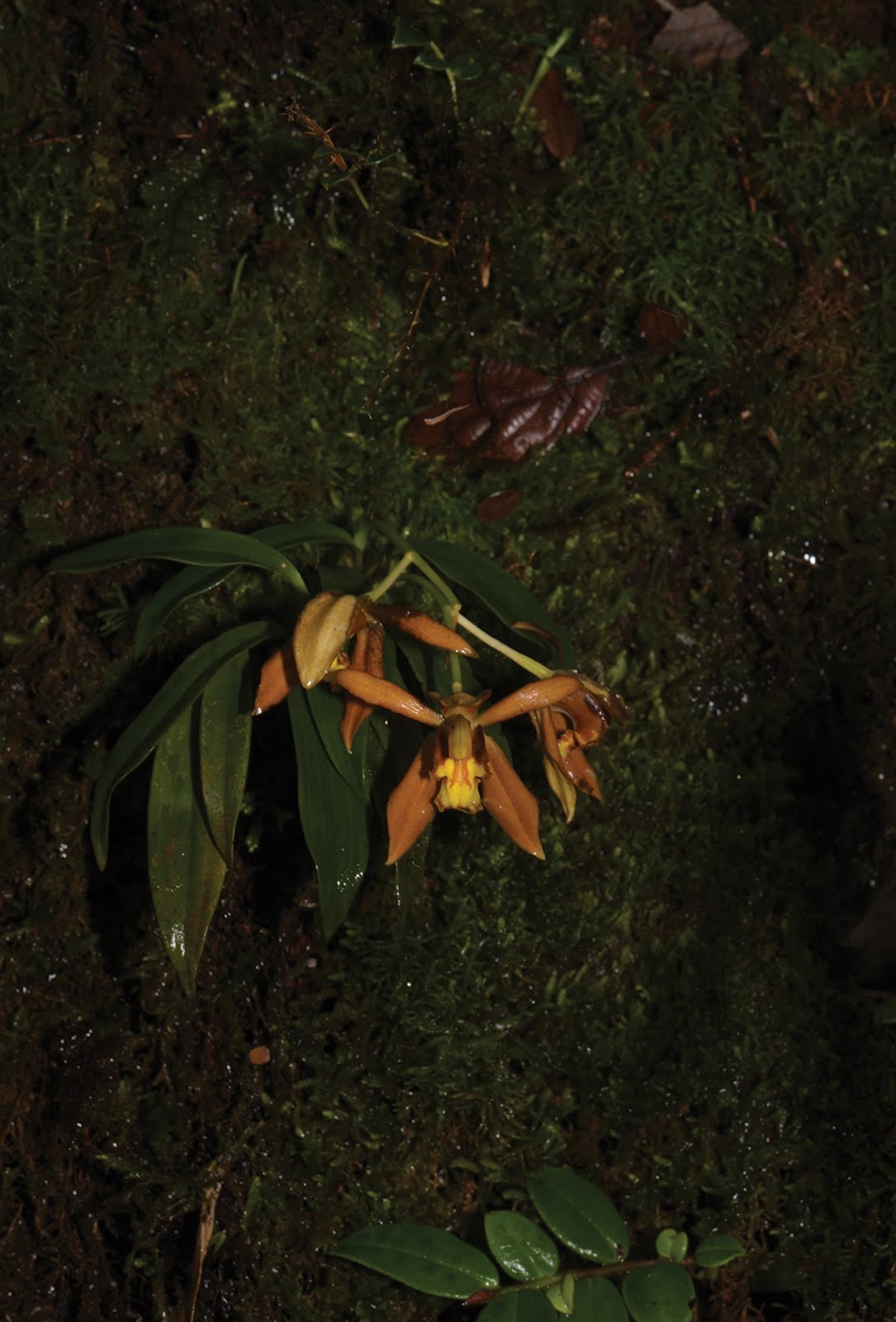
Figure 1. Coelogyne putaoensis X.H. Jin, L.A. Ye & Schuit.
A Inflorescence B Dorsal sepal C Lateral sepals D Petal E Lip F Lateral view of column.
Illustration by Yunxi Zhu. 

Figure 3. Close-up of flower of Coelogyne putaoensis, showing the white papillae on the two lateral lamellae.
Photo by X.H. Jin. 

Coelogyne putaoensis X.H. Jin, L.A. Ye & Schuit., sp. nov.
Diagnosis: Coelogyne putaoensis is similar to C. taronensis and C. weixiensis, but can be distinguished by its solid yellowish brown sepals and petals, a brown lip with bright yellow markings, three keels extending from the base of the lip onto the mid-lobe, and lateral keels adorned with papillae.
Type: MYANMAR. Kachin State: Putao Township, Hponkanrazi Wildlife Sanctuary, subtropical, evergreen, broad-leaved, montane forest, 2500–3100 m, epiphytic on tree trunks or lithophytic on rocks, 14 June 2016, Xiaohua Jin et al, PT-2116 (Holotype, PE!).

Figure 2. Habit of Coelogyne putaoensis. Photo by X.H. Jin. 

Etymology: The new species is named after Putao, the northernmost town of Myanmar near which it was discovered in a vast area of unspoiled mountain forest.

Distribution and habitat: Coelogyne putaoensis is a predominantly epiphytic species that grows on moss-covered branches and tree trunks, sometimes also on rocks, in humid, broad-leaved, evergreen, montane forest, from 2500 to 3100 m elevation. At present, C. putaoensis is only known from the type locality.


 Ye Lwin Aung, Xiaohua Jin and André Schuiteman. 2017. Coelogyne putaoensis (Orchidaceae), A New Species from Myanmar.
 PhytoKeys. 82: 27-34. DOI: 10.3897/phytokeys.82.13172


Monday, July 3, 2017

[Entomology • 2017] Redescription and Commentary on the Chinese Mayfly Vietnamella sinensis (Ephemeroptera: Vietnamellidae)


Vietnamella sinensis  (Hsu, 1936)

Abstract

The genus Vietnamella Tshernova, 1972 is reviewed and 3 valid species are confirmed. They are V. ornata (Tshernova, 1972), V. sinensis (Hsu, 1936) (=V. dabieshanensis You & Su, 1987, new synonym; =V. qingyuanensis Zhou & Su, 1995, new synonym; =V. guadunensis Zhou & Su, 1995, new synonym) and V. thani Tshernova, 1972. The nymphal and key imaginal characters of V. sinensis are described and figured. The monogeneric family Vietnamellidae has long series of autapomorphies (two pairs of projections on head, modified mandibles, slender maxillae with few setae, round hindwings, and half of egg covered with single cap) and some plesiomorphies (seven pairs of gills, large hindwings, few marginal intercalaries on forewings). The structures of mouthparts, head and forefemora suggest that nymphs of Vietnamella may be able to move substrates and scrape food from them. Morphological evidences show that the family Vietnamellidae is a basal clade of Ephemerelloidea.

Keywords: Ephemeroptera, Vietnamella, new synonyms, phylogeny, biology, morphology

Nymphal habitus of Vietnamella sinensis.  

 Ze Hu, Zhen-xing Ma, Juan-yan Luo and Chang-Fa Zhou. 2017. Redescription and Commentary on the Chinese Mayfly Vietnamella sinensis (Ephemeroptera: Vietnamellidae).
 Zootaxa. 4286(3): 381–390.  DOI:  10.11646/zootaxa.4286.3.5


[Ichthyology • 2017] Rhynchocypris deogyuensis • A New Species of Fat-minnow (Cypriniformes: Cyprinidae) from Korea


 Rhynchocypris deogyuensis
Lee & Sim, 2017 


A new species of deogyu fat-minnow, Rhynchocypris deogyuensis, is described from the Geum River in Korea. This species is distinguished from Rhynchocypris kumgangensis by the following characteristics: shorter interorbital width; shorter eye diameter; longer caudal peduncle depth; number of scales above lateral line; and black transverse bar on the first unbranched ray in dorsal fin. The lower band of yellowish longitudinal two bands on lateral body is interrupted and unsharpened. Numerous silverly white spots are on blackish dorso-lateral body. Analyses of 1,141 bp length of mitochondrial Cyt b gene proved that, R. deogyuensis is clearly distinguished from R. kumgangensis in that the former showed a high level (94 bootstrap) of reliability.

Key words: New species, Rhynchocypris deogyuensis, Fat-minnow, Cyprinidae, Geum River


Figure 1. Rhynchocypris deogyuensis sp. nov. Holotype from the Geum River, Muju, Korea. NPRI 148, male, 68.9 mm SL. Scale bar=10 mm.

Figure 2. Nuptial coloration, A; Rhynchocypris deogyuensis, 68.9 mm, SL, male, collected April 25, 2013, from the Muju. B; R. kumgangensis, 68.2 mm, SL, male, collected April 16, 2013, from the Pyeongchang. Scale bar=10 mm. 

Etymology. The name deogyuensis, distributed in Deogyusan National Park, refers to the geographical occurrence of the species in Korea.


Seung-Rok Lee and Jae-Hwan Sim. 2017. A New Species of Deogyu Fat-minnow, Rhynchocypris deogyuensis (Cypriniformes: Cyprinidae) from Korea.  Journal of National Park Research. 8(1); 1-7.   http://www.earticle.net/article.aspx?sn=302167

Sunday, July 2, 2017

[Botany • 2017] Lapidia apicifolia • A New Monotypic Genus of Asteraceae (Eupatorieae) from Brazil, and Its Phylogenetic Placement


Lapidia apicifolia  Roque & S.C. Ferreira
   
Abstract

Asteraceae is the family with the highest species number in the rocky fields (campos rupestres) of the Chapada Diamantina, Bahia, Brazil. On the basis of several collections from this area, we are proposing a new genus of Asteraceae based on morphology and phylogeny, to accommodate a species newly described here. Lapidia apicifolia is a loosely ramified shrub 2–4 m high, stem tomentose, leaves opposite-decussate, laminae conduplicate, petiolate, receptacle flat, epaleaceous, glabrous, and pappus of bristles fused at base, irregular in length, fringed and purplish. In a phylogenetic analysis using sequence data from ITS and trnL-trnF of selected members of Eupatorieae, Lapidia is indicated as sister group of a highly supported clade with Morithamnus, Bahianthus and Catolesia. This group is composed by loosely branched shrubs, most with leaves that are lax, stems, leaves and involucral bracts that are viscid (Bahianthus and Morithamnus) and, if not, trichomes (tomentose indumentum) are developed (Lapidia), to protect against both solar radiation and loss of water. A description, illustrations, and a discussion about related and sympatric genera are presented.

Keywords: Compositae; endemism; ITS and trnL-trnF; rocky fields; taxonomy; Eudicots; Brazil


Nádia Roque, Silvana C. Ferrucci and Cássio van den Berg. 2017. Lapidia, A New Monotypic Genus of Asteraceae (Eupatorieae) from Brazil, and Its Phylogenetic Placement.
Phytotaxa. 291(1); 1–16. DOI:  10.11646/phytotaxa.291.1.1


[Ornithology • 2017] Molecular Systematics, Taxonomy and Distribution of the Pyrrhura picta–leucotis Complex


plumage patterns of some taxa of the Pyrrhura picta-leucotis complex.


Abstract
Introduction: The relationships within the Pyrrhura species complex are partly unresolved. In this study, a comprehensive phylogenetic analysis of the Pyrrhura picta-leucotis complex was carried out, covering all species except P. subandina.

Material and Methods: We made a morphological analysis of 745 preserved specimens of all the taxa in different museums. Nucleotide sequences of the mitochondrial cytochrome gene were generated and used to reconstruct a molecular phylogeny of Pyrrhura.

 Results and Discussion: Our results show that the complex is divided into 6 main groups comprising 15 species. P. dilutissima, regarded up to now as a subspecies of P. peruviana, acquires species status and three new subspecies are described. We also provide evidence that P. roseifrons is a paraphyletic group, indicating the existence of probably 3 lineages of which 2 deserve species status.

Fig. 4. Overview of the plumage patterns of all taxa of the Pyrrhura picta-leucotis complex.


 Thomas Arndt and Michael Wink. 2017. Molecular Systematics, Taxonomy and Distribution of the Pyrrhura picta–leucotis Complex. The Open Ornithology Journal. 10; 53-91.
DOI: 10.2174/1874453201710010053  


Saturday, July 1, 2017

[Botany • 2017] Vietnamocasia dauae • A New Genus from Central Vietnam belonging to the Alocasia-Colocasia clade (Araceae)


Vietnamocasia N.S. Lý, S.Y. Wong & P.C. Boyce
Vietnamocasia dauae N.S. Lý, T. Haevermans, Y.S. Wong & D.V. Nguyen

Abstract

Vietnamocasia, a new monotypic aroid genus in the Alocasia-Colocasia clade, is described with the type species, Vietnamocasia dauae. Vietnamocasia is distinguished by possessing free individual staminate flowers, lacking expanded synconnectives, and having nodding inflorescences. Vegetatively Vietnamocasia is reminiscent of species of the distantly closely related Alocasia Cuprea Group, although Vietnamocasia is so far only known from the type locality in Central Vietnam, over 1200 km NE from the nearest representative of the Alocasia Cuprea Group. The phylogenetic analyses of Vietnamocasia dauae together with representative taxa from all genera of the Alocasia-Colocasia clade recovered Vietnamocasia as a strongly supported clade sister to Alocasia, together nested in a clade to which Leucocasia is a sister taxon. Vietnamocasia dauae is illustrated from living plants and with a line drawing. A key to all genera of Alocasia-Colocasia clade is included.

Keywords: Endemics, Indochina, Malesia, phylogeny, Vietnamocasia dauae, Monocots

Figure 3. Vietnamocasia dauae. A. Habit; B. Leaf blades: adaxially and abaxially with their closed-up of the leaf bases (from left); C. Inflorescence (front view); D. Cataphyll, spathe (back view), and spadix (from left); E. Close-up of pistillate (E1), sterile interstice (E2) and staminate zones showing free individual staminate flowers (a red arrow, E3); F. Closed-up of appendix; G. pistillate zone after anthesis with lower spathe; H. Fruit spathe (back and front views); I. Longitudinal section of fruit spathe and infructescences (from left).

Vietnamocasia N.S.Lý, S.Y.Wong & P.C.Boyce, gen. nov. 
Type: Vietnamocasia dauae N.S.Lý, S. Y. Wong, T.Haevermans & D.V.Nguyen, sp. nov.

 Etymology:— Vietnamocasia is compounded from the Greek classical name kolokasia, itself from an old Middle Eastern name qolqas (Nicolson 1987) and the root of Alocasia and Leucocasia (and the more distantly related Colocasia) + Vietnam. 

Distribution:— Vietnamocasia is so far known only from the type locality and its vicinity. 

Ecology:— At Mount Dầu Vietnamocasia dauae grows in moist shady understory of hillsides in secondary broadleaved forest dominated by dipterocarps at 150–490 m elevation. At the other known locality, Cà Đam, it occurs in primary evergreen broad-leaf forest at about 790 m elevation.

Vietnamocasia dauae N. S. Lý, T. Haevermans, Y. S. Wong & D. V. Nguyen, sp. nov. 

Etymology:— The specific epithet is for Mount Dầu, the type locality, treated as feminine.  


Lý Ngọc-Sâm, Wong Sin Yeng, Thomas Haevermans, Nguyễn Văn Dư and PETER C. Boyce. 2017. Vietnamocasia, A New Genus from Central Vietnam belonging to the Alocasia-Colocasia clade (Araceae). Phytotaxa. 303(3);  253–263.  DOI: 10.11646/phytotaxa.303.3.5

[Paleontology • 2017] A New, Exceptionally Preserved Juvenile Specimen of Eusaurosphargis dalsassoi (Diapsida) and Implications for Mesozoic Marine Diapsid Phylogeny


Eusaurosphargis dalsassoi Nosotti & Rieppel, 2003

Illustration: Beat Scheffold
DOI: 
10.1038/s41598-017-04514-x 

Abstract
Recently it was suggested that the phylogenetic clustering of Mesozoic marine reptile lineages, such as thalattosaurs, the very successful fish-shaped ichthyosaurs and sauropterygians (including plesiosaurs), among others, in a so-called ‘superclade’ is an artefact linked to convergent evolution of morphological characters associated with a shared marine lifestyle. Accordingly, partial ‘un-scoring’ of the problematic phylogenetic characters was proposed. Here we report a new, exceptionally preserved and mostly articulated juvenile skeleton of the diapsid reptile, Eusaurosphargis dalsassoi, a species previously recovered within the marine reptile ‘superclade’, for which we now provide a revised diagnosis. Using micro-computed tomography, we show that besides having a deep skull with a short and broad rostrum, the most outstanding feature of the new specimen is extensive, complex body armour, mostly preserved in situ, along its vertebrae, ribs, and forelimbs, as well as a row of flat, keeled ventrolateral osteoderms associated with the gastralia. As a whole, the anatomical features support an essentially terrestrial lifestyle of the animal. A review of the proposed partial character ‘un-scoring’ using three published data matrices indicate that this approach is flawed and should be avoided, and that within the marine reptile ‘superclade’ E. dalsassoi potentially is the sister taxon of Sauropterygia.

A life reconstruction of Eusaurosphargis dalsassoi based on new specimen PIMUZ A/III 4380.
Illustration: Beat Scheffold. 

Figure 2: Eusaurosphargis dalsassoi (PIMUZ A/III 4380) in ventral view. (a) Photograph. (b) Interpretative drawing of skeleton. Abbreviations used in the figure are chevron (ch), gastralia (g), and lateral osteoderm (lo). 

Systematic Palaeontology

Diapsida Osborn, 190321.
Eusaurosphargis dalsassoi Nosotti and Rieppel, 2003.

Holotype: BES SC 390 (Palaeontological Collection of the Museo Civico di Storia Naturale di Milano, Italy), an associated but disarticulated specimen from the Besano Formation (242 Ma, Anisian-Ladinian, Middle Triassic) of Besano, Lombardy, Italy.

Referred specimen: PIMUZ A/III 4380, an almost completely articulated skeleton preserved in ventral view (Fig. 2a).

Stratigraphy and locality: Upper Prosanto Formation (bed no. 1; fossil found on bottom side of a limestone slab); 241 Ma, early Ladinian, Middle Triassic of Ducanfurgga locality no. 4, south of Davos, Canton Grisons (Graubünden), south-eastern Switzerland.


Torsten M. Scheyer, James M. Neenan, Timea Bodogan, Heinz Furrer, Christian Obrist and Mathieu Plamondon. 2017. A New, Exceptionally Preserved Juvenile Specimen of Eusaurosphargis dalsassoi (Diapsida) and Implications for Mesozoic Marine Diapsid Phylogeny.
 Scientific Reports. 7, 4406.  DOI: 10.1038/s41598-017-04514-x

Rare, exceptionally preserved fossil reveals lifestyle of ancient armor-plated reptile  phy.so/418006972   @physorg_com
Davoser Saurier zeigt erstmals seine bizarre Schuppenpanzerung
 http://www.idw-online.de/-ClXPAA

[Ornithology • 2017] Campylopterus calcirupicola • A Cryptic New Species of Hummingbird of the Campylopterus largipennis complex (Aves: Trochilidae)


Dry-forest Sabrewing | Campylopterus calcirupicola 
Lopes, de Vasconcelos & Gonzaga, 2017


FIGURE 7. The newly described Campylopterus calcirupicola from eastern Brazilian tropical dry forests.  
watercolor painting by Walter Gam ||  DOI:  10.11646/zootaxa.4268.1.1 

Abstract

A new species of Campylopterus sabrewing is described from eastern Brazilian tropical dry forests occurring below 900 m asl. Its holotype (MZUSP 99024) is an adult female from Sítio Duboca (16°43’19’’S, 43°58’20’’W, elevation 840 m), municipality of Montes Claros, state of Minas Gerais. A taxonomic revision based on more than 1,000 museum specimens revealed that the new taxon, together with C. largipennis, C. diamantinensis and C. obscurus (with C. aequatorialis considered as a subjective junior synonym) should be ranked as species. We provide a key to permit easy identification of the four species. The new species is very similar to the parapatric C. diamantinensis of high altitude “campos rupestres” above 1,000 m asl, differing from it by its smaller size and longer light tail tips, as well as by sternum measurements. Given the several threats faced by the habitat to which the new species is endemic, we propose to consider it as Vulnerable under the IUCN criteria.

Keywords: cryptic biodiversity, Neotropical, Trochilidae, tropical dry forests, Aves


  A young male of Campylopterus calcirupicola captured on 18 July 2006 in the Fazenda Corredor (880 m asl), municipality of Bocaiúva, Minas Gerais, Brazil (DZUFMG 5005). Photographs by LEL. 

Campylopterus calcirupicola sp. nov. Dry-forest Sabrewing (English)
Asa-de-sabre-da-mata-seca (Portuguese)

Etymology. The name calcirupicola is Latin, composed by “calx”, calcis, limestone; “rupes”, steep rocks; and “cola”, dwelling (Eggli & Newton 2004). It refers to the habitat of this new hummingbird, which inhabits dry forests growing on limestone outcrops. This specific name matches that for the cactus Cereus calcirupicola F. Ritter, found in the type locality and in the same habitat (Ritter 1979) of the new hummingbird. The vernacular names we propose also refer to the habitat used by the new species.

Geographic distribution. Campylopterus calcirupicola has been recorded from Divinópolis de Goiás (northeastern state of Goiás) and Coribe (southwestern state of Bahia) to Bocaiúva (northern state of Minas Gerais) on both banks of the São Francisco River, as well as in the Paranã River valley, an important tributary of the Tocantins River, west of the Serra Geral (Figures 9 and 10). The altitudinal range of this new species is between 460–880 m asl. The range of C. calcirupicola probably extends to southeastern Tocantins (Dornas et al. 2014) and the southern part of the state of Piauí (Santos 2004), from where there are sight records of C. largipennis. We believe that the specimen of C. largipennis from “Posse, Goiás” cited by Silva (1990) as housed in the MNRJ refers to the specimen from “Galheiros” housed in the same institution and mentioned by Ruschi (1951), probably representing a toponymic mistake committed by Silva (1990).


 Leonardo E. Lopes, Marcelo F. De Vasconcelos and Luiz P. Gonzaga. 2017. A Cryptic New Species of Hummingbird of the Campylopterus largipennis complex (Aves: Trochilidae). Zootaxa. 4268(1); 1–33.   DOI:  10.11646/zootaxa.4268.1.1


Friday, June 30, 2017

[Botany • 2017] Roscoea megalantha • A New Species (Zingiberaceae) from eastern Bhutan and India


Roscoea megalantha  Tosh.Yoshida & R.Yangzom


Abstract
A new species of Roscoea is described and illustrated. Roscoea megalantha Tosh.Yoshida & R.Yangzom occurs in the Eastern Zone of Bhutan and neighbouring Arunachal Pradesh in India. A distribution map and an IUCN conservation assessment are given. A key to the three species of Roscoea found in Bhutan is provided.

Keywords. Arunachal Pradesh, Bhutan, IUCN conservation assessment, new species, Roscoea.


Roscoea megalantha Tosh.Yoshida & R.Yangzom, sp. nov. 

Roscoeae purpureae Sm. affinis, sed dorsali petalo reflexo, labelli ungue distincto et profunde canaliculato, labelli limbo late ovato vel rotundato, atque calcaribus connectivi praeditis projectris reflexis filiformibus differt.  

Etymology. The epithet comes from the Greek for large flower.


T. Yoshida, R. Yangzom and M. F. Newman. 2017. Roscoea megalantha (Zingiberaceae), A New Species from eastern Bhutan and India.  Edinburgh Journal of Botany.  DOI: 10.1017/S0960428617000142