Showing posts with label Brunei. Show all posts

Monday, November 10, 2025

[Crustacea • 2022] Borneosa gen. nov., Borneosa bario, B. kapit, B. serrata, ... • Establishment of A New Bornean Genus of Gecarcinucidae (Brachyura), with Descriptions of Five New Species


Borneosa bario 
B. sarawakensis
B. kapit 
Ng & Grinang, 2022 


The freshwater gecarcinucid species from Borneo previously referred to Sundathelphusa Bott, 1969, are transferred to a new genus. Borneosa gen. nov. can be diagnosed by the presence of a distinct frontal median triangle that is shorter than the frontal margin, a relatively longer male thoracic sternum in which the sternopleonal cavity reaches more anteriorly, and a male first gonopod that has the terminal segment prominently covered with long setae. The eight species recognised: B. tenebrosa (Holthuis, 1979), B. aspera (Ng & Stuebing, 1989), B. brachyphallus (Ng, 2015), and five new species, B. niah, B. bario, B. kapit, B. sarawakensis and B. serrata; can be distinguished by characters of the frontal median triangle, epibranchial tooth, anterolateral margin, third maxillipeds, ambulatory legs, male sternum, male pleon and male first gonopod.   

Key words: Freshwater crab, Gecarcinucoidea, New species, New genus, Malaysia, Brunei, Indonesia, Taxonomy, Distribution, Key


A, type locality of Borneosa sarawakensis sp. nov., Sungei Musing, first order stream feeding Batang Ai reservoir, Sri Aman, Sarawak;
B, B. sarawakensis sp. nov., holotype male (35.5 × 28.1 mm) (ZRC 2021.0516), Batang Ai, Sarawak (freshly preserved);
C, B. kapit sp. nov., paratype male (32.3 × 25.6 mm) (ZRC 2021.0520), Sungei Lebau, Pelagus, Kapit, Sarawak (freshly preserved).  

Colour in life. A–C, Borneosa aspera (Ng & Stuebing, 1989), female (44.5 × 33.7 mm (ZRC 2013.746), Temburong, Brunei; D, E, B. aspera (Ng & Stuebing, 1989), female (44.1 × 33.1 mm) (ZRC 2014.845), Temburong, Brunei; F, G, B. aspera (Ng & Stuebing, 1989), male (32.3 × 25.4 mm) (ZRC 2014.845), Temburong, Brunei;
H, B. bario sp. nov., holotype male (29.6 × 23.1 mm) (ZRC 2021.0692), Bario, Sarawak; I, B. bario sp. nov., paratype male (31.1 × 23.9 mm) (UNIMAS.C.00011), Bario, Sarawak; J, B. bario sp. nov., Sungei Lawan, tributary of Sungei Tutoh, Baram basin, Miri, specimen not caught.
Photographs: A, B, Mohd. Abdul Majid; C–F, Low Yee Wen. 


Peter K. L. Ng and Jongkar Grinang. 2022. Establishment of A New Bornean Genus of Gecarcinucidae (Crustacea: Brachyura), with Descriptions of Five New Species. Zoological Studies. 61:13. DOI: doi.org/10.6620/ZS.2022.61-13 (05 May 2022 ) 

Thursday, July 31, 2025

[Entomology • 2025] Nemophora pendleburyi, N. vitalii, ... • A Taxonomic Revision of the tristrigella Species Group of the Fenus Nemophora Hoffmannsegg (Lepidoptera: Adelidae) from the Philippines, Malaysia, Brunei and Indonesia


[2] Nemophora pendleburyi Kozlov, sp. nov., holotype, from Selangor, Malaysia; [3] N. vitalii Kozlov, sp. nov., holotype, from Brunei; 
[4-5] N. chalcotechna (Meyrick, 1937), male, from the Philippines;
[7-8] N.tristrigella (Walker, 1866), male, from Indonesia.

in Kozlov, 2025.
 
Abstract
This study defines and revises the monophyletic tristrigella species group of the genus Nemophora Hoffmannsegg, 1798, characterized by six presumably apomorphic traits, including (but not limited to) a glossy golden vertex and glossy golden basal part of forewing sharply contrasting with the coppery bronze apical part, which features a distinctive pattern of several yellow spots surrounded by dark brown scales. The group comprises four species: Nemophora pendleburyi Kozlov, sp. nov., from Malaysia; N. vitalii Kozlov, sp. nov., from Indonesia, Malaysia and Brunei; N. chalcotechna (Meyrick, 1937) from the Philippines; and N. tristrigella (Walker, 1866) from Indonesia and the Philippines. These species are described and illustrated herein, with identification keys based on external morphology and male genitalia provided. Particular attention is paid to similarities and dissimilarities between N. chalcotechna and N. tristrigella.

Lepidoptera, biogeography, diagnoses, distribution, keys, new species, phylogeny, variation

Adults of Nemophora spp.
2, N. pendleburyi Kozlov, sp. nov., male, holotype, from Selangor, Malaysia; 3, N. vitalii Kozlov, sp. nov., male, holotype, from Brunei;
4, N. chalcotechna (Meyrick, 1937), male, holotype, from Mindanao, the Philippines; 5, ditto, male, from Basilan Island, the Philippines; 6, ditto, female, from the same locality; 
7, N.tristrigella (Walker, 1866), male, holotype, from Java, Indonesia; 8, ditto, male, from Balikpapan, Indonesia; 9, ditto, female, from Indonesia.
Scale bar: 2 mm.


Mikhail V. KOZLOV. 2025. A Taxonomic Revision of the tristrigella Species Group of the Fenus Nemophora Hoffmannsegg (Lepidoptera, Adelidae) from the Philippines, Malaysia, Brunei and Indonesia. Zootaxa. 5665(1); 99-110. DOI: doi.org/10.11646/zootaxa.5665.1.6 [2025-07-21]

Thursday, June 5, 2025

[Ichthyology • 2025] Hampala lupar & H. katibas • Two New Species of Hampala (Cypriniformes: Cyprinidae) from Borneo


Hampala lupar
Hampala katibas
Tan & Grinang, 2025

 RAFFLES BULLETIN OF ZOOLOGY. 73

Abstract
 Two new species of Hampala are described from Borneo Island. Hampala lupar, new species, is closely allied to H. bimaculata but differs in having three black bars on the body, vs. two bars; with the additional black bar just posterior to head. Hampala lupar is distinguished from all congeners by the following combination of characters: lateral line scales 26–27; three black bars on body, even at juvenile stage; upper and lower edges of caudal fin with a black marginal stripe; all fins orange with caudal fin reddish-orange when alive. Hampala katibas, new species, is similar to H. bimaculata but differs in having two large black blotches on the body, vs. two curved black bars; amongst other characters. Both new species are separated by the Lupar Geological Divide.

 Key words. Southeast Asia, Sundaland, taxonomy, freshwater fish, Cypriniformes

Hampala lupar, new species;
not preserved, ca. 300 mm SL, showing live colouration from Sarawak: Bau area (image from Mike Lo); 
 not preserved, ca. 60 mm SL, showing live colouration from Sarawak Kanan River population (sides inverted, image from Jongkar Grinang).

Hampala lupar, new species 

Etymology. Named after the Lupar River basin, where it was first recorded in the 1980s. Used as a noun in genitive. Cramphorn (1982: 29) who had misidentified H. lupar as “H. bimaculata (3 spots)”, listed the following local names for this species: Adong Tekalang Maioh (Iban) and Adong Takalang Banyak (Malay).

Hampala katibas, new species
  fresh colouration from Sarawak: Katibas, not preserved, ca. 350 mm SL (image from Low Bi Wei);
Brunei: Belalong, not preserved, ca. 160 mm SL;
Brunei: Belalong, ZRC uncatalogued, ca. 160 mm SL.

Hampala katibas, new species 

Etymology. Named after the Katibas River sub-basin draining into the Rejang River. Used as a noun in genitive.


 Tan Heok Hui and Jongkar Grinang. 2025. Two New Species of Hampala from Borneo (Teleostei: Cyprinidae). RAFFLES BULLETIN OF ZOOLOGY. 73


Monday, May 5, 2025

[Botany • 2025] Gastrodia microchila (Orchidaceae: Epidendroideae) • A New Species from Brunei Darussalam


Gastrodia microchila Hroneš, 

 in Hroneš, Sochor, Uvírová, bin Pandai, Jaafar, Sukri et Dančák, 2025. 

Abstract
A new orchid species, Gastrodia microchila is described and illustrated. The species was found in a mixed dipterocarp forest in the Belait district, Brunei Darussalam, northern Borneo in 2024. It is distinct from most Gastrodia species in western Malesia by its small lip and column, and presence of the smooth cushion-like tissue on the inner side of lateral sepals. Gastrodia microchila is only the second species of Gastrodia recorded for Brunei Darussalam and the seventh known species for Borneo. A determination key for all Gastrodia species occurring in western Malesia is also provided.

Key words: Borneo, endemic species, holomycotrophic orchid, Malesia, mycoheterotrophy, tribe Gastrodieae

Gastrodia microchila Hroneš
A habit of flowering plant B detail of inflorescence with bracts C dissected synsepalum with free parts of sepals and petals D flower viewed from above E flower viewed from below F front view of flower G lip H column
A–H from Hroneš 2024/4 (Illustration V. Blažek).

Gastrodia microchila Hroneš
A habit of flowering plant B fruiting plant with capsules on elongated pedicels C detail of inflorescence with side view of flower D front view of flower E inflorescence viewed from above F flower viewed from below with connate and free part of lateral sepals, and ovary G dissected synsepalum showing minute petals and cushion-like smooth tissue on the internal side of sepals H part of the stem with leaf I tuber
 A–I from Hroneš 2024/4 (Photo M. Hroneš).


 Gastrodia microchila Hroneš, sp. nov.

Diagnosis. Gastrodia microchila is similar to G. holttumii Carr from Peninsular Malaysia but differs by narrower cylindrical rhizome without distinct nodes (vs. robust, distinctly noded), flowers 8.5–9.0 mm wide, narrowly open (vs. 9.0–11.0 mm wide, widely open), free part of lateral and dorsal sepals oblong triangular to broadly triangular, up to 4.5 × 5.0 mm (vs. elliptic to oblong elliptic, 6.0–7.0 × 3.0–5.0 mm), free part of petals indistinct, ca. 0.7 × 0.6 mm, elliptic (vs. 1.0–2.0 × 0.7–1.0 mm, ovate), hypochile 2.0 × 2.0 mm, broadly oblong-orbicular (vs. 2.0 × 1.5 mm, oblong-ovate) and stelidia longer than anther cap (vs. subequal to anther cap).

Etymology. The name is derived from the Latin micro- = small and -chilum = lip, referring to the size of the lip, which is among the smallest in Gastrodia species in western Malesia.


 Michal Hroneš, Michal Sochor, Alena Uvírová, Azlan bin Pandai, Salwana Jaafar, Rahayu S. Sukri and Martin Dančák. 2025. Gastrodia microchila (Orchidaceae, Epidendroideae), A New Species from Brunei Darussalam. PhytoKeys. 256: 1-11. DOI: doi.org/10.3897/phytokeys.256.149020

Monday, February 12, 2024

[PaleoIchthyology • 2024] Advenasciaena bruneiana, Atrobucca borneensis, Bruneisciaena schwarzhansi, etc. • Late Miocene Teleost Fish Otoliths from Brunei Darussalam (Borneo) and their implications for palaeoecology and palaeoenvironmental conditions


Advenasciaena bruneiana & Bruneisciaena schwarzhansi  
 Kocsis, Lin, Bernard & Johari, 2024

 
ABSTRACT
We report here diverse Late Miocene fish assemblages based on otoliths collected from sedimentary rocks deposited in coastal marine settings in northern Borneo (Seria and Miri formations and Tutong beach). Surface-collected, large-sized otoliths, representing > 96% of the whole assemblage, are dominated by the families Sciaenidae and Ariidae, while Haemulidae, Engraulidae, and Lactaridae can be common at certain sites. Additional taxa were revealed by screen-washing of the sediments from selected sites including taxa from the families of Congridae, Bregmacerotidae, Apogonidae, Gobidae, Sillaginidae, and Cepolidae. Among the sciaenids, we describe six new taxa (Advenasciaena bruneiana, Atrobucca borneensis, Bruneisciaena schwarzhansi, Nibea ambugensis, Nibea stintoni, and Protonibea nolfi), and we also report the first fossil occurrence of some other groups (e.g. Lactarius lactarius, Acanthocepola sp.) from the Indo-Australian Archipelago (IAA). All these discoveries add to our understanding of fish palaeobiodiversity in the IAA where today’s highest marine biodiversity exists. The compositions of the faunas reflect a shallow marine coastal palaeoenvironment with close connection to estuaries where some of the reported fishes might have migrated seasonally or daily with the tide. Turbid, suspension-loaded water might be also presumed, where ariids, sciaenids, and the haemulid Pomadasys are often observed today.

KEYWORDS: Teleost otoliths, shallow-water tropical fauna, palaeobiodiversity, new genera, Indo-Australian archipelago, fossil fish fauna


Order incertae sedis in Eupercaria Betancur-R. et al., 2017

Family Sciaenidae Cuvier, 1829


Genus Advenasciaena gen. nov.

Name: Advena refers to the strange, alien characteristic of these new sciaenid otoliths.

Advenasciaena bruneiana sp. nov.

Name: Referring to Brunei Darussalam, the country of origin.

Distribution: From late Middle Miocene to Late Miocene layers of the Seria and Miri formations in Brunei Darussalam.


Genus Atrobucca Chu, Lo and Wu, 1963

Atrobucca borneensis sp. nov.

Name: Refers to the origin of the otoliths as they are found on Borneo Island.


Genus Bruneisciaena gen. nov.

Name: Refers to the geographic origin of the new sciaenid genus (Brunei Darussalam).

Bruneisciaena schwarzhansi sp. nov.

Name: In honour of Werner Schwarzhans (Hamburg, Germany) due to his great works on sciaenid otoliths.

Distribution: From late Middle Miocene to Late Miocene layers of the Seria and Miri formations in Brunei Darussalam.

Genus Nibea Jordan and Thompson, 1911

Nibea ambugensis sp. nov.

Name: Derived from the locality of Ambug Hill (Tutong District, Brunei Darussalam) where these otoliths are the most abundant.

Nibea stintoni sp. nov.

Name: In memory of Fred C. Stinton who first worked on fossil otoliths from Brunei.


Genus Protonibea Trewavas, 1971

Protonibea nolfi sp. nov.

Name: In honour of Dirk Nolf for his major contributions to otolith research.


Conclusion: Our study reports diverse coastal marine fish faunas based on otoliths from the Neogene beds of Brunei Darussalam in Borneo. The recovered 1493 otoliths belong to 34 taxa of 11 families, and among them six new species and two new genera (Advenasciaena bruneiana gen. nov. sp. nov., Atrobucca borneensis sp. nov., Bruneisciaena schwarzhansi gen. nov. sp. nov., Nibea ambugensis sp. nov., Nibea stintoni sp. nov., and Protonibea nolfi sp. nov.) are reported. The overall fauna is dominated by Sciaenidae, followed by Ariidae, Haemulidae, Engraulidae, and Lactariidae. Most of these specimens were collected from the surface of the outcrops, however, other families were revealed by occasional screen-washing (Gobiidae, Sillaginidae, Bregmacerotidae, Apogonidae, Congridae, and Cepolidae). Many of these groups are represented only by a few specimens and collectively the micro-remains compose 3.7% of the entire fauna. Future bulk sampling of the sediments could shed further light on the abundance and diversity of the micro-otolith assemblages. Based on the large-sized otoliths, the fish fauna indicates a palaeoenvironment with a coastal marine setting with nearby estuaries and deltas, probably with turbid water and, from time to time with lower salinity conditions. The younger deposits of the Seria Fm (AH) may reflect more open marine connections but still with a shallow setting with close proximities of river inputs. When comparing our findings with modern biodiversity and previous studies of the fossil record from the region, it is evident that our results increase our understanding of fish palaeobiodiversity in the Indo-Australian Archipelago, where today’s highest marine biodiversity exists. The described faunas and new taxa further highlight that the region’s fossil record is understudied, and new palaeontological findings are expected in the future.


László Kocsis, Chien-Hsiang Lin, Emma Bernard and Adibah Johari. 2024. Late Miocene Teleost Fish Otoliths from Brunei Darussalam (Borneo) and their implications for palaeoecology and palaeoenvironmental conditions. Historical Biology: An International Journal of Paleobiology. DOI: 10.1080/08912963.2023.2271489

Tuesday, April 11, 2023

[Gastropoda • 2023] Microparmarion sallehi • A New Semi-slug of the Genus Microparmarion (Gastropoda: Stylommatophora: Ariophantidae) from Brunei, discovered, described and DNA-barcoded on Citizen-science 'Taxon Expeditions'


Microparmarion sallehi Wu, Ezzwan & Hamdani,

in Schilthuizen, Berenyi, Ezzwan, Hamdani, Wu, De Antoni, Vincenzi, de Gier, ... et Cicuzza, 2023.

Abstract
Background: 
During citizen-science expeditions to the Ulu Temburong National Park, Brunei, several individuals were collected of a semi-slug species of the genus Microparmarion that, based on morphology and in-the-field DNA-barcoding, was found to be an undescribed species.

New information: 
In this paper, we describe Microparmarion sallehi Wu, Ezzwan & Hamdani, n. sp., after field centre supervisor Md Salleh Abdullah Bat. We provide details on the external and internal reproductive morphology, the shell and the ecology of the type locality, as well as a diagnosis comparing it with related species. DNA barcodes were generated for five individuals and used for a phylogenetic reconstruction. Microparmarion sallehi sp. n. and M. exquadratus Schilthuizen et al., 2019 so far are the only Bornean species of the genus that live in lowland forest; other species are found in montane forests.

Keywords: taxonomy, malacology, Borneo, new species, land snails, semi-slugs


Microparmarion sallehi, n. sp., photographs of living holotype, UBDM.7.00152,
 Kuala Belalong Field Studies Centre, Brunei Darussalam;
a right lateral view; b left lateral view.

Microparmarion sallehi Wu, Ezzwan & Hamdani, sp. n.

Diagnosis: This new species of Microparmarion stands out because of its shell, which, unlike other north Bornean species of the genus, has no discernible whorls. In that sense, it appears to be more closely related to Parmarion, with which it also shares the clearly keeled mantle. However, the genital set-up, with the looped part of the penis, the vas deferens connected terminally to the epiphallus and the unstalked gametolytic sac clearly fits with the Microparmarion genus definition (Simroth 1893; Vermeulen and Liew 2022). The looped part of the penis, which remains thick until the place where it is enveloped by the muscular sheath, places the species in ‘group 2’ of Vermeulen and Liew (2022).
....

Etymology: The species epithet is a masculine genitive and honours the supervisor of the Kuala Belalong Field Studies Centre, Mr. Md Salleh Abdullah Bat, who recently retired. The taxon expedition, during which the species was described, was the last group he hosted before retirement. The name won the winning number of votes out of seven options during a voting session in which all participants of the 2022 expedition took part.

 
Menno Schilthuizen, Simon Berenyi, Nurilya Syamimi Muhammad Nazirul Ezzwan, Nur Izzah Amal Afiqah Hamdani, Harrison Wu, Luca De Antoni, Leonardo Vincenzi, Werner de Gier, Anthonie D. P. van Peursen, Iva Njunjić, Massimo Delledonne, Ferry Slik, Ulmar Grafe and Daniele Cicuzza. 2023. A New Semi-slug of the Genus Microparmarion from Brunei, discovered, described and DNA-barcoded on Citizen-science 'Taxon Expeditions' (Gastropoda, Stylommatophora, Ariophantidae). Biodiversity Data Journal. 11: e101579. DOI: 10.3897/BDJ.11.e101579
 

Friday, March 25, 2022

[PaleoBotany • 2022] First fossil-leaf floras from Brunei Darussalam show Dipterocarp dominance in Borneo by the Pliocene


in Wilf​, Zou, Donovan, ... et Lambiase, 2022.  

Abstract 
The Malay Archipelago is one of the most biodiverse regions on Earth, but it suffers high extinction risks due to severe anthropogenic pressures. Paleobotanical knowledge provides baselines for the conservation of living analogs and improved understanding of vegetation, biogeography, and paleoenvironments through time. The Malesian bioregion is well studied palynologically, but there have been very few investigations of Cenozoic paleobotany (plant macrofossils) in a century or more. We report the first paleobotanical survey of Brunei Darussalam, a sultanate on the north coast of Borneo that still preserves the majority of its extraordinarily diverse, old-growth tropical rainforests. We discovered abundant compression floras dominated by angiosperm leaves at two sites of probable Pliocene age: Berakas Beach, in the Liang Formation, and Kampong Lugu, in an undescribed stratigraphic unit. Both sites also yielded rich palynofloral assemblages from the macrofossil-bearing beds, indicating lowland fern-dominated swamp (Berakas Beach) and mangrove swamp (Kampong Lugu) depositional environments. Fern spores from at least nine families dominate both palynological assemblages, along with abundant fungal and freshwater algal remains, rare marine microplankton, at least four mangrove genera, and a diverse rainforest tree and liana contribution (at least 19 families) with scarce pollen of Dipterocarpaceae, today’s dominant regional life form. Compressed leaves and rare reproductive material represent influx to the depocenters from the adjacent coastal rainforests. Although only about 40% of specimens preserve informative details, we can distinguish 23 leaf and two reproductive morphotypes among the two sites. Dipterocarps are by far the most abundant group in both compression assemblages, providing rare, localized evidence for dipterocarp-dominated lowland rainforests in the Malay Archipelago before the Pleistocene. The dipterocarp fossils include winged Shorea fruits, at least two species of plicate Dipterocarpus leaves, and very common Dryobalanops leaves. We attribute additional leaf taxa to Rhamnaceae (Ziziphus), Melastomataceae, and Araceae (Rhaphidophora), all rare or new fossil records for the region. The dipterocarp leaf dominance contrasts sharply with the family’s <1% representation in the palynofloras from the same strata. This result directly demonstrates that dipterocarp pollen is prone to strong taphonomic filtering and underscores the importance of macrofossils for quantifying the timing of the dipterocarps’ rise to dominance in the region. Our work shows that complex coastal rainforests dominated by dipterocarps, adjacent to swamps and mangroves and otherwise similar to modern ecosystems, have existed in Borneo for at least 4–5 million years. Our findings add historical impetus for the conservation of these gravely imperiled and extremely biodiverse ecosystems.

Study area. (A) Inset series showing location of Brunei Darussalam, the capital Bandar Seri Begawan (BSB),
and the two fossil sites studied here at Berakas Beach (B), and Kampong Lugu (C).

Kampong Lugu fossil site (see also Fig. 1) and stratigraphic section. A sharp, ca. 30° angular unconformity separates the lower unit, the Miocene Miri Formation, from the horizontal, dark, onlapping beds of the new stratigraphic unit, which is exposed in a horseshoe around the west and north sides of the local hill as shown (marker A; bottom photograph shows the north face of the outcrop). Fossil leaves are abundant throughout the dark claystones. Google Earth Image © 2017 CNES/Airbus.

Dipterocarpus sp. BR01.
(A) UBDH F00253b (Kampong Lugu), with well-preserved plications; (B) UBDH F00090a (Berakas Beach), with subtle preservation of plications; (C) UBDH F00156 (Kampong Lugu), preserving base and stout petiole; (D) UBDH F00096 (Berakas Beach), large leaf fragment with good vein preservation; (E) UBDH F00140b (Kampong Lugu), under low-angle unidirectional light to show the stout midvein and strong longitudinal folding of the blade. (F) UBDH F00140a, counterpart of specimen in E, preserving margin and venation details.

Shorea sp. BR04. UBDH F00097b (Berakas Beach).
White arrow, shared visual reference point at a wing juncture with the nut body. (A, B) Surface view, showing an ovoid nut with two clasping, obovate, apparently subequal fruit wings (calyx lobes); the wing at left is missing its apex (fragments distal to the wing are dark-stained matrix, not fossil), but the wing at right is relatively complete; (C) Rotational views of CT scans, showing an additional large wing (dark color) embedded in the sediment directly underneath the broken wing at the surface, subequal in size and shape to the more complete wing at the surface. Inset, initial scan that captured fragments of the embedded wing (dark) clasping the obverse surface of the nut well toward the base.

Conclusions
We report two new late Cenozoic compression assemblages from Brunei Darussalam, a nation with extraordinarily biodiverse and intact tropical rainforests. The new plant fossils are the first from that country and the first Cenozoic compression floras from the Malay Archipelago in the modern era. We also report co-occurring palynofloras, and both the macro- and microfossils are unbiased collections. Our results, most broadly, show that the principal features of northern Borneo’s coastal vegetation (e.g., Thia-Eng, Loke Ming & Sadorra, 1987; Wong & Kamariah, 1999) have changed little for at least 4–5 million years. Dipterocarps overwhelmingly dominate both macrofossil assemblages, showing for the first time from compression floras, which record localized paleoecological information, that the dipterocarp-dominated rainforests that define lowland forest structure throughout Malesia are ancient. At least three genera (Dipterocarpus, Dryobalanops, and Shorea) and four species of dipterocarps are present, and dipterocarps represent 79% of all identifiable macrofossils. All other elements identified are also present in the living Brunei flora and include the first reliable macrofossil occurrences for the region of Melastomataceae, Rhamnaceae (Ziziphus), and Araceae (Rhaphidophora).

Rich palynofloras from the same strata as the leaves detail fern- and mangrove-swamp depositional environments with input from adjacent tropical rainforests and diverse, well-structured communities. The pollen data provide a large number of taxon occurrences that complement the macrofloras, with few overlaps. Dipterocarp pollen is notably rare, at less than 1% abundance. Thus, our work directly tests and supports the idea that the low representation of dipterocarp pollen in many regional assemblages results from significant taphonomic bias, providing a caveat for palynological studies. Macrofossils offer an outstanding opportunity to assess patterns of dipterocarp diversity, abundance, and dominance through time and, more broadly, the evolution of the modern vegetation structure and dominance patterns of Southeast Asia. Our discovery of dipterocarp-dominated coastal rainforests in Borneo from 4–5 million years ago raises the conservation significance of their highly threatened yet still strikingly diverse and ecologically foundational living analogs.


Peter Wilf​, Xiaoyu Zou, Michael P. Donovan, László Kocsis, Antonino Briguglio, David Shaw, J.W. Ferry Slik and Joseph J. Lambiase. 2022. First fossil-leaf floras from Brunei Darussalam show Dipterocarp dominance in Borneo by the Pliocene.   PeerJ. 10:e12949. DOI: 10.7717/peerj.12949

Saturday, October 16, 2021

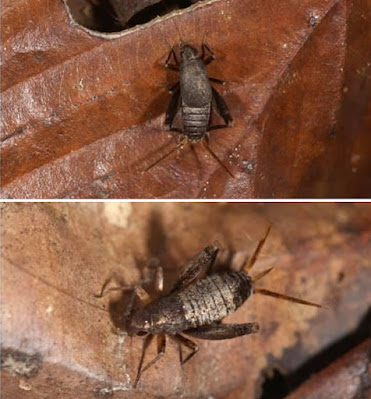
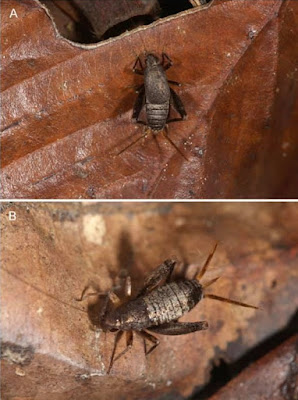
[Entomology • 2021] Cycloptiloides bimaculata & Ectatoderus nigrofasciatus • New Species and Taxonomic Notes of Scaly Crickets (Orthoptera: Mogoplistidae: Mogoplistinae) from Borneo


 Cycloptiloides bimaculata Tan, Japir & Chung,

in Tan, Japir, ... et Wahab, 2021. 

Abstract
Recent orthopteran surveys in the hyper-diverse Borneo, i.e., Brunei Darussalam and Sandakan in Sabah, allow us to review the scaly crickets from the subfamily Mogoplistinae there. We discover and describe the male, as well as formally naming Cycloptiloides bimaculata Tan, Japir & Chung, sp. nov. from Sandakan. This species was previously described as sp. 1 in a comprehensive revision by Ingrisch (2006) but only the females were known. We also describe Ectatoderus nigrofasciatus Tan & Wahab, sp. nov. from Brunei Darussalam. New locality records are reported for Apterornebius kinabalu Ingrisch, 2006 in Sandakan (Sabah) and Ornebius pullus Ingrisch, 2006 in Belait District (Brunei).

Keywords: Orthoptera, Cycloptiloides, Ectatoderus, Ornebius, Brunei Darussalam, Malaysia, Southeast Asia


Ming Kai Tan, Razy Japir, Arthur Y. C. Chung, Rodzay Bin Haji Abdul Wahab. 2021. New Species and Taxonomic Notes of Scaly Crickets (Orthoptera: Mogoplistidae: Mogoplistinae) from Borneo. Zootaxa. 5048(3); 407-421. DOI: 10.11646/zootaxa.5048.3.6


Saturday, May 15, 2021

[Entomology • 2021] Megalofaciatus foliotibialis & M. gibbosus • A Remarkable New Genus and Two New Species of the Gigantometopini (Hemiptera, Heteroptera, Miridae, Isometopinae) from Brunei


Megalofaciatus gibbosus Taszakowski, Kim & Herczek  

in Taszakowski, Kim, Damken, ... et Jung, 2021. 

Abstract
The new genus Megalofaciatus gen. nov. represented by two new species M. foliotibialis Taszakowski, Kim & Herczek sp. nov. (the type species) and M. gibbosus sp. nov. Taszakowski, Kim & Herczek (Hemiptera, Heteroptera, Miridae, Isometopinae, Gigantometopini), is described from Brunei. Photographs of the adult males and genital structures, as well as detailed SEM micrographs, are presented. The first finding of the largely modified leg in Gigantometopini is also reported.

Keywords: Hemiptera, Asia, biodiversity, Borneo, distribution, jumping tree bugs, plant bugs, true bugs


Megalofaciatus gibbosus Taszakowski, Kim & Herczek  


Artur Taszakowski, Junggon Kim, Claas Damken, Rodzay A. Wahab, Aleksander Herczek and Sunghoon Jung. 2021. A Remarkable New Genus and Two New Species of the Gigantometopini (Hemiptera, Heteroptera, Miridae, Isometopinae) from Brunei. Zootaxa. 4970(1); 171–181. DOI:  10.11646/zootaxa.4970.1.9

Tuesday, April 6, 2021

[Entomology • 2018] Varthemapistra edentata • A New Genus of Anthophorine Bees (Hymenoptera: Apidae) from Brunei


Varthemapistra edentata 
Engel, 2018


Abstract
A new genus
of anthophorine bees (Apinae: Anthophorini) is described and figured from a remarkable female collected in eastern Brunei (northern Borneo). Varthemapistra edentata Engel, new genus and species, is most similar to species of Habrophorula Lieftinck, which occur in southeastern China, and Elaphropoda Lieftinck, found broadly across Southeast Asia.  Habrophorula and the new genus both have the third submarginal cell broad anteriorly and posteriorly.  Unique among anthophorines, V. edentata has a simple female mandible, while other Anthophorini have bidentate or tridentate mandibles.  The genus is described and figured, and a revised key to the genera of Anthophorini provided.

Keywords: Anthophila; Apoidea; Apidae; Apinae; Anthophorini

Figures 1–2. Holotype female of Varthemapistra edentata, new genus and species, from Brunei.
1. Lateral habitus. 2. Dorsal habitus.

Figures 3–6. Holotype female of Varthemapistra edentata, new genus and species, from Brunei.
3. Facial view. 4. Mandible. 5. Metabasitibial plate. 6. Profle of head.


Tribe Anthophorini Dahlbom
 
Varthemapistra Engel, new genus

Diagnosis: The new genus can be distinguished in the female from other anthophorines by the simple mandible, lacking any preapical teeth (Fig. 4) (note that this is not the result of mandibular wear: vide etiam Discussion, infra).  In addition the combination of a weakly protuberant clypeus, linear malar space, metatibia with setae on outer surface distinctly fuscous medially, and forewing with the anterior border of the third submarginal cell only slightly shorter than the posterior border further serve to char-acterize the genus among other Anthophorini, in the female sex.

Etymology: The new generic name is a combination of Varthema; after Ludovico di Varthema (1470–1517), the Italian explorer who, among other things, was apparently the earliest to record accounts of Brunei based on his possible visit to the then Empire in 1505 (Temple, 1928: it should be noted, however, that while his account accords with a visit to Brunei, he may have landed elsewhere on Borneo and learned trade details from other ports on the island, e.g., Vienne, 2015); and the Latin apis (meaning, “bee”), and –istra, the diminutive suffix referencing “wild resemblance”.  The gender of the name is feminine.


Varthemapistra edentata Engel, new species

Etymology: The specific epithet refers to the absence of preapical teeth on the fe-male mandible.


Michael S. Engel. 2018. A New Genus of Anthophorine Bees from Brunei (Hymenoptera: Apidae).  Journal of Melittology. 78; 1–13. DOI: 10.17161/jom.v0i78.7488

Wednesday, September 30, 2020

[Ichthyology • 2020] Rasbora marinae • A New Species of Cyprinid Fish (Cypriniformes: Danionidae) from northwestern Borneo


 Rasbora marinae 
Tan & Kottelat, 2020

  RAFFLES BULLETIN OF ZOOLOGY. 68

Abstract
 Rasbora marinae, new species, is described from Brunei Darussalam and northern Sarawak, Borneo. It shares with R. cephalotaenia the colour pattern of a mid-lateral stripe from tip of snout to end of median caudal-fin rays and rows of black spots on the flank, including two rows along edges of the mid-lateral stripe; it differs from R. cephalotaenia in retaining the mid-lateral stripe in adults, and in the absence of a conspicuous black blotch at the middle of the caudal-fin base. 

Key words. Southeast Asia, biodiversity, taxonomy, Cypriniformes, peat swamps


Fig. 1. Rasbora marinae, ca. 60 mm SL; Sarawak: Tatau; freshly caught specimen; not preserved.

Fig. 2. Rasbora marinae, Brunei.
A, ZRC 51189, holotype, 97.1 mm SL;
B, ZRC 51190, paratype, 36.5 mm SL.

Fig. 3. Rasbora cephalotaenia, colouration of freshly caught specimens.
A, Kahayan basin, clear water stream, ca. 50 mm SL;
B, Sebangau basin, black water stream, ca. 60 mm SL.

Fig. 6. Distribution of Rasbora cephalotaenia (squares) and Rasbora marinae (circles) in Borneo and Belitung Island. Hollow symbols represent type localities.

Rasbora marinae, new species

Diagnosis. Rasbora marinae is differentiated from congeners by the following combination of characters: a mid-lateral black or dark brown stripe from the tip of the snout to the end of the median caudal-fin rays; rows of black spots on the flank, including two rows along the edges of the midlateral stripe; lateral line complete, with 30–31 + 1–2 scales; 12 circumpeduncular scale rows. Rasbora marinae is very similar to R. cephalotaenia from which it differs in retaining the mid-lateral stripe in adults (vs. stripe disappearing with increasing size, leaving only the 2 rows of black spots along its edges), and the absence of a conspicuous black blotch at the middle of the caudal-fin base (vs. presence).

Distribution. Rasbora marinae is currently found in Belait and Tutong Districts, Brunei Darussalam; and in Sarawak, north of Tatau basin including Lambir Hills, to Baram basin (see map in Fig. 6; Zakaria-Ismail, 1984; Parenti & Meisner, 1995; Sulaiman & Shahdan, 2003; Tan & Lim, 2007; unpublished data).

Etymology. This species is named for Marina Wong (Brunei Museum, retired) in appreciation of her contributions to the knowledge of the natural history of Southeast Asia and her generous help in organising fieldwork in Brunei for the first author and team.


Tan Heok Hui and Maurice Kottelat. 2020. Rasbora marinae, A New Species of Cyprinid Fish from northwestern Borneo (Teleostei: Danionidae). RAFFLES BULLETIN OF ZOOLOGY. 68: 750–758. DOI: 10.26107/RBZ-2020-0086
 

Thursday, June 18, 2020

[Arachnida • 2020] Forty-seven New Species of Sinopoda (Sparassidae: Heteropodinae) from Asia with A Considerable Extension of the Distribution Range to the South and Description of A New Species Group


Sinopoda sp. 
in Grall & Jäger, 2020. 


Abstract
Up to current knowledge, the spider genus Sinopoda Jäger, 1999 is distributed in South-, East- and Southeast-Asia. New material treated in this paper include new records from Brunei, India, Indonesia, Thailand and Vietnam. Forty-seven new Sinopoda species are described: S. aenyk spec. nov. (female; Laos), S. arboricola spec. nov. (male, female; Malaysia), S. assamensis spec. nov. (female; India), S. bifurca spec. nov. (male, female; China), S. bispina spec. nov. (male; Myanmar), S. caeca spec. nov. (female; Laos), S. chiangmaiensis spec. nov. (male, female; Thailand), S. cornuta spec. nov. (male, female; Indonesia), S. deminutiva spec. nov. (male; Laos), S. emei spec. nov. (female; China), S. empat spec. nov. (male; Malaysia), S. flexura spec. nov. (female; Indochina), S. hainan spec. nov. (male; China), S. hanya spec. nov. (male; Malaysia), S. incisura spec. nov. (female; China), S. inthanon spec. nov. (male; Thailand), S. kalaw spec. nov. (female; Myanmar), S. kambaiti spec. nov. (male; Myanmar), S. kamouk spec. nov. (female; Laos), S. kieo spec. nov. (female; Laos), S. kinabalu spec. nov. (male; Malaysia), S. konglor spec. nov. (female; Laos), S. kyee spec. nov. (female; Myanmar), S. lebar spec. nov. (female; Indonesia), S. longicymbialis spec. nov. (male, female; Thailand), S. lot spec. nov. (female; Thailand), S. maculata spec. nov. (female; Malaysia), S. mat spec. nov. (female; Vietnam), S. matang spec. nov. (male, female; Malaysia), S. nanphagu spec. nov. (female; Myanmar), S. parva spec. nov. (male; Malaysia), S. phathai spec. nov. (female; Thailand), S. phiset spec. nov. (female; Thailand), S. phom spec. nov. (male, female; Thailand), S. reinholdae spec. nov. (female; Malaysia), S. rotunda spec. nov. (female; China), S. ruam spec. nov. (female; Thailand), S. silvicola spec. nov. (male, female; China), S. sulawesia spec. nov. (male, female; Indonesia), S. tawau spec. nov. (female; Malaysia), S. thieu spec. nov. (female; Vietnam), S. tibang spec. nov. (female; Indonesia), S. tilmanni spec. nov. (male, female; Malaysia), S. tralinh spec. nov. (female; Vietnam), S. tuber spec. nov. (female; Malaysia), S. unicolor spec. nov. (female; Thailand) and S. wayala spec. nov. (female; China). The female of S. exspectata Jäger & Ono, 2001 and the males of S. scurion Jäger, 2012 and S. steineri Jäger, 2012 are described for the first time. Males of S. tengchongensis Fu & Zhu, 2008 and S. triangula Liu et al., 2008 and females of S. crassa Liu et al., 2008 and S. licenti (Schenkel, 1953) are redescribed. In addition to the okinawana-group, a second species-group is diagnosed, the chiangmaiensis-group, which includes S. chiangmaiensis spec. nov., S. lot spec. nov. and S. phathai spec. nov. All three species occur in north-western Thailand. Twenty new species are described from caves, some of which have distinct cave adaptations: S. caeca spec. nov. is the second known eyeless huntsman spider, S. kamouk spec. nov. has two remnants of eyes without pigments, S. empat spec. nov. has four remnants of eyes without pigmentation and S. tralinh spec. nov. has all eight eyes but without pigments. All other new species herein described have eight functional eyes.

Keywords: Araneae, huntsman spiders, taxonomy, cave adaptation, Southeast Asia


 Elena Grall and Peter Jäger. 2020. Forty-seven New Species of Sinopoda from Asia with A Considerable Extension of the Distribution Range to the South and Description of A New Species Group (Sparassidae: Heteropodinae). Zootaxa. 4797(1); 1-101. DOI:  10.11646/zootaxa.4797.1.1


Friday, February 21, 2020

[Mollusca • 2020] Craspedotropis gretathunbergae • A New Species of Cyclophoridae (Gastropoda: Caenogastropoda), discovered and described on A Field Course to Kuala Belalong Rainforest, Brunei


Craspedotropis gretathunbergae 
Schilthuizen, Lim, van Peursen, Alfano, Jenging, et al., 2020


Abstract
Background: 
Terrestrial Caenogastropoda form an important but threatened component of the Borneo tropical rainforest malacofauna, where the group is nearly as rich in species as the Stylommatophora. They are, however, more sensitive to drought, temperature extremes and forest degradation.

New information:
On a field course at Kuala Belalong Field Studies Centre in Brunei Darussalam (Borneo), a new caenogastropod species, belonging to the genus Craspedotropis, was discovered by the course participants. The participants decided to name the species Craspedotropis gretathunbergae n. sp., in honour of the climate change activist Greta Thunberg, as caenogastropod land snails, such as this species, are likely to suffer because of climate change.

Keywords: Land snails, Borneo, lowland dipterocarp rainforest, new species

Figure 1. Craspedotropis gretathunbergae n. sp., holotype (IBER-UBD 7.00141), shell in apertural view. Photo by Pierre Escoubas.

Figure 2. Active individual of Craspedotropis gretathunbergae n. sp. (paratype, IBER-UBD 7.00142), taken from a video file (Suppl. material 1). Image by Pierre Escoubas.

Figure 3. Craspedotropis gretathunbergae n. sp. (paratype, IBER-UBD 7.00143) a, shell with operculum in apertural view. b, detail of the body whorl in lateral view. c, detail of the shell in umbilical view.

Craspedotropis gretathunbergae, sp. n.

Nomenclature: Craspedotropis Blanford 1864 sensu Vermeulen (1999). 
Type species: Craspedotropis cuspidata (Benson 1851)

Diagnosis: Amongst the Bornean cyclophorids, Craspedotropis gretathunbergae n. sp. is most similar to C. borneensis (Godwin Austen 1889), which, however, is somewhat less slender, has 7 - 9 spiral ribs and more broadly reflected apertural lip. In addition, the operculum of C. borneensis has raised whorl margins, which is not the case in C. gretathunbergae n. sp. Other Asian species, with which the new species may be confused, are: (i) Cyathopoma conoideum Sykes 1898, which has a more slender shell and the spiral ribs arranged in a different pattern, with the second rib located just above the suture; (ii) C. sivagherrianum Beddome 1875, which is smaller, has 7 spiral ribs and a nearly closed umbilicus; (iii) C. beddomeanum Nevill 1881, which has more (7 - 8) and more prominent, spiral ribs, more globular whorls and a rounder aperture; (iv) C. procerum Blanford 1868, which is stockier, has 9 - 12 spiral ribs and a peristome that is strongly thickened by folds.

Etymology: We name this species in honour of the young climate activist Greta Thunberg, because caenogastropod microsnails from tropical rainforests, like this new species, are very sensitive to the droughts and temperature extremes that are likely to be more frequent as climate change continues. Via mutual contacts, we have approached Ms. Thunberg and learned that she would be 'delighted' to have this species named after her.

Following Recommendation 51C of the Code (ICZN 1999), if it is desired that authorship of the name be included as part of the name, instead of listing all authors, the species can be referred to as Craspedotropis gretathunbergae Schilthuizen et al., 2019, provided that all authors of the name are cited in full elsewhere in the same work, either in the text or in a bibliographic reference.

Distribution: Borneo: Brunei Darussalam: Temburong District: Ulu Temburong lowland rainforest.

Ecology: In tropical mixed dipterocarp lowland rainforest. All individuals were found alive at the foot of a steep hill-slope, next to a river bank, foraging at night on the upper surfaces of green leaves of understorey plants, up to 1 m above ground level.

Taxon discussion: 
The generic classification of minute cyclophorids in Southeast Asia is somewhat confused. The genera Craspedotropis Blanford 1864, Cyathopoma Blanford 1861 Blanford and Blanford 1861, Jerdonia Blanford 1861 (Blanford and Blanford 1861; sometimes considered a subgenus of Cyathopoma) and Ditropopsis Smith 1897 appear poorly defined and may be partly overlapping or synonymous (Vermeulen et al. 2015, Vermeulen 1999). In its general shell form (a tall conical shell with spiral ribs), the present species is similar to several species of Cyathopoma (e.g. the South Asian C. conoideum Sykes 1898, C. sivagherrianum Beddome 1875, C. beddomeanum Nevill 1881 and C. procerum Blanford 1868) and Craspedotropis, especially C. borneensis (Godwin Austen 1889), known from Sarawak. Given the geographical proximity of the latter, we have tentatively placed the new species in the same genus, Craspedotropis.

Discussion:  
All work described in this paper (fieldwork, morphological study, microphotography, taxonomic description and diagnosis) was carried out in a field centre with basic equipment and no internet access, by untrained ‘citizen scientists’ guided by expert scientists, on a 10-day taxon expedition. While we are aware that this way of working has its limitations in terms of the quality of the output (for example, we were unable to perform dissections or to do extensive literature searches), the benefits include rapid species discovery and on-site processing of materials.


 Menno Schilthuizen, Jonathan P. Lim, Anthonie D. P. van Peursen, Massimiliano Alfano, Awang Bikas Jenging, Daniele Cicuzza, Alexandre Escoubas, Pierre Escoubas, Ulmar Grafe, Jamil Ja, Peter Koomen, Aleks Krotoski, Denise Lavezzari, Laura Lim, Rudie Maarschall, Ferry Slik, Derek Steele, Dennis Teck Wah Ting, Ine van Zeeland and Iva Njunjić. 2020. Craspedotropis gretathunbergae, A New Species of Cyclophoridae (Gastropoda: Caenogastropoda), discovered and described on A Field Course to Kuala Belalong Rainforest, Brunei.  Biodiversity Data Journal. 8: e47484. DOI: 10.3897/BDJ.8.e47484