Showing posts with label Gymnophiona - Caecilian. Show all posts

Wednesday, January 21, 2026

[Herpetology • 2026] Gegeneophis valmiki • Discovery of A New Species of Gegeneophis (Gymnophiona: Grandisoniidae) highlights hidden diversity and implications for regional endemism in the Western Ghats, India


Gegeneophis valmiki 
Dinesh, Shikalgar, Adhav, Jadhav & Kulkarni, 2026. 


A new species of Gegeneophis is described from the base of the lateritic plateaus of Satara, Maharashtra, India. The new species is described based on morphological characters, metric and meristic measurements, phylogenetic analysis, genetic distances, ASAP analysis,and geographic isolation. Phylogenetic and ASAP analyses suggest the presence of an additional six lineages representing potential new species from the northern and central Western Ghats. The affinities of spatial and temporal distribution of Gegeneophis in thenorthern and central Western Ghats are discussed.

Keywords: Annulocylix caecilian, Legless amphibian, New species description, NorthernWestern Ghats, Tailless caecilians, Taxonomy


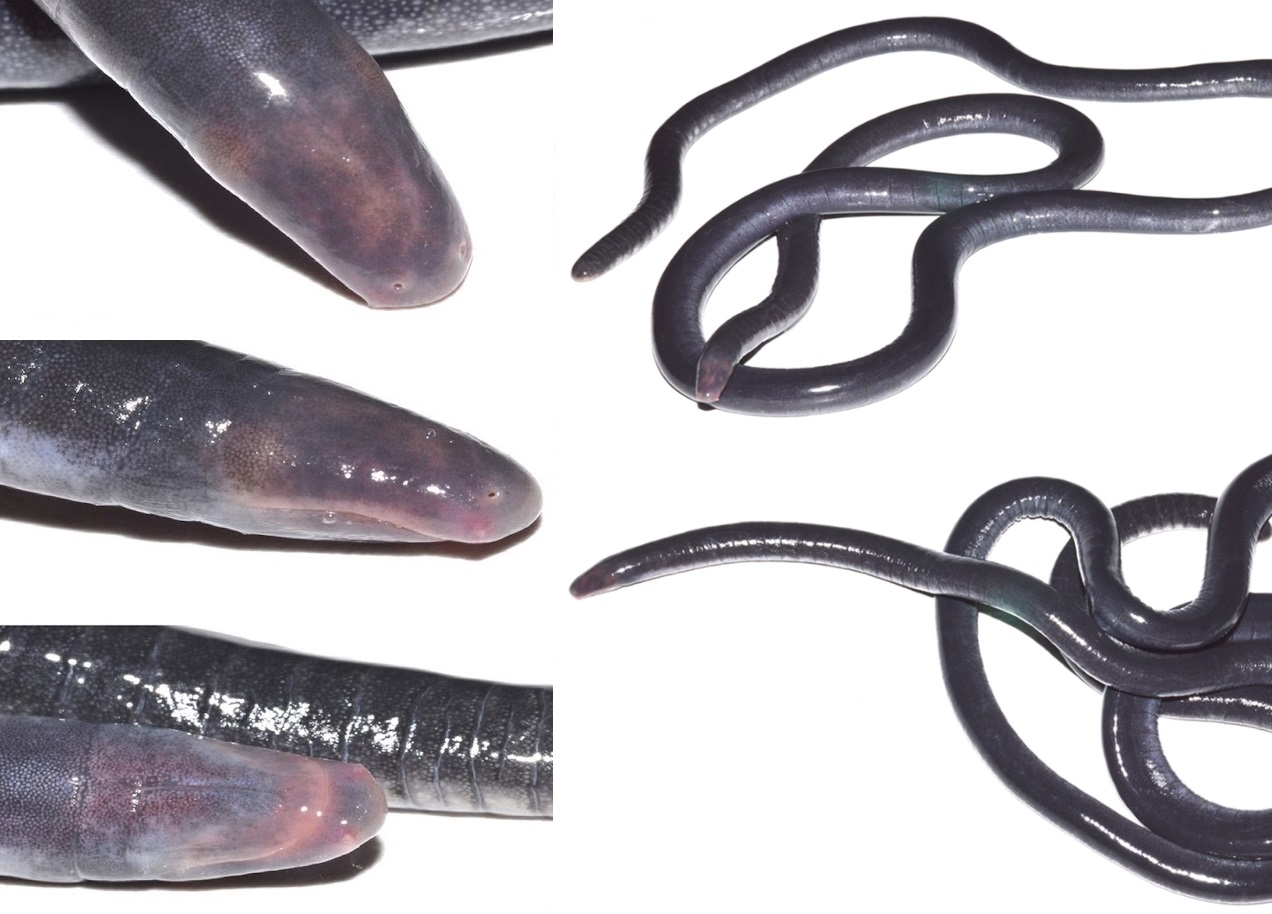
Gegeneophis valmiki sp. nov. in life
from Maharshi Valmiki Mandir, Valmiki Plateau, Paneri, Palashi, Pathan, Satara, Maharashtra, India.

Gegeneophis valmiki sp. nov.
 

 K.P. Dinesh, Sahil Shikalgar, Pranjal Adhav, Bapurao Vishnu Jadhav and Nirmal U. Kulkarni. 2026. Discovery of A New Species of Gegeneophis (Gymnophiona: Grandisoniidae) highlights hidden diversity and implications for regional endemism in the Western Ghats, India. Phyllomedusa, Journal of Herpetology24(2); 295-312. DOI: doi.org/10.11606/issn.2316-9079.v24i2p295-312

Tuesday, November 4, 2025

[Herpetology • 2025] Ichthyophis griseivermis • Integrative Taxonomy reveals A New unstriped Ichthyophis Fitzinger, 1826 (Gymnophiona: Ichthyophiidae) from Vietnam and provides new data on diagnostic osteological traits for Asian tailed caecilians


Ichthyophis griseivermis 
Poyarkov, Skorinova, Bragin, Kolchanov, Gorin, Trofimets, Yuzefovich, Le, Nguyen & Skutschas, 2025 


Abstract
Herein we examined the cranial osteology of 15 species of Ichthyophis (I. asplenius, I. beddomei, I. glutinosus, I. kohtaoensis, I. larutensis, I. mindanaoensis, I. multicolor, I. nguyenorum, I. nigroflavus, I. sikkimensis, I. singaporensis, I. supachaii, I. tricolor, I. weberi, and Ichthyophis sp. from northern Vietnam) with a special emphasis on the temporal region. We presented the first detailed description of the cranium and the atlas of an Ichthyophis species based on micro-CT scanning data. We discuss the implications of temporal region composition for the systematics of this group and the evolution of the cranium in Gymnophiona as a whole. We further provided comments on a jaw-closing mechanism and reported on the presence of phylogenetically basal cranial features in ichthyophiids that are also found in stem caecilians. Our detailed morphological description was based on a specimen from a previously unknown population of unstriped Ichthyophis from northern Vietnam. We consequently described this population as a new species based on morphological and molecular (3967 bp from cyt b, 12S rRNA, and 16S rRNA mitochondrial DNA genes) lines of evidence. We provide comparisons of external morphological traits of the new species with its congeners and further compare its cranial osteological features with other Ichthyophis for which skull descriptions exist. The new species differs from the morphologically similar species I. yangi and I. chaloensis by a significant divergence in cyt b and 16S rRNA mitochondrial DNA gene sequences (p = 6.5%–6.9% and p = 4.5%, respectively). The new species is currently known only from evergreen forests of Xuan Lien National Park (Thanh Hoa Province) and Pu Hoat (Nghe An Province) Nature Reserve, northern Vietnam, and was recorded at elevations of 700–800 m asl. We suggest the new species be considered Data Deficient (DD), following the IUCN’s Red List categories.

Keywords: Ichthyophis griseivermis sp. nov., micro-CT scanning, molecular analyses, morphology, Nghe An, osteology, Pu Hoat, taxonomy, Thanh Hoa, Xuan Lien

Family Ichthyophiidae Taylor, 1968

Genus Ichthyophis Fitzinger, 1826

Details of external morphology of the holotype of Ichthyophis griseivermis sp. nov. in life (ZMMU A-8208, adult female). A Lateral view of the head, right side; B lateral view of the head, right side; C dorsal view of the head; D ventral view of the head; E lateral view of the tail, left side; F lateral view of the tail, right side; G dorsal view of the tail; H ventral view of the tail. Scale bar equals 5 mm (all photographs shown in one scale).
Photographs by A. M. Bragin.

The holotype of Ichthyophis griseivermis sp. nov. in life in situ (ZMMU A-8208, adult female).
Photograph by A. M. Bragin.

Ichthyophis griseivermis sp. nov.

Diagnosis. The new species Ichthyophis griseivermis sp. nov. differs from other members of the genus Ichthyophis by the following combination of the morphological characters: unstriped body lacking lateral yellow stripe; adult total length 206–242 mm (based on two available specimens); snout blunt and rounded (snout length/head length ratio 0.06–0.08); tentacle aperture located closer to eye than to naris (tentacle aperture-naris distance/tentacle aperture-eye distance ratio 2.1–2.2); premaxillary and maxillary teeth 44–48, vomero-palatine teeth 43–48, dentary teeth 38, inner mandibular teeth 25–33; tail very short, acuminate, ending in a nipple-like cap; annuli angulate, total 301–306 (dorsal count), four interupted by cloacal disc, one posterior to cloacal disc, the degree of annuli angulation decreasing from head to cloaca with grooves appearing almost orthoplicate at mid-body and posteriorly; vertebrae 111–112; scales in one series per annulus (dosolaterally), present only in the posterior half of body.
 
Etymology. The specific name “griseivermis” is a Latin noun in the nominative singular, given in apposition, derived from the Latin adjective “griseus” for “grey” and the Latin noun “vermis” for “worm.” The new species is named in reference to its characteristic uniform grey body coloration. The specific epithet also alludes to Grey Worm, the commander of the Unsullied, the warrior-eunuchs of Astapor with an unparalleled reputation for combat in George R. R. Martin’s fictional work “A Song of Ice and Fire” (also known as “Game of Thrones”). We suggest the following common names for the new species: “Grey Worm Caecilian” (in English), “ếch giun xám ___” (in Vietnamese), and “Seryi rybozmey” (“____,” in Russian). 


 Nikolay A. Poyarkov, Dana D. Skorinova, Andrey M. Bragin, Veniamin V. Kolchanov, Vladislav A. Gorin, Alexey V. Trofimets, Alexander P. Yuzefovich, Dac Xuan Le, Tan Van Nguyen and Pavel P. Skutschas. 2025.  Integrative Taxonomy reveals A New unstriped Ichthyophis Fitzinger, 1826 from Vietnam and provides new data on diagnostic osteological traits for Asian tailed caecilians (Gymnophiona: Ichthyophiidae). Vertebrate Zoology. 75: 405-440. DOI: doi.org/10.3897/vz.75.e149399

Saturday, September 13, 2025

[Herpetology • 2025] Rhinatrema koki • Re-diagnoses of rhinatrematid genera and description of A New Species of Guyanese Rhinatrema Duméril & Bibron, 1841 (Gymnophiona: Rhinatrematidae)


 Rhinatrema koki
Wilkinson & Bittencourt-Silva, 2025 


Abstract
We describe a new species of the rhinatrematid caecilian genus Rhinatrema Duméril & Bibron, 1841 from Guyana based on a single specimen previously confused with the type species of Rhinatrema, R. bivittatum (Guérin-Méneville, 1838), and the more recently described Guyanese endemic R. shiv Gower, Wilkinson, Sherratt & Kok, 2010. The new species is distinctive in external morphology (a substantial pale dorsal head spot, no substantial pale dorsal tail spot), cranial osteology (many more inner than outer mandibular teeth) and mitochondrial DNA sequence data. We propose revised morphological diagnoses for the constituent genera as part of a brief systematic overview of the Rhinatrematidae Nussbaum, 1977, provide a key to the species of Rhinatrema, and present improved images of the cranial osteology of R. shiv.
 
KEYWORDS: Caecilian, computed tomography, Herpetology, Neotropics, systematics, taxonomy


Systematics
Rhinatrematidae Nussbaum, 1977
Type genus: Rhinatrema Duméril & Bibron, 1841.

Diagnosis: The only caecilians with the paired m. adductores mandibulae externi extending through the upper temporal fenestra to the mid-dorsum of the cranium.

Phylogenetic definition: All caecilians more closely related to R. bivittatum than to Caecilia tentaculata.

Distribution: Northern South America.

Content: three genera, 15 species. Amazops Wilkinson, Reynolds & Jacobs, 2021; Epicrionops Boulenger, 1883a; Rhinatrema Duméril & Bibron, 1841

Rhinatrema Duméril & Bibron, 1841

Diagnosis: Rhinatrematid caecilians with fangs (enlarged maxillary and outer mandibular teeth) and the orbit entirely within the maxillopalatine.

Phylogenetic definition: All caecilians more closely related to R. bivittatum than to A. amazops or E. bicolor.

Distribution: Brazil, French Guiana, Guyana, Suriname, Venezuela.

Content: seven species (bivittatum, gilbertogili, koki sp. nov., nigrum, shiv, ron, uaiuai).

USNM 566004, holotype of Rhinatrema koki sp. nov. with head end (top), whole body (middle) and tail end (bottom). Scale bar gradations in mm.
Photo by Harry Taylor (Natural History Museum, London).

Rhinatrema koki sp. nov.,  
Rhinatrema bivittatum Frost et al. (2006)
Rhinatrema shiv Cole et al. (2013)
 
Diagnosis: A Rhinatrema with a substantial pale dorsal head spot, no substantial pale dorsal tail spot and many more inner than outer mandibular teeth.

Etymology: The species is named in honour of Philippe J.R. Kok in recognition of his outstanding scholarship and scientific endeavours that have led to substantial and important contributions to the herpetology of the Guyana Shield. The specific epithet is a noun in the genitive case, but for nomenclatural purposes is considered a noun in apposition. Borrowing from the French, we suggest the vernacular ‘Kok’s Rhinatrème’.


Mark Wilkinson and Gabriela B. Bittencourt-Silva. 2025. Re-diagnoses of rhinatrematid genera and description of A New Species of Guyanese Rhinatrema Duméril & Bibron, 1841 (Amphibia: Gymnophiona: Rhinatrematidae). J. of Vertebrate Biology. 74(25060):25060.1-16. DOI: doi.org/10.25225/jvb.25060 [2 September 2025]
 

Monday, May 8, 2023

[Herpetology • 2023] Caecilia wilkinsoni • A New Species of Caecilia Linnaeus, 1758 (Gymnophiona: Caeciliidae) from the Pacific Lowlands of Colombia, with Comments on the Status of C. tenuissima Taylor, 1973


Caecilia wilkinsoni
Fernández-Roldán & Lynch, 2023

  
Abstract
We here describe a new species of the genus Caecilia from the Pacific lowlands of Colombia that was mistaken in previous literature as C. tenuissima, but which has more primary and secondary grooves than that species (among other differences). The description of Caecilia wilkinsoni sp. nov. restricts the known distribution of C. tenuissima to Guayaquil, Ecuador, re-establishing its status as an endemic species. We comment on the type locality of C. tenuissima, the current condition of its holotype, and on the distributions of the Caecilia that inhabit the Pacific region of Colombia.

Key words: biodiversity, caecilians, Chocó, Ecuador, Pacific lowlands


Caecilia wilkinsoni sp. nov.


Juan David Fernández-Roldán and John D. Lynch. 2023. A New Species of Caecilia Linnaeus, 1758 (Amphibia: Gymnophiona: Caeciliidae) from the Pacific Lowlands of Colombia, with Comments on the Status of C. tenuissima Taylor, 1973. Zootaxa. 5270(2); 194-206. DOI: 10.11646/zootaxa.5270.2.2

Wednesday, April 26, 2023

[Herpetology • 2023] Caecilia yaigoje • A New Caecilia (Gymnophiona: Caeciliidae) from the Colombian Amazon


Caecilia yaigoje 
 Fernández-Roldán; Medina-Rangel & Lynch, 2023

 
We here describe a new Caecilia from Parque Nacional Natural Yaigojé Apaporis, Taraira, Vaupés, Colombia, near the Brazilian border. Although this new species is only represented in collections by three specimens, it is recognizable from all other congeners by virtue of its head shape, its dentition, its counts of primary and secondary grooves, its oval dermal scales, and its small terminal shield. Although its phylogenetic relationships are unknown, it seems most similar to C. museugoeldi from French Guyana.

Holotype of Caecilia yaigoje (IAvH 5114).
 (A–B) General view of the body in dorsal and ventral view; scale bar equals 6 mm. (C, E, G) Head, collars, and first primary grooves in lateral, dorsal, and ventral view. (D, F, H) Terminus, last grooves, and vent in lateral, dorsal, and ventral view.
Scale bar equals 3.5 mm.

Caecilia yaigoje, new species 

Etymology.—This species is named after Parque Nacional Natural Yaigojé Apaporis, the first P.N.N. to be entirely designated as a protected area in response to the wishes and petitions of its native human inhabitants who believe in the conservation of the Amazon jungle and oppose any mining activities carried out in this region of Colombia. The specific epithet is used as a noun in apposition.


 Juan David Fernández-Roldán; Guido Fabian Medina-Rangel and John D. Lynch. 2023. A New Caecilia (Amphibia: Gymnophiona: Caeciliidae) from the Colombian Amazon. Ichthyology & Herpetology. 111(2); 241–247. DOI: 10.1643/h2021107

Thursday, January 26, 2023

[Paleontology • 2023] Funcusvermis gilmorei • Triassic Stem Caecilian (Lissamphibia: Gymnophionomorpha) supports dissorophoid Origin of Living Amphibians


Funcusvermis gilmorei
Kligman, Gee, Marsh, Nesbitt, Smith, Parker & Stocker, 2023 


Abstract
Living amphibians (Lissamphibia) include frogs and salamanders (Batrachia) and the limbless worm-like caecilians (Gymnophiona). The estimated Palaeozoic era gymnophionan–batrachian molecular divergence suggests a major gap in the record of crown lissamphibians prior to their earliest fossil occurrences in the Triassic period. Recent studies find a monophyletic Batrachia within dissorophoid temnospondyls, but the absence of pre-Jurassic period caecilian fossils has made their relationships to batrachians and affinities to Palaeozoic tetrapods controversial. Here we report the geologically oldest stem caecilian—a crown lissamphibian from the Late Triassic epoch of Arizona, USA—extending the caecilian record by around 35 million years. These fossils illuminate the tempo and mode of early caecilian morphological and functional evolution, demonstrating a delayed acquisition of musculoskeletal features associated with fossoriality in living caecilians, including the dual jaw closure mechanism, reduced orbits and the tentacular organ. The provenance of these fossils suggests a Pangaean equatorial origin for caecilians, implying that living caecilian biogeography reflects conserved aspects of caecilian function and physiology, in combination with vicariance patterns driven by plate tectonics. These fossils reveal a combination of features that is unique to caecilians alongside features that are shared with batrachian and dissorophoid temnospondyls, providing new and compelling evidence supporting a single origin of living amphibians within dissorophoid temnospondyls.


Digital renderings of holotype, paratype, and referred specimens of Funcusvermis gilmorei.
a–c, Composite reconstruction of craniomandibular elements in lateral (a), medial (b) and dorsal (c) views. d,e, Holotype right pseudodentary (PEFO 43891) in medial and ventral views. f, Paratype right pseudodentary (PEFO 46284) in medial view. g–i, Referred left maxillopalatine (PEFO 46481) in medial (g), ventral (h) and dorsal (i) views. j,k, Referred left pseudoangular (PEFO 46480) in medial and lateral views. l–o, Paratype right pseudodentary (PEFO 45800) in medial (l; expanded view in m) and dorsal (n; expanded view in o) views.
abcnV, alveolar branch cranial nerve V; adtr, adsymphyseal tooth row; af, adductor fossa; att, attachment tissue; bp, basal pore; cnV, cranial nerve V insertions; cp, coronoid process; dpaf, dorsal pseudoangular facet; dpdf, dorsal pseudodentary facet; dtr, dentary tooth row; dz, dividing zone; ebcnV, external branch cranial nerve V; fr, facial ramus; hp, hamate process; imf, intramandibular foramen; jas, jaw articulation surface; lcm, lateral choanal margin; lecnV, lateral exit cranial nerve V; mtr, maxillary tooth row; om, orbital margin; pap, posterior pseudoangular process; pc, pulp cavity; pd, pedicel; pgp, preglenoid process; ptr, palatal tooth row; rtl, replacement tooth locus; sf, symphyseal foramen; sp, symphyseal prongs; vpaf, ventral pseudoangular facet; vpdf, ventral pseudodentary facet. Arrows indicate anterior direction.
 
Systematic palaeontology
Lissamphibia Haeckel, 1866
Gymnophionomorpha Marjanović and Laurin, 2008

Funcusvermis gilmorei gen. et sp. nov.

Etymology. Funcus, Latinized form of the English word funky (funk is an upbeat, rhythmic form of dance music); vermisworm (Latin); in honour of the 1972 song Funky Worm from the album Pleasure by the Ohio Players. The species name honours N. Gilmore, collections manager at the Academy of Natural Sciences of Drexel University in Philadelphia, PA, USA.

Holotype. PEFO 43891, right pseudodentary, accessioned at Petrified Forest National Park, Arizona, USA.

Life restoration of Funcusvermis gilmorei (bottom) and Acaenasuchus geoffreyi (top) in a paleoenvironmental reconstruction of the Chinle Formation, Petrified Forest National Park, Arizona, USA.
 
Ben T. Kligman, Bryan M. Gee, Adam D. Marsh, Sterling J. Nesbitt, Matthew E. Smith, William G. Parker and Michelle R. Stocker. 2023. Triassic Stem Caecilian supports dissorophoid Origin of Living Amphibians. Nature. DOI: 10.1038/s41586-022-05646-5
 

Saturday, January 7, 2023

[Herpetology • 2023] Caecilia atelolepis, A. epicrionopsoides & A. macrodonta • On the Identities of Caecilia degenerata Dunn, 1942 and of C. corpulenta Taylor, 1968 (Gymnophiona: Caeciliidae) with Descriptions of Three New Species of Caecilia Linnaeus, 1758 from the Cordillera Oriental of Colombia


A) Caecilia atelolepis sp. nov.;  B) C. degenerata;
C) C. epicrionopsoides sp. nov.;  D) C. orientalis 

 Fernández-Roldán, Lynch & Medina-Rangel, 2023
Photographs A, B) by J. D. Lynch, C) by Juan Carlos Sánchez-Nivicela, and D) by Mariela Osorno-Muñoz.

Abstract
The Central portion of the Cordillera Oriental of Colombia is currently reported to harbor two species of Caecilia distributed at comparable elevations on opposite versants of these Mountains. These are C. corpulenta, known from Virolín, Santander, at 1700–2000 m on the western slopes of the Cordillera Oriental and C. degenerata, known from Garagoa, Boyacá, and Choachí and Fomequé, Cundinamarca, at 1800–2100 m on the eastern slopes of the Cordillera Oriental. Both species have dermal scales and lack secondary grooves, and have been subjected to misidentifications by herpetologists studying the Gymnophiona of the Eastern Andes of Colombia. Our results indicate that only the latter species is found in Colombia and the former is restricted to Peru, leaving those populations previously referred to C. corpulenta and those distinct from C. degenerata pending names. We here present an account for C. degenerata based on material from Choachí and Fómeque, Cundinamarca, as well as descriptions of three new species from the Cordillera Oriental and adjacent Venezuela: Caecilia atelolepis sp. nov., C. epicrionopsoides sp. nov., and C. macrodonta sp. nov. We also provide additional morphological information for the recently described C. pulchraserrana.

Key words: biodiversity, caecilians, dentition, squamation, taxonomy


General body views in life of
A) Caecilia atelolepis sp. nov. ICN 43525; B) C. degenerata ICN 58465;
C) C. epicrionopsoides sp. nov. ICN 58434; D) C. orientalis ISCA 4208.
Photographs A, B) by J. D. Lynch, C) by Juan Carlos Sánchez-Nivicela, and D) by Mariela Osorno-Muñoz.

  Caecilia atelolepis sp. nov., 
C. epicrionopsoides sp. nov., 
 C. macrodonta sp. nov.   


Juan David Fernández-Roldán, John D. Lynch and Guido Fabian Medina-Rangel. 2023. On the Identities of Caecilia degenerata Dunn, 1942 and of C. corpulenta Taylor, 1968 (Amphibia: Gymnophiona: Caeciliidae) with Descriptions of Three New Species of Caecilia Linnaeus, 1758 from the Cordillera Oriental of Colombia. Zootaxa5227(2); 205-228. DOI: 10.11646/zootaxa.5227.2.3

Tuesday, October 4, 2022

[Herpetology • 2022] Caecilia goweri • A New Species previously confused with Caecilia pachynema (Günther, 1859) (Gymnophiona: Caeciliidae) from the Cordillera Central of Colombia


Caecilia goweri
Fernandez & Lynch, 2022
 

Abstract
Caecilia pachynema is a distinctively colored species known from western Ecuador and supposedly from a remote population in the northern Cordillera Central of Colombia. Previously it had been detected that the Colombian populations of "C. pachynema’’ were likely an undescribed species. Material gathered over the past twenty years allows us to describe this new species and restrict the known distribution of C. pachynema to Ecuador.

 Keywords: Caecilians, Fossorial, Neotropical, Sexual dimorphism, Taxonomy


Head of Caecilia goweri (MHUA 8115) in (A) dorsal, (B) lateral, and (C) ventral views, in life.
Photographs by Dr. Juan Manuel Daza of MHUA.

Holotype of Caecilia goweri (MHUA 3241)
 (A) Ventral and (B) dorsal views, respectively, of whole specimen; scale bar equals 8 mm. (C) Lateral view of the head and (D) ventral view of the terminus and phallodeum; scale bar equals 3 mm.


Juan David Fernandez and John D. Lynch. 2022. A New Species previously confused with Caecilia pachynema (Günther, 1859) (Amphibia: Gymnophiona: Caeciliidae) from the Cordillera Central of Colombia.   Amphibians and Reptiles: Diversity and Natural History. DOI: 10.22201/fc.25942158e.2021.02.278
     

Monday, October 18, 2021

[Herpetology • 2021] Ichthyophis benjii • A New Striped Species of Ichthyophis Fitzinger, 1826 (Gymnophiona: Ichthyophiidae) from Mizoram, northeast India


Ichthyophis benjii  
 Lalremsanga, Purkayastha, Biakzuala, Vabeiryureilai, Muansanga & Hmar, 2021

Photos by H.T. Lalremsanga

Abstract
A new species of striped Ichthyophis is described from Mizoram State of northeast India. For its distinguishing features, Ichthyophis benjii sp. nov. has narrow (W/S >5) irregular faint lateral yellow stripes extending immediately from corner of the mouth to the level of the posterior vent, not contacting the disc, barely or not visible on the collars ventrally, patchy in the trunk region; known to attain lengths greater than 400 mm, 26 < L/W < 30; head V-shaped, short (L/H > 24); TAs (tentacular apertures) more than twice as far from nares as from eyes (TN/TE > 2); C2 (second collar) noticeably longer than C1 (frst collar). It differs from all other striped congeners, except for I. tricolor and I. multicolor, in having an indistinct pale yellowish lateral stripe that is bordered by a darker ventrolateral longitudinal stripe immediately above the pale venter on each side. It differs from I. tricolor and I. multicolor in having more AGs (annular grooves) 388–422 counted dorsally; and in having 118–124 vertebrae vs. < 120 (I. tricolor) or > 125 (I. multicolor). An analysis of mitochondrial 16s rRNA shows Ichthyophis benjii sp. nov. to be a sister taxon to I. multicolor with an uncorrected p-distance of 0.055. At present, due to the lack of data on the population status and range of distribution, we propose the species be considered as Data Defcient (DD) under the IUCN Red List criteria. 

Keywords. 16s rRNA, caecilian, conservation, Data Defcient, Ichthyophis benjii sp. nov., Indo-Burma 

 Holotype (MZMU 1479) of Ichthyophis benjii sp. nov. in life from Durtlang.
Photo by H.T. Lalremsanga.

Ichthyophis benjii sp. nov.
 
Diagnosis. Ichthyophis with narrow (W/S > 5) irregular faint lateral yellow stripes extending from immediately behind CMs to the level of the posterior of vent, not contacting the disc, barely or not visible on the collars ventrally, patchy in the trunk region; known to attain lengths greater than 400 mm, 26 < L/W < 30; head more V-shaped than U-shaped in dorsal view, short (L/H > 24); TAs more than twice as far from nares as from eyes (TN/TE > 2); without distinctive moustache-like stripes between snout tip and TAs; and C2 noticeably longer than C1. Ichthyophis benjii sp. nov. differs from all other striped congeners in having a markedly less prominent pale yellowish lateral stripe, bordered by a darker ventrolateral longitudinal stripe immediately above the pale venter on each side. It can be differentiated from I. tricolor and I. multicolor in having much higher AGs of 385–422 and 383–423 counted dorsally and ventrally, respectively.

Etymology. The species epithet “benjii” is dedicated in memory of Benjamin Lalremsanga (1988–2020, nephew of Hmar Tlawmte Lalremsanga) who used to actively assist the author(s) in their herpetofaunal surveys. 
Suggested English common name: Benji’s Caecilian

Paratypes of Ichthyophis benjii sp. nov. in life: (A) MZMU 1462 from Chhinga Veng, (B) MZMU 1481 from Tanhril, (C) MZMU 2025 from Gosen,
and (D) I. multicolor MZMU 1740 from Tuirini Bridge, Aizawl District.
Photos by H.T. Lalremsanga.


Hmar Tlawmte Lalremsanga, Jayaditya Purkayastha, Lal Biakzuala, Mathipi Vabeiryureilai, Lal Muansanga and Gospel Zothanmawia Hmar. 2021. A New Striped Species of Ichthyophis Fitzinger, 1826 (Amphibia: Gymnophiona: Ichthyophiidae) from Mizoram, northeast India. Amphibian & Reptile Conservation. 15(2) [Taxonomy Section]: 198–209 (e288). 


Wednesday, January 6, 2021

[Herpetology • 2021] Amazops amazops • A New Genus and Species of Rhinatrematid Caecilian (Gymnophiona: Rhinatrematidae) from Ecuador


Amazops amazops 
Wilkinson, Reynolds & Jacobs, 2021


Abstract
 A new genus and species of rhinatrematid caecilian, Amazops amazops gen. et sp. nov., is described based on a single specimen from Orellana, Ecuador collected in 1990. Among other features the new taxon differs from all other rhinatrematid caecilians in having less than four annular grooves interrupted in the region of the vent and in the squamosal contributing to the bony margin of the orbit. A consideration of its distinctive morphology suggests that it is plausible that the new taxon is the sister taxon of all other rhinatrematid caecilians. That the genus is known from a single specimen, and that this is the first new rhinatrematid species from the Andes described for more than 50 years, highlights the poor sampling (collecting) of rhinatrematid caecilians and limited knowledge of their diversity.

Keywords: Andes, biodiversity, computed tomography, morphology, South America, systematics, taxonomy

USNM 320729, holotype of Amazops amazops sp. nov. with head end (top), whole body (middle) and tail end (bottom). 
Scale bar gradations in mm. 
Photo by Harry Taylor (Natural History Museum, London).

CT scan of skull USNM 320729, holotype of Amazops amazops sp. nov.

The holotype of Amazops amazops sp. nov. in life [USNM 320729]. 
Photo by William W. Lamar.

Amazops gen. nov. 

Diagnosis. Rhinatrematid caecilians with the squamosal contributing to the margin of the orbit. 

Content: A single species Amazops amazops, sp. nov., the type by monotypy and by designation. 

Etymology: The name is a portmanteau word combining reference to the Amazonian provenance of the type and only known species and the distinctive topological relationships of its eye and orbit, particularly the contribution of the squamosal to the bony margin of the orbit, which is unknown in any other rhinatrematid. As mandated by the code, gender is masculine. 

Remarks: Three other features of the only known specimen of this genus are distinctive, known in no other rhinatrematids and might be diagnostic for the genus: lack of contact between the quadrate and maxillopalatine, contact between the squamosal and frontal and the small number of annular grooves that are interrupted by the vent. 

  
Amazops amazops sp. nov.
 
Etymology. As for the genus. For nomenclatural purposes the specific epithet is considered to be a genderless noun in apposition.

Remarks. That the species is known from a single specimen is sufficient reason to suggest that the IUCN conservation status of the species should be data deficient. Effort is needed to identify populations of this distinctive lineage as a precursor to any meaningful study of its natural history. Based on it being a rhinatrematid it is assumed that it will share the reproductive mode of the other rhinatrematids, as far as is known, in being oviparous with an aquatic larval stage (San Mauro et al., 2014, Müller, 2020) and thus being dependent on water bodies for its reproduction. 

 Map showing type locality (black star) of Amazops amazops sp. nov.


 Mark Wilkinson, Robert P. Reynolds and Jeremy F. Jacobs. 2021. A New Genus and Species of Rhinatrematid Caecilian (Amphibia: Gymnophiona: Rhinatrematidae) from Ecuador. Herpetological Journal. (31); 27-34. DOI: 10.33256/hj31.1.2734

Wednesday, November 6, 2019

[Herpetology • 2019] Caecilia pulchraserrana • A New Species of Caecilia (Gymnophiona, Caeciliidae) from the Magdalena Valley Region of Colombia


Caecilia pulchraserrana
Acosta-Galvis, Torres & Pulido-Santacruz, 2019


Abstract
A new species of the genus Caecilia (Caeciliidae) from the western foothills of the Serranía de los Yariguíes in Colombia is described. Caecilia pulchraserrana sp. nov. is similar to C. degenerata and C. corpulenta but differs from these species in having fewer primary annular grooves and a shorter body length. With this new species, the currently recognized species in the genus are increased to 35. Mitochondrial DNA sequences, including newly sequenced terminals representing two additional, previously unanalyzed species, corroborate the phylogenetic position of the new species within Caecilia and the monophyly of the genus. This analysis also included newly sequenced terminals of Epicrionops aff. parkeri (Rhinatrematidae) and trans-Andean Microcaecilia nicefori (Siphonopidae). Evidence was found for the non-monophyly of the family Siphonopidae and the siphonopid genera Microcaecilia and Siphonops. The implications of these results for caecilian systematics are discussed and the status of the trans-Andean populations of Caecilia degenerata is commented upon.

Keywords: Amphibia, Caecilia degenerata, Epicrionops, Microcaecilia, paraphyly, phylogeny, Siphonopidae, South America, taxonomy, tropical humid forest

Figure 3. Holotype of Caecilia pulchraserrana sp. nov.
Adult female, IAvH-Am-1548. A, B Lateral views of body C dorsal D ventral E lateral views of head F Frontal view of cephalic region, the arrow indicates the narial plug G dorsal and H lateral views of caudal region I ventral view of vent.

Figure 4. Caecilia pulchraserrana sp. nov. in life.
A Adult female, paratype, IAvH-Am-15488, TL= 232 mm B adult female, paratype, IAvH-Am-15488, TL= 232 mm C adult female, holotype, IAvH-Am-15487, TL= 206 mm D–E adult female. paratype, UIS-MHN-A-6575, TL= 195 mm.


Caecilia pulchraserrana sp. nov.

Type Locality: (Fig. 1) Colombia, Santander Department, El Carmen de Chucurí Municipality, vereda La Belleza, Cascajales River, .., 789 m a.s.l.

Diagnosis: Caecilia pulchraserrana sp. nov. differs from its congeners by the combination of having 100–104 dorsally incomplete primary annular grooves, a small size (195–232 mm), lips and ventral margin of upper jaw with a pink-orange (salmon) color (Fig. 4), and lacking secondary annular grooves and dermal scale pockets.

Distribution and natural history: Caecilia pulchraserrana sp. nov. is currently known from two adjacent, relictual tropical wet forest localities on the western slope of the Cordillera Oriental of Colombia (Serranía de los Yariquíes; Fig. 1) at elevations between 731–789 m a.s.l. The Serrania of the Yariguies corresponds to an isolated mountain range that is part of the western slope of the Cordillera Oriental of Colombia (Fig. 1). Caecilia pulchraserrana sp. nov. is a fossorial species associated with marshy areas surrounded by secondary vegetation at the forest edge (Fig. 6). The specimens were collected during the dry season in very wet soils lacking rocks (i.e., bogs; Fig. 6), in a slightly inclined area (nearly 5°of slope) covered with vegetation of the family Heliconiaceae (Heliconia spp., Fig. 6).

Figure 6. Habitat of Caecilia pulchraserrana sp. nov. in the Serranía de los Yariguíes in Santander Department, El Carmen de Chucurí Municipality, vereda La Belleza, Cascajales River, .., 789 m a.s.l.. A View showing standing water in marshy area B Transitional change of wetter (right) to drier (left) microhabitat.

Caecilia pulchraserrana sp. nov. was obtained during the initial 10 minutes of removal with a hoe.We extracted the first specimen in intermediate substrates between marshy and dry areas; after 40 minutes of excavation in these selected areas, we obtained four additional specimens. Using these same criteria, when moving two kilometers above the original point, an area with similar characteristics was located and within 20 minutes we collected two additional specimens. Caecilia pulchraserrana sp. nov. was collected on black sandy soils with high organic matter content. These caecilians move quickly under the substrate, so once the first specimen is detected it is important to quickly create channels to surround and block them from escaping.

Etymology: The specific epithet is formed from the Latin pulchra (nominative feminine singular of pulcher), meaning beauty, and the Spanish adjective serrana (feminine singular of serrano), from the sierra or serranía. This specific name refers to the type locality of the species: vereda La Belleza (beauty in English) in the western foothills of the Serranía de Los Yariguíes. The specific name was chosen using a citizen science approach. First, scientists and inhabitants of the El Carmen de Chucurí municipality gathered a list of possible names for the new species. Then, the list of potential names and their meanings was shared with the local people, who voted to choose their preferred name.


 Andrés R. Acosta-Galvis, Mauricio Torres and Paola Pulido-Santacruz. 2019. A New Species of Caecilia (Gymnophiona, Caeciliidae) from the Magdalena Valley Region of Colombia. ZooKeys. 884: 135-157. DOI: 10.3897/zookeys.884.35776