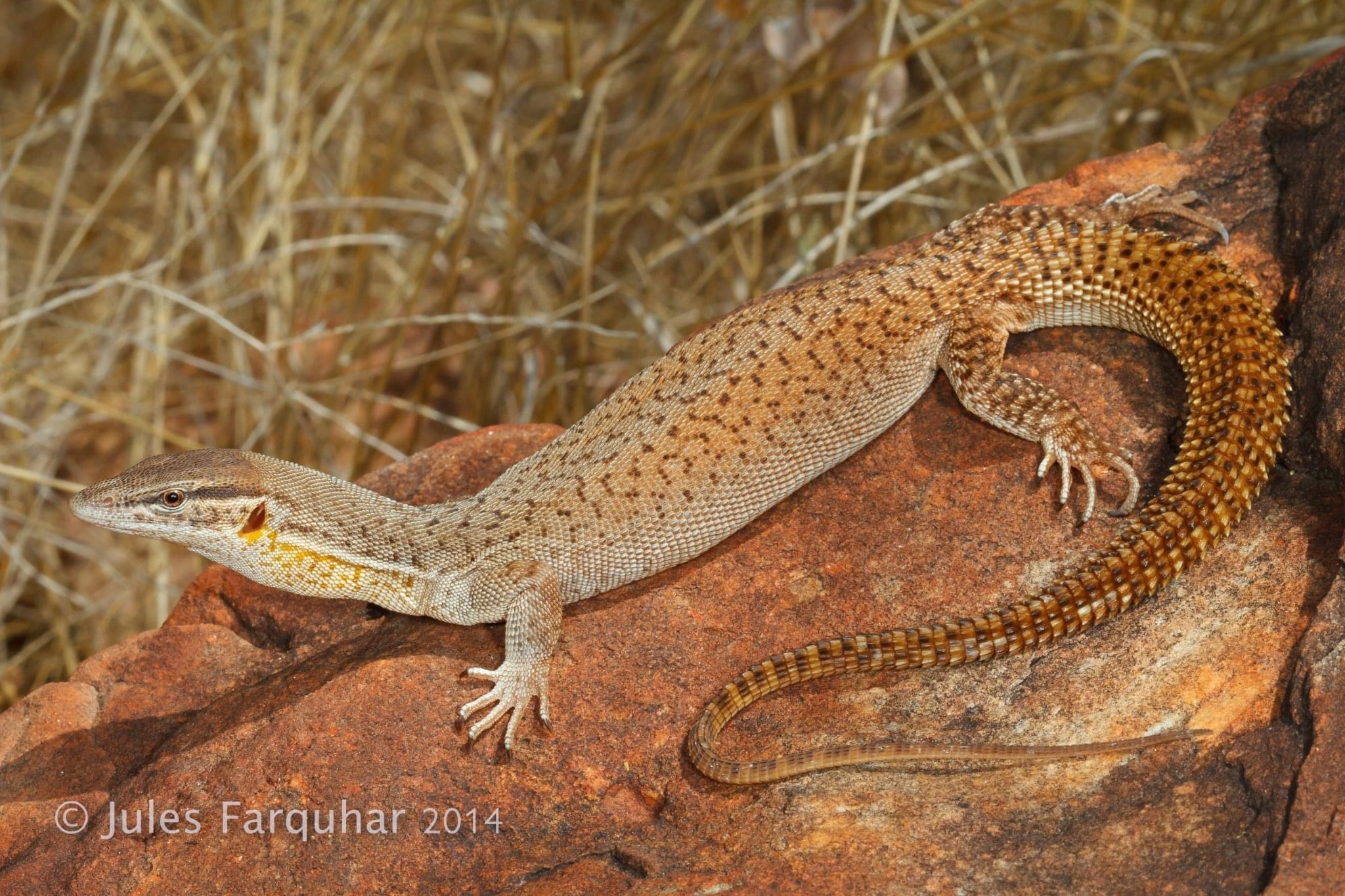
Showing posts with label Varanus. Show all posts

Wednesday, May 3, 2017

[Herpetology • 2017] Reinstatement of Varanus douarrha Lesson, 1830 As A Valid Species with Comments on the Zoogeography of Monitor Lizards (Squamata : Varanidae) in the Bismarck Archipelago, Papua New Guinea


Varanus douarrha Lesson, 1830 

Weijola, Kraus, Vahtera, Lindqvist & Donnellan, 2017 
Reinstatement of Varanus douarrha as a valid species ....  DOI: 10.1071/ZO16038 

Abstract

The distribution and taxonomy of varanid lizards occurring in the Bismarck Archipelago is revised on the basis of field surveys, examination of museum vouchers and molecular phylogenetic analyses. A total of four species is recorded: Varanus indicus and Varanus finschi on New Britain and some of its offshore islands, Varanus douarrha on New Ireland, Lavongai and Djaul, and Varanus semotus on Mussau Island. V. douarrha, previously mistaken for both V. indicus and V. finschi, is shown to be the only species represented on New Ireland and is here resurrected as a valid taxon based on an integrated approach combining morphological and molecular evidence. Phylogenetic analyses of two mitochondrial genes suggest that V. indicus is a relatively recent immigrant to the Bismarck Islands, whereas V. douarrha, V. finschi and V. semotus have significantly longer histories in the island group. Together with the recently described V. semotus the revalidation of V. douarrha doubles the number of species known to occur in the Bismarck region and highlights an important component of both local and regional endemism.

 Keywords: endemism, neotype, New Ireland, taxonomy, Varanus indicus, Varanus finschi.


Etymology: According to Lesson, the specific name douarrha was the local word for this species in Port Praslin. During fieldwork on New Ireland in 2012 VW interviewed a native speaker of the Siar-Lak language, which is what is spoken at Port Praslin. According to this local informant, the Siar-Lak word for ‘monitor’ is ‘kailam’. The word for the emerald tree skink, Lamprolepis smaragdina, is ‘dawar’, and it is possible that the words for these different species were confused by Lesson or that the application of local names has changed since his visit. Given current orthography for Siar-Lak (see en.wikipedia.org/wiki/Siar-Lak_language), it is clear that Lesson’s name was intended as a translitteration into French of the Siar-Lak name as he heard it.Words in Siar-Lak have the accent placed on the final syllable; hence, the name should be pronounced ‘dwah-rah’.


Valter Weijola, Fred Kraus, Varpu Vahtera, Christer Lindqvist and Stephen C. Donnellan. 2017. Reinstatement of Varanus douarrha Lesson, 1830 As A Valid Species with Comments on the Zoogeography of Monitor Lizards (Squamata : Varanidae) in the Bismarck Archipelago, Papua New Guinea. Australian Journal of Zoology.  DOI: 10.1071/ZO16038

  Long lost monitor lizard 're-discovered' on Papua New Guinean island http://phy.so/412940372 @physorg_com

Thursday, August 18, 2016

[Herpetology • 2016] Scale Morphology and Micro-Structure of Monitor Lizards Varanus spp. (Squamata: Varanidae) and their Allies: Implications for Systematics, Ecology, and Conservation


Varanus macraei is restricted to Batanta Island off the coast of New Guinea

Photographed by André Koch
 
  DOI: 10.11646/zootaxa.4153.1.1 

Abstract

We analysed scale morphology and micro-structure from five different body regions using scanning electron microscopy (SEM) across all nine recognized subgenera of the monitor lizard genus Varanus including 41 different species investigated. As far as we are aware, this qualitative visual technique was applied by us for the first time to most monitor lizard species and probably also to the primary outgroup and sister species Lanthanotus borneensis. A comprehensive list of 20 scalation characters each with up to seven corresponding character states was established and defined for the five body regions sampled. For the phylogenetic approach, parsimony analyses of the resulting morphological data matrix as well as Bremer and bootstrap support calculations were performed with the software TNT. Our results demonstrate that a variety of micro-ornamentations (i.e., ultra- or micro-dermatoglyphics) as seen in various squamate groups is hardly present in monitor lizards. In several species from six out of nine subgenera, however, we found a honeycomb-shaped micro-structure of foveate polygons. Two further samples of Euprepiosaurus Fitzinger, 1843 exhibit each another unique microscopic structure on the scale surface. Notably, the majority of species showing the honeycombed ultra-structure inhabit arid habitats in Australia, Africa and the Middle East. Therefore, it can be inferred that this microscopic scalation feature, which has also been identified in other desert dwelling lizard species, is taxonomically and ecologically correlated with a xeric habitat type in varanids, too. In addition, the systematic affiliation of V. spinulosus, an endemic monitor lizard species from the Solomon Islands with an extraordinary scale shape, is discussed in the light of current hypotheses about its phylogenetic position within the Varanidae. Due to its unique scalation characteristics, in combination with other morphological evidence, a new monotypic subgenus, Solomonsaurus subgen. nov., is erected for this enigmatic monitor lizard species. Furthermore, we propose a taxonomic splitting of the morphologically and ecologically heterogeneous subgenus Euprepiosaurus comprising the Pacific or mangrove and the tree monitor lizards, respectively, again based on the SEM data. Thus, for the members of the highly arboreal V. prasinus species group erection of a new subgenus, Hapturosaurus subgen. nov., is justified based on the autapomorphic scale shape in concert with further morphological, phylogenetic and ecological evidence. In addition, V. reisingeri originally described as a distinct species is considered conspecific with the wide-spread V. prasinus due to joint synapormorphic features in the ventral scale micro-structure. Consequently, V. prasinus is (again) rendered polytypic with the taxon reisingeri being assigned subspecies status here.

        In conclusion, the established scalation characters allow discrimination of single species even among closely-related Varanus species, such as the members of the V. indicus species group. Together with a recently published identification key for Southeast Asian monitor lizards based on macroscopic phenotypic characters (Koch et al. 2013), the SEM-pictures of the present study may serve as additional references for the microscopic identification of CITES-relevant monitor lizard skins and products, respectively.

Keywords: Reptilia, scanning electron microscopy (SEM), species determination, Convention on International Trade in Endangered Species of Wild Fauna and Flora (CITES)


The attractive Varanus macraei is restricted to Batanta Island off the coast of New Guinea. It is probably highly threatened by the commercial pet trade.
Photographed by André Koch

Yannick Bucklitsch, Wolfgang Böhme and André Koch. 2016. Scale Morphology and Micro-Structure of Monitor Lizards (Squamata: Varanidae: Varanus spp.) and their Allies: Implications for Systematics, Ecology, and Conservation. Zootaxa. 4153(1);   DOI: 10.11646/zootaxa.4153.1.1
André Koch, Thomas Ziegler, Wolfgang Böhme, Evy Arida and Mark Auliya. 2013. Pressing Problems: Distribution, Threats, and Conservation Status of the Monitor Lizards (Varanidae: Varanus spp.) of Southeast Asia and the Indo-Australian Archipelago.  Herpetological Conservation and Biology. 8(Monograph 3); 1-62.

Wednesday, February 24, 2016

[Herpetology • 2016] Varanus semotus • A New Blue-tailed Monitor Lizard (Squamata, Varanus) of the Varanus indicus group from Mussau Island, Papua New Guinea


Varanus semotus 
Weijola, Donnellan & Lindqvist, 2016

an adult in its habitat at the outskirts of Nai (photos by VW), and a juvenile (photo by Quetzal Dwyer).

Abstract
We describe a new species of Varanus from Mussau Island, north-east of New Guinea. The new species is a member of the Varanus indicus species group and is distinguished from all other members by both morphological and molecular genetic characters. It is the third species of Varanus reported from the Bismarck Archipelago and the first record of a yellow tongued member of the Varanus indicus species group from a remote oceanic island. The herpetofauna of Mussau Island has not been well studied but the discovery of this new species is in accordance with recent findings indicating that the island may harbor several unknown endemic vertebrates. The distribution of the closely related Varanus finschi is also discussed in the light of recent fieldwork and a review of old records.

Keywords: Melanesia, Bismarck Archipelago, St. Matthias islands, Varanidae, Varanus doreanus, Varanus finschi, Varanus yuwonoi, mitochondrial phylogeny, biogeography, taxonomy


Figure 3. A–C Images of live Varanus semotus at Nai on Mussau Island.
A an adult in its habitat at the outskirts of Nai B an adult basking on the trunk of a palm tree (photos by VW), and C a juvenile (photo by Quetzal Dwyer).

Etymology: The specific epithet semotus is Latin for distant or remote and refers to the isolated occurrence on Mussau, separated by several hundred kilometers from its closest relatives. The term is employed as a masculine adjective.

Diagnosis: Varanus semotus sp. n. is distinguished from all other species of Varanus by a combination of the following characters. (1) Tongue white/pinkish to pale yellow (white in preservative) occasionally with small patches of dark pigmentation, the yellow pigment concentrated along the mid-dorsal line and the dorsal surface of the tines (Fig. 2). (2) Gular region marbled in black and cream-white. (3) The tail of adult individuals is indistinctly banded on the distal half, with a varying degree of turquoise to bluish pigmentation on the distal 2/3. (4) Juveniles are black with white spots on the head, yellow and orange spots on the dorsum, and have well defined cream colored to pale greenish tail bands (Fig. 3C). (5) The number of dorsal scales, XY, ranges from 149 to 153. (6) The number of midbody scale rows, S, ranges from 152 to 161. (7) The dorsum is black with single- and clustered groups of dispersed yellow/orange scales. (8) There are several complete rows of paryphasmata across the asulcal side of the hemipenis below the lobes. (9) Geographical distribution restricted to Mussau Island.


Distribution: Varanus semotus is known so far only from Mussau, an island of 414 sq.km in the northern Bismarck Sea (Fig. 5). According to some of the locals on Mussau, monitors are absent from Emirau, the second largest island of the St. Matthias group, but this needs confirmation from fieldwork. It is also unknown whether this species occurs on the other two nearby islands Emananus and Eloaua.


Natural history: A total of 16 observations were made during fieldwork on Mussau, all of them along the coast near the village of Nai at the SE corner of the island. Searches in the secondary growth forest of the interior of the island and in the mangrove forests near Palakau did not produce any observations. The relatively dry coastal vegetation near Nai comprises a mixture of coconut palms, pandanus and other trees and shrubs able to persist in the karst, limestone and salt spray affected area (Fig. 6). In this vegetation type monitors appeared to be relatively common. Just south of the village there is a freshwater spring with a small area of Sago palms which was also a popular site for monitors. The lizards were usually spotted either as they were foraging on the ground and quickly fled up in trees, or while they were basking on the trunks of palms or other trees. The specimens collected as vouchers were noosed from trees with a long pole. As is typical of the closely related V. doreanus, V. finschi and V. yuwonoi the specimens were exceedingly aggressive and inclined to bite when captured and handled. Stomach content analysis of the three ZMUT specimens revealed a total of five reptile eggs (3,2,0) and one small skink. All stomachs contained the remains of crabs. Philipp et al. (2007) recorded a bird as the stomach content of ZMUC 4272.


Conservation. The field observations indicate that V. semotus doesn’t occur, or possibly only at low densities, in the highly degraded secondary forest/bush of large parts of the interior of the island. It is likely that the species occurred throughout Mussau prior to the large scale logging activities of the past three decades (Venter and Arihafa 2015). Thus the species is now mostly restricted to the coastal strip of a relatively small isolated island. Possible threats to the future survival of this species would be the introduction of cane toads which were widely established in the PNG islands during WW2 (Zug et al. 1975). According to unconfirmed accounts by locals they already occur on Emirau Island which also according to local inhabitants on Mussau lack monitor lizards. Varanus semotus is the only large-sized terrestrial generalist predator and scavenger on the island, and may well fill an important ecological function, making it of particular conservation concern. The new species is unusual inasmuch as it fills a role normally occupied by Mangrove monitors on isolated Pacific islands and it can well be considered a biogeographical oddity.


 Valter Weijola, Stephen Donnellan and Christer Lindqvist. 2016. A New Blue-tailed Monitor Lizard (Reptilia, Squamata, Varanus) of the Varanus indicus group from Mussau Island, Papua New Guinea. ZooKeys. 568: 129-154. DOI:  10.3897/zookeys.568.6872


Tuesday, June 30, 2015

[Herpetology / Paleontology • 2015] Deep Nesting in A Lizard Varanus panoptes, Déjà Vu Devil's Corkscrews: First Helical Reptile Burrow and Deepest Vertebrate Nest


Figure 2. Composite Varanus panoptes nesting burrow based on actual burrow dimensions. The burrow is plugged with soil, except for the top-most 0.5 m and the nest chamber.
Scale bar = 3 m.

Abstract
Dating back to 255 Mya, a diversity of vertebrate species have excavated mysterious, deep helical burrows called Daimonelix (devil's corkscrews). The possible functions of such structures are manifold, but their paucity in extant animals has frustrated their adaptive explanation. We recently discovered the first helical reptile burrows, created by the monitor lizard Varanus panoptes. The plugged burrows terminated in nest chambers that were the deepest known of any vertebrate, and by far the deepest of any reptile (mean = 2.3 m, range = 1.0–3.6 m, N = 52). A significant positive relationship between soil moisture and nest depth persisted at depths > 1 m, suggesting that deep nesting in V. panoptes may be an evolutionary response to egg desiccation during the long (approximately 8 months) dry season incubation period. Alternatively, lizards may avoid shallower nesting because even slight daily temperature fluctuations are detrimental to developing embryos; our data show that this species may have the most stable incubation environment of any reptile and possibly any ectotherm. Soil-filled burrows do not support the hypothesis generated for Daimonelix that the helix would provide more consistent temperature and humidity as a result of limited air circulation in dry palaeoclimates. We suggest that Daimonelix were used mainly for nesting or rearing young, because helical burrows of extant vertebrates are generally associated with a nest. The extraordinary nesting in this lizard reflects a system in which adaptive hypotheses for the function of fossil helical burrows can be readily tested.

Keywords: DaimonelixDiictodon; eggs; nest-site choice; Palaeocastor; Varanus panoptes


J. Sean Doody, Hugh James, Kim Colyvas, Colin R. Mchenry and Simon Clulow. 2015. Deep Nesting in A Lizard, Déjà Vu Devil's Corkscrews: First Helical Reptile Burrow and Deepest Vertebrate Nest. Biological Journal of the Linnean Society. DOI: 10.1111/bij.12589


J. Sean Doody, Hugh James, Ryan Ellis, Nick Gibson, Mitchell Raven, Stephen Mahony, David G. Hamilton, David Rhind, Simon Clulow, and Colin R. McHenry. 2014. Cryptic and Complex Nesting in the Yellow-Spotted Monitor, Varanus panoptesJournal of Herpetology. 48(3); 363-370. DOI: 10.1670/13-006

Friday, May 1, 2015

[Herpetology • 2015] A Single Species of Mangrove Monitor (Varanus, subgenus Euprepiosaurus) occupies Ambon, Seram, Buru and Saparua, Moluccas, Indonesia


Fig. 1. Mangrove monitors and their habitats: Varanus cerambonensis on Ambon (A) and Buru (D). V. rainerguentheri on Halmahera (E) and Obi (F). Coastal vegetation on Ambon (G) and Nipa swamp (H).
Photographs by Valter Weijola.

Abstract
According to current literature the islands of the central Moluccan region harbor at least three species of monitor lizards. This suggests similar patterns of species richness to the northern Moluccas and could imply significant taxonomic and ecological complexity throughout the Moluccan region. Field investigations in habitats from sea level up to 300 m elevation failed to locate more than one widespread species, by definition referable to Varanus indicus (type locality Ambon). Reassessments of records for other species of mangrove monitors show that these can either be attributed to taxonomic mis-identifications or to colonial-era specimens lacking reliable collection data. We test Principal Components Analysis of scalation characters as a diagnostic tool for some of the island populations and species within the Varanus indicus group.

Key words. Monitor, Euprepiosaurus, Varanus indicus, Varanus cerambonensis, Varanus rainerguentheri, Moluccas, habitat use


Fig. 1. Mangrove monitors and their habitats: Varanus cerambonensis on Ambon (A), Seram (B), and Buru (C, D). Varanus rainerguentheri on Halmahera (E) and Obi (F).
Coastal vegetation on Ambon (G) and Nipa swamp (H).
Photographs by Valter Weijola.


Citation: Weijola V, Sweet SS. 2015. A Single Species of Mangrove Monitor (Varanus) occupies Ambon, Seram, Buru and Saparua, Moluccas, Indonesia.
Amphibian & Reptile Conservation. 9(1) [General Section]: 14–23 (e95).

Friday, April 10, 2015

[Herpetology • 2015] Varanus nesterovi • A New Species of Desert Monitor Lizard (Varanidae: Varanus: Psammosaurus) from the Western Zagros region (Iraq, Iran)

Varanus (Psammosaurusnesterovi
 Böhme, Ehrlich, Milto, Orlov & Scholz, 2015

ABSTRACT
We describe a new species of desert monitor lizard from the western and southwestern foothills of the Zagros Mountains. From Varanus griseus and its nominal subspecies V. g. griseus, V. g. caspius, and V. g. koniecznyi it is easily distinguishable by its stout head shape, the shape and position of the nostril, an extremely rough and spiny neck scalation, a laterally compressed tail with a double-keeled dorsal crest throughout its length, a nearly uniformly colored dorsum and an unpatterned light yellowish distal half of tail. Geographically, the new species seems to be restricted to the western and southwestern margin of the Zagros Mountain range and seems to prefer medium altitudes between 500 and 1100 m a.s.l. The new species renders the current subgenus Psammosaurus as consisting of more than one single living species.


Wolfgang Böhme, Klaus Ehrlich, Konstantin D. Milto, Nikolay Orlov and Sebastian Scholz. 2015. A New Species of Desert Monitor Lizard (Varanidae: Varanus: Psammosaurus) from the Western Zagros region (Iraq, Iran). Russian Journal of Herpetology. 22(1): 41-52.


Thursday, January 15, 2015

[Herpetology • 2014] Integrative Taxonomy and Phylogeny-based Species Delimitation of Philippine Water Monitor Lizards (Varanus salvator Complex) with Descriptions of Two New Cryptic Species; Varanus dalubhasa & V. bangonorum


Varanus dalubhasa and V. bangonorum
Welton, Travers, Siler & Brown, 2014

Abstract

We describe two new species of morphologically cryptic monitor lizards (genus Varanus) from the Philippine Archipelago: Varanus dalubhasa sp. nov. and V. bangonorum sp. nov. These two distinct evolutionary lineages are members of the V. salvator species complex, and historically have been considered conspecific with the widespread, northern Philippine V. marmoratus. However, the new species each share closer phylogenetic affinities with V. nuchalis (and potentially V. palawanensis), than either does to one another or to V. marmoratus. Divergent from other recognized species within the V. salvator Complex of water monitors by as much as 3.5% pairwise genetic distance, these lineages are also distinguished by unique gular coloration, metrics of body size and scalation, their non-monophyly with “true” V. marmoratus, and insular allopatric distributions, suggesting biogeographically distinct and unique evolutionary histories. We compare the new species with the most geographically proximate and phenotypically relevant lineages.  Although we show that these new taxa are nearly indistinguishable morphologically from V. marmoratus, both species can be readily distinguished from their closest relatives (each’s respective sister taxon, V. palawanensis and V. nuchalis) by traditional morphological characters.  Our findings underscore the high herpetological diversity and biogeographical complexity of vertebrates in the Philippines, and further emphasize the need for detailed study of species-level diversity, mechanisms of reproductive isolation, gene flow, and biologically relevant boundaries between taxa within the V. salvator Complex.

Keywords: biogeography, cryptic diversity, Southeast Asia, Varanidae, within-island speciation


Welton, Luke J., Scott L. Travers, Cameron D. Siler & Rafe M. Brown. 2014. Integrative Taxonomy and Phylogeny-based Species Delimitation of Philippine Water Monitor Lizards (Varanus salvator Complex) with Descriptions of Two New Cryptic Species.
Zootaxa. 3881(3); 201–227. DOI: 10.11646/zootaxa.3881.3.1
Undercover researchers expose new species of lizard for sale on Philippine black market
http://phy.so/340546124 via @physorg_com


Monday, December 22, 2014

[Herpetology • 2014] Varanus sparnus | Dampier Peninsula Goanna • A New Diminutive Species of Varanus from the Dampier Peninsula, western Kimberley region, Western Australia


Varanus sparnus Doughty, Kealley, Fitch & Donnellan, 2014

ABSTRACT  
Varanus lizards in Australia are moderately diverse and include a radiation of small-bodied species that occur in arid or tropical environments. Varanus brevicauda is the smallest species, with an elongate body and short prehensile tail and is associated with spinifex clumps in arid environments. Recently collected unusual specimens at the north-western edge of the range of V. brevicauda on the Dampier Peninsula, Western Australia, had an even more elongate body and also co-occurred with typical V. brevicauda. This led us to conduct a morphological and molecular genetic systematic appraisal of the two morphotypes. We found that the more elongate specimens were highly divergent genetically from both typical V. brevicauda and another related species, V. eremius,
with the three lineages forming a polytomy. Morphologically, the elongate specimens are most similar to V. brevicauda, but possess a more elongate body, less robust head and limbs, distinctive scales on the front of the arms that are large, squarish and lacking surrounding granules and a plainer pattern and colouration. The co-occurrence of both forms on the Dampier Peninsula in combination with the extent and pattern of genetic divergence and presence of key morphologically diagnostic traits unequivocally demonstrates that more elongate form is a new species, which we describe here. The new species may be of conservation concern owing to the small range of the only known specimens and development proposals in the area.

KEYWORDS: Goanna, monitor lizard, Varanus brevicauda, Varanus sparnus sp. nov.


TAXONOMY
Family Varanidae Merrem, 1820
Genus Varanus Merrem, 1820

TYPE SPECIES:  Varanus sparnus sp. nov.
[Dampier Peninsula Goanna]


Paul Doughty, Luke Kealley, Alison Fitch and Stephen C. Donnellan. 2014. A New Diminutive Species of Varanus from the Dampier Peninsula, western Kimberley region, Western Australia. Records of the Western Australian Museum. 29 128–140. 

Thursday, February 27, 2014

[Herpetology • 2014] Varanus hamersleyensis • Molecular and Morphological Assessment of Varanus pilbarensis (Squamata: Varanidae), with a description of a new species from the southern Pilbara, Western Australia


Varanus (Odatria) hamersleyensis
Maryan, Oliver, Fitch & O'Connell 2014

Abstract
Varanus pilbarensis Storr, 1980 is a specialised saxicolous varanid endemic to the Pilbara region of Western Australia. We present genetic and morphological evidence confirming the existence of a divergent southern lineage, here described as V. hamersleyensis sp. nov.. The new species differs noticeably in having a darker colouration and a reduced pattern of small whitish ocelli on the dorsal surface of the limbs only with a largely unbanded tail. By contrast, V. pilbarensis which is redescribed and restricted to the northern lineage, is paler and more boldly patterned with large greyish ocelli on the dorsal and lateral surfaces of the body and a strongly banded tail. The two species have discrete distributions centred on the Chichester and Hamersley Ranges to the north and south of the Fortescue River Basin. This pattern of intraregional genetic structuring is similar to that found in a number of other saxicolous lizard lineages from the Pilbara. 

Key words: goanna, Chichester Range, Hamersley Range, Fortescue River Basin, mtDNA divergence


Maryan B, Oliver PM, Fitch AJ and O'Connell M. 2014. Molecular and Morphological Assessment of Varanus pilbarensis (Squamata: Varanidae), with a description of a new species from the southern Pilbara, Western Australia. Zootaxa. 3768(2): 139-158.

[Herpetology • 2010] Varanus bitatawa • A Spectacular New Philippine Monitor Lizard reveals a Hidden Biogeographic Boundary and a Novel Flagship Species for Conservation


Northern Sierra Madre forest monitor Varanus bitatawa
Welton, Siler, Bennett, Diesmos, Duya, Dugay, Rico, Van Weerd & Brown 2010

As humans continue to explore the last uncharted regions of the planet, discoveries of previously unknown species of large vertebrates have become infrequent. Here, we report on the discovery of a spectacular new species of giant, secretive, frugivorous, forest monitor lizard (Genus: Varanus) from the forests of the northern Philippines. Using data from morphology and mitochondrial and nuclear DNA sequences, we demonstrate the taxonomic distinctiveness of this new 2 m long species and provide insight into its historical biogeography and systematic affinities. Our molecular phylogenetic analyses indicate that the new species is closely related to Varanus olivaceus (from southern Luzon and nearby islands), but it differs from this and other varanids with respect to characteristics of scalation, colour pattern, body size, anatomy of the reproductive organs and genetic divergence. The new species appears to be restricted to forests of the central and northern Sierra Madre mountain range; it is separated from the range of V. olivaceus by a more than 150 km stretch that includes at least three low-elevation river valley barriers to dispersal. This discovery identifies a seldom-perceived biogeographic boundary and emphasizes the need for continued biodiversity research in the megadiverse conservation hotspot of the Philippines. It is anticipated that the new species will serve as an important flagship species for conservation efforts aimed at preserving the remaining forests of northern Luzon.

Keywords: biodiversity, conservation hotspots, flagship species, frugivory, Sierra Madre, Varanus


Varanus bitatawa sp. nov.

Etymology: The specific epithet is derived from bitatawa, the Agta tribespeoples' common name for the new species.


One of the first photographs in life of the newly discovered (Welton et al. 2010)
Varanus bitatawa (KU 322188) from Barangay Dibuluan, San Mariano.


Luke J. Welton, Cameron D. Siler, Daniel Bennett, Arvin Diesmos, M. Roy Duya, Roldan Dugay, Edmund Leo B. Rico, Merlijn Van Weerd and Rafe M. Brown. 2010. A Spectacular New Philippine Monitor Lizard reveals a Hidden Biogeographic Boundary and a Novel Flagship Species for Conservation. Biology Letters. 6 (5): 654–658. doi: dx.doi.org/10.1098/rsbl.2010.0119

Brown R, Siler C, Oliveros C, Welton L, Rock A, Swab J, Van Weerd M, van Beijnen J, Rodriguez D, Jose E, Diesmos A 2013. The amphibians and reptiles of Luzon Island, Philippines, VIII: The herpetofauna of Cagayan and Isabela Provinces, northern Sierra Madre Mountain Range. ZooKeys. 266: 1. DOI: dx.doi.org/10.3897/zookeys.266.3982.

Thursday, June 27, 2013

[Herpetology / Evolution • 2009] A Central Role for Venom in Predation by Varanus komodoensis (Komodo Dragon) and the Extinct Giant Varanus (Megalania) priscus


Fig. 2. Anatomical investigation of the Varanus komodoensis venom system. (A) Magnetic resonance imaging of the V. komodoensis head showing the protein-secreting mandibular venom gland, with the 6 compartments colored in alternating red and pink (C1–C6), and the mucus-secreting infralabial gland in yellow (L).
(B) Longitudinal MRI section showing the large duct emerging separately from each compartment of the mandibular venom gland and threading between the mucus lobes of the infralabial gland to terminate between successive teeth (black oval areas).
(C) Transverse MRI section showing the large central lumen of the mandibular venom gland and individual lobes of the labial gland.
(D) Transverse histology of Masson’s Trichromestained section showing the intratubular lumina of the mandibular venom gland that feed into the large central lumen.
(E) Transverse histology of Masson’s Trichrome-stained section of a mucus infralabial gland showing numerous tightly packed internal lobules (note that the 6 large dark folds are histology artifacts).

Abstract
The predatory ecology of Varanus komodoensis (Komodo Dragon) has been a subject of long-standing interest and considerable conjecture. Here, we investigate the roles and potential interplay between cranial mechanics, toxic bacteria, and venom. Our analyses point to the presence of a sophisticated combined-arsenal killing apparatus. We find that the lightweight skull is relatively poorly adapted to generate high bite forces but better adapted to resist high pulling loads. We reject the popular notion regarding toxic bacteria utilization. Instead, we demonstrate that the effects of deep wounds inflicted are potentiated through venom with toxic activities including anticoagulation and shock induction. Anatomical comparisons of V. komodoensis with V. (Megalania) priscus fossils suggest that the closely related extinct giant was the largest venomous animal to have ever lived.

Keywods: evolution, phylogeny, squamate, protein, toxin


Fry, B., Wroe, S., Teeuwisse, W., van Osch, M., Moreno, K., Ingle, J., McHenry, C., Ferrara, T., Clausen, P., Scheib, H., Winter, K., Greisman, L., Roelants, K., van der Weerd, L., Clemente, C., Giannakis, E., Hodgson, W., Luz, S., Martelli, P., Krishnasamy, K., Kochva, E., Kwok, H., Scanlon, D., Karas, J., Citron, D., Goldstein, E., Mcnaughtan, J., & Norman, J. 2009. A Central Role for Venom in Predation by Varanus komodoensis (Komodo Dragon) and the Extinct Giant Varanus (Megalania) priscus. Proceedings of the National Academy of Sciences 


Tuesday, March 19, 2013

[Herpetology / Conservation • 2013] Pressing Problems: Distribution, threats, and conservation status of the Monitor Lizards (Varanidae: Varanus spp.) of Southeast Asia and the Indo-Australian Archipelago


Abstract
We update an earlier review (Mertens 1959) of the monitor lizards of Southeast Asia and the Indo-Australian Archipelago, emphasizing the importance of this island region as a center of varanid diversity and endemism. Currently, 44 monitor lizard species (i.e., 60% of the known global varanid diversity) are recognized from this vast study region. New Guinea and the surrounding offshore islands harbor the highest diversity in terms of species (15) and subgenera (four). We provide a detailed identification key to all monitor lizards found in the study area. Moreover, we critically review the conservation status of all monitor lizard species involved as needed in light of urgent conservation issues. Major threats to monitor lizards include: (1) habitat destruction; (2) the international trade in reptile skins and in monitors as pets; and (3) human consumption. Current export figures of seven focal monitor species (i.e., Varanus beccarii, V. boehmei, V. macraei, V. melinus, V. prasinus, V. salvator, and V. yuwonoi) of the commercial skin and pet trade reflect export allowances that are not based on sound information from population studies, meaning that current harvest levels may be unsustainable and could threaten the viability of these Indonesian island endemics. Therefore, these monitor lizard species require special attention by the relevant authorities and conservationists of both the source and the consuming countries. The conservation status of all monitor lizard species and their assessment in the International Union for Conservation of Nature (IUCN) Red List is in need of a critical update and we strongly recommend the establishment of an IUCN Species Survival Commission (SSC) Monitor Specialist Group. Therefore, this review of distribution, threats, and conservation status of Southeast Asian and Indo-Australian monitor lizards is intended to support customs officers and other government agents in: (1) more strictly enforcing the regulations of the Convention on International Trade in Endangered Species of Wild Fauna and Flora (CITES); (2) monitoring trade activities, annual harvest levels, and export quotas; (3) in reducing current unsustainable harvest levels; and, (4) in reducing over-exploitation and extinction risks of Varanus spp. in the wild. 

Key Words.— conservation status; deforestation impact; Indonesia; New Guinea; Philippines; species diversity; trade impact


Koch, André, Thomas Ziegler, Wolfgange Böhme, Evy Arida, and Mark Auliya. 2013. Pressing Problems: Distribution, threats, and conservation status of the monitor lizards (Varanidae: Varanus spp.) of Southeast Asia and the Indo-Australian Archipelago. Herpetological Conservation and Biology. 8(Monograph 3):1-62.