Showing posts with label Anthropocene. Show all posts

Saturday, March 11, 2023

[Paleontology • 2023] Dwarfism and Gigantism Drive Human-mediated Extinctions on Islands


 Sardinian Dwarf Mammoth Mammuthus lamarmorai, Sardinian Giant Otter Megalenhydris barbaricina, Deer, Sardinian Dhole Cynotherium sardous and Giant Pica.


in Rozzi, Lomolino, van der Geer, Silvestro, ... et Chase, 2023. 
Illustration by Peter Schouten

Abstract
Islands have long been recognized as distinctive evolutionary arenas leading to morphologically divergent species, such as dwarfs and giants. We assessed how body size evolution in island mammals may have exacerbated their vulnerability, as well as how human arrival has contributed to their past and ongoing extinctions, by integrating data on 1231 extant and 350 extinct species from islands and paleo islands worldwide spanning the past 23 million years. We found that the likelihood of extinction and of endangerment are highest in the most extreme island dwarfs and giants. Extinction risk of insular mammals was compounded by the arrival of modern humans, which accelerated extinction rates more than 10-fold, resulting in an almost complete demise of these iconic marvels of island evolution.

Illustration of Sardinian Dwarf Mammoth Mammuthus lamarmorai, Sardinian Giant Otter Megalenhydris barbaricina, Deer, Sardinian Dhole Cynotherium sardous and Giant Pica.
Artwork: Peter Schouten
 studioschouten.com.au
  

  Roberto Rozzi, Mark V. Lomolino, Alexandra A. E. van der Geer, Daniele Silvestro, S. Kathleen Lyons, Pere Bover, Josep A. Alcover, Ana Benítez-López, Cheng-Hsiu Tsai, Masaki Fujita, Mugino O. Kubo, Janine Ochoa, Matthew E. Scarborough, Samuel T. Turvey, Alexander Zizka and Jonathan M. Chase. 2023.  Dwarfism and Gigantism Drive Human-mediated Extinctions on Islands. Science. 379(6636); 1054-1059. DOI: 10.1126/science.add8606
Evolutionary arenas: 
Islands often contain distinctive ecological conditions that can lead to unusual evolutionary trajectories such as dwarf mammoths and giant rats. Rozzi et al. looked across extant and extinct species from islands to determine whether these evolutionary “oddities” were more threatened and found that both dwarf and giant species were more at risk for extinction. Further, the arrival of humans, both deep in the past and in the present, accelerated their extinction. Island conditions have thus both generated these unusual species and protected them, at least until humans acquired the ability to cross oceans. —SNV

Monday, February 15, 2021

[Herpetology • 2021] Leiocephalus roquetus • Historical and Fossil Evidence of An Extinct Endemic Species of Leiocephalus (Squamata: Leiocephalidae) from the Guadeloupe Islands


Leiocephalus roquetus 
 Bochaton, Charles & Lenoble, 2021


Abstract
Documenting recent extinction events against the backdrop of increasing human-induced environmental pressure is complicated by the lack of historical and subfossil evidence for most parts of the world. This paucity of data renders it particularly difficult to evaluate the human impact on fragile environments, such as small islands, that may have been heavily altered by historical human exploitation. Here we describe a new species of an extinct Leiocephalus lizard from Guadeloupe, Leiocephalus roquetus sp. nov. based on recent discoveries of both a previously undocumented historically taxidermy specimen and of a large assemblage of subfossil bone remains from La Désirade Island. This new species presents a primitive morphology compared to all extant species of its genus and provides evidence for the past existence of a Lesser Antillean clade of Leiocephalus lizards that was completely wiped out in the centuries following the European colonization of these islands. Our study demonstrates how paleontological approaches can help to better understand the history of human environmental impact as well as the degree of degradation of modern ecosystems.

Keywords: Reptilia, Curlytail lizard, Extinction, Human Impact, Lesser Antilles, Osteology


 Leiocephalus roquetus sp. nov.  

Corentin Bochaton, Laurent Charles and Arnaud Lenoble. 2021. Historical and Fossil Evidence of An Extinct Endemic Species of Leiocephalus (Squamata: Leiocephalidae) from the Guadeloupe Islands. Zootaxa. 4927(3); 383–409. DOI: 10.11646/zootaxa.4927.3.4

Wednesday, April 10, 2019

[Herpetology • 2019] Might Dendrelaphis caudolineatus (Gray, 1834) (Squamata: Colubridae) present in India?


 Dendrelaphis caudolineatus (Gray, 1834)

in Patel, Vyas & Dudhatra, 2019. 

The colubrid snake genus Dendrelaphis comprises of 45 species (Uetz et al. 2018) of which eleven currently occurs in India (Aengals et al. 2018). A member of this genus, Dendrelaphis caudolineatus (Gray, 1834), was once considered a wide-ranging species in Southeast Asia, the Philippines and the Indo-Australian Archipelago, until Van Rooijen & Vogel (2012) resolved taxonomy of this species complex. Now its range is restricted from southern Thailand to Sundaland (Peninsular Malaysia, Sumatra, Billiton and Borneo; presence doubtful in Java of Indonesia) (Van Rooijen & Vogel 2012).
....


 Harshil Patel, Raju Vyas and Bhautik Dudhatra. 2019. Might Dendrelaphis caudolineatus (Gray, 1834) (Squamata: Colubridae) present in India? Zootaxa. 4571(2); 278–280. DOI: 10.11646/zootaxa.4571.2.9  
Slithering Through Sea Routes: New Snake Species Finds its Way to Gujarat Port City news18.com/news/india/slithering-through-sea-routes-new-snake-species-finds-its-way-to-gujarat-port-city-2080693.html

Sunday, December 11, 2016

[Ecology / Paleontology • 2016] Patterns, Causes, and Consequences of Anthropocene Defaunation


Figure 3: Disproportionate impacts of human harvesting the largest individuals and the largest species in a community first. Such harvesting causes local declines in abundance of the largest individuals, inducing population-scale downsizing and many population-scale impacts. This decline often proceeds to local extinction of populations of large-sized species. Replicated across regions, this local extinction often progresses to global extinction, such that large body size is a leading predictor of global extinction risk.
Megafauna images courtesy of Fiona A. Reid. 

ABSTRACT
Anthropocene defaunation, the global extinction of faunal species and populations and the decline in abundance of individuals within populations, has been predominantly documented in terrestrial ecosystems, but indicators suggest defaunation has been more severe in freshwater ecosystems. Marine defaunation is in a more incipient stage, yet pronounced effects are already apparent and its rapid acceleration seems likely. Defaunation now impacts the planet's wildlife with profound cascading consequences, ranging from local to global coextinctions of interacting species to the loss of ecological services critical for humanity. Slowing defaunation will require aggressively reducing animal overexploitation and habitat destruction; mitigating climate disruption; and stabilizing the impacts of human population growth and uneven resource consumption. Given its omnipresence, defaunation should receive status of major global environmental change and should be addressed with the same urgency as deforestation, pollution, and climatic change. Global action is needed to prevent defaunation's current trajectory from catalyzing the planet's sixth major extinction.

Keywords: animal conservation, defaunation cascades, animal overexploitation, terrestrial fauna, marine fauna, freshwater fauna


Hillary S. Young, Douglas J. McCauley, Mauro Galetti and Rodolfo Dirzo. 2016. Patterns, Causes, and Consequences of Anthropocene Defaunation. Annual Review of Ecology, Evolution, and Systematics.  47; 333-358. DOI: 10.1146/annurev-ecolsys-112414-054142


Saturday, July 2, 2016

[Archaeology • 2016] Earliest “Domestic” Cats in China Identified as Leopard Cat (Prionailurus bengalensis)


Abstract

The ancestor of all modern domestic cats is the wildcat, Felis silvestris lybica, with archaeological evidence indicating it was domesticated as early as 10,000 years ago in South-West Asia. A recent study, however, claims that cat domestication also occurred in China some 5,000 years ago and involved the same wildcat ancestor (F. silvestris). The application of geometric morphometric analyses to ancient small felid bones from China dating between 5,500 to 4,900 BP, instead reveal these and other remains to be that of the leopard cat (Prionailurus bengalensis). These data clearly indicate that the origins of a human-cat ‘domestic’ relationship in Neolithic China began independently from South-West Asia and involved a different wild felid species altogether. The leopard cat’s ‘domestic’ status, however, appears to have been short-lived—its apparent subsequent replacement shown by the fact that today all domestic cats in China are genetically related to F. silvestris.


Fig 2. Geometric morphometric analyses of the five archaeological Chinese cat mandibles.
 Left column: lateral view of the mandibles—the first and the fourth specimens being transposed right side left, the scale bare represents 1cm. Middle column: Boxplot comparison of centroid size of the archaeological specimen (A), with those of modern: domestic cat (Dom), leopard cat (Pb), European wildcat (Fss) and SW Asian wildcat (Fsl). Right column: species identification of the specimen based on discriminant analyses computed on mandible shape variables. Percentages within brackets correspond to the probability of being identified as Pb.

Fig 1. Modern distribution of wild felid species, archaeological site location and mandible shape relationship between modern wild felid species and domestic cat.
(A), Modern Old World distribution of the different wild cat subspecies (Felis silvestris) and the leopard cat (Prionailurus bengalensis), and location of the three Middle-Late Neolithic sites of the Shaanxi and Henan Provinces (China) analyzed in this paper: 1, Quanhucun, 2, Wuzhuangguoliang, 3, Xiawanggang;
 (B), Phenotypic relationship (unrooted neighbour joining tree) built on mandible shape distances between modern domestic cat (F. catus), leopard cat (P. bengalensis) and the two relevant sub-species of wild cat (F. s. silvestris; F. s. lybica) from our analyses.  DOI: 10.1371/journal.pone.0147295 

Jean-Denis Vigne, Allowen Evin, Thomas Cucchi, Lingling Dai, Chong Yu, Songmei Hu, Nicolas Soulages, Weilin Wang, Zhouyong Sun, Jiangtao Gao, Keith Dobney and Jing Yuan. 2016. Earliest “Domestic” Cats in China Identified as Leopard Cat (Prionailurus bengalensis). PLoS ONE. 11(1): e0147295.  DOI: 10.1371/journal.pone.0147295

Earliest Cat Domesticated in China Was the Leopard Cat, Scientists Say http://on.natgeo.com/29c0FdI via @NatGeo

Friday, May 22, 2015

[Herpetology • 2015] Turtles and Tortoises of the World during the Rise and Global Spread of Humanity: First Checklist and Review of Extinct Pleistocene and Holocene Chelonians

Figure 14. Two species of extinct giant tortoises, Cylindraspis vosmaeri (larger, saddlebacked) and C. peltastes (smaller, domed) in their native habitat on Rodrigues Island in the late 1600s when accounts indicate the herds of tortoises were so large and dense that it was possible to walk for long distances on their backs without touching the ground (Leguat 1707).
Painting by Julian Pender Hume (from Griffiths et al. 2013).

ABSTRACT 

We provide a first checklist and review of all recognized taxa of the world’s extinct Pleistocene and Holocene (Quaternary) turtles and tortoises that existed during the early rise and global expansion of humanity, and most likely went extinct through a combination of earlier hominin (e.g., Homo erectus, H. neanderthalensis) and later human (H. sapiens) exploitation, as well as being affected by concurrent global or regional climatic and habitat changes. This checklist complements the broader listing of all modern and extant turtles and tortoises by the Turtle Taxonomy Working Group (2014). We provide a comprehensive listing of taxonomy, names, synonymies, and stratigraphic distribution of all chelonian taxa that have gone extinct from approximately the boundary between the Late Pliocene and Early Pleistocene, ca. 2.6 million years ago, up through 1500 AD, at the beginning of modern times. We also provide details on modern turtle and tortoise taxa that have gone extinct since 1500 AD. This checklist currently includes 100 fossil turtle and tortoise taxa, including 84 named and apparently distinct species, and 16 additional taxa that appear to  represent additional valid species, but are only identified to genus or family. Modern extinct turtles and tortoises include 8 species, 3 subspecies, and 1 unnamed taxon, for 12 taxa. Of the extinct fossil taxa, terrestrial tortoises of the family Testudinidae (including many large-bodied island forms) are the most numerous, with 60 taxa. When the numbers for fossil tortoises are combined with the 61 modern (living and extinct) species of tortoises, of the 121 tortoise species that have existed at some point since the beginning of the Pleistocene, 69 (57.0%) have gone extinct. This likely reflects the high vulnerability of these large and slow terrestrial (often insular) species primarily to human exploitation. The other large-bodied terrestrial turtles, the giant horned turtles of the family Meiolaniidae, with 7 taxa (also often insular), all went extinct by the Late Holocene while also exploited by humans. The total global diversity of turtles and tortoises that has existed during the history of hominin utilization of chelonians, and that are currently recognized as distinct and included on our two checklists, consists of 336 modern species and 100 extinct Pleistocene and Holocene taxa, for a total of 436 chelonian species. Of these, 109 species (25.0%) and 112 total taxa are estimated to have gone extinct since the beginning of the Pleistocene. The chelonian diversity and its patterns of extinctions during the Quaternary inform our understanding of the impacts of the history of human exploitation of turtles and the effects of climate change, and their relevance to current and future patterns.

Key Words: Reptilia, Testudines, turtle, tortoise, chelonian, taxonomy, distribution, extinction, fossils, paleontology, archaeology, humanity, hominin, exploitation, chelonophagy, megafauna, island refugia, climate change, Pliocene, Pleistocene, Holocene, Anthropocene, Quaternary


Anders G.J. Rhodin, Scott Thomson, Georgios L. Georgalis, Hans-Volker Karl, Igor G. Danilov, Akio Takahashi, Marcelo S. de la Fuente, Jason R. Bourque, Massimo Delfino, Roger Bour, John B. Iverson, H. Bradley Shaffer and Peter Paul van Dijk. 2015. Turtles and Tortoises of the World during the Rise and Global Spread of Humanity: First Checklist and Review of Extinct Pleistocene and Holocene Chelonians. In: Rhodin, A.G.J., Pritchard, P.C.H., van Dijk, P.P., Saumure, R.A., Buhlmann, K.A., Iverson, J.B., and Mittermeier, R.A. (Eds.). Conservation Biology of Freshwater Turtles and Tortoises: A Compilation Project of the IUCN/SSC Tortoise and Freshwater Turtle Specialist Group. Chelonian Research Monographs. 5(8):1-66. DOI: dx.doi.org/10.3854/crm.5.000e.fossil.checklist.v1.2015
http://www.iucn-tftsg.org/recently-extinct-turtles-of-the-world/

Griffiths, O., Andre, A., and Meunier, A. 2013. Tortoise Breeding and ‘Re-Wilding’ on Rodrigues Island. In: Castellano, C.M., Rhodin, A.G.J., Ogle, M., Mittermeier, R.A., Randriamahazo, H., Hudson, R., and Lewis, R.E. (Eds.). Turtles on the Brink in Madagascar: Proceedings of Two Workshops on the Status, Conservation, and Biology of Malagasy Tortoises and Freshwater Turtles. Chelonian Research Monographs. 6:171–177.
http://www.chelonian.org/wp-content/uploads/file/CRM%206/28-Griffiths&al.pdf

Thursday, March 12, 2015

[Geology • 2015] Defining the Anthropocene


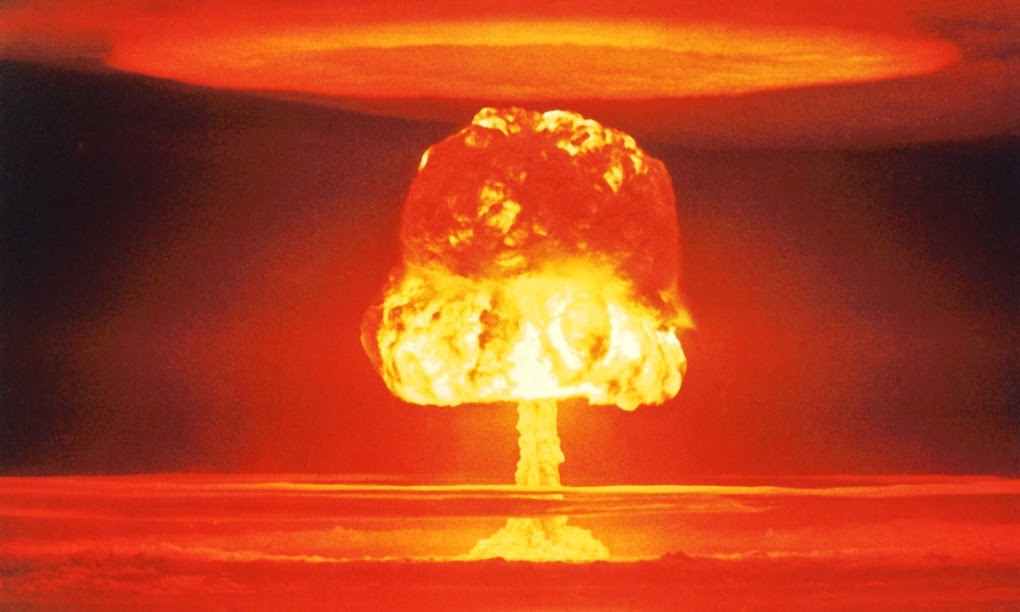
Nuclear Explosion over Bikini Atoll, Marshall Islands on March 26, 1954.
Photograph: Corbis | doi:10.1038/nature14258

Time is divided by geologists according to marked shifts in Earth’s state. Recent global environmental changes suggest that Earth may have entered a new human-dominated geological epoch, the Anthropocene. Here we review the historical genesis of the idea and assess anthropogenic signatures in the geological record against the formal requirements for the recognition of a new epoch. The evidence suggests that of the various proposed dates two do appear to conform to the criteria to mark the beginning of the Anthropocene: 1610 and 1964. The formal establishment of an Anthropocene Epoch would mark a fundamental change in the relationship between humans and the Earth system.

.......


a, GTS2012, with boundaries marked in millions of years (ref. 10). b, c, The alternatives include a defined Anthropocene Epoch following either the Holocene (b) or directly following the Pleistocene (c). Defining the Anthropocene as an epoch requires a decision as to whether the Holocene is as distinct as the Anthropocene and Pleistocene; retaining it or not distinguishes between b and c. The question mark represents the current debate over the start of the Anthropocene, assuming it is formally accepted as an epoch (see Box 1, Fig. 2). Colour coding is used according to the Commission for the Geological Map of the World10, except for the Anthropocene.

 (a) Current boundary between the Pleistocene and Holocene (dashed line), with global temperature (blue), and atmospheric CO2 (red). (b) Early Anthropogenic methane GSSP suggested boundary (dashed line), atmospheric methane (in parts per billion, p.p.b.) (green), global temperature (blue), and atmospheric CO2 (red). (c) Orbis GSSP suggested boundary (dashed line), atmospheric CO2 (blue), and global temperature (red). (d) Bomb GSSP suggested boundary (dashed line), atmospheric radiocarbon from annual tree-rings (black), atmospheric CO2 (red), and global temperature (blue).
Illustration: Simon L. Lews & Mark A. Maslin
doi:
10.1038/nature14258


Simon L. Lews & Mark A. Maslin. 2015. Defining the Anthropocene. Nature. 519: 171–180 doi:10.1038/nature14258 | 10.1038/nature.2015.16739


The Human Epoch: when did it start? | @BobOHara & @GrrlScientist http://gu.com/p/46h8b/stw
New study argues the Anthropocene began in 1610 http://news.mongabay.com/2015/0311-hance-anthropocene-1610.html via @mongabay
Epoch-defining study pinpoints when humans came to dominate planet Earth http://phy.so/345298759 via @physorg_com