Showing posts with label Author: Quah. Show all posts

Tuesday, October 1, 2019

[Herpetology • 2019] Cyrtodactylus dayangbuntingensis • A New Species of Bent-toed Gecko of the Cyrtodactylus pulchellus complex (Squamata: Gekkonidae) from the Langkawi Archipelago, Peninsular Malaysia


Cyrtodactylus dayangbuntingensis 
Quah, Grismer, Wood & Anuar, 2019

DOI: 10.11646/zootaxa.4668.1.3 

Abstract
A new species of limestone karst-adapted gecko of the Cyrtodactylus pulchellus complex, Cyrtodactylus dayangbuntingensis sp. nov., is described from Dayang Bunting Island of the Langkawi Archipelago off the northwest coast of Peninsular Malaysia. It is the third species of the group to be described from the archipelago after C. langkawiensis and C. macrotuberculatus. The new species can be distinguished from all other species of Cyrtodactylus based on molecular evidence from the mitochondrial gene ND2 and its flanking tRNAs as well as having unique combinations of morphological and color pattern characteristics. This discovery underscores the need for continued surveys of the many islands in the archipelago to properly ascertain its true herpetological diversity.

Keywords: Reptilia, Integrative taxonomy, phylogeny, molecular systematics, karst, island, conservation

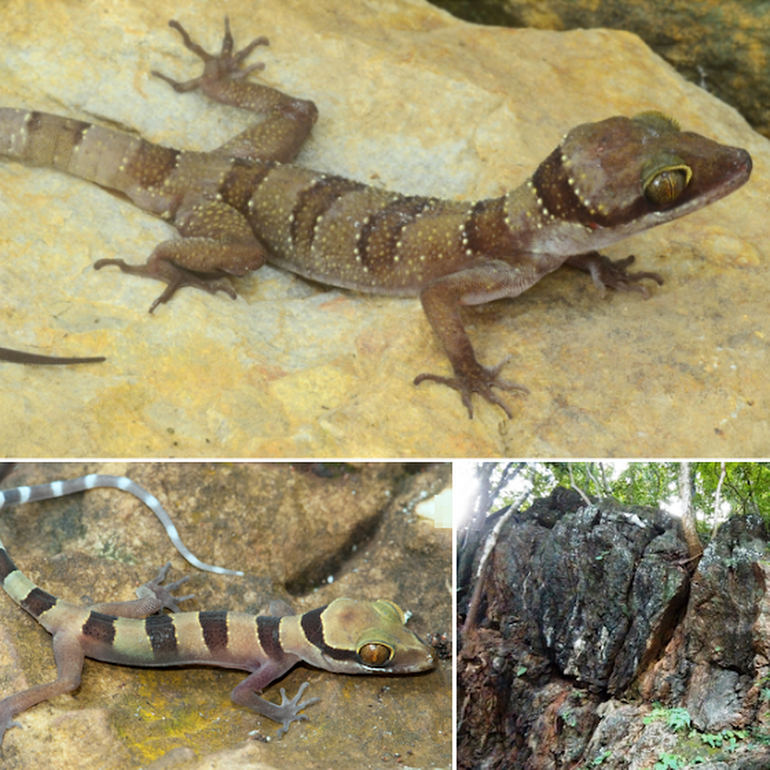
FIGURE 4. Type series of Cyrtodactylus dayangbuntingensis sp. nov. from Dayang Bunting Island, Langkawi archipelago, Kedah.
(A) Holotype (LSUHC 14353). (B) Paratype (LSUHC 14354). (C) Paratype (LSUHC 14355). 
Photographs by Evan Quah.

Cyrtodactylus dayangbuntingensis sp. nov.

Suggested common name: Dayang Bunting Island Bent-toed Gecko


Etymology. The specific epithet dayangbuntingensis is in reference to the type locality of this species on Dayang Bunting Island of the Langkawi Archipelago, Kedah, Peninsular Malaysia.


FIGURE 7. (A) Juvenile Cyrtodactylus dayangbuntingensis sp. nov. photographed on Dayang Bunting Island, Langkawi archipelago, Kedah. Photograph by M.A. Muin.
(B) Karst microhabitat of C. dayangbuntingensis sp. nov. on Dayang Bunting Island, Langkawi archipelago, Kedah. Photograph by Evan Quah.

Natural history. Cyrtodactylus dayangbuntingensis sp. nov. is a karst-associated species that is only found in close proximity of karst outcrops (Fig. 7B). The holotype (LUSHC 14353) was found under a karst overhang at night approximately 1 m above the ground while the male paratype (LSUHC 14354) was found approximately 1.5 m above the ground on the trunk of a tree that was growing next to and in contact with a karst wall. The female paratype (LSUHC 14355) was found on the ground under a karst overhang. Another adult specimen was observed hiding in a narrow vertical karst crevice 2 m above the ground. A juvenile ( Fig. 7A) was photographed on 17 October 2015 and indicates breeding may take place during the latter half of the year. Other species of geckos observed on the karst were Cnemaspis sp. and Gehyra mutilata (ESHQ per. obs.).


Evan S. H. Quah, L. Lee Grismer, Perry L. Wood, Jr. and Shahrul Anuar Mohd Sah. 2019. The Discovery and Description of A New Species of Bent-toed Gecko of the Cyrtodactylus pulchellus complex (Squamata: Gekkonidae) from the Langkawi Archipelago, Kedah, Peninsular Malaysia. Zootaxa. 4668(1); 51–75. DOI: 10.11646/zootaxa.4668.1.3


Thursday, November 29, 2018

[Herpetology • 2018] On the Taxonomy and Phylogeny of the Rare Selangor Mud Snake Raclitia indica Gray (Serpentes, Homalopsidae) from Peninsular Malaysia


Raclitia indica Gray, 1842 

in Quah, Wood, Grismer & Anuar, 2018.
 Photo by Evan Quah. facebook.com/EvanQuah

Abstract
The taxonomic position of the rare Selangor Mud Snake (Raclitia indica) Gray to other species of homalopsids has remained uncertain due to the scarcity of specimens in collections and the lack of genetic material for comparison. Here we report the first molecular phylogenetic examination of this species based on recently acquired material. The study recovered R. indica nested within the clade of advanced, fanged homalopsids and the sister species to Erpeton tentaculatus Lácèpede. We also present notes on variation observed in the new specimens as well as range extensions for the species.

Keywords: Reptilia, Reptile, Squamata, Enhydris, conservation, endemic, biodiversity


 Raclitia indica from Lubuk Yu, Pahang, Peninsular Malaysia.
 Photo by Evan Quah.


Evan S.H. Quah, Perry L. Jr. Wood, L. Lee Grismer and Shahrul Anuar Mohd Sah. 2018. On the Taxonomy and Phylogeny of the Rare Selangor Mud Snake (Raclitia indica) Gray (Serpentes, Homalopsidae) from Peninsular Malaysia.  Zootaxa. 4514(1); 53–64. DOI:  10.11646/zootaxa.4514.1.4

Thursday, September 20, 2018

[Herpetology • 2018] A Phylogenetic Taxonomy of the Cyrtodactylus peguensis Group (Squamata: Gekkonidae) with Descriptions of Two New Species from Myanmar; Cyrtodactylus meersi & C. myintkyawthurai


Cyrtodactylus meersi  &  C. myintkyawthurai
Grismer​, Wood, Quah, Murdoch, Grismer, Herr, Espinoza, Brown & Lin, 2018


Abstract
A phylogenetic taxonomy of species in the Cyrtodactylus peguensis group from the Ayeyarwady Basin of Myanmar is constructed based on color pattern, morphology, and molecular systematic analyses using the mitochondrial gene NADH dehydrogenase subunit 2. Newly collected samples from the type locality of C. peguensis and other localities indicate that this clade is endemic to central Myanmar and contains at least seven species, four of which are undescribed. Three species, including C. peguensis occur in the low hills of the Bago Yoma Range within the central portion of the Ayeyarwady Basin. Two of these, Cyrtodactylus myintkyawthurai sp. nov. from the northern and central Bago Yoma and Cmeersi sp. nov. which is syntopic with Cpeguensis in the southern Bago Yoma are described herein. As more lowland hilly areas bordering, and within the Ayeyarwady Basin are surveyed, more new species of this group are likely to be discovered. These discoveries continue the recent surge of descriptions of new species of Cyrtodactylus that are being discovered in Myanmar.

....

Figure 1: Distribution map of the Cyrtodactylus peguensis group. Distribution of the species of the Cyrtodactylus peguensis group in the Ayeyarwady Basin and the adjacent foothills of the Chin Hills and Shan Hills in Myanmar.


Figure 5: Type specimens and additional specimen of Cyrtodactylus peguensis.
(A) Boulenger’s (1893) illustration of the lost syntype from the type locality of Hpa Lon, Bago Region Myanmar. (B) Syntype BM 946.8.23.10 from the type locality. (C) LSUHC 13454 from the Myin Mo Shwe Taung Pagoda, 9.5 km east of Hpa Lon, Bago Region Myanmar.
Photos by L. Lee Grismer.

Cyrtodactylus peguensis (Boulenger, 1893)
Pegu Bent-toed Gecko
Gymnodactylus peguensis Smith, 1921:29; 1935:52 in part. Wermuth, 1965:63 in part.
Cyrtodactyuls peguensis Taylor, 1963:728 in part; Denzer & Manthey, 1991:314 in part; Cox, Van Dijk & Nabhitabhata, 1998:87 in part; Pianka & Vitt, 2003:175 in part; Manthey & Grossmann, 1997:225 in part; Das, 2010:213 in part; Grismer et al., 2017a:91 in part; Brennan et al., 2017:3, in part.
Cyrtodactylus (Cyrtodactylyspeguensis Rösler, 2000:66 in part.

Syntype. Adult male BM 1946.8.23.10 collected in 1887 by Signor L. Fea from “Palon” (Hpa Lon), “Pegu” (Bago Region), Taikkyi Township, Yangon (north) District, Myanmar. Hpa-Lon is a small village in the Ayeyarwady Basin 9.5 km west of the western foothills of the southern portion of the Bago Yoma Range where Fea reported making zoological collections (Fea, 1897). Being that foothills are the closest suitable habitat for C. peguensis east of Pa-Lon, we restrict the type locality to the Myin Mo Swhe Taung Pagoda, Bago Region, Taikkyi Township, Yangon (north) District, Myanmar (..., elevation 162 m) situated within these foothills where we collected an additional specimen (LSUHC 13454). The other syntype could not be located.

Diagnosis. Cyrtodactylus peguensis differs from other species of the peguensis group by having the unique combination of seven supralabial and infralabial scales; 31 or 32 paravertebral tubercles; 17–19 longitudinal rows of dorsal tubercles; 36 or 37 ventral scales; 19 subdigital lamellae on the fourth toe; 17–19 femoral pores in males; eight precloacal pores in males; three rows of post-precloacal scales; and domed to weakly conical and weakly keeled body tubercles; and a maximum SVL of 70 mm (Table 7).


Figure 7: Holotype of Cyrtodactylus meersi sp. nov. (LSUHC 13455) from the type locality of the Myin Mo Shwe Taung Pagoda, Bago Division, Myanmar.
Photo by L. Lee Grismer.

Cyrtodactylus meersi sp. nov.
Bago Yoma Bent-toed Gecko

Diagnosis. Cyrtodactylus meersi sp. nov. differs from other species of the peguensis group by having the unique combination of seven supralabials and eight infralabials; 32 paravertebral tubercles; 13 longitudinal rows of body tubercles; 32 ventral scales; 17 subdigital lamellae on the fourth toe; 12 femoral pores; eight precloacal pores; two rows of post-precloacal scales; and domed to weakly conical and weakly keeled body tubercles (Table 7). We note, however, that this diagnosis is not robust due to having only a sample size of one juvenile and will be subject to adjustment if additional specimens are ever collected and analyzed. Nonetheless, the placement of this individual near the base of the phylogeny (Fig. 2) and it having an uncorrected percent sequence divergence of 10.0–13.7% from all other species in the phylogeny (Table 3) is strong evidence of its species status.

Distribution. Cyrtodactylus meersi sp. nov. is known only from the type locality of Myin Mo Shwe Taung Pagoda, 9.5 km east of the village of Hpa Lon, Bago Region, Taikkyi Township, Yangon (north) District Myanmar (Fig. 1).

Etymology. The specific epithet, meersi, is named in honor of Mr. John Meers whose generous private donations to Fauna & Flora International’s in the name of karst conservation have resulted in the continuation of karst biology research in Indochina.

Natural History. The holotype was collected in a region composed of low foothills and highly disturbed forest (Fig. 6). The specimen was encountered at 2,000 h as it was sitting in the middle of an ant trail, presumably preying on the ants. The fact that the specimen is a juvenile suggests the reproductive season is prior to May.


Cyrtodactylus myintkyawthurai sp. nov.
Mt. Popa Bent-toed Gecko
Cyrtodactylus fea Wood et al., 2012:995; 
Agarwal et al., 2014:147; Brennan et al., 2017:3.


Figure 8: Type specimens of Cyrtodactylus myintkyawthurai sp. nov. from the type locality of Taung Twin Chaung camp, Mt. Popa, Kyauk-pa-taung Township, Mandalay Region, Myanmar.
 (A) Adult male holotype LSUHC 13808. (B) Adult male paratype LSUHC 13807. (C) Subadult male paratype 13806. (D) Juvenile male paratype LSUHC 13809.
Photos by L. Lee Grismer.

Diagnosis. Cyrtodactylus myintkyawthurai sp. nov. differs from other species in the peguensis group by having the unique combination of six or seven supralabials and six or seven infralabials; 28–33 paravertebral tubercles; 17–23 longitudinal rows of body tubercles; 32–36 ventral scales; 17–19 subdigital lamellae on the fourth toe; 12–20 femoral pores in males; 7–9 precloacal pores in males; two rows of post-precloacal scales; raised, moderately to strongly keeled body tubercles; and a maximum SVL of 75.1 mm.

Distribution. Cmyintkyawthurai sp. nov. ranges throughout Mt. Popa, Mandalay Region and the central section of the Bago Yoma Range, Bago Region (Fig. 2).

Etymology. The specific epithet, myintkyawthurai, is a patronym honoring Myint Kyaw Thura for his contributions to the study of herpetology in Myanmar, his discovery of several new species, and his collaboration with foreign researchers.

Natural History. At both Mt. Popa and in the central Bago Yoma Range, C. myintkyawthurai sp. nov. occurs in hilly regions covered in deciduous dipterocarp forest up to 978 m in elevation (Fig. 9). The Mt. Popa specimens were collected at night from 0.05 to 1 m above the ground on rocks, the trunks of small trees, on leaves or on the ground amongst small rocks.


Conclusions: 
A phylogenetic taxonomy of species in the Cyrtodactylus peguensis species group from the Ayeyarwady Basin of Myanmar recovers at least seven species, four of which are undescribed. Three species, including C. peguensis occur in the low hills of the Bago Yoma mountain range one of which, C. meersi sp. nov., is syntopic with C. peguensis. As more lowland hilly areas associated with the Ayeyarwady Basin are surveyed, more new species of this group are likely to be discovered. These discoveries continue the recent surge of descriptions of new species of Cyrtodactylus that are being discovered in Myanmar.


L. Lee Grismer​, Perry L. Wood Jr, Evan S.H. Quah, Matthew L. Murdoch, Marta S. Grismer, Mark W. Herr, Robert E. Espinoza, Rafe M. Brown and Aung Lin. 2018.  A Phylogenetic Taxonomy of the Cyrtodactylus peguensis Group (Reptilia: Squamata: Gekkonidae) with Descriptions of Two New Species from Myanmar.  PeerJ. 6:e5575. DOI: 10.7717/peerj.5575

Wednesday, September 5, 2018

[Herpetology • 2018] Calamaria albiventer (Gray, 1835) • Identification and A New Record from Penang Island of the Rare Redbellied Reed Snake (Serpentes: Calamariinae)


Calamaria albiventer (Gray, 1835)

in Quah, Lim, Leong & Anuar, 2018
 RAFFLES BULLETIN OF ZOOLOGY. 66 

Abstract
 Calamaria albiventer (Gray, 1835) is rediscovered at its type locality on Penang Hill on Penang Island, Malaysia after a six-decade absence of recorded sightings in the country. The species is known from only six locations in Peninsular Malaysia, Singapore, and Sumatra. A description of the new specimen is provided along with the first ever illustrations of the species in life and observations of its natural history. An updated taxonomic key to the Calamaria species of Peninsular Malaysia is included. 

Key words: Squamata, Colubridae, historical, taxonomy, systematics, herpetofauna, taxonomic key


Fig. 1. Calamaria albiventer (USMHC 2390) in life from Penang Hill, Penang Island.
A
, Dorsal view; B, Ventral view.
 Photographs by Evan Quah [A–B].

Natural history. Almost nothing is known about the natural history of this species across its range (David & Vogel, 1996). In Peninsular Malaysia, C. albiventer is found in the lowlands as well as at higher elevations. Batchelor’s (1958) specimen from Asahan, Malacca, was collected in secondary forest near a reservoir. Flower (1899) collected a specimen on Penang Hill at 2,000 ft in the month of March 1898. The new specimen was found in hill dipterocarp forest (Fig. 2A) and it was crawling on the forest floor among the leaf litter at approximately 1700 hours, three hours before sunset. Conditions were damp from rains the night before. At the time of collection, USMHC 2390 had captured an earthworm, but it released the prey when it became startled when approached. This vermivorous diet is similar to that of other Calamaria species such as C. lumbricoidea, C. pavimentata, and C. schlegeli that have been observed feeding on earthworms as well (Malkmus et al., 2002; Tan & Yeo, 2013; Baker, 2014; Stuebing et al., 2014; Evan S.H. Quah, pers. obs.). Calamaria albiventer is expected to behave similarly to other species of Calamaria in being a secretive, terrestrial snake that hides beneath surface objects and leaf litter during the day and predominantly active at night (Malkmus et al., 2002; Stuebing et al., 2014). Nothing is known about the breeding biology of this species but it likely lays eggs like other members of the genus (Malkmus et al., 2002; Stuebing et al., 2014). On Penang Hill it occurs in sympatry with C. lumbricoidea, C. pavimentata, C. schlegeli, and Pseudorabdion longiceps (Evan S.H. Quah, pers. obs.). Based on a published checklist, this species would also occur with those same three Calamaria species on Bukit Larut along with other fossorial snakes including Collorhabdium williamsoni, P. longiceps, and Macrocalamus chanardi (Grismer et al., 2010).


Evan S. H. Quah, Kelvin K.P. Lim, Eric H.H. Leong and Shahrul Anuar M.S. 2018. Identification and A New Record from Penang Island of the Rare Redbellied Reed Snake (Calamaria albiventer) (Gray, 1835) (Serpentes: Calamariinae). RAFFLES BULLETIN OF ZOOLOGY. 66;  486–493.


Monday, July 9, 2018

[Herpetology • 2018] The Rediscovery of Schaefer’s Spine-jawed Snake Xenophidion schaeferi Günther & Manthey, 1995 (Serpentes, Xenophidiidae) from Peninsular Malaysia with Notes on Its Variation and the First Record of the Genus from Sumatra, Indonesia


 Schaefer’s Spine-jawed Snake, Xenophidion schaeferi Günther & Manthey, 1995

in Quah, Grismer, Jetten, et al., 2018.


Abstract
The family Xenophidiidae is an extremely rare and little-known family of snakes that contains only two species, Xenophidion acanthognathus Günther & Manthey and X. schaeferi Günther & Manthey that are each known only from their holotypes. We report on the rediscovery of X. schaeferi from two new locations in southern Peninsular Malaysia. The new specimens differ markedly from the holotype of X. schaeferi in colour pattern and are more akin to the patterning of X. acanthognathus from Borneo. However, molecular analyses of one of the new specimens reveal that it only differs from the holotype of X. schaeferi by a minimum sequence divergence of 0.27%. An expanded description of the species based on these specimens is provided and phenotypic variation within the species is discussed. We also report the first record of the genus Xenophidion from West Sumatra, Indonesia. These sensational discoveries continue to underscore the fact that southern Peninsular Malaysia and upland areas of Southeast Asia in general still harbour unrealized herpetological diversity and are still in need of field research-based taxonomic studies.

Keywords: Reptilia, Reptile, Squamata, Southeast Asia, Sundaland, endemic, biodiversity, taxonomy


 Evan S. H. Quah, L. L. Grismer, Thom Jetten, JR. P. L. Wood, Aurélien Miralles, Shahrul A. M. Sah, Kurt H. P. Guek and Matthew L. Brady. 2018. The Rediscovery of Schaefer’s Spine-jawed Snake (Xenophidion schaeferi Günther & Manthey, 1995) (Serpentes, Xenophidiidae) from Peninsular Malaysia with Notes on Its Variation and the First Record of the Genus from Sumatra, Indonesia. Zootaxa. 4441(2); 366–378. DOI:  10.11646/zootaxa.4441.2.10

Monday, June 25, 2018

[Herpetology • 2018] Lygosoma peninsulare & L. kinabatanganensis • On the Taxonomy of Lygosoma bampfyldei Bartlett, 1895 (Squamata: Scincidae) with Descriptions of New Species from Borneo and Peninsular Malaysia and the Resurrection of Lygosoma schneideri Werner, 1900


 Lygosoma peninsulare  
Grismer, Quah, Dzulkefly & Yambun, 2018


Abstract
A reassessment of the taxonomy of Lygosoma bampfyldei based on morphology and color pattern indicates that it is a species complex containing L. bampfyldei Bartlett, 1895 from the Rajang River, Sarawak and Croker Range, Sabah in East Malaysia; Lygosoma peninsulare sp. nov. from Bukit Larut, Perak and 13.5 km east of Jeli, Kelantan, Peninsular Malaysia; Lygosoma kinabatanganensis sp. nov. from the Kinabatangan District, Deramakot camp (=Deramakot Sabah Forestry Department), Sabah, East Malaysia; and L. schneideri Werner, 1900 from Djapura, Indragiri, Sumatra, Indonesia—resurrected herein from the synonymy of L. bampfyldei. The new taxonomy aligns itself well with a growing body of literature demonstrating that semi-fossorial and fossorial Sundaic skinks are more diverse than previously considered.

Keywords: Reptilia, Sundaland, skinks, systematics, new species


L. Lee Grismer, Evan S. H. Quah, Zaharil Dzulkefly and Paul Yambun. 2018. On the Taxonomy of Lygosoma bampfyldei Bartlett, 1895 (Squamata: Scincidae) with Descriptions of New Species from Borneo and Peninsular Malaysia and the Resurrection of Lygosoma schneideri Werner, 1900.   Zootaxa.  4438(3); 528–550. DOI:  10.11646/zootaxa.4438.3.6

Sunday, November 19, 2017

[Herpetology • 2017] Dibamus floweri • A New Species of Dibamus Duméril & Bibron 1839 (Squamata: Dibamidae) from A Hill Station in Peninsular Malaysia


 Dibamus floweri 
 Quah, Anuar, Grismer & Grassby-Lewis, 2017


 RAFFLES BULLETIN OF ZOOLOGY. 65.

Abstract 
A new species of worm-like lizard, Dibamus floweri, is described from Fraser’s Hill, Pahang, in the central highlands of Peninsular Malaysia based on the following unique combination of characters: maximum SVL of 112 mm; tail length 11.4–15.2% of SVL; labial and nasal sutures absent; rostral suture present but incomplete; a single postocular; four scales bordering the posterior edge of first infralabial; no enlarged, medial, sublabial scale; 21 scale rows around midbody; 23 scale rows around the body immediately posterior to head; 21 scale rows around the body immediately anterior to vent; 175–194 ventral scales; 23–46 subcaudal scales and light coloured bands on body. Dibamus floweri, new species, is the third species of dibamid discovered in Peninsular Malaysia and is the first montane species. Its discovery underscores the importance of uplands regions as important habitats for herpetological diversity and their understudied nature. 

Key words: herpetofauna, montane, new species, taxonomy, conservation, systematics


SYSTEMATICS
Dibamidae Boulenger, 1884
Dibamus Duméril & Bibron, 1839

Dibamus floweri, new species
Flower’s blind lizard

Diagnosis. Dibamus floweri, new species, differentiated from all other congeners by this combination of characters: maximum SVL of 112 mm; tail length 11.4–15.2% of SVL; labial, nasal sutures absent; rostral suture present but incomplete; single postocular; four scales bordering posterior edge of first infralabial; no enlarged, medial, sublabial scale; 21 midbody scale rows; 23 transverse scale rows just posterior to head; 21 transverse scale rows just anterior to vent; 175–194 ventral scales; 23–46 subcaudal scales; relative size of frontal to frontanasal 1.1–1.5; relative size of interparietal to surrounding scales 1.3–1.8; and light coloured bands on the body. These characters are scored across all nominal species of Dibamus in Table 2.

Etymology: The specific epithet, floweri, is in honour of Major Stanley Smyth Flower, who was one of the pioneers for herpetological discoveries in the Malay Peninsula. He made many notable discoveries over the course of his explorations in the region and his natural history observations well over a century ago were very detailed and contributed tremendously to improving our understanding of the ecology and behaviour of many species to this day.

 Distribution: Dibamus floweri, new species, is presently known only from Fraser’s Hill, Pahang, Peninsular Malaysia at elevations between 1,207 and 1,500 m (Fig. 3). 

  (A) Holotype of Dibamus floweri, new species (LSUHC 12481) from Fraser’s Hill, Pahang (Photograph by Rupert Grassby-Lewis).
(B) Paratype of Dibamus floweri, new species (ZRC 2.7240) from Fraser’s Hill, Pahang at ease. Photographs by Evan Quah.
(F) Leaf litter microhabitat at Fraser’s Hill, Pahang where the paratype of Dibamus floweri, new species, was found.

Natural history: Both specimens were found while digging through leaf litter that had accumulated along the banks of roads. The holotype was discovered at night in a drainage ditch along Jalan Girdle in a damp and shaded area. The paratype was uncovered during the day underneath approximately 3 cm beneath the soil (Fig. 2F), and in the same pile of leaf-litter, the skink, Larutia miodactyla (Boulenger, 1903) was also found. When handled, both specimens flared up their body scales, giving them a wrinkled appearance (Fig. 1C). This behaviour is interpreted as a defensive, anti-predator mechanism employed by Dibamus to mimic a possible non-palatable species of worm (Darevsky, 1992). The other two Peninsular Malaysian species, D. booliati and D. tiomanensis display the same behaviour when agitated (Das & Yaakob, 2003; Diaz et al., 2004; Grismer, 2011).


Evan S. H. Quah, Shahrul Anuar M. S., L. Lee Grismer and Rupert Grassby-Lewis. 2017. 
A New Species of Dibamus Duméril & Bibron 1839 (Squamata: Dibamidae) from A Hill Station in Peninsular Malaysia. RAFFLES BULLETIN OF ZOOLOGY. 65; 681–690. 


Monday, September 18, 2017

[Herpetology • 2017] Abavorana nazgul • A New Species of Frog of the Genus Abavorana (Anura: Ranidae) from Gunung Jerai, Kedah, northwestern Peninsular Malaysia


Abavorana nazgul
Quah, Anuar, Grismer, Wood, Azizah & Muin, 2017

Abstract

The recently erected ranid genus Abavorana is thought to contain one nominal species, A. luctuosa, that ranges from the Thai-Malay Peninsula to Borneo and Sumatra. A melanistic form from Gunung Jerai, Peninsular Malaysia previously thought to be the same species is new to science and herein described based on new specimens and data. Based on morphology, colour pattern, and phylogenetic analyses using the mitochondrial genes 16s, ND1 and three tRNAs (tRNA-leu, tRNA-lle, and tRNA-gln), we determine that this new speciesAbavorana nazgul sp. nov., is the sister lineage to other populations of A. lucutosa from Peninsular Malaysia and one from Borneo. It differs from A. luctuosa by a minimum sequence divergence of 7.5% and the following combination of morphological and colour pattern characteristics: (1) SVL 42.1–50.0 mm in adult males; (2) prominent but small humeral glands in males (2.3–2.5 mm); (3) dorsolateral stripe continuous, orange to yellow in colour; (4) mid-dorsal region of dorsum black, with or without faint orange or yellow speckles; (5) flanks with distinct cream spots; (6) dorsal surfaces of limbs with cream spots–bar; and (7) venter grayish brown, with prominent light spots on throat and belly. The discovery of yet another endemic species from the upland regions of Peninsular Malaysia highlights the rich diversity of these habitats and the need for more studies in montane areas throughout the region.

Keywords: Amphibia, Herpetofauna, montane, new species, taxonomy, conservation, systematics


Abavorana lucutosa  

Evan S.H. Quah, Shahrul M.S. Anuar, L.L. Grismer, Perry L. JR. Wood, Siti M.N. Azizah and Mohd Abdul Muin. 2017. A New Species of Frog of the Genus Abavorana Oliver, Prendini, Kraus & Raxworthy 2015 (Anura: Ranidae) from Gunung Jerai, Kedah, northwestern Peninsular Malaysia.  Zootaxa. 4320(2); 272–288. DOI:  10.11646/zootaxa.4320.2.4

Wednesday, March 8, 2017

[Herpetology • 2017] Gyiophis salweenensis • A New Species of Mud Snake (Serpentes, Homalopsidae, Gyiophis Murphy & Voris, 2014) from Myanmar with A First Molecular Phylogenetic Assessment of the Genus


Gyiophis salweenensis
Quah, Grismer, Wood, Thura, Zin, Kyaw, Lwin, Grismer & Murdoch, 2017
Salween River Basin Mud Snake  |   DOI: 10.11646/zootaxa.4238.4.5  

Abstract

A newly discovered species of homalopsid snake from the genus Gyiophis Murphy & Voris is described from the lowlands of Mawlamyine District in Mon state, southeastern Myanmar. Gyiophis salweenensis sp. nov. is presumed to be closely related to G. maculosa Blanford and G. vorisi Murphy based on the similarities in pholidosis and patterning but can be separated from G. maculosa by the shape of its first three dorsal scale rows that are square, ventral scale pattern that lacks a central spot, and a faint stripe on dorsal scale rows 1–4. It can be further distinguished from G. vorisi by its lower number of ventral scales (129 vs. 142–152), lower number of subcaudals (30/29 vs. 41–58), narrow rostral scale, and having more rows of spots on the dorsum (four vs. three). A preliminary molecular analysis using 1050 base pairs of cytochrome b (cytb) recovered G. salweenensis sp. nov. as the sister species to the Chinese Mud Snake (Myrrophis chinensis). G. maculosa and G. vorisi were unavailable for the analysis. The discovery of G. salweenensis sp. nov. highlights the need for more surveys into the herpetological diversity of eastern Myanmar which remains very much underestimated.

Keywords: Reptilia, phylogeny, Enhydris, homalopsid, conservation, endemic biodiversity, Burma


 Holotype of Gyiophis salweenensis sp. nov. in life.
Photograph by Evan Quah. 


Etymology. The specific epithet salweenensis is in reference to area where the holotype was found which is close to the vicinity of the Salween River near the city of Mawlamyine. The suffix ensis is a Latin derivation meaning “from” or “inhabiting.” It renders the specific epithet an adjective that must be in grammatical accord with the gender of Gyiophis.

Distribution:  Gyiophis salweenensis sp. nov. is only known from the type locality near Sanpel Cave, Mon State, Myanmar. It is expected to be wider ranging throughout the Salween River Basin and found wherever appropriate habitat occurs. 

Natural history: The holotype was found at approximately 1930 hours crossing a narrow dirt road between flooded fields that we presume to be its natural habitat. The weather was overcast and it rained later that night. Many other species of homalopsids are semiaquatic and commonly found in streams, rivers, ponds, and flooded rice fields (Murphy 2007a; Stuebing et al. 2014). Gyiophis salweenensis sp. nov. is expected to share a similar life history and the valvular nostrils located dorsally on the snout indicate this species probably spends a large part of its life in the water. Homalopsid snakes such as Enhydris enhydris, Homalopsis buccata (Linnaeus, 1758) and Hypsiscopus plumbea have been observed crawling on land and crossing roads during wet weather (Voris & Karns 1996; Lim & D’Rozario 2009; EQSH personal obs.) and the holotype of G. salweenensis sp. nov. could have been dispersing to a new area as well. The holotype also had a puncture wound on its back which might have come from an encounter with a predator such as a heron.


Quah, Evan S. H., L. L. Grismer, P. L. Wood, Jr., Myint K. Thura, Thaw Zin, Htet Kyaw, Ngwe Lwin, Marta S. Grismer & M. L. Murdoch. 2017. A New Species of Mud Snake (Serpentes, Homalopsidae, Gyiophis Murphy & Voris, 2014) from Myanmar with A First Molecular Phylogenetic Assessment of the Genus. Zootaxa. 4238(4): 571–582.  DOI: 10.11646/zootaxa.4238.4.5


Thursday, June 18, 2015

[Herpetology • 2015] Herpetofauna of Gunung Tebu • First Report on the Amphibians and Reptiles of A Remote Mountain, Gunung Tebu in northeastern Peninsular Malaysia


ABSTRACT 
This is the first herpetological survey and checklist of the Mount Tebu (Gunung Tebu) region including the upland areas of Gunung Tebu, the surrounding lowlands of Hutan Lipur Lata Belatan, and the nearby lowland region of Hutan Lipur Lata Tembaka in Terrengganu, northeastern Peninsular Malaysia. Expanding upon the only previous herpetological survey in this region from Gunung Lawit (Dring 1979), we record a total of 106 species including 43 species previously unknown from this portion of Peninsular Malaysia.

Keywords: Southeast Asia; Banjaran Timur; conservation


Alexandra X. Sumarli, L. Lee Grismer, Shahrul Anuar, Mohd Abdul Muin, Evan S.H. Quah. 2015. First Report on the Amphibians and Reptiles of A Remote Mountain, Gunung Tebu in northeastern Peninsular Malaysia. Check List. 11(4): 1679. DOI: 10.15560/11.4.1679

Monday, April 20, 2015

[Herpetology • 2015] An Integrative Taxonomic Review of the Agamid Genus Bronchocela (Kuhl, 1820) from Peninsular Malaysia with Descriptions of New Montane and Insular Endemics; Bronchocela shenlong & B. rayaensis


Bronchocela shenlong
Grismer, Wood, Lee, Quah, Anuar, Ngadi & Sites, 2015
DOI: 10.11646/zootaxa.3948.1.1

Abstract

An integrative taxonomic analysis is used to identify and describe two new species of the agamid genus Bronchocela (Kuhl) from Peninsular Malaysia: an upland species Bronchocela shenlong sp. nov. from Bukit Larut, Perak in the Bintang Mountain Range and Parit Falls, Cameron Highlands, Pahang in the Titiwangsa Mountain Range and an insular species, Bronchocela rayaensis sp. nov., from Pulau Langkawi, Kedah off the northwest coast on the border with Thailand. Both species are diagnosed from each other and all other species of Bronchocela on the basis of body shape, scale morphology, and color pattern. The analysis also demonstrates the remarkable genetic similarity of B. cristatella (Kuhl) throughout 1120 km of its range from northern Peninsular Malaysia to western Borneo despite its highly variable coloration and pattern. The two new species are appended to a rapidly growing list of newly described lizard species (60 to date) from Peninsular Malaysia tallied within the last decade.

Keywords: Peninsular Malaysia, Integrative taxonomy, Bronchocela, Langkawi Island


The Dragon of the Mountains. Introducing Bronchocela shenlong, a new species of green crested lizard from the highlands of Peninsular Malaysia that was named after one of the great dragons of Chinese mythology. It can be differentiated from its lowland congener B. cristatella by the broad white stripe on the jawline, green tympanum and red stripe along the lower edge of the tail and posterior margin of the thigh
photograph: Evan Quah

Bronchocela shenlong sp. nov.
Sheng Long Green-crested Lizard

Etymology. The specific epithet shenlong is used here to indicate this species’ morphological and ecological similarity to the “Shen Long” or “Spirit Dragon” of Chinese mythology. Shen Long is a wingless, five-toed, azurecolored reptile that resides in mountains and controls the wind, thunder, rain and clouds. As the epithet is used here, shenlong refers to this species’ upland, cloud forest habitat as well as its general dragon-like appearance.

Distribution. Bronchocela shenlong sp. nov. is known only from Bukit Larut, Perak in the Bintang Mountain Range and from Parit Falls, Cameron Highlands, Pahang in the Titiwangsa Mountain Range (Fig. 1).


Bronchocela rayaensis sp. nov., from Pulau Langkawi, Kedah off the northwest coast on the border with Thailand
photo: David Hegner


Bronchocela rayaensis sp. nov.
Gunung Raya Green-crested Lizard
Bronchocela cristatela Zimmerer 2004:87.
Bronchocela cristatella Manthey 2008:49; Lim et al. 2009:23; Grismer 2011:143.

Distribution. Bronchocela rayaensis sp. nov. is confirmed only from Pulau Langkawi, Kedah, Peninsular Malaysia (Fig. 1). However, B. cristatella has been reported from Pulau Singa Besar, a small satellite island off the southern coast of Pulau Langkawi (Grismer 2008; Lim et al. 2009). The specimens on which these reports were based (DWNP 2250, 2997) should be re-examined as they may be B. rayaensis sp. nov.

Etymology. The specific epithet is derived from the Malay word raya meaning “great” and the Latin suffix -ensis meaning “originating in” and refers to this species discovery at the type locality on Gunung Raya.


Grismer, L. L., JR. P. L. Wood, Cheol H. Lee, Evan S. H. Quah, Shahrul Anuar, Ehwan Ngadi & Jack W. Sites, Jr. 2015. An Integrative Taxonomic Review of the Agamid Genus Bronchocela (Kuhl, 1820) from Peninsular Malaysia with Descriptions of New Montane and Insular Endemics. Zootaxa. 3948(1): 1–23. DOI: 10.11646/zootaxa.3948.1.1
facebook.com/233680374671/photos/10153352031039672


Grismer, L. L., T. M. Youmans, P. L. Wood Jr, A. Ponce, R. Johnson, S. B. Wright, and S. Y. Norsham. 2006. Checklist of the herpetofauna of Pulau Langkawi with taxonomic comments. Hamadryad. 29:15–32.
http://www.bmnh.org/PDFs/Grismer_etal2006.pdf