Wednesday, February 24, 2021

[Entomology • 2021] The Genus Gasteruption Latreille, 1796 (Hymenoptera: Gasteruptiidae) in the Czech Republic and Slovakia: Distribution, Checklist, Ecology, and Conservation Status


Gasteruption jaculator (Linnaeus, 1758)

in Bogusch, 2021.

Abstract
The genus Gasteruption (Gasteruptiidae) is represented in Europe by more than 30 species. Of these, twenty-one are recorded from the Czech Republic and Slovakia, with six being new records for the Czech Republic and eight for Slovakia. Three species are recorded as new for Bohemia (western part of the Czech Republic). Gasteruption goberti is excluded from the fauna of the Czech Republic because specimens previously identified as G. goberti belong to G. caucasicum. Four species (G. assectator, G. caucasicum, G. jaculator and G. nigritarse) are common and widespread in both countries, G. tournieri is very common but prefers warmer regions. Only G, subtile occurs predominantly in higher altitudes of mountain ranges, while the other species are usually restricted to or are more common in warmer regions. Gasteruption opacum and G. subtile are regionally extinct from the Czech Republic and G. paternum from Slovakia, with the the most recent records of these species are pre-1990. Gasteruption freyi, G. hastator and G. hungaricum are considered very endangered thermophilous species of loess walls and steppe habitats with a marked loss of occurrence records post-1990. Locally common but much rarer than in the past are G. erythrostomum and G. boreale. Due to the fact that recent determination keys are focused on other regions, a determination key for all species recorded in central Europe is presented.

Keywords: Hymenoptera, Evanioidea, bees, wasps, predator-inquilins, Bohemia, Slovakia, red list


Petr Bogusch. 2021. The Genus Gasteruption Latreille, 1796 (Hymenoptera: Gasteruptiidae) in the Czech Republic and Slovakia: Distribution, Checklist, Ecology, and Conservation Status. Zootaxa. 4935(1); 1-63. DOI: 10.11646/zootaxa.4935.1.1

[Arachnida • 2021] Phylogenomic Re-evaluation of Triaenonychoidea (Opiliones: Laniatores), and Systematics of Triaenonychidae, including New Families, Genera and Species


in Derkarabetian, Baker, Hedin, et al., 2021. 
 DOI: 10.1071/IS20047 

Abstract
The Opiliones superfamily Triaenonychoidea currently includes two families, the monogeneric New Zealand–endemic Synthetonychiidae Forster, 1954 and Triaenonychidae Sørensen, 1886, a diverse family distributed mostly throughout the temperate Gondwanan terranes, with ~110 genera and ~500 species and subspecies currently described. Traditionally, Triaenonychidae has been divided into subfamilies diagnosed by very few morphological characters largely derived from the troublesome ‘Roewerian system’ of morphology, and classifications based on this system led to many complications. Recent research within Triaenonychoidea using morphology and traditional multilocus data has shown multiple deeply divergent lineages, non-monophyly of Triaenonychidae, and non-monophyly of subfamilies, necessitating a revision based on phylogenomic data. We used sequence capture of ultraconserved elements across 164 samples to create a 50% taxon occupancy matrix with 704 loci. Using phylogenomic and morphological examinations, we explored family-level relationships within Triaenonychoidea, including describing two new families: (1) Lomanellidae Mendes & Derkarabetian, fam. nov., consisting of Lomanella Pocock, 1903, and a newly described genus Abaddon Derkarabetian & Baker, gen. nov. with one species, A. despoliator Derkarabetian, sp. nov.; and (2) the elevation to family of Buemarinoidae Karaman, 2019, consisting of Buemarinoa Roewer, 1956, Fumontana Shear, 1977, Flavonuncia Lawrence, 1959, and a newly described genus Turonychus Derkarabetian, Prieto & Giribet, gen. nov., with one species, T. fadriquei Derkarabetian, Prieto & Giribet, sp. nov. With our dataset we also explored phylogenomic relationships within Triaenonychidae with an extensive taxon set including samples representing ~80% of the genus-level diversity. Based on our results we (1) discuss systematics of this family including the historical use of subfamilies, (2) reassess morphology in the context of our phylogeny, (3) hypothesise placement for all unsampled genera, (4) highlight lineages most in need of taxonomic revision, and (5) provide an updated species-level checklist. Aside from describing new taxa, our study provides the phylogenomic context necessary for future evolutionary and systematic research across this diverse lineage.
 
Keywords: classification, Gondwana, Lomanellidae fam. nov., Synthetonychiidae, ultraconserved elements.


 Shahan Derkarabetian, Caitlin M. Baker, Marshal Hedin, Carlos E. Prieto and Gonzalo Giribet. 2021. Phylogenomic Re-evaluation of Triaenonychoidea (Opiliones : Laniatores), and Systematics of Triaenonychidae, including New Families, Genera and Species. Invertebrate Systematics. 35(2); 133-157. DOI: 10.1071/IS20047 


Tuesday, February 23, 2021

[Botany • 2021] Aeschynanthus rejieae (Gesneriaceae) • A New Species of Lipstick Vine from Tawi-Tawi, Philippines


Aeschynanthus rejieae  S. Olimpos & Mansibang 

in Olimpos & Mansibang, 2021.

Abstract
Aeschynanthus rejieae from Panglima Sugala, one of the few remaining forested areas in Tawi-Tawi, Philippines, is illustrated and described as a new species. It resembles A. obconicus and A. ovatus by the ovate leaves and dense indumentum in the external calyx and corolla. However, A. rejieae is distinguished by having leaves that have persistent sparse pubescence, campanulate calyx with dense hirsute indumentum both internally and externally, and ovary with a glandular cilia. This species is named after Rejie Sahali-Generale, who initiated the biodiversity conservation in Panglima Sugala. This new discovery further highlights the urgent need to study and conserve the remaining forests of Tawi-Tawi.

Keywords: taxonomy, Sulu, Panglima Sugala, novel, epiphyte, Eudicots


Aeschynanthus rejieae 


Shiella Mae B. Olimpos and Jayson A. Mansibang. 2020. Aeschynanthus rejieae (Gesneriaceae), A New Species of Lipstick Vine from Tawi-Tawi, Philippines. Phytotaxa. 487(1); 83–90. DOI: 10.11646/phytotaxa.487.1.7


[Botany • 2021] Crassula × mortii (Crassulaceae: Crassuloideae) • A New Natural Hybrid Between C. perforata and C. rubricaulis from South Africa’s southern Cape


Crassula ×mortii

in Smith & Crouch, 2021. 

In terms of species-level diversity, the genus Crassula Linnaeus (1753: 282) is by far the most diverse in the Crassulaceae within the Flora of Southern Africa region [Namibia, Botswana, Eswatini (formerly Swaziland), Lesotho, South Africa] (Tölken 1977a, b, 1985). In this region diversity is highest in the Fynbos and Succulent Karoo Biomes, both of which straddle the southern Cape, an area represented in the Western and Eastern Cape provinces.

Keywords: taxonomy, Crassula, nothospecies, Eudicots


Gideon F. Smith and Neil R. Crouch. 2021. Crassula ×mortii (Crassulaceae subfam. Crassuloideae), A New Natural Hybrid Between C. perforata and C. rubricaulis from South Africa’s southern Cape. Phytotaxa. 487(1); 97–102. DOI: 10.11646/phytotaxa.487.1.9

Monday, February 22, 2021

[Herpetology • 2021] Madatyphlops eudelini • Morphological, Osteological, and Genetic Data support A New Species of Madatyphlops (Serpentes: Typhlopidae) endemic to Mayotte Island, Comoros Archipelago


Madatyphlops eudelini 
Hawlitschek, Scherz, Webster, Ineich & Glaw, 2021

 
Abstract
Blind snakes (Typhlopidae) are an enigmatic group of small burrowing snakes whose anatomy, phylogenetics, and biodiversity remain poorly known. Madatyphlops comorensis (Boulenger, 1889), endemic to the Comoros Archipelago in the Western Indian Ocean, is one of many species whose phylogenetic placement and generic assignment is unclear. We used DNA barcoding, external morphological examination, and osteological data from 3D reconstruction with micro‐CT to study specimens of Madatyphlops from the Comoros Archipelago. Our results support the placement of M. comorensis in Madatyphlops and the recognition of the specimens from Mayotte Island as a closely related but distinct species, which we describe as Madatyphlops eudelini sp. nov. In this context, we present the first detailed osteological descriptions of any species of Madatyphlops, which we hope will serve as groundwork for further osteological studies in this genus and contribute to our limited but growing understanding of the osteology of typhlopid snakes.

Keywords: 3D reconstruction, blind snake, Comoros Archipelago, cranial anatomy, Mayotte, micro‐CT, skull


The holotype (ZSM 403/2014) of Madatyphlops eudelini sp. nov.
 (a) Specimen found freshly dead at the type locality. (b) Close‐up lateral view of the head and anterior body.
(c) The specimen preserved in ethanol, lateral view of the whole specimen. (d) Head and neck, dorsal view.
(e) Head and neck, lateral view. (f) Head and throat, ventral view.
 Photos (a) and (b) by Rémy Eudeline, (c) by Oliver Hawlitschek, (d) to (f) by Michael Franzen


Genus Madatyphlops Hedges et al., 2014

Madatyphlops eudelini sp. nov.

Etymology: The species epithet is a patronym in honor of Rémy Eudeline, with the last letter removed for better pronunciation. Rémy is a high school teacher of sciences, parataxonomist, and then‐resident of Mayotte, who found the holotype specimen during his first visit to the type locality, after the first author of this publication failed to observe this species in more than 10 surveys of the same locality.  

Distribution map of Madatyphlops in the Comoros Archipelago.
 The inlays show the position of the archipelago in the context of the Western Indian Ocean (bottom left)
and a photo of the type locality of Madatyphlops eudelini sp. nov., the humid forest of Mt. Benara on Mayotte Island (top right)


Oliver Hawlitschek, Mark D. Scherz, Kathleen C. Webster, Ivan Ineich and Frank Glaw. 2021. Morphological, Osteological, and Genetic Data support A New Species of Madatyphlops (Serpentes: Typhlopidae) endemic to Mayotte Island, Comoros Archipelago. The Anatomical Record. DOI: 10.1002/ar.24589

[Botany • 2021] Begonia murlenensis (Begoniaceae, sect. Platycentrum) • A New Species of Begonia from northeastern India


 Begonia murlenensis N. Krishna & Pradeep

in Krishna, Pradeep, et al., 2021. 

Abstract
A new species of Begonia, Begonia murlenensis (sect. Platycentrum) is described and illustrated from northeastern India. The new species is compared with B. manhaoensis. Diagnostic characters are provided along with a distribution map and notes on its habitat and phenology. Begonia zhongyangiana as a new record in India is also presented here along with a distribution map.

Keywords: Mizoram, Murlen, new record, new species, Taxonomy, Eudicots

FIGURE 2. Begonia murlenensis N. Krishna & Pradeep,
 A. Flowering plant; B. Male flower; C. Female flower; D. Male tepals; E. Female tepals; F. Androecium; G. Stamen; H. Single style separated; I. Fruit; J. Cross section of ovary; K. Seed.

FIGURE 2. Begonia murlenensis N. Krishna & Pradeep,
A. Habit & habitat; B. Cultivated individual; C. Tuberous base of the rhizome; D. Cross section of petiole; E. Bulbils and plantlets at sinus; F. Lamina; G. Male flowers; H&I. Female flowers; J. Male tepals; K. Female tepals; L. Androecium; M. Stamens; N. Styles; O. Style separated; P. Fruit; Q. Cross section of ovary; R. Seeds.
(Photos: A-R by Nikhil Krishna).

Begonia murlenensis N.Krishna & Pradeep sp. nov.

Etymology:—The specific epithet is derived from the name of the type locality, Murlen National Park in Mizoram.


Nikhil Krishna, Ayilliath Kuttiyeri Pradeep, Athalappil Amrutha and Thachat Jayakrishnan. 2021. A New Species and A New Record of Begonia (sect. Platycentrum, Begoniaceae) from northeastern India. Phytotaxa. 482(3); 261–267. DOI: 10.11646/phytotaxa.482.3.4


[Invertebrate • 2021] Tedania (Tedaniopsis) rappi • Increasing Knowledge of Biodiversity on the Orphan Seamount: A New Species of Tedania (Tedaniopsis) Dendy, 1924 (Demospongiae, Poecilosclerida)


Tedania (Tedaniopsis) rappi 
Ríos, Cristobo & Kenchington

in Ríos, Cristobo, Baker, ... et Kenchington, 2021. 

A new Tedania species (Porifera) was collect using remotely operated vehicles during the Canadian mission HUD2010-029 and the British RRS Discovery Cruise DY081, on the Orphan Seamount near the Orphan Knoll, northwest Atlantic, between 2999.88 and 3450.4 m depth. Orphan Knoll is an isolated, drowned continental fragment 550 km northeast Newfoundland in the Labrador Sea. This region is biologically rich and complex and in 2007, the regional fisheries management organization operating in the area regulated that no vessel shall engage in bottom-contact fishing activities until reviewed in 2020 with a review slated at the end of this year. Members of the genus Tedania are uncommon in the temperate northern hemisphere with only six species known previously: Tedania (Tedania) anhelans; Tedania (Tedania) pilarriosae; Tedania (Tedania) suctoria; Tedania (Tedania) urgorrii; Tedania (Tedaniopsis) gurjanovae; and Tedania (Tedaniopsis) phacellina. The particular features of the new sponge we describe are the very peculiar external morphology which is tree-like with dichotomous branching—a morphology not previously described in this subgenus; and the combination of spicules found: long styles, the typical tornotes of the subgenus and two sizes of onychaetes. Additional information is provided on other species of Tedaniopsis described from the Atlantic Ocean. Based on the characteristics reported, we propose a new species, Tedania (Tedaniopsis) rappi sp. nov. in honor of Prof. Hans Tore Rapp (1972–2020), University of Bergen, Norway, a renowned sponge taxonomist and coordinator of the Horizon 2020 SponGES project. The holotype of T. (T.) phacellina Topsent, 1912 from the Azores, the only other northern Atlantic species in the subgenus Tedaniopsis, was reviewed for comparison.

Keywords: sponges, VMEs, taxonomy, new species, Tedania (Tedaniopsis) rappi

Figure 2. Tedania (Tedaniopsis) rappi sp. nov.
(A,B) Environment of holotype. (C) In situ collection of holotype.

Phylum PORIFERA Grant, 1836
Class DEMOSPONGIAE Sollas, 1885
SubClass HETEROSCLEROMORPHA Cárdenaset al., 2012
Order POECILOSCLERIDA Topsent, 1928

Family TEDANIIDAE Ridley and Dendy, 1886

Genus Tedania Gray, 1867

Definition: Tedaniidae with differentiated ectosomal and choanosomal megascleres Van Soest (2002).

Subgenus Tedaniopsis Dendy, 1924

Diagnosis: Tedania with relatively long thick, smooth styles, occasionally modified to anisostrongyles or anisoxeas, as structural megascleres. Ectosomal megascleres are mucronate or tylostrongylote tornotes occasionally with one or more vestigial spines (Desqueyroux-Faúndez and Van Soest, 1996).

Tedania (Tedaniopsis) rappi Ríos, Cristobo and Kenchington sp. nov.

Type material: Holotype: TBD Orphan Seamount (NW Atlantic), 50.1119; −45.3199. Depth 2999.88 m, Coll. CCGS Hudson, 19.07.2010, 1 specimen. Rock substrate. In 70% Ethanol Canadian Museum of Nature number CMNI 2020-0004. Paratype: Atlantic Reference Centre (ARC) Museum (ARC 81604) Orphan Seamount (NW Atlantic), 50.0484; -45.3757, 3,450 m depth, Coll. RRS Discovery, 08.07.2017, 1 specimen. Rock substrate. In 100% Ethanol.

Holotype of Tedania (Tedaniopsis) phacellina Topsent, 1912, was revised. Museé Oceanographique Monaco; Collection of S.A.S. Le Prince de Monaco Station 2183, 28th August 1905, 1,998 m in depth. A small fragment (Schizotype) was analyzed by SEM.

Derivatio nominis: In honor of Prof. Hans Tore Rapp (1972–2020), University of Bergen, Norway, a renowned sponge taxonomist and dear colleague, who described 50 new species of sponges for science. Prof. Rapp was also coordinator and leader of the EU Horizon 2020 SponGES project which focused much needed attention on deep-sea sponges and their habitats.
 

Pilar Ríos, Javier Cristobo, Emily Baker, Lindsay Beazley, Timothy Culwick and Ellen Kenchington. 2021. Increasing Knowledge of Biodiversity on the Orphan Seamount: A New Species of Tedania (Tedaniopsis) Dendy, 1924. Front. Mar. Sci. 8:612857. DOI: 10.3389/fmars.2021.612857


[Botany • 2021] Ephedra chengiae (Ephedraceae) • A New Species from Xizang of China


Ephedra chengiae  Y. Yang & D.K. Ferguson
Ephedra chengiae var. spinosa Y. Yang & D.K. Ferguson

in Yang & Ferguson, 2021. 
 
Abstract
A new species of Ephedraceae, i.e. Ephedra chengiae sp. nov., is described and illustrated here. This new species is similar to E. rituensis Y.Yang & al. and E. intermedia Schrenk & C.A.Mey. in the erect habit with prominent woody stems, elongated twigs with many nodes, and the long micropylar tube. However, it differs from E. rituensis by the synangia being prominently stipitate (vs. sessile), the female cone having fewer bract pairs (3–4 vs. 4–5), its glossy seeds, and from E. intermedia by the prominently stipitate synangia (vs. sessile or nearly so), the female cone having fewer bract pairs (3–4 vs. 2–5), the glossy seeds (vs. seeds not glossy), and the micropylar tube being more or less straight (vs. twisted). Ephedra chengiae var. spinosa var. nov. differs from var. chengiae in its cushion-like habit and the spinose twigs.

Keyword: China, Ephedra rituensis, Ephedra intermedia, Ephedraceae, morphology, new species, taxonomy, Xizang


Fig. 2. Ecological photos of Ephedra chengiae sp. nov. displaying habit and habitat.
A, female plant; B, male plant.

Fig. 1. Illustrations of Ephedra chengiae sp. nov. (A-F)
and var. spinosa var. nov. (G-H);
A, a plant displaying the erect habit; B, a female cone showing the fleshy bracts and the enclosed chlamydosperms; C & D, chlamydosperms displaying the ovoid-ellipsoid shape and the long and straight micropylar tube; E, a male cone revealing the exposed synangia with apical openings; F, a pair of bracteoles subtending a median synangiophore with terminal stipitate synangia;
G, a plant of var. spinosa exhibiting the cushion-like habit and the spinose twigs; H, a twig displaying the spinose shape.
Abbreviations: br, bracts; bt, bracteoles; mt, micropylar tube; si, synangium.
 

Ephedra chengiae Y. Yang & D.K. Ferguson, sp. nov.
 誠氏麻黃 

Diagnosis: This species is similar to Ephedra rituensis Y.Yang et al. and E. intermedia Schrenk & C.A.Mey. in the long micropylar tube, but differs from the latter two species by the stipitate synangia (vs. sessile synangia), female cones having fewer pairs of bracts (3– 4 vs. up to 5), and the glossy seeds (vs. seeds not glossy).

Etymology: The specific epithet is derived from Ching-Yung Cheng for her contributions to taxonomic knowledge of Chinese gnetophytes. Prof. Cheng was the author of the Chlamydospermopsida in Flora Reipublicae Popularis Sinicae (Cheng, 1978). 

Habitat: The species lives in rock crevices or on slopes of sand dunes. 

Distribution: The species is distributed in western Xizang of China (Fig. 3, black solid square).


Ephedra chengiae var. spinosa Y. Yang & D.K. Ferguson, var. nov. 
刺枝麻黃 

Diagnosis: The new variety differs from E. chengiae var. chengiae in the dwarf and cushion-like habit, straight and spinose twigs with 1–2 internodes (vs. erect shrub, twigs not spinose with more than 3 nodes). 

Etymology: The specific epithet is derived from the spinose twigs

Distribution: This new variety is only known from Lhozhag County of Xizang in China (Fig. 3, triangle).  


Yong Yang and David K. Ferguson. 2021. Ephedra chengiae (Ephedraceae), A New Species from Xizang of China. Taiwania. 66(1); 57 - 60. DOI: 10.6165/tai.2021.66.57

[Entomology • 2021] Cryptophyllium gen. nov., the Hidden Leaf Insects • Descriptions of A New Leaf Insect Genus and Thirteen Species from the former celebicum Species Group (Phasmatodea, Phylliidae)


Cryptophyllium phami 
Cumming, Bank, Bresseel, Constant, Tirant, Dong, Sonet & Bradler, 2021


Abstract
While the leaf insects (Phylliidae) are a well-supported group within Phasmatodea, the genus Phyllium Illiger, 1798 has repeatedly been recovered as paraphyletic. Here, the Phyllium (Phyllium) celebicum species group is reviewed and its distinctiveness from the remaining Phylliini genera and subgenera in a phylogenetic context based on morphological review and a phylogenetic analysis of three genes (nuclear gene 28S and mitochondrial genes COI and 16S) from most known and multiple undescribed species is shown. A new genus, Cryptophyllium gen. nov., is erected to partially accommodate the former members of the celebicum species group. Two species, Phyllium ericoriai Hennemann et al., 2009 and Phyllium bonifacioi Lit & Eusebio, 2014 morphologically and molecularly do not fall within this clade and are therefore left within Phyllium (Phyllium). The transfer of the remaining celebicum group members from Phyllium Illiger, 1798 to this new genus creates the following new combinations; Cryptophyllium athanysus (Westwood, 1859), comb. nov.; Cryptophyllium celebicum (de Haan, 1842), comb. nov.; Cryptophyllium chrisangi (Seow-Choen, 2017), comb. nov.; Cryptophyllium drunganum (Yang, 1995), comb. nov.; Cryptophyllium oyae (Cumming & Le Tirant, 2020), comb. nov.; Cryptophyllium parum (Liu, 1993), comb. nov.; Cryptophyllium rarum (Liu, 1993), comb. nov.; Cryptophyllium tibetense (Liu, 1993), comb. nov.; Cryptophyllium westwoodii (Wood-Mason, 1875), comb. nov.; Cryptophyllium yapicum (Cumming & Teemsma, 2018), comb. nov.; and Cryptophyllium yunnanense (Liu, 1993), comb. nov.

The review of specimens belonging to this clade also revealed 13 undescribed species, which are described within as: Cryptophyllium animatum gen. et sp. nov. from Vietnam: Quang Nam Province; Cryptophyllium bankoi gen. et sp. nov. from Vietnam: Quang Ngai, Thua Thien Hue, Da Nang, Gia Lai, Quang Nam, and Dak Nong Provinces; Cryptophyllium bollensi gen. et sp. nov. from Vietnam: Ninh Thuan Province; Cryptophyllium daparo gen. et sp. nov. from China: Yunnan Province; Cryptophyllium echidna gen. et sp. nov. from Indonesia: Wangi-wangi Island; Cryptophyllium faulkneri gen. et sp. nov. from Vietnam: Quang Ngai and Lam Dong Provinces; Cryptophyllium icarus gen. et sp. nov. from Vietnam: Lam Dong and Dak Lak Provinces; Cryptophyllium khmer gen. et sp. nov. from Cambodia: Koh Kong and Siem Reap Provinces; Cryptophyllium limogesi gen. et sp. nov. from Vietnam: Lam Dong, Dak Lak, and Dak Nong Provinces; Cryptophyllium liyananae gen. et sp. nov. from China: Guangxi Province; Cryptophyllium nuichuaense gen. et sp. nov. from Vietnam: Ninh Thuan Province; Cryptophyllium phami gen. et sp. nov. from Vietnam: Dong Nai and Ninh Thuan Provinces; and Cryptophyllium wennae gen. et sp. nov. from China: Yunnan Province. All newly described species are morphologically described, illustrated, and molecularly compared to congenerics.

With the molecular results revealing cryptic taxa, it was found necessary for Cryptophyllium westwoodii (Wood-Mason, 1875), comb. nov. to have a neotype specimen designated to allow accurate differentiation from congenerics. To conclude, male and female dichotomous keys to species for the Cryptophyllium gen. nov. are presented.

Keywords: Description, Greek Mythology, new species, Phasmida, Phylliini, Phyllium, Southeast Asia, Vietnam
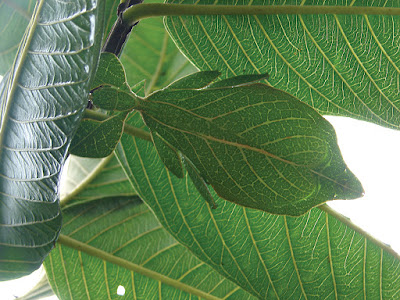

Paratype Cryptophyllium phami sp. nov. where it was found in Cat Tien N.P. (Vietnam) feeding on a Guava tree (Psidium guajava) in July 2012 by Jérôme Constant (RBINS) and Joachim Bresseel (RBINS). The photograph was taken without flash to show how they appear naturally from underneath with the light passing through their thin bodies like the light passing through a leaf.


 Royce T. Cumming, Sarah Bank, Joachim Bresseel, Jérôme Constant, Stéphane Le Tirant, Zhiwei Dong, Gontran Sonet and Sven Bradler. 2021. Cryptophyllium, the Hidden Leaf Insects – Descriptions of A New Leaf Insect Genus and Thirteen Species from the former celebicum Species Group (Phasmatodea, Phylliidae). ZooKeys. 1018: 1-179. DOI: 10.3897/zookeys.1018.61033

Friday, February 19, 2021

[Herpetology • 2021] Species Diversity and Biogeography of An Ancient Frog Clade from the Guiana Shield (Anura: Microhylidae: Adelastes, Otophryne, Synapturanus) exhibiting Spectacular Phenotypic Diversification


iin Fouquet, Leblanc, Framit, Réjaud, ... et Fabre, 2021. 

 
Abstract
The outstanding biodiversity of the Guiana Shield has raised many questions about its origins and evolution. Frogs of the genera AdelastesOtophryne and Synapturanus form an ancient lineage distributed mostly across this region. These genera display strikingly disparate morphologies and life-history traits. Notably, Synapturanus is conspicuously adapted to fossoriality and is the only genus within this group to have dispersed further into Amazonia. Moreover, morphological differences among Synapturanus species suggest different degrees of fossoriality that might be linked to their biogeographical history. Through integrative analysis of genetic, morphometric and acoustic data, we delimited 25 species in this clade, representing a fourfold increase. We found that the entire clade started to diversify ~55 Mya and Synapturanus ~30 Mya. Members of this genus probably dispersed three times out of the Guiana Shield both before and after the Pebas system, a wetland ecosystem occupying most of Western Amazonia during the Miocene. Using a three-dimensional osteological dataset, we characterized a high morphological disparity across the three genera. Within Synapturanus, we further characterized distinct phenotypes that emerged concomitantly with dispersals during the Miocene and possibly represent adaptations to different habitats, such as soils with different physical properties.

Keywords: Amazonia, Amphibia, integrative taxonomy, micro-computed tomography, mitogenomics


Antoine Fouquet, Killian Leblanc, Marlene Framit, Alexandre Réjaud, Miguel T Rodrigues, Santiago Castroviejo-Fisher, Pedro L V Peloso, Ivan Prates, Sophie Manzi, Uxue Suescun, Sabrina Baroni, Leandro J C L Moraes, Renato Recoder, Sergio Marques de Souza, Francisco Dal Vecchio, Agustín Camacho, José Mario Ghellere, Fernando J M Rojas-Runjaic, Giussepe Gagliardi-Urrutia, Vinícius Tadeu de Carvalho, Marcelo Gordo, Marcelo Menin, Philippe J R Kok, Tomas Hrbek, Fernanda P Werneck, Andrew J Crawford, Santiago R Ron, Jonh Jairo Mueses-Cisneros, Rommel Roberto Rojas Zamora, Dante Pavan, Pedro Ivo Simões, Raffael Ernst and Anne-Claire Fabre. 2021. Species Diversity and Biogeography of An Ancient Frog Clade from the Guiana Shield (Anura: Microhylidae: AdelastesOtophryneSynapturanus) exhibiting Spectacular Phenotypic Diversification. Biological Journal of the Linnean Society. 132(2); 233–256. DOI: 10.1093/biolinnean/blaa204


[Botany • 2019] Begonia zhongyangiana (Begoniaceae) • A New Species of Begonia from western China


Begonia zhongyangiana W.G.Wang et S.Z.Zhang

in Wang, Lang, ... et Zhang, 2019. 

Abstract
Begonia zhongyangiana, a new species iBegonia sect. Platycentrum (Begoniaceae) from Motuo (SE Xizang, China), is described and illustrated. This new species is similar to B. versicolor, B. scintillans and B. smithiae, but can be distinguished by its shorter rhizome lacking or rarely with short stems when blooming, orange-yellow flowers, 2 styles and 2-loculed ovary.

Keywords: Begonia, New taxon, Taxonomy, Tibet, western China, Eudicots

FIGURE 1. Begonia zhongyangiana W.G.Wang et S.Z.Zhang.
 A.  Habit;  B.  Hairs  and  margin  of  the  adaxially  leaf;  C.  Stipule;  D. Bract; E. Staminate flower; F&G. Outer tepal of the staminate flower; H. Inner tepal of the staminate flower; I. Androecium; J. Anthers; K. Pistillate flower; L. Cross-section of ovary; M. Capsule. N. Side view of stigmas.
(Drawn by Mr. Z. M. Li, based on the variegated individual with short stem cultivated in Fairy Lake Botanical Garden) 

FIGURE 2. Begonia zhongyangiana W.G.Wang et S.Z.Zhang.
A. Habit; B. Cultivated individuals; C. Blooming individual with short erect stems; D. Adult plant without erect stem; E. Staminate flowers; F. Side view of the pistillate flower; G. Front view of the pistillate flower; H. Cross-section of ovary; I. Capsule.
(Photos: A, E, F, I by W. G. Wang; B by J. M. Chen; C, D, G, H by D. K. Tian). 

Begonia zhongyangiana W.G.Wang et S.Z.Zhang, sp. nov . 
鐘揚秋海棠

Etymology:—The specific epithet zhongyangiana is named after Dr. Yang Zhong, a Chinese botanist who was dedicated to botanical research and seed bank in Xizang (Tibet), China.  


Wen-Guang Wang, Xiao-An Lang, Lei-Lei Yang, Hong Wu and Shou-Zhou Zhang. 2019. Begonia zhongyangiana, A New Species of Begonia (Begoniaceae) from western China. Phytotaxa. 407(1); 51-58. DOI:10.11646/phytotaxa.407.1.8

[Botany • 2021] Thismia belumensis (Thismiaceae) • A Remarkable New Species from The Royal Belum State Park, Gerik, Perak, Peninsular Malaysia


 Thismia belumensis Siti-Munirah & Suhaimi-Miloko

in Siti-Munirah, Suhaimi-Miloko & Ahmad, 2021. 

Abstract
This report describes Thismia belumensis Siti-Munirah & Suhaimi-Miloko, a novel species of achlorophyllous herb discovered in the Royal Belum State Park, Peninsular Malaysia. This new species is unlike any previously described species of Thismia. In particular, T. belumensis possesses a unique annulus, which has been expanded and modified into a cucullate (hood-like) structure. This structure covers the apical floral tube and has an opening on one side facing a thickened part of the annulus, and the off-centre floral aperture confers a zygomorphic symmetry to the flower, indicating T. belumensis is more similar to Thismia labiata J.J.Sm. This morphological detail makes this new species distinct from all other described species of Thismia. In this report, we provide descriptions, illustrations, colour plates, and the provisional conservation status of Thismia belumensis.

Keywords: Conservation status, endemic, Peninsular Malaysia, Perak, Thismia belumensis, zygomorphic

Figure 2. Outer appearance of  Thismia belumensis Siti-Munirah & Suhaimi-Miloko
 A root and stem B flower from side view C flower showing the erect tepal appendages of the live plant D tip of erect tepal appendages E slender appendage of outer tepal F side view showing inner tepals overlaying the cucullate structure G floral tube with the floral aperture of the expanded annulus H outer tepals alternate with inner tepals, each with distal or dorsal appendage I top view of flower showing inner tepals overlapping on cucullate structure J semi-round shape of the aperture of the annulus
(All photos by Siti-Munirah MY, FRI 94752 & FRI 94758).

Figure 1. Illustration of  Thismia belumensis Siti-Munirah & Suhaimi-Miloko
A habit B side view of flower C back view of flower D longitudinal section of the floral tube showing pendulous stamen with ovary and stigma E outer view of stamens F inner view of stamens G outer tepal H inner tepal I longitudinal section of hood (annulus) and pendulous stamens J longitudinal section of ovary K stigma L pistil M ovules N bract O leaf.
 All from FRI 94752 & FRI 94758, drawn by Mohamad Aidil Noordin.

Figure 3. Inner flower appearance of  Thismia belumensis Siti-Munirah & Suhaimi-Miloko
 K longitudinal section showing the internal parts of flower L longitudinal section of floral tube and apical part (L1 left side L2 right side) showing pendulous stamen attached to the filament, expanded annulus developing a cucullate (hood-like) structure, thickened part of the annulus at one-side, and outer surface of hood overlaid by inner tepals M transverse section of floral tube at lower part showing the apex of fused pendulous stamen and the floral aperture with the thickened part of the annulus in the centre N inner view of stamens and filament attached to the expanded annulus, which is covered with white trichome hairs O inner view of two stamens and hood inner surface P stamen (from inner view) Q stamen displaying linear to filiform thecae (outer view) and supraconnective apex curved outwards R top view of ovary and stigma S stigma from side view (S1 shows triangular-pyramidal S2 shows whitish part on surface) T cross-section of ovary showing young seeds
 (All photos by Siti-Munirah MY, FRI 94752 & FRI 94758).

Figure 4. Thismia belumensis Siti-Munirah & Suhaimi-Miloko
 A habitat B T. belumensis growing in leaf litter, FRI 94758
C habit of the young flowering plant and the young fruit of T. belumensis D fruits of T. belumensis, in-situ
(Photos by A–C Siti-Munirah MY D Suhaimi-Miloko Z).

Thismia belumensis Siti-Munirah & Suhaimi-Miloko, sp. nov.
 
Diagnosis: Most similar to Thismia labiata J.J.Sm. but differing in the floral tube partially covered by a massively expanded cucullate bilabiate annulus, longer outer tepals appendage, obovate to spathulate rather than linear to filiform inner tepals and the supraconnective apex curved outwards like a skirt rather than straight.

Distribution: Endemic to Perak, Peninsular Malaysia. Currently known only from the type locality (Map 1).

Ecology: Lowland dipterocarp forest, under shade, 260–290 m altitude. Flowering from June to October. Thismia belumensis was found growing within tree leaf litter and between the buttress roots of large trees (Fig. 4). Two other Thismia species were also discovered within a radius of about 350 meters, T. javanica and Thismia sp. 1 (see Fig. 5), which is currently suspected by the authors to be Thismia arachnites Ridl., but further examination is still needed. All plants were found close to the walking trail.

Etymology: The species is named after The Royal Belum State Park, the type locality of this species.


Mat Yunoh Siti-Munirah, Zainol Suhaimi-Miloko and Mohammad Ismail Zubir Ahmad. 2021. Thismia belumensis (Thismiaceae), A Remarkable New Species from The Royal Belum State Park, Gerik, Perak, Peninsular Malaysia. PhytoKeys. 172: 121-134. DOI: 10.3897/phytokeys.172.59336

Spesies baru untuk Malaysia