Thursday, April 11, 2013

[Mammalogy • 2013] Niumbaha superba • A new genus for a rare African vespertilionid bat: insights from South Sudan


Niumbaha superba
photo: DeeAnn Reeder/Bucknell University.

Figure 2. Photographs of Niumbaha superba live and as a freshly prepared specimen.
Top photos show profile and anterior view, with ventral and dorsal images below.

Abstract

A new genus is proposed for the strikingly patterned African vespertilionid “Glauconycteris” superba Hayman, 1939 on the basis of cranial and external morphological comparisons. A review of the attributes of a newly collected specimen from South Sudan (a new country record) and other museum specimens of “G.” superba suggests that “G.” superba is markedly distinct ecomorphologically from other species classified in Glauconycteris and is likely the sister taxon to Glauconycteris sensu stricto. The recent capture of this rarely collected but widespread bat highlights the need for continued research in tropical sub-Saharan Africa and in particular, for more work in western South Sudan, which has received very little scientific attention. New country records for G. cf. poensis (South Sudan) and G. curryae (Gabon) are also reported.

Keywords: Glauconycteris superba, Glauconycteris poensis, Glauconycteris curryae, Niumbaha gen. nov., Badger Bat, South Sudan, Description


Taxonomy

Niumbaha Reeder, Helgen, Vodzak, Lunde & Ejotre gen. n.

Etymology: The name is the Zande word for ‘rare/unusual’. This name was chosen because of the rarity of capture for this genus, despite its wide distribution throughout West and Central Africa, and for the unusual and striking appearance of this bat. Zande is the language of the Azande people, who are the primary ethnic group in Western Equatoria State in South Sudan (where our recent specimen was collected). The homeland of the Azande extends westwards into Democratic Republic of the Congo, where superba has also been collected (the holotype and another recent capture), and into southeastern Central African Republic. Gender: feminine.
Type species: Glauconycteris superba Hayman, 1939; by monotypy.


Striped like a badger - new genus of bat identified in South Sudan
The rare specimen was discovered by researchers from Bucknell University and Fauna & Flora International while conducting field research with wildlife authorities in South Sudan


Reeder DM, Helgen KM, Vodzak ME, Lunde DP, Ejotre I. 2013. A new genus for a rare African vespertilionid bat: insights from South Sudan. ZooKeys. 285: 89–115. doi: http://dx.doi.org/10.3897/zookeys.285.4892

Wednesday, April 10, 2013

[PaleoOrnithology • 2012] Anchigyps voorhiesi • A Late Miocene Accipitrid (Aves: Accipitriformes) from Nebraska and Its Implications for the Divergence of Old World Vultures


Figure 1. Holotype of Anchigyps voorhiesi gen. et sp. nov. (UNSM 62877).

Abstract


Background
Old World vultures are likely polyphyletic, representing two subfamilies, the Aegypiinae and Gypaetinae, and some genera of the latter may be of independent origin. Evidence concerning the origin, as well as the timing of the divergence of each subfamily and even genera of the Gypaetinae has been elusive.

Methodology/Principal Findings
Compared with the Old World, the New World has an unexpectedly diverse and rich fossil component of Old World vultures. Here we describe a new accipitriform bird, Anchigyps voorhiesi gen. et sp. nov., from the Ash Hollow Formation (Upper Clarendonian, Late Miocene) of Nebraska. It represents a form close in morphology to the Old World vultures. Characteristics of its wing bones suggest it was less specialized for soaring than modern vultures. It was likely an opportunistic predator or scavenger having a grasping foot and a mandible morphologically similar to modern carrion-feeding birds.

Conclusions/Significance
The new fossil reported here is intermediate in morphology between the bulk of accipitrids and the Old World gypaetine vultures, representing a basal lineage of Accipitridae trending towards the vulturine habit, and of its Late Miocene age suggests the divergence of true gypaetine vultures, may have occurred during or slightly before the Miocene.


Etymology. Anchi from Greek meaning almost, plus gyps, vulture, in reference to its intermediate morphology between normal accipitrids and gypaetine Old World vultures. Species name is in honor of Michael R. Voorhies, who discovered the locality and led the excavations.


Citation: Zhang Z, Feduccia A, James HF. 2012.  A Late Miocene Accipitrid (Aves: Accipitriformes) from Nebraska and Its Implications for the Divergence of Old World Vultures. PLoS ONE. 7(11): e48842. doi:10.1371/journal.pone.0048842

Friday, April 5, 2013

[Testudology • 2013] One Extinct Turtle Species Less: Pelusios seychellensis Is Not Extinct, It Never Existed


Pelusios castaneus | hatchling, Comoé National Park, Ivory Coast

Figure 1. Distribution of Pelusios seychellensis (arrow) and P. castaneus. Introduced population of P. castaneus on Guadeloupe (Lesser Antilles) not shown. Inset: P. castaneus (hatchling, Comoé National Park, Ivory Coast). 
doi:10.1371/journal.pone.0057116

Abstract

Pelusios seychellensis is thought to be a freshwater turtle species endemic to the island of Mahé, Seychelles. There are only three museum specimens from the late 19th century known. The species has been never found again, despite intensive searches on Mahé. Therefore, P. seychellensis has been declared as “Extinct” by the IUCN and is the sole putatively extinct freshwater turtle species. Using DNA sequences of three mitochondrial genes of the historical type specimen and phylogenetic analyses including all other species of the genus, we provide evidence that the description of P. seychellensis was erroneously based on a widely distributed West African species, P. castaneus. Consequently, we synonymize the two species and delete P. seychellensis from the list of extinct chelonian species and from the faunal list of the Seychelles.

Figure 2. Dorsal (left) and ventral aspect (right) of the lectotype of Pelusios seychellensis.

One Extinct Turtle Less: Turtle Species in the Seychelles Never Existed

 — The turtle species Pelusios seychellensis regarded hitherto as extinct never existed. Scientists at the Senckenberg Research Institute in Dresden discovered this based on genetic evidence. The relevant study was published today in the journal PLOS ONE.

Turtles are the vertebrates under the greatest threat. Among the approximately 320 turtle species, the species confined to islands have been especially hard hit -- humans have caused the extinction of a whole number of species. One of them -- or at least it was thought so -- is the Seychelles mud turtle Pelusios seychellensis. Just three specimens were collected at the end of the 19th century; they are still kept at the Natural History Museum in Vienna and the Zoological Museum in Hamburg.

Despite an intensive search for this species, which was declared as "extinct" by the International Union for Conservation of Nature (IUCN), no further specimens have been found since those in the 19th century. "Consequently, it was assumed the species had been exterminated," says Professor Uwe Fritz, director of the Museum of Zoology at the Senckenberg Natural History Collections in Dresden. The Dresden biologist states quite clearly that this is not true. "We have examined the DNA of the original specimen from the museum in Vienna and discovered that these turtles are not a separate species."

The genetic analyses have shown that this supposed Seychellois species is in reality another species, Pelusios castaneus, that is widespread in West Africa. "The species Pelusios seychellensis has therefore never existed," adds Fritz. "In fact, for a long time researchers were amazed that the supposed Seychelles turtles looked so deceptively similar to the West African turtles. But due to the great geographic distance, it was thought this had to be a different species, which is why the assumed Seychelles turtles were also described as a new species in 1906."

The West African mud turtle Pelusios castaneus acquired an “extinct Doppelganger” from the Seychelles due to a scientific error.


Citation: Stuckas H, Gemel R, Fritz U. 2013. One Extinct Turtle Species Less: Pelusios seychellensis Is Not Extinct, It Never Existed. PLoS ONE 8(4): e57116. doi:10.1371/journal.pone.0057116

[Palaeontology • 2013] The affinities of ‘Steneosaurus barettoni’ (Crocodylomorpha, Thalattosuchia), from the Jurassic of Northern Italy, and implications for cranial evolution among geosaurine metriorhynchids


MPUP 6552 & Holotype of Neptunidraco ammoniticus

Abstract
In 1787, a fragmentary fossil skull of a crocodylian was discovered in the Altopiano dei Sette Comuni (Veneto, Northern Italy). In 1883, the specimen was referred to a new species of the teleosauroid Steneosaurus, S. barettoni. In this study, the specimen is redescribed and its taxonomic status reviewed. S. barettoni fails to conform to Article 12 of the International Code of Zoological Nomenclature and is considered as a nomen nudum. The specimen lacks synapomorphies of both Teleosauroidea and Steneosaurus, whereas it is referred to Metriorhynchidae based on the presence of an elongate median depression between the dorsal surface of nasals, and a large teardrop-shaped prefrontal that is expanded laterally. The combination of cranial and dental features present in this specimen supports its referral to Neptunidraco, an interpretation that adds new information on the morphology of the Italian metriorhynchid. Although total evidence analysis placed Neptunidraco as a basal divergence among Geosaurinae, it independently evolved some craniomandibular features previously considered exclusive of the macrophagous Geosaurini. This specimen is historically relevant because it may represent the first metriorhynchoid found worldwide.

Keywords: Crocodylomorpha, Italy, Jurassic, Neptunidraco , Thalattosuchia


Andrea Cau. 2013. The affinities of ‘Steneosaurus barettoni’ (Crocodylomorpha, Thalattosuchia), from the Jurassic of Northern Italy, and implications for cranial evolution among geosaurine metriorhynchids. Historical Biology.  DOI:10.1080/08912963.2013.784906

[Cetology • 2013] Clicking in Shallow Rivers: Short-Range Echolocation of Irrawaddy and Ganges River Dolphins in a Shallow, Acoustically Complex Habitat


A rare sight of the fast and shy
Ganges River Dolphin 
Platanista g. gangetica. 

(Photo by Rubaiyat Mansur, Whale and Dolphin Conservation Society)

Abstract
Toothed whales (Cetacea, odontoceti) use biosonar to navigate their environment and to find and catch prey. All studied toothed whale species have evolved highly directional, high-amplitude ultrasonic clicks suited for long-range echolocation of prey in open water. Little is known about the biosonar signals of toothed whale species inhabiting freshwater habitats such as endangered river dolphins. To address the evolutionary pressures shaping the echolocation signal parameters of non-marine toothed whales, we investigated the biosonar source parameters of Ganges river dolphins (Platanista gangetica gangetica) and Irrawaddy dolphins (Orcaella brevirostris) within the river systems of the Sundarban mangrove forest. Both Ganges and Irrawaddy dolphins produced echolocation clicks with a high repetition rate and low source level compared to marine species. Irrawaddy dolphins, inhabiting coastal and riverine habitats, produced a mean source level of 195 dB (max 203 dB) re 1 µPapp whereas Ganges river dolphins, living exclusively upriver, produced a mean source level of 184 dB (max 191) re 1 µPapp. These source levels are 1–2 orders of magnitude lower than those of similar sized marine delphinids and may reflect an adaptation to a shallow, acoustically complex freshwater habitat with high reverberation and acoustic clutter. The centroid frequency of Ganges river dolphin clicks are an octave lower than predicted from scaling, but with an estimated beamwidth comparable to that of porpoises. The unique bony maxillary crests found in the Platanista forehead may help achieve a higher directionality than expected using clicks nearly an octave lower than similar sized odontocetes.

____________________

An Ancient Biosonar Sheds New Light On the Evolution of Echolocation in Toothed Whales

— Some 30 million years ago, Ganges river dolphins diverged from other toothed whales, making them one of the oldest species of aquatic mammals that use echolocation, or biosonar, to navigate and find food. This also makes them ideal subjects for scientists working to understand the evolution of echolocation among toothed whales.


New research, led by Frants Havmand Jensen, a Danish Council for Independent Research / Natural Sciences postdoctoral fellow at Woods Hole Oceanographic Institution, shows that freshwater dolphins produce echolocation signals at very low sound intensities compared to marine dolphins, and that Ganges river dolphins echolocate at surprisingly low sound frequencies. The study, "Clicking in shallow rivers," was published in the journal PLOS ONE.

"Ganges River dolphins are one of the most ancient evolutionary branches of toothed whales," says Jensen. "We believe our findings help explain the differences in echolocation between freshwater and marine dolphins. Our findings imply that the sound intensity and frequency of Ganges river dolphin may have been closer to the 'starting point' from which marine dolphins gradually evolved their high-frequent, powerful biosonar."

The scientists believe these differences evolved due to differences in freshwater and marine environments and the location and distribution of prey in those environments.

A complex, underwater environment
To sustain themselves, river dolphins must find their food, often small fish or crustaceans, in highly turbid water where visibility seldom exceeds a few inches. Like their marine relatives, they manage this using echolocation: They continuously emit sound pulses into the environment and listen for the faint echoes reflected off obstacles while paying special attention to the small details in the echoes that might signify a possible meal.
The environment that freshwater dolphins operate in poses very different challenges to a biosonar than the vast expanses of the sea where most dolphins later evolved. "Dolphins that range through the open ocean often feed on patchily distributed prey, such as schools of fish," Jensen says. "They have had a large advantage from evolving an intense biosonar that would help them detect prey over long distances, but we have little idea of how the complex river habitats of freshwater dolphins shape their biosonar signals."

Shy study animals with a surprisingly deep voice
To answer that question, the researchers recorded the echolocation signals of two species of toothed whales inhabiting the same mangrove forest in the southern part of Bangladesh: The Ganges river dolphin, an exclusively riverine species that is actually not part of the dolphin family but rather the Platanistidae family, and the Irrawaddy, a freshwater toothed whale from the dolphin family that lives in both coastal and riverine habitats.
Surprisingly, the echolocation signals turned out to be much less intense than those employed by marine dolphins of similar size and it seemed that the freshwater dolphins were looking for prey at much shorter distances. From this, the researchers surmise that both the dolphin species and the river dolphin were echolocating at short range due to the complex and circuitous river system that they were foraging in.
While both Irawaddy and Ganges river dolphin produced lower intensity biosonar, the Ganges river dolphin had an unexpectedly low frequency biosonar, nearly half as high as expected if this species had been a marine dolphin.
"It is very surprising to see these animals produce such low-frequent biosonar sounds. We are talking about a small toothed whale the size of a porpoise producing sounds that would be more typical for a killer whale or a large pilot whale," says Professor Peter Teglberg Madsen from Aarhus University in Denmark, an expert on toothed whale biosonar and co-author of the study.

A new perspective on the evolution of biosonar
The study suggests that echolocation in toothed whales initially evolved as a short, broadband and low-frequent click. As dolphins and other toothed whales evolved in the open ocean, the need to detect schools of fish or other prey items quickly favored a long-distance biosonar system. As animals gradually evolved to produce and to hear higher sound frequencies, the biosonar beam became more focused and the toothed whales were able to detect prey further away.
However, the Ganges river dolphin separated from other toothed whales early throughout this evolutionary process, adapting to a life in shallow, winding river systems where a high-frequency, long-distance sonar system may have been less important than other factors such as high maneuverability or the flexible neck that helps these animals capture prey at close range or hiding within mangrove roots or similar obstructions.

Improved tools for counting animals
Freshwater dolphins are among the most endangered animal species. Only around a thousand Ganges river dolphins are thought to remain, and they inhabit some of the most polluted and overfished river systems on Earth. The results of this study will help provide local collaborators with a new tool in their struggle to conserve these highly threatened freshwater cetaceans. Using acoustic monitoring devices to identify the local species may help researchers estimate how many animals remain, and to identify what areas are most important to them.


Frants H. Jensen, Alice Rocco, Rubaiyat M. Mansur, Brian D. Smith, Vincent M. Janik, Peter T. Madsen. 2013. Clicking in Shallow Rivers: Short-Range Echolocation of Irrawaddy and Ganges River Dolphins in a Shallow, Acoustically Complex Habitat. PLoS ONE. 8 (4): e59284 DOI: 10.1371/journal.pone.0059284

[Botany • 2004] Allium nathaliae • a new species from the Crimea (Ukraine, Europe), and taxonomic notes on the related species A. erubescens C. Koch.


Allium nathaliae Seregin sp. nova (sect. Allium)
http://www.flora.crimea.ua/luk/Allium-nathaliae.html

Summary
Allium nathaliae Seregin sp. nova (sect. Allium), an endemic plant of the Crimean Mountains is described in the paper. This species with acute perianth segments which are curved outwards was formerly accounted for the Crimea as A. multiflorum auct., A. rudbaricum auct., and A. erubescens auct.. A. nathaliae differs from A. erubescens C. Koch, a related species, showing leaves distinctly  arching outwards and densely scabrid on the margin; longer bracteoles; outer bulb tunics becoming fibrous during ontogenesis and producing usually a long neck at the apex; rather large bulblets and some other characters. I have named the new species after Nathalya K. Shvedtchikova, curator of Caucasian and Crimean Sectors of MW Herbarium. Busсh collected in Tepe-Kermen (Western Crimea) a variety with remarkable spirally structured leaves, a deviation for the section Allium, which is very consistent in all four specimens of type collection (A. nathaliae var. tepekermensis Seregin var. nova). 

Problems of the taxonomy of A. erubescens C. Koch are discussed. According to GROSSHEIM (1940), this species seemed to be a widely distributed and locally common plant in Caucasus. Studying Grossheim’s material in LE made me sure, that he used only one unreliable character for delimitation of A. erubescens and A. rotundum L. s. l. in Caucasus. As a result, I can not firmly separate from A. rotundum s. l. almost two thirds of A. erubescens sensu Grossh. collected mainly in Daghestan (NE Caucasus). Typical A. erubescens grows in Azerbaydzhan and Northern Iran. Daghestanian plants of A. erubescens sensu Grossh. which I am concerning to be a part of A. rotundum s. l. nonetheless slightly differ from the latter species, but these characters are of poor importance for the taxonomy of the section Allium. Taxonomic citations for A. erubescens C. Koch, A. nathaliae Seregin sp. nova, A. rotundum L. s. l., and A. jajlae Vved. are given in this paper. Treating of the names A. brevicuspis Boiss. and A. rudbaricum Boiss. et Buhse as synonyms of A. erubescens is a provisional solution, because Koch’s type of A. erubescens [B] was probably destroyed. The best solution during the absence of the A. erubescens type is to follow BOISSIER (1882), who united this species with A. rudbaricum. A. erubescens C. Koch should be excluded from the Crimean (and European) flora. Numerous records of A. erubescens from Daghestan and adjacent territories refer to A. rotundum s. l. or probably to a separate (undescribed?) taxon. 

Keywords: Alliaceae, Allium, new taxa, taxonomy, endemics, Crimea, Caucasus 


Results 
Allium nathaliae Seregin sp. nova, an endemic of the Crimean Mountains, differs from the related A. erubescens C. Koch with several distinct characters. A. erubescens should be excluded from the Crimean (and European) flora. Typical A. erubescens is growing in Azerbaydzhan and Northern Iran, although the implementation of the names A. erubescens, A. brevicuspis, and A. rudbaricum is an intricate question. Numerous records of A. erubescens from Daghestan and adjacent territories refer to A. rotundum L. s. l. or probably to a separate (undescribed?) taxon. 


Alexey P. Seregin. 2004. Allium nathaliae (Alliaceae), a new species from the Crimea (Ukraine, Europe), and taxonomic notes on the related species A. erubescens C. Koch. Wulfenia 11 (2004): 15–28 

[Botany • 2013] Allium formosum • a new onion species (Amaryllidaceae) from the Western Tian-Shan, Kyrgyzstan | Remaining unnoticed for 100 years, a Kyrgyz onion species strikes with its beauty


A line drawing of the new species Allium formosum sp. nov. and photo of Allium spathulatum, a close relative

Abstract

Allium formosum Sennikov & Lazkov sp. nov. is described as new to science and illustrated. This species is the second member of A. sect. Spathulata F.O.Khass. & R.M.Fritsch, being different from A. spathulatum F.O.Khass. & R.M.Fritsch in larger, broader, obtuse and more intensely purple-coloured tepals, and in a more robust habit. It is a local endemic of Babash-Ata Mt. Range situated east of Fergana Valley in Kyrgyzstan, recommended for legal protection as Endangered because of the very small population size in its only locality.

_________________

 Remaining unnoticed for 100 years, a Kyrgyz onion species strikes with its beauty

Situated at the foothills of the Western Tian-Shan, Kyrgyzstan is home to a diverse range of vascular plants, many of which are endemic and can only be found in very narrowly circumscribed areas. Such is the case for the onion species Allium spathulatum that had long remained undetected in spite of living within the famous Sary-Chelek Nature Reserve. Even in close proximity to the headquarters it remained unnoticed until it was finally described in 1998. 

The species occurs in the low-altitude forest zone, between 1600 and 1700 m a.s.l., dwelling in river valleys, on open sunny slopes with sparse savanna-type vegetation or sheltered by stones. The plants grow clustered in small patches, suggesting the most successful establishment nearby mature plants. When originally found, the species was considered unique in the subgenus Allium because of its unusual spatule-like bracts subtending pedicels. It probably belongs to an old phylogenetic lineage that has archaic characters and is survived in very few representative species.

A new rare species, Allium formosum, closely related to A. spathulatum, has been now discovered by the scientists Alexander Sennikov from the Finnish Museum of Natural History, University of Helsinki and Georgy Lazkov from the Institute of Biology and Soil Science, National Academy of Sciences in the Kyrgyz Republic, Bishkek. The study was published in the open access journal Phytokeys. The new plant is possibly a very narrow endemic species of the Babash-Ata Mountains, Kyrgyzstan, so far known only from the type locality. The name of the new species is derived from the Latin word for 'beautiful' (formosum) because of its elegant habit and beautiful colouration of the flower, transitional between deeply pink and purple.

The distance between the localities of A. spathulatum and A. formosum, both narrow endemics of mountains surrounding the eastern end of Fergana valley, is about 60 km. The area of the eastern part of the Chatkal Range and the northern outliers of the Fergana Range (Babash-Ata and neighbouring mountains) harbour many other narrow endemics of Allium, and this discovery stresses the need of further explorations and plant protection in this area.

"Because of the vulnerability of the species, we anticipate its inclusion in the forthcoming Red Data Book of Central Asia and the next edition of the Red Data Book of Kyrgyzstan", says the lead author Dr Alexander Sennikov.

 Remaining unnoticed for 100 years, a Kyrgyz onion species strikes with its beauty

Sennikov AN, Lazkov GA. 2013. Allium formosum Sennikov & Lazkov (Amaryllidaceae), a new species from Kyrgyzstan. Phytokeys. 21: 29, doi: http://dx.doi.org/10.3897/Phytokeys.21.4130

[Paleontology • 2012] Nyasasaurus parringtoni • The Oldest Dinosaur? A Middle Triassic dinosauriform from Tanzania


Artist rendering of Nyasasaurus parringtoni, either the earliest dinosaur or the closest dinosaur relative yet discovered.
Art: Mark Witton http://palaeoblog.blogspot.com
Abstract

The rise of dinosaurs was a major event in vertebrate history, but the timing of the origin and early diversification of the group remain poorly constrained. Here, we describe Nyasasaurus parringtoni gen. et sp. nov., which is identified as either the earliest known member of, or the sister–taxon to, Dinosauria. Nyasasaurus possesses a unique combination of dinosaur character states and an elevated growth rate similar to that of definitive early dinosaurs. It demonstrates that the initial dinosaur radiation occurred over a longer timescale than previously thought (possibly 15 Myr earlier), and that dinosaurs and their immediate relatives are better understood as part of a larger Middle Triassic archosauriform radiation. The African provenance of Nyasasaurus supports a southern Pangaean origin for Dinosauria.

Keywords: Dinosauria, Archosaur, radiation, Triassic, Manda beds, phylogeny


Artist rendering of Nyasasaurus parringtoni, either the earliest dinosaur or the closest dinosaur relative yet discovered. Nyasasaurus parringtoni was up to 10 feet long, weighed perhaps 135 pounds and is depicted near plant-eating reptiles of the genus Stenaulorhynchus.
© Natural History Museum, London/Mark Witton http://palaeoblog.blogspot.com


Bones of Nyasasaurus parringtoni were collected in southwest Tanzania in the 1930s from the Manda beds, which preserves fossils of many animals from the Triassic Period of Earth’s history.


Scientists find oldest dinosaur – or closest relative yet

Researchers have discovered what may be the earliest dinosaur, a creature the size of a Labrador retriever, but with a 5-foot-long tail, that walked the Earth about 10 million years before more familiar dinosaurs like the small, swift-footed Eoraptor and Herrerasaurus.

The findings mean that the dinosaur lineage appeared 10 million to 15 million years earlier than fossils previously showed, originating in the Middle Triassic rather than in the Late Triassic period.

“If the newly named Nyasasaurus parringtoni is not the earliest dinosaur, then it is the closest relative found so far,” according to Sterling Nesbitt, a University of Washington postdoctoral researcher in biology and lead author of a paper published online Dec. 5 in Biology Letters, a journal of the United Kingdom’s Royal Society.

“For 150 years, people have been suggesting that there should be Middle Triassic dinosaurs, but all the evidence is ambiguous,” he said. “Some scientists used fossilized footprints, but we now know that other animals from that time have a very similar foot. Other scientists pointed to a single dinosaur-like characteristic in a single bone, but that can be misleading because some characteristics evolved in a number of reptile groups and are not a result of a shared ancestry.”

The researchers had one humerus – or upper arm bone – and six vertebrae to work with. They determined that the animal likely stood upright, measured 7 to 10 feet in length (2 to 3 meters), was as tall as 3 feet at the hip (1 meter) and may have weighed between 45 and 135 pounds (20 to 60 kilograms).


The fossilized bones were collected in the 1930s from Tanzania, but it may not be correct to say dinosaurs originated in that country. When Nyasasaurus parringtoni lived, the world’s continents were joined in the landmass called Pangaea. Tanzania would have been part of Southern Pangaea that included Africa, South America, Antarctica and Australia.

“The new findings place the early evolution of dinosaurs and dinosaur-like reptiles firmly in the southern continents,” said co-author Paul Barrett at the Natural History Museum, London.

The bones of the new animal reveal a number of characteristics common to early dinosaurs and their close relatives. For example, the bone tissues in the upper arm bone appear as if they are woven haphazardly and not laid down in an organized way. This indicates rapid growth, a common feature of dinosaurs and their close relatives.

“We can tell from the bone tissues that Nyasasaurus had a lot of bone cells and blood vessels,” said co-author Sarah Werning at the University of California, Berkeley, who did the bone analysis. “In living animals, we only see this many bone cells and blood vessels in animals that grow quickly, like some mammals or birds.”

“The bone tissue of Nyasasaurus is exactly what we would expect for an animal at this position on the dinosaur family tree,” she added. “It’s a very good example of a transitional fossil; the bone tissue shows that Nyasasaurus grew about as fast as other primitive dinosaurs, but not as fast as later ones.”

Another example is the upper arm bone’s distinctively enlarged crest, needed to anchor the upper arm muscles. The feature, known as an elongated deltopectoral crest, is also common to all early dinosaurs.

“Nyasasaurus and its age have important implications regardless of whether this taxon is a dinosaur or the closest relatives of dinosaurs,” Nesbitt said. “It establishes that dinosaurs likely evolved earlier than previously expected and refutes the idea that dinosaur diversity burst onto the scene in the Late Triassic, a burst of diversification unseen in any other groups at that time.”

It now appears that dinosaurs were just part of a large diversification of archosaurs. Archosaurs were among the dominant land animals during the Triassic period 250 million to 200 million years ago and include dinosaurs, crocodiles and their kin.

“Dinosaurs are just part of this archosaur diversification, an explosion of new forms soon after the Permian extinction,” Nesbitt said.

The specimen used to identify the new species is part of the collection at the Natural History Museum, London. Four vertebrae from a second specimen of Nyasasaurus, which were also used in this research, are housed in the South African Museum in Cape Town.  The work was funded by the National Science Foundation and the Natural History Museum, London. The fourth co-author on the paper is Christian Sidor, UW professor of biology.


The name Nyasasaurus parringtoni is new, but “Nyasasaurus” – combining the lake name Nyasa with the term “saurus” for lizard – is not. The late paleontologist Alan Charig, included as a co-author on the paper, named the specimen but never documented or published in a way that was formally recognized. “Parringtoni” is in honor of University of Cambridge’s Rex Parrington, who collected the specimens in the 1930s.

“What’s really neat about this specimen is that it has a lot of history. Found in the ’30s, first described in the 1950s but never published, then its name pops up but is never validated. Now 80 years later, we’re putting it all together,” Nesbitt said.

“This work highlights the important role of museums in housing specimens whose scientific importance might be overlooked unless studied and restudied in detail,” Barrett said. “Many of the more important discoveries in paleontology are made in the lab, or museum storerooms, as well as in the field.”


Nesbitt, S., et al. 2012. The oldest dinosaur? A Middle Triassic dinosauriform from Tanzania. Biol. Lett.. 9 (1). http://dx.doi.org/10.1098/rsbl.2012.0949


Thursday, April 4, 2013

[Herpetology • 2013] Taxonomic review of the tree frog genus Rhacophorus (Anura: Rhacophoridae) from the Western Ghats, India | Rhacophorus calcadensis, R. lateralis, R. malabaricus and R. pseudomalabaricus, with description of ontogenetic colour changes and reproductive behaviour


Rhacophorus calcadensis Ahl, R. lateralis Boulenger,
R. malabaricus
Jerdon, and R. pseudomalabaricus Vasudevan & Dutta
Remarkable Transformation of Coat Colour from Juvenile to Adult  

Abstract 
A taxonomic revision of the Western Ghats species from the genus Rhacophorus is presented. Based on museum studies and new collections from localities spanning the known range of Western Ghats Rhacophorus, we review the four known species of this genus, their type specimens, current taxonomic status and their geographic distribution on the basis of morphological and molecular data. The holotypes of Rhacophorus calcadensis, R. lateralis and R. malabaricus are redescribed. The previously unidentified holotype of Rhacophorus malabaricus is herein fixed. Descriptions of ontogenetic colour change (OCC) in the Western Ghats Rhacophorus are provided and we conjecture the taxonomic utility of OCC. Additionally we provide observations on nesting behaviour of each species, and report multiple male participation during amplexus, oviposition and foam nest construction in R. lateralis and R. malabaricus. 

Keywords: Rhacophorus, taxonomy, phylogeny, ontogenetic colour change, polyandry, Western Ghats, biodiversity, conservation


Remarkable Transformation of Coat Colour from Juvenile to Adult in Rhacophorus from the Western Ghats, India

Introduction
The Old World tree frog family Rhacophoridae Hoffman, consisting of 350 species in 16 genera, is one of the most diverse anuran families in the world (Frost 2013, AmphibiaWeb 2013). Within the genus Rhacophorus Kuhl & Van Hasselt (sensu stricto), 85 nominal species are currently recognised making it the most species-rich rhacophorid genus (Frost 2013; AmphibiaWeb 2013). The primary centre of Rhacophorus radiation is in the tropical and temperate zones of East and South East Asia (Inger 1999; Chan & Grismer 2010). In India, 14 Rhacophorus species have been reported though some of the species records from north and northeast India require taxonomic scrutiny (SDB, personal observation). The Western Ghats mountain range is considered a distinct biogeographic unit (Biju & Bossuyt 2003; Bossuyt et al. 2004, 2006; Roelants et al. 2004; Bocxlaer et al. 2009), and contains four species of Rhacophorus viz., Rhacophorus calcadensis Ahl, R. lateralis Boulenger, R. malabaricus Jerdon, and R. pseudomalabaricus Vasudevan & Dutta, that are endemic to this chain of mountains.

............................

2013. Taxonomic review of the tree frog genus Rhacophorus from the Western Ghats, India (Anura: Rhacophoridae), with description of ontogenetic colour changes and reproductive behaviour. Zootaxa. 3636(2): 257–289. 

Wednesday, April 3, 2013

[Cetology • 2013] Bizarre fossil beaked whales (Odontoceti, Ziphiidae); Choneziphius leidyi, Globicetus hiberus, Imocetus piscatus and Tusciziphius atlanticus | fished from the Atlantic Ocean floor off the Iberian Peninsula


The four new species;
Top left: Imocetus piscatus , top right: Choneziphius leidyi ,
bottom left: Tusciziphius atlanticus , bottom right: Globicetus hiberus.
Picture: SGHN |  http://www.sghn.org

Abstract
Forty partial fossil skulls belonging to beaked whales (Cetacea, Odontoceti, Ziphiidae) were collected by trawling and long-line fishing on Neogene (probably Late Early to Middle Miocene) layers of the Atlantic floor off the coasts of Portugal and Spain (Asturias and Galicia). e systematic study of the most diagnostic Iberian specimens, those preserving the rostrum and the dorsal part of the cranium, led to the recognition of two new genera (Globicetus n. gen. and Imocetus n. gen.) and four new species (Choneziphius leidyi n. sp., G. hiberus n. gen., n. sp., I. piscatus n. gen., n. sp., and Tusciziphius atlanticus n. sp.). Based on the matrix of a previous work, the phylogenetic analysis places all the new taxa in the subfamily Ziphiinae Gray, 1850. More fragmentary specimens are tentatively referred to the genera Caviziphius Bianucci & Post, 2005 and Ziphirostrum du Bus, 1868. 
Among these new ziphiids, extremely bizarre skull morphologies are observed. In G. hiberus n. gen., n. sp. the proximal portion of the rostrum bears a voluminous premaxillary spheroid. In T. atlanticus n. sp. a medial premaxillary bulge is present on the rostrum; together with asymmetric rostral maxillary eminences at the rostrum base, this bulge displays various degrees of elevation in different specimens, which may be interpreted as sexual dimorphism. Specimens of I. piscatus n. gen., n.sp. bear two sets of even crests: spur-like rostral maxillary crests and longitudinal maxillary crests laterally bordering a wide and long facial basin. A preliminary macroscopic observation of these elements indicates very dense bones, with a compactness comparable with that of cetacean ear bones. Questioning their function, the high medial rostral elements (the premaxillary spheroid of G. hiberus n. gen., n. sp. and the medial bulge of T. atlanticus n. sp.) remind the huge rostral maxillary crests of adult males of the extant Hyperoodon ampullatus (Forster, 1770). In the latter, the crests are very likely related to head-butting. However, they are made of much more spongy bone than in the fossil taxa studied here, and therefore possibly better mechanically suited for facing impacts. Other interpretations of these unusual bone specializations, related to deep-diving (ballast) and echolocation (sound reflection), fail to explain the diversity of shapes and the hypothetical sexual dimorphism observed in at least part of the taxa. e spur-like rostral maxillary crests and long maxillary crests limiting the large facial basin in I. piscatus n. gen., n. sp. and the excrescences on the maxilla at the rostrum base in Choneziphius spp. are instead interpreted as areas of origin for rostral and facial muscles, acting on the nasal passages, blowhole, and melon. From a palaeobiogeographic point of view, the newly described taxa further emphasize the differences in the North Atlantic (including Iberian Peninsula) and South African Neogene ziphiid faunal lists. Even if the stratigraphic context is poorly understood, leaving open the question of the geological age for most of the dredged specimens, these differences in the composition of cold to temperate northern and southern hemisphere fossil ziphiid faunas may be explained by a warm-water equatorial barrier.

Keywords: Cetacea, Odontoceti, Ziphiidae, Neogene, Miocene, Portugal, Spain, phylogeny, skull morphology, new genera, new species.


CONCLUSION
The systematic study of 40 partial fossil ziphiid skulls dredged from the Atlantic Ocean floor off Portugal and Spain lead to the description of two new genera, Globicetus n. gen. and Imocetus n. gen., and four new species, G. hiberus n. gen., n. sp., I. piscatus n. gen., n. sp., Choneziphius leidyi n. sp., and Tusciziphius atlanticus n.sp. In addition, members of the genera Caviziphius and Ziphirostrum are tentatively reported.

The phylogenetic analysis of the new taxa places them in the subfamily Ziphiinae here redefined, also including Choneziphius planirostris, Tusciziphius crispus, and the genera Izikoziphius and Ziphius. Bizarre elements observed on the skull of Globicetus n. gen. (large premaxillary spheroid) and T. atlanticus n.sp. (medial premaxillary bulge, likely sexually dimorphic), are commented from a functional point of view; these structures are confronted to various hypotheses proposed for the function of pachyosteosclerotic parts of the rostrum in several ziphiid lineages. 

Other peculiar features of the skull of Imocetus (spur-like rostral maxillary crests and long maxillary crests limiting a large facial basin) and Choneziphius spp. (excrescences on the maxilla at the rostrum base) are interpreted as areas of origin for rostral and facial muscles.

The palaeobiogeography of Neogene ziphiids is discussed in the light of the new discoveries. Differences in the composition of cold to temperate northern and southern hemisphere ziphiid communities might be explained by a warm equatorial barrier. 

Finally, by comparison with other fossil ziphiid assemblages in the world and on the basis of a few geological and stratigraphic data for the Atlantic Ocean floor off Portugal and Spain, a late early to middle Miocene age is very tentatively proposed  for the studied specimens. However, this hypothesis should be considered cautiously; a younger age cannot be excluded for part or all of these specimens


Bianucci G., Miján I, Lambert O., Post K. & Mateus O. 2013. Bizarre fossil beaked whales (Odontoceti, Ziphiidae) fished from the Atlantic Ocean floor off the Iberian Peninsula. Geodiversitas. 35 (1): 105-153. http://dx.doi.org/10.5252/g2013n1a6


Four new species of whale from 15 million years ago.

Tuesday, April 2, 2013

[PaleoIchthyology • 2013] Planohybodus marki • a new freshwater hybodontid shark from the Early Cretaceous of northeastern Brazil


Artistic reconstruction of the “Cascudo” outcrop vertebrate fauna showing Planohybodus marki sp. nov., Lepidotes-like fishes, Mawsonia and an indeterminate crocodilomorph.
Illustrator: Voltaire P. Neto | facebook.com/photo.php?fbid=638200322872699

Abstract
A new species of hybodontid shark is described for the Lower Cretaceous of Brazil. The type specimen is derived from pre-Aptian strata of Malhada Vermelha Formation, Lima Campos Basin (Ceará State, northeastern Brazil), with referred material from the Missão Velha Formation of Araripe Basin, northeastern Brazil. The new taxon differs from other Planohybodus species by the presence of a stronger tooth ornamentation characterized by simple, usually non-branching cristae that nearly reach the apex of the main cusp as well as distinctly divergent lateral cusplets. In addition, certain North-American specimens formerly attributed to Hybodus are identified as Planohybodus. The new species presented herein, in addition to the North-American remains, represents an important contribution to the knowledge of the distribution of Planohybodus, expanding the geographic range of the genus to South and North America in the Late Jurassic and Early Cretaceous.

Keywords: Planohybodus; Hybodontidae; Malhada Vermelha Formation; Lima Campos Basin; Early Cretaceous; Missão Velha Formation


Felipe L. Pinheiro, Ana Emilia Q. de Figueiredo, , Paula C. Dentzien-Dias, Daniel C. Fortier, Cesar L. Schultz, Maria Somália S. Viana. 2013. Planohybodus marki sp. nov., a new fresh-water hybodontid shark from the Early Cretaceous of northeastern Brazil. Cretaceous Research. 41, April 2013, 210–216. http://dx.doi.org/10.1016/j.cretres.2012.12.005

Monday, April 1, 2013

[Crustacea • 2011] Kiwa puravida • Dancing for food in the deep sea: bacterial farming by a new species of yeti crab


Kiwa puravida holotype

Figure 1. Kiwa puravida holotype, in situ images, and morphologic and behavioral adaptations to harvesting its bacteria.
doi: 10.1371/journal.pone.0026243

Abstract
Vent and seep animals harness chemosynthetic energy to thrive far from the sun's energy. While symbiont-derived energy fuels many taxa, vent crustaceans have remained an enigma; these shrimps, crabs, and barnacles possess a phylogenetically distinct group of chemosynthetic bacterial epibionts, yet the role of these bacteria has remained unclear. We test whether a new species of Yeti crab, which we describe as Kiwa puravida n. sp, farms the epibiotic bacteria that it grows on its chelipeds (claws), chelipeds that the crab waves in fluid escaping from a deep-sea methane seep. Lipid and isotope analyses provide evidence that epibiotic bacteria are the crab's main food source and K. puravida n. sp. has highly-modified setae (hairs) on its 3rd maxilliped (a mouth appendage) which it uses to harvest these bacteria. The ε- and γ- proteobacteria that this methane-seep species farms are closely related to hydrothermal-vent decapod epibionts. We hypothesize that this species waves its arm in reducing fluid to increase the productivity of its epibionts by removing boundary layers which may otherwise limit carbon fixation. The discovery of this new species, only the second within a family described in 2005, stresses how much remains undiscovered on our continental margins.


Etymology: Puravida, is a conjunction of the Spanish words “pura” and “vida” meaning pure life and is a common saying within Costa Rica, in whose waters these specimens were collected in. The genus is feminine as is the species name.

Figure 4. Kiwa puravida male holotype,


Andrew R. Thurber, William J. Jones & Kareen Schnabel. 2011. Dancing for food in the deep sea: bacterial farming by a new species of yeti crab. PLoS ONE. 6 (11): e26243. doi: 10.1371/journal.pone.0026243.


[Crustacea • 2005] Family Kiwaidae | Kiwa hirsuta | Yeti Crab • A new squat lobster family of Galatheoidea (Crustacea, Decapoda, Anomura) from the hydrothermal vents of the Pacific - Antarctic Ridge


Kiwa hirsuta n. gen., n. sp. | specimen on pillow lava, near the vent site Pâle Étoile

Abstract
A new monotypic family, Kiwaidae n. fam., is proposed for Kiwa hirsuta n. gen., n. sp., new genus and new species collected in hydrothermal vents of the Pacific-AntarcticRidge, south of Easter Island. The new family belongs to the superfamily Galatheoidea, having similarities with the family Chirostylidae, but with distinctive characters including carapace shape and ornamentation, insertion of fifth pereopod not visible and situated below sternal plastron, sternite between third maxillipeds large and strongly produced anteriorly; eyes strongly reduced, antennal scale absent and chelipeds and walking legs with dense mat of setae. Molecular data (18S rRNA) gene confirm the clear difference between anomuran families, placing the new taxa closer to the families Chirostylidae, Galatheidae and Porcellanidae than to Aeglidae.

Key words: Crustacea, Decapoda, Anomura, Galatheoidea, Kiwaidae n. fam., Kiwa n. gen., hydrothermal vents, Pacific-Antarctic Ridge, new family, new genus, new species.

FIG. 2. — Kiwa hirsuta n. gen., n. sp., in situ observations;
A, two specimens on vent site Annie’s Anthill, with crabs Bythograea sp., on mussel bed Bathymodiolus sp.; B, one specimen on pillow lava, near the vent site Pâle Étoile.
Photographs taken by the submarine Alvin in March 2004 (SEPR),
copyright MBARI/PAR 5/B. Vrijenhoek

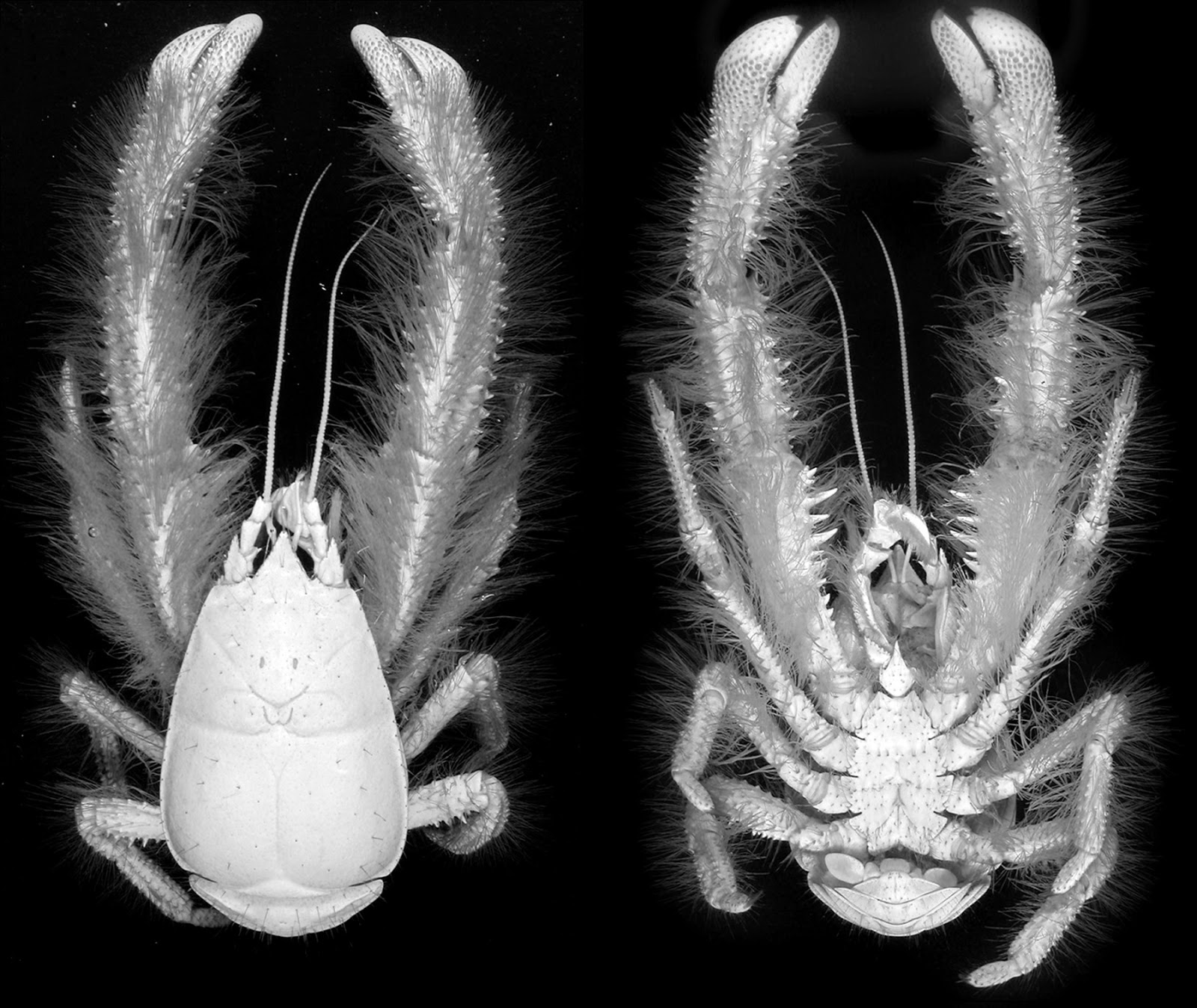
FIG. 3. — Kiwa hirsuta n. gen., n. sp. male holotype (MNHN-Ga 5310);
A, dorsal view; B, ventral view. 


Macpherson E., Jones W. & Segonzac M. 2005. A new squat lobster family of Galatheoidea (Crustacea, Decapoda, Anomura) from the hydrothermal vents of the Pacific - Antarctic Ridge. Zoosystema. 27 (4) : 709-723.